
Reviewed · GEORGIAN FOOD TOURS
Tbilisi: Georgian Cooking Class with Khinkali and Khachapuri
Come hungry, leave with recipes. This 2.5-hour class at St. Bunny gives you a practical introduction to Georgian food, with hands-on lessons in khinkali and Imeretian khachapuri. I like the friendly, social setting and the chance to eat what you make, along with local cheeses, fresh salad, and Georgian wine.
I also like the useful instruction. Chefs such as Artem, Nino, Nina, Seva, and George have been praised for patient demonstrations, clear explanations, and good humor. The main consideration is that the event takes place in a restaurant courtyard-style setting rather than a working kitchen, and some participants may find the format a little more guided and meal-focused than a serious culinary course.
In This Review
- Key Points
- Why These Two Dishes Matter
- Arriving at St. Bunny in the Merani Center
- Starting With Georgian Wine, Cheese, and Salad
- Making Khinkali Without Losing the Broth
- Shaping Imeretian Khachapuri
- A Social Meal After the Lesson
- How Much Cooking Do You Really Do?
- The $28 Price and What It Covers
- Who Will Enjoy This Class Most?
- Practical Tips Before You Book
- Should You Book It?
- FAQ
- Where does the cooking class take place?
- How long does the class last?
- Which Georgian dishes will I learn to make?
- Is food and wine included?
- Is the class available in English?
- Can I cancel or pay later?
Key Points
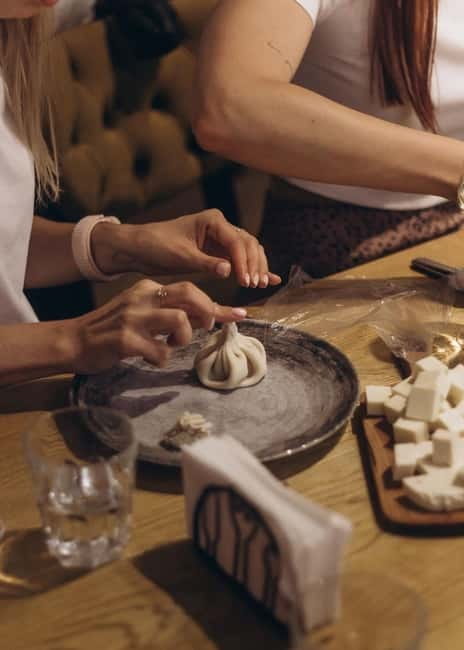
- Two Georgian classics: Learn to fold meat-filled khinkali and prepare Imeretian khachapuri, a cheese-filled bread.
- A generous meal included: Cheese, salad, wine, khinkali, and khachapuri make this much more than a short demonstration.
- Patient, hands-on teaching: The chef guides each stage, including the tricky folds and shaping.
- A social Tbilisi evening: Small groups are common, though group size can vary, and solo visitors often meet people from several countries.
- Recipes to use at home: Participants receive recipes or a recipe link after the class.
- Good central location: St. Bunny is on the third floor of the Merani shopping center, with access from Rustaveli Avenue or Alexander Griboyedov Street.
Why These Two Dishes Matter
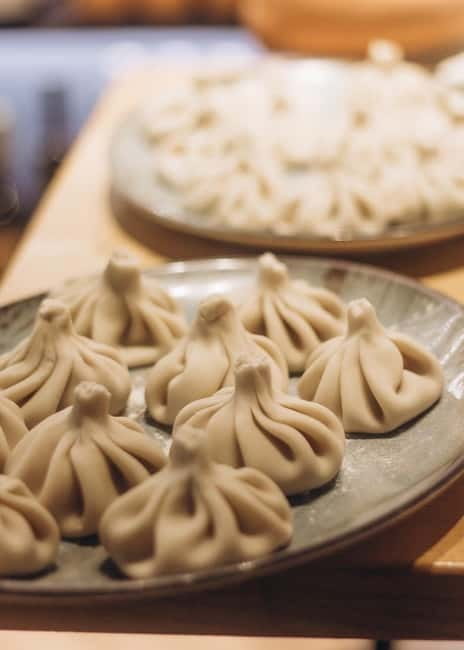
Georgian food is especially well suited to a cooking class because the most famous dishes are made by hand. Khinkali is not just a dumpling you eat with a fork. Its dough must hold a pocket of broth, and its gathered top requires a bit of practice.
Khachapuri is equally central to Georgian food culture. The version taught here is Imeretian khachapuri, a round, cheese-filled bread. It is different from the boat-shaped Adjarian khachapuri often seen in photographs, so keep that distinction in mind when booking. One participant expected another style, but still enjoyed the class and the food.
I like this pairing because you learn two different skills in one sitting. Khinkali teaches dough handling, filling, and folding. Khachapuri shows you how Georgian cooks turn simple bread and cheese into something made for sharing.
The class also gives you a little context about Georgian food and Tbilisi. The chef or host shares stories about the city and explains the background of the dishes. It is not a full cultural lecture, but those small details help connect the meal to the place you are visiting.
More Food Tours in Tbilisi:
- Private Tbilisi Food Tour: 9 Tastings Walk in Bohemian District
★ 5.0 · 227 reviews - Small-Group Khinkali and Khachapuri Cooking Class in Tbilisi
★ 4.5 · 224 reviews - Tbilisi Food Tour in a Local Family
★ 5.0 · 113 reviews
Arriving at St. Bunny in the Merani Center
The meeting point is Restaurant St. Bunny, located on the third floor of the Merani shopping center. You can enter from central Rustaveli Avenue or from parallel Alexander Griboyedov Street.
This is useful to know because the restaurant is not presented as a separate cooking school with a street-level sign. Allow yourself time to find the shopping center entrance and reach the third floor. A separate entrance is available for the activity, described as a skip-the-line entrance.
The setting is part of the appeal. Several people praised the artistic interior, the welcoming atmosphere, and the historic architecture of the building. The class is held in a courtyard-style restaurant area, not inside the restaurant kitchen. That means you get a comfortable dining setting, but you should not expect to inspect the professional kitchen or work at a conventional culinary-school station.
The venue is wheelchair accessible. Instruction is available in English or Russian, so choose the language that will let you follow dough techniques and cooking instructions most easily.
Starting With Georgian Wine, Cheese, and Salad
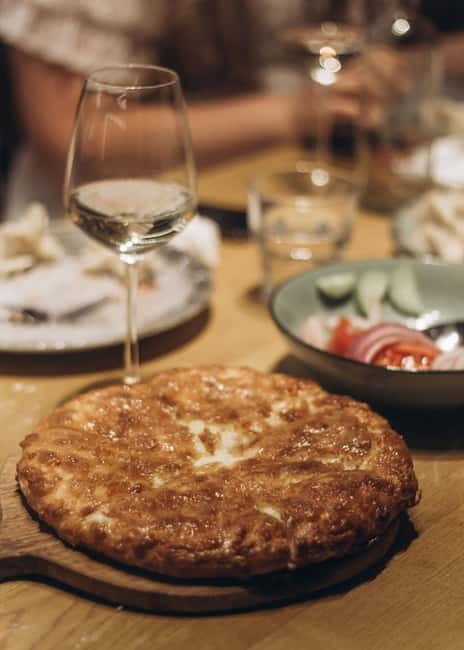
The class begins with Georgian hospitality rather than a pile of ingredients. You receive a glass of homemade Georgian wine, a plate of local cheeses, and a salad made with Georgian tomatoes and cucumbers.
The salad comes with aromatic oil from Kakheti, Georgia’s well-known wine-producing region. This is a small but worthwhile part of the experience. It lets you taste fresh local produce before you start cooking, and it gives the session the feel of a shared Georgian meal rather than a formal lesson.
The cheese platter also matters. Georgian cheese is less familiar to many visitors than the country’s wine or dumplings, so this is a good chance to try several types in one sitting. The salad portion is generous, and you may have plenty left to take home.
The wine included is homemade Georgian wine. Additional wine or food can be ordered separately, but those extras are not part of the $28 price. If you want to keep costs under control, the included food and drink should be enough for most people.
Making Khinkali Without Losing the Broth
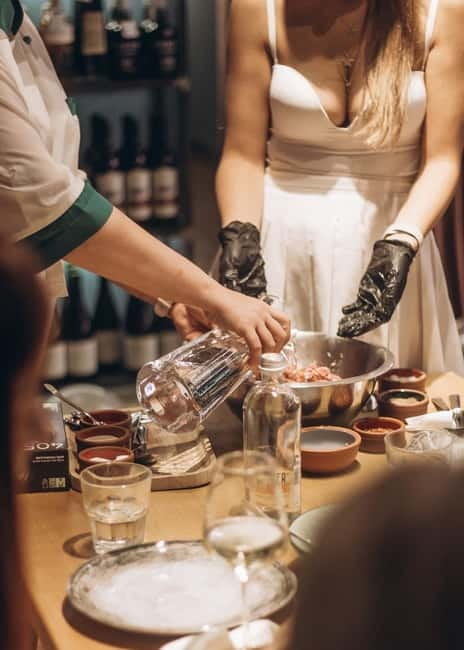
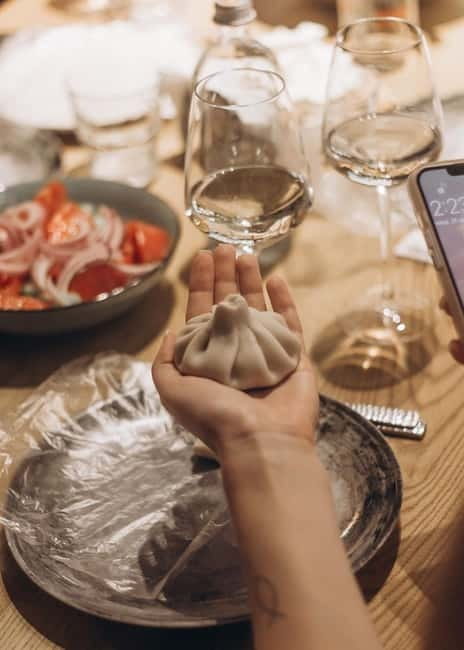
Khinkali is the most entertaining part of the lesson for many people. The goal is a pleated dumpling filled with seasoned meat and liquid. The dough must be thin enough to cook well but strong enough to hold the filling and its broth.
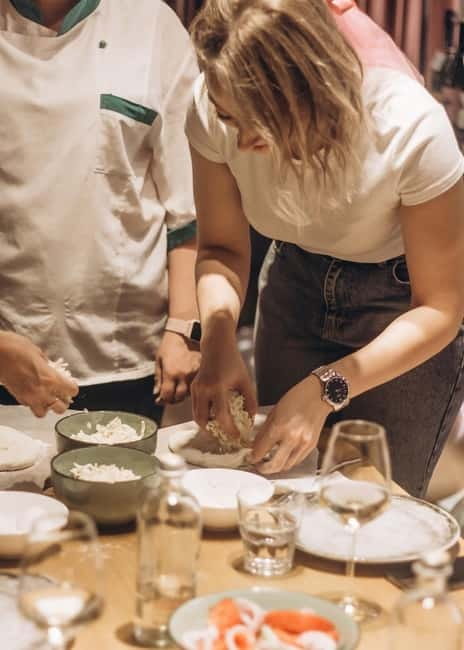
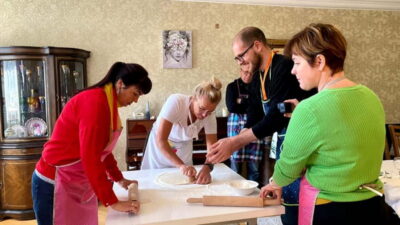
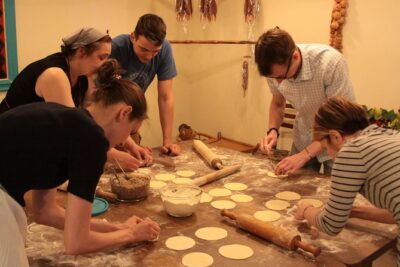
The chef demonstrates the process step by step, then helps you repeat it. The teaching style is closely guided, which is helpful if you have never made dumplings. Instructors have been praised for checking each person’s work, correcting folds, and keeping the mood light when the first few khinkali look less than perfect.
Do not worry if your pleats are uneven. The point is to understand the technique, not to produce restaurant-perfect dumplings on your first try. One of the pleasures of this part is the repetition. After a few attempts, your hands begin to understand the shape.
The class is suitable for beginners because the instruction is broken into manageable stages. You are not simply watching a chef make the food and then receiving a plate. You take part in preparing the dishes and later eat your own work.
There is one practical point to keep in mind. In a larger group, not every person may have exactly the same amount of hands-on time for every step. Several sessions have been small, including groups of four, while one organized group had 10 participants. Group size can vary, so people who want one-to-one instruction should ask about the expected size before booking.
More things to do in Tbilisi:
- Tbilisi: Day Trip to Kazbegi, Gudauri, Gergeti, and Ananuri
★ 4.9 · 3,203 reviews - Day Trip to Kakheti Wine Region Including 9 Wine Tastings
★ 5.0 · 2,774 reviews - Highlights of Caucasus Mountains-Jinvali,Ananuri,Gudauri,Kazbegi(Group tour)
★ 5.0 · 2,682 reviews - From Tbilisi: Kakheti Wine Region Tour with 9 Wine Tastings
★ 4.9 · 2,541 reviews
Shaping Imeretian Khachapuri
The second main lesson is Imeretian khachapuri. This is a round bread filled with Georgian cheese, rather than the open boat shape associated with Adjarian khachapuri.
You learn how the dough is shaped, filled, sealed, and prepared for cooking. As with the khinkali, the chef stays close and explains the process in simple steps. The result is a dish that feels both rustic and festive, with a soft bread exterior and a warm cheese center.
I like this part because it balances the more delicate dumpling work. If your khinkali folds are not tidy, the khachapuri gives you another chance to succeed with a different kind of dough. The class also explains that Georgia has several khachapuri styles, which helps you recognize the differences when ordering food around Tbilisi.
The ingredients are described as high quality, and the finished food is the main reward. You do not just practice the recipe and watch someone else eat it. The dishes are prepared and served so you can enjoy them in a relaxed setting afterward.
A Social Meal After the Lesson

Once the cooking is finished, the room shifts toward a shared meal. You eat the khinkali and khachapuri you helped prepare, with the cheese, salad, and wine served alongside.
This final stage is where the class becomes especially appealing for solo visitors. The format encourages conversation, and people often sit together after the formal instruction ends. You might arrive alone and leave having spoken with people from several countries.
The atmosphere is generally warm and informal. Hosts and chefs have been praised for being funny, attentive, and easy to talk with. Names such as Artem, Nino, Nina, Seva, and George appear in individual accounts, but the instructor depends on the date and language of the session.
The meal can be substantial. One participant felt the portion was too large, while another described the experience as more dinner than cooking. That is useful information if you are planning other restaurant meals the same evening. For most people, this is best treated as a full meal with a cooking lesson attached.
If you are sensitive to food waste, you may want to ask whether the group can prepare smaller quantities. The available information indicates that portions can be generous, and extra salad may be taken home.
How Much Cooking Do You Really Do?
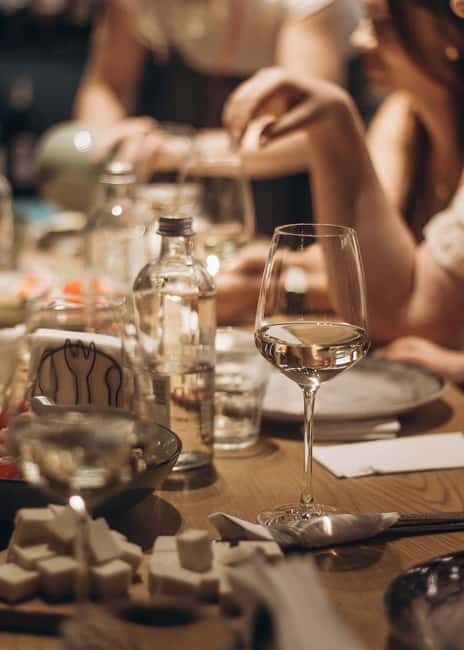
This is a hands-on class, but it is not designed as an advanced professional course. You will follow the chef’s directions closely, copy the demonstrations, and receive help as you work.
That guided approach is a strength for first-time cooks. You can ask questions, see each stage clearly, and avoid the frustration of trying to guess how much filling or dough to use. It also makes the experience suitable for teens and for people who rarely cook.
For an experienced cook, the class may feel a little controlled. You are there to learn two specific dishes, not to create your own menu or choose your ingredients. Some participants wanted more equal hands-on time for both recipes, especially in a larger group.
I would describe the pace as relaxed and practical. The full session lasts about 2.5 hours, which gives enough time for food preparation, stories, cooking, and the meal. It is long enough to feel worthwhile without taking an entire day away from sightseeing.
The $28 Price and What It Covers
At $28 per person, this is strong value if you consider it a meal, a short cultural activity, and a recipe lesson in one package.
The included items are:
- Instruction for khinkali and Imeretian khachapuri
- Local Georgian cheeses
- Georgian tomato and cucumber salad
- Kakheti aromatic oil
- Homemade Georgian wine
- The food you prepare and eat
- Recipes or a recipe link after the class
The value is not just in the amount of food. A restaurant meal for two Georgian specialties, cheese, salad, and wine could approach the cost of the class, depending on what you order. Here, you also get direct instruction and the chance to repeat the recipes at home.
Additional wine and food ordered from the restaurant cost extra. The package itself is generous enough that you do not need to add anything unless you want more drinks or a different dish.
Free cancellation is available up to 24 hours before the activity for a full refund. You can also reserve now and pay later, which helps if your Tbilisi schedule is still changing.
Who Will Enjoy This Class Most?
I would recommend this experience to anyone who wants an activity that combines food and conversation. It works particularly well for:
- Solo visitors who want an easy social evening
- Couples looking for something beyond a standard restaurant meal
- Families with older children or teens
- First-time cooks who prefer clear, guided instruction
- Food lovers who want to understand Georgian staples
- Small groups seeking a shared activity
It may be less suitable if you want advanced culinary training, a market visit, or a lesson inside a professional kitchen. It is also not the right choice if you dislike rich, filling food or prefer to spend an evening sampling many small dishes around the city.
The strongest reason to book is the balance of instruction and hospitality. You learn enough to repeat the dishes, but you also get time to eat, talk, and enjoy the setting.
Practical Tips Before You Book
Book the English or Russian session according to the language in which you can best follow detailed instructions. Folding dumplings and sealing bread are easier when you understand every step.
Plan the class as a main meal. The portions can be large, especially when you add the salad, cheese, and wine. If you have dinner reservations later, leave a long gap.
Arrive at the Merani shopping center with enough time to find the third-floor restaurant. Use either Rustaveli Avenue or Alexander Griboyedov Street for access.
If you are a serious cook, ask about the group size and how much time each person gets with the dough and filling. Smaller sessions have offered especially close supervision, while larger groups may require a little more sharing of the work.
Finally, keep the recipe information. That is one of the most useful parts of the class. You can try the dishes again at home and remember Tbilisi through something you made yourself.
Should You Book It?
Yes, if you want a friendly, food-centered way to spend 2.5 hours in Tbilisi. The $28 price covers a generous meal, wine, cheese, salad, instruction, and recipes, making it a good choice for the money.
I would book it early in your stay if possible. Learning the basics of khinkali and khachapuri gives you more confidence when ordering Georgian food elsewhere. It is also a pleasant way to meet people if you are traveling alone.
Skip it only if you want a demanding cooking course or a kitchen-based professional lesson. For everyone else, this class offers a tasty introduction to Georgian food, with enough practical instruction to make the experience last beyond dinner.
FAQ
Where does the cooking class take place?
It takes place at Restaurant St. Bunny on the third floor of the Merani shopping center in Tbilisi. You can enter from Rustaveli Avenue or Alexander Griboyedov Street.
How long does the class last?
The session lasts approximately 2.5 hours, including cooking, conversation, and eating the finished dishes.
Which Georgian dishes will I learn to make?
You will learn to prepare khinkali and Imeretian khachapuri.
Is food and wine included?
Yes. The package includes Georgian homemade wine, local cheeses, a tomato and cucumber salad with Kakheti aromatic oil, and the dishes you prepare. Additional wine or food ordered from the restaurant costs extra.
Is the class available in English?
Yes. The instructor languages are English and Russian.
Can I cancel or pay later?
You can cancel up to 24 hours in advance for a full refund. You can also reserve your place and pay later.
Just added in Tbilisi
- Wine Tasting feel the Difference of Qvevri or Classical Wine★ 4.4 · 10 reviews
- From Tbilisi: Kakheti and Kazbegi 2-Day 4X4 Jeep Tour pack★ 5.0 · 6 reviews
- Walking Tour in Old Tbilisi – Group Tour★ 4.5 · 8 reviews
- Uforgatable Kakheti Tour with wine tasting – in Georgia★ 4.9 · 5 reviews
- From Tbilisi: Uplistsikhe Caves and Mtskheta Town Day tour★ 5.0 · 2 reviews
- Tbilisi: Vintage Fashion and Secondhand Thrifting Tour★ 5.0 · 11 reviews
- Private Adorable City Tour of Tbilisi★ 5.0 · 3 reviews
- Tbilisi Airport to Gudauri, Bakuriani, Batumi, Tbilisi★ 5.0 · 3 reviews
Georgian Food Tours, compared.

Private Tbilisi Food Tour: 9 Tastings Walk in Bohemian District
Read our review →
Small-Group Khinkali and Khachapuri Cooking Class in Tbilisi
Read our review →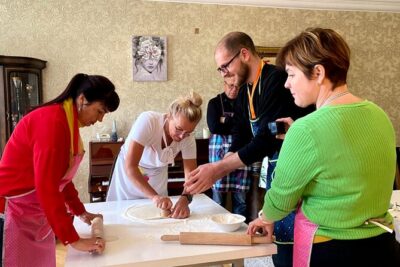
Cook True Ajarian Khachapuri and Khinkali in Highlanders Style
Read our review →
Old Town and Beyond: A Tbilisi Silk Road Feast with Culinary Backstreets
Read our review →
Taste of Kakheti: Wine Tour Bread Baking & Churchkhela Workshop
Read our review →
Nana’s Kitchen – traditional Georgian cooking class at real Georgian family home
Read our review →Browse the lists this tour appears in