
Reviewed · GEORGIAN FOOD TOURS
Tbilisi: Cooking Class with a Local Family
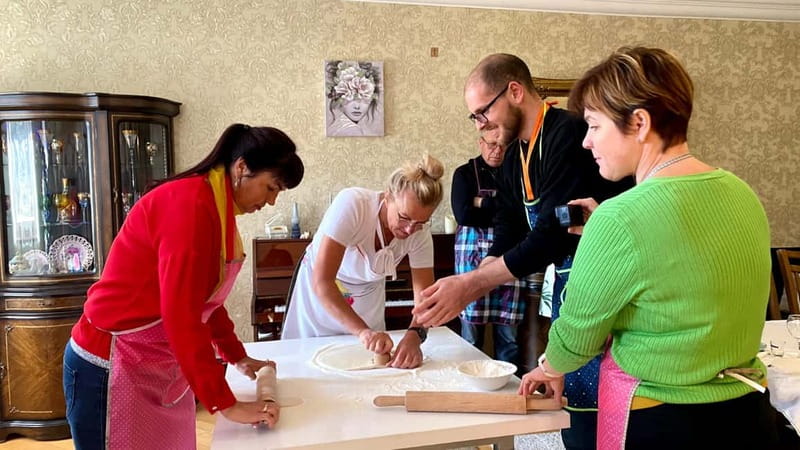
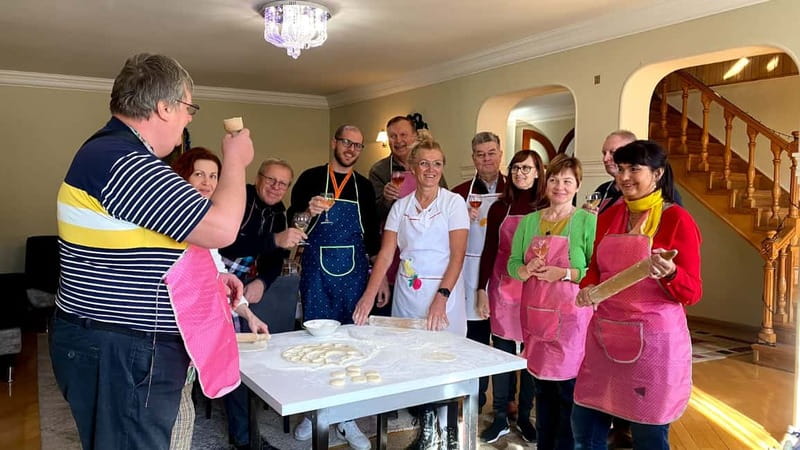
Come hungry, leave with recipes. This three-hour evening at Shorena’s Magic Kitchen gives you a hands-on taste of Georgian food inside a local family home. I like that you do more than watch a demonstration: you shape dumplings, prepare fillings, work with cheese, and sit down to eat what you helped make. I also like the friendly guides, including Maria, Ana, Nicolas, Salome, and others who explain the food, customs, and history in English. The main thing to consider is that the host may speak little or no English, so the guide’s translation is an important part of the experience.
The meeting point is Avlabari Metro Station at 17:30, where you look for a representative holding a branded orange flag. Transportation from there to the family home is included, but transportation back from the home is not, so you should plan the end of your evening before you begin. At $55 per person, the price is fair if you value a full meal, drinks, instruction, and a personal look at Georgian home cooking rather than a simple restaurant dinner.
In This Review
- Key points to know before you book
- Why Georgian food makes a good cooking lesson
- Meeting at Avlabari at 17:30
- Entering a Georgian family home
- Making khinkali, Georgia’s famous dumplings
- Folding khachapuri and working with Georgian cheese
- Eggplant with walnuts, salad, and mchadi
- Wine, Sulguni, and a taste of chacha
- Sitting down to the feast
- How much value do you get for $55?
- Practical points that affect your evening
- Who should book this cooking class?
- Should you book Shorena’s Magic Kitchen?
- FAQ
- How much does the cooking class cost?
- How long does the experience last?
- Where does the class meet?
- Is transportation included?
- What language is the class offered in?
- Which Georgian dishes will I prepare?
- Are drinks included?
- Is a vegetarian option available?
- What should I bring?
Key points to know before you book
- Khinkali is made by hand: You get to work with Georgia’s famous soup dumplings, though the dough may already be prepared.
- The meal covers several Georgian classics: Expect dishes such as khachapuri, eggplant with walnuts, Georgian salad, and mchadi cornbread.
- A local home changes the experience: You cook and eat with a Georgian family instead of sitting in a commercial cooking studio.
- English support comes from the guide: The host may speak Georgian and only a little English, but the guide translates instructions and adds cultural context.
- Wine and chacha are included: You taste homemade dry white wine, Georgian cheese, water, and local chacha.
- The evening suits solo visitors: You join a group, cook together, and share the final meal around the same table.
Why Georgian food makes a good cooking lesson
Georgian food is built for sharing. Many of the country’s best-known dishes arrive at the table in generous portions, with bread, cheese, herbs, walnuts, vegetables, and dumplings all competing for your attention. A cooking class helps you understand how these foods fit together instead of treating each dish as an isolated menu item.
I especially like the way this class connects cooking with everyday Georgian culture. Guides have explained regional differences, food traditions, wine, chacha, family life, history, and even subjects such as traditional dance and current events. You are not only learning how to fold a dumpling. You are getting a short lesson in how Georgians eat, toast, host, and celebrate.
The setting matters, too. Shorena comes from western Georgia and has more than 30 years of cooking experience. You visit her family home, where she lives with her husband and children, and the meal takes place in a personal setting rather than an impersonal classroom.
More Food Tours in Tbilisi:
- Tbilisi: Georgian Cooking Class with Khinkali and Khachapuri
★ 4.7 · 1,146 reviews - Private Tbilisi Food Tour: 9 Tastings Walk in Bohemian District
★ 5.0 · 227 reviews - Small-Group Khinkali and Khachapuri Cooking Class in Tbilisi
★ 4.5 · 224 reviews
Meeting at Avlabari at 17:30
Your evening begins at Avlabari Metro Station at 17:30. Look for the local partner’s representative with the branded orange flag in front of the station. This is a useful meeting point because Avlabari is easy to reach by Tbilisi Metro and sits on the eastern side of the city.
From there, transportation to the family home is included. The supplied details do not specify the exact distance, neighborhood, or type of vehicle, so you should treat the meeting point as the firm part of the plan and allow a little flexibility around the transfer.
The class operates in rain or shine. Dress for the weather, especially because at least one account describes beginning in a garden with grapevines and plum trees. You should also bring your passport or ID card.
The activity lasts about three hours. Since it begins at 17:30, it works well as an evening meal and cultural outing. You may want to avoid booking a late event immediately afterward, since the final meal, wine, toasts, and conversation can make the schedule feel pleasantly unhurried.
Entering a Georgian family home
The first major pleasure is simply arriving at a local home. You see a more personal side of Tbilisi than you get from eating in the city center. The experience can include time in a garden, a glass of wine, fresh grapes, and a chance to meet the host and the other people in your group.
This is not a formal restaurant kitchen with numbered workstations. The atmosphere is social and domestic. You are there to cook, but also to talk, ask questions, and learn how food connects to family traditions.
The host may not speak English fluently. That is not a reason to avoid the class, but it does mean you should expect the guide to translate. Guides such as Nicolas and Maria have handled this role, explaining the host’s directions and adding background about Georgia. The quality of the evening depends partly on that communication, and the available feedback gives strong praise to the guides who made the process clear and lively.
Making khinkali, Georgia’s famous dumplings
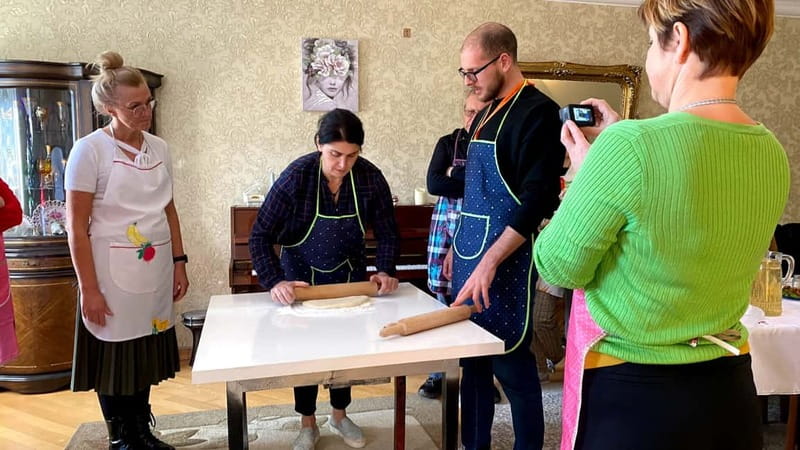
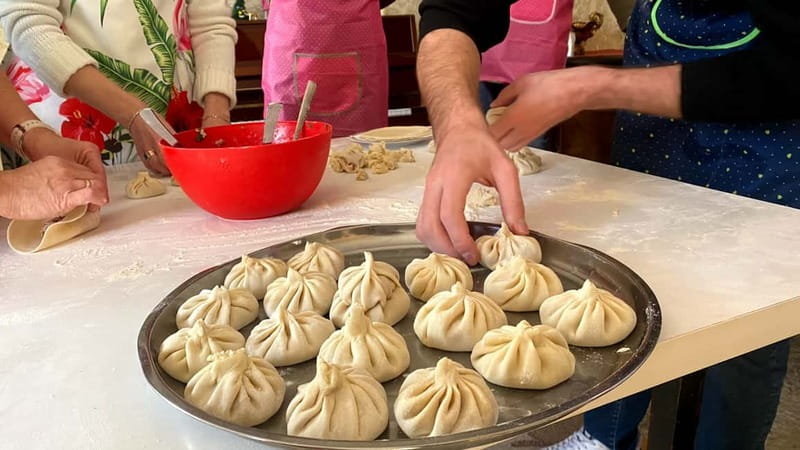
Khinkali is usually the dish people most want to learn. These large Georgian dumplings are filled, folded, and cooked so that broth gathers inside. Eating them properly is part of the fun, but making them gives you a better sense of why the folds and sealed top matter.
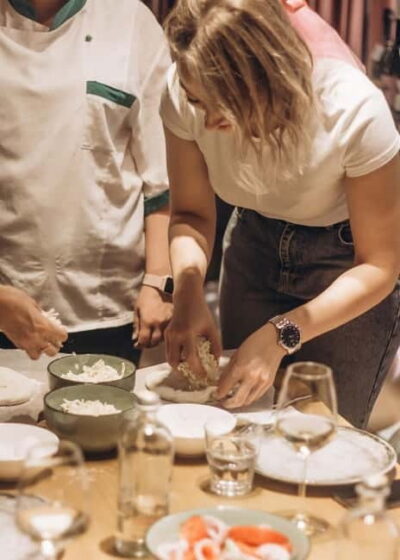
You should expect to participate directly. You may shape the dumplings, prepare or handle the filling, and learn the folding method. One useful point is that the dough may be prepared in advance. That keeps the three-hour class manageable and helps the group succeed, but it means you may not make every component completely from scratch.
That trade-off is worth knowing. If you want a professional pastry lesson that covers dough ratios, resting time, and every technical stage, this may feel fairly simple. If you want a relaxed class where you can actually produce edible khinkali and enjoy dinner afterward, the preparation is a strength.
The class has been described as accessible even for people who do not cook much. The guide demonstrates, explains, and then helps you through the steps. You do not need to arrive with expert knife skills or restaurant experience.
More things to do in Tbilisi:
- Tbilisi: Day Trip to Kazbegi, Gudauri, Gergeti, and Ananuri
★ 4.9 · 3,203 reviews - Day Trip to Kakheti Wine Region Including 9 Wine Tastings
★ 5.0 · 2,774 reviews - Highlights of Caucasus Mountains-Jinvali,Ananuri,Gudauri,Kazbegi(Group tour)
★ 5.0 · 2,682 reviews - From Tbilisi: Kakheti Wine Region Tour with 9 Wine Tastings
★ 4.9 · 2,541 reviews
Folding khachapuri and working with Georgian cheese
Khachapuri is Georgia’s celebrated cheese bread, and it appears in more than one regional form. The exact version can vary, but the lesson gives you a hands-on introduction to dough, cheese, and baking.
Sulguni, a popular Georgian cheese, is included as part of the food and drink tasting. You may work with cheese in the khachapuri itself and taste it separately during the meal. Some sessions have included two types of khachapuri, giving you a chance to compare shapes and textures.
I like this part of the class because khachapuri explains an important feature of Georgian food: simple ingredients can become a centerpiece when they are prepared with care. Bread and cheese sound basic. In Georgia, they are a meal, a welcome, and often the dish everyone reaches for first.
The preparation is designed for participation, not pressure. Much of the work may already be organized before you arrive, which helps the group move along and reduces the chance of a failed dinner. You still get to handle the food and see how it comes together.
Eggplant with walnuts, salad, and mchadi
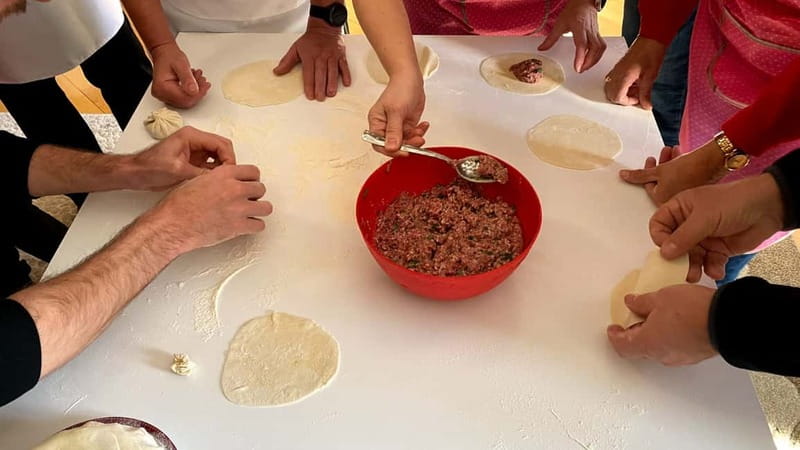
The class goes beyond the two famous dishes. You also prepare eggplant with walnuts, Georgian salad, and mchadi, a cornbread made with cornmeal. These dishes give the meal contrast: creamy walnut filling, fresh vegetables, bread, cheese, and dumplings all share the table.
Eggplant rolls with walnut filling, often called nigvziani badrijani, are particularly useful to learn because they look special but do not require elaborate equipment. The walnut mixture shows off a common Georgian flavor pairing, where nuts and seasoning turn a simple vegetable into a substantial appetizer.
The Georgian salad is a fresh break from the heavier foods. It brings tomatoes and cucumbers to the table, while mchadi adds a rustic corn flavor and a firm texture. Some accounts also describe ajapsandali, a vegetable stew, so the exact selection may vary slightly with the session.
The important point is variety. You are not spending three hours on one dish. You prepare several foods and then eat them together, which makes the final meal feel like a Georgian feast rather than a sample plate.
Wine, Sulguni, and a taste of chacha
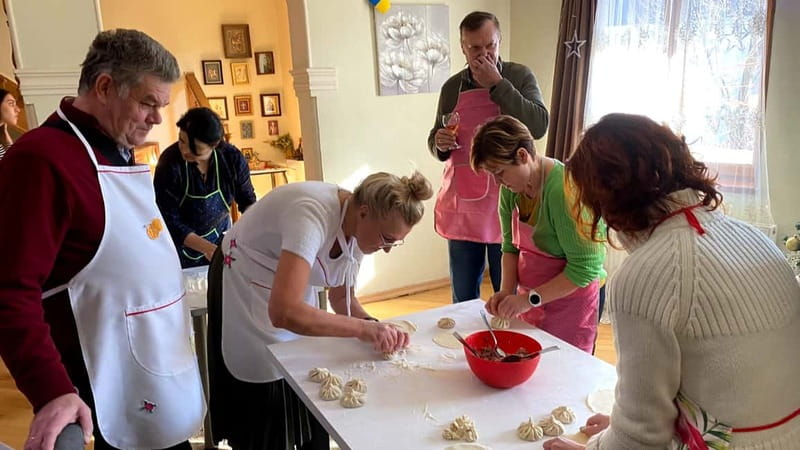
Food is only half the evening. You also receive homemade dry white wine, Georgian cheese, water, and famous Georgian vodka called chacha. The drinks help explain why Georgian meals can last a long time and why toasting is such a central social custom.
Chacha is strong, so take the small serving seriously. If you do not drink alcohol, the activity still includes plenty of food and water, but the supplied details do not specify a nonalcoholic wine substitute. Vegetarian visitors can request a vegetarian option in advance.
Some sessions include several wines or a toast master who leads traditional toasts and tells stories. That can add warmth and ceremony to the dinner. At the same time, drink quality can vary, and one account found the wine and chacha less impressive than the food and instruction. I would book this for the cooking and home setting first, with the drinks as an added part of the experience.
Sitting down to the feast
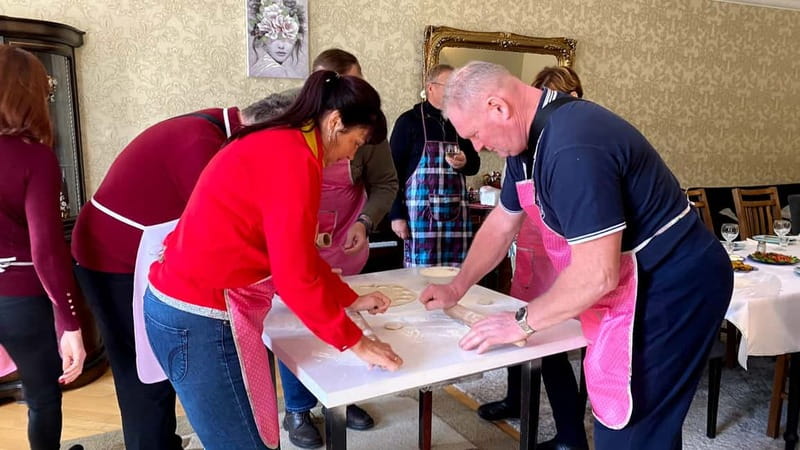
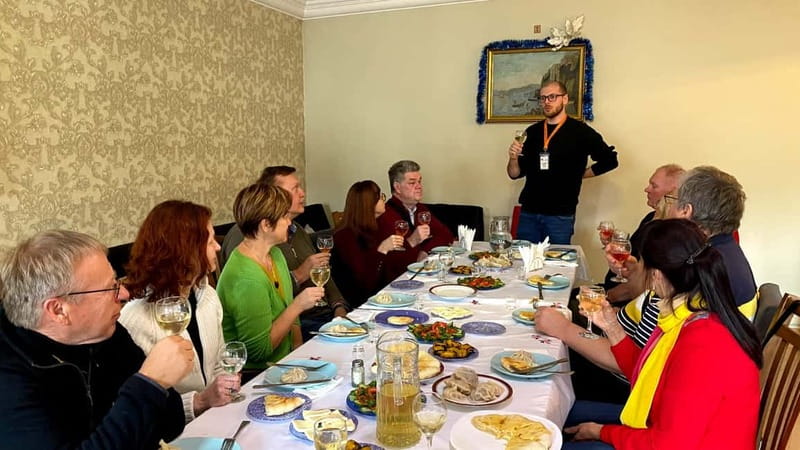
After the cooking, you eat the finished dishes together. This is the payoff, and it also turns the class into a social evening. You taste the khinkali while it is fresh, share the khachapuri, try the walnut-filled eggplant, and sample the other foods prepared by the group.
Portions appear to be generous. One session produced enough food for far more people than were present, and several accounts stress that you should come hungry. That generosity is part of Georgian hospitality, though it can also mean more food than you can comfortably finish.
The table is where the cultural side comes alive. Guides explain how dishes are paired, what regional traditions mean, and how Georgian toasts work. Music and stories may be part of the evening, but you should not assume every session follows exactly the same pattern.
This shared meal also makes the class a good choice for solo visitors. You join a group rather than eating alone, and the practical tasks give everyone an easy way to talk. Couples, families, and children can also take part, provided they are comfortable with the evening schedule and a home-based setting.
How much value do you get for $55?
At $55 per person, this is not the cheapest way to eat in Tbilisi. You can order an excellent khachapuri or khinkali meal in a restaurant for much less. The price makes more sense when you count the food, homemade wine, chacha, guide, transport from Avlabari, cooking instruction, recipes, and access to a local family home.
You are paying for participation, not just consumption. A restaurant gives you a finished dish. This class lets you make several Georgian foods, ask questions, and take home a recipe for traditional Georgian food.
The value is strongest if you are curious about food and culture. It is weaker if you only want a quick dinner, dislike group activities, or expect a technically demanding culinary course. The class is built for success, with some preparation done ahead of time, so it favors enjoyment over advanced kitchen training.
The price also includes enough food to function as your evening meal. You should still confirm the current price when booking, but based on the stated $55 rate, I consider it reasonable for a three-hour experience with dinner and drinks.
Practical points that affect your evening
The English-speaking guide is important. Hosts may speak Georgian and only a few English words, so the guide translates instructions and keeps the conversation moving. Guides named Maria, Ana, Nicolas, Nini, Salome, Oki, and others have been praised for warmth, clear explanations, and cultural knowledge.
The group size can vary. One session had six people, while another became a private class because no other participants had booked that date. You should not count on a private lesson, but a small group is possible.
The recipes are a useful extra. If you want to recreate the meal at home, consider buying Georgian spices and cheese during your stay. One participant specifically recommended Dezerter Bazaar in Tbilisi for ingredients, though transporting food on a flight depends on airline and customs rules.
For the return journey, make your own plan. Transportation from the meeting point to the family home is included, but transportation from the home is not. Ask the operator where the class ends and what local transport options are available before you set a strict evening appointment.
Free cancellation is available up to 24 hours in advance for a full refund, and you can reserve now and pay later. Those terms are useful if your Tbilisi schedule is still moving, but always check the current conditions when you book.
Who should book this cooking class?
I would choose this experience if you want to understand Georgian food through your hands, not only through a menu. It is especially good for first-time visitors who want one evening that combines a meal, a family setting, local drinks, and cultural conversation.
It also suits solo visitors. The group format gives you company without requiring you to arrange your own dinner companions. Couples and families can enjoy it too, and the practical work makes the evening more engaging for children than a long restaurant meal, provided the child is comfortable cooking and sharing food.
You may want to skip it if you need a fully English-speaking host, a strict professional curriculum, or guaranteed transport back to central Tbilisi. You should also be clear that the food preparation may include advance work, particularly the dough, so this is a friendly masterclass rather than a full culinary certification course.
Should you book Shorena’s Magic Kitchen?
Book it if you want a warm, hands-on introduction to Georgia through food. The strongest parts are the family home, generous meal, guide translation, and chance to make khinkali and khachapuri yourself.
I would treat the homemade alcohol, possible language gap, and unprovided return transport as practical details rather than deal breakers. Come hungry, bring ID, request a vegetarian meal ahead of time if needed, and leave the rest of your evening open. For $55, this is one of the better choices in Tbilisi if you want dinner to come with stories, recipes, and a real connection to Georgian hospitality.
FAQ
How much does the cooking class cost?
The stated price is $55 per person.
How long does the experience last?
The cooking class and meal last three hours.
Where does the class meet?
You meet at Avlabari Metro Station at 17:30. A local partner representative waits in front of the station with a branded orange flag.
Is transportation included?
Transportation from the Avlabari meeting point to the local family home is included. Transportation from the family home afterward is not included.
What language is the class offered in?
The experience is offered in English with a live English-speaking guide. The host may speak Georgian and only limited English, so the guide translates the cooking instructions.
Which Georgian dishes will I prepare?
The class includes dishes such as khinkali dumplings, khachapuri, eggplant with walnuts, Georgian salad, and mchadi cornbread. The exact selection may include additional foods, with six foods listed as included.
Are drinks included?
Yes. The experience includes homemade dry white wine, Georgian cheese, homemade chacha, and water.
Is a vegetarian option available?
Yes. A vegetarian option is available if you request it in advance.
What should I bring?
Bring your passport or ID card, and dress for the weather because the class operates in rain or shine.
Just added in Tbilisi
- Wine Tasting feel the Difference of Qvevri or Classical Wine★ 4.4 · 10 reviews
- From Tbilisi: Kakheti and Kazbegi 2-Day 4X4 Jeep Tour pack★ 5.0 · 6 reviews
- Walking Tour in Old Tbilisi – Group Tour★ 4.5 · 8 reviews
- Uforgatable Kakheti Tour with wine tasting – in Georgia★ 4.9 · 5 reviews
- From Tbilisi: Uplistsikhe Caves and Mtskheta Town Day tour★ 5.0 · 2 reviews
- Tbilisi: Vintage Fashion and Secondhand Thrifting Tour★ 5.0 · 11 reviews
- Tbilisi Airport to Gudauri, Bakuriani, Batumi, Tbilisi★ 5.0 · 3 reviews
- Private Adorable City Tour of Tbilisi★ 5.0 · 3 reviews
Georgian Food Tours, compared.
Georgian Cooking Class with Khinkali and Khachapuri
Read our review →
Private Tbilisi Food Tour: 9 Tastings Walk in Bohemian District
Read our review →
Small-Group Khinkali and Khachapuri Cooking Class in Tbilisi
Read our review →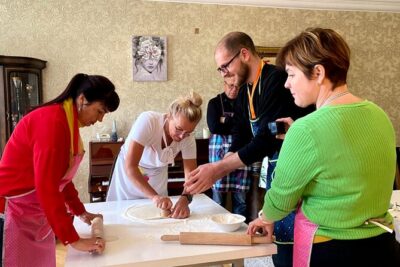
Cook True Ajarian Khachapuri and Khinkali in Highlanders Style
Read our review →
Old Town and Beyond: A Tbilisi Silk Road Feast with Culinary Backstreets
Read our review →
Taste of Kakheti: Wine Tour Bread Baking & Churchkhela Workshop
Read our review →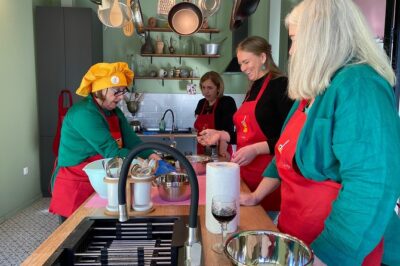
Nana’s Kitchen – traditional Georgian cooking class at real Georgian family home
Read our review →Browse the lists this tour appears in