
Reviewed · HISTORICAL TOURS
6-Day Tour to Georgia from Tbilisi. Cultural Heritage
Georgia rewards a well-packed week. This six-day small-group circuit links Tbilisi’s old churches, Silk Road sites, western cave country, and Kakheti wine country without making you arrange each transfer yourself. I like the wide range of sights and the practical value of having transport, hotels, breakfasts, entrance fees, and a guide included. The main drawback is the brisk pace, with several long driving days and only short visits at some major sites.
I also like the human touch reported by past customers, especially the prompt help from Dali and the strong guiding of Giuli in Tbilisi and Temor on the longer route. Still, you should check the final day-by-day plan carefully before booking, since the Day 3 description contains a confusing reference to Vani and Prometheus Cave appears again on Day 4.
In This Review
- What makes this Georgian circuit worth considering
- Tbilisi’s churches, fortress, and sulfur baths
- Gori and Uplistsikhe, two very different chapters
- Kutaisi and Imereti, cathedrals, markets, and caves
- Prometheus Cave and the return toward Mtskheta
- Kakheti wine, Sighnaghi, and Bodbe
- What the $961 price really covers
- Group size, guides, and the practical details
- Who should book this six-day route?
- Should you book it?
- FAQ
- How long is the tour?
- Where does the tour start?
- Is hotel pickup included?
- How many people can join the group?
- Are entrance fees included?
- Are meals included?
- Is wine tasting included?
- What places are visited?
- What is the cancellation policy?
What makes this Georgian circuit worth considering
- Tbilisi is given a proper first day, with churches, fortress views, sulfur baths, a waterfall, old streets, and the National Museum.
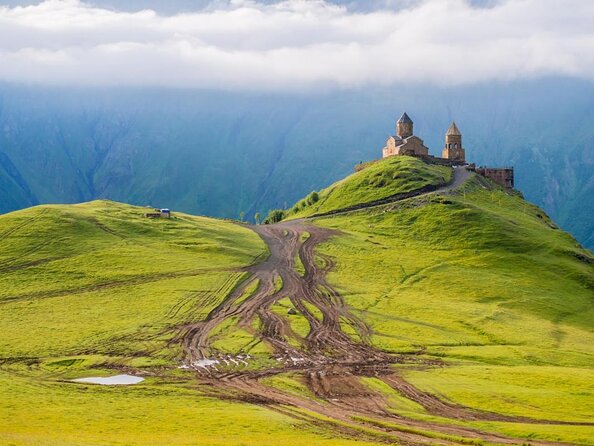
- The route crosses much of Georgia, from Gori and Uplistsikhe in the east to Kutaisi and Imereti in the west, then back to Kakheti.
- Wine is treated as culture, not just a tasting, with a visit to Giuaani Winery and an explanation of qvevri production.
- The group stays small, with a maximum of 15 people and guaranteed operation once four people have booked.
- The price covers many costly pieces, including accommodation, five breakfasts, entrance fees, bottled water, transport, and guide service.
- The tour has practical support, including hotel pickup and drop-off in Tbilisi and a guide or driver on every touring day.
Tbilisi’s churches, fortress, and sulfur baths
Your first day begins at 10:00 am, a sensible start after arriving in Georgia. The route opens with the Holy Trinity Cathedral, known as Sameba, built between 1995 and 2004. Its design combines several medieval Georgian church styles, giving you an early introduction to the country’s habit of building toward the past while living firmly in the present.
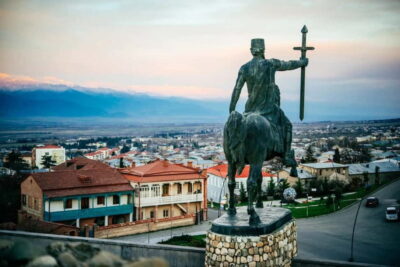
Next comes Metekhi Cathedral, a 13th-century church above the Mtkvari River. The nearby statue of King Vakhtang I Gorgasali connects the view to the traditional founding story of Tbilisi as Georgia’s capital. I like this pairing because it gives you both a modern religious landmark and an older site tied to the city’s beginnings.
The cable car ride to Narikala Fortress is one of the day’s most useful short outings. The fortress began in the fourth century, with surviving sections dating from later periods, and the hilltop gives you a clear look across Tbilisi. You only have about 30 minutes here, so treat it as a viewpoint and orientation stop rather than a long archaeological visit.
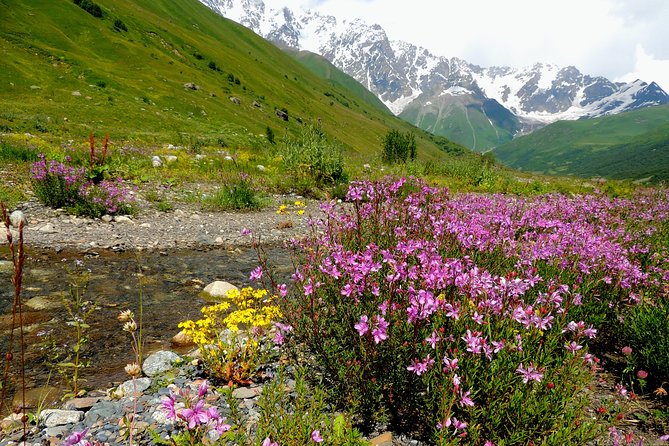
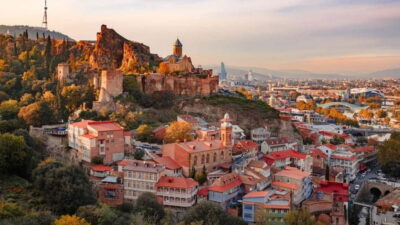
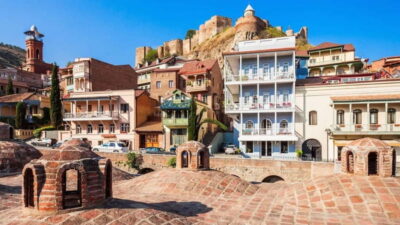
From Narikala, you walk down through the old city toward Abanotubani. This is the most atmospheric part of the day. You pass Tbilisi Mosque, described as the only surviving mosque in the city dating from the 18th century, then continue through Legvtakhevi, the Fig ravine, with its nearby waterfall.
The two-hour walk continues through the sulfur bath district, Meidan Square, Sharden Street, and Erekle II Street. The baths sit over natural hot springs, and some date from the 17th through 19th centuries. Cafes, bars, pubs, souvenir shops, and art galleries fill the old streets, so this is where you get your first real sense of present-day Tbilisi rather than just its monuments.
Sioni Cathedral and Anchiskhati Basilica round out the old-city sightseeing. Sioni was founded in the sixth or seventh century and rebuilt more than once, while Anchiskhati dates from the sixth century and is among Tbilisi’s oldest churches. The visits are short, but the sequence makes sense: you see how the capital’s religious buildings span many centuries within a compact area.
The Georgian National Museum provides the day’s indoor anchor. Its Collection of Treasures includes objects from the second half of the third millennium BC through the 19th century, with striking pre-Christian gold and silver jewelry. Allow your attention to slow down here. After a day of streets and viewpoints, the museum helps explain the symbols, craftsmanship, and long cultural continuity behind what you have been seeing.
More History Tours in Tbilisi:
- Tbilisi: Guided Walking Tour of Historic City
★ 4.9 · 156 reviews - Mtskheta, Jvari, gori, uflistsikhe, history and panorama (group tours)
★ 4.5 · 107 reviews - Tbilisi old town & soviet heritage – Private driver-guided Tour
★ 5.0 · 83 reviews
Gori and Uplistsikhe, two very different chapters
Day two turns west toward Gori, where you visit the Stalin Museum and the house where Joseph Stalin was born. The museum was established in the mid-20th century and focuses on objects connected with the Soviet dictator’s life.
This stop will suit you if you want a direct look at Georgia’s Soviet past, but it can also feel politically uncomfortable. The experience depends heavily on how your guide frames the material. Set aside time for questions, since the museum itself presents Stalin through a formal collection rather than through a fully detached modern critique.
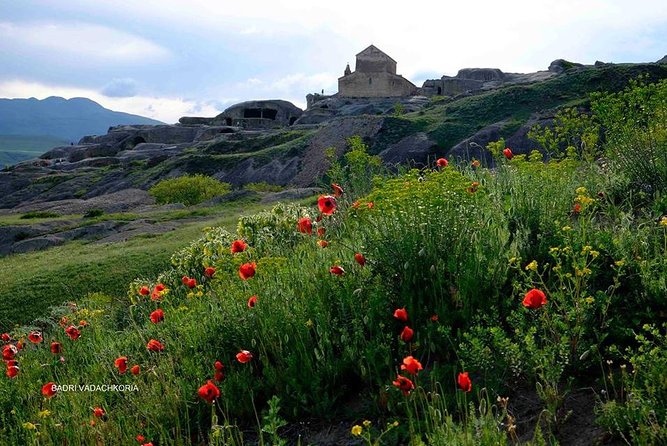
Uplistsikhe is a sharper contrast. This rock-cut town covers about eight hectares and reaches back to the second or first millennium BC. You walk among chambers carved into stone, seeing how people shaped a settlement directly from the hillside.
The site requires attention to your footing and a willingness to walk around exposed rock. The 90-minute visit gives you enough time to understand the layout, but not necessarily enough time to inspect every corner slowly. I would choose comfortable shoes and keep water close, even though bottled water is included.
The route then crosses the Rikoti Pass toward Kutaisi and Gelati Monastery. This is a substantial transfer, and the changing scenery is part of the point. Georgia is compact on a map, but mountain roads and regional distances make a guided vehicle useful here.
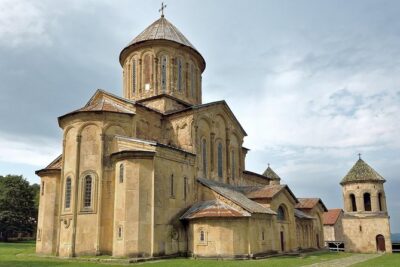
Gelati dates from the 12th century and was built during the reign of David the Builder. It served as an academy and cultural center, preserving murals and manuscripts from the 12th through 17th centuries. Even with only 40 minutes, you get a strong sense of the monastery’s role as a place of learning, not simply worship.
Kutaisi and Imereti, cathedrals, markets, and caves
Day three begins at Bagrati Cathedral, a hilltop landmark above Kutaisi. Built in the 11th century and named for King Bagrat III, it recalls the period when Georgia was united under one crown. The elevated position gives the stop a broad city view, while the cathedral itself shows the scale and confidence of medieval Georgian architecture.
The Kutaisi State Historical Museum and botanical garden follow. The combined visit lasts about 1 hour and 40 minutes, with one free hour for lunch included in that block. This is a good chance to ask your guide for advice on local food, though the tour does not include lunch unless specifically stated.
The schedule then lists a guided excursion at a site described as Vani, lasting 50 minutes, followed by a visit to Kutaisi Market. The supplied day-by-day details also identify Prometheus Cave as a main stop on Day 4. Because both names appear in the schedule, I would confirm with the operator which archaeological or cave visit takes place on Day 3 and which takes place on Day 4.
Kutaisi Market gives you a more ordinary, useful side of the region. Local sellers offer fresh fruit, vegetables, and Imeretian cheese. You can look, smell, and compare products without the pressure of a staged cultural show. The evening walk through central Kutaisi adds a relaxed finish after several formal monuments.
Prometheus Cave and the return toward Mtskheta
The clearly described Prometheus Cave visit comes on Day 4. The underground trail runs for 1.2 kilometers and passes through 16 caves, six of which are open to the public. Stalactites, stalagmites, colored lighting, and classical music turn the route into a designed attraction rather than a raw cave walk.
That presentation will appeal to you if you enjoy dramatic scenery with an easy narrative. If you prefer a quiet, untouched cave, the light show and music may feel theatrical. Either way, two hours gives you time to take in the scale of the chambers without rushing through every section.
The route then moves to Svetitskhoveli Cathedral in Mtskheta. The 12th-century cathedral is considered sacred because tradition says the robe of Jesus Christ is buried beneath it. This is one of Georgia’s most important religious sites, and the short 40-minute stop works best when your guide explains the beliefs and events connected with the building.
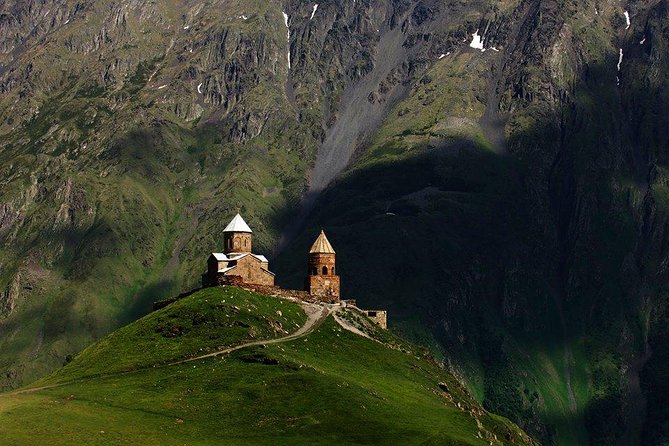
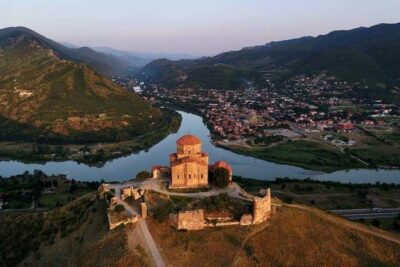
Jvari Church follows, with about 30 minutes for the visit. The sixth-century monastery looks toward the meeting point of the Aragvi and Mtkvari rivers. The stop is brief, but the view explains why this position mattered. It also gives you a final high viewpoint before the tour’s focus shifts from central Georgia to wine country.
More things to do in Tbilisi:
- Tbilisi: Day Trip to Kazbegi, Gudauri, Gergeti, and Ananuri
★ 4.9 · 3,203 reviews - Day Trip to Kakheti Wine Region Including 9 Wine Tastings
★ 5.0 · 2,774 reviews - Highlights of Caucasus Mountains-Jinvali,Ananuri,Gudauri,Kazbegi(Group tour)
★ 5.0 · 2,682 reviews - From Tbilisi: Kakheti Wine Region Tour with 9 Wine Tastings
★ 4.9 · 2,541 reviews
Kakheti wine, Sighnaghi, and Bodbe
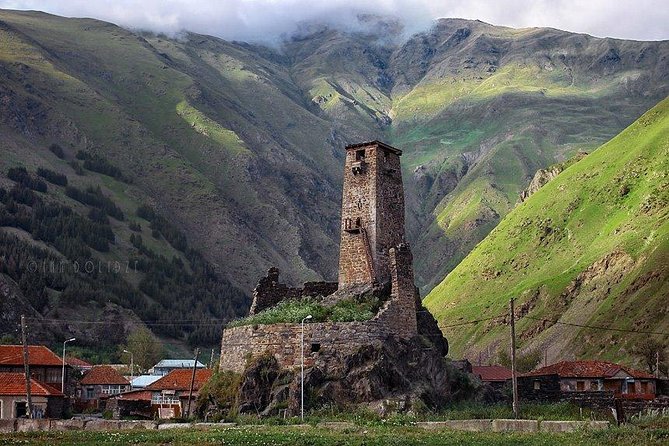
Day five heads east to Kakheti, Georgia’s best-known wine-making region. At Giuaani Winery in Manavi, a host explains qvevri production, the traditional method of fermenting wine in large buried clay vessels.
The tasting includes three premium local wines: two reds and one white. This is a modest tasting rather than a full winery day, but the explanation of qvevri methods gives the stop cultural weight. You are learning how wine fits into Georgian life, not simply sampling a few glasses before getting back in the vehicle.
Sighnaghi provides a change of pace. The small town is surrounded by 18th-century defensive structures, and you have about 90 minutes to walk around. The compact visit lets you see the town without turning the day into a long urban stop.
Bodbe Monastery of St. Nino comes next. The ninth-century nunnery is associated with the shrine of St. Nino, the Georgian female evangelist. Like the churches earlier in the week, Bodbe is best approached as a living religious place, not just a photo stop.
This final touring day is nicely balanced. You get a working cultural tradition at the winery, a historic town with defensive walls, and a religious site tied to Georgian Christianity. It is also less museum-heavy than the opening days, which helps the six-day program finish on a more open-air note.
What the $961 price really covers
At $961 per person, the tour is not a budget day trip. But for six days, the price includes hotel accommodation, five breakfasts, air-conditioned transport, guide or driver service on the touring days, bottled water, entrance fees, taxes, and a wine tasting.
That package matters in Georgia because the route covers several regions and requires repeated intercity transfers. Buying individual tickets and arranging each hotel and ride could easily become tiring, especially when you are moving from Tbilisi to Gori, Kutaisi, and Kakheti.
The value is strongest for a pair or small group that wants a structured route without handling the transport. The accommodation standard is not described in detail, so I would ask for the hotel names before paying if room quality matters greatly to you.
Food is the main cost point to watch. Five breakfasts are included, but other food and drinks are generally not included unless specified. Plan for lunches, dinners, and personal purchases. Airport transfers in Tbilisi are also excluded.
Group size, guides, and the practical details
The maximum group size is 15, which should keep the vehicle and stops more manageable than a large coach tour. The experience is guaranteed to run once four people have booked, but a minimum of two people is required per booking. Confirmation is subject to availability and is promised within 48 hours of booking.
Hotel pickup and drop-off in Tbilisi are included, a real convenience on the first and last touring days. Airport transfers are not included, so you need to arrange those separately.
The guide team is one of the strongest parts of the experience. Giuli is identified as the Tbilisi guide, while Temor handled the rest of the route for one customer and was praised for explaining many aspects of Georgia. Dali, who appears to handle customer support, was praised for replying promptly, being available around the clock, arranging early check-in, and finding solutions when a hotel dinner disappointed.
Those details suggest a company that pays attention when plans need adjusting. They do not guarantee that every hotel or guide will suit every person, but they are useful signs for anyone who values communication and practical help.
The experience is marked as suitable for most people and near public transportation. Dietary requirements should be shared at booking. You should also be comfortable with frequent hotel changes, walking at historic sites, and several long road journeys.
Cancellation terms are strict enough to note. Cancel at least six full days before the start for a full refund. Cancelling two to six days ahead brings a 50 percent refund, while cancelling less than two days ahead brings no refund. If the minimum group size is not reached, you are offered another date or experience, or a full refund.
Who should book this six-day route?
I would recommend it to you if you want a broad first look at Georgia and prefer someone else to manage the route. It suits people who care about churches, archaeology, Soviet history, wine, and regional food culture more than long stretches of free time in one city.
It is less suitable if you want a slow holiday. Tbilisi receives one full sightseeing day, Kutaisi is handled through several short visits, and the route keeps moving. You should also confirm the cave and archaeological stops because the Day 3 wording is not fully clear.
Should you book it?
Book this tour if you want strong geographic coverage and built-in support. The mix of Tbilisi, Gori, Uplistsikhe, Kutaisi, Prometheus Cave, Mtskheta, and Kakheti gives you an unusually full introduction to Georgia in six days.
I would ask three questions before booking: which exact hotels are used, how the Day 3 Vani and Prometheus references are resolved, and what meals are planned beyond breakfast. If the answers suit you, the $961 cost is reasonable for a small group with transport, guiding, entrance fees, accommodation, and a wine visit already arranged.
FAQ
How long is the tour?
The experience lasts approximately six days, with touring activities on Days 1 through 5 and hotel checkout by 12:00 pm on Day 6.
Where does the tour start?
The tour starts in Tbilisi, with hotel pickup offered. The stated start time is 10:00 am.
Is hotel pickup included?
Yes. Pickup and drop-off at your Tbilisi hotel are included. Tbilisi airport transfers are not included.
How many people can join the group?
The tour has a maximum of 15 participants. A minimum of two people is required per booking, and the tour is guaranteed to run once four people have booked.
Are entrance fees included?
Yes. The listed entrance fees, including the Georgian National Museum, Stalin Museum, Uplistsikhe, Prometheus Cave, and the wine tasting, are included.
Are meals included?
Five breakfasts are included. Other food and drinks are not included unless specifically stated in the arrangements.
Is wine tasting included?
Yes. Day five includes one wine tasting at Giuaani Winery, with three local wines: two reds and one white.
What places are visited?
The route includes Tbilisi, Gori, Uplistsikhe, Gelati Monastery, Kutaisi, Bagrati Cathedral, Prometheus Cave, Svetitskhoveli Cathedral, Jvari Church, Kakheti, Sighnaghi, and Bodbe Monastery.
What is the cancellation policy?
You receive a full refund if you cancel at least six full days before the start time. A cancellation two to six days ahead receives a 50 percent refund, while cancellation less than two full days ahead is not refunded.
Just added in Tbilisi
- Wine Tasting feel the Difference of Qvevri or Classical Wine★ 4.4 · 10 reviews
- From Tbilisi: Kakheti and Kazbegi 2-Day 4X4 Jeep Tour pack★ 5.0 · 6 reviews
- Walking Tour in Old Tbilisi – Group Tour★ 4.5 · 8 reviews
- Uforgatable Kakheti Tour with wine tasting – in Georgia★ 4.9 · 5 reviews
- From Tbilisi: Uplistsikhe Caves and Mtskheta Town Day tour★ 5.0 · 2 reviews
- Tbilisi: Vintage Fashion and Secondhand Thrifting Tour★ 5.0 · 11 reviews
- Tbilisi Airport to Gudauri, Bakuriani, Batumi, Tbilisi★ 5.0 · 3 reviews
- Private Adorable City Tour of Tbilisi★ 5.0 · 3 reviews
Historical Tours, compared.
Mtskheta, Jvari, gori, uflistsikhe, history and panorama (group tours)
Read our review →
Tbilisi old town & soviet heritage – Private driver-guided Tour
Read our review →
Private Wine tasting in Historic Karalashvili Wine Cellar
Read our review →
Browse the lists this tour appears in