
Reviewed · HISTORICAL TOURS
Historical walking tour of Tbilisi
Tbilisi reveals itself one narrow lane at a time. This three-hour private walk connects the city’s sulfur baths, old churches, Narikala Fortress, and modern Bridge of Peace, so you get both old and new Tbilisi in one outing. I especially like the Narikala viewpoint and the chance to see small corners of the old town that are easy to miss alone.
I also like the flexible finish. You can stop at Freedom Square or continue along Rustaveli Avenue if your legs and schedule allow. The main consideration is pace: three hours is tight for this many sights, and the route includes hills, steps, and uneven streets. One recent guest found the time a little short, while another had a two-hour customized walk, so you should discuss priorities with the guide at the start.
In This Review
- Six details that shape the experience
- Starting beside the Falcon and Pheasant Fountain
- Abanotubani and Tbilisi’s sulfur bath district
- Leghvtakhevi Waterfall in the city center
- Narikala Fortress and the climb above Tbilisi
- Metekhi Church and views across the river
- The Bridge of Peace and the city’s modern face
- Patriarchate, Anchiskhati, and old Tbilisi’s churches
- Meidan Bazaar, Sharden Street, and the small details
- Rezo Gabriadze’s theater and the Clock Tower
- Freedom Square or an extended Rustaveli Avenue walk
- How much value do you get for $47?
- The guide, languages, and private format
- Who should book this Tbilisi walk?
- Should you book it?
- FAQ
- How long does the historical walking tour of Tbilisi last?
- What language is the tour offered in?
- Is this a private group tour?
- Where does the tour begin?
- What should I bring?
- Is the tour suitable for people with mobility impairments?
- Are food and drinks included?
Six details that shape the experience
- Narikala Fortress gives you Tbilisi from above, with a strong view after the uphill walk.
- The sulfur bath district opens the tour well, especially the ornate bathhouse associated with Pushkin and Dumas.
- A private group means the route can bend to your interests, energy, and questions.
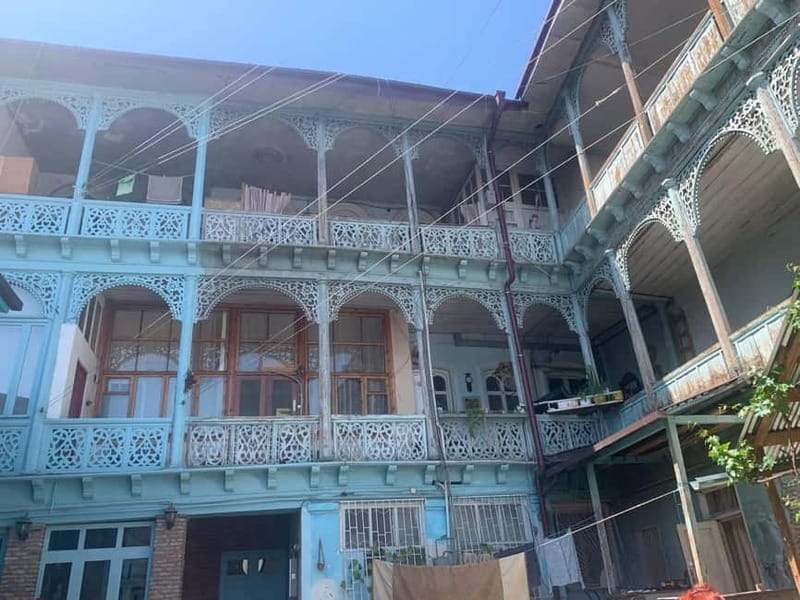
- The old town is explored on foot, through narrow streets, churches, caravanserais, walls, and small architectural details.
- The guide speaks English, German, Russian, and Byelorussian, with German receiving especially warm praise.
- The three-hour schedule is active, and comfortable shoes are not optional.
Starting beside the Falcon and Pheasant Fountain
The meeting point is the Monument Fountain Falcon and Pheasant, in Tbilisi’s historic center. This is a practical place to begin because the route quickly moves into the part of town where Tbilisi began roughly 20 centuries ago.
You can also ask about pickup at your hotel or apartment if it is not too far away. That arrangement is not automatic for every address, so send the location before you book or soon after. Starting at the monument keeps the tour focused on walking rather than spending the first part finding one another.
The first advantage of a private walk is simple: you are not tied to a large group’s rhythm. You can ask why a building matters, stop for a photograph, or request more time in one area. The tradeoff is that the guide may expect you to keep moving so the long route fits into three hours.
More History Tours in Tbilisi:
- Tbilisi: Guided Walking Tour of Historic City
★ 4.9 · 156 reviews - Mtskheta, Jvari, gori, uflistsikhe, history and panorama (group tours)
★ 4.5 · 107 reviews - Tbilisi old town & soviet heritage – Private driver-guided Tour
★ 5.0 · 83 reviews
Abanotubani and Tbilisi’s sulfur bath district
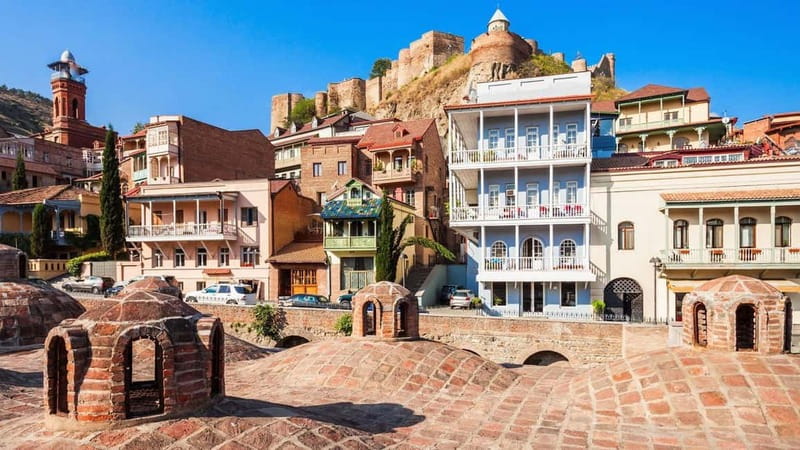
The tour opens in Abanotubani, the famous bath district. Tbilisi’s name is linked to its warm springs, and the baths help explain why this spot became the center of the city.
The domed roofs and brick exteriors make this one of the most recognizable parts of old Tbilisi. You will hear about the sulfur baths connected with the city’s origin, including the particularly ornate bathhouse associated with Alexander Pushkin and Alexandre Dumas. This is more than a quick photo stop. It gives you a reason for Tbilisi’s location and an early look at the city’s mix of Persian, Georgian, and other regional influences.
The bath district can be busy, and the streets are not always smooth. Pay attention to your footing while looking up at the domes and façades. The planned 30-minute visit gives the guide enough time to explain the area rather than simply point at the buildings.
Leghvtakhevi Waterfall in the city center

From the baths, the route reaches Leghvtakhevi Waterfall. The stop is brief, around five minutes, but it changes the feel of the walk. You move from historic buildings and bathhouse domes to a small natural feature tucked into the urban center.
This is a good place for a quick photograph and a pause before the climb toward Narikala. Do not expect a long nature walk. The attraction here is the contrast: a waterfall appears within the old city, close to streets, walls, and centuries-old buildings.
The short stop also shows why sturdy footwear matters. The route is not a flat promenade from beginning to end. You should be ready for walking surfaces that vary from paved streets to steps and sloping paths.
Narikala Fortress and the climb above Tbilisi
Narikala Fortress is the visual high point of the tour, both literally and figuratively. The walk includes scenic views along the way, then about 20 minutes for sightseeing and explanation at the fortress.
From this height, you can place the city’s main parts in relation to one another: the old town below, the river, the modern Bridge of Peace, and the hills around Tbilisi. The view helps turn a collection of streets into a city you understand. After this stop, you will recognize where you have been walking.
The fortress itself is a reminder that Tbilisi has long been a strategic city. Its walls and position above the old center make the site easy to read, even if your knowledge of Georgian history is limited.
The climb is also the clearest physical challenge. The tour is not suitable for people with mobility impairments, and you should not book it expecting an easy, level stroll. Wear comfortable shoes, bring water, and tell Alesia early if you need a slower pace. Since the tour contains many stops, a slower climb may mean less time at Freedom Square or Rustaveli Avenue later.
More Walking Tours in Tbilisi:
- Tbilisi Walking Tour Including Cable Car and Traditional Bakery
★ 5.0 · 1,310 reviews - Tbilisi: City Highlights Guided Walking Tour
★ 4.9 · 1,114 reviews - Tbilisi:Evening Walking & Talking Tour with Wine & Boat Ride
★ 5.0 · 572 reviews - Tbilisi: Evening Walking Tour with Wine & Boat Ride Options
★ 5.0 · 407 reviews
Metekhi Church and views across the river
The route continues to Metekhi St. Virgin Church, with roughly 10 minutes for a visit and explanation. The church occupies a prominent position above the river, giving this stop both religious and visual importance.
Metekhi is useful in the sequence because you have just seen Tbilisi from Narikala. Now you look back across the city from another historic position. The two viewpoints help you understand how the old center is arranged around the river and hills.
Ten minutes is enough for a focused introduction, not a long religious or architectural study. If you want detailed church history, ask direct questions. A private guide can adjust the explanation, but the entire route still has to fit into the allotted time.
The Bridge of Peace and the city’s modern face
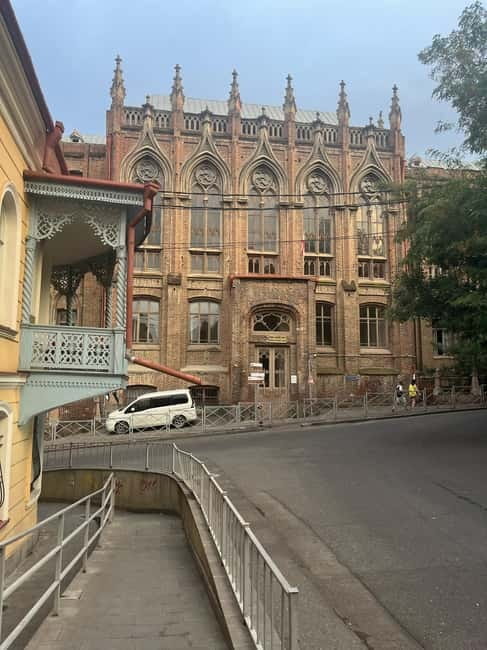
The Bridge of Peace brings you into present-day Tbilisi. Its modern design contrasts sharply with the old streets, churches, bathhouses, and fortress you have already seen.
The scheduled sightseeing time is about 20 minutes. That allows for photographs and a discussion of the bridge’s place in the city, rather than treating it as something to cross quickly. The structure is especially effective after the older parts of the route because the contrast is so clear.
I like this part of the walk because it prevents the tour from presenting Tbilisi as a museum city. You see a Georgian capital that has added bold modern architecture while keeping its old center in daily use. The bridge can also feel more striking from a distance than when you are standing directly on it, so listen for the guide’s suggestions about where to pause.
Patriarchate, Anchiskhati, and old Tbilisi’s churches
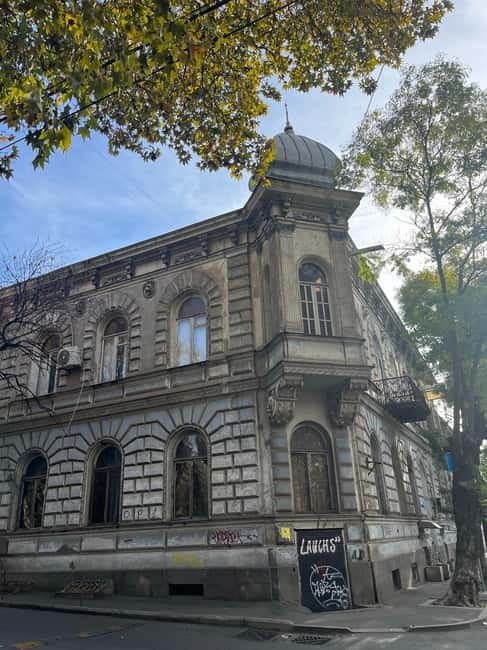
The walk then reaches the Patriarchate of Georgia, with around 10 minutes for sightseeing. This gives you a chance to connect the religious buildings you have already seen with Georgia’s wider church tradition.
Next comes Anchiskhati Basilica, described as the oldest church on the route and dating to the sixth century. The walk between these sights is part of the experience. You are not simply being driven between major monuments. You pass through the old center, where the scale shifts from major landmarks to doorways, walls, courtyards, and lanes.
Anchiskhati is a particularly valuable stop for anyone who wants more than postcard views. Its age gives the old town a long timeline, while the surrounding streets show how that past fits into the city people use today.
The route also includes Sioni Church, listed among the churches seen along the way. It is not given a separate timed stop, so you should think of it as part of the moving tour rather than a full interior visit. The same applies to the old city wall and the many caravanserais. These details reward attention, and a guide can point out what you might otherwise pass without noticing.
Meidan Bazaar, Sharden Street, and the small details
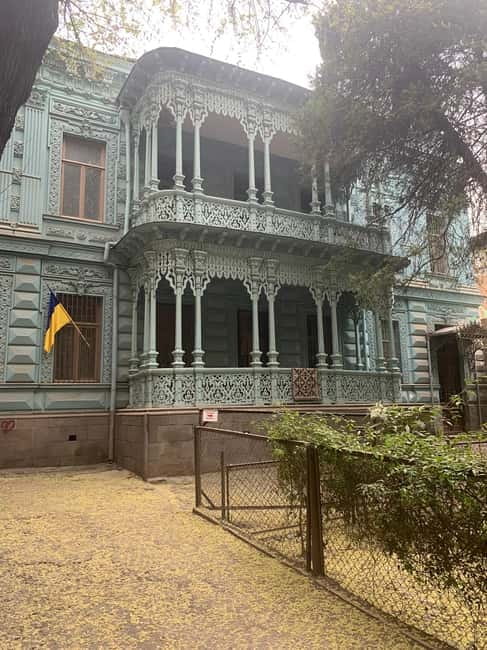
Meidan Bazaar and Sharden Street add a more social and commercial side to the old town. The route is not only about fortress walls and churches. It also shows the spaces where people traded, met, ate, and moved through the city.
You will also see the tamada monument, a tribute to the Georgian toastmaster. It is a small but telling detail, since Georgian dining culture places great importance on formal toasts and the person leading them.
The caravanserais are another worthwhile part of this section. Tbilisi’s position between regions made trade and travel central to its development, and caravanserais served people and animals moving through the city. Their surviving traces help you picture the old center as a working crossroads, not simply an attractive quarter for visitors.
A private guide is particularly useful here. The larger landmarks are easy to identify, but a doorway, fragment of wall, or old courtyard may have no obvious sign. Alesia’s strongest praise has centered on pointing out such overlooked details and explaining the life around them. Several guests also valued her willingness to answer questions and change the route to suit their interests.
Rezo Gabriadze’s theater and the Clock Tower

The Rezo Gabriadze Theater and its Clock Tower provide one of the walk’s most memorable visual stops. The theater is known for its distinctive character, and the clock tower gives the surrounding street an unusual focal point.
The guided portion here is short, about five minutes. That is enough to explain why the theater and tower matter, but not enough for an extended theater visit or performance. Treat it as an architectural and cultural stop along the walking route.
This is also a good reminder that Tbilisi’s appeal is not limited to grand monuments. The city’s personality often appears in playful façades, intimate lanes, and buildings that do not look important until someone explains them.
Freedom Square or an extended Rustaveli Avenue walk
The stated route can finish at Liberty Square, with around 10 minutes for sightseeing and explanation. Freedom Square is a natural endpoint because it marks the transition from the older center to the broader central city.
If you still have energy, the guide may continue along Rustaveli Avenue. This extension is flexible and can include the avenue’s theaters and museums. It is not a guaranteed fourth hour, so ask about your preferred finish at the beginning.
This flexible ending is useful for planning. If you have an evening reservation, want lunch, or feel tired after the fortress climb, Freedom Square is a sensible place to stop. If you want more central Tbilisi and still have time, Rustaveli Avenue gives the tour a wider finish.
How much value do you get for $47?
At $47 per person, the tour is not the cheapest way to walk around Tbilisi. Its value depends on the size of your private group and how much you want explanation rather than simple sightseeing.
You are paying for a three-hour guided route that combines major landmarks with smaller sites, plus the ability to ask questions and adjust the pace. Transportation is not included because this is a walking experience, and food and drinks are also extra. For a private group, the price can make sense if you want personal attention and a route shaped around your interests.
The tour covers a lot: baths, a waterfall, a fortress, churches, a bazaar, streets, monuments, a bridge, a theater, a clock tower, old walls, and possibly Rustaveli Avenue. That breadth is useful on a first day in Tbilisi, but it creates the main weakness. You may see many places without having long at each one.
One guest described the guide as very pleasant but felt the timing was somewhat tight. Another received an individual old-town walk in about two hours. I would treat that as a reason to agree on priorities before setting off. If Narikala and the baths matter most, say so. If you prefer churches and architecture, ask for more explanation there.
The guide, languages, and private format
The experience is led by Alesia Aliakseichyk, also referred to as Alisa in several guest comments. Her German received especially strong praise, and the tour is also offered in English, Russian, and Byelorussian.
The most repeated positive points are her friendly manner, clear explanations, patience with questions, and ability to show places you could easily walk past. Guests also valued her flexibility when they wanted a more individual route. That matters in Tbilisi, where an informed explanation can turn an ordinary lane or entrance into part of the city’s story.
The private format should suit couples, families, or small groups that dislike fixed group schedules. It also makes the route more personal. You can ask for less time at a viewpoint and more time in the old town, or stop at Freedom Square instead of extending along Rustaveli Avenue.
Who should book this Tbilisi walk?
I would choose this tour for a first visit, especially if you want a clear introduction to the old center without arranging several separate visits. It is also a good fit if you care about local details, church architecture, city views, and the story behind ordinary streets.
It suits active walkers who can manage hills and uneven ground. You should bring comfortable shoes and plan for a steady pace. The tour is not suitable for people with mobility impairments.
You may want something slower if your main goal is extended time inside churches, museums, or bathhouses. The route is broad rather than deeply focused on one subject. It works best as an orientation walk that gives you enough context to return to favorite places later.
Cancellation is free up to 24 hours before the start, and you can reserve now and pay later. Starting times depend on availability, so check the schedule before fixing other plans.
Should you book it?
Book this walk if you want a private, active introduction to Tbilisi with a guide who can explain overlooked details as well as famous sights. The combination of Abanotubani, Narikala, Metekhi, Anchiskhati, the Bridge of Peace, and the old lanes gives you a useful first picture of the city.
Skip it if you need a flat route, long visits at each stop, or a slow museum-style tour. For everyone else, the $47 price is reasonable when the private format matters and the group can keep a steady pace. Tell Alesia what you most want to see at the start, and you will get more from the three hours.
FAQ
How long does the historical walking tour of Tbilisi last?
The tour is scheduled for three hours. The finish is flexible, and it can end at Freedom Square or continue along Rustaveli Avenue, depending on your endurance and walking speed.
What language is the tour offered in?
The live guide can conduct the tour in English, German, Russian, or Byelorussian.
Is this a private group tour?
Yes. The experience is offered for a private group, allowing the route and explanations to respond to your questions and preferences.
Where does the tour begin?
The meeting point is the Monument Fountain Falcon and Pheasant in Tbilisi’s historic center. Hotel or apartment pickup may be possible if the address is not too far away, so provide the address in advance.
What should I bring?
Bring comfortable shoes. The tour includes walking through narrow old-town streets and an uphill route to Narikala Fortress.
Is the tour suitable for people with mobility impairments?
No. The tour is listed as unsuitable for people with mobility impairments because of the walking route, hills, and varied surfaces.
Are food and drinks included?
No. Food and drinks are not included, so you should budget for them separately if needed.
Just added in Tbilisi
- Wine Tasting feel the Difference of Qvevri or Classical Wine★ 4.4 · 10 reviews
- From Tbilisi: Kakheti and Kazbegi 2-Day 4X4 Jeep Tour pack★ 5.0 · 6 reviews
- Walking Tour in Old Tbilisi – Group Tour★ 4.5 · 8 reviews
- Uforgatable Kakheti Tour with wine tasting – in Georgia★ 4.9 · 5 reviews
- From Tbilisi: Uplistsikhe Caves and Mtskheta Town Day tour★ 5.0 · 2 reviews
- Tbilisi: Vintage Fashion and Secondhand Thrifting Tour★ 5.0 · 11 reviews
- Tbilisi Airport to Gudauri, Bakuriani, Batumi, Tbilisi★ 5.0 · 3 reviews
- Private Adorable City Tour of Tbilisi★ 5.0 · 3 reviews
Historical Tours, compared.

Mtskheta, Jvari, gori, uflistsikhe, history and panorama (group tours)
Read our review →
Tbilisi old town & soviet heritage – Private driver-guided Tour
Read our review →
Private Wine tasting in Historic Karalashvili Wine Cellar
Read our review →

Browse the lists this tour appears in