

Reviewed · HISTORICAL TOURS
Tbilisi: Guided Walking Tour of Historic City
Tbilisi rewards a slow walk. This three-hour tour links the old city’s churches, mosque, synagogue, sulfur baths, river views, and winding streets in one useful introduction. I especially like the focus on Georgia’s mixed religious heritage and the practical food, wine, and sightseeing advice built into the walk.
I also like the small-group format, limited to 10 people, which gives you a fair chance to ask questions and take photos. The main drawback is physical: uneven paving, stairs, and sloping streets can make the route tiring, despite the activity being listed as wheelchair accessible. At $14 per person, though, it offers strong value for a first look at Tbilisi.
In This Review
- Key points at a glance
- Why this $14 walk is a smart first step in Tbilisi
- Meeting at Rustaveli Avenue and entering the old city
- Meidan Bazar and the old Silk Road quarter
- Five religions and Tbilisi’s shared religious space
- Devil Street and the Georgian art of the toast
- The Bridge of Peace, Rike Park, and Europe Square
- The Berlin Wall Stone and the city’s changing politics
- Metekhi Church and King Vakhtang Gorgasali
- Abanotubani and Tbilisi’s sulfur bath tradition
- Samghebro Street, the waterfall, and quieter corners
- Guide style and what the feedback tells you
- Pace, access, languages, and booking details
- Who should book this Old Tbilisi walk?
- Should you book it?
- FAQ
- How long is the Tbilisi historic city walking tour?
- How much does the tour cost?
- Where does the tour start?
- Where does the tour finish?
- Which languages are available?
- What landmarks does the tour visit?
- Is the walking tour wheelchair accessible?
- What should I bring?
- Can I cancel or pay later?
Key points at a glance
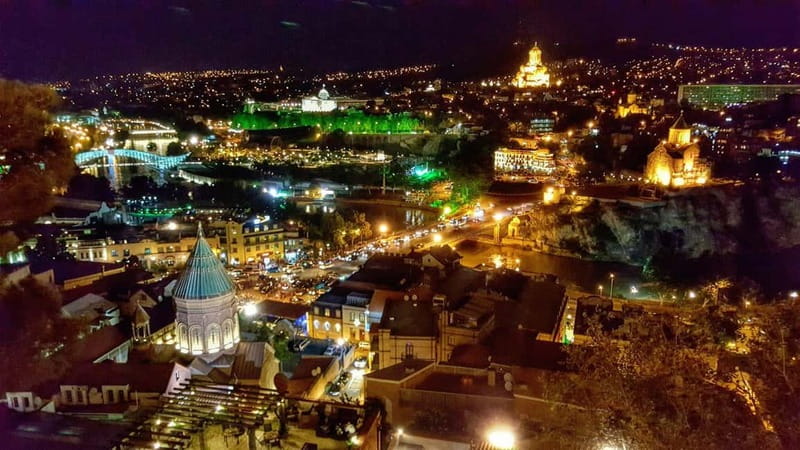
- Five faiths in one historic quarter: See how churches, a mosque, and a synagogue occupy the same part of Old Tbilisi.
- A guide-led route through the old city: Connect Meidan Bazar, Jan Shardeni Street, the Bridge of Peace, Metekhi Church, and Abanotubani in three hours.
- Sulfur baths with real local context: Learn why Tbilisi grew around its hot springs and what makes Abanotubani distinctive.
- Strong personal guidance: Sally receives repeated praise for her energy, clear explanations, food advice, and willingness to tailor the walk. Nick Z is also singled out for his command of local history.
- Useful for a short stay: The route gives you a quick sense of where to return for meals, wine, churches, shopping, and further sightseeing.
- Easy to book with flexibility: You can cancel up to 24 hours before departure for a full refund and reserve without paying immediately.
Why this $14 walk is a smart first step in Tbilisi
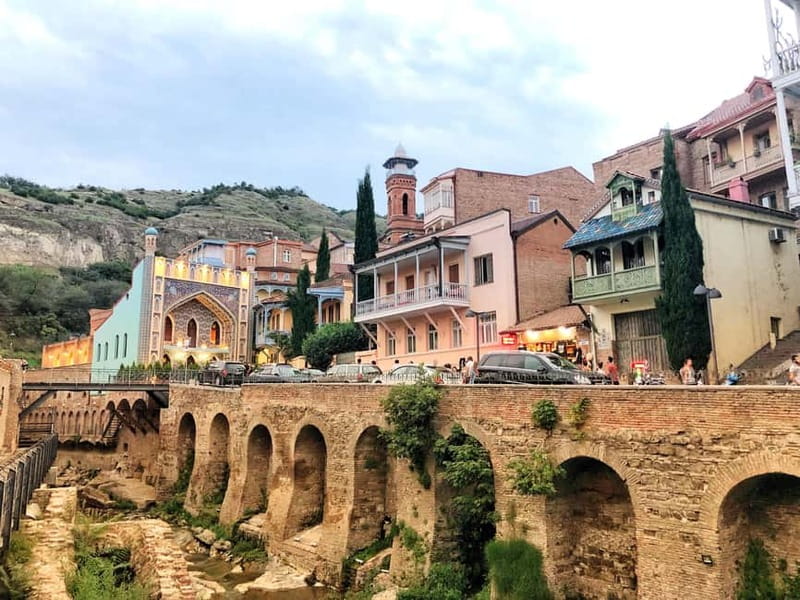
Tbilisi can feel confusing at first. The old city has steep lanes, courtyards, religious buildings, grand viewpoints, renovated squares, and layers of Georgian, Armenian, Persian, Russian, and modern influence. A map will show you where to walk, but it will not explain why the streets look the way they do.
That is the real value here. For $14, you get three hours with a local guide rather than simply ticking off monuments. The guide connects places that might otherwise seem unrelated: the old trading quarter, the statue of the toastmaster, a Soviet-era symbol of freedom, the city’s founding king, and the sulfur baths that gave Tbilisi its name.
The price is especially fair if you have only one day in the capital. River offers a useful example: the tour worked as a broad introduction during a short visit. You still need time afterward to explore inside churches, visit museums, eat slowly, and return to the areas you like best, but this walk helps you decide where to spend that time.
The small group matters, too. With no more than 10 participants and a minimum of two, the guide can usually answer questions without turning the experience into a moving lecture. The feedback points to relaxed pacing, regular stops, and time for photos. That makes the tour easier to follow than a nonstop march through the old streets.
More History Tours in Tbilisi:
- Mtskheta, Jvari, gori, uflistsikhe, history and panorama (group tours)
★ 4.5 · 107 reviews - Tbilisi old town & soviet heritage – Private driver-guided Tour
★ 5.0 · 83 reviews - Private Wine tasting in Historic Karalashvili Wine Cellar
★ 5.0 · 60 reviews
Meeting at Rustaveli Avenue and entering the old city
The meeting point is in front of the Magti Office at 20 Shota Rustaveli Avenue. Arrive about 10 minutes early. This is worth doing because central Tbilisi can be busy, and a late start may shorten the time available at the final stops.
From there, the route moves toward the historic center. The exact order of some smaller stops can vary, and several itinerary entries do not have names, but the main path is clear: Meidan Bazar, Jan Shardeni Street, the Bridge of Peace, Rike Park, Europe Square, Metekhi Church, Abanotubani, the waterfall area, and Samghebro Street.
You should wear comfortable shoes and bring water. The route is a genuine walking tour, not a sightseeing trip with a vehicle waiting at each stop. Rain does not automatically cancel it, so dress for the forecast.
Meidan Bazar and the old Silk Road quarter

Meidan Bazar is a good early stop because it introduces the commercial side of Old Tbilisi. The bazaar area recalls the time when the city connected trading routes across the region. Today, it is also a useful place to notice souvenirs, local products, and the way modern businesses occupy old spaces.
I like this part because the guide can explain the city through ordinary movement, not only famous monuments. Trade shaped Tbilisi’s streets, food, languages, and religious mix. The old bazaar is a natural bridge between the city’s past and the modern shops you see today.
Do not expect a long market visit or a shopping session. It is primarily a guided visit and photo stop. If you find something you want to buy, make a note of it and return later, since the group needs to keep moving.
Jan Shardeni Street brings a different mood. It is one of the better-known lanes in the old center, with restaurants, bars, and restored facades. The guide’s role here is useful because you can learn how the area has changed, rather than seeing it only as a pleasant place for a photograph.
Five religions and Tbilisi’s shared religious space
One of the most meaningful parts of the walk is the Five Religions Connecting Square. The idea is simple but unusual: a church, mosque, synagogue, and other religious sites are found close together, reflecting the city’s long record of different communities living side by side.
The exact buildings and religious labels should be confirmed with your guide on the day, but the point of the stop is clear. Tbilisi is not a city that can be understood through one faith or one historical period. Its identity comes from overlap, contact, and occasional tension among communities.
This stop rewards questions. Ask about which buildings are still active, how visitors should behave inside places of worship, and what parts of the old quarter retain their original purpose. Some church visits may be added or adjusted based on timing and group interest. Emma’s experience included extra church stops and a short wine tasting, but those additions should not be treated as guaranteed.
The Armenian Church near the end of the route adds another important layer. It is quieter than the main attractions, which makes it a good place to consider Tbilisi’s Armenian heritage without the noise of a major square. You may find the building more rewarding for its setting and cultural meaning than for a long formal visit.
More Walking Tours in Tbilisi:
- Tbilisi Walking Tour Including Cable Car and Traditional Bakery
★ 5.0 · 1,310 reviews - Tbilisi: City Highlights Guided Walking Tour
★ 4.9 · 1,114 reviews - Tbilisi:Evening Walking & Talking Tour with Wine & Boat Ride
★ 5.0 · 572 reviews - Tbilisi: Evening Walking Tour with Wine & Boat Ride Options
★ 5.0 · 407 reviews
Devil Street and the Georgian art of the toast
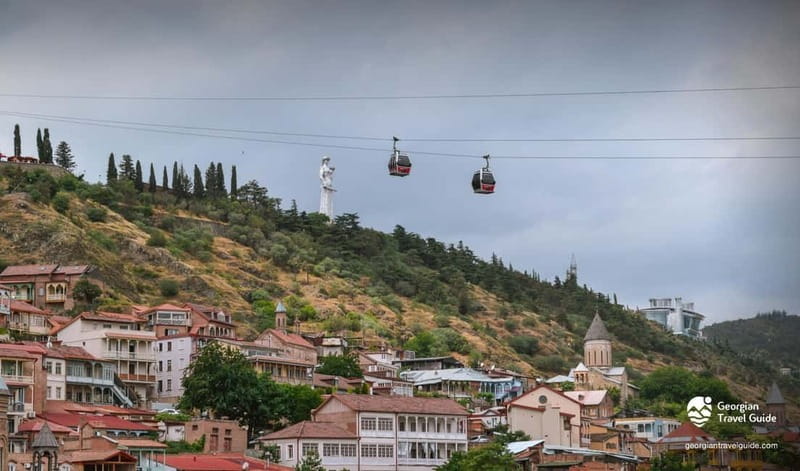
The stop known as Devil Street brings local legends into the walk. This is the sort of place that benefits from a person telling the story. Without a guide, it may look like an ordinary old lane. With context, its name and reputation become part of the city’s folklore.
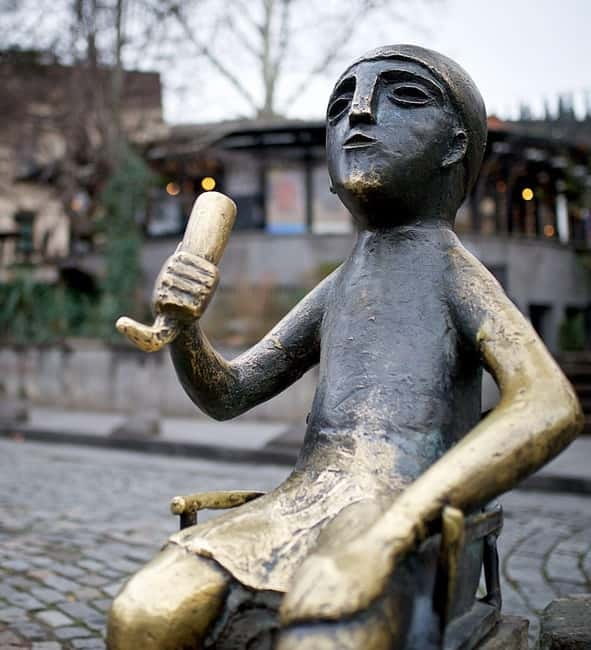
The tour then reaches the Tamada Sculpture, the statue of the toastmaster. Tamada refers to the person who leads a Georgian feast and guides the sequence of toasts. This is more than a decorative statue. It points to Georgia’s famous culture of hospitality, speechmaking, friendship, and wine.
You will probably hear about the role of toasts in Georgian social life and the importance of the person leading them. The stop also gives you a practical preview of why Georgian meals can take time. Food and drink are not treated as fuel here. They are occasions for conversation and ritual.
If you want to add wine tasting or lunch, the provider says this can be arranged in advance. That option makes sense if you want the tour to introduce Georgian food culture as well as the city’s buildings, but contact the provider before booking rather than assuming it is part of the standard $14 walk.
The Bridge of Peace, Rike Park, and Europe Square
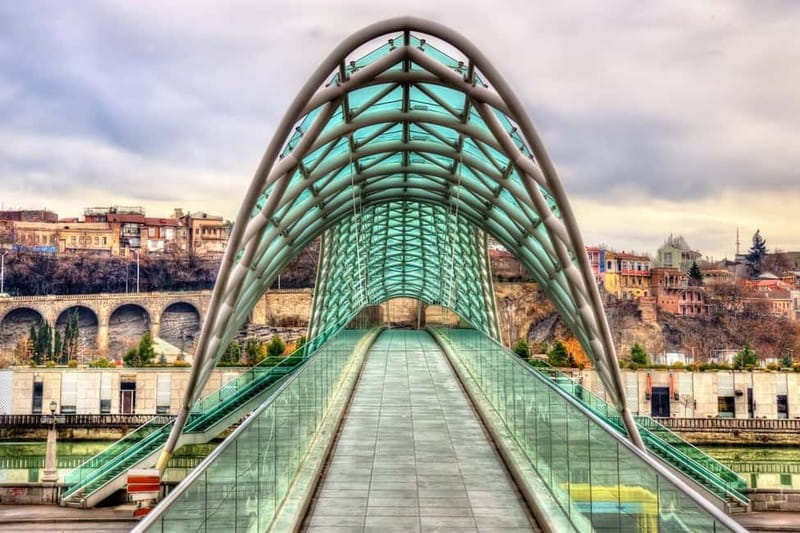
The Bridge of Peace is one of the city’s clearest contrasts. Its modern design crosses the Mtkvari River near the old quarter, while older streets and buildings press close around it. The guide can help you read the bridge as part of contemporary Tbilisi, not just as a photo stop.
Some people love the design; others find it out of place beside the old city. That disagreement is part of the appeal. You can make up your own mind while looking at how the bridge joins the older district to Rike Park.
Rike Park gives the walk a more open stretch. After narrow lanes, stairs, and old walls, the park offers room to pause and look across the river. Europe Square continues the modern civic side of the route and helps orient you around the riverfront.
These stops are particularly useful early in your stay. You will learn the relationship between the old center, the river, the park, and the newer parts of town. That mental map can save time later when you return alone.
The Berlin Wall Stone and the city’s changing politics
The Berlin Wall Stone is a small monument, but the subject it represents is large: freedom, division, and the political changes that shaped Europe and Georgia. It is easy to walk past without knowing what it means, so this is a good example of why a guide adds value.
Do not expect a large museum display. The stone is a brief stop within a wider walking route. Its power comes from the explanation and from placing a modern political symbol among much older buildings.
The tour’s historical discussion is not limited to distant centuries. Several participants appreciated learning about current life in Georgia and the country’s recent past as well as its older stories. If you are interested in how people understand Georgia today, ask questions here. The guide can provide a local point of view, while you should still treat any short walking tour as an introduction rather than a full political history lesson.
Metekhi Church and King Vakhtang Gorgasali
Metekhi St. Virgin Church is one of the route’s major sights. Set above the Mtkvari River, it gives you both a historic religious site and a strong view over the water and surrounding city.
Next to it is the statue of King Vakhtang Gorgasali, the ruler traditionally linked with the founding of Tbilisi. The story of the city’s origin is closely tied to the sulfur springs, so this stop prepares you for Abanotubani later in the walk.
This is one of the places where your guide’s storytelling matters most. A bare date and name will not tell you why the church occupies this position or why the king’s statue is important. Sally is often praised for making these connections clear and for answering questions without rushing the group. Nick Z is also noted for explaining the history of each place in a way that made familiar sights more meaningful.
The church area can involve steps and uneven ground. Take your time, especially if you are walking in warm weather or carrying a heavy daypack. The tour allows stops for photos, but it is still a group experience, so long private pauses may not be possible.
Abanotubani and Tbilisi’s sulfur bath tradition

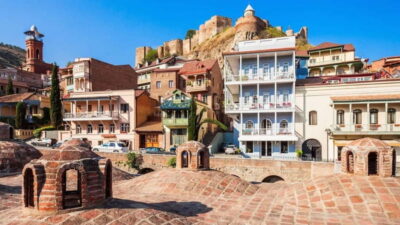
Abanotubani is perhaps the most atmospheric section of the route. The district is marked by domed brick roofs covering the sulfur baths, with hot water rising from underground springs.
The baths are central to Tbilisi’s origin story and remain one of the city’s best-known traditions. Your guide explains the connection between the springs and the founding of the capital, along with the role the bath district played in daily life.
This is a viewing and guided visit, not a standard bathing session. If you want to use a bath, plan that separately. The tour gives you context and helps you recognize the district, but it does not say that bath admission or a treatment is included.
The atmosphere can be busy around the main lanes, and the ground may be slick or uneven. Keep water handy and avoid wearing shoes that offer little grip. I would also save room in your day for a return visit if the bath district catches your interest, since three hours is not long enough to explore every corner at a relaxed pace.
Samghebro Street, the waterfall, and quieter corners
Samghebro Street is described as a less-traveled route with stories in its walls. That makes it a useful counterpoint to the better-known bridge and bazaar areas. You get a chance to see how Old Tbilisi feels away from its main photo spots.
The route also includes the Bridge of Love and Leghvtakhevi Waterfall. These stops add variety: a small crossing, a narrow natural setting, and a change from grand churches and civic monuments. The waterfall is reached along paths that may include stairs or uneven surfaces, so it is not the easiest part for anyone with limited mobility.
Several stops in the supplied route have no printed names. That suggests the guide may include brief pauses at additional courtyards, streets, or viewpoints, but I would not count on a particular unnamed location. Think of these gaps as room for the guide to respond to the group, local conditions, or questions.
The walk finishes at 1 Samghebro Street. Ending in the old city is convenient because you can continue to dinner, revisit a church, look for a wine shop, or ask the guide for directions and suggestions before leaving.
Guide style and what the feedback tells you
The clearest strength of this experience is the human guide. Sally receives repeated praise for her warmth, humor, energy, patience, and strong command of Georgian history and culture. She is also praised for giving useful advice on food, shopping, sightseeing, and places to avoid, including warnings about common tourist scams.
That practical side may be as useful as the monuments. A good first-day guide can help you avoid wasting an evening at a poor restaurant or missing a worthwhile part of the old city. Specific recommendations have included Georgian food and khinkali, as well as wine experiences.
The guide’s style seems flexible. One family said Sally kept two boys, aged 11 and 13, engaged. Other comments describe a relaxed pace with time for questions and photographs. The tour can also be adjusted around group interests when possible.
There is one small caution. One person found the amount of information almost too much to process and suggested that visual aids could make the history easier to follow. If you prefer a light walk with only a few facts, tell the guide at the start. If you want detail, ask questions and take notes.
Sally is not the only guide associated with the activity. Nick Z is also praised for making history clear and turning a short visit into a useful introduction. Your guide may vary, and the quality of the experience will naturally depend on who leads your departure.
Pace, access, languages, and booking details
The activity lasts three hours and is offered in English and Russian. English is the normal language, while other languages may be available if requested ahead of time.
The route is listed as wheelchair accessible, but the practical notes also warn about stairs and uneven surfaces and say it is not recommended for people with limited mobility. Those details do not fully align, so contact the provider before booking if access is important to you. Ask about the specific departure route and current conditions.
Bring water and wear comfortable shoes. The walk runs rain or shine, so bring suitable clothing. A small group of no more than 10 people is a good fit for a historic district where large groups can block narrow lanes.
You can cancel up to 24 hours before the tour for a full refund. You can also reserve now and pay later, which is useful if your schedule in Tbilisi is still shifting. A minimum of two participants is required.
Who should book this Old Tbilisi walk?
I would book this tour at the beginning of a Tbilisi visit, especially if I had one or two days in the city. It gives you enough history to make later sightseeing more rewarding and enough practical advice to shape your meals and free time.
It suits first-time visitors, history fans, families with older children, solo visitors who like a small group, and anyone who wants local advice without paying for a private tour. It also works for people who have already seen some of the sights alone but want the stories behind them.
I would think twice if you dislike walking on uneven streets, need a fully step-free route, or want long interior visits at every church. The tour covers a lot in three hours, so it favors breadth, stories, and orientation over extended time at one monument.
Should you book it?
At $14, this is an easy recommendation for most first-time visitors who can manage three hours on foot. The strongest reasons to book are the small group, the mix of old and modern Tbilisi, the religious history, and the practical advice from guides such as Sally and Nick Z.
Book it early in your stay, arrive 10 minutes ahead, and treat the route as your introduction rather than your entire Old Tbilisi experience. If you want a bath, lunch, or wine tasting, arrange that separately or ask in advance about an add-on. With a 4.9 rating from 156 bookings, the experience has a strong record, but the uneven streets and information-heavy style are real considerations.
FAQ
How long is the Tbilisi historic city walking tour?
The tour lasts three hours.
How much does the tour cost?
The price is $14 per person.
Where does the tour start?
The meeting point is in front of the Magti Office at 20 Shota Rustaveli Avenue.
Where does the tour finish?
The tour finishes at 1 Samghebro Street.
Which languages are available?
The tour is conducted in English and Russian. Other languages may be available on request with advance notice.
What landmarks does the tour visit?
The route includes Meidan Bazar, Jan Shardeni Street, the Tamada Sculpture, the Bridge of Peace, Rike Park, Europe Square, Metekhi Church, Abanotubani, the Bridge of Love, Leghvtakhevi Waterfall, Samghebro Street, and other historic stops.
Is the walking tour wheelchair accessible?
The activity is listed as wheelchair accessible, but the route includes stairs and uneven surfaces and is not recommended for people with limited mobility. Contact the provider before booking to discuss your needs.
What should I bring?
Bring water and wear comfortable shoes. Since the tour runs rain or shine, dress appropriately for the weather.
Can I cancel or pay later?
You can cancel up to 24 hours in advance for a full refund. You can also reserve your place and pay later.
Just added in Tbilisi
- Wine Tasting feel the Difference of Qvevri or Classical Wine★ 4.4 · 10 reviews
- From Tbilisi: Kakheti and Kazbegi 2-Day 4X4 Jeep Tour pack★ 5.0 · 6 reviews
- Walking Tour in Old Tbilisi – Group Tour★ 4.5 · 8 reviews
- Uforgatable Kakheti Tour with wine tasting – in Georgia★ 4.9 · 5 reviews
- From Tbilisi: Uplistsikhe Caves and Mtskheta Town Day tour★ 5.0 · 2 reviews
- Tbilisi: Vintage Fashion and Secondhand Thrifting Tour★ 5.0 · 11 reviews
- Tbilisi Airport to Gudauri, Bakuriani, Batumi, Tbilisi★ 5.0 · 3 reviews
- Private Adorable City Tour of Tbilisi★ 5.0 · 3 reviews
Historical Tours, compared.
Mtskheta, Jvari, gori, uflistsikhe, history and panorama (group tours)
Read our review →
Tbilisi old town & soviet heritage – Private driver-guided Tour
Read our review →
Private Wine tasting in Historic Karalashvili Wine Cellar
Read our review →

Browse the lists this tour appears in