
Reviewed · MTSKHETA AND GORI TOURS
Mtskheta, Jvari, gori, uflistsikhe, history and panorama (group tours)
Four layers of Georgian history fit into one day. This inexpensive group trip links Jvari Monastery, Mtskheta, the cave city of Uplistsikhe, and possibly Gori, giving you a broad look at Georgia beyond Tbilisi. I especially like the superb view from Jvari and the chance to compare Georgia’s early Christian traditions with the much older pagan world carved into Uplistsikhe.
I also like the small-group format, with a maximum of 15 people, and the chance to travel with guides such as Luka, Paata, Emilia, George, or Tornike, who have received especially warm praise. The main concern is inconsistent guide quality and language balance. Several English-speaking customers received clear, helpful explanations, while others felt that Russian commentary was much longer and the English portion too brief.
In This Review
- Key points before you book
- Why this day trip works from Tbilisi
- Jvari Monastery and the view over two rivers
- Mtskheta and Svetitskhoveli Cathedral
- Uplistsikhe, Georgia’s carved stone city
- The local restaurant stop
- Gori and the optional Stalin Museum
- Guides, language, and the group experience
- Is the $19 price a good deal?
- Timing, comfort, and what to bring
- Who should book this tour?
- FAQ
- How long does the tour last?
- Where does the tour start?
- Is the tour available in English?
- How many people can join the group?
- Are the Jvari and Mtskheta entrance tickets included?
- Is the Uplistsikhe entrance fee included?
- Is the Stalin Museum included?
- Is lunch included?
- What happens if the weather is poor?
Key points before you book
- Jvari gives you the day’s finest panorama, with Mtskheta below and the Aragvi and Kura rivers meeting in the distance.
- Svetitskhoveli Cathedral is the emotional high point for many visitors, especially if you are interested in Georgian Christianity.
- Uplistsikhe requires extra payment, listed at 17 GEL in the practical details, though another tour description gives 15 GEL.
- The Stalin Museum in Gori is optional, and its entrance fee is also listed as 17 GEL in the practical details.
- Language quality can vary, so ask ahead whether your assigned guide will give full explanations in English.
- Comfortable shoes matter, especially at Uplistsikhe, where the stone paths and cave passages can be uneven.
Why this day trip works from Tbilisi
Tbilisi is a good base, but Georgia’s story makes more sense when you leave the capital. This excursion takes you through several distinct periods in one long day: pagan worship at Uplistsikhe, Georgia’s early Christian identity in Mtskheta and Jvari, and the complicated twentieth-century legacy of Joseph Stalin in Gori.
The advertised price is only $19 per person, which is excellent value for transport and a guide if the full route operates as planned. You are getting roughly nine hours outside Tbilisi, with a group capped at 15 people. That is not a private tour, but it is more manageable than a large coach excursion.
The low base price needs a little arithmetic. The entrance fee for Uplistsikhe is extra, and the Stalin Museum is also extra if the group chooses to visit. The supplied details list both at 17 GEL, while the itinerary text lists 15 GEL for each, so confirm the current amount before setting out. Lunch is also paid separately.
The meeting point is at 3 Vakhtang Gorgasali Street, with a 9:00 am start and a return to the same meeting point. Pickup arrangements can involve a short wait, including around Liberty Square, so do not plan a tight appointment immediately after the tour.
More History Tours in Tbilisi:
- Tbilisi: Guided Walking Tour of Historic City
★ 4.9 · 156 reviews - Tbilisi old town & soviet heritage – Private driver-guided Tour
★ 5.0 · 83 reviews - Private Wine tasting in Historic Karalashvili Wine Cellar
★ 5.0 · 60 reviews
Jvari Monastery and the view over two rivers
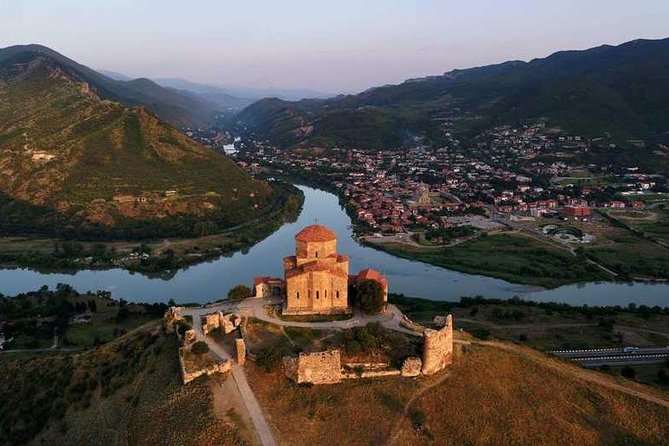
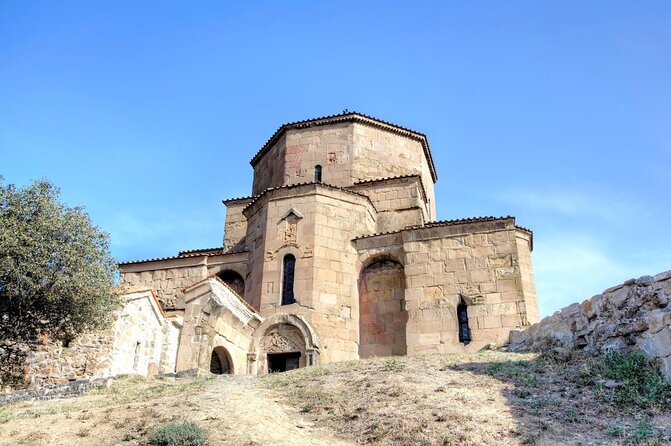
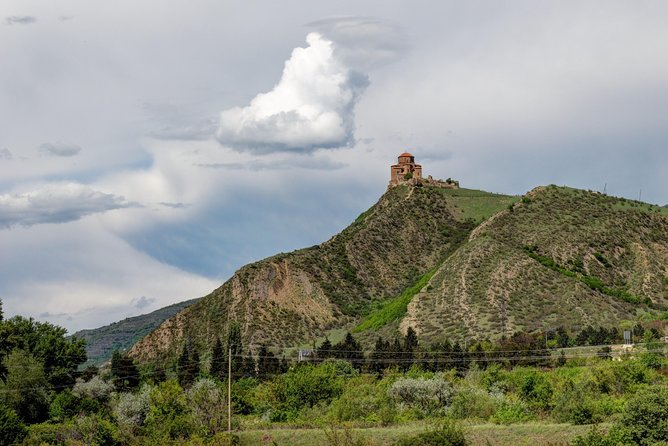
Jvari is the first major stop, and it earns that early position. The sixth-century monastery sits high above Mtskheta, where you get a wide view over the old Georgian capital and the meeting of the Aragvi and Kura rivers.
The panorama is the main prize. From the hill, Mtskheta appears below as a compact historic center, framed by surrounding hills and river valleys. The view also connects directly to Georgian literature. The route recalls the setting described by Mikhail Lermontov in his poem Mtsyri, while the names of other writers associated with the area include Pushkin, Lermontov, Tchaikovsky, Alexandre Dumas, and Tolstoy.
You are scheduled to spend about an hour here. That is enough for the view, the church exterior, and a look inside if access is open, but it is not generous if you want a slow photographic session. Stay close to the guide and keep an eye on the time. The group later has several major stops, and delays early in the day can make the cave city feel hurried.
Jvari is also a religious site, not simply a viewpoint. You will hear about Christianity in Georgia and the role of the monastery in the country’s early Christian story. If you are not Christian, the visit still has value as an introduction to Georgian architecture, belief, and place.
Mtskheta and Svetitskhoveli Cathedral
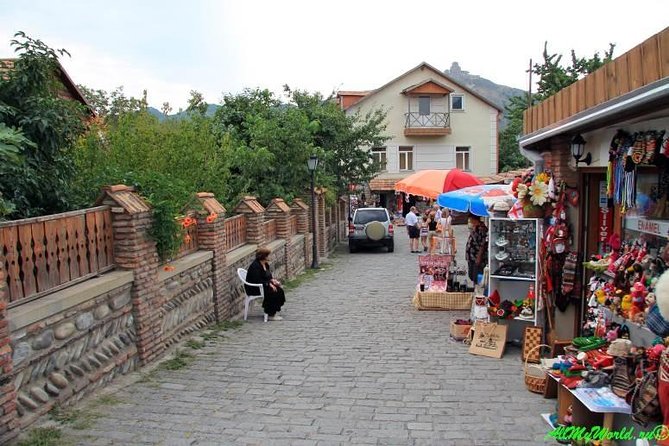
Mtskheta is one of the most important stops on the route. The town served as an early center of Georgian Christianity, and Svetitskhoveli Cathedral remains the patriarchal cathedral of the Georgian Orthodox Church.
The name Svetitskhoveli is commonly translated as Pillar of Life-Giving. Inside, the guide explains the cathedral’s religious importance and the events connected with its past. Georgian tradition associates the cathedral with the tunic of Jesus Christ, the mantle of the Prophet Elijah, and the relics of Saint Andrew the First-Called.
You are allowed about an hour here. That gives you time to appreciate the cathedral and absorb the setting without turning the visit into a rushed photograph-and-go stop. Of all the churches on this route, Svetitskhoveli is the one most likely to leave the strongest impression, especially if you enjoy working out how a building functions as both a place of worship and a national symbol.
Dress and behavior should be respectful. This is an active Orthodox religious site, so modest clothing is the sensible choice. The cathedral can be visually powerful even if you know little about Georgian Christianity, but the quality of the explanation makes a real difference. Guides such as Paata, Luka, and Tornike have been praised for making the history easy to follow.
The order of the churches can vary in practice. The stated route places Jvari first and Mtskheta afterward, while some accounts describe Mtskheta later in the day. Treat the sequence as flexible, but make sure both church visits are confirmed when you board.
Uplistsikhe, Georgia’s carved stone city
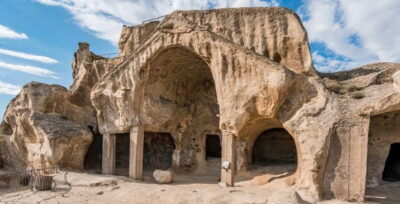
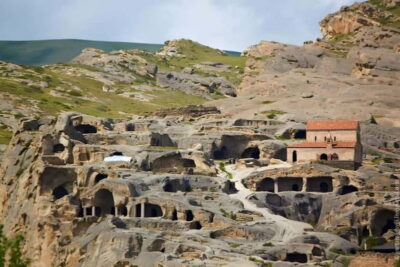
Uplistsikhe changes the mood completely. Instead of a functioning cathedral, you walk through an ancient rock-cut settlement dating from the end of the second millennium BC to the beginning of the first millennium BC, as described in the tour material.
The site contains carved rooms, passageways, living spaces, utility areas, and religious places. As you move through the stone corridors, the guide connects the remains with pagan worship and ritual life. You also hear about Uplistsikhe’s links with ancient states such as Urartu and Media, along with the settlement’s period of growth and later decline.
The setting is as important as the archaeology. Uplistsikhe offers broad views over the Kura Valley, and the mixture of caves, exposed rock, and open sky makes it unlike the churches at Mtskheta and Jvari. A small church near the top is especially appealing, according to the detailed comments from the tour experience.
You are scheduled to spend about two hours and 20 minutes in this part of the day, including a meal at a local restaurant. That sounds comfortable on paper, but the walking time can feel short when the group is large, the site is busy, or the schedule has slipped. One of the clearest warnings from the feedback is that some people felt they saw very little of Uplistsikhe because the visit moved too quickly.
Wear shoes with a firm sole. Comfortable clothing is also important. The site has stone surfaces and uneven routes, and you will get more from it if you can walk without worrying about every step. Good weather matters here, since much of the experience depends on being outdoors.
More things to do in Tbilisi:
- Tbilisi: Day Trip to Kazbegi, Gudauri, Gergeti, and Ananuri
★ 4.9 · 3,203 reviews - Day Trip to Kakheti Wine Region Including 9 Wine Tastings
★ 5.0 · 2,774 reviews - Highlights of Caucasus Mountains-Jinvali,Ananuri,Gudauri,Kazbegi(Group tour)
★ 5.0 · 2,682 reviews - From Tbilisi: Kakheti Wine Region Tour with 9 Wine Tastings
★ 4.9 · 2,541 reviews
The local restaurant stop
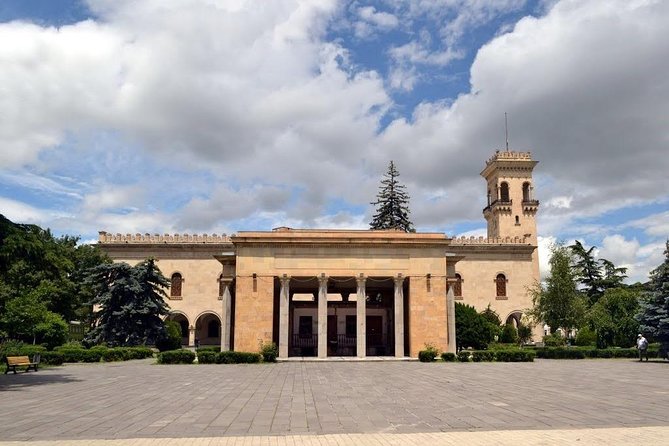
The meal stop is included as part of the day’s route, but the restaurant bill is not included in the tour price. The setting gives you a chance to try local products and take a proper break after walking around Uplistsikhe.
Food quality appears to be variable. Some people appreciated the restaurant as a welcome part of the day, while one detailed account found the food overly oily and the service attitude disappointing. I would treat this as a convenient group lunch rather than a carefully chosen food tour.
If Georgian food is a major reason for booking, keep expectations measured. The real value of the meal stop is the pause, not a guaranteed culinary highlight. You may want to carry water and a small snack, particularly if you prefer not to rely entirely on the restaurant schedule.
Gori and the optional Stalin Museum
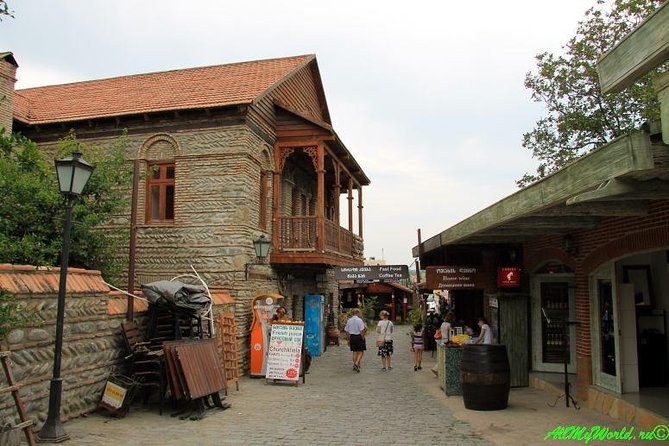
Gori adds a very different kind of historical subject. It is the hometown of Joseph Stalin, and the museum presents his life through preserved personal belongings, furniture, and a sculpture. A museum guide conducts the visit.
This stop is optional and depends on the group’s wishes. The route description allows about an hour, but the extra ticket is not included. The practical details list the Stalin Museum at 17 GEL, while the itinerary says 15 GEL, so ask the guide for the current price.
The museum can be uncomfortable, and that is part of its value. It presents Stalin as a major Georgian historical figure, but the wider record of his rule includes mass repression and deaths. The supplied comments show a real split in reactions: some people found the museum interesting as an honest historical stop, while others struggled with its presentation of a dictator.
I would not book this tour solely for the Stalin Museum. Its inclusion depends on group interest, and the balance of time may favor the churches and Uplistsikhe. If you want to visit Gori independently or need to be dropped there, confirm that arrangement before booking. One serious complaint came from someone expecting Gori to be the final drop-off point and finding that the schedule did not meet that expectation.
Guides, language, and the group experience
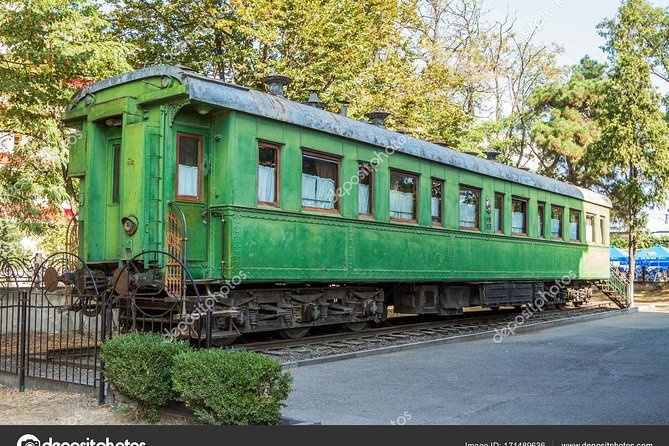
The strongest praise goes to individual guides. Luka was credited with turning the day into a memorable history lesson, while Paata was praised for combining warm treatment with strong explanations. Emilia, George, and Tornike also received positive comments for professionalism, easy explanations, helpfulness, and a friendly manner.
That personal element matters on a route like this. Jvari is more than a hilltop church, Mtskheta is more than a photogenic cathedral, and Uplistsikhe can look like a pile of caves without context. A good guide links the places together and gives you a reason to care.
The warning is just as important. Some English-speaking participants found the explanations short or basic, especially when the guide gave fuller commentary in Russian. Two highly negative accounts also raised concerns about rude behavior, phone use, and driving safety. Those complaints conflict with the positive reports, which suggests that the assigned guide can make a major difference.
The tour is offered in English, but the company’s guides speak English and Russian, and the actual balance may vary. If you need detailed English commentary, contact the provider before paying and ask for the expected guide and language arrangement. Requesting a particular guide cannot be guaranteed from the supplied information, but asking about names such as Luka, Paata, Emilia, George, or Tornike may help you understand who is scheduled.
A maximum of 15 people keeps the group fairly small, though it is still large enough for delays at entrances, photo stops, and narrow cave paths. Stay aware of the meeting point and do not wander far ahead or behind at Uplistsikhe.
Is the $19 price a good deal?
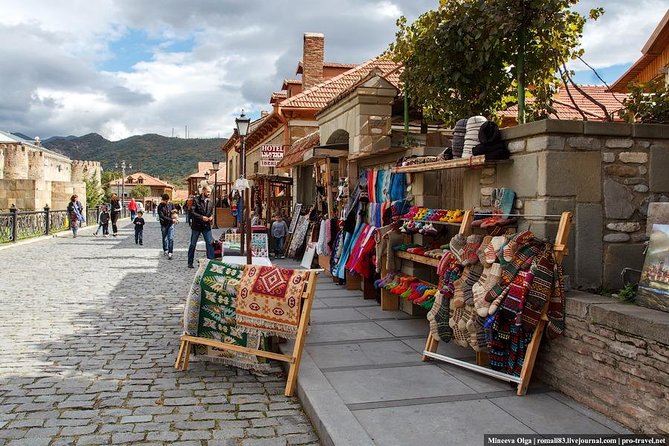
Yes, with conditions. At $19, the tour offers unusually broad coverage: two important Christian sites, an ancient rock settlement, transport from Tbilisi, and guide service. For someone with only a few days in Georgia, that range is useful.
The price is not the final cost. Add the Uplistsikhe entrance fee, possibly the Stalin Museum ticket, and the separately paid meal. You should also allow for the fact that a nine-hour group day is tiring. The value is strongest if you want to see several major sites in one outing and do not want to arrange transport between them.
The value is weaker if you prefer slow visits, long meals, or detailed museum interpretation. A private trip would give you more control, but it would cost more. This group option is best viewed as an affordable introduction to the region, not a leisurely archaeological or religious study tour.
Timing, comfort, and what to bring
The start time is 9:00 am, and the full experience is listed at about nine hours. That means much of the day is spent in transport between Tbilisi, the church sites, Gori, and Uplistsikhe.
Bring comfortable shoes, water, sun protection, and clothing suitable for church visits. Since the tour requires good weather, a rainy forecast could affect the day, especially at Jvari and Uplistsikhe. If poor weather causes cancellation, you can be offered another date or a full refund.
Keep your schedule flexible after returning to Tbilisi. Traffic, group decisions, the optional museum, and time at Uplistsikhe can all affect the finish. The tour ends back at the meeting point, but no exact return time is provided.
Who should book this tour?
I would recommend it to you if you want a broad introduction to central Georgian history at a low price. It suits first-time visitors based in Tbilisi, people who enjoy moving between several sites in one day, and anyone who wants both Christian landmarks and ancient pre-Christian archaeology.
It is also a good match if you are comfortable with a group schedule and can accept that one guide may be more effective than another. The positive experiences show how much Luka, Paata, Emilia, George, or Tornike can add when the commentary is clear and the group is well managed.
I would hesitate if full English commentary is essential, if you dislike optional stops decided by group vote, or if you want to spend unhurried time at Uplistsikhe. Ask about the day’s guide, language balance, ticket prices, Gori’s place in the route, and the expected return time before booking.
Overall, this is an appealing bargain with a strong route and uneven execution. Book it for the sites and the price, but protect yourself from surprises by confirming the guide, language, extra fees, and schedule in advance.
FAQ
How long does the tour last?
The tour is listed as approximately nine hours, beginning at 9:00 am and returning to the original meeting point in Tbilisi.
Where does the tour start?
The ticket redemption point is 3 Vakhtang Gorgasali Street, Tbilisi 0105, Georgia.
Is the tour available in English?
Yes. The experience is offered in English, although the guides also speak Russian and the amount of English explanation can vary.
How many people can join the group?
The maximum group size is 15 people.
Are the Jvari and Mtskheta entrance tickets included?
The tour details state that admission is included for the Jvari Monastery and the Mtskheta church visit.
Is the Uplistsikhe entrance fee included?
No. Uplistsikhe requires an additional ticket. The practical information lists the price as 17 GEL, while another part of the tour details lists 15 GEL.
Is the Stalin Museum included?
No. The museum visit is optional and depends on the group’s wishes. The practical information lists an additional fee of 17 GEL, while the itinerary lists 15 GEL.
Is lunch included?
No. The group visits a local restaurant, but the meal is paid separately.
What happens if the weather is poor?
The experience requires good weather. If it is canceled because of weather, you can be offered another date or a full refund.
Just added in Tbilisi
- Wine Tasting feel the Difference of Qvevri or Classical Wine★ 4.4 · 10 reviews
- From Tbilisi: Kakheti and Kazbegi 2-Day 4X4 Jeep Tour pack★ 5.0 · 6 reviews
- Walking Tour in Old Tbilisi – Group Tour★ 4.5 · 8 reviews
- Uforgatable Kakheti Tour with wine tasting – in Georgia★ 4.9 · 5 reviews
- From Tbilisi: Uplistsikhe Caves and Mtskheta Town Day tour★ 5.0 · 2 reviews
- Tbilisi: Vintage Fashion and Secondhand Thrifting Tour★ 5.0 · 11 reviews
- Private Adorable City Tour of Tbilisi★ 5.0 · 3 reviews
- Tbilisi Airport to Gudauri, Bakuriani, Batumi, Tbilisi★ 5.0 · 3 reviews
Mtskheta and Gori Tours, compared.
Mtskheta, Jvari, Gori and Uplistsikhe Day Tour
Read our review →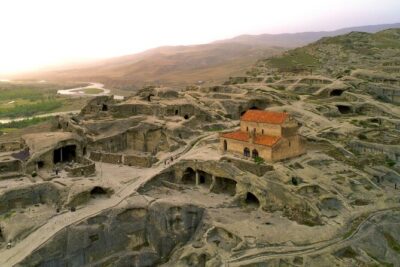
Mtskheta Jvari Bazaar, Chronicles of Georgia & Wine
Read our review →
Mtskheta,Jvari,Bazaar,wine tasting,Chronicles of Georgia
Read our review →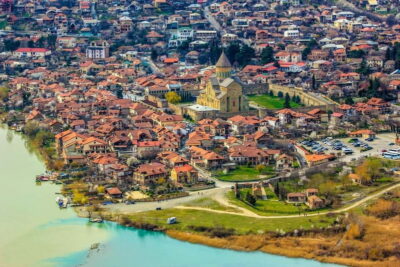
The Chronicles of Georgia, Jvari & Mtskheta Tour
Read our review →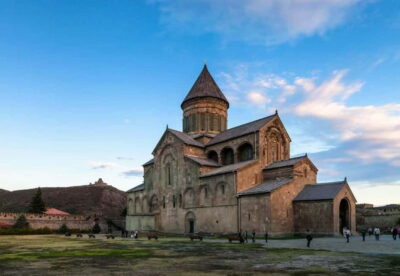
Browse the lists this tour appears in