
Reviewed · WORKSHOPS
Jewelry master-class
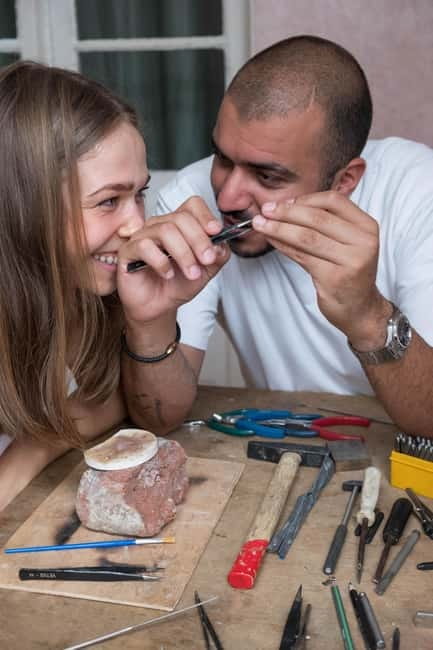
Silver becomes a Tbilisi keepsake. This three-hour jewelry master-class lets you make a ring, pendant, or pair of earrings from start to finish. I like the private-group format, which should give you room to ask questions and shape the work at your own pace. I also like the chance to work inside a 19th-century house in the historic heart of Tbilisi.
The main thing to watch is the extra silver charge. The $106 workshop fee covers the instruction and making process, but your silver is weighed and charged separately at the market rate on the day. That makes the final cost less fixed than the headline price suggests.
The session is practical rather than decorative. You will cut, roll, melt, solder, texture, whiten, sand, and polish the metal yourself. The result is not a souvenir picked from a shelf. It is a small object carrying your own design choices, and perhaps an inscription or memorable date.
In This Review
- Key points to know before booking
- Starting at the PSP pharmacy in old Tbilisi
- The first hour: learning how silver changes shape
- Cutting and forming your chosen design
- Adding texture, letters, and a personal date
- Soldering the parts into one piece
- Whitening, sanding, and polishing to a mirror finish
- What the $106 price really covers
- Who will enjoy Aquarius jewelry and workshops
- Useful planning advice for the three-hour session
- Should you book this Tbilisi jewelry class?
- FAQ
- Where does the jewelry class meet?
- How long does the activity last?
- How much does the workshop cost?
- How is the silver charge calculated?
- How much silver does a ring usually use?
- Can I bring my own silver?
- What jewelry can I make?
- Is the class available in English?
Key points to know before booking
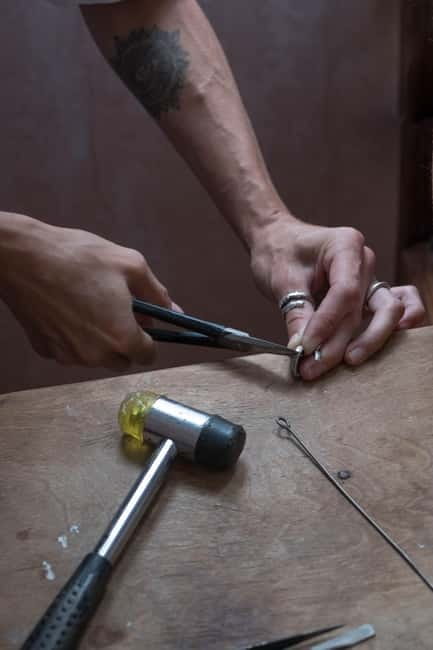
- Three hours of hands-on work: You take part in each major stage, from shaping silver to polishing the finished piece.
- Choose your own jewelry: Make a ring, pendant, or earrings, then add texture, letters, or a date.
- Silver costs extra: Small rings usually weigh about 4 to 6 grams, while larger or more detailed rings tend to weigh 5 to 8 grams.
- A historic Tbilisi setting: The workshop is in a house from the 19th century in the old part of the city.
- Private instruction in two languages: The class is offered in English or Russian for a private group.
- Adults only: The workshop is not suitable for children under 18.
Starting at the PSP pharmacy in old Tbilisi
The meeting point is a PSP pharmacy. From there, the instructor takes you to the workshop, so you do not need to search for a private studio in the old city on your own.
That small meeting detail matters in Tbilisi, where old streets can twist, change names, and become confusing after a few turns. It also gives the class a clear beginning. You meet in a familiar public spot, then walk together to the workroom.
The setting is part of the appeal. You will work in a house dating from the 19th century, rather than in a modern activity center built only for tourists. The supplied information does not promise a formal architectural tour, so you should think of the building as an atmospheric setting for the class, not a separate sightseeing stop.
The historic location also makes this easy to pair with a day spent exploring central Tbilisi. Keep in mind that the activity itself lasts three hours. If you want time for lunch, old-city sights, or a second appointment, allow a comfortable gap around the class.
More things to do in Tbilisi:
- Tbilisi: Day Trip to Kazbegi, Gudauri, Gergeti, and Ananuri
★ 4.9 · 3,203 reviews - Day Trip to Kakheti Wine Region Including 9 Wine Tastings
★ 5.0 · 2,774 reviews - Highlights of Caucasus Mountains-Jinvali,Ananuri,Gudauri,Kazbegi(Group tour)
★ 5.0 · 2,682 reviews
The first hour: learning how silver changes shape
The class begins with the material itself. You will work with silver and learn how 999 silver is turned into 925 sterling silver. The instructor then shows you how to press the metal into the shape you need using rollers.
This is useful because jewelry making can look simple from the outside. A ring appears to be only a narrow strip of metal, but its size, thickness, curve, and joins all matter. The rolling stage helps prepare the silver for the piece you have chosen and gives you a direct sense of how much work sits behind a finished item.
You will also learn how to create the correct ring size if you choose to make a ring. That is one of the most practical parts of the session. A beautiful ring that does not fit is a disappointing souvenir, so measuring and shaping the band correctly is more important than rushing toward decoration.
The class does not limit you to one fixed design. You can make a ring, pendant, or earrings, then develop your own shape. I would arrive with a simple idea rather than a highly detailed plan. You will be handling tools and learning several techniques, so a design that can actually be finished in three hours is the sensible choice.
Cutting and forming your chosen design
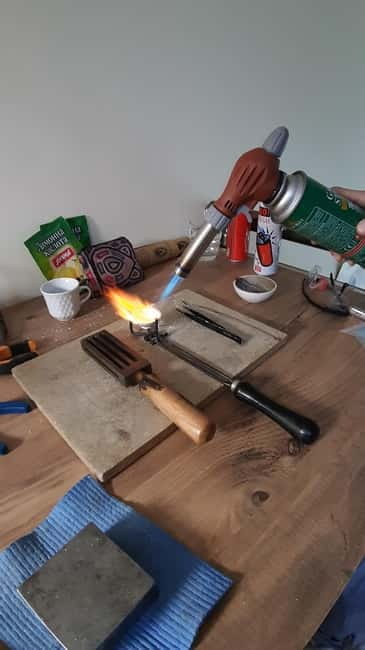
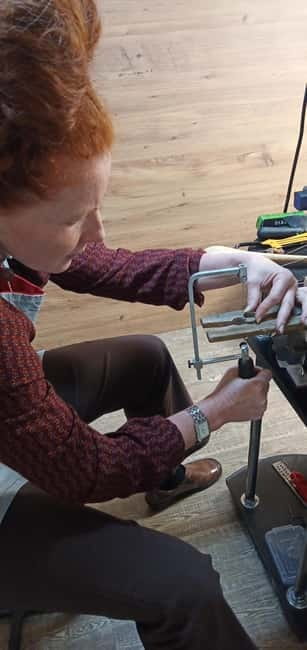
Once the silver is prepared, you cut out the parts you need with a jigsaw. You may also melt the silver and press it again on rollers as the form develops.
This is where the activity becomes personal. You are not simply copying a finished sample. You decide how plain or decorative the piece should be, which shape suits you, and how much detail you want to add.
The jigsaw work requires care. Small pieces and fine shapes take time, and the class has a set length. If your design includes many separate parts, you will spend more of the session cutting and fitting them. A simpler form gives you more time for texture, lettering, and polishing.
The workshop includes melting silver, but you should not expect to spend the full session watching the instructor do every technical stage. The stated format is hands-on, with you involved in cutting, shaping, soldering, and finishing. The instructor’s role is to guide you through the process so that the object remains yours while the more technical steps are explained clearly.
Adding texture, letters, and a personal date
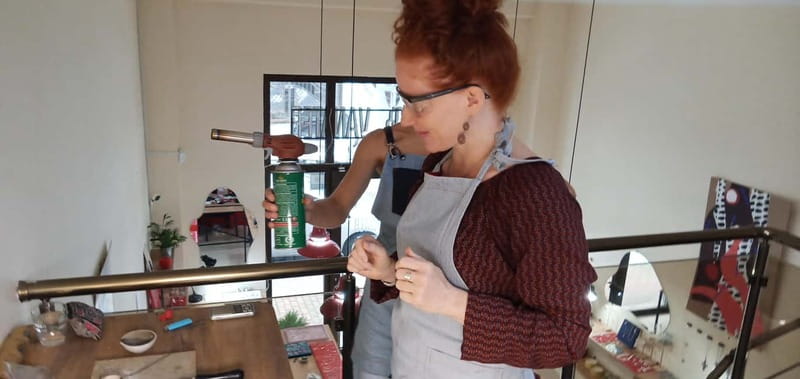
After the main form is ready, you can add texture and decorative elements. The class includes minting or melting techniques, along with the option to use letters or emboss a memorable date.
This is the point where a basic piece can become a personal keepsake. A date might mark a birthday, wedding, trip, or another event. Letters can keep the design simple while still making it unmistakably yours. Texture is another good choice if you want something less formal than an inscription.
You should decide early how much decoration you want. Every added mark takes time, and an ambitious design may leave less time for the final sanding and polish. Since the finished piece needs to be cleaned and prepared before you take it, decoration should support the design rather than overwhelm it.
I particularly like this part of the experience because it connects the object to your time in Georgia without forcing a tourist symbol onto it. You can make something subtle and wearable instead of producing a trinket that announces its destination from across the room.
A completely different kind of day:
- From Tbilisi: Kakheti Wine Region Tour with 9 Wine Tastings
★ 4.9 · 2,541 reviews - Tbilisi: Mtskheta, Jvari, Gori and Uplistsikhe Day Tour
★ 4.9 · 2,396 reviews - From Tbilisi to Kazbegi, Ananuri, Gudauri & Gergeti
★ 4.9 · 2,278 reviews - Tbilisi: Kakheti Wine Region Tour with 10 Wine Tastings
★ 5.0 · 2,160 reviews
Soldering the parts into one piece
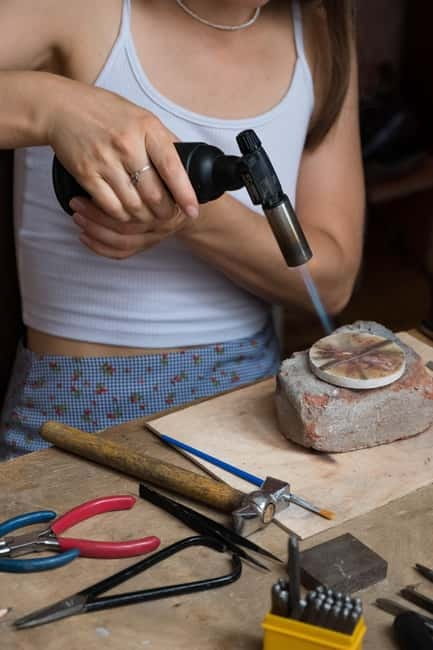
If your design includes separate components, you will learn the basics of soldering. This may include joining parts of a pendant, attaching decorative elements, or closing a ring.
Soldering is one of the more technical stages, and it is also one of the reasons the class feels like a real workshop session rather than a quick craft demonstration. You see how separate pieces become one object, and you learn why the joints need to be clean and properly aligned.
You should expect the instructor to help closely at this stage. The activity is offered in English and Russian, and the private-group format should make it easier to ask for clarification when a process is unfamiliar. Still, this is manual work. Your final piece may show tiny variations that reflect the fact that you made it yourself.
That is not a flaw. Handmade jewelry often has more character than a perfectly uniform factory item. The important question is whether you want a polished, personal object with evidence of your own hand, or a flawless piece produced by an expert without your involvement.
Whitening, sanding, and polishing to a mirror finish
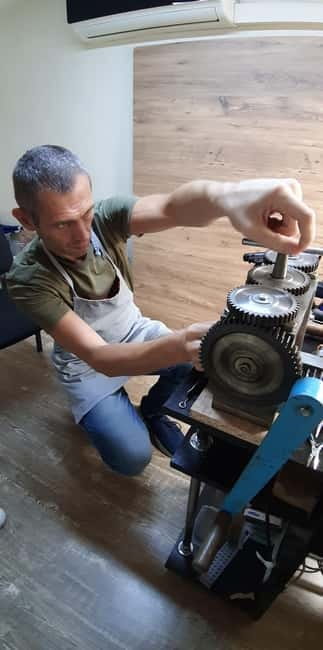
The final stages include whitening the decoration, sanding the product, and polishing it to a mirror effect. These steps can seem less exciting than melting or cutting, but they have a major effect on the result.
Sanding removes rough areas and helps soften the marks left by cutting and shaping. Polishing then brings out the shine. You will learn how to handle the finished piece rather than handing it over for someone else to complete.
Three hours is a useful length for this kind of class. It gives you enough time to move through the full process without turning the activity into an all-day commitment. At the same time, the schedule means you should keep your design manageable. A ring with a modest texture may be a better plan than an elaborate set of earrings with many tiny components.
The comments available for this experience repeatedly praise the clear, useful, hands-on nature of the session. One recent participant described the practice and final result as especially satisfying. Another called the class soulful and said the three hours passed quickly. That fits the structure here: you are changing tasks often, so there is little time for the afternoon to drag.
What the $106 price really covers
The listed workshop price is $106 per person. It covers the class and the jewelry-making instruction, but not the silver itself.
Your piece is weighed at the end, and the silver cost is calculated using the market price on that day. A small ring generally uses about 4 to 6 grams of silver. A larger or more elaborate ring usually weighs about 5 to 8 grams. The exact extra charge depends on the weight of your item and that day’s price.
This arrangement is fair in one sense. You pay for the amount of material you actually use rather than paying one inflated material fee for every participant. It also gives you freedom to make a lighter or heavier piece. But it means you should not treat $106 as the final total.
If you want better control of your budget, ask about the current silver price before the workshop and keep your design fairly light. You may also bring your own silver to use during the class. The information does not specify any requirements for the metal you bring, so confirm the details with the provider before arriving with old jewelry or scrap silver.
The value is strongest for someone who wants instruction and a finished object, not simply inexpensive jewelry. You are paying for access to the workshop, guidance through several processes, and the chance to make a one-off item. If your only goal is to buy a silver ring at the lowest price, a shop will likely be simpler.
Who will enjoy Aquarius jewelry and workshops
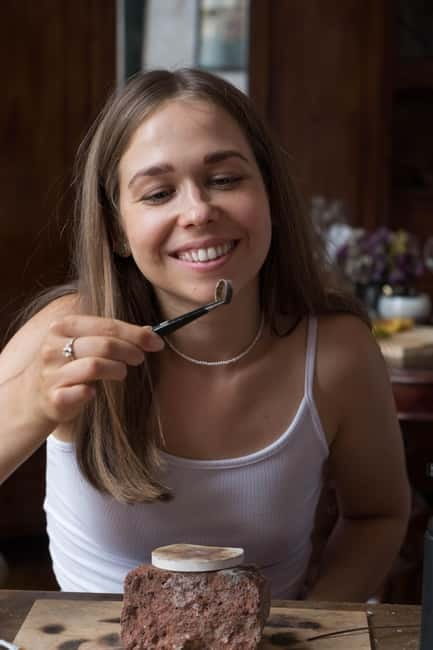
This class suits adults who like making things with their hands and want a quiet, creative activity in Tbilisi. It is also a good choice if you want a souvenir with a personal story rather than a standard gift from a market stall.
The private format works well for couples, friends, or a small family group of adults. You can compare ideas, but you still have the benefit of a more personal session than a large class would provide. English and Russian are available, which makes the practical instructions more accessible for many visitors.
You should choose this activity if you are comfortable with a little trial and error. The supplied information does not promise a completely effortless process, and jewelry work involves tools, heat, cutting, and careful finishing. You will need patience, especially if you want precise lettering or several decorative parts.
This is not suitable for children under 18. The age rule is clear, so families with younger children should plan a different activity.
Useful planning advice for the three-hour session
Bring a simple design idea. A quick sketch, a basic shape, or a date you want to include can help you make decisions once you are at the bench.
If you want a ring, know the intended size if possible. You will learn how to create the needed size, but having a clear starting point can save time. For earrings or a pendant, think about whether you prefer a smooth surface, texture, letters, or a date.
Allow for the silver charge after the workshop. Since the cost is based on weight and the market price on the day, you should have room in your budget beyond the $106 class fee.
Keep the rest of your schedule light. The class lasts three hours, and creative work can take a little longer mentally than a simple sightseeing stop. The stated duration is three hours, but you will enjoy it more if you are not watching the clock for your next appointment.
The activity has free cancellation up to 24 hours before the start for a full refund. You can also reserve now and pay later, which helps if your Tbilisi plans are still taking shape.
Should you book this Tbilisi jewelry class?
Book it if you want to make something yourself, value a small private setting, and like the idea of working in a 19th-century Tbilisi house. The strongest parts are the full process, the freedom to design your own piece, and the chance to finish with a polished silver object you can actually wear.
Think twice if you want a fixed all-inclusive price, dislike detailed handwork, or prefer a short demonstration with little participation. The silver fee is separate, and a complicated design may feel rushed within three hours.
For the right person, this is a thoughtful Tbilisi activity with a clear payoff. You leave not only with jewelry, but with a better sense of how metal is cut, shaped, joined, textured, and polished. Keep your design practical, plan for the extra silver cost, and this should be a memorable creative stop in Georgia.
FAQ
Where does the jewelry class meet?
You meet at a PSP pharmacy in Tbilisi, then go with the instructor to the workshop.
How long does the activity last?
The jewelry master-class lasts three hours. Starting times depend on availability.
How much does the workshop cost?
The workshop price is $106 per person. The cost of the silver is not included.
How is the silver charge calculated?
Your finished piece is weighed at the end, and the silver cost is calculated using the market price on that day.
How much silver does a ring usually use?
A small ring typically weighs about 4 to 6 grams. Larger or more elaborate rings generally weigh about 5 to 8 grams.
Can I bring my own silver?
Yes. You are welcome to bring your own silver to use during the workshop.
What jewelry can I make?
You can make your own ring, pendant, or earrings.
Is the class available in English?
Yes. The instructor offers the activity in English and Russian.
Just added in Tbilisi
- Wine Tasting feel the Difference of Qvevri or Classical Wine★ 4.4 · 10 reviews
- From Tbilisi: Kakheti and Kazbegi 2-Day 4X4 Jeep Tour pack★ 5.0 · 6 reviews
- Walking Tour in Old Tbilisi – Group Tour★ 4.5 · 8 reviews
- Uforgatable Kakheti Tour with wine tasting – in Georgia★ 4.9 · 5 reviews
- From Tbilisi: Uplistsikhe Caves and Mtskheta Town Day tour★ 5.0 · 2 reviews
- Tbilisi: Vintage Fashion and Secondhand Thrifting Tour★ 5.0 · 11 reviews
- Tbilisi Airport to Gudauri, Bakuriani, Batumi, Tbilisi★ 5.0 · 3 reviews
- Private Adorable City Tour of Tbilisi★ 5.0 · 3 reviews
Workshops, compared.
Georgian Cooking Class with Khinkali and Khachapuri
Read our review →
Small-Group Khinkali and Khachapuri Cooking Class in Tbilisi
Read our review →

Taste of Kakheti: Wine Tour Bread Baking & Churchkhela Workshop
Read our review →
Nana’s Kitchen – traditional Georgian cooking class at real Georgian family home
Read our review →
Join a Local for a Market Tour, Cooking Class and Meal in her Tbilisi Home
Read our review →
Browse the lists this tour appears in