
Reviewed · CITY TOURS
City tour Tbilisi on red bus
Tbilisi reveals itself in layers. This red double-decker bus tour gives you a quick look at the old town, river, grand avenues, and major sights without demanding a long walk. I like the easy city overview and the included headsets, which help you follow the commentary from your seat. The main concern is reliability: some departures have run late, and the full circuit has sometimes taken closer to an hour than the advertised 90 minutes.
The ticket is sold as a 24-hour hop-on, hop-off pass, so you can use the first circuit to choose where to return later. I also like that the bus can help if an ankle, knee, or general lack of energy makes Tbilisi’s hills and uneven streets harder. Just keep expectations in check: the audio is useful for orientation, but it may not explain every sight in enough detail for a satisfying history lesson.
In This Review
- Key points to know before boarding
- Seeing Tbilisi from a red double-decker
- Old Tbilisi, Meidan Square, and the sulphur baths
- The Mtkvari River and Metekhi Cathedral
- Rike Park and the Peace Bridge
- Dry Bridge Market and the city’s changing face
- What the audio guide can and cannot do
- The 24-hour pass and the question of value
- Timing, waiting, and the hop-on question
- Who will get the most from this ride?
- Booking, cancellation, and practical details
- Should you book the Tbilisi red bus tour?
- FAQ
- How much does the Tbilisi red bus tour cost?
- How long does the tour last?
- Is this a hop-on, hop-off tour?
- Where does the tour begin?
- Where does the tour finish?
- What time does the tour start?
- Are headsets included?
- What languages are available?
- Is food included?
- Can I cancel for a refund?
Key points to know before boarding

- Old Tbilisi in one sitting: See the defensive walls, Meidan Square, sulphur bath district, Metekhi area, and Peace Bridge without covering the ground on foot.
- A 24-hour ticket: The pass is intended for use over 24 hours, not only during the first 90-minute circuit.
- Headsets are supplied: Commentary is available in 14 languages, though the quality and availability of devices may vary.
- A practical mobility aid: The bus offers a good city view when walking is difficult, especially for a short first look.
- Possible waiting time: One departure reportedly took about an hour to arrive, while another circuit finished in roughly an hour.
- Best use: Treat it as an orientation ride first, then combine it with walking around the places that catch your eye.
Seeing Tbilisi from a red double-decker

At $20 per person, this is not the cheapest way to move around Tbilisi. It is a reasonable price if you use the ticket as transport for more than one circuit, especially when you want a broad first look before choosing where to spend your time.
The bus begins at 44 Kote Afkhazi Street, a central address in the old part of Tbilisi. The stated start time is 10:00 am, and the experience returns to the same meeting point. You receive a 24-hour ticket, a headset, and the taxes and handling charges are included.
The first circuit is the key moment. Sit upstairs if the weather and space allow, and use it to get your bearings. From above, the bus gives you a useful sense of how the old town, river, bridges, squares, and newer avenues fit together.
The route is designed for sightseeing rather than fast transport. It passes through or near many of the city’s main landmarks, but the bus cannot stop for long at every one. You are looking from the road, sometimes through traffic, so this is a broad introduction rather than a close examination of each monument.
The experience is listed as approximately one hour and 30 minutes. That timing is worth treating as an estimate. Some accounts describe the circuit taking closer to one hour, while another describes long parking delays. If you have a train, flight, dinner reservation, or guided visit afterward, leave extra time.
More things to do in Tbilisi:
- Tbilisi: Day Trip to Kazbegi, Gudauri, Gergeti, and Ananuri
★ 4.9 · 3,203 reviews - Day Trip to Kakheti Wine Region Including 9 Wine Tastings
★ 5.0 · 2,774 reviews - Highlights of Caucasus Mountains-Jinvali,Ananuri,Gudauri,Kazbegi(Group tour)
★ 5.0 · 2,682 reviews
Old Tbilisi, Meidan Square, and the sulphur baths
The old town is where this ride makes its strongest impression. The bus passes the old defensive walls and the streets around Meidan Square, a compact area that works as a natural starting point for exploring on foot.
Meidan is also close to the sulphur bath district, one of Tbilisi’s defining features. The city grew around its warm mineral springs, and the bathhouses remain an important part of its character. From the bus, you can identify the district and decide if you want to return for a closer look.
That is the smart way to use this tour. The red bus shows you the shape of the area, but you will appreciate the narrow streets, brick bathhouse domes, balconies, and small passages far more at walking pace. If you stay seated for the entire circuit, you see the setting but miss much of the texture.
The audio commentary should help point out what you are passing. Headsets are provided so you can hear without relying on a loudspeaker, and the tour advertises commentary in 14 languages. One English-speaking guide has also been praised for answering questions and supplying a tour brochure.
Still, the experience can be inconsistent. One passenger received no device despite requesting one, and another found the audio too thin to make the buildings fully understandable. I would regard the headset as a helpful supplement, not a replacement for a detailed walking guide.
The Mtkvari River and Metekhi Cathedral
The route follows views connected with the Mtkvari River, the waterway that cuts through Tbilisi. The river helps you understand the city’s geography. The old districts sit close to the water, while roads and viewpoints rise around them.
The bus passes the Metekhi area and Metekhi Cathedral, one of the city’s best-known sights. The church sits above the river near a dramatic section of the old city, and its setting is more memorable than a simple roadside view can suggest.
This is one of the places where hopping off can make sense. The supplied information identifies Metekhi Cathedral as a pass-by point, not a stop with an included visit. You should not expect admission, a guided tour inside, or time to examine the church from the bus.
The same applies to the Metekhi wall and nearby historic streets. The ride lets you mark them on your mental map. If they interest you, return later with comfortable shoes and spend time at ground level.
A practical warning: the hop-on, hop-off system may not be explained clearly at the start. Stops can be announced, but you may not receive a detailed explanation of how long the bus waits, where to stand for the next one, or exactly when the next vehicle arrives. Ask the staff at the starting point before leaving the bus.
Rike Park and the Peace Bridge
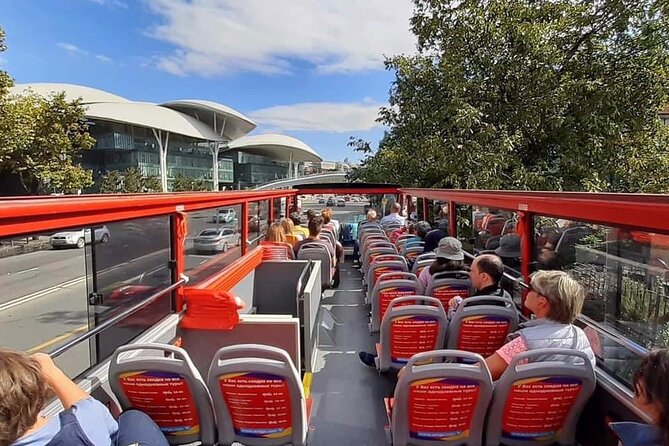
The bus also passes Rike Park and the modern Peace Bridge. Together they show a different side of Tbilisi, with open public space and newer architecture alongside the older neighborhoods.
The Peace Bridge is easy to recognize, and Rike Park is a useful place to pause if you want a break from the compact old-town streets. The bus gives you a quick contrast between historic Tbilisi and the city’s newer public projects.
Again, the value is mainly visual and practical. You can decide if you want to return for photographs or a walk across the bridge. The circuit itself does not provide a dedicated visit or admission to anything at these points.
The bus may be especially useful in poor weather, but rain changes the experience. One passenger was asked to leave the bus in wet, cold conditions and wait around 30 minutes for the next vehicle. That is an unpleasant surprise when you were expecting to remain onboard.
If the forecast is wet, ask before boarding whether the bus will complete the whole circuit with passengers seated. Bring a rain layer, and avoid planning this as your only activity of the day.
More city tours in Tbilisi:
- Tbilisi: City Highlights Guided Walking Tour
★ 4.9 · 1,114 reviews - Kakheti;City of Love Sighnaghi, Bodbe. KTW. Wine House Group tour
★ 5.0 · 376 reviews - Tbilisi: Old and New City Guided Tour with 2 Cable Car Rides
★ 5.0 · 176 reviews - Tbilisi: Guided Walking Tour of Historic City
★ 4.9 · 156 reviews
Dry Bridge Market and the city’s changing face
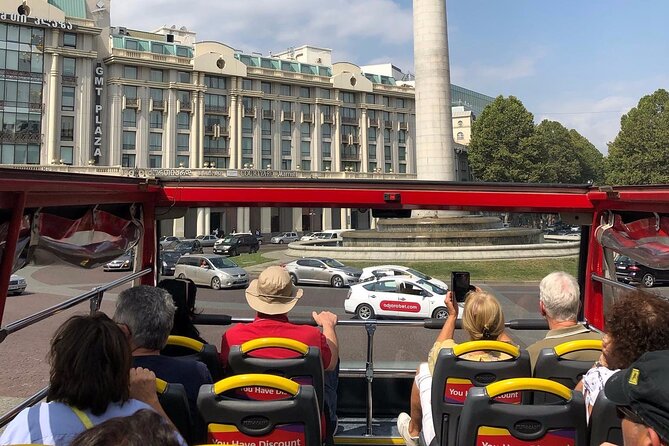
The route passes Dry Bridge Market, a well-known place for browsing antiques, old household items, art, and small souvenirs. The bus does not include purchases or a market visit, and the stop is listed as a pass-by point.
That makes the market a good candidate for a later return. Use the circuit to note its location, then decide how much time you want to spend there. Markets reward patience, and a few minutes seen through a bus window will not tell you much.
The route also covers Freedom Square and Rustaveli Avenue, two important central points. Freedom Square is one of the city’s main meeting places, while Rustaveli Avenue provides a more formal, spacious view of Tbilisi, with major buildings, cultural venues, and busy city traffic.
After the compressed old-town streets, this section helps you understand the city’s wider plan. It also gives you practical orientation if you plan to explore central Tbilisi on foot later.
The bus then reaches Heroes Square and Agmashenebeli Avenue. The route therefore moves beyond the oldest quarter and gives you a wider look at the capital. That breadth is the tour’s strongest feature: in a short time, you see far more than you would by staying in one neighborhood.
What the audio guide can and cannot do
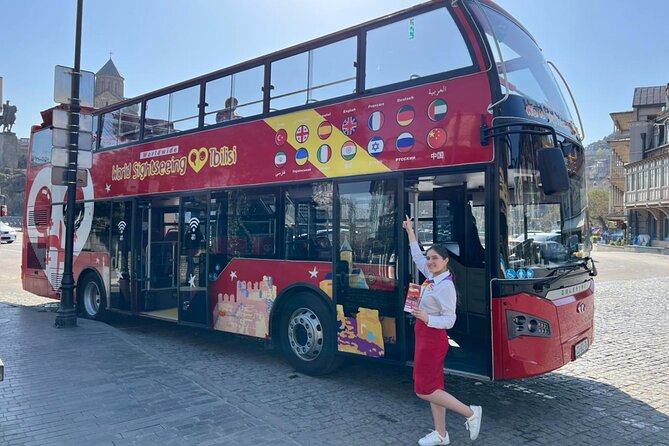
The audio system is an important part of the ticket. Headsets are included, and commentary is advertised in 14 languages. That is useful when traffic noise, engine sound, or a crowded upper deck makes live narration hard to hear.
The commentary also gives the ride some structure. Instead of simply passing buildings, you receive names and basic context as the bus moves through the city.
But you should not expect a full lesson on Tbilisi. Some audio sections may identify a building without explaining why it matters or where exactly to look. One passenger felt unsure if the described sight was even visible from the bus.
I would use the commentary as a prompt. When it mentions the sulphur baths, Metekhi, the Dry Bridge Market, or Rustaveli Avenue, make a note of what interests you. Then explore that place later with a map or walking tour.
Live help can add value. A guide who speaks English and answers questions can make the ride more personal, but the experience may be operated by a multilingual guide, and the amount of live narration is not guaranteed. If you want detailed, continuous explanation, choose a dedicated walking tour instead.
The 24-hour pass and the question of value
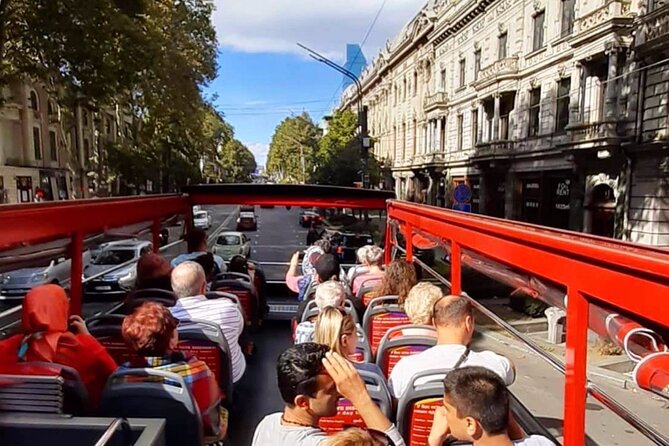
The advertised ticket lasts 24 hours, which can make the $20 price more attractive. A useful plan is to take the first circuit, decide which areas deserve more time, and ride again or hop off later.
Some passengers have used the pass from one afternoon to the same time the next day. That approach gives the ticket a clear purpose: the first ride is for orientation, and the second use is for practical transport between sightseeing areas.
The value drops if you only remain onboard for one short circuit. With reports of the complete ride taking about an hour, you may pay $20 for a broad view that a normal city walk can provide at no cost.
The bus is more worthwhile if you:
- Have limited walking ability
- Are visiting Tbilisi for the first time
- Want to compare several neighborhoods quickly
- Prefer sitting during the hottest, coldest, or wettest part of the day
- Plan to use the ticket again within 24 hours
It is less worthwhile if you want detailed history, small streets, interior visits, or a carefully timed schedule. The ride can show you where to go, but it cannot replace time on the ground.
The group limit is 50 people. That is large enough for a busy vehicle, although one account describes a bus that was not crowded. Space and comfort can change by departure, so arrive with some flexibility if sitting upstairs matters to you.
Timing, waiting, and the hop-on question

The main practical weakness is uncertain timing. One departure involved a wait of about an hour, despite an expected wait of roughly 40 minutes. Another account describes buses arriving every 30 minutes, while the whole circuit took less time than advertised.
Those gaps matter because a hop-on, hop-off ticket only works well when the next bus is reasonably predictable. A 30-minute wait is manageable in good weather. In rain or cold, it can become the least pleasant part of the day.
At the starting point, ask three questions:
- When is the next bus expected?
- Can I remain onboard for the complete circuit?
- If I get off, where do I wait for the next bus?
This simple check may prevent confusion. One passenger was asked where they planned to get off, then later had to leave the bus despite intending to stay onboard. Clear information at the start would have made that situation easier.
The advertised start time is 10:00 am, but you should still confirm the day’s operating pattern when you arrive. Since the experience can be affected by traffic, parking, and weather, do not build a tight schedule around the bus.
Who will get the most from this ride?
I would recommend the red bus most strongly to anyone who wants an easy first look at Tbilisi. It is particularly useful when you have only a short visit and need to understand the relationship between the old town, river, central squares, and main avenues.
It also suits people with mobility problems. A sprained ankle made walking difficult for one passenger, and the bus provided a practical way to see the city while seated. Tbilisi includes uneven streets and uphill sections, so that benefit is real.
Families may like the simple format, but children must be accompanied by an adult. The bus is near public transportation, and most people can participate. No health restrictions are stated.
You may prefer a walking tour if you care most about architecture, local stories, food, or the small details of the old town. The bus gives distance and scale. Walking gives atmosphere and control.
For the best result, combine both. Take the red bus early in your stay, mark two or three places that deserve more time, and return on foot. That turns a somewhat brief sightseeing ride into a useful planning tool.
Booking, cancellation, and practical details
Confirmation is provided at booking, and free cancellation is available if you cancel at least 24 hours before the local start time. Changes or cancellations made inside that window are not accepted for a refund.
Food and drinks are not included. Bring what you need for the ride, especially if you intend to use the pass across several hours.
The experience begins and ends at 44 Kote Afkhazi Street, Tbilisi 0105. The activity is offered in English, while the audio system is advertised in 14 languages. Because the live guide arrangement can vary, ask which language and commentary format will be available that day.
Should you book the Tbilisi red bus tour?
Book it if you want a quick, seated introduction to Tbilisi, need to limit walking, or plan to use the 24-hour pass more than once. The route covers the old walls, Meidan Square, the bath district, Mtkvari River, Metekhi, Rike Park, Peace Bridge, Freedom Square, Rustaveli Avenue, Heroes Square, Dry Bridge Market, and Agmashenebeli Avenue. That is a lot of ground for $20.
Skip it if you want a detailed history tour or a precise, clockwork schedule. The audio may feel too general, buses may arrive late, and the full ride may finish sooner than the stated 90 minutes.
My advice is simple: use this as your city compass, not your whole Tbilisi experience. Ride once, choose your favorite areas, then get off and explore them slowly.
FAQ
How much does the Tbilisi red bus tour cost?
The price is $20 per person.
How long does the tour last?
The stated duration is approximately one hour and 30 minutes. Actual ride times can vary, with some accounts describing a circuit closer to one hour.
Is this a hop-on, hop-off tour?
Yes. The ticket is described as a 24-hour hop-on, hop-off pass, allowing you to explore at your own pace during that period.
Where does the tour begin?
The meeting point is 44 Kote Afkhazi Street, Tbilisi 0105, Georgia.
Where does the tour finish?
The activity ends back at the meeting point.
What time does the tour start?
The stated start time is 10:00 am.
Are headsets included?
Yes. Headsets are included so you can hear the guide or audio commentary clearly.
What languages are available?
The tour is offered in English, and the audio guide is advertised in 14 languages. The activity may be operated by a multilingual guide.
Is food included?
No. Food and drinks are not included unless specifically stated.
Can I cancel for a refund?
Yes. You can cancel for a full refund up to 24 hours before the experience begins. Cancellations or changes made less than 24 hours before the local start time are not accepted for a refund.
Just added in Tbilisi
- Wine Tasting feel the Difference of Qvevri or Classical Wine★ 4.4 · 10 reviews
- From Tbilisi: Kakheti and Kazbegi 2-Day 4X4 Jeep Tour pack★ 5.0 · 6 reviews
- Walking Tour in Old Tbilisi – Group Tour★ 4.5 · 8 reviews
- Uforgatable Kakheti Tour with wine tasting – in Georgia★ 4.9 · 5 reviews
- From Tbilisi: Uplistsikhe Caves and Mtskheta Town Day tour★ 5.0 · 2 reviews
- Tbilisi: Vintage Fashion and Secondhand Thrifting Tour★ 5.0 · 11 reviews
- Tbilisi Airport to Gudauri, Bakuriani, Batumi, Tbilisi★ 5.0 · 3 reviews
- Private Adorable City Tour of Tbilisi★ 5.0 · 3 reviews
City Tours, compared.

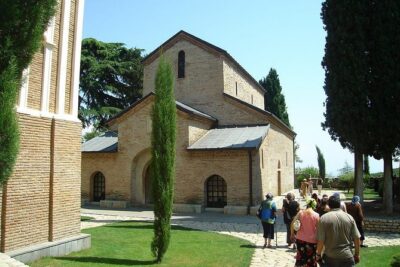
Kakheti;City of Love Sighnaghi, Bodbe. KTW. Wine House Group tour
Read our review →
Old and New City Guided Tour with 2 Cable Car Rides
Read our review →

Old & New City Guided Tour with 15 Tastings & Wine
Read our review →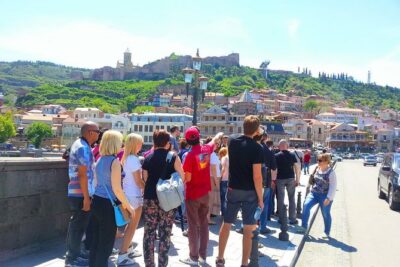
Mtskheta – Jvari. Full City Tour on Hop On Hop Off Bus
Read our review →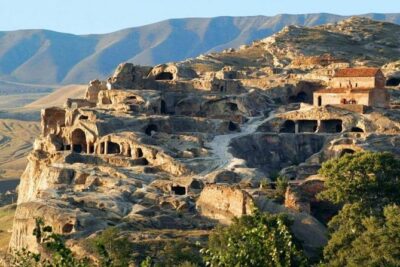
Day tour to Chronicles of Georgia, Gori city, Uplistsikhe cave
Read our review →
Browse the lists this tour appears in