

Reviewed · DAY TRIPS IN TBILISI
Private Walking Tbilisi City Tour (Day Trip)
Tbilisi rewards curious walkers. This six-to-seven-hour city tour links Narikala Fortress, Abanotubani, and the Old Town with Rustaveli Avenue, major churches, the mosque, and the synagogue, giving you a useful first look at Georgia’s capital. I especially like the multi-faith route and the way the tour connects legends, architecture, and daily city life. Bottled water is included, too, which matters on a long day outside.
The $59 price is fair for a guided full-day introduction, especially if you want background rather than a quick photo stop. I also like that guides such as Teimuraz and Temo have been praised for detailed storytelling and personal attention. One point to check before booking: the title presents this as a private tour, while the tour details describe a shared experience with a possible maximum of 100 participants, so group size may vary.
In This Review
- Key points to know before booking
- Why this walking tour works as a first day in Tbilisi
- Narikala Fortress and the old city from above
- Sulfur baths, Abanotubani, and the story behind Tbilisi
- Metekhi Cathedral and the city’s royal foundations
- The Bridge of Peace and Rike Park
- Rustaveli Avenue and the newer capital
- A close look at Tbilisi’s churches and synagogue
- Kartlis Deda and the city’s symbolic figure
- Leselidze Street and the Rezo Gabriadze theater
- How the six-to-seven-hour format feels
- Guide quality and group size
- Who should book this Tbilisi tour?
- Should you book it?
- FAQ
- How long does the Tbilisi city tour last?
- How much does the tour cost?
- Is transportation included?
- Is the tour offered in English?
- Is bottled water included?
- What are the main sights on the route?
- Does the tour include admission tickets?
- What is the maximum group size?
- Can I cancel for a full refund?
Key points to know before booking
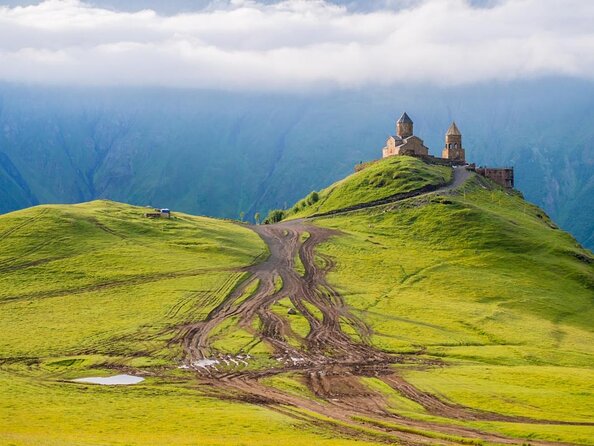
- Narikala Fortress anchors the day: You get broad views, old balconies, churches, and several faith traditions in one historic area.
- The route covers both old and newer Tbilisi: Rustaveli Avenue adds theaters, art spaces, and grand civic buildings to the medieval lanes.
- Fourteen stops create a full city portrait: The plan includes the sulfur baths, Metekhi Cathedral, the Bridge of Peace, Rike Park, and Leghvtakhevi Waterfall.
- The tour is mainly on foot: Transportation is not included, so you should be ready for a long walking day.
- Guiding is a major part of the value: Temo is praised for detailed explanations, while Teimuraz is singled out for warmth and strong service.
- The pace can run long: One participant found the outing lasted longer than the stated time, which may be good for sightseeing but harder on a tight schedule.
Why this walking tour works as a first day in Tbilisi
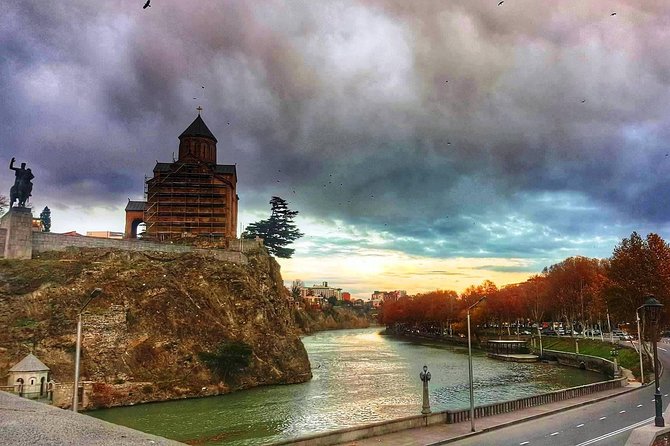
Tbilisi can feel confusing at first. The city spreads along the Mtkvari River, with a fortress above the old lanes, newer districts stretching along Rustaveli Avenue, and churches, bathhouses, and modern buildings sharing the same small area.
This tour gives you a broad framework. Instead of seeing only the postcard sights, you move through the city’s religious, royal, artistic, and civic landmarks. That makes the day useful early in a Georgia visit, when you want to learn where everything fits before exploring on your own.
The route is also a good match for anyone who prefers a guide to explain what a building means. You will hear the legend behind Tbilisi’s hot springs, learn why Metekhi matters to Georgian rulers, and see how Orthodox Christian, Armenian, Catholic, Muslim, Jewish, and older pagan traditions appear in the city center.
At $59 per person, the value rests mainly in the guide. There are no major transport costs or attraction fees listed, and the day is built around outdoor sightseeing. If you already know Tbilisi well, the price may feel less attractive. For a first visit, the context and route planning make it more worthwhile.
More Day Trips in Tbilisi
- Tbilisi: Day Trip to Kazbegi, Gudauri, Gergeti, and Ananuri
★ 4.9 · 3,203 reviews - Day Trip to Kakheti Wine Region Including 9 Wine Tastings
★ 5.0 · 2,774 reviews - Day Trip to Kazbegi and Gudauri
★ 5.0 · 2,009 reviews
Narikala Fortress and the old city from above
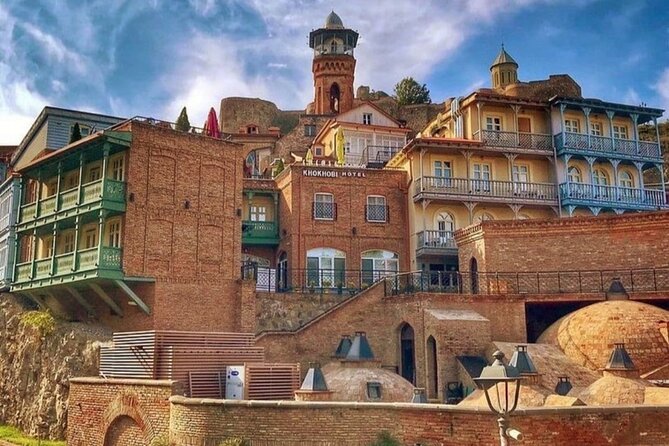
The first major stop is Narikala Fortress, with about 50 minutes allocated and admission included. The fortress gives the tour a strong opening because it places Tbilisi beneath you: old houses with wooden balconies, the river valley, church towers, and the steep slopes that shape the city.
The fortress area also introduces the range of sights found in Old Tbilisi. The route takes in traditional balcony houses, Anchiskhati Church, the Holy Trinity Cathedral, Catholic and Gregorian churches, the mosque, the synagogue, and Ateshga, described as a temple connected with pre-Christian worship.
That combination is one of the tour’s best features. Tbilisi is not presented as a single-faith city or a museum frozen in one period. You get a quick sense of how different communities and eras overlap within a compact area.
The drawback is physical rather than cultural. A fortress on a hill means uneven ground and some climbing may be involved, though the exact walking conditions are not specified. Wear comfortable shoes and do not treat the day as a light stroll.
Sulfur baths, Abanotubani, and the story behind Tbilisi
The sulfur bath district receives two separate stops: around 30 minutes at the sulfur baths and 15 minutes in Abanotubani. That may sound repetitive, but the two stops help explain both the appearance of the neighborhood and the origin story of the city.
The name Tbilisi comes from tbili, meaning warm. According to the well-known legend, King Vakhtang Gorgasali discovered the hot springs after his falcon fell in the area. The springs then helped inspire the founding of a new capital.
You can expect the guide to point out the domed bathhouses and explain why this corner of the city remains central to Tbilisi’s identity. King Vakhtang’s sculpture looks toward the baths from the Metekhi plateau, linking the legend to the city’s royal past.
You should note that a bath visit is not listed. This is a sightseeing stop, not a spa booking. If you want to bathe, you would need to arrange that separately, and no extra bathing cost or reservation is included in the tour details.
Leghvtakhevi Waterfall adds another view of the same area. The waterfall is about 22 meters tall, and the name comes from the Georgian word for fig, since fig trees once grew around the place. The stop lasts about 20 minutes, enough to see the setting and hear its story without turning the tour into a long nature walk.
Metekhi Cathedral and the city’s royal foundations
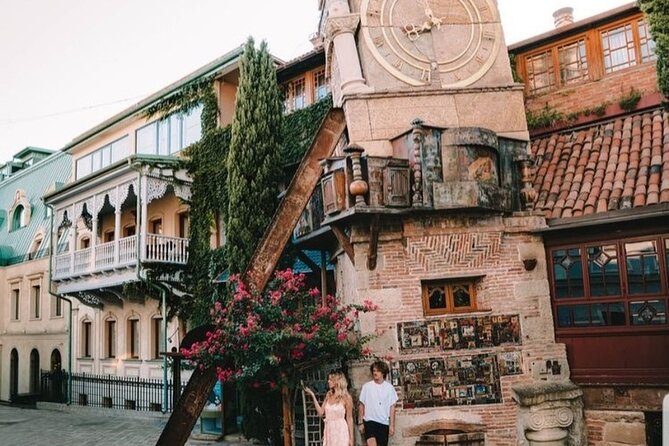
Metekhi Cathedral gets about 15 minutes. The church sits on a plateau above the river, a location tied to King Vakhtang I Gorgasali, who established a church and fortress here that also served as a royal residence.
The name Metekhi dates to the 12th century and means the area around the palace. That small detail makes the stop more meaningful. You are not just looking at an old church. You are seeing a place connected to the early political center of Tbilisi.
The short time allocation means this is likely an exterior-focused visit or a quick look inside if conditions allow. The tour details do not promise a special interior visit or a service. Still, the position makes it an important stop for understanding how the river, fortress, palace, and old city relate to each other.
More Walking Tours in Tbilisi:
- Tbilisi Walking Tour Including Cable Car and Traditional Bakery
★ 5.0 · 1,310 reviews - Tbilisi: City Highlights Guided Walking Tour
★ 4.9 · 1,114 reviews - Tbilisi:Evening Walking & Talking Tour with Wine & Boat Ride
★ 5.0 · 572 reviews - Tbilisi: Evening Walking Tour with Wine & Boat Ride Options
★ 5.0 · 407 reviews
The Bridge of Peace and Rike Park
The Bridge of Peace offers a sharp change in style. Built in 2009 and 2010, it was designed by Italian architect Michele De Lucchi, with lighting by French designer Philippe Martinaud.
Its glass and steel form contrasts with the stone churches, fortress walls, and wooden balconies nearby. That contrast is useful because Tbilisi is not only an old city. Modern public projects have become part of its visual identity.
The bridge leads toward Rike Park, a public space in the Old Town where events such as Tbilisoba are held. You get about 15 minutes at each stop, so expect a brief orientation and photo opportunity rather than a long park visit.
I like this part of the route because it prevents the day from becoming a parade of churches and ruins. The old and new sit close together, and the bridge makes that change easy to see.
Rustaveli Avenue and the newer capital
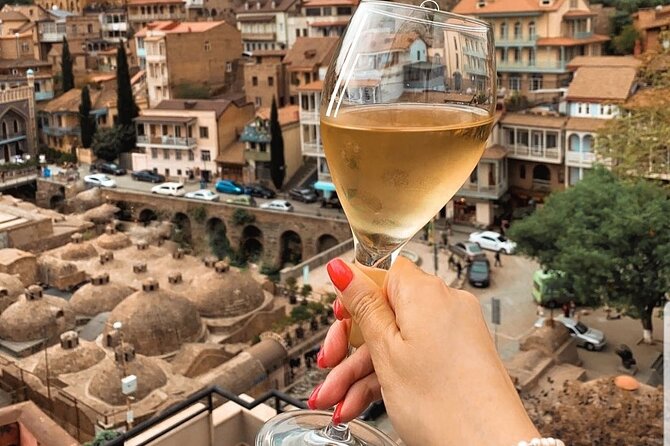
The hour on Rustaveli Avenue is the longest single allocation on the schedule. This broad avenue represents the newer part of Tbilisi, with development dating largely from after the 20th century began.
The route includes the Rustaveli Drama Theater, the State Academic Theater of Opera and Ballet named after Zakaria Paliashvili, the First Gymnasium, and art salons. These sights show Tbilisi as a cultural capital, not simply a historic old town.
This is also where the tour’s range becomes clear. You move from fortress walls and bathhouses to theaters, public buildings, and artistic institutions. The guide’s commentary matters here because an avenue can otherwise feel like a walk past facades without much connection between them.
The one-hour slot may feel long if you want only old streets. If you enjoy architecture, performing arts, and the story of modern Tbilisi, it is a useful balance. If your main goal is medieval churches and narrow lanes, this is the portion you may find less compelling.
A close look at Tbilisi’s churches and synagogue
The tour includes several religious buildings, each with a short 15-minute stop. The Great Synagogue of Tbilisi is particularly important because it reflects the city’s Jewish community and its links with Akhaltsikhe.
The synagogue was built from 1895 to 1903 in an eclectic style by Georgian Jews who moved to Tbilisi from Akhaltsikhe in the late 19th century. It is also known as the synagogue of the people of Akhaltsikhe. That name gives you a human connection to the building, tying architecture to migration and community life.
Anchiskhati Basilica is described as the oldest surviving church in Georgia, dating to the sixth century. It also has an artistic connection: the studio of Georgian sculptor Elguja Amashukeli was located here. He created Kartlis Deda, the famous symbol of Georgia.
Sioni Cathedral dates from the sixth and seventh centuries, though invasion and repeated rebuilding changed it over time. The present church is based on a 13th-century version, with later changes from the 17th through 19th centuries. It served as Georgia’s main Orthodox cathedral and the seat of the Catholicos-Patriarch until Holy Trinity Cathedral was consecrated.
The route also includes Catholic and Gregorian churches, a Muslim mosque, and Ateshga. The details do not promise entry into every building, and each stop is short. Think of this part of the day as a guided introduction to Tbilisi’s religious map rather than a series of long interior visits.
Kartlis Deda and the city’s symbolic figure
Kartlis Deda, or Mother of Georgia, receives about 15 minutes. The large female figure holds wine for friends and a sword for enemies, a simple image that captures Georgia’s welcome and its long need for defense.
The statue also connects back to Anchiskhati Basilica through its sculptor, Elguja Amashukeli. That link is easy to miss if you visit the statue alone, so the guided route adds useful context.
From this high point, you may get broad views across Tbilisi. The exact view depends on weather and conditions, but the location helps you understand how the fortress, river, old town, and newer districts fit together.
Leselidze Street and the Rezo Gabriadze theater
Leselidze Street is described as a place where old and new parts of the city meet. The 15-minute stop is less about one monument and more about seeing Tbilisi as a working urban center, where historic buildings and newer uses share the same street.
The Rezo Gabriadze Marionette Theater gets about 10 minutes. It is one of Tbilisi’s best-known sights, and its performances are known for emotional depth and strong storytelling.
You should keep expectations in check. A show is not included, and the short stop does not mean you will attend a performance. The guide can point out the theater and explain its importance, while the famous clock tower and nearby details are best treated as part of the visual character of the area.
How the six-to-seven-hour format feels
The tour is listed at about six to seven hours, with several stops lasting only 10 to 15 minutes and Rustaveli Avenue receiving an hour. One participant found the outing ran longer than the stated time, while also appreciating that the guide paid close attention to the group.
That suggests a flexible pace rather than a strict timetable. It can work in your favor if the guide is answering questions and showing extra details. It can be a problem if you have an evening train, restaurant reservation, or another booked activity.
Transportation is not included. The experience begins and ends at the meeting point in Tbilisi, and the route is described as a walking city tour. You should plan for a full day on your feet, with hills, old paving, and changes in elevation likely around the fortress and river districts.
A complimentary bottle of water is supplied for each participant. Bring comfortable shoes and allow extra time after the official finish, especially if your schedule is tight.
Guide quality and group size
The strongest praise centers on the guides. Teimuraz is described as the best part of one city tour, while Temo is praised for explaining places in detail and being helpful. Another participant called the guide a history expert whose energy and storytelling made the day memorable.
That matters because many of these stops are brief. A good explanation can turn a 15-minute church visit into a useful lesson. A weak one would leave you with a list of names and dates.
The experience is offered in English. The details also allow a maximum of 100 participants, which is a large possible group for a walking tour. Since the tour title says private but the description calls it shared, ask the provider to confirm the expected group arrangement before you pay if personal guiding is important to you.
The feedback is uniformly positive, with a five-star rating and 100 percent recommendation from 69 ratings. The repeated themes are friendly service, punctuality, helpful staff, detailed stories, and a social atmosphere in which some participants made new friends.
Who should book this Tbilisi tour?
I would choose this tour if you are visiting Tbilisi for the first time and want the main sights explained in one long outing. It suits people who enjoy religious architecture, city legends, viewpoints, and a mix of old and modern neighborhoods.
It is also a good fit if you want a guide who can connect small details, such as the word tbili, the Akhaltsikhe Jewish community, and the symbolism of Kartlis Deda. Those links are easy to miss when you walk alone.
You may want another option if you dislike group tours, have limited mobility, or prefer to spend a long time inside each monument. The stated maximum of 100 is worth taking seriously, and the tour does not include transportation or a bathhouse visit.
Cancellation is free up to 24 hours before the local start time. Changes or cancellations inside that window are not refunded, and poor weather or failure to meet the minimum group size can lead to a new date or full refund.
Should you book it?
Book it if you want a well-priced orientation to Tbilisi with a strong mix of landmarks, stories, and faith traditions. The route covers more ground than a simple Old Town stroll, and the named guides, especially Temo and Teimuraz, receive unusually warm praise for personal service and clear explanations.
Before booking, confirm whether your departure will be private or shared and ask how large the group is expected to be. If you are comfortable walking for six to seven hours and want a guide-led introduction, $59 is a sensible spend. If you need a quiet, highly personal visit or a fixed finish time, choose carefully or arrange a smaller private walk.
FAQ
How long does the Tbilisi city tour last?
The experience lasts approximately six to seven hours. The schedule can run longer, so allow extra time if you have plans afterward.
How much does the tour cost?
The listed price is $59 per person.
Is transportation included?
No. Transportation is not included. The activity begins and ends at the meeting point in Tbilisi and is presented as a walking tour.
Is the tour offered in English?
Yes. English is the listed language for the experience.
Is bottled water included?
Yes. Each participant receives complimentary bottled water.
What are the main sights on the route?
The route includes Narikala Fortress, the sulfur baths, Rustaveli Avenue, Abanotubani, the Great Synagogue, Metekhi Cathedral, the Bridge of Peace, Rike Park, Kartlis Deda, Anchiskhati Basilica, Sioni Cathedral, Leselidze Street, the Rezo Gabriadze Marionette Theater, and Leghvtakhevi Waterfall.
Does the tour include admission tickets?
Admission is included for Narikala Fortress. The other listed stops show no admission fee. A performance at the Rezo Gabriadze Marionette Theater and a bathhouse session are not listed as included.
What is the maximum group size?
The activity may have a maximum of 100 participants. Because the title describes a private tour while the details also describe a shared tour, confirm the expected group size before booking.
Can I cancel for a full refund?
Yes. You can cancel at least 24 hours before the local start time for a full refund. Cancellations or changes made less than 24 hours in advance are not accepted for a refund. If poor weather or an insufficient minimum group causes cancellation, you will be offered another date or a full refund.
Just added in Tbilisi
- Wine Tasting feel the Difference of Qvevri or Classical Wine★ 4.4 · 10 reviews
- From Tbilisi: Kakheti and Kazbegi 2-Day 4X4 Jeep Tour pack★ 5.0 · 6 reviews
- Walking Tour in Old Tbilisi – Group Tour★ 4.5 · 8 reviews
- Uforgatable Kakheti Tour with wine tasting – in Georgia★ 4.9 · 5 reviews
- From Tbilisi: Uplistsikhe Caves and Mtskheta Town Day tour★ 5.0 · 2 reviews
- Tbilisi: Vintage Fashion and Secondhand Thrifting Tour★ 5.0 · 11 reviews
- Tbilisi Airport to Gudauri, Bakuriani, Batumi, Tbilisi★ 5.0 · 3 reviews
- Private Adorable City Tour of Tbilisi★ 5.0 · 3 reviews
Day Trips in Tbilisi, compared.
Day Trip to Kazbegi, Gudauri, Gergeti, and Ananuri
Read our review →
Day Trip to Kakheti Wine Region Including 9 Wine Tastings
Read our review →


Browse the lists this tour appears in