
Reviewed · WALKING TOURS
Walking City Tour in Tbilisi
Tbilisi reveals itself one layer at a time. This two-hour private walk links the sulfur baths, narrow old-town lanes, Narikala Fortress, and the grander streets around Liberty Square, giving you a quick but meaningful introduction to Georgia’s capital. I like the compact route and the fact that it brings together both Tbilisi’s old city and its 19th-century aristocratic district.
I also like the private format, since the guide can adjust the pace, choose the cable car or the uphill walk, and suggest places to try Georgian food. The main caution is time: ten stops in two hours means some visits are brief, and the tour is best for orientation rather than a slow, detailed look inside every sight.
In This Review
- Key points to know before booking
- Why this short Tbilisi walk works
- From Orbeliani Baths into Abanotubani
- Twenty minutes through Old Town Tbilisi
- Choosing the cable car or walking to Narikala
- Narikala Fortress and the best city view
- Churches, Mother of Georgia, and Persian traces
- Liberty Square and the Russian imperial chapter
- Rezo Gabriadze’s clock tower and puppet theater
- What the two-hour schedule really means
- Food advice is an unexpected bonus
- Who will get the most from this tour?
- Should you book the Tbilisi Walking City Tour?
- FAQ
- How long does the Walking City Tour in Tbilisi last?
- How much does the tour cost?
- Is the Tbilisi Cable Car included?
- Where does the tour begin?
- Where does the tour end?
- Is this a private tour?
- Do I need to be physically fit?
- Are the sights included in the price?
Key points to know before booking
- The tour begins at Orbeliani Baths and ends at Liberty Square, creating a useful route through several central parts of Tbilisi.
- Narikala Fortress provides the main city view, with the cable car available for an extra 2.00 EUR per person.
- You visit both famous sights and less obvious historical traces, including the Ateshgah Zoroastrian Temple.
- The tour is private, so only your own group takes part and the ending point can be changed if arranged.
- A guide can add food advice, including help choosing Georgian dishes that may sound unfamiliar on a menu.
- Moderate fitness is required, since this is a walking tour with an optional uphill route to the fortress.
Why this short Tbilisi walk works

At $23.27 per person, this tour is priced as a low-cost introduction to central Tbilisi. The value comes less from admission savings, since nearly all the sights are free, and more from the route, historical explanation, and private guide time. You are paying to connect the dots between Georgian Christianity, Persian influence, Russian imperial rule, old bath culture, and modern city life.
That matters in Tbilisi. A street can shift quickly from ornate balconies to a church, from a sulfur bathhouse to a fortress wall, or from a quiet old lane to a formal square. Without context, these places can feel like separate photo stops. With a good explanation, the city’s position between Europe and Asia becomes easier to understand.
The tour is also practical for a first day. You start in Abanotubani, see the core old town, gain a high view from Narikala, and finish at Liberty Square. Afterward, you will know which areas deserve a longer return visit.
The guide is Alesia Aliakseichyk. The available feedback gives special praise to her warm contact with the group, clear guidance, and help with Georgian food. That last point is useful. Menus can include dishes you might not recognize, and a guide who explains what to order can turn an uncertain meal into one of the best parts of your stay.
More Walking Tours in Tbilisi:
- Tbilisi Walking Tour Including Cable Car and Traditional Bakery
★ 5.0 · 1,310 reviews - Tbilisi: City Highlights Guided Walking Tour
★ 4.9 · 1,114 reviews - Tbilisi:Evening Walking & Talking Tour with Wine & Boat Ride
★ 5.0 · 572 reviews
From Orbeliani Baths into Abanotubani
The meeting point is Orbeliani Baths at 31 Abano Street. This bath is also known as Pushkin Bath or Dumas Bath, names that hint at the way Tbilisi’s bath culture has long attracted outside attention.
You spend about five minutes here, so think of it as a starting reference rather than a full bath visit. The tour does not include a bath treatment or admission. That is fine for a walking introduction, but you should not book this expecting time to change clothes, soak, or use the facilities.
The next stop is Abanotubani, the old sulfur bath neighborhood. Its oriental-style bathhouses give this part of Tbilisi a character unlike the rest of the route. The guide can offer recommendations if you want to return later for a relaxing bath.
That personal advice is one of the better uses of a private tour. You can ask about visiting later instead of trying to make a bath decision while the group is moving. Since the stop itself lasts around five minutes, treat it as a briefing and neighborhood overview.
The sulfur baths also help explain why this area became important. Even without a long lecture, the bath district gives you a clear sense that Tbilisi was shaped by public bathing, trade, and contact between different cultures.
Twenty minutes through Old Town Tbilisi
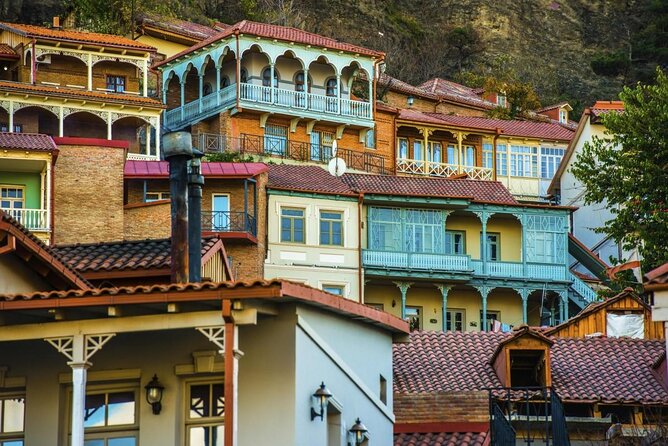
The old city receives the longest scheduled visit, about 20 minutes. That is still a brisk look, but it gives you time to notice the narrow streets, carved wooden balconies, and uneven mix of old and restored buildings.
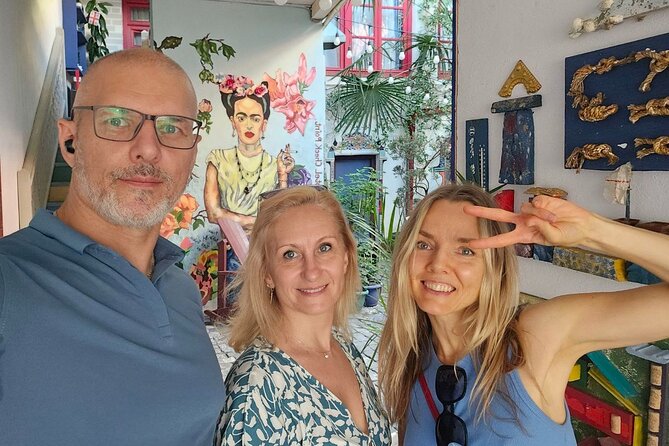
This is the part of the tour where you will likely want your camera ready. The guide points out Frida’s Cafe and other popular photo spots. Some are well known online, but the useful part is having someone show you where to look rather than wandering past without noticing the details.
The short timing has a clear benefit and a clear limit. You get a lively introduction without spending the whole morning in one neighborhood. On the other hand, you will not have much time for cafés, shops, long conversations, or careful architectural study.
I would use this stop to note places you want to revisit. If one balcony-lined lane catches your attention, mark it mentally and return after the tour. A guided walk should help you choose where to spend your unhurried time later.
Choosing the cable car or walking to Narikala
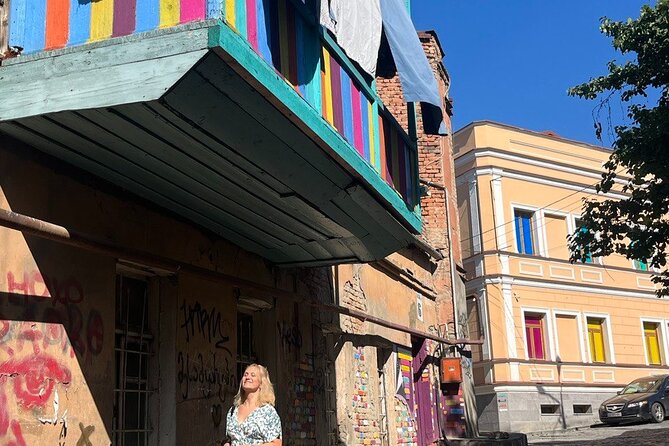
The route then turns toward the Tbilisi Cable Car and Narikala Fortress. The guide offers flexibility here: you can use the cable car for the uphill or downhill section, or continue on foot through the old streets.
The cable car ticket is not included and costs 2.00 EUR per person. Since the rest of the listed sights are free, this is the only expected attraction-related extra cost in the tour description. Carry enough payment for the ride, or choose the walking option if you prefer to keep the cost down.
This choice affects the feel of the tour. The cable car saves energy and gets you to the viewpoint efficiently. Walking keeps you closer to the old streets and gives the route a more gradual rhythm, but the activity information specifically asks for moderate physical fitness, so you should take the uphill option seriously.
You do not need to decide before booking. The guide can adapt the plan during the tour. That is especially helpful if the group includes people with different energy levels.
More things to do in Tbilisi:
- Tbilisi: Day Trip to Kazbegi, Gudauri, Gergeti, and Ananuri
★ 4.9 · 3,203 reviews - Day Trip to Kakheti Wine Region Including 9 Wine Tastings
★ 5.0 · 2,774 reviews - Highlights of Caucasus Mountains-Jinvali,Ananuri,Gudauri,Kazbegi(Group tour)
★ 5.0 · 2,682 reviews - From Tbilisi: Kakheti Wine Region Tour with 9 Wine Tastings
★ 4.9 · 2,541 reviews
Narikala Fortress and the best city view
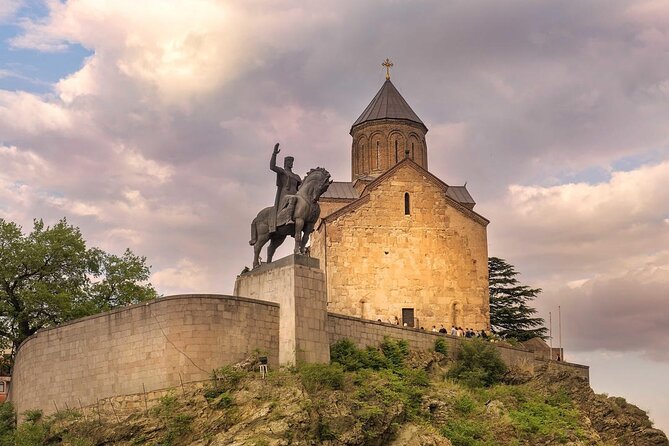
Narikala Fortress is the tour’s high point in both senses. You spend about ten minutes there, looking across Tbilisi from one of the city’s most impressive viewpoints.
The fortress stop is free, but do not confuse free entry with a small experience. From this height, the winding old streets, river corridor, and dense central districts make more sense as one city. You can see why the guide presents Narikala as the main highlight.
Ten minutes is enough for a strong first look and photographs. It is not enough for a slow fortress exploration. If you want to inspect walls or linger over the view, ask about extending the visit or arrange to return on your own.
The optional cable car also makes practical sense here. You can ride up and walk down, walk up and ride down, or walk both ways. The tour’s flexibility lets you match the route to your group instead of treating the schedule as fixed.
Churches, Mother of Georgia, and Persian traces
The Lower and Upper Betlemi Churches follow Narikala. The stop lasts about five minutes and focuses on old Orthodox cathedrals and Georgia’s conversion to Christianity.
That subject gives the route needed context. The churches are not just attractive religious buildings. They introduce a key part of Georgian identity and help explain why faith is so visible in the city’s architecture and traditions.
The timing remains brief. You may see the churches from outside or receive a short explanation, but the tour does not promise extended interior visits. Dress and behavior should be respectful around active religious sites, even though no special clothing rule is stated in the tour details.
Next comes Kartlis Deda, the giant Mother of Georgia monument. You spend about five minutes here. The monument is a visual marker above the city and another good viewpoint, though the visit is designed as a quick stop rather than a long monument tour.
The Ateshgah Zoroastrian Temple adds a different layer. This five-minute stop points to Persian imperial influence and reminds you that Tbilisi’s past is not limited to one religion or one political power. It is a small site with a big role in the story of the city.
These stops are valuable because they prevent the tour from becoming a simple old-town photo walk. You get Georgian Christian history, Persian influence, and the physical signs of a city shaped by nearby empires.
Liberty Square and the Russian imperial chapter
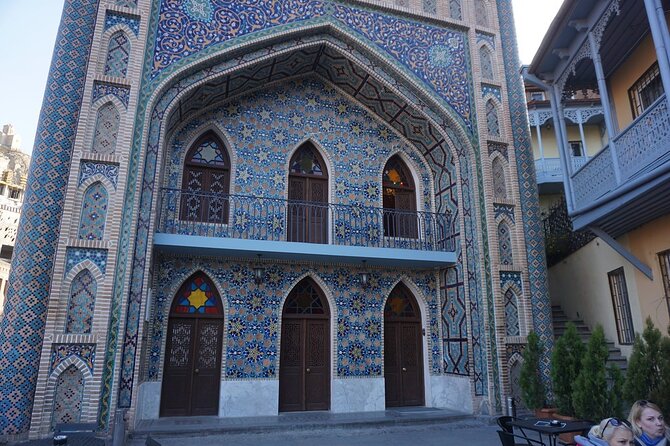
The tour ends at Liberty Square, also called Freedom Square, after about ten minutes there. This broad central space is the place to discuss the Russian Empire in Georgia and why that period matters.
The square gives the walking route a useful finish. You begin among baths and medieval lanes, then move through fortress views and religious landmarks before arriving at a formal urban center linked to more recent political history.
Because the tour ends here, you can continue independently into central Tbilisi. You may also request a different ending point, since the tour is described as flexible about where it finishes. Confirm that adjustment with the guide rather than assuming it will happen automatically.
Liberty Square is also a practical place to end because it is near public transportation. The tour information confirms access to nearby transit, making it easier to continue sightseeing or return to your accommodation.
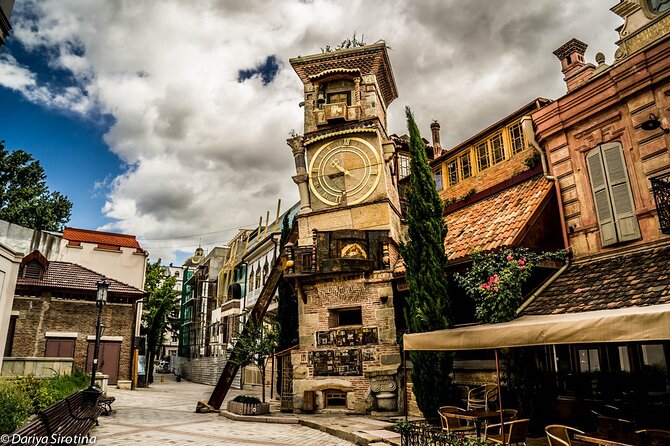
Rezo Gabriadze’s clock tower and puppet theater
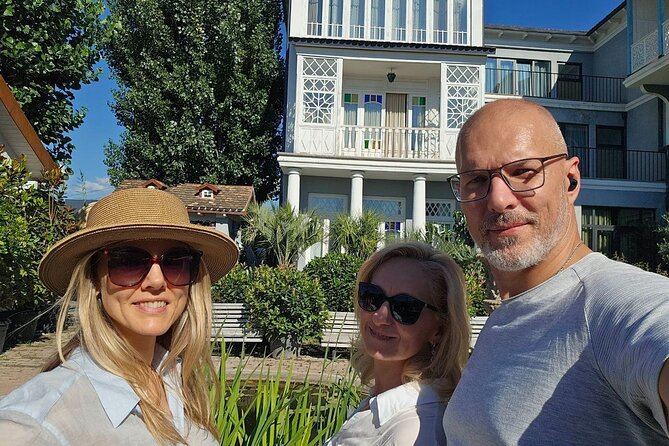
The Rezo Gabriadze Marionette Theater is listed as the final sight, with about ten minutes devoted to it. Its clock tower and small hourly performance make it one of the more distinctive stops on the route.
The timing of this stop is worth planning around. The tower’s small performance happens every hour, so ask the guide about the schedule at the beginning of the walk. If the timing lines up, you may catch it without changing the rest of the route. If not, the exterior and theater still give you a memorable final image of Tbilisi.
This is a good example of why a private tour can be more useful than a rigid group outing. The guide may be able to adjust the order or pace, though no guaranteed schedule change is stated. Ask rather than count on it.
The theater also adds a touch of Georgian creative life after the heavier stops about empire, faith, and war. It keeps the tour from ending on a purely political note.
What the two-hour schedule really means
The route includes ten stops in roughly two hours. That works out to short visits, with walking time between them. You should expect an overview, not a museum-style tour with long explanations at each location.
I see that as a strength for some people. If you have limited time in Tbilisi, this walk covers a remarkable range. You get baths, old streets, a fortress, churches, a monument, a Zoroastrian site, a major square, and a puppet theater in one compact outing.
The tradeoff is depth. You will need a longer independent visit if you want to enter religious buildings at length, spend time in the baths, explore every lane, or examine Narikala in detail.
The private setting helps reduce that problem. You can ask questions as they arise, request a different end point, and choose between walking and the cable car. Still, do not expect every stop to receive equal attention.
Food advice is an unexpected bonus
The strongest personal detail attached to this experience is the guide’s help with Georgian cuisine. Alesia Aliakseichyk introduced unfamiliar dishes and helped the group choose food they might not have ordered by themselves.
That is more useful than it sounds. Georgian menus can include names that are new to you, and a short explanation of ingredients or serving style can make ordering less intimidating. Food is not included, and snacks are specifically excluded, so plan to pay separately for anything you eat.
The tour does not promise a meal or tasting. Instead, the value is informal guidance during or around the walk. If food interests you, raise the subject early and ask for specific suggestions.
Who will get the most from this tour?
I would choose this tour if you are visiting Tbilisi for the first time, have only a short stay, or want a private introduction before exploring alone. It also suits couples, families, and small groups who prefer to ask questions without sharing the guide with strangers.
It is a good match for people who want history and culture mixed with practical city orientation. The route does not focus on a single theme, so you see more of Tbilisi’s main story in less time.
I would be more cautious if you want a slow architectural walk, an extended fortress visit, a full bath experience, or detailed interior tours. The two-hour format moves quickly, and the cable car costs extra.
Confirmation is provided at booking, and free cancellation is available if you cancel at least 24 hours before the local start time. Changes or cancellations inside that window are not accepted for a refund. Keep the mobile ticket available, and wear shoes suited to walking.
Should you book the Tbilisi Walking City Tour?
Book it if you want a private, affordable overview with strong coverage of Tbilisi’s central sights. The best reasons are the flexible cable car choice, the high view from Narikala, the mix of Georgian, Persian, Christian, and Russian-era subjects, and Alesia’s reported help with local food.
Skip it if your priority is slow sightseeing. At $23.27 per person, the price is fair for private guiding, but the tour is not designed for long visits inside each place. Add the 2.00 EUR cable car fare if you choose that option, and remember that food is separate.
For most first-time visitors, this is a useful way to get your bearings fast, learn what makes Tbilisi unusual, and decide where to return with more time.
FAQ
How long does the Walking City Tour in Tbilisi last?
The tour lasts approximately two hours.
How much does the tour cost?
The listed price is $23.27 per person.
Is the Tbilisi Cable Car included?
No. The cable car costs 2.00 EUR per person. You can also walk to the fortress instead.
Where does the tour begin?
The tour begins at Orbeliani Baths, 31 Abano Street, Tbilisi, Georgia.
Where does the tour end?
The scheduled ending point is Liberty Square, 2 Freedom Square, Tbilisi, Georgia. A different ending location can be arranged if requested.
Is this a private tour?
Yes. Only your own group participates in the activity.
Do I need to be physically fit?
A moderate level of physical fitness is recommended. The tour involves walking, and the route to Narikala can be taken on foot or by cable car.
Are the sights included in the price?
The listed sights are free to enter. Snacks are not included, and the cable car costs extra if you choose to use it.
Just added in Tbilisi
- Wine Tasting feel the Difference of Qvevri or Classical Wine★ 4.4 · 10 reviews
- From Tbilisi: Kakheti and Kazbegi 2-Day 4X4 Jeep Tour pack★ 5.0 · 6 reviews
- Walking Tour in Old Tbilisi – Group Tour★ 4.5 · 8 reviews
- Uforgatable Kakheti Tour with wine tasting – in Georgia★ 4.9 · 5 reviews
- From Tbilisi: Uplistsikhe Caves and Mtskheta Town Day tour★ 5.0 · 2 reviews
- Tbilisi: Vintage Fashion and Secondhand Thrifting Tour★ 5.0 · 11 reviews
- Tbilisi Airport to Gudauri, Bakuriani, Batumi, Tbilisi★ 5.0 · 3 reviews
- Private Adorable City Tour of Tbilisi★ 5.0 · 3 reviews
Walking Tours, compared.
Tbilisi Walking Tour Including Cable Car and Traditional Bakery
Read our review →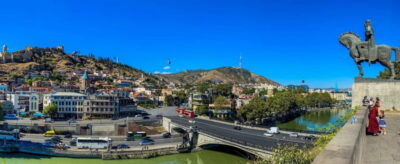
Evening Walking & Talking Tour with Wine & Boat Ride
Read our review →
Evening Walking Tour with Wine & Boat Ride Options
Read our review →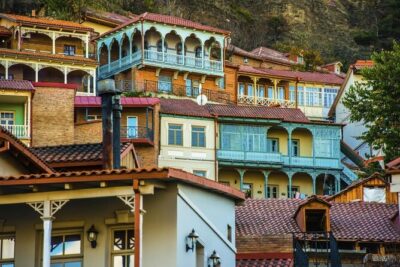
Old Tbilisi Highlights walking tour with wine & 10 tastings
Read our review →
Old Tbilisi Tour: Private Walking Tour With Wine Tasting
Read our review →

Private Tbilisi Food Tour: 9 Tastings Walk in Bohemian District
Read our review →Browse the lists this tour appears in