
Reviewed · WINE TOURS IN TBILISI
Old Tbilisi Tour: Private Walking Tour With Wine Tasting
Old Tbilisi rewards slow footsteps. This private tour combines Narikala Fortress views with a guided walk through sulfur baths, churches, lanes, and riverside sights, then adds a tasting of Georgian wine. I like the personal pace, and I like that the route gives you both famous landmarks and small details you could easily miss alone. The main drawback is the amount of walking on uneven streets, especially in summer heat.
At $39 per person, this is a strong introduction to central Tbilisi, particularly if you are arriving for the first time and want useful orientation. The tour usually lasts two to three hours, but the experience depends heavily on your guide and your interests. Guides such as Luka, Lela, Mirian, Mariam, and Khatia are praised for being friendly, flexible, and clear without turning the outing into a long lecture.
In This Review
- Key points to know before booking
- Why this is a good first look at Tbilisi
- Narikala Fortress and the cable-car ride
- Kartlis Deda, Georgia’s welcoming hilltop figure
- Abanotubani and the sulfur-bath district
- Legvachtahvi Gorge and the city waterfall
- Jan Shardeni Street and the changing old town
- Sioni Cathedral and Georgian religious tradition
- The Bridge of Peace and Rike Park
- Metekhi Cathedral and the final stretch
- The Georgian wine tasting
- Guides, pace, and the personal touch
- Price, walking effort, and timing
- Who should book this Old Tbilisi tour?
- Should you book it?
- FAQ
- How long does the Old Tbilisi tour last?
- What is included in the price?
- Where does the tour begin and end?
- Is this a private tour?
- How much walking is involved?
- Can I cancel for a full refund?
Key points to know before booking
- Narikala by cable car: Your ticket takes you up to one of Tbilisi’s best viewpoints and saves a steep uphill climb.
- A private route: Only your group participates, so the guide can adjust the pace and explain what interests you most.
- Eight major sights: The walk links Narikala, Kartlis Deda, Abanotubani, Legvachtahvi Gorge, Jan Shardeni Street, Sioni Cathedral, the Bridge of Peace, and Metekhi Cathedral.
- Georgian wine at the finish: The tasting adds a cultural layer to the sightseeing, and some tastings may include chacha or juice.
- Best in cooler hours: Several people found morning or evening more comfortable in summer, with 7:30 p.m. suggested for especially attractive cable-car views.
- A useful first-day tour: The route helps you understand central Tbilisi and can leave you with ideas for food and later activities.
Why this is a good first look at Tbilisi
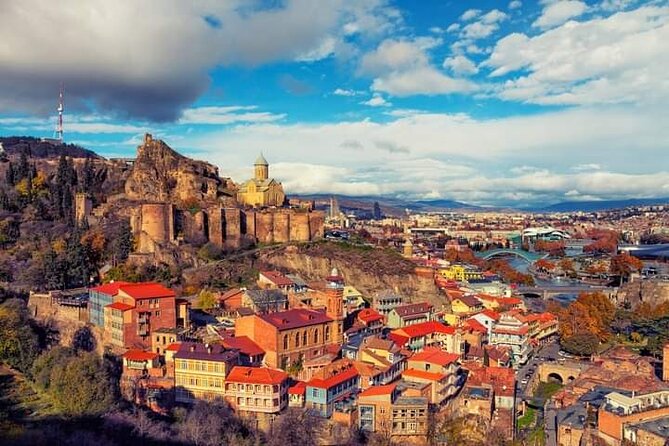
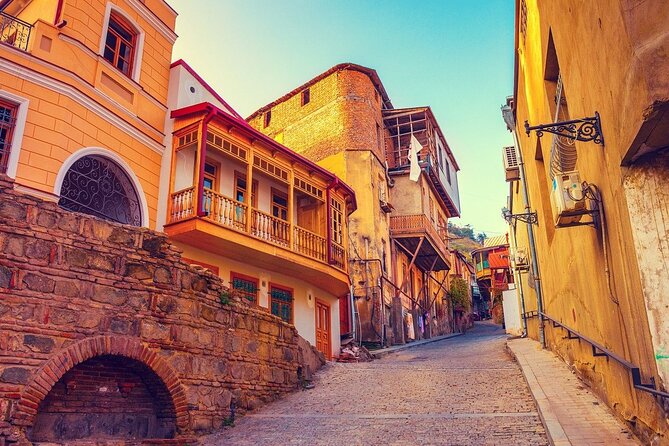
Tbilisi can feel confusing at first. The old town sits around hills, the Mtkvari River, ravines, courtyards, churches, baths, and newer public spaces. A map shows the sights, but it does not explain why a fortress sits above a botanical garden, why sulfur baths shaped the city, or how an old cathedral and a modern glass bridge ended up within the same short walk.
This tour gives you that framework. You begin at Metekhi Church of the Nativity of the Mother of God, at the stated meeting point on Metekhi Street, and the route includes a cable-car ride to Narikala. You then walk downhill through some of Old Tbilisi before crossing the river and returning to the Metekhi area.
I like this direction because the cable car handles the hardest vertical section. You get the hilltop view early, then spend much of the walk descending or moving across the city. It is still a walking tour, not a sightseeing ride, so comfortable shoes and a reasonable fitness level matter.
The private format is the real advantage. You are not trying to keep up with a large group or wait while a guide answers the same question several times. The guide can slow down, shorten explanations, or spend more time on history, architecture, food, or present-day life. One person specifically appreciated that the guide adjusted the pace to personal interests, while another enjoyed a relaxed balance between detail and brevity.
More Wine Tours in Tbilisi
- Day Trip to Kakheti Wine Region Including 9 Wine Tastings
★ 5.0 · 2,774 reviews - From Tbilisi: Kakheti Wine Region Tour with 9 Wine Tastings
★ 4.9 · 2,541 reviews - Tbilisi: Kakheti Wine Region Tour with 10 Wine Tastings
★ 5.0 · 2,160 reviews
Narikala Fortress and the cable-car ride
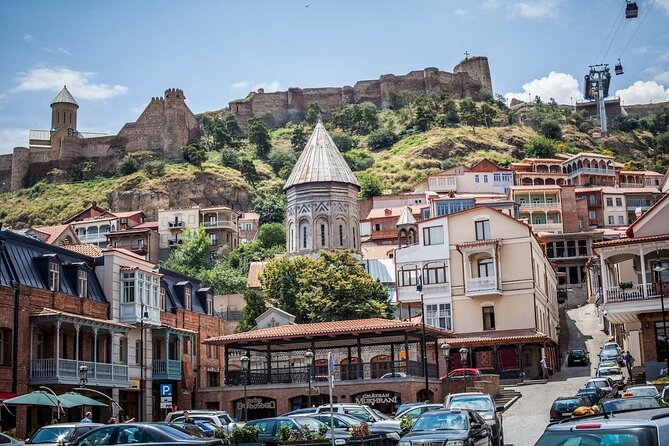
The tour’s high point is Narikala Fortress, reached by cable car. The ride itself gives you a quick sense of Tbilisi’s shape, with the old city below and the hills rising around it. From the top, you can look across the city in one direction and toward the quiet forest of the Botanical Garden on the other side of the fortress walls.
Narikala began as a Sasanian citadel in the fourth century, when it was known as Shuris-tsikhe, or Invidious Fort. The Umayyads expanded it in the seventh century, and King David the Builder added to its importance later. The Mongols gave it the name Narin Qala, meaning Little Fortress. Much of what you see today dates from the sixteenth and seventeenth centuries.
The site also carries the marks of damage. An earthquake in 1827 destroyed parts of the fortress, and some sections were later demolished. You can walk around the remaining walls and look closely at the stonework rather than simply taking a quick photo from the cable-car station.
The scheduled stop is about 20 minutes. That is enough for an introduction and a walk around the main area, but not enough for a long, unhurried exploration of every corner. If fortress ruins are a major interest, tell your guide at the beginning and ask how much time can be given here.
The views are the main prize. One side looks over a busy capital, while the other opens toward trees and the Botanical Garden. That sharp change in scenery explains Tbilisi better than a long speech could. The city is compact, hilly, old, and still changing.
Kartlis Deda, Georgia’s welcoming hilltop figure
Near Narikala is Kartlis Deda, the 20-meter aluminum statue often called Mother of Georgia. Elguja Amashukeli designed the figure in Georgian national dress for Tbilisi’s 1,500th anniversary in 1958.
Her pose carries a clear message. She holds a bowl of wine in her left hand for friends and a sword in her right hand for enemies. This is a quick stop, around 10 minutes, but it gives your guide an opening to talk about Georgian hospitality, national identity, and the symbolism of wine in local culture.
Do not expect a large museum or a long visit here. Kartlis Deda is best treated as a viewpoint and a cultural marker. The statue also connects naturally with the wine tasting later, since wine is not just a drink in Georgia. It is part of how the country presents itself.
Abanotubani and the sulfur-bath district
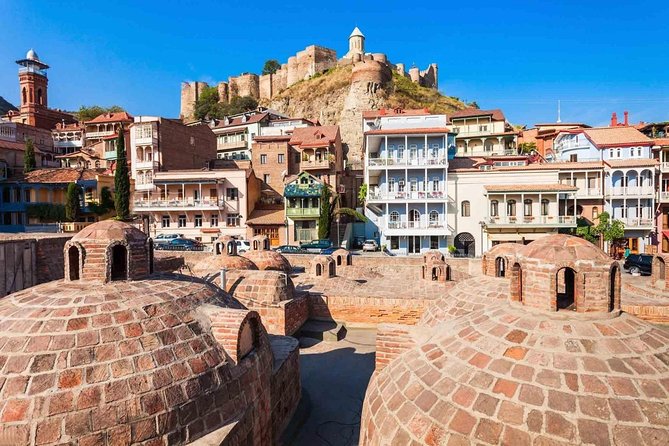
From the fortress area, you walk downhill to Abanotubani, the district of domed sulfur baths. According to local legend, this area helped inspire the founding of Tbilisi in the fifth century. The name Tbilisi is linked to warm water, and the natural sulfur springs remain central to the city’s identity.
The springs supply about 3 million liters of water each day, with an average temperature of 47 degrees Celsius. That is a striking figure to hear while standing in an active part of the old city. You can also notice the contrast between the historic bath district and the restaurants, shops, and foot traffic around it.
The stop takes about 20 minutes and is mainly about context. You do not need to plan a bath during this tour, and a bathing session is not included. If you want that experience, you would need to arrange it separately.
Abanotubani is also one of the places where a local guide adds real value. Without explanation, the bath district can look like a cluster of attractive old buildings. With a guide, the hot springs become part of the story of why Tbilisi exists where it does.
A completely different kind of day:
- Tbilisi: Day Trip to Kazbegi, Gudauri, Gergeti, and Ananuri
★ 4.9 · 3,203 reviews - Highlights of Caucasus Mountains-Jinvali,Ananuri,Gudauri,Kazbegi(Group tour)
★ 5.0 · 2,682 reviews - Tbilisi: Mtskheta, Jvari, Gori and Uplistsikhe Day Tour
★ 4.9 · 2,396 reviews - From Tbilisi to Kazbegi, Ananuri, Gudauri & Gergeti
★ 4.9 · 2,278 reviews
Legvachtahvi Gorge and the city waterfall

The walk continues into Legvachtahvi Gorge, where a small waterfall sits surprisingly close to the center of the capital. The pathway makes the site easy to reach, and the gorge offers a cooler, quieter break after the exposed streets and hilltop views.
The stop is short, about 10 minutes. That is enough to see the waterfall and enjoy the change in setting, but you should not expect a large natural attraction. Its appeal is the surprise of finding a narrow gorge and running water inside central Tbilisi.
In summer, this can be one of the most pleasant points on the route. Several accounts advise taking the tour in the morning or evening during hot weather. The shaded gorge helps, but much of the rest of the walk is outdoors, so bring water and protect yourself from the sun.
Jan Shardeni Street and the changing old town

After the gorge, you head toward Jan Shardeni Street, one of the most social and commercial parts of Old Tbilisi. The street is named for Jean Chardin, an eighteenth-century French traveler who wrote about Georgia after visiting the country.
Today, Jan Shardeni is known for nightlife that can continue until 5 a.m. That detail gives you a useful sense of how the old town changes during the day. In daylight, you can examine the street as part of the walking route. At night, it becomes a place for food, drinks, and late activity.
The stop lasts about 10 minutes. It is not a long shopping visit, and the tour does not promise a nightlife outing. Instead, you get a quick look at the modern social side of an old district.
I find this contrast useful. Tbilisi is not a preserved historic set piece. People live, eat, drink, work, and go out here. A good guide can connect the old buildings with current city life, which several participants valued.
Sioni Cathedral and Georgian religious tradition
Sioni Cathedral is one of the most important religious sites in Georgia. The first church here was built in the fifth century by order of Vakhtang Gorgasali. The present building dates mainly from the seventeenth century and holds the original cross associated with Saint Nino from the fourth century.
The visit is planned for about 10 minutes. That makes it a focused stop rather than a full church tour. You will want to dress and behave respectfully, since this remains a working place of worship.
The cathedral is especially useful for understanding how Christianity shaped Georgia. The guide can give you the basic story and point out details that may not be obvious from the outside. If religious art or Georgian church history matters to you, ask for more explanation since the private format allows some adjustment.
The Bridge of Peace and Rike Park
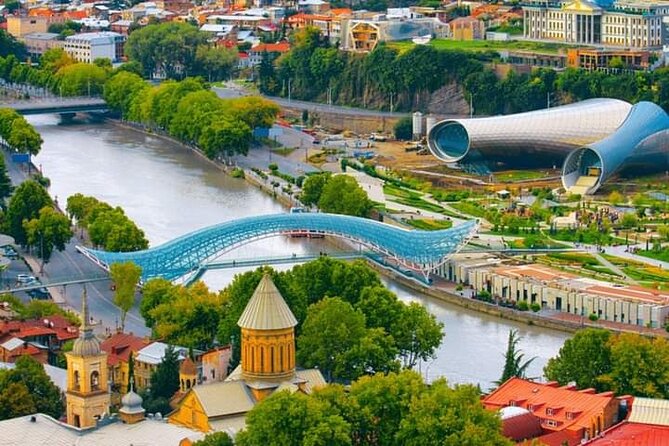
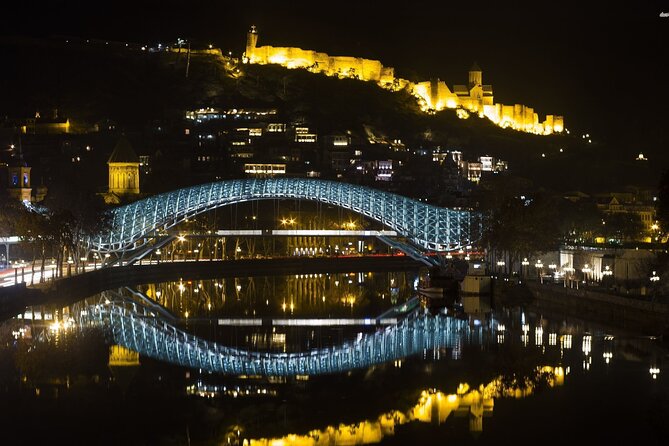
The Bridge of Peace brings a sharp modern contrast to the older parts of the route. Opened in 2010, the glass-and-steel pedestrian bridge stretches 156 meters across the Mtkvari River and contains 10,000 lamps.
You cross it through Rike Park, where the route begins to feel more open and contemporary. The bridge is a popular photo stop, but it also helps you see how Tbilisi has developed public spaces alongside its historic core.
The planned stop is about 20 minutes. That gives you time to cross, pause for views, and hear the basic story of the design. The bridge may not appeal to everyone, especially if you prefer older architecture, but its inclusion makes the tour more balanced. You see both the medieval and modern faces of the capital.
Metekhi Cathedral and the final stretch
The tour visits Metekhi Cathedral, on the left bank of the Mtkvari River, and finishes back at the meeting point. The church is tied to several Georgian legends, including the belief that Saint Shushanik’s remains are here. A statue of Vakhtang Gorgasali stands in the church courtyard.
Because Metekhi is also the meeting point, this ending is practical. You do not need to work out a new return route after the walk. It also gives the tour a sense of completion, linking the city’s religious and royal stories with the river and the old neighborhoods around it.
The church stop is listed as about 20 minutes. As with Sioni Cathedral, this is not a specialist religious excursion, but it gives you another important place with a local explanation.
The Georgian wine tasting
Wine tasting is included, and it is more than a glass added at the end to make the tour sound festive. Georgian wine has a major place in the country’s culture and economy, and many people arrive knowing little about it. The tasting gives you a direct, easy way to learn.
The exact number and selection of wines can vary. One account described trying eight or nine samples, while another praised the quality of the selections. Some tastings have also included chacha and juice. Since the precise tasting lineup is not fixed here, you should see those details as possibilities rather than promises.
The setting has also made an impression. One person liked it enough to return afterward, buy a bottle, and enjoy it on a rooftop patio. That is a good sign that the tasting can point you toward a place you may want to revisit, not simply provide a rushed sample before the tour ends.
If you do not drink alcohol, the available information indicates that juice tasting has been part of at least one experience, but you should confirm your preference in advance. The private format makes that request reasonable.
Guides, pace, and the personal touch
The strongest part of this experience is the guiding. Luka is repeatedly praised for a friendly manner, clear historical explanations, and the ability to keep the tour moving without losing substance. Mirian is described as relaxed and especially strong on background and small facts. Lela is praised for warmth, storytelling, and adding extra places beyond the planned route.
Mariam’s advice about taking the cable car at around 7:30 p.m. in summer is worth noting. That timing can offer softer light and cooler air, though the exact view will depend on the day and season. Khatia is also described as experienced, adaptable, and attentive to personal interests.
Guide assignments can change, so you may not receive a particular person unless the operator confirms it. Still, the repeated pattern is clear: the best part of the tour is the conversational style and the ability to shape the outing around you.
The tour is offered in English. It is also private, which means your own group participates. That makes it a good fit for couples, families, coworkers, or anyone who dislikes fixed group pacing.
Price, walking effort, and timing
At $39 per person, the price includes the guide, wine tasting, and cable-car ticket. For a two to three-hour private experience in a capital city, that is good value if you want both orientation and local context rather than a simple checklist of sights.
You are paying for the guide’s time as much as for the transport and tasting. The cable car would otherwise be a separate cost, and the wine tasting gives the tour a cultural finish. Gratuities are not included, so plan to tip your guide if the service is helpful.
The main physical demand is walking. The route includes hills, stone streets, pathways, and the descent from Narikala. A moderate fitness level is advised. Service animals are allowed, and the meeting point is near public transport, but no hotel pickup or drop-off is included.
Good weather is required. You can cancel for a full refund up to 24 hours before the start time, while poor weather may lead to a different date or a full refund. If you are visiting in a hot month, morning or evening is the sensible choice.
Who should book this Old Tbilisi tour?
I would choose this tour early in a Tbilisi stay. The route covers the main old-town sights, gives you a view from above, and introduces local food and wine culture. The guides may also suggest places to eat or things to do later, which makes the outing useful beyond its scheduled hours.
It suits you best if you want:
- A private guide rather than a large group
- A compact introduction to Tbilisi’s history and layout
- A mix of old churches, fortress ruins, city streets, and modern architecture
- A flexible pace
- A wine tasting included in the price
- A manageable half-day outing rather than a full-day excursion
I would hesitate only if you want a long fortress visit, a full religious-art tour, or a completely flat route. You may also prefer a different experience if you dislike wine or walking in warm weather.
Should you book it?
Yes, if you want an efficient and personal introduction to Old Tbilisi. The route is well chosen, the cable car saves effort, and the wine tasting gives the history a human and distinctly Georgian finish.
Book it for your first or second day if possible, and request a morning or evening start in summer. Tell the guide what interests you, ask for a slower pace if needed, and consider requesting Luka, Lela, Mirian, Mariam, or Khatia, while understanding that guide availability may vary. At $39, this is a practical way to get your bearings, learn the city’s story, and finish with a toast.
FAQ
How long does the Old Tbilisi tour last?
The experience lasts approximately two to three hours.
What is included in the price?
The price includes guide service, a Georgian wine tasting, and a cable-car ticket.
Where does the tour begin and end?
The meeting point is Metekhi Church of the Nativity of the Mother of God on Metekhi Street in Tbilisi. The tour ends back at the same meeting point.
Is this a private tour?
Yes. Only your group participates in the activity.
How much walking is involved?
You should expect a walking tour with hills, paths, and old-city streets. A moderate level of physical fitness is recommended.
Can I cancel for a full refund?
Yes. You must cancel at least 24 hours before the experience start time for a full refund. If poor weather causes the tour to be canceled, you will be offered another date or a full refund.
More Walking Tours in Tbilisi
- Tbilisi Walking Tour Including Cable Car and Traditional Bakery
★ 5.0 · 1,310 reviews - Tbilisi: City Highlights Guided Walking Tour
★ 4.9 · 1,114 reviews - Tbilisi:Evening Walking & Talking Tour with Wine & Boat Ride
★ 5.0 · 572 reviews - Tbilisi: Evening Walking Tour with Wine & Boat Ride Options
★ 5.0 · 407 reviews
Just added in Tbilisi
- Wine Tasting feel the Difference of Qvevri or Classical Wine★ 4.4 · 10 reviews
- From Tbilisi: Kakheti and Kazbegi 2-Day 4X4 Jeep Tour pack★ 5.0 · 6 reviews
- Walking Tour in Old Tbilisi – Group Tour★ 4.5 · 8 reviews
- Uforgatable Kakheti Tour with wine tasting – in Georgia★ 4.9 · 5 reviews
- From Tbilisi: Uplistsikhe Caves and Mtskheta Town Day tour★ 5.0 · 2 reviews
- Tbilisi: Vintage Fashion and Secondhand Thrifting Tour★ 5.0 · 11 reviews
- Tbilisi Airport to Gudauri, Bakuriani, Batumi, Tbilisi★ 5.0 · 3 reviews
- Private Adorable City Tour of Tbilisi★ 5.0 · 3 reviews
Wine Tours in Tbilisi, compared.
Day Trip to Kakheti Wine Region Including 9 Wine Tastings
Read our review →
Kakheti Wine Region Tour with 9 Wine Tastings
Read our review →
Kakheti Wine Region Tour with 10 Wine Tastings
Read our review →
Mtskheta Jvari Bazaar, Chronicles of Georgia & Wine
Read our review →
Mtskheta,Jvari,Bazaar,wine tasting,Chronicles of Georgia
Read our review →
Evening Walking & Talking Tour with Wine & Boat Ride
Read our review →
Evening Walking Tour with Wine & Boat Ride Options
Read our review →
Kakheti;City of Love Sighnaghi, Bodbe. KTW. Wine House Group tour
Read our review →Browse the lists this tour appears in