

Reviewed · WALKING TOURS
Tbilisi with all its glory and originality. (group walking tour)
Tbilisi rewards curious walkers. This four-hour tour links hilltop views, ancient legends, sulfur baths, old balconies, and a wine cellar, giving you a useful first look at Georgia’s capital. I like the small group of no more than 15 people, and I like that the tour mixes famous sights with everyday details such as Italian courtyards, Georgian feasts, and jokes on a theater tower. The main drawback is that the day includes uphill walking and a cable-car ride that costs extra.
At $20 per person, the tour offers good value if you want a guided introduction rather than a list of photo stops. The free wine tasting helps, too. I would avoid booking at the last minute, since one participant reported a same-day cancellation and an argument over the reason for it, even though the payment was refunded.
In This Review
- Key points to know before you book
- Starting above the Old Town at Metekhi Cathedral
- Riding up to Kartlis Deda for the city view
- The sulfur baths and Tbilisi’s founding legend
- Fig Valley, the waterfall, and Tbilisi’s wooden balconies
- Crossing the Bridge of Peace and entering modern Tbilisi
- Meeting Tbilisi through courtyards, festivals, and feasts
- A 17th-century cellar and the included wine tasting
- How the $20 price compares with what you receive
- Who will get the most from this walk
- Should you book Tbilisi with All Its Glory and Originality?
- FAQ
- How long is the Tbilisi walking tour?
- Where does the tour start?
- What time does the tour begin?
- Where does the tour finish?
- Is the cable-car fare included?
- Is wine tasting included in the price?
- How large is the group?
Key points to know before you book
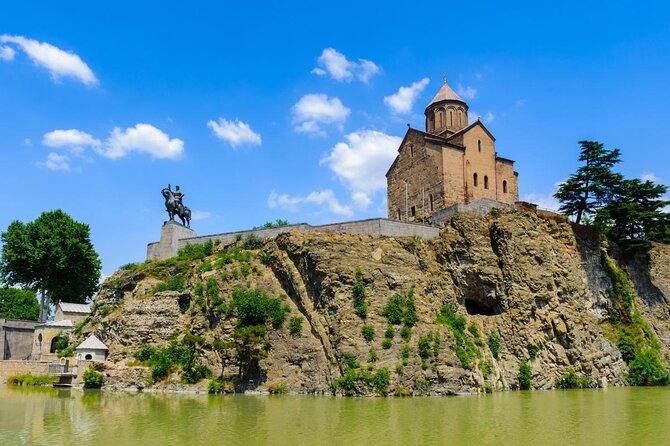
- Start at Metekhi Cathedral at 10:00 am: You begin with a strong view across the Old Town and toward Narikala Fortress.
- The cable car costs about $2 extra: You use it to reach the Mother of Georgia and later Tbilisi Fortress.
- The group is capped at 15 people: That is small enough for questions without the stiffness of a private tour.
- The walk covers Tbilisi’s main contrasts: Hilltop monuments, sulfur baths, narrow streets, balconies, modern architecture, and old courtyards all appear.
- Wine tasting is included: A cellar dating to the 17th century provides a tasting with comments from the winemaker.
- The tour returns to its starting point: Begin and finish at Alani1 on Vakhtang Gorgasali Street.
Starting above the Old Town at Metekhi Cathedral
The tour starts at Alani1, Vakhtang Gorgasali Street, at 10:00 am. From there, the opening stop is the Metekhi Plateau, a smart place to begin because you can see much of Tbilisi before walking into its tight streets.
You get a broad view of the Old Town, the river area, and Narikala Fortress. The guide uses this outlook to explain the city’s origins, including the settlement that existed before King Vakhtang Gorgasali became linked with Tbilisi’s founding story.
This first half hour is less about entering a grand cathedral and more about getting your bearings. You begin with geography, then add the stories that explain why the city grew where it did. That makes the rest of the walk easier to understand.
The description calls the opening walk boring, which appears to be an awkward translation rather than a fair warning. The subject matter is promising, but you should expect spoken explanation and city views rather than a packed sequence of formal sights.
More Walking Tours in Tbilisi:
- Tbilisi Walking Tour Including Cable Car and Traditional Bakery
★ 5.0 · 1,310 reviews - Tbilisi: City Highlights Guided Walking Tour
★ 4.9 · 1,114 reviews - Tbilisi:Evening Walking & Talking Tour with Wine & Boat Ride
★ 5.0 · 572 reviews
Riding up to Kartlis Deda for the city view
The cable car takes you toward Kartlis Deda, the Mother of Georgia. The ride is not included in the $20 price and costs about $2, so keep a little cash or another accepted form of payment ready.
The statue’s symbolism is simple and memorable. She holds a cup of wine for friends and a sword for enemies. The image gives the guide an easy way to discuss Georgian identity, hospitality, pride, and self-protection without turning the tour into a dry lecture.
At the top, you get another view over Tbilisi. The city’s older houses and narrow streets spread below, with Narikala Fortress adding a strong visual anchor. This is one of the best parts of the tour for photographs, but the value is not only visual. From above, you can see why Tbilisi feels like several cities pressed together: old homes, hills, fortifications, parks, and newer structures all share the same frame.
The stop lasts about 30 minutes. That is enough time for the view and an explanation, though not enough for a long stay or a relaxed exploration of every path around the statue.
The sulfur baths and Tbilisi’s founding legend
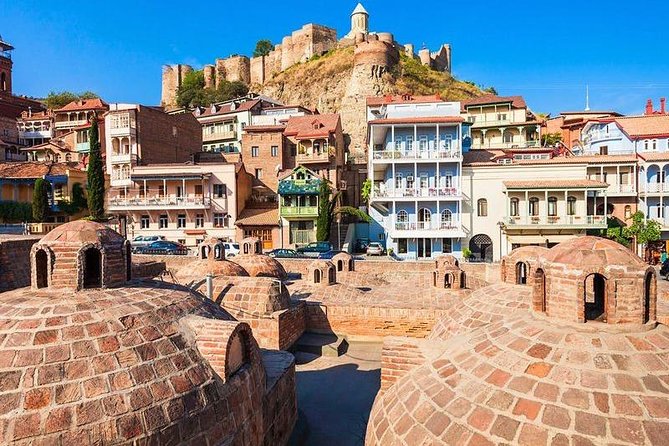
The walk then reaches Sulfur Bath No. 5 in the Abanotubani area. Tbilisi’s famous warm springs are tied to the city’s traditional founding story, involving a falcon and the discovery of hot water.
You will hear the familiar legend, but the tour promises more specific details as well. The guide discusses why only 15 of the original 65 baths remain and explains the naming system, from plain numbers such as No. 5 to more decorative names such as Royal and Variegated.
That kind of detail is useful because it turns a quick look at domed bathhouses into a better explanation of how the district developed. You do not need to take a bath to enjoy this stop, and bathing is not part of the tour.
The scheduled time is about 30 minutes. The area can be visually busy, and the walking route continues through streets where you may need to pay attention to uneven ground and other pedestrians. The supplied information does not promise an accessible route, so anyone with mobility concerns should ask the provider before booking.
Fig Valley, the waterfall, and Tbilisi’s wooden balconies
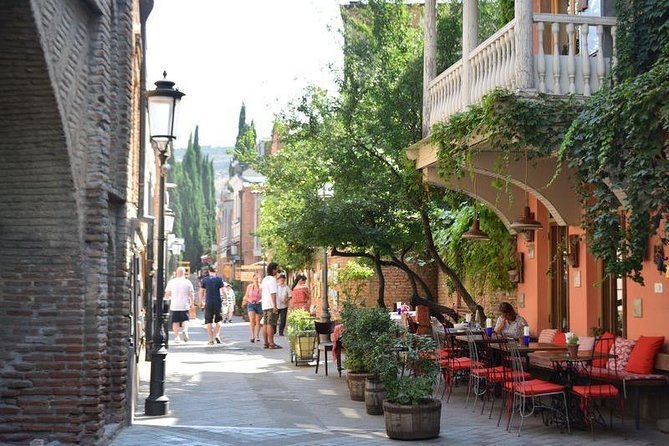
From the baths, the route continues into the Old Town and along Fig Valley. One of the pleasant surprises is a real waterfall within the city. It gives the walk a short change of pace after the history around the baths.
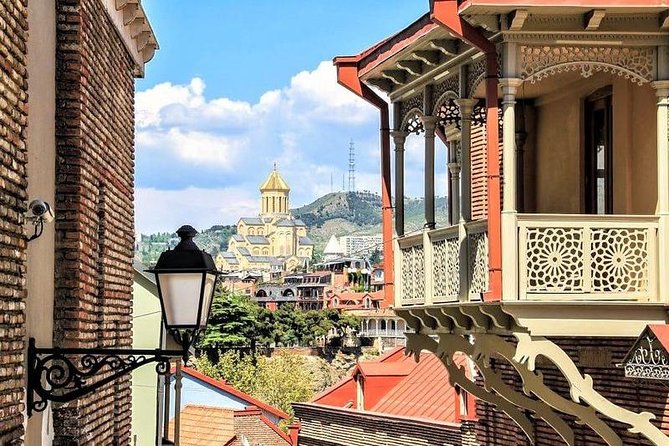
The route also highlights Tbilisi’s famous balconies. These projecting wooden structures are among the city’s most recognizable features, and the guide explains how they served different purposes in different periods. You will also hear why no two balconies are exactly alike.
That focus on ordinary buildings is one of the tour’s strongest ideas. A fortress tells you about power. A balcony tells you how people used their homes and streets. It also helps you look upward as you walk, since the best details in the Old Town are often above eye level.
This portion is listed at about 20 minutes, so expect a compact visit rather than a long nature walk. The waterfall and balconies are part of a larger route, not separate excursions.
More things to do in Tbilisi:
- Tbilisi: Day Trip to Kazbegi, Gudauri, Gergeti, and Ananuri
★ 4.9 · 3,203 reviews - Day Trip to Kakheti Wine Region Including 9 Wine Tastings
★ 5.0 · 2,774 reviews - Highlights of Caucasus Mountains-Jinvali,Ananuri,Gudauri,Kazbegi(Group tour)
★ 5.0 · 2,682 reviews - From Tbilisi: Kakheti Wine Region Tour with 9 Wine Tastings
★ 4.9 · 2,541 reviews
Crossing the Bridge of Peace and entering modern Tbilisi
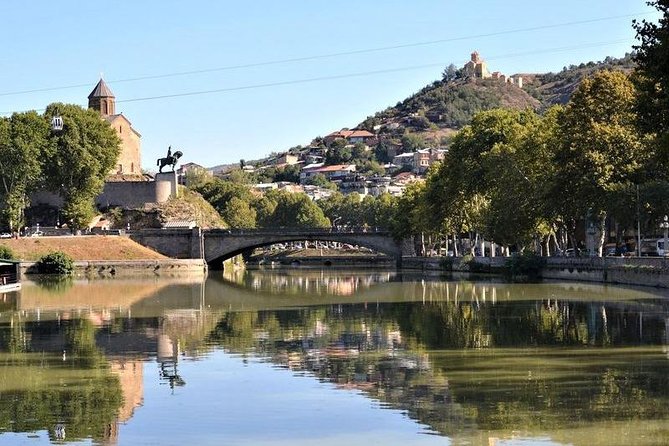
The Bridge of Peace brings a sharp change in mood. Its glass-and-steel design crosses the river between older parts of the city and Rike Park. The tour explains the bridge’s symbolism and addresses the mixed local reaction to its unusual appearance.
That balance matters. Tbilisi is not an old city frozen for sightseeing. It contains modern projects that some people admire and others dislike. Learning how the bridge fits into the city’s recent story gives you a more honest view than simply calling it beautiful or strange.
The guide also points out the unusual pipes in Rike Park. They are the sort of detail you might pass without understanding, so this is a good moment to ask questions about the city’s newer public spaces.
From Rike Park, you take another cable-car ride toward Tbilisi Fortress. Again, the ride costs extra, with the listed price at about $2. The two rides mean you should budget roughly $4 in total for cable cars, in addition to the tour price.
From the fortress area, the view shifts again. You look down over the small houses of the Old Town and its narrow streets. The first cable-car ride takes you toward the Mother of Georgia, while this later ride helps connect the modern park with the fortress and upper viewpoints.
Meeting Tbilisi through courtyards, festivals, and feasts
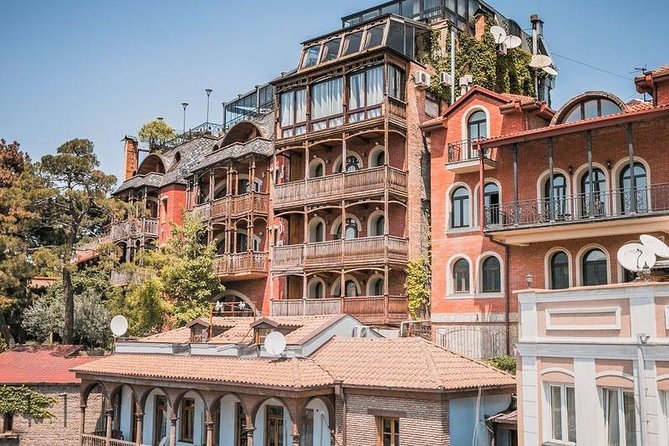
The final Old Town section moves away from monuments and toward city life. The guide introduces Georgian attitudes, food, celebrations, and the way residents have used the city over time.
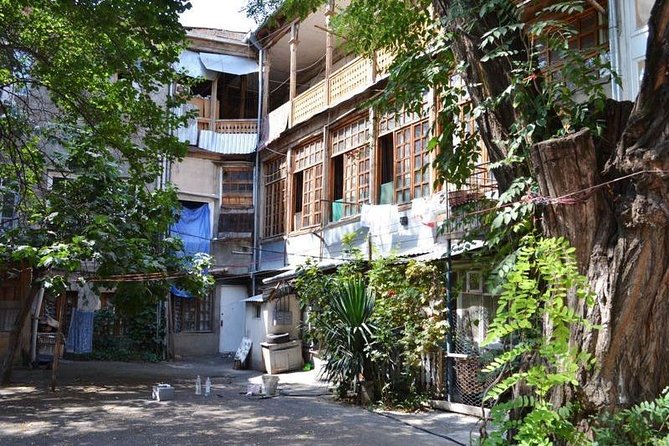
Italian courtyards are an especially useful subject. These shared interior spaces help explain the social side of old Tbilisi, where a building could contain more communal life than its street-facing walls suggest.
You also hear about Tbilisoba, the city’s colorful festival, and the jokes written on the turret of the Rezo Gabriadze theater. These details give the walk a lighter tone after the fortresses and founding legends. They also point you toward places worth revisiting on your own later.
At the Tamada monument, the guide explains the Georgian feast. Tamada means toastmaster, and the role is not simply to raise a glass now and then. Georgian toasting follows its own rules and social rhythm, so this stop helps you understand why food, wine, friendship, and formal toasts matter so much in Georgian culture.
The walk’s strongest theme appears here: Tbilisi is not only a collection of old buildings. It is a city shaped by food, storytelling, shared courtyards, humor, and hospitality.
A 17th-century cellar and the included wine tasting
The tour includes a wine tasting in a cellar dating to the 17th century. This is a meaningful addition in Georgia, a country closely associated with long-standing winemaking traditions.
The tasting is described as lasting about an hour, with no restriction on the amount served and comments from the winemaker. At the same time, the overall tour is advertised as approximately four hours, and the individual stop times add up to less than the full duration. You should treat the timing as a guide rather than a minute-by-minute schedule.
The tasting is free for participants, which improves the value of the tour. A separate wine experience could cost much more, while here it is attached to a walking route that already covers major parts of the Old Town.
Still, pace matters. If you do not drink alcohol, or if you prefer a faster sightseeing schedule, this stop may feel long. The information provided does not state that an alternative drink is available, so ask ahead if that matters to you.
Dinner is not included. That is not a serious drawback, since the tour ends back at its central starting point and leaves you free to choose your own restaurant. It does mean you should not expect a full food tour. The emphasis is on stories about Georgian cuisine and feast traditions, with wine as the main tasting element.
How the $20 price compares with what you receive
The $20 price is fair for a four-hour guided walk with a group limit of 15. You receive an English-language tour, a mobile ticket, city views, explanations at the major stops, and a wine tasting with the winemaker.
The extra cable-car charges are modest but easy to overlook. Plan on about $4 total if you use both rides. Dinner is separate, and no entrance charge for a bathhouse experience is included because you are visiting the area rather than booking a bath.
The small group is important. With 15 or fewer people, you have a better chance of hearing the guide in narrow streets and asking about details that catch your eye. It is not the same as having a private guide, but it should feel more personal than a large coach excursion.
The experience has a 4.4 rating based on nine ratings. That is a positive result, but the sample is small. One serious complaint involved a cancellation on the booking day, an argument about same-day reservations, and taxi costs. The provider said the money was refunded. My practical advice is clear: do not book this as a last-minute same-day plan, and confirm that the tour is running if your schedule depends on it.
Who will get the most from this walk
I would choose this tour if you are in Tbilisi for the first time and want the city explained through both sights and local customs. It suits you especially well if you like walking, viewpoints, short historical talks, and a social wine stop.
It is also a good fit if you want one outing that covers the Old Town, Narikala area, Mother of Georgia, sulfur baths, Fig Valley, the Bridge of Peace, Rike Park, and Tbilisi Fortress. You will not study each site in museum-level detail, but you will build a useful mental map of central Tbilisi.
You may want something else if you dislike hills, cable cars, group pacing, or alcohol-focused tastings. The route is packed, and the timetable may shift as the group moves between viewpoints, streets, and the cellar.
Wear shoes suited to several hours of walking. The information confirms that most people can participate, but it does not provide detailed accessibility information. If you have mobility needs, contact Ushba Travel before paying.
Free cancellation is available if you cancel at least 24 hours before the 10:00 am start. Cancellations or changes inside that period are not refunded or accepted. Poor weather or failure to reach the minimum group size can also lead to a different date, another experience, or a full refund.
Should you book Tbilisi with All Its Glory and Originality?
Book it if you want a broad, story-led introduction to Tbilisi for a modest price. The best features are the small group, the high viewpoints, the mix of old and new city sights, and the included cellar tasting.
I would book it early rather than on the day itself, allow about $4 for the cable cars, and keep the afternoon flexible because the tasting and walking times may not run like a railway timetable. For a first day in the city, this tour gives you enough context to return later to the baths, balconies, fortress, or wine shops with better questions and a clearer sense of place.
FAQ
How long is the Tbilisi walking tour?
The tour lasts approximately four hours.
Where does the tour start?
It starts at Alani1, Vakhtang Gorgasali Street, Tbilisi, Georgia.
What time does the tour begin?
The stated start time is 10:00 am.
Where does the tour finish?
The activity ends back at the meeting point.
Is the cable-car fare included?
No. The cable-car fare is listed separately at about $2 per ride. The route uses cable cars twice, so you should allow about $4 in total.
Is wine tasting included in the price?
Yes. The wine tasting is free for participants and takes place in a cellar dating to the 17th century, with comments from the winemaker.
How large is the group?
The group has a maximum of 15 participants.
Just added in Tbilisi
- Wine Tasting feel the Difference of Qvevri or Classical Wine★ 4.4 · 10 reviews
- From Tbilisi: Kakheti and Kazbegi 2-Day 4X4 Jeep Tour pack★ 5.0 · 6 reviews
- Walking Tour in Old Tbilisi – Group Tour★ 4.5 · 8 reviews
- Uforgatable Kakheti Tour with wine tasting – in Georgia★ 4.9 · 5 reviews
- From Tbilisi: Uplistsikhe Caves and Mtskheta Town Day tour★ 5.0 · 2 reviews
- Tbilisi: Vintage Fashion and Secondhand Thrifting Tour★ 5.0 · 11 reviews
- Tbilisi Airport to Gudauri, Bakuriani, Batumi, Tbilisi★ 5.0 · 3 reviews
- Private Adorable City Tour of Tbilisi★ 5.0 · 3 reviews
Walking Tours, compared.
Tbilisi Walking Tour Including Cable Car and Traditional Bakery
Read our review →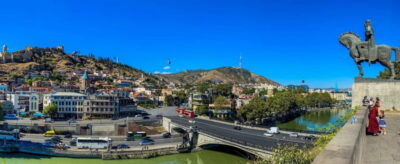

Evening Walking & Talking Tour with Wine & Boat Ride
Read our review →
Evening Walking Tour with Wine & Boat Ride Options
Read our review →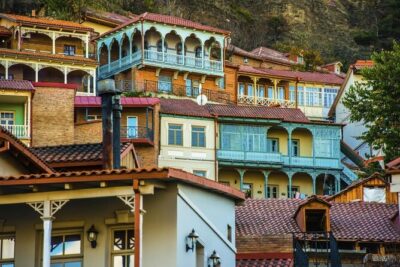
Old Tbilisi Highlights walking tour with wine & 10 tastings
Read our review →
Old Tbilisi Tour: Private Walking Tour With Wine Tasting
Read our review →

Private Tbilisi Food Tour: 9 Tastings Walk in Bohemian District
Read our review →Browse the lists this tour appears in