
Reviewed · WALKING TOURS
Tbilisi walking tour
Tbilisi reveals itself one layer at a time. This eight-hour private tour links the city’s major historic sights with a guide who can explain how Georgian, Armenian, Muslim, and Jewish traditions once met in the same compact quarter. I like the careful mix of landmarks and cultural context, and I like that your group can set its own pace. The main drawback is that lunch is not included, and the tour is long enough to require a full day.
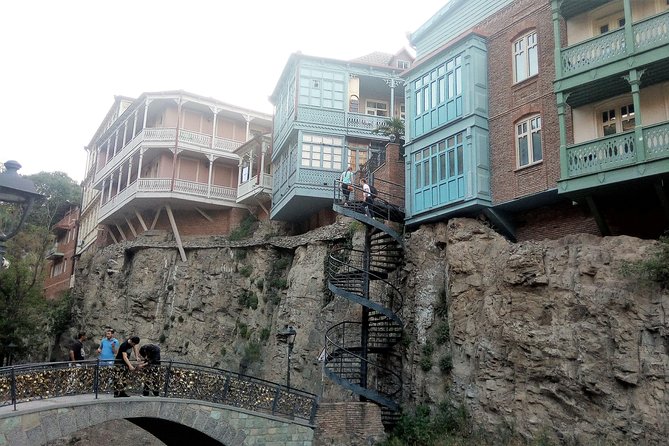
The route begins at Metekhi Cathedral and climbs toward Narikala Fortress before dropping into the old bath district. You then pass Charden Street, Sioni Cathedral, and Anchiskhati Basilica. Pickup is offered, but the exact arrangements and any transport costs should be confirmed before booking.
In This Review
- Key points to know before booking
- Why this Tbilisi route works so well
- Metekhi Cathedral and Tbilisi’s first view
- Narikala Fortress and the air tramway
- Abanotubani and the warm-water legend
- Charden Street for crafts, food, and a short pause
- Sioni Cathedral and the city’s Georgian faith
- Anchiskhati Basilica and the final historic note
- What eight hours feels like in practice
- The guide makes the difference
- Is $30 a fair price?
- Who should book this private walk?
- Should you book the Tbilisi walking tour?
- FAQ
- How much does the Tbilisi walking tour cost?
- How long does the tour last?
- What time does the tour start?
- Is pickup available?
- Is the tour private?
- Is lunch included?
- Is the Narikala air tramway part of the route?
- Can I cancel for a full refund?
Key points to know before booking
- A private eight-hour route: Your group takes part alone, so the day can move at a more comfortable pace than a large scheduled walk.
- Narikala by air tramway: The route includes the city’s old fortress and St. Nicholas Church, reached by aerial tramway.
- A strong religious and cultural mix: Metekhi, Sioni, Anchiskhati, a mosque, an Armenian church, and a synagogue help explain Tbilisi’s layered identity.
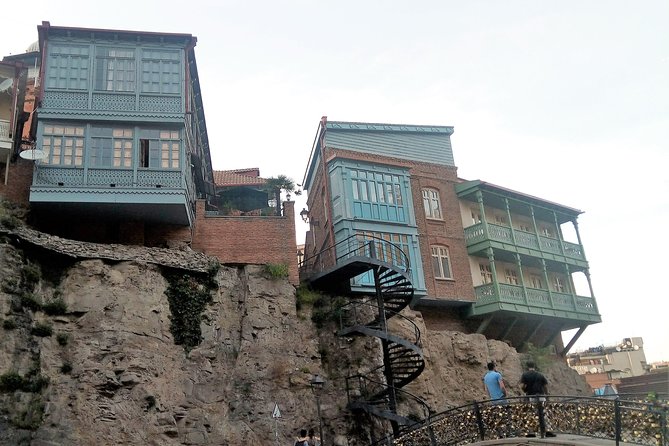
- Old Tbilisi at street level: Abanotubani and Charden Street bring sulfur baths, crafts, jewelry, restaurants, and narrow historic lanes into the day.
- $30 for roughly eight hours: That is a low price for a private guide, though lunch is extra and the air tramway ticket is not clearly listed as included.
- Flexible cancellation: You can receive a full refund if you cancel at least 24 hours before the local start time.
Why this Tbilisi route works so well
Tbilisi is not a city you understand from one grand monument. Its character comes from the way different buildings, faiths, and periods sit close together. A Georgian cathedral may be only a short walk from a mosque, an Armenian church, or a synagogue. This tour uses that compact old center well.
The route also gives you a useful sense of movement. You begin near the Mtkvari River at Metekhi, rise to the fortress above the city, then return to the sulfur baths and the old streets. From there, the path continues through important churches and shopping lanes. It is less a checklist of isolated sights and more a day spent connecting the parts.
I especially like the private format. The only published rating is five stars, and the strongest praise focuses on the guide’s enthusiasm, the amount learned, and the ability to see the city at a personal pace. That matters in Tbilisi, where churches may call for quiet time and viewpoints may tempt you to linger.
The price is also appealing. At $30 per person, the cost is modest for about eight hours of guiding. The value depends on group size, since the tour is private. For one or two people, the total remains reasonable if you want a dedicated introduction rather than a group walk. For a larger party, the per-person price becomes particularly attractive.
More Walking Tours in Tbilisi:
- Tbilisi Walking Tour Including Cable Car and Traditional Bakery
★ 5.0 · 1,310 reviews - Tbilisi: City Highlights Guided Walking Tour
★ 4.9 · 1,114 reviews - Tbilisi:Evening Walking & Talking Tour with Wine & Boat Ride
★ 5.0 · 572 reviews
Metekhi Cathedral and Tbilisi’s first view
Metekhi Cathedral is the opening stop, and it gives the tour a fitting start. The church dates from the 13th century and sits in a position that helps you read the city around it. The information provided does not promise interior access or a particular amount of time inside, so think of this stop as both a religious site and an orientation point.
Your guide’s main job here is to place Tbilisi in the wider story of Georgia. The capital is often described as roughly 1,500 years old, though Georgian tradition tends to count in centuries rather than individual years. Before Tbilisi, Mtskheta served as the capital of the Kartli Kingdom, and that older city remains important to Georgia’s story.
That context makes Metekhi more useful than a quick photo stop. You begin to see Tbilisi as a former royal center shaped by changes in power, faith, and trade. The cathedral’s free admission keeps the stop simple, though appropriate clothing and respectful behavior are wise at any Georgian church.
Narikala Fortress and the air tramway
From Metekhi, the tour continues to Narikala Fortress and St. Nicholas Church. The fortress is described as about 1,600 years old, making it one of the oldest major markers on the route. You reach this part by air tramway, which saves you from making the full climb on foot.
That ride is one of the practical pleasures of the day. It changes the pace and gives you a broad look over Tbilisi as you rise. The exact ticket arrangement is not stated among the inclusions, so I would confirm whether the air tramway fare is covered or should be paid separately. The tour price includes guiding, not lunch, and the transport detail deserves the same check.
Narikala is valuable for its outlook as much as its walls. From above, the old districts make better sense. You can see how the river, churches, bath district, and dense central streets fit together. The fortress also helps explain why this location mattered. High ground offered control and protection, while the river corridor supported movement through the region.
St. Nicholas Church adds another layer to the stop. Admission is listed as free. The supplied details do not give a precise route through the fortress or specify how much uneven ground you will cover, so comfortable shoes remain a sensible choice for a long day centered on historic sites.
Abanotubani and the warm-water legend
The route then descends to Abanotubani, Tbilisi’s sulfur bath district. The name Tbilisi comes from the Georgian word tbili, meaning warm. The city’s origin story says that King Vakhtang Gorgasali discovered the hot springs during a hunt after his servants found a falcon and pheasant in boiling water. The king was so impressed that he decided to move the capital from Mtskheta.
It is a memorable tale, though the description rightly presents it as a legend rather than proven history. That distinction is useful. Georgia has many powerful origin stories, and a good guide can help you enjoy them without treating every detail as a documented fact.
The baths themselves are noted for sulfur and therapeutic springs. The tour does not say that bathing is included, nor does it promise a bath reservation. You should therefore treat Abanotubani as a sightseeing stop unless the provider confirms an additional bathing arrangement.
This is one of the most atmospheric parts of the route because it shows how practical features can shape a city’s identity. Warm mineral water helped make the area important, and the bath district remains one of Tbilisi’s defining places. You also see the city’s religious mix here. A Muslim mosque, Armenian church, Jewish synagogue, and Georgian churches are found close together in this part of Old Tbilisi.
That combination is central to the tour’s value. You are not just looking at old façades. You are seeing how several communities once shared one urban quarter. The modern city has changed, but the old center still preserves signs of that earlier arrangement.
More things to do in Tbilisi:
- Tbilisi: Day Trip to Kazbegi, Gudauri, Gergeti, and Ananuri
★ 4.9 · 3,203 reviews - Day Trip to Kakheti Wine Region Including 9 Wine Tastings
★ 5.0 · 2,774 reviews - Highlights of Caucasus Mountains-Jinvali,Ananuri,Gudauri,Kazbegi(Group tour)
★ 5.0 · 2,682 reviews - From Tbilisi: Kakheti Wine Region Tour with 9 Wine Tastings
★ 4.9 · 2,541 reviews
Charden Street for crafts, food, and a short pause
Charden Street brings a different mood. It is known for Georgian handicrafts, jewelry, stores, and restaurants. After several churches and historic structures, this is a useful change of pace.
I would use this stop to look for locally made objects rather than rush through it. The information does not identify particular shops or promise shopping time, so you should ask your guide how long the group can pause. Since lunch is not included, Charden Street may also be a practical place to discuss food options.
The street helps connect the old city with present-day Tbilisi. You can see how heritage areas are used now, not simply preserved behind ropes. At the same time, shopping streets can feel more commercial than the quieter religious stops. That is not a flaw, but it is worth knowing if your main interest is archaeology or architecture.
Sioni Cathedral and the city’s Georgian faith
Sioni Cathedral is listed as dating from the sixth or seventh centuries. Like many Georgian religious buildings, it carries the weight of repeated rebuilding and change, though the supplied information does not provide a full construction history. Your guide can help explain what you are seeing and how Sioni fits into Georgia’s Christian tradition.
This stop gives the tour a clear Georgian center after the broader cultural picture around Abanotubani. You have already considered the city’s mixed communities. At Sioni, the focus returns to the faith that shaped much of Georgia’s national identity.
Admission is free. Church visits are not only about dates and architecture, so allow time to notice the atmosphere and ask questions. The published details do not specify service times, interior rules, or photography policies. Those can change, and your guide is the right person to ask on the day.
Anchiskhati Basilica and the final historic note
Anchiskhati Basilica completes the main route. It is another important church in central Tbilisi, and its inclusion keeps the focus on the old city rather than sending you out to scattered suburbs.
By this stage, the sequence has done something useful. Metekhi introduced the setting, Narikala showed the city from above, Abanotubani explained the warm springs and shared quarters, Charden Street brought in modern commerce, Sioni highlighted Georgian Christianity, and Anchiskhati returned you to an early church in the center.
The basilica is free to enter, according to the tour details. No additional admission fees are listed for the stops. That keeps the day affordable, but remember that free entry does not mean every cost is included. Lunch is excluded, and the air tramway fare needs clarification.
What eight hours feels like in practice
Eight hours is generous for central Tbilisi. It gives you room to listen, take photographs, shop briefly, and move between sites without the hard rush of a short city orientation. The private format should make that time easier to manage because your group is not waiting for a large crowd at every corner.
Still, a full day can feel long if you want only a quick introduction. The tour covers several religious buildings and historic locations, so it suits someone who enjoys context and comparison. If you prefer a loose morning stroll with long café breaks, you should ask about shortening or adjusting the route.
The start time is 10:00 a.m. Pickup is offered, and the tour is near public transportation. The meeting details are not fully specified, so confirm the exact pickup point when booking. Confirmation is provided at the time of booking, which is helpful for settling those details before the day begins.
Most people can participate, according to the supplied information. No special access limitations are described. Because the route includes a fortress reached by air tramway, churches, and an old bath district, ask the provider directly about walking surfaces or any difficult sections if those matter to you.
The guide makes the difference
A private walking tour succeeds or fails largely on the guide. Here, the clearest praise centers on a guide who kept the pace comfortable, explained both the past and present of Tbilisi, and brought visible enthusiasm to the day. The response from the provider is warm and personal, suggesting a small operator who values the connection with the people they guide.
No guide name is supplied, so I cannot tell you to request a particular person. I can tell you what to look for: someone who can explain the difference between legend and established history, describe the city’s religious communities with care, and adapt the route to your interests.
That last point is especially important because the tour is private. Tell the guide if you want more time at Narikala, more attention to churches, a shopping pause on Charden Street, or extra explanation in Abanotubani. A fixed group tour rarely gives you that choice.
Is $30 a fair price?
At $30 per person, the tour offers strong value if you want a full day with a private guide. The route covers five main stops plus Charden Street, and the guide ties them together rather than leaving you to arrange transport and timing yourself.
The price is less about admission savings, since the listed sites are free, and more about interpretation and organization. You are paying for someone to explain why these places matter, connect Mtskheta with Tbilisi, manage the route, and help you read the city beyond its postcard views.
Lunch is not included. You should budget for that separately. The air tramway ticket is also not clearly identified in the included services, so ask before you go. That small clarification will give you a more accurate total cost.
Who should book this private walk?
I would recommend this experience to a first-time visitor who wants a strong introduction to Tbilisi in one day. It also suits anyone interested in religious history, old urban quarters, Georgian legends, and the way several communities shaped one city.
The tour is a good fit for couples, families, or friends who value a private pace. It may also work well for a short stay, since the route covers many central sights without requiring you to plan several separate outings.
I would hesitate only if you dislike long guided days, want a tour centered on food, or expect a bath experience to be included. The route shows you Abanotubani, but bathing is not listed as part of the service. I would also clarify the air tramway fare and pickup details before paying.
Should you book the Tbilisi walking tour?
Yes, if you want a well-organized first look at central Tbilisi with personal guiding and plenty of historical context. The best reasons to book are the private format, the smart sequence from Metekhi to Narikala and the baths, and the chance to understand the city’s Georgian, Armenian, Muslim, and Jewish connections in one day.
Book with a little planning. Confirm pickup, ask about the air tramway ticket, and set aside money and time for lunch. If that works for you, $30 is a fair price for an eight-hour introduction that puts Tbilisi’s landmarks into a clear, human story.
FAQ
How much does the Tbilisi walking tour cost?
The tour costs $30 per person.
How long does the tour last?
The experience lasts approximately eight hours.
What time does the tour start?
The stated start time is 10:00 a.m.
Is pickup available?
Yes, pickup is offered. The exact pickup details should be confirmed when booking.
Is the tour private?
Yes. Only your group participates in the activity.
Is lunch included?
No. Lunch is not included in the tour price.
Is the Narikala air tramway part of the route?
Yes. The route reaches Narikala Fortress by air tramway. The available information does not clearly state whether the tramway ticket is included, so confirm this before the tour.
Can I cancel for a full refund?
Yes, if you cancel at least 24 hours before the experience start time. Cancellations made less than 24 hours before the start time are not refunded, and changes within that period are not accepted.
Just added in Tbilisi
- Wine Tasting feel the Difference of Qvevri or Classical Wine★ 4.4 · 10 reviews
- From Tbilisi: Kakheti and Kazbegi 2-Day 4X4 Jeep Tour pack★ 5.0 · 6 reviews
- Walking Tour in Old Tbilisi – Group Tour★ 4.5 · 8 reviews
- Uforgatable Kakheti Tour with wine tasting – in Georgia★ 4.9 · 5 reviews
- From Tbilisi: Uplistsikhe Caves and Mtskheta Town Day tour★ 5.0 · 2 reviews
- Tbilisi: Vintage Fashion and Secondhand Thrifting Tour★ 5.0 · 11 reviews
- Tbilisi Airport to Gudauri, Bakuriani, Batumi, Tbilisi★ 5.0 · 3 reviews
- Private Adorable City Tour of Tbilisi★ 5.0 · 3 reviews
Walking Tours, compared.
Tbilisi Walking Tour Including Cable Car and Traditional Bakery
Read our review →

Evening Walking & Talking Tour with Wine & Boat Ride
Read our review →
Evening Walking Tour with Wine & Boat Ride Options
Read our review →
Old Tbilisi Highlights walking tour with wine & 10 tastings
Read our review →
Old Tbilisi Tour: Private Walking Tour With Wine Tasting
Read our review →

Private Tbilisi Food Tour: 9 Tastings Walk in Bohemian District
Read our review →Browse the lists this tour appears in