
Reviewed · WALKING TOURS
Tbilisi Explorer: Essential Walking Tour for First-Timers
Tbilisi reveals itself one street at a time. This private walking tour gives you a useful first look at the city, linking Freedom Square, the old town, the Peace Bridge, historic churches, hillside views, and the sulfur district with an English-speaking local guide. I especially like the private format, which lets the guide adjust the pace and answer your questions, and the way the one-way cable car ride adds a fine view without turning the day into a bus tour.
The main consideration is the amount of walking. The route includes hills, uneven old-town streets, and a cable car ride to the Kartlis Deda area, so you should have moderate physical fitness. The listed stops add up to far more than the advertised 90 minutes to two hours, which means the schedule is best understood as a flexible route rather than a promise of lengthy visits at every stop.
In This Review
- Key points at a glance
- Why this tour works well for a first day
- Freedom Square and the first look at central Tbilisi
- Wall ruins and Anchiskhati Basilica
- The Peace Bridge and the river
- Armenian heritage and the old-town streets
- Gabriadze Theater and Parajanov
- Shardeni Street and Meidan Bazaar
- The cable car to Kartlis Deda
- Sioni Cathedral, the mosque, and religious variety
- Rike Park, the Toaster, and local symbols
- The sulfur waterfall, folklore, and Metekhi Cathedral
- Is $41 a fair price?
- Who should book this Tbilisi walk?
- Should you book it?
- FAQ
- How long does the Tbilisi Explorer tour last?
- Where does the tour begin?
- Where does the tour end?
- Is the tour private?
- Is the cable car ride included?
- Is hotel pickup provided?
- What should I wear for the tour?
- Can I cancel for a full refund?
Key points at a glance
- A private route through old and new Tbilisi: You move from Freedom Square and Rustaveli Avenue toward the old town, the Mtkvari River, and Rike Park.
- The guide can shape the experience: Guides including Gio, Jonah, Koba, Aleksi, Tamar, and Sofi have been praised for patience, local insight, family-friendly help, and flexible pacing.
- The cable car adds a welcome change: The one-way ride links Rike Park with Narikala and the upper city around Kartlis Deda.
- A strong introduction to local culture: Churches, a mosque, Armenian heritage, Georgian legends, wine, food, film, music, and theater all appear along the way.
- Good value for a short private tour: At $41 per person, the price is most attractive for solo visitors, couples, or small groups who want a focused orientation.
- Plan your clothing and footwear carefully: Places of worship require covered knees and shoulders, and the route calls for comfortable shoes.
Why this tour works well for a first day
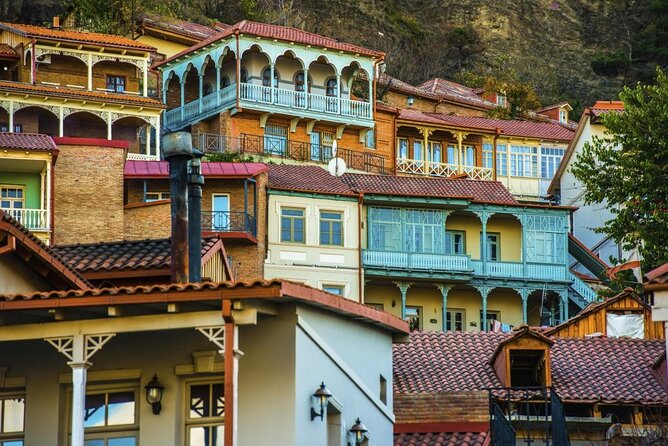
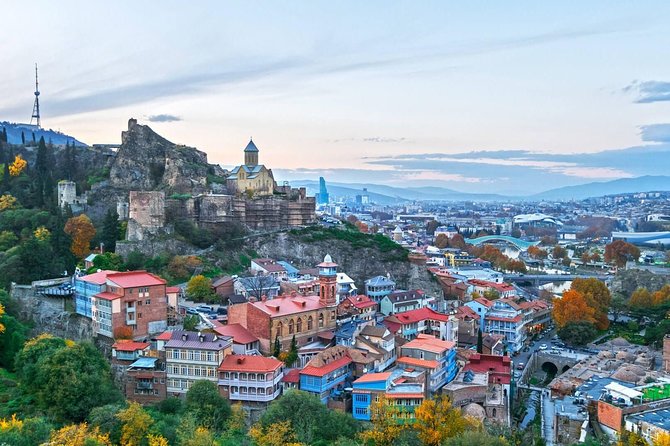
Tbilisi can feel confusing at first. The city spreads along both banks of the Mtkvari River, while the oldest streets climb toward hills and fortifications. This route helps you connect the pieces quickly.
You begin at Freedom Square, a natural central meeting point at the eastern end of Rustaveli Avenue. From there, the walk moves into the older part of town, crosses toward the riverfront, reaches Rike Park, and uses the aerial tramway before continuing through more historic quarters. That broad sweep is useful if you have only a short stay or want to decide which areas deserve a second visit.
I like the fact that this is a private activity. You do not have to match the pace of a large group, and the guide can focus on your interests. If you want more background on churches, more help with food, or a quicker walk through shopping streets, you can ask.
The guides also seem to bring different strengths. Gio is praised for matching a fast walking pace. Jonah tailored the route to a family’s schedule. Aleksi was patient with a toddler and helped deal with persistent sellers and price negotiations. Tamar is especially good for visitors interested in Georgian history, food, and wine, while Sofi has helped with souvenir shopping and questions. Koba created a friendly, personal experience for a solo visitor.
These details matter. A city walk is not only about the landmarks. It is also about having someone who can help you read the street, understand local customs, and avoid wasting time.
More Walking Tours in Tbilisi:
- Tbilisi Walking Tour Including Cable Car and Traditional Bakery
★ 5.0 · 1,310 reviews - Tbilisi: City Highlights Guided Walking Tour
★ 4.9 · 1,114 reviews - Tbilisi:Evening Walking & Talking Tour with Wine & Boat Ride
★ 5.0 · 572 reviews
Freedom Square and the first look at central Tbilisi
Freedom Square is a practical place to begin because it sits in the middle of modern Tbilisi. Its past names reflect the city’s changing political eras. Under Imperial Russia it was known as Erivansky or Paskevich-Erivansky Square, and during Soviet rule it became Beria Square and later Lenin Square.
Your guide can use this opening stop to explain how Tbilisi has changed without turning the tour into a lecture. The square also leads toward Rustaveli Avenue, one of the city’s main central corridors.
The first section is not the most atmospheric part of the route, but it gives you orientation. You will understand where you are in relation to the old city before the streets become narrower and more layered.
Wall ruins and Anchiskhati Basilica
The Tbilisi wall ruins offer a quick reminder that the old city was once a defended settlement, not simply a pretty collection of lanes. The stop is brief, so expect context and a look rather than a long archaeological visit.
Anchiskhati Basilica is more substantial. It is the oldest surviving church in Tbilisi and belongs to the Georgian Orthodox Church. The building dates from the sixth century, making it one of the key early monuments in the city.
You should dress properly if you hope to enter churches during the walk. Knees and shoulders must be covered for men and women, and shorts or sleeveless tops can lead to refused entry. This is an easy detail to overlook in warm weather, so carry a light layer.
The Peace Bridge and the river
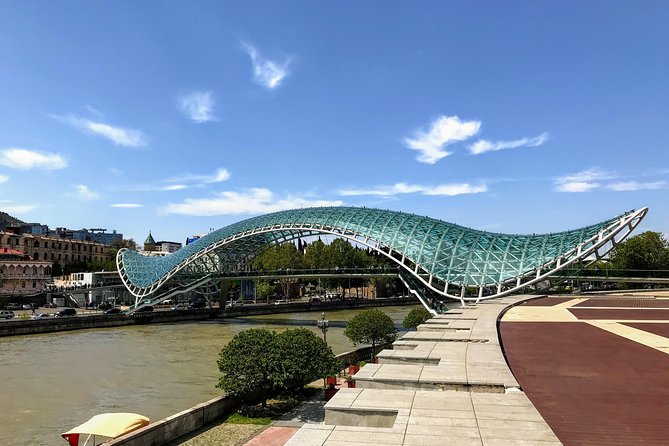
The Bridge of Peace opened in 2010 across the Mtkvari, also called the Kura River. Its modern design creates a sharp contrast with the older buildings nearby.
That contrast is one of Tbilisi’s pleasures. You can move from a sixth-century basilica to a contemporary glass-and-steel bridge in a few minutes. The guide can help make sense of that mix instead of presenting the city as one fixed historic quarter.
The bridge leads toward Rike Park, a public recreation area used by local residents, families, and people out for a walk. It is also the departure point for the aerial tramway to Narikala.
More things to do in Tbilisi:
- Tbilisi: Day Trip to Kazbegi, Gudauri, Gergeti, and Ananuri
★ 4.9 · 3,203 reviews - Day Trip to Kakheti Wine Region Including 9 Wine Tastings
★ 5.0 · 2,774 reviews - Highlights of Caucasus Mountains-Jinvali,Ananuri,Gudauri,Kazbegi(Group tour)
★ 5.0 · 2,682 reviews - From Tbilisi: Kakheti Wine Region Tour with 9 Wine Tastings
★ 4.9 · 2,541 reviews
Armenian heritage and the old-town streets
The Monument of Sayat-Nova introduces another part of Tbilisi’s cultural story. Sayat-Nova, born Harutyun Sayadian, was an Armenian poet and musician known as an ashugh. His monument sits near the northern wall of St. Kevork Armenian Church.
The site carries a difficult historical memory. Sayat-Nova hid in the church during Shah Aga Mohamed Kadjar’s attack in 1795 and was later killed at its doorstep. He is buried there. This brief stop shows how Armenian, Georgian, Persian, and other influences meet in Tbilisi’s old quarters.
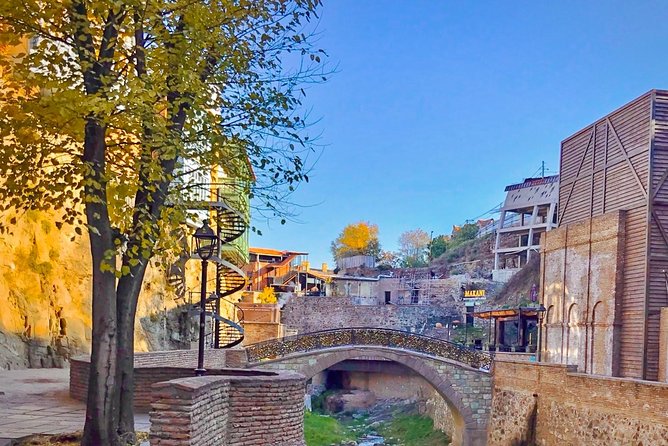
From here, the tour gives you time in Old Town Tbilisi. The area includes old buildings, restaurants, eateries, and theaters. The one-hour listing for this part suggests that it is the heart of the walk, though the overall advertised duration is shorter than the total of all individual stop times.
That discrepancy is worth understanding before you book. You will not receive 15 to 30 minutes at every listed sight during a 90-minute tour. Some places will be quick orientation stops, and the guide may spend more time in the old town, at the cable car, or at the places that interest you most.
Gabriadze Theater and Parajanov

The Rezo Gabriadze Marionette Theater opened in 1981 and has become an important part of Tbilisi’s cultural life. The tour does not include a performance, but the theater is a worthwhile landmark for anyone interested in the city’s arts scene.
The Sergey Paradzhanov Monument adds a different artistic note. Paradzhanov directed films including Shadows of Forgotten Ancestors, The Colour of Pomegranates, The Legend of Suram Fortress, and Ashik-Kerib. His work joined poetic cinema with visual traditions from Armenian, Eastern, and European art.
These stops help broaden the tour beyond the usual churches and viewpoints. If you enjoy film, theater, or local creative culture, ask your guide for extra context here.
Shardeni Street and Meidan Bazaar
Shardeni Street is one of the best-known pedestrian streets in Tbilisi. It is popular, attractive, and lined with places to eat and browse. You should expect a more visitor-focused atmosphere here than in the quieter lanes around the old town.
The 30-minute stop gives you time to look around, but the area can also be a place where you spend money quickly. If you want souvenirs, Meidan Bazaar is a convenient option because it gathers shopping in one place. It suits you if you have limited time and do not want to search through many streets.
Aleksi’s help with sellers and price negotiations is particularly useful here. Do not assume every guide will negotiate for you, but this example shows how a private guide may provide practical help beyond historical facts.
The cable car to Kartlis Deda
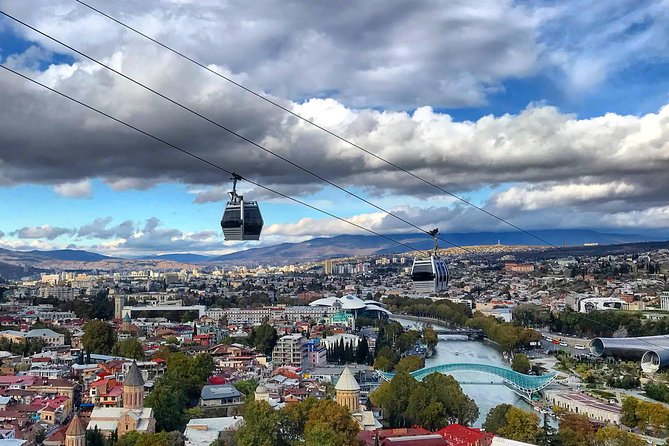
The aerial tramway opened in 2012 and connects Rike Park with Narikala, the fortress above the old town. One one-way cable car ride is included, while the tour information also notes that admission for the tramway is not included, so confirm the exact ticket arrangement when booking.
The ride changes the rhythm of the tour. After walking through narrow streets, you rise above the Mtkvari and gain a wider view of Tbilisi. The route ends near the upper old town and Kartlis Deda, the large aluminum statue known as Mother of Georgia.
Kartlis Deda was erected in 1958 for Tbilisi’s 1,500th anniversary. The 20-meter figure wears Georgian national dress and holds symbols associated with hospitality and defense. The viewpoint is one of the clearest reasons to keep the cable car portion in the plan.
The route involves elevation and walking, so this is not a good choice if you want a completely level stroll. The cable car helps, but it does not remove the need for steady walking.
Sioni Cathedral, the mosque, and religious variety
Sioni Cathedral of the Dormition is a Georgian Orthodox cathedral named after Mount Zion in Jerusalem. The naming follows a medieval Georgian custom of giving churches names connected with places in the Holy Land.
The Jumah Mosque offers a valuable counterpoint. It sits in the center of the old town and is open to people of all religions or beliefs. Its architecture may not immediately announce itself as a mosque, and it is known as one of the few mosques where Shia and Sunni Muslims pray together.
Together, these stops show why Tbilisi feels culturally layered. The tour does not present the city as belonging to one tradition alone. It gives you a chance to see Georgian Orthodox, Armenian, and Muslim sites within a compact walking route.
Again, modest clothing is important. Cover your knees and shoulders for religious sites, regardless of gender.
Rike Park, the Toaster, and local symbols
After the cable car section, Rike Park gives the route a more open public space. It is popular with families, local residents, and people taking a casual walk, so it offers a look at present-day city life rather than only monuments.
The Sculpture of the Toaster shows a man holding a drinking horn, modeled on an ancient Colchian statuette and linked with the figure of the tamada, or Georgian toastmaster. It is a small but useful cultural stop because Georgian meals and toasts are central to the country’s social life.
If Tamar guides your tour, you might also finish with wine tasting. That is not listed as a standard inclusion, so treat it as something that may be arranged rather than guaranteed. Still, the food and wine focus can make the walk feel more connected to daily Georgian culture.
The sulfur waterfall, folklore, and Metekhi Cathedral
Meidan Bazaar and the nearby fountain monument of a falcon and pheasant connect the old city with the traditional story of Tbilisi’s founding. The legend tells of King Vakhtang Gorgasali discovering the area in the fifth century after encountering a pheasant and falcon.
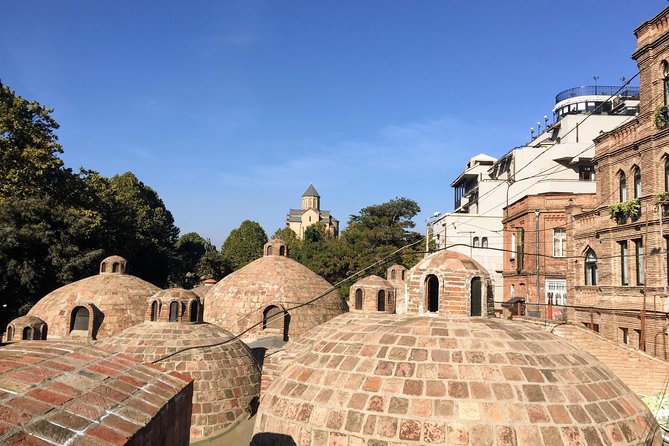
The Dzveli Tbilisi Sulphur Waterfall is one of the route’s most surprising sights. You get a real waterfall in the middle of the city, close to the sulfur-bath district. It is a short stop, but it breaks up the architecture and gives you a memorable natural feature.
Metekhi Cathedral sits near the edge of the rocky bank of the Mtkvari. The temple dates from the 12th century and is one of the city’s major old monuments. Its position above the river makes it an effective final landmark, bringing together Tbilisi’s cliffs, water, churches, and dense old quarters.
The tour ends back at the Freedom Square meeting point. Since the route covers several districts, ask your guide to point out the easiest way back to your hotel or onward destination.
Is $41 a fair price?
At $41 per person, the tour is reasonably priced for a private experience, particularly if you are traveling alone or with one other person. You are paying for a local guide, a customized pace, and a route that combines many major sights in a short period.
The value is less obvious for a larger group because group discounts are available, but the final saving depends on the booking arrangement. The price does not include hotel pickup, and you should confirm the cable car ticket details because the inclusion notes and admission section are not perfectly clear.
There are no admission charges listed for the main sights. The tour’s real value comes from saving planning time and gaining local help with history, food, shopping, and city layout.
Who should book this Tbilisi walk?
I would choose this tour if you are visiting Tbilisi for the first time, have only a few hours, or want a clear introduction before exploring alone. It also suits solo visitors who prefer company without joining a large group.
Families may like the private format. Aleksi’s patient handling of a toddler shows how useful a flexible guide can be when a child needs a pause or a change of pace.
You should think twice if you dislike hills, uneven streets, religious dress rules, or a fast overview style. The route covers a lot, and some stops will be brief. For a slower experience, tell the guide at the start which three or four places matter most to you.
Free cancellation is available up to 24 hours before the start time. Changes made inside that period are not accepted, and poor weather may lead to a new date or a full refund. The tour runs in English and requires moderate physical fitness.
Should you book it?
Yes, if you want a short, private orientation that covers both old and modern Tbilisi. The mix of churches, mosque, bridge, market, waterfall, monuments, river views, and cable car gives you a better sense of the city than a simple old-town stroll.
Book it with realistic expectations. This is a brisk introduction, not a full archaeological or museum tour. Wear modest clothing and sturdy shoes, confirm the cable car ticket arrangement, and ask for the guide who best matches your interests if names are available. For first-time visitors who value personal attention and practical local help, $41 is a fair price.
FAQ
How long does the Tbilisi Explorer tour last?
The advertised duration is approximately one hour and 30 minutes to two hours.
Where does the tour begin?
The meeting point is 2 Freedom Square, Tbilisi, Georgia.
Where does the tour end?
The activity ends back at the meeting point at Freedom Square.
Is the tour private?
Yes. Only your group participates in the private tour or activity.
Is the cable car ride included?
The inclusions state that a one-way cable car ride is included. The admission section also says the aerial tramway ticket is not included, so you should confirm the exact ticket arrangement before the tour.
Is hotel pickup provided?
No. Hotel pickup is not included.
What should I wear for the tour?
Places of worship and selected museums require covered knees and shoulders for both men and women. Shorts and sleeveless tops may result in refused entry.
Can I cancel for a full refund?
Yes. You can cancel at least 24 hours before the experience start time for a full refund. Cancellations or changes made less than 24 hours before the start time are not accepted for a refund.
Just added in Tbilisi
- Wine Tasting feel the Difference of Qvevri or Classical Wine★ 4.4 · 10 reviews
- From Tbilisi: Kakheti and Kazbegi 2-Day 4X4 Jeep Tour pack★ 5.0 · 6 reviews
- Walking Tour in Old Tbilisi – Group Tour★ 4.5 · 8 reviews
- Uforgatable Kakheti Tour with wine tasting – in Georgia★ 4.9 · 5 reviews
- From Tbilisi: Uplistsikhe Caves and Mtskheta Town Day tour★ 5.0 · 2 reviews
- Tbilisi: Vintage Fashion and Secondhand Thrifting Tour★ 5.0 · 11 reviews
- Tbilisi Airport to Gudauri, Bakuriani, Batumi, Tbilisi★ 5.0 · 3 reviews
- Private Adorable City Tour of Tbilisi★ 5.0 · 3 reviews
Walking Tours, compared.
Tbilisi Walking Tour Including Cable Car and Traditional Bakery
Read our review →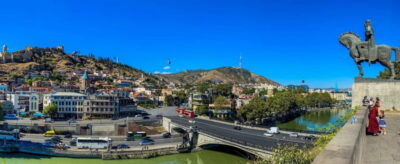
Evening Walking & Talking Tour with Wine & Boat Ride
Read our review →
Evening Walking Tour with Wine & Boat Ride Options
Read our review →
Old Tbilisi Highlights walking tour with wine & 10 tastings
Read our review →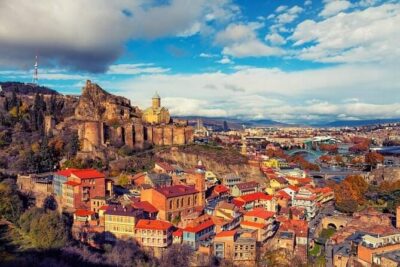
Old Tbilisi Tour: Private Walking Tour With Wine Tasting
Read our review →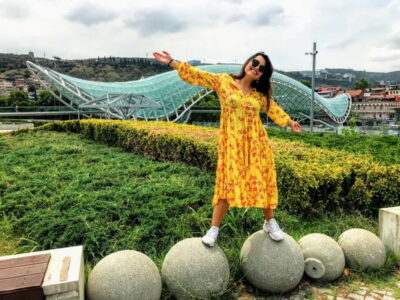

Private Tbilisi Food Tour: 9 Tastings Walk in Bohemian District
Read our review →Browse the lists this tour appears in