
Reviewed · WALKING TOURS
Tbilisi City Private Walking Tour, Ride by Cable Car to Narikala Fortress
Tbilisi rewards a good pair of walking shoes. This private city tour combines the city’s main sights with a cable-car ride to Narikala Fortress, giving you both street-level details and a broad view over the old city. I like the private format, which lets you set the pace, and I like the sensible route from Europe Square through the old center to Rustaveli Avenue. The main drawback is the long eight-hour schedule, especially if you prefer short sightseeing outings.
I also like that the cable car is included rather than left as an extra decision during the day. Guide Tsotne receives especially warm praise for his humor, comfortable manner, and strong grasp of local history, while Tsotne and Shota are both credited with making visitors feel at home. Still, this is primarily a walking experience, so you should be ready for a full day on your feet.
In This Review
- Key points to know before booking
- Starting beside the Mtkvari at Europe Square
- Metekhi Cathedral and the first view of Tbilisi
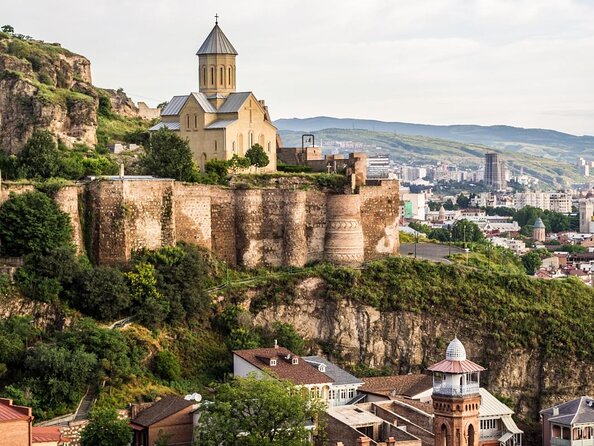
- Taking the cable car up to Narikala Fortress
- Chreli Abano and Tbilisi’s sulphur-bath quarter
- Sioni Cathedral and the older center
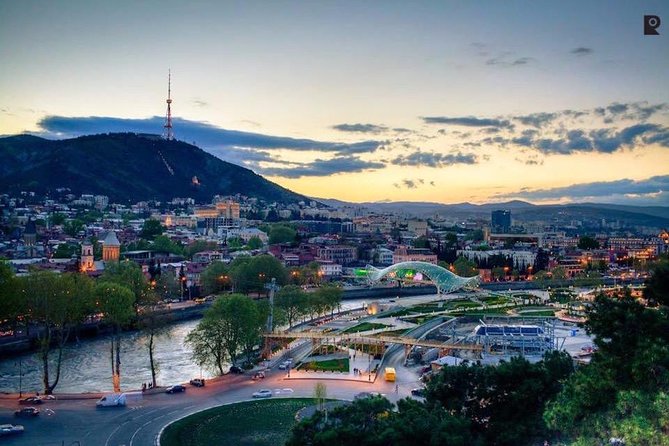
- Crossing the Bridge of Peace
- The Clock Tower and a touch of Tbilisi oddness
- Liberty Square and the change in city scale
- Finishing along Rustaveli Avenue
- What $55 buys you
- The guide can shape the whole day
- Who will enjoy this Tbilisi walking tour?
- Timing, meeting point, and cancellation
- Should you book it?
- FAQ
- Where does the Tbilisi private walking tour begin?
- What time does the tour start?
- Where does the tour finish?
- How long does the tour last?
- Is the cable-car ride included?
- Is this a private tour?
- Can I cancel for a full refund?
Key points to know before booking
- Narikala by cable car: The ride adds a memorable change of pace and opens up a fine view of Tbilisi.
- Private guide and private group: You do not share the guide with strangers, and the day can move at your speed.
- Eight major stops: The route includes Metekhi Cathedral, Narikala Fortress, the sulphur baths, Sioni Cathedral, the Bridge of Peace, the Clock Tower, Liberty Square, and Rustaveli Avenue.
- A useful city introduction: The tour links religious buildings, old streets, river views, public squares, and the modern city center.
- Easy meeting point: You begin at Europe Square at 10:00 a.m. and finish on Shota Rustaveli Avenue.
- Strong personal hosting: Tsotne is praised for using jokes and an easy manner to make the day feel relaxed rather than like a formal lecture.
Starting beside the Mtkvari at Europe Square
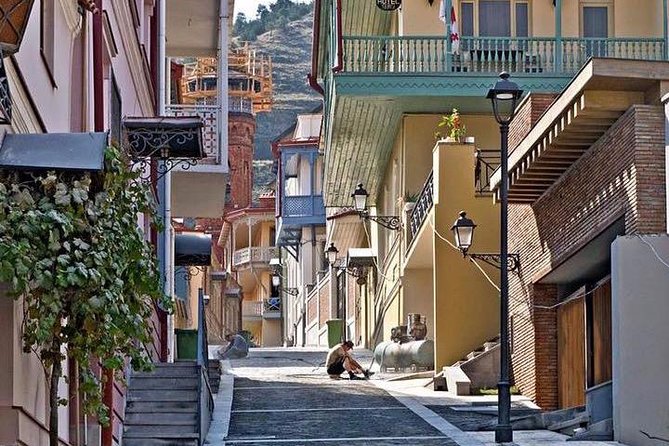
The tour begins at Europe Square at 10:00 a.m., a practical place to meet because it puts you close to the Mtkvari River and the old city. From here, the route quickly reaches one of Tbilisi’s most important religious sites, Metekhi Cathedral.
I appreciate a meeting point that is easy to identify rather than hidden inside a hotel or a narrow side street. You should still allow a little extra time to reach Europe Square, since the tour begins promptly and the supplied details do not include hotel pickup.
This is a private activity, meaning your own group has the guide to itself. That matters more than it might seem. You can pause for a photo, ask about a building, or spend less time at a stop that does not hold your interest without waiting for a large group to catch up.
More Walking Tours in Tbilisi:
- Tbilisi Walking Tour Including Cable Car and Traditional Bakery
★ 5.0 · 1,310 reviews - Tbilisi: City Highlights Guided Walking Tour
★ 4.9 · 1,114 reviews - Tbilisi:Evening Walking & Talking Tour with Wine & Boat Ride
★ 5.0 · 572 reviews
Metekhi Cathedral and the first view of Tbilisi
The first stop is Metekhi Cathedral, with about 25 minutes set aside for the visit. The church is described as dating to the fifth century, placing it among the oldest religious landmarks on the route.
Metekhi is a good opening stop because it introduces the character of Tbilisi at once: a city shaped by faith, river crossings, hills, and layers of age. You are not simply checking off a church. You are beginning to see how the city’s central districts fit together.
Twenty-five minutes is enough for an explanation, a look inside if appropriate, and photographs without turning the visit into a long architectural study. If you want detailed information about every construction phase or religious artwork, you will need to ask your guide directly. The schedule gives you a broad city tour, not an extended specialist visit at each site.
Taking the cable car up to Narikala Fortress
The cable-car ride to Narikala Fortress is the clearest highlight of the day. The ride is included in the $55 price, so you can enjoy this change from walking without paying a separate fare during the tour.
Narikala is described as a fourth-century fortress. Its position above Tbilisi makes it valuable even if you are not focused on military history. From higher ground, you gain a much better sense of the city’s shape, including the river corridor, the old center, and the surrounding slopes.
The visit is scheduled for about 25 minutes. That is enough to take in the setting and hear the main story, but it is not a long fortress exploration. I would treat Narikala as a viewpoint and important landmark within a wider city day, not as a stand-alone fortress tour.
The cable car also breaks up the rhythm of the walking route. Eight hours can feel long when every section is on foot, so this short ride provides a welcome lift, both literally and practically. Because this is a private tour, you can use the time to ask your guide to point out the places you will later see from street level.
Chreli Abano and Tbilisi’s sulphur-bath quarter
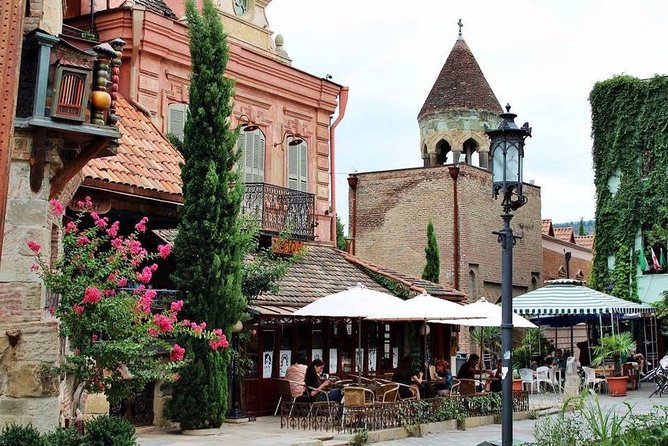
The next stop is Chreli Abano, in the sulphur-bath area of old Tbilisi. About 25 minutes are planned here, and admission is free.
This part of the route adds a different side of the city. Churches and fortifications show Tbilisi’s public and religious face, while the baths point to daily life and the city’s long association with naturally heated water. The bath district is also one of the places where the old center feels most distinct from the broad avenues visited later in the day.
You should not expect a bathing session as part of this tour. Chreli Abano is a sightseeing stop, not a spa booking, and the supplied details do not include bath admission or private bathing time. If you want to use a bath during your stay, ask your guide for practical advice, but do not assume it is included in this experience.
More things to do in Tbilisi:
- Tbilisi: Day Trip to Kazbegi, Gudauri, Gergeti, and Ananuri
★ 4.9 · 3,203 reviews - Day Trip to Kakheti Wine Region Including 9 Wine Tastings
★ 5.0 · 2,774 reviews - Highlights of Caucasus Mountains-Jinvali,Ananuri,Gudauri,Kazbegi(Group tour)
★ 5.0 · 2,682 reviews - From Tbilisi: Kakheti Wine Region Tour with 9 Wine Tastings
★ 4.9 · 2,541 reviews
Sioni Cathedral and the older center
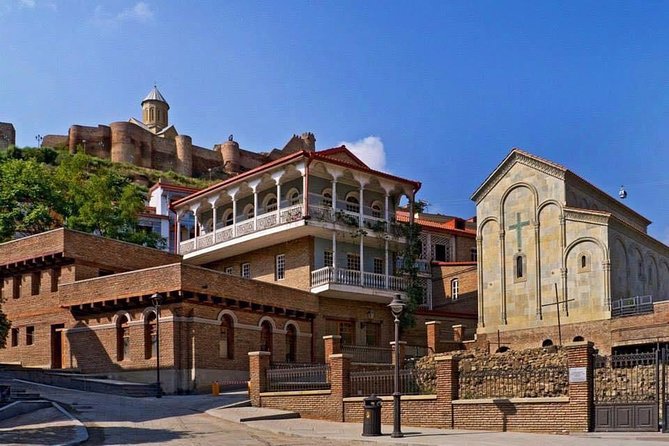
Sioni Cathedral receives another 25-minute stop. It is described as an old cathedral dating to the sixth century, and it gives the tour another chance to explain Tbilisi through its religious buildings.
I like the balance here. The route does not place every church together and then rush through the rest of the city. Instead, Metekhi and Sioni appear as separate parts of the walk, with the fortress, bath district, river, and public squares filling out the picture between them.
As with Metekhi, the visit is relatively brief. You can see the building and hear its place in the city, but anyone who wants a long look at art, icons, or architectural detail may want additional time on another day. A private guide helps because you can ask for the level of explanation you prefer, from a quick orientation to a more detailed account.
Crossing the Bridge of Peace
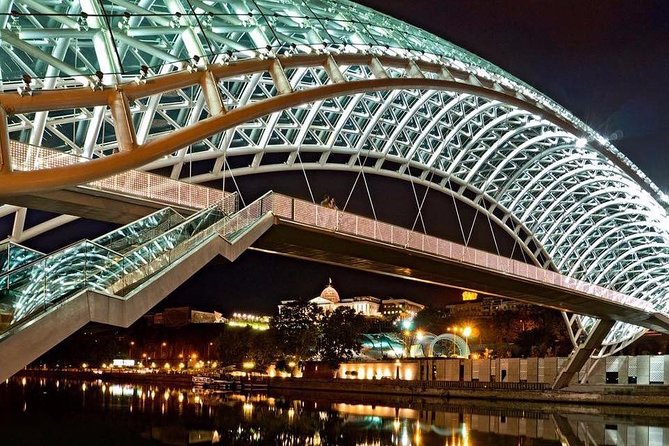
The Bridge of Peace spans the Mtkvari and opened in 2010. The planned stop lasts about 25 minutes, with no admission charge.
This is a useful contrast to the older churches and fortress. The tour shows you that Tbilisi is not preserved in one period. It includes old religious sites, a much older defensive structure, the bath quarter, and a modern bridge that has become part of the city’s public image.
The bridge is also a natural place for photographs and a short pause. You can look back toward the older districts and forward toward the newer parts of central Tbilisi. Your guide’s role is especially useful here because a modern structure can be easy to admire without understanding its place in the city’s changing design.
The stop is not a separate architecture lecture, so keep your expectations measured. It is one piece of the larger route, not a museum visit.
The Clock Tower and a touch of Tbilisi oddness
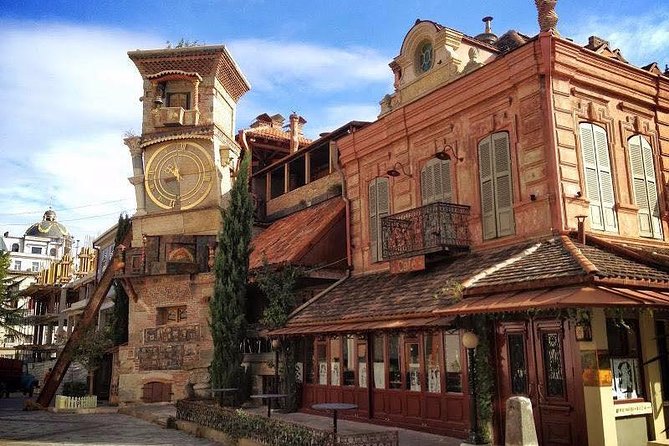
The Clock Tower gets about 20 minutes, slightly less than most other stops. It is described as an unusual structure added to a Tbilisi street in 2010.
That short visit makes sense. The Clock Tower is a quick visual stop, the kind of place you can photograph, discuss, and appreciate without needing a long stay. It also keeps the tour from becoming too solemn. After cathedrals, a fortress, and historic baths, an odd modern structure adds some humor to the day.
This is a good place to take advantage of the guide’s personality. Tsotne is praised for making people comfortable through jokes and an informal style. That kind of hosting can make a stop like the Clock Tower more enjoyable, since the appeal is partly its unexpected appearance and local character.
Liberty Square and the change in city scale
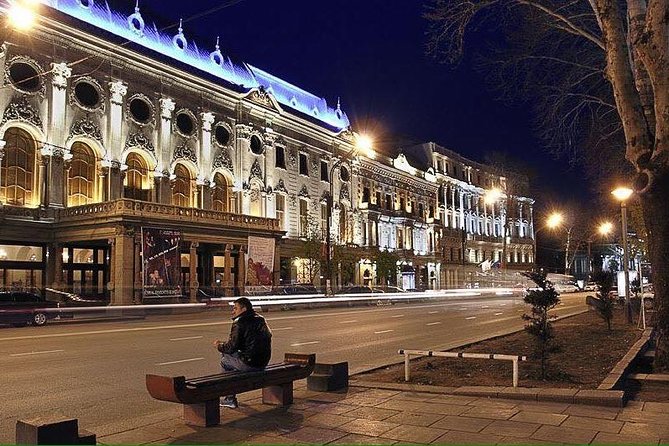
Liberty Square is scheduled for 30 minutes. By this point, the tour shifts from the tighter streets and older landmarks toward a larger civic space.
The square helps you understand Tbilisi as a working capital, not only as an old town for sightseeing. It is a useful pause before the final stretch along Rustaveli Avenue, and it gives your guide room to explain how the central city connects its older districts with its more formal public spaces.
Because the square itself has no admission charge, the value comes from the setting and the explanation rather than from entering a particular attraction. You are paying for a private guide who can connect what you see, not for a bundle of ticketed interiors.
The 30-minute timing is generous enough for photographs and questions. It also gives you a chance to judge your energy level. If you are tired, remember that Rustaveli Avenue is still ahead and the full experience lasts about eight hours.
Finishing along Rustaveli Avenue
The tour ends on Shota Rustaveli Avenue, with about 30 minutes assigned to the avenue itself. This is a fitting finish because the route moves from old Tbilisi’s religious and defensive landmarks into one of the city’s best-known central streets.
Ending here is practical. Rustaveli Avenue gives you a clear place to continue exploring, find food, or return to your accommodation. The tour does not return you to Europe Square, so plan your next move from the avenue rather than assuming a round trip.
I also like the way the route finishes with a broad city street instead of ending at the first old-town landmark. You get a sense of Tbilisi as a whole: river, hilltop fortress, bath district, churches, modern bridge, square, and main avenue.
The final stop is not a detailed visit to a named museum or gallery. It is a city orientation along an important avenue, which suits the tour’s wider purpose.
What $55 buys you
At $55 per person, this tour offers reasonable value if you want a private introduction to Tbilisi. The price covers the private guide and the cable car, while the listed sightseeing stops do not require admission fees.
The important point is group size. A private tour usually costs more than a large shared walk, but you are buying flexibility and direct attention. You can ask questions freely, slow down for photographs, and set a comfortable pace within the day’s overall structure.
The tour is less compelling if you want a short, tightly focused visit to one attraction. Eight hours is a serious commitment, and the experience covers a lot of ground. You are paying for breadth, context, and a full-day introduction rather than a single monument.
The price also makes more sense for two or more people sharing the experience. Since the rate is listed per person, compare the total cost with a shared city walk if budget is your main concern. The private format is the stronger choice if comfort and flexibility matter most.
The guide can shape the whole day
The most warmly praised part of the experience is the personal hosting. Tsotne is singled out for his humor, calm manner, and ability to make the day feel comfortable rather than formal. The feedback also names Shota alongside Tsotne as someone who helped create a welcoming experience in Tbilisi and Georgia.
That is important on a tour with many stops. A guide who simply recites dates can make eight hours feel heavy. A guide who adjusts the conversation, uses humor, and explains the city in an easy way can make the same route feel much more natural.
You should ask questions as you go. The private setting is ideal for clarifying local customs, comparing old and modern Tbilisi, or asking which places deserve a second visit. The information provided does not promise a particular guide for every booking, so you should not assume Tsotne or Shota will lead your specific departure. Their names do, however, give you a useful sense of the company’s preferred hosting style.
Who will enjoy this Tbilisi walking tour?
I would recommend this experience to a first-time visitor who wants the main city sights covered in one day. It suits you especially well if you enjoy walking but also want a guide to explain what you are seeing.
It is also a good fit if you dislike large groups. You will not share the tour or guide with strangers, and the private arrangement gives you more control over pauses and questions.
Families and mixed-age groups may appreciate the flexibility, although the full eight-hour duration should be considered carefully. The supplied details say most people can participate and that service animals are allowed, but they do not provide a detailed accessibility assessment for every street, stairway, or section near the fortress.
You may want a different format if your priority is museum interiors, food tasting, or a slow visit to one neighborhood. None of those are listed as central features. This tour is built around seeing a wide selection of landmarks and understanding how they fit together.
Timing, meeting point, and cancellation
You meet at Europe Square at 10:00 a.m. and finish on Shota Rustaveli Avenue. A mobile ticket is provided, and confirmation arrives when you book.
The tour lasts approximately eight hours. Wear shoes you can walk in comfortably, and keep your schedule open after the end time in case the private pace changes slightly. The cable car is included, but the supplied details do not identify any other paid admissions.
Free cancellation is available if you cancel at least 24 hours before the start time. Changes or cancellations inside that 24-hour window are not accepted for a refund, with cut-off times based on local time.
Should you book it?
Book this tour if you want a private, full-day introduction to Tbilisi that combines major landmarks with a memorable ride to Narikala Fortress. The route is broad, the meeting point is clear, and the included cable car adds real value.
I would choose it for a first visit, for a small group that wants its own guide, or for anyone who values an easygoing host more than a rigid lecture. I would skip it if eight hours of walking sounds excessive or if you prefer to explore one district slowly.
The strongest reason to book is the combination of flexibility and coverage. You see churches, baths, a fortress, a modern bridge, a quirky clock tower, Liberty Square, and Rustaveli Avenue in one day. Just plan for a long outing and remember that the final stop is on Rustaveli Avenue, not back at Europe Square.
FAQ
Where does the Tbilisi private walking tour begin?
The tour begins at Europe Square in Tbilisi, Georgia.
What time does the tour start?
The scheduled start time is 10:00 a.m.
Where does the tour finish?
The tour ends on Shota Rustaveli Avenue in Tbilisi.
How long does the tour last?
The experience lasts approximately eight hours.
Is the cable-car ride included?
Yes. The cable car to Narikala Fortress is included in the tour price.
Is this a private tour?
Yes. Only your group participates, and you do not share the guide with strangers.
Can I cancel for a full refund?
Yes, if you cancel at least 24 hours before the experience start time. Cancellations or changes made less than 24 hours before the start time are not refunded.
Just added in Tbilisi
- Wine Tasting feel the Difference of Qvevri or Classical Wine★ 4.4 · 10 reviews
- From Tbilisi: Kakheti and Kazbegi 2-Day 4X4 Jeep Tour pack★ 5.0 · 6 reviews
- Walking Tour in Old Tbilisi – Group Tour★ 4.5 · 8 reviews
- Uforgatable Kakheti Tour with wine tasting – in Georgia★ 4.9 · 5 reviews
- From Tbilisi: Uplistsikhe Caves and Mtskheta Town Day tour★ 5.0 · 2 reviews
- Tbilisi: Vintage Fashion and Secondhand Thrifting Tour★ 5.0 · 11 reviews
- Tbilisi Airport to Gudauri, Bakuriani, Batumi, Tbilisi★ 5.0 · 3 reviews
- Private Adorable City Tour of Tbilisi★ 5.0 · 3 reviews
Walking Tours, compared.
Tbilisi Walking Tour Including Cable Car and Traditional Bakery
Read our review →

Evening Walking & Talking Tour with Wine & Boat Ride
Read our review →
Evening Walking Tour with Wine & Boat Ride Options
Read our review →
Old Tbilisi Highlights walking tour with wine & 10 tastings
Read our review →
Old Tbilisi Tour: Private Walking Tour With Wine Tasting
Read our review →

Private Tbilisi Food Tour: 9 Tastings Walk in Bohemian District
Read our review →Browse the lists this tour appears in