
Reviewed · WALKING TOURS
Revolutionary Tbilisi Walking Tour
Revolutions hide in plain sight. This Tbilisi walk links schools, palaces, parks, and public buildings to the city’s often overlooked story from 1900 to 1921. I like its sharp focus on Georgian socialist history, and I especially like that guide Giorgi brings politics and personal stories into the walk rather than reciting dates. The main drawback is that this is not a light sightseeing stroll. The subject is serious, and the optional printing press visit adds time, cost, and a metro ride.
This is a strong choice if you want more than Tbilisi’s postcard streets. I like the way the tour explains the split between Bolsheviks and Mensheviks, then connects those arguments to workers, institutions, streets, and symbols around the city. You should also know that some visitors may find the pace and material demanding, while children under 12 and wheelchair users cannot join.
In This Review
- Key points to know before booking
- Why this Tbilisi walk covers unusual ground
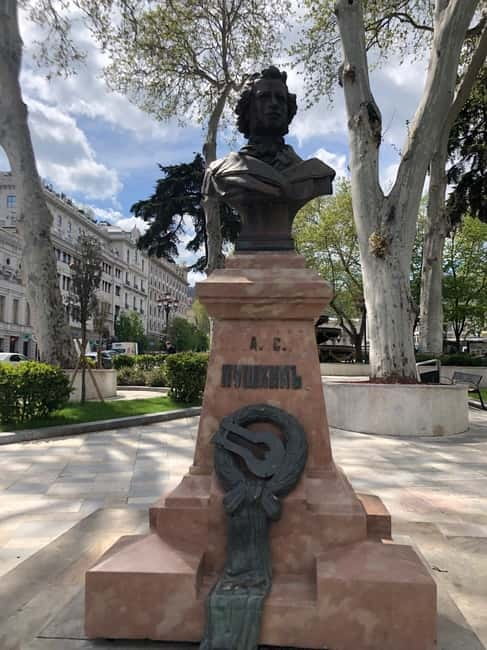
- Pushkin Square sets the political tone
- Tiflis Spiritual Seminary and the education of revolutionaries
- Tiflis City Hall and the machinery of public power
- The Viceroy’s Palace across three political eras
- Alexander’s Park and the city as a workers’ stage
- The memorial stone and the cost of political change
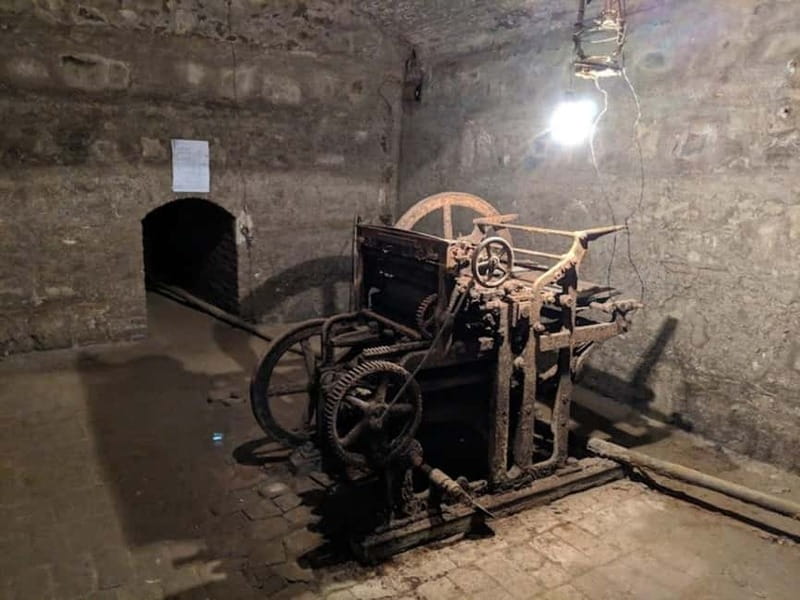
- The optional Underground Illegal Printing House Museum
- Is $30 a fair price for this experience?
- Who will enjoy this walk most?
- Practical tips for getting more from the tour
- Should you book the Revolutionary Tbilisi Walking Tour?
- FAQ
- Where does the Revolutionary Tbilisi Walking Tour begin?
- Where does the walking tour finish?
- How long is the tour?
- What language is the tour offered in?
- Is the Underground Illegal Printing House Museum included?
- How do you reach the printing house museum?
- How long does the museum extension take?
- How much does the main tour cost?
- Who cannot join the tour?
Key points to know before booking
- The tour begins at Pushkin Square, a central and easy-to-find starting point in Tbilisi.
- The focus is 1900 to 1921, including the rise of revolutionary groups and the Georgian social democratic movement.
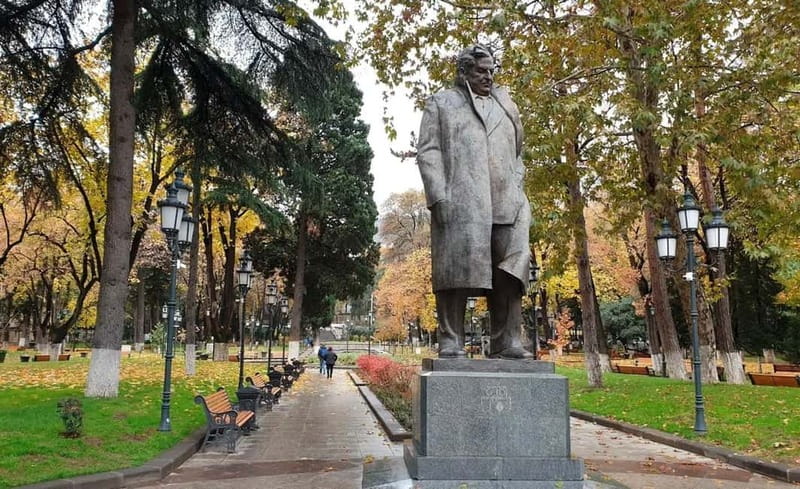
- You visit major political sites, including Tiflis Spiritual Seminary, Tiflis City Hall, the Viceroy’s Palace, Alexander’s Park, and a memorial stone for people killed in the revolutions.
- The guide-led walk is offered in English, with Giorgi praised for clear explanations, strong storytelling, and thoughtful answers.
- The Underground Illegal Printing House Museum is optional, costs extra, and requires about 15 minutes of metro travel.
- The main price is $30 per person, with free cancellation up to 24 hours before the tour and a reserve-now, pay-later option.
Why this Tbilisi walk covers unusual ground
Most first visits to Tbilisi center on churches, balconies, baths, wine, and hilltop views. This tour takes a different route through the city’s political past. Its subject is the revolutionary period from roughly 1900 to 1921, when Georgia became an important center of social democratic activity inside the Russian Empire.
I find that focus useful because it gives you a way to read ordinary buildings differently. A school may point to a future revolutionary. A palace may reveal changing rulers. A square may recall demonstrations, repression, or public speeches. The city becomes a record of competing ideas, not just a collection of attractive old facades.
The tour also deals with difficult material: imperial rule, political repression, illegal organizing, and the consequences of revolutionary policy. You will hear about the emergence of revolutionary groups in Georgia and their later division into Bolshevik and Menshevik factions. The aim is not to present one tidy political story. Instead, the guide explains how their methods and goals differed, and what followed from those differences.
That makes the tour best for someone who enjoys history with arguments in it. If you only want charming streets and quick facts, you may find the subject heavy. If you want to understand how workers, institutions, political movements, and urban space connected, this walk offers far more than a standard city introduction.
More Walking Tours in Tbilisi:
- Tbilisi Walking Tour Including Cable Car and Traditional Bakery
★ 5.0 · 1,310 reviews - Tbilisi: City Highlights Guided Walking Tour
★ 4.9 · 1,114 reviews - Tbilisi:Evening Walking & Talking Tour with Wine & Boat Ride
★ 5.0 · 572 reviews
Pushkin Square sets the political tone
The meeting point is Tbilisi Pushkin Square. The walk begins here and then moves through central locations tied to the city’s revolutionary story.
A central start matters. You do not need to arrange a long transfer before the tour, and the square gives you a practical place to meet your English-speaking guide. From there, the experience is built around walking and explanation rather than entering a long list of unrelated attractions.
The guide’s role is especially important here. Giorgi, also called Gio in some tour information, has earned praise for his clear English, friendly manner, and ability to handle detailed questions. Several people specifically valued his willingness to discuss both historical events and current political realities. That suggests a conversation-led tour, not a speech that ends when the guide reaches the next stop.
You should use that strength. Bring questions about the political divisions, the role of workers, or the way imperial power shaped Tbilisi. The more curious you are, the more useful this experience is likely to feel.
Tiflis Spiritual Seminary and the education of revolutionaries

One of the early sights is Tiflis Spiritual Seminary, a school associated with famous revolutionaries who graduated there. Its value is not only architectural. The stop helps explain how education, religious institutions, and political thought could overlap in late Tsarist Georgia.
The tour uses this setting to introduce people and ideas that are easy to miss in a general city walk. You are not simply told that a revolutionary once studied there. You get a sense of how institutions produced, shaped, or sometimes unintentionally encouraged political opposition.
This is also where the tour begins to show its interest in people outside the usual ruling circles. The experience keeps returning to workers, organizers, unions, and political groups. That gives the city’s past a social dimension that visitors often do not encounter in a standard sightseeing route.
The subject can become complicated quickly, especially if Russian imperial politics and Georgian social democracy are new to you. I would not expect a simple list of names and dates. The benefit is greater context, but you need to pay attention.
Tiflis City Hall and the machinery of public power
Tiflis City Hall shifts the focus from education to government. Here, the guide discusses the State Duma, imperial administration, and the harsh repression connected to political opposition.
This is one of the tour’s most useful contrasts. You see how public institutions worked while revolutionary groups tried to organize against the system. The walk does not treat political change as something that happened only in distant capitals. Tbilisi had its own meetings, conflicts, public spaces, and local power structures.
The State Duma discussion is particularly valuable for visitors who know the Russian Revolution mainly through famous names and dramatic events. The tour places those larger developments within the Caucasus, showing why Georgia matters in the story.
Expect serious content at this point. The phrase horrible repressions is not decorative marketing. The experience addresses the violence and pressure used against opponents of the imperial order. The guide also explains the illegal activities that revolutionary groups relied on, which may include organizing methods and underground political work rather than simply open public campaigning.
That balance matters. The tour does not present revolutionaries as romantic heroes without flaws. Nor does it reduce them to criminals. You are asked to consider why illegal activity emerged, who took part, and what political aims shaped it.
More things to do in Tbilisi:
- Tbilisi: Day Trip to Kazbegi, Gudauri, Gergeti, and Ananuri
★ 4.9 · 3,203 reviews - Day Trip to Kakheti Wine Region Including 9 Wine Tastings
★ 5.0 · 2,774 reviews - Highlights of Caucasus Mountains-Jinvali,Ananuri,Gudauri,Kazbegi(Group tour)
★ 5.0 · 2,682 reviews - From Tbilisi: Kakheti Wine Region Tour with 9 Wine Tastings
★ 4.9 · 2,541 reviews
The Viceroy’s Palace across three political eras
The Viceroy’s Palace is a key stop because the building’s meaning changed with the government around it. The tour considers the palace during the Tsarist, Menshevik, and Soviet eras.
That three-part view is one of the strongest ideas in the experience. Buildings often survive political change, but their purpose, symbols, and occupants shift. At the palace, you can follow those changes in one place instead of treating Tsarist, Menshevik, and Soviet history as separate chapters.
The discussion of imperial symbolism adds another layer. The tour looks at how power was represented through architecture and public space, and how symbols could reinforce the authority of an empire. You will not only hear who controlled the palace. You will consider how control was made visible.
The Menshevik period is especially important because Georgian social democracy followed a different path from the Bolshevik model. The tour presents the split between these factions as a major political question, not a footnote. Their approaches varied, and the consequences were significant.
For you, the practical value is clear: this stop helps connect a handsome public building with the political choices made inside and around it. It is a reminder that Tbilisi’s architecture cannot always be separated from the systems that used it.
Alexander’s Park and the city as a workers’ stage
Alexander’s Park brings the story outdoors. The guide uses public space to discuss marches, gatherings, symbols, and revolutionary activity.
This is where the tour’s urban history becomes most visible. Streets and parks were not neutral backdrops. Workers marched through them, political groups used them, and authorities watched or controlled them. The walk encourages you to picture crowds and conflicts in places that may otherwise seem like ordinary parts of central Tbilisi.
The tour also points to traces of workers’ lives and labor struggles around the city. It connects factories, union buildings, occupied institutions, streets, and squares to the wider political story. That approach gives you a more grounded picture of revolution. It was not only speeches by famous leaders. It also involved workplaces, neighborhoods, organized labor, and public action.
I like this part because it avoids treating history as cold and distant. At the same time, the guide does not turn the past into simple nostalgia. The point is to understand what was at stake, including the pressures that shaped workers and political organizers.
Allow time to listen. A short stop can carry a lot of names, factions, and dates, and the meaning comes from the connections between them.
The memorial stone and the cost of political change
The walk includes a stone dedicated to people who died in the revolutions. This memorial provides a quiet counterweight to the more analytical stops.
After hearing about organizations, policies, and political divisions, the stone brings the cost back to individuals. Revolutions are often described through leaders and institutions, but the memorial points toward the people who suffered or died during those struggles.
The stop also fits the tour’s interest in symbols. A single stone can carry a political message, preserve a memory, or shape how later generations understand the past. The guide examines that symbolism as part of the wider story of imperialism, revolution, and public memory.
The walk finishes at 9 April Park. That gives the experience a clear endpoint in a central public space rather than ending inside a museum or at an isolated site. The final location also suits a tour concerned with public gatherings, political memory, and the changing meaning of streets and parks.
The optional Underground Illegal Printing House Museum
If you want the most tangible look at underground political work, consider adding the Underground Illegal Printing House Museum. It is not included in the $30 price, and you pay an extra amount for the visit.
The optional extension requires about 15 minutes by metro, followed by roughly an hour at the museum. The format includes a guided visit, free time, and time to explore on your own. Transportation is not included, so you should budget separately for the metro.
The printing house gives physical form to the tour’s discussion of illegal revolutionary activity. Instead of hearing only about secret publications and underground organization, you get a place associated with that work. It can make the earlier conversations about censorship, organizing, and political communication easier to understand.
I would add it if your interest is strong and your schedule allows. One person who particularly enjoyed the main tour advised paying a little extra for the museum, and I agree with that practical suggestion. It extends the experience considerably, though, so do not choose it if you need a strict two-hour activity.
There is an important timing issue to note. The experience is advertised as two hours, while the detailed route lists a three-hour guided walk, then the metro ride and approximately one-hour museum visit. Treat the two-hour figure as the core duration only if confirmed at booking. The full version can take about four hours or more once transport and the museum are added.
Is $30 a fair price for this experience?
At $30 per person, the main tour is priced as a specialized history walk rather than a general orientation tour. I think that is fair if you care about Georgian politics, social movements, Soviet-era history, or the way cities preserve political memory.
You are paying for a narrow subject and a guide who can explain opposing interpretations. That matters more here than the number of sights. The route includes several locations, but the real value comes from linking them into one argument about power, labor, repression, and revolution.
The price is less compelling if you want famous landmarks presented quickly. Many of the stops are valuable because of the explanation, not because you spend a long time inside them. In other words, this is a guide-led interpretation of Tbilisi, not an entrance-ticket package.
The printing house costs extra, and metro transportation is separate. Include those costs before you decide on the extended version. The reserve-now, pay-later option and cancellation up to 24 hours before the start make planning easier, especially if your Tbilisi schedule is still changing.
Who will enjoy this walk most?
I would recommend it to adults and older teenagers with a real interest in history, politics, labor movements, or modern Georgia. It suits you if you like asking questions and comparing political viewpoints rather than receiving a simple heroic narrative.
It is also useful for anyone who has already seen Tbilisi’s main sights and wants a different way to understand the city. The tour adds social and political meaning to buildings and public spaces you might otherwise pass without a second thought.
The experience is less suitable for children under 12. The subject is complex and serious, and the tour’s value depends on sustained attention. Wheelchair users cannot join, according to the activity information, so accessibility should be considered before booking.
English is the available tour language. You should be comfortable following detailed historical explanations in English, especially during the sections on the State Duma, imperial repression, and the Bolshevik-Menshevik split.
Practical tips for getting more from the tour
Wear comfortable shoes, since the experience is built around walking through Tbilisi. Bare feet, alcohol, and drugs are not allowed, so treat it as a conventional guided cultural activity rather than a casual street outing.
Ask for clarification when the political story becomes dense. Giorgi has been praised for answering many questions, and this is the sort of tour where a brief question can help you understand the next several stops.
Decide in advance if you want the printing house. The main walk and the museum are not a quick combined activity. You need extra time, a metro transfer, and an additional payment.
Finally, avoid booking this as your only introduction to Tbilisi if you want a broad overview of food, architecture, religion, and daily life. This tour has a specific mission. Its strength is focus, and that focus means it leaves many other parts of the city aside.
Should you book the Revolutionary Tbilisi Walking Tour?
Book it if you want the political Tbilisi that sits behind the balconies and historic facades. The tour offers a rare look at the years from 1900 to 1921, the Georgian social democratic movement, workers’ struggles, imperial power, and the split between Mensheviks and Bolsheviks.
I would choose the extended printing house visit if underground organizing interests you and you have enough time. If you want a shorter experience, stick to the main walk and confirm the exact duration before booking, since the published timing differs between the core activity and the full route.
The best reason to go is the guide. Giorgi’s English, enthusiasm, storytelling, and readiness to discuss difficult questions are central to the experience. The main caution is equally simple: this is serious political history, not a relaxed highlights tour. For the right audience, $30 buys a thoughtful way to see Tbilisi through the people and movements that helped shape modern Georgia.
FAQ
Where does the Revolutionary Tbilisi Walking Tour begin?
The tour begins at Tbilisi Pushkin Square.
Where does the walking tour finish?
The main route finishes at 9 April Park.
How long is the tour?
The activity is listed as two hours, but the detailed route describes a three-hour guided walk. Confirm the timing when you book, especially if you plan to add the museum.
What language is the tour offered in?
The tour is offered in English with a live guide.
Is the Underground Illegal Printing House Museum included?
No. The printing house is an optional extra and costs additional money.
How do you reach the printing house museum?
The route includes about 15 minutes by subway or metro. Transportation is not included in the tour price.
How long does the museum extension take?
The museum portion lasts about one hour and includes a guided visit, free time, and self-guided exploration.
How much does the main tour cost?
The listed price is $30 per person. The optional printing house visit and metro transportation cost extra.
Who cannot join the tour?
The activity is not suitable for children under 12 or wheelchair users. Alcohol and drugs are not allowed, and participants may not attend barefoot.
Just added in Tbilisi
- Wine Tasting feel the Difference of Qvevri or Classical Wine★ 4.4 · 10 reviews
- From Tbilisi: Kakheti and Kazbegi 2-Day 4X4 Jeep Tour pack★ 5.0 · 6 reviews
- Walking Tour in Old Tbilisi – Group Tour★ 4.5 · 8 reviews
- Uforgatable Kakheti Tour with wine tasting – in Georgia★ 4.9 · 5 reviews
- From Tbilisi: Uplistsikhe Caves and Mtskheta Town Day tour★ 5.0 · 2 reviews
- Tbilisi: Vintage Fashion and Secondhand Thrifting Tour★ 5.0 · 11 reviews
- Private Adorable City Tour of Tbilisi★ 5.0 · 3 reviews
- Tbilisi Airport to Gudauri, Bakuriani, Batumi, Tbilisi★ 5.0 · 3 reviews
Walking Tours, compared.
Tbilisi Walking Tour Including Cable Car and Traditional Bakery
Read our review →
Evening Walking & Talking Tour with Wine & Boat Ride
Read our review →
Evening Walking Tour with Wine & Boat Ride Options
Read our review →
Old Tbilisi Highlights walking tour with wine & 10 tastings
Read our review →
Old Tbilisi Tour: Private Walking Tour With Wine Tasting
Read our review →

Private Tbilisi Food Tour: 9 Tastings Walk in Bohemian District
Read our review →Browse the lists this tour appears in