

Reviewed · WALKING TOURS
Private Walking Tbilisi City Tour
Four hours can reveal Tbilisi’s best angles. This private walk combines old churches and royal stories with a cable-car ride to Mother of Georgia, then winds through sulfur baths, a waterfall, and narrow lanes. I like the hotel pickup and drop-off, and I especially like the chance to explore with a guide who can adjust the pace and answer questions. The main drawback is value: at $45 per person, it may feel costly if you want a wider city tour by car.
The route is packed, but it does not feel like a museum march. Guides such as Luka, Kate, Nico, Mariam, Nino, Sally, David, and Roma have been praised for friendly service, clear English, storytelling, and flexibility. You should still dress for changing weather, and remember that church visits require modest clothing.
In This Review
- Key things to know before booking
- Starting with a glass of wine and the old city
- Metekhi Cathedral and the story of Tbilisi’s founder
- Europe Square, Rike Park, and the cable car
- Mother of Georgia and the hilltop view
- A modern bridge and an ancient basilica
- The clock tower, Sioni, and the tamada
- Shardeni Street, sulfur baths, and a waterfall
- What the $45 price gets you
- Who will enjoy this Tbilisi walk most
- Should you book this private Tbilisi tour?
- FAQ
- How long does the private Tbilisi city tour last?
- How much does the tour cost?
- Is hotel pickup included?
- Is hotel drop-off included?
- Is the cable-car ride included?
- What happens if the weather is windy?
- Is this a private tour?
- What should I wear to the churches?
- Can I cancel for a full refund?
Key things to know before booking
- The cable car gives the tour its best panorama: You ride from Rike Park toward the Mother of Georgia statue, with broad views over central Tbilisi.
- The route covers several sides of the city: You see churches, royal monuments, modern bridges, old lanes, sulfur baths, and a waterfall.
- It is genuinely private: Only your own group takes part, so the guide can slightly adjust the route or spend more time on subjects that interest you.
- Hotel pickup and drop-off are included: The guide meets you at your hotel reception, which makes the start simple.
- The walking is cultural as much as physical: You will hear about Georgian kings, Orthodox traditions, the tamada toastmaster, and Tbilisi’s old neighborhoods.
- The cable car depends on the weather: Strong wind can stop its operation, although the tour itself runs in all weather.
Starting with a glass of wine and the old city
The tour begins at the Traveler’s Meeting Point, a free social space with board games, music, and the option to enjoy a glass of wine. You spend about 10 minutes here before setting out.
This is a pleasant opening because it feels less formal than meeting beside a landmark with a clipboard. The welcoming atmosphere has been a real strength, and one visitor specifically appreciated the complimentary drinks and friendly introduction. Another guide, David, added wine tasting, traditional Georgian bread, and lemonade to the day, although these extras are not listed as guaranteed inclusions, so you should not book expecting them every time.
From there, you move toward the Mtkvari River and Metekhi Cathedral. The meeting point is not the main reason to book, but it gives you a soft landing after arriving in Tbilisi. You can meet the guide, ask practical questions, and settle into the city’s rhythm.
More Walking Tours in Tbilisi:
- Tbilisi Walking Tour Including Cable Car and Traditional Bakery
★ 5.0 · 1,310 reviews - Tbilisi: City Highlights Guided Walking Tour
★ 4.9 · 1,114 reviews - Tbilisi:Evening Walking & Talking Tour with Wine & Boat Ride
★ 5.0 · 572 reviews
Metekhi Cathedral and the story of Tbilisi’s founder
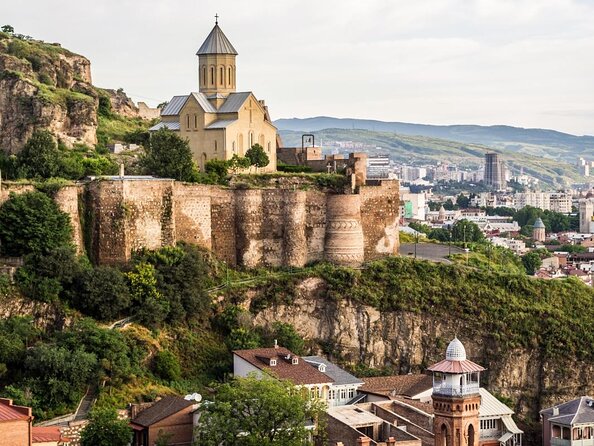
Metekhi Cathedral sits dramatically on a cliff above the Mtkvari River. The setting does much of the work: stone walls, steep ground, river views, and one of the city’s most important religious sites come together in a short stop.
The church is linked with Vakhtang Gorgasali, the king traditionally credited with founding Tbilisi. The first church here may have been built by him, and the site also connects with the story of Saint Shushanik. Your guide can help separate tradition from confirmed history, which matters in Georgia, where legends often remain part of the way places are understood.
You spend about 15 minutes inside or around the cathedral. Church access comes with a dress code. Shorts are not permitted, and women need to cover their heads. Bring a scarf if needed, and dress with the same care you would use at other Georgian Orthodox churches.
A statue of King Vakhtang Gorgasali follows. The five-minute stop is brief, but it gives the cathedral visit a human focus. You learn about a king who ruled Iberia, now known as Kartli, during the late fifth and early sixth centuries. His reign involved conflict with Sasanian Iran, an alliance with Byzantium, and the weakening of his kingdom after defeat. Dates for his rule are debated, and the guide may explain how Georgian tradition connects him with the founding of the capital.
Europe Square, Rike Park, and the cable car
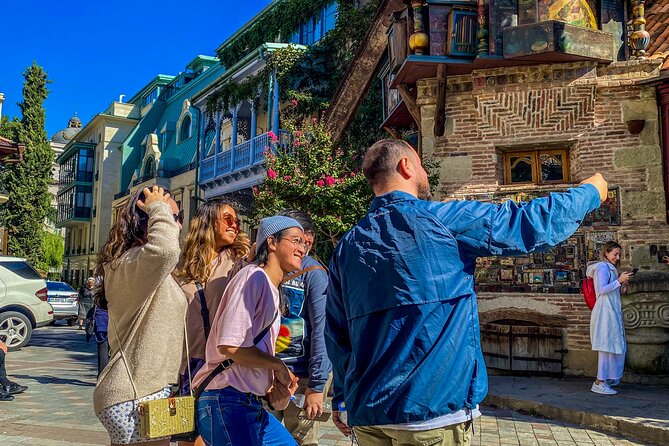
The route crosses Europe Square, where the guide explains Georgia’s relationship with the European Union. This is a short stop, only about five minutes, but it adds a modern political layer to a tour otherwise filled with medieval churches and royal figures. The subject is important to Georgians, and it helps you see that Tbilisi’s identity is not only about the past.
Next comes Rike Park on the left bank of the Mtkvari. It is a newer recreational area with fountains, paths, climbing walls, children’s facilities, large chess boards, bars, and restaurants. The park also leads to the Bridge of Peace and the lower cable-car station.
The cable car ride is included in the price and takes about 10 minutes. It carries you upward toward Narikala and the Mother of Georgia statue. This is the route’s clearest visual payoff. From above, you can see the river, the old city, the hills, and the mix of older roofs and newer buildings that makes Tbilisi so distinctive.
Wind is the catch. The cable cars will not operate in windy weather, and the tour provider does not promise a replacement ride. Since this is one of the main included features, it is worth checking the conditions before you set out. The tour continues in poor weather, so a rain jacket and sensible shoes are useful.
Mother of Georgia and the hilltop view
Kartlis Deda, usually translated as Mother of Georgia, is a 20-meter aluminum statue on Sololaki Hill. It was erected in 1958 for Tbilisi’s 1,500th anniversary and designed by Georgian sculptor Elguja Amashukeli.
The figure holds a bowl of wine in her left hand for friends and a sword in her right hand for enemies. It is a simple image with a lot packed into it: hospitality, pride, and a readiness to defend the country.
The stop lasts about 10 minutes. The statue itself does not require a long visit, but the hilltop position gives you time to look across Tbilisi and understand how the city occupies its hills and river valley. This is also a good place to ask your guide about Georgian customs, national identity, and the way old stories still shape public symbols.
The itinerary mentions Narikala Fortress in the tour highlights, but the timed stop is centered on the upper cable-car station and Mother of Georgia. If entering or exploring the fortress is essential to you, ask the guide about the exact plan before booking.
More things to do in Tbilisi:
- Tbilisi: Day Trip to Kazbegi, Gudauri, Gergeti, and Ananuri
★ 4.9 · 3,203 reviews - Day Trip to Kakheti Wine Region Including 9 Wine Tastings
★ 5.0 · 2,774 reviews - Highlights of Caucasus Mountains-Jinvali,Ananuri,Gudauri,Kazbegi(Group tour)
★ 5.0 · 2,682 reviews - From Tbilisi: Kakheti Wine Region Tour with 9 Wine Tastings
★ 4.9 · 2,541 reviews
A modern bridge and an ancient basilica

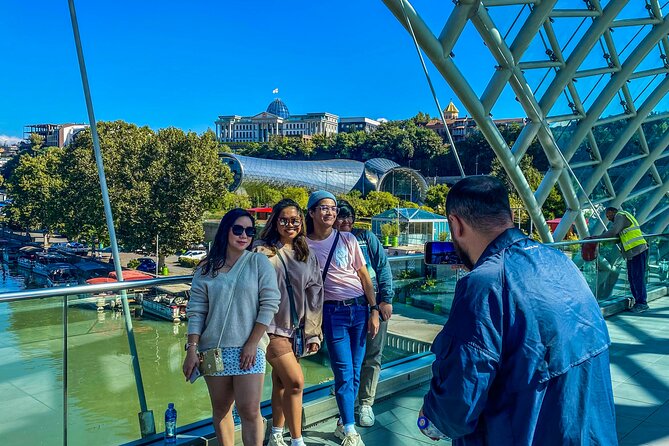
After coming back down, you visit the Bridge of Peace. This glass-and-steel pedestrian bridge opened in 2010 and crosses the Mtkvari in a bow-shaped curve. It was shipped from Italy in 200 unassembled components and contains more than 10,000 LED bulbs, which switch on 90 minutes before sunset.
The stop lasts about five minutes. The bridge is modern, polished, and visually unlike the surrounding old streets. Some people love the contrast; others may find it less appealing than Tbilisi’s weathered buildings. Either way, it is useful for understanding the city’s mix of old and new.
The tour then pauses at the Patriarchate of Georgia for about five minutes. The guide shares facts about the institution and its role in Georgian religious life. The stop is short, so expect an introduction rather than a long visit.
Anchiskhati Basilica brings you back to the old city’s older stonework. Located on Shavteli Street in upper Kala, it dates to the sixth century and is linked with Dachi Ujarmeli. It originally carried the name of the Virgin Mary’s Birth. Its current name came later, after an image of Christ was moved from Anchi Church to this basilica in 1675.
The church also connects with Georgian calligraphy through the Meskhishvili and Aleximaskhishvili families. You spend about 10 minutes here. This is the kind of stop that benefits from a guide because the building is modest in scale, while its story reaches across religion, art, family history, and Georgian writing.
The clock tower, Sioni, and the tamada
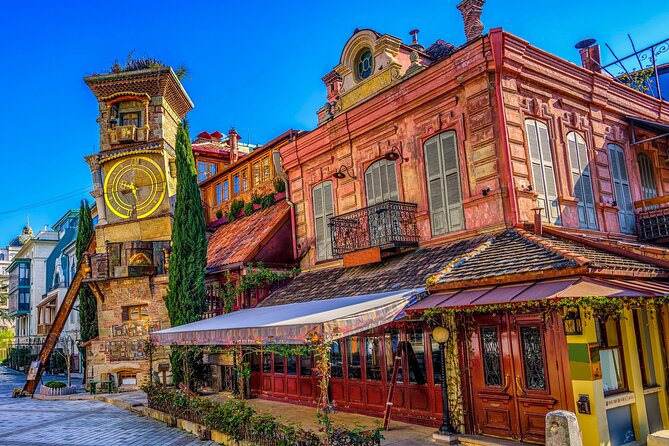
The Rezo Gabriadze Marionette Theater is one of Tbilisi’s most recognizable modern attractions. Beside the theater is a whimsical clock tower built in 2010, covered with hundreds of tiles designed by Rezo Gabriadze himself.
Every hour, an angel appears with a small hammer and rings the bell. A puppet show called The Circle of Life takes place twice daily, at noon and 7 p.m. The tour allows about 10 minutes here, but the timing may not line up with the performances. If you want to see the show, ask the guide whether the schedule fits your tour time.
Sioni Cathedral sits on the street of the same name in upper Kala. Tradition links the first church at this site with King Vakhtang Gorgasali in the fifth century. The current cathedral is another reminder that Tbilisi’s oldest quarter is not a single historic period. Churches, old homes, restaurants, modern art, and busy footpaths all share the same small area.
At the Tamada statue, you hear about the Georgian toastmaster. A tamada leads a traditional Georgian feast, guiding the sequence of toasts and keeping the table connected. This five-minute stop is brief but useful because it points toward a living custom rather than only a stone monument.
Shardeni Street, sulfur baths, and a waterfall

Jan Shardeni Street is a pedestrian lane in the old city. It is known for cafés, restaurants, and evening activity. The tour spends only five minutes here, so you get an orientation rather than free time for a long meal or a proper look inside the shops.
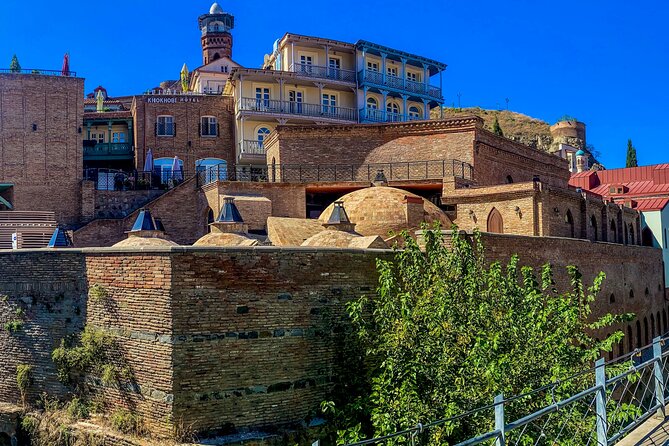
Then comes Abanotubani, Tbilisi’s sulfur-bath district. Abanos Kucha is lined with public bathhouses fed by hot sulfur springs. The domed roofs and low stone buildings give the area a different feel from the grand churches and modern bridge.
The tour does not include a bath session, and the stop is also about five minutes. Still, the guide’s explanation helps you understand why Tbilisi grew around these warm springs. If you plan to return for a soak, use this stop to note the location and ask your guide about the district.
The final stop is Leghvtakhevi Waterfall, a small natural break within the old city. Georgians and international visitors come here to cool off when the weather is hot. The waterfall is reached as part of the walking route, so wear shoes that can handle uneven streets and damp ground.
Ending here is smart. After churches, statues, political context, and city views, the sound of water offers a quieter finish. The visit lasts about five minutes, but you can ask whether there is time for extra photographs.
What the $45 price gets you

At $45 per person, this tour sits in a reasonable middle range for a private four-hour experience, but the value depends on how you prefer to explore.
You are paying for a private professional guide, hotel pickup, hotel drop-off, the cable-car ride, and online support. You are also paying for interpretation. A driver can take you across more ground, but a walking guide can explain why a church matters, how the tamada fits Georgian culture, and what you are seeing from the hill.
The strongest value comes when your guide makes the route personal. David was praised for detailed historical explanations, photos on request, fun anecdotes, and a well-organized mix of wine, bread, lemonade, churches, the waterfall, and the cable car. Mariam adjusted the tour slightly and allowed enough time at the stops. Nico accommodated extra requests, while Nino kept the history lively and responded closely to questions.
There is a fair criticism to consider. One person felt that a car tour covering a larger area would offer better value, with this route added as one part of a broader day. That is a reasonable view if you have only one day in Tbilisi or dislike walking. For a first look at the old center, though, the private format gives you more personal attention than a large group outing.
Gratuities are not included. If your guide is punctual, helpful, and engaging, leave a tip according to the service you receive.
Who will enjoy this Tbilisi walk most
I would choose this tour for a first day in Tbilisi, especially if you want the basic map of the old city before exploring on your own. It suits couples, families, and small groups who want a private guide rather than a fixed public group.
It also works well if you care about context. The route is not simply a checklist of photo stops. It links King Vakhtang Gorgasali, Georgian Orthodox churches, European politics, the tamada tradition, sulfur baths, and modern city design.
You should think twice if you want a fast vehicle-based tour of distant parts of Tbilisi. Four hours is enough to see many central sights, but the walk does not cover the whole city. It may also feel rushed for anyone who wants long church visits, a bath, a full meal, or extended shopping time.
The route operates in all weather. Wear clothing suited to the forecast, and plan for walking between stops. If you need a slower pace or want to adjust the route, tell the guide at the start. The private setup makes that request practical.
Should you book this private Tbilisi tour?
Book it if you want a friendly introduction to central Tbilisi, a private guide, hotel transport, and a strong mix of history, local customs, views, and old-city streets. The cable car and Mother of Georgia add a memorable high point, while the sulfur baths and waterfall show a more everyday side of the capital.
Skip it if your main goal is to cover a large part of Tbilisi by car or keep costs as low as possible. At $45 per person, the tour earns its price through personal guiding rather than distance covered.
For most first-time visitors who enjoy walking and asking questions, I think it is a good opening half-day. Guides such as Sally and Kate have been praised for warmth, while Luka, David, Nico, Mariam, Nino, and Roma have earned praise for history, flexibility, and professional service. That personal touch is the real reason to choose this tour.
FAQ
How long does the private Tbilisi city tour last?
The tour lasts approximately four hours.
How much does the tour cost?
The listed price is $45 per person.
Is hotel pickup included?
Yes. The guide meets you at the reception of your hotel.
Is hotel drop-off included?
Yes. Drop-off at your hotel is included.
Is the cable-car ride included?
Yes. The cable-car ride is included in the tour price.
What happens if the weather is windy?
The cable cars will not operate during windy weather. The tour itself operates in all weather conditions, so dress according to the forecast.
Is this a private tour?
Yes. Only your own group participates in the activity.
What should I wear to the churches?
Shorts are not allowed in the churches, and women need to cover their heads.
Can I cancel for a full refund?
Yes. You can cancel at least 24 hours before the local start time for a full refund. Cancellations or changes made less than 24 hours in advance are not accepted for a refund.
Just added in Tbilisi
- Wine Tasting feel the Difference of Qvevri or Classical Wine★ 4.4 · 10 reviews
- From Tbilisi: Kakheti and Kazbegi 2-Day 4X4 Jeep Tour pack★ 5.0 · 6 reviews
- Walking Tour in Old Tbilisi – Group Tour★ 4.5 · 8 reviews
- Uforgatable Kakheti Tour with wine tasting – in Georgia★ 4.9 · 5 reviews
- From Tbilisi: Uplistsikhe Caves and Mtskheta Town Day tour★ 5.0 · 2 reviews
- Tbilisi: Vintage Fashion and Secondhand Thrifting Tour★ 5.0 · 11 reviews
- Tbilisi Airport to Gudauri, Bakuriani, Batumi, Tbilisi★ 5.0 · 3 reviews
- Private Adorable City Tour of Tbilisi★ 5.0 · 3 reviews
Walking Tours, compared.
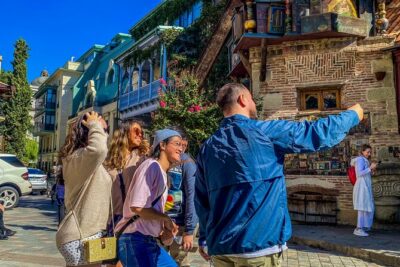
Tbilisi Walking Tour Including Cable Car and Traditional Bakery
Read our review →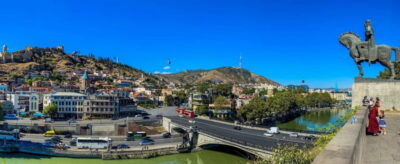

Evening Walking & Talking Tour with Wine & Boat Ride
Read our review →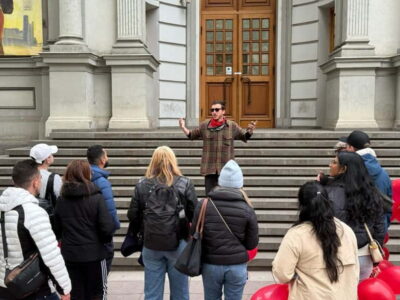
Evening Walking Tour with Wine & Boat Ride Options
Read our review →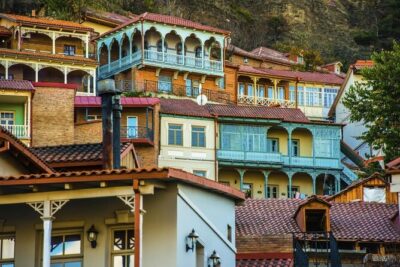
Old Tbilisi Highlights walking tour with wine & 10 tastings
Read our review →
Old Tbilisi Tour: Private Walking Tour With Wine Tasting
Read our review →

Private Tbilisi Food Tour: 9 Tastings Walk in Bohemian District
Read our review →Browse the lists this tour appears in