Reviewed · PRIVATE
Private Abastumani Tour from Tbilisi with Medieval Monasteries & Observatory
Ancient churches meet Soviet science here. This long private road trip links Sapara, Zarzma, and Chulevi monasteries with the Abastumani Astrophysical Observatory and a mountain spa town. I like the unusual mix of medieval Georgian art and astronomy, plus the freedom of a private vehicle and guide. The main drawback is the distance: 555 kilometers in about 14 hours makes this a demanding day, not a relaxed outing.
I also like that you can choose between a simple sightseeing day and a version with traditional lunch and a sulfur bath. The only real caution is that the standard price of $147.50 per person does not include lunch, and the schedule leaves limited time at each monastery.
In This Review
- The quick take on this 14-hour mountain road trip
- Why Abastumani makes a worthwhile day trip
- Sapara Monastery, carvings in a green canyon
- Zarzma Monastery and its underground burial vault
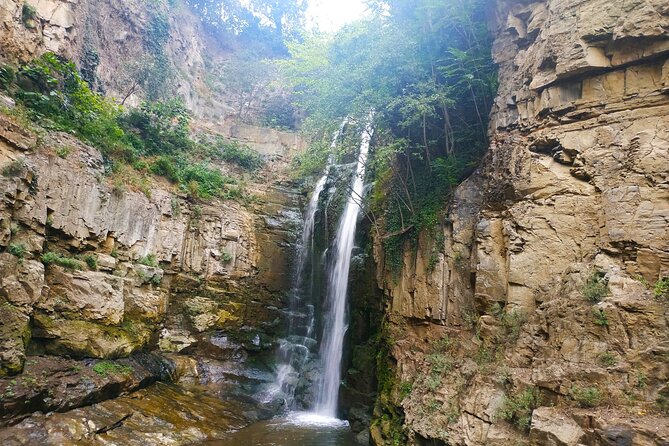
- Chulevi Monastery and a five-minute walk to a waterfall
- Abastumani Observatory, a science stop at 1,650 meters
- Abastumani resort and its sulfate-sodium chloride springs
- Lunch, monastery food, and the optional sulfur bath
- Is $147.50 per person good value?
- The long drive and the private format
- Who should book this Abastumani experience?
- Should you book the private Abastumani tour?
- FAQ
- How long is the Abastumani tour from Tbilisi?
- Is pickup offered?
- Is lunch included?
- Does the tour include a sulfur bath?
- What should women wear at the monasteries?
- Can men wear short trousers?
- Can I cancel for a full refund?
The quick take on this 14-hour mountain road trip
- Sapara Monastery offers carved stone and frescoes in a forested canyon, a strong first stop for anyone interested in Georgian church art.
- Zarzma combines a large domed church, a major belfry, and an underground burial vault beneath the church.
- Chulevi adds a short five-minute walk to a waterfall, giving the day a small nature break between historic sites.
- Abastumani Observatory brings a rare Soviet-era science stop into a tour otherwise centered on monasteries and mountain culture.
- The lunch and sulfur bath option turns the final stop into a spa experience, but you need to bring a swimming costume and towel.
- The private format matters on such a long day, since only your own group takes part and group discounts are available.
Why Abastumani makes a worthwhile day trip
Abastumani sits on the southern slopes of the Meskheti Range in the Lesser Caucasus. It is known both as a climatic resort and as the home of Georgia’s National Astrophysical Observatory. That pairing gives this excursion a different feel from a standard monastery circuit.
You get old stone churches, mountain forests, springs, and a research center founded in 1932. The result is a day about several chapters of Georgian life: medieval religion, imperial and Soviet science, mountain health resorts, and local food.
The setting changes as you leave Tbilisi and head toward the southern Caucasus. The total drive is about 555 kilometers, or 345 miles, so much of the experience takes place from the road. I would choose this trip only if you are happy spending a full day in a vehicle for access to places that are difficult to combine independently.
The private arrangement helps. You are not tied to the preferences of a large group, and the guide can explain the sites as you go. One particularly warm account of the trip praised guide Georgi for showing unusual places as well as the main sights. That same experience included breakfast with monks and a swim in a sulfur pool at Abastumani, reminders that the best parts of this outing may come from the local connections around the formal stops.
More things to do in Tbilisi:
- Tbilisi: Day Trip to Kazbegi, Gudauri, Gergeti, and Ananuri
★ 4.9 · 3,203 reviews - Day Trip to Kakheti Wine Region Including 9 Wine Tastings
★ 5.0 · 2,774 reviews - Highlights of Caucasus Mountains-Jinvali,Ananuri,Gudauri,Kazbegi(Group tour)
★ 5.0 · 2,682 reviews
Sapara Monastery, carvings in a green canyon
The first listed stop is Sapara Monastery, with about 30 minutes set aside for the visit. The monastery dates from the ninth century and sits in a green, forested canyon, so the approach is part of its appeal.
Inside and around the church, look for the carved stone details and frescoes. This is not simply a quick photo stop. The artwork gives you an early introduction to the visual language of Georgian Orthodox churches, where stone carving and painted religious scenes carry much of the meaning.
Thirty minutes is enough for a focused visit, though not for a slow study of every detail. If church art matters to you, keep your attention on the carvings and frescoes rather than treating Sapara as a warm-up stop. The admission fee is included, so you do not need to budget separately for entry.
Dress properly from the start. Women need a headscarf and dress in Georgian Orthodox churches, while men cannot wear short trousers. Scarves and dresses may be available near some entrances, but bringing suitable clothing is the safer choice.
Zarzma Monastery and its underground burial vault
Zarzma Monastery is another brief 30-minute stop, but it offers a different visual experience. The monastery’s Church of the Transfiguration is described as an eighth-century foundation with a distinctive domed form and a belfry regarded as one of the largest in Georgia.
The underground burial vault beneath the church adds an unusual layer. It contains the remains of monks, so this is a place where the building’s religious purpose remains very present. You should expect a quieter, more serious stop than a simple architectural viewing.
The short timing means you will want to listen closely to the guide and use your camera carefully. Details such as the dome, the belfry, and the burial area are the features to prioritize. As at Sapara, admission is included.
The sequence of Sapara and Zarzma works well because the two monasteries do not feel identical. Sapara is especially appealing for its canyon setting, carvings, and frescoes. Zarzma offers scale, a domed church, and the burial vault. Together, they make the morning feel more varied than a series of similar church visits.
Chulevi Monastery and a five-minute walk to a waterfall
Chulevi Monastery of St. George was home to a monastic community by the 11th century, although the current church was built in the 14th century. The visit lasts about 30 minutes, with an optional short walk to a nearby waterfall.
The waterfall takes about five minutes to reach on foot. That is not a major hike, but sensible shoes will make the walk easier. The stop gives your legs a break after the road and adds a touch of moving water and forest to a day heavy with stone buildings.
Chulevi is also useful for understanding how Georgian monasteries changed over time. The site’s earlier monastic life and later church building belong to different periods, even though they occupy the same religious setting.
Again, plan for a compact visit. If the waterfall matters to you, leave enough time for the walk rather than spending every minute at the church entrance. The schedule is workable, but it is not designed for long, unhurried exploration.
A few more options to weigh up in Tbilisi
- Kazbegi and Gudauri Full Day Private Tour from Tbilisi
★ 5.0 · 447 reviews - Old Tbilisi Tour: Private Walking Tour With Wine Tasting
★ 5.0 · 273 reviews - Private Tbilisi Food Tour: 9 Tastings Walk in Bohemian District
★ 5.0 · 227 reviews - Full Day Private Wine Tour in Kakheti Region with Lunch and 3 Wine Tastings
★ 5.0 · 207 reviews
Abastumani Observatory, a science stop at 1,650 meters
The Georgian National Astrophysical Observatory is the most unexpected part of the route. It was founded in 1932 by Academician Evgeni Kharadze on Mount Kanobili, close to Abastumani, at an altitude between 1,650 and 1,700 meters.
The location was chosen for practical scientific reasons. It is far from air pollution and artificial light, with coniferous forest and stable weather. Those conditions make it a useful place for astronomy at this altitude.
You have about one hour here, the longest scheduled stop of the day. The observatory conducts research in astronomy and astrophysics, as well as studies of the upper layers of Earth’s atmosphere. For many people, this will be the tour’s most memorable contrast: after centuries-old churches, you are looking at a research institution shaped by twentieth-century science.
The observatory is also a reminder that Abastumani is not only a spa town. It has a serious scientific identity. If you enjoy unusual museums, technology, or Soviet-era institutions, this stop adds real value to the trip. If your main interest is medieval architecture, it may feel like a detour, but the contrast is precisely what gives the excursion its character.
The mountain altitude may also make the stop feel different from Tbilisi. The information provided does not promise a particular temperature on the day, so check the forecast and bring a layer suitable for mountain conditions.
Abastumani resort and its sulfate-sodium chloride springs
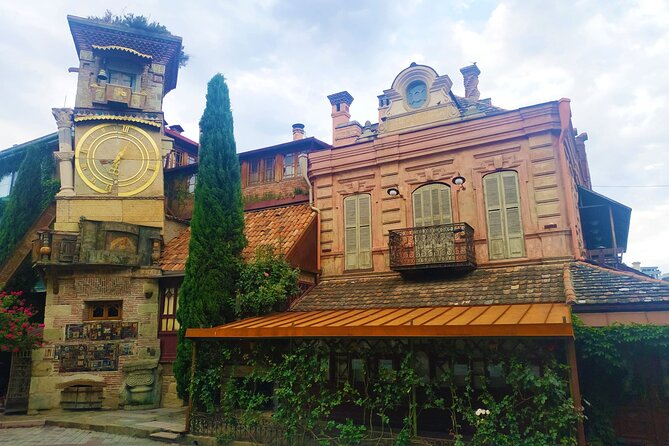
The final listed stop is Abastumani itself, with about 30 minutes for a look around. The resort lies on the southern slopes of the Meskheti Range and has a moderately dry mountain climate. Average temperatures are given as about 6.4 to 6.5 degrees Celsius in January and 17.2 degrees in July.
Abastumani’s three hot springs range from 39 to 48.5 degrees Celsius. Their lightly mineralized water contains sulfate and sodium chloride, and the springs have long been used in the treatment of tuberculosis.
That medical history gives the town a strong sense of place. This was not built only for sightseeing. Its climate and springs shaped its identity as a health resort, while the observatory developed nearby because of the clear, stable conditions.
Thirty minutes is enough to see the resort atmosphere, but the short visit will not provide a full spa stay. If bathing is an important reason for booking, choose the lunch and Soviet bath option rather than the standard tour. Bring a swimming costume and towel. The available details do not specify how long the bath session lasts, so you should treat it as an added experience, not a full wellness day.
Lunch, monastery food, and the optional sulfur bath
The standard tour does not include lunch, although the route stops at a restaurant. That gives you a chance to eat local food, but you should include the meal in your budget and expect the timing to fit the day’s long schedule.
The lunch and sulfur bath option includes traditional local cuisine and a soak in the sulfur baths. This is the more distinctive choice, especially if you want the trip to feel connected to Abastumani’s old resort culture rather than simply passing through town.
Dietary restrictions should be shared when booking this option. The provider uses that information to arrange an appropriate lunch. You also need a swimming costume and towel, details that are easy to overlook when leaving Tbilisi early in the morning.
A striking example from the experience is breakfast with a group of monks, followed by a swim in a sulfur pool. That is not presented as a guaranteed part of every departure, so I would not book expecting it. Still, it shows the value of having a local guide who can add human encounters and unusual stops to a formal sightseeing route.
Is $147.50 per person good value?
At $147.50 per person, the tour is not a cheap short excursion. It is priced for a private full-day vehicle, guide, included admission at the listed sights, and a route covering 555 kilometers.
The value improves if you are traveling with family or friends and can use the group discount. A private outing also avoids the inconvenience of matching your day to strangers, which matters when the schedule begins at 7:00 in the morning and runs for roughly 14 hours.
Lunch is not included in the standard version. The optional lunch and sulfur bath package should be compared carefully with your priorities. If you already plan to eat at a restaurant and have no interest in bathing, the standard version keeps the cost simpler. If the springs are a major attraction, the upgrade gives the day a more complete Abastumani focus.
The price makes less sense for someone who wants only one monastery or a quick trip outside Tbilisi. It makes more sense for you if you want several remote sites in one day and would find the driving, route planning, and church etiquette easier with a guide.
The long drive and the private format
This is a road trip first and a walking tour second. The route totals 555 kilometers, and the full outing takes about 14 hours, with a 7:00 a.m. start. You should be ready for an early morning, long stretches in the vehicle, and a full return journey.
The private format is a practical advantage. Only your group participates, so the pace can feel more personal than a large coach trip. It may also make it easier to ask questions about Georgian churches, the observatory, and local customs.
The tradeoff is the packed schedule. Sapara, Zarzma, and Chulevi each receive around 30 minutes, while Abastumani has another 30 minutes and the observatory gets one hour. You will see a lot, but you will not have unlimited time at any single location.
Good planning will improve the day. Wear church-appropriate clothing, bring water and snacks for the road, and use the short stops efficiently. The tour information confirms mobile ticketing and pickup, which removes two common sources of hassle, but it does not replace the need for stamina.
Who should book this Abastumani experience?
I would recommend this tour to you if you enjoy several kinds of travel at once:
- Medieval Georgian churches and Orthodox art
- Remote mountain roads and forested settings
- Soviet-era science and observatories
- Health resorts and natural hot springs
- Traditional Georgian food
- Private guiding rather than a large group
It is especially suited to people who have already seen central Tbilisi and want a demanding day beyond the usual nearby sights. The tour also works for curious couples, families, and small groups who can share the private cost.
I would hesitate if you dislike long drives, need generous time at each stop, or want a slow spa break. The sulfur bath option adds pleasure, but the overall outing remains a 14-hour road day.
The tour requires good weather. If conditions force a cancellation, you can choose a different date or receive a full refund. You can also cancel up to 24 hours before the start for a full refund. Changes or cancellations made less than 24 hours before departure are not refunded.
Should you book the private Abastumani tour?
Book it if you want Georgia beyond the familiar postcard route. The combination of ninth-century Sapara, Zarzma’s burial vault, Chulevi’s waterfall, a 1932 observatory, and Abastumani’s hot springs is genuinely unusual.
Choose the lunch and sulfur bath option if local food and bathing are central to your plans. Choose the standard version if you mainly want the monasteries and observatory, and prefer to decide your own lunch at the restaurant stop.
The key question is simple: are you willing to spend 14 hours on the road for a varied, private day in the southern Caucasus? If yes, this is a strong choice. If not, save Abastumani for a longer regional itinerary, where its monasteries, observatory, and springs can receive more time.
FAQ
How long is the Abastumani tour from Tbilisi?
The tour lasts approximately 14 hours and begins at 7:00 a.m. The total driving distance is about 555 kilometers, or 345 miles.
Is pickup offered?
Yes, pickup is offered for this private experience.
Is lunch included?
Lunch is not included in the standard tour, but the route includes a stop at a restaurant. A separate option includes lunch featuring traditional local cuisine.
Does the tour include a sulfur bath?
The sulfur bath is included only with the Tour with Lunch and Sulfur Bath option. You should bring a swimming costume and towel for that version.
What should women wear at the monasteries?
Women need to wear headscarves and dresses in Georgian Orthodox churches. Scarves and dresses may be available near some church entrances.
Can men wear short trousers?
No. Short trousers are forbidden in the Georgian Orthodox churches visited on this tour.
Can I cancel for a full refund?
Yes, you can cancel up to 24 hours before the experience starts for a full refund. If poor weather causes the tour to be canceled, you will be offered another date or a full refund.
Just added in Tbilisi
- Wine Tasting feel the Difference of Qvevri or Classical Wine★ 4.4 · 10 reviews
- From Tbilisi: Kakheti and Kazbegi 2-Day 4X4 Jeep Tour pack★ 5.0 · 6 reviews
- Walking Tour in Old Tbilisi – Group Tour★ 4.5 · 8 reviews
- Uforgatable Kakheti Tour with wine tasting – in Georgia★ 4.9 · 5 reviews
- From Tbilisi: Uplistsikhe Caves and Mtskheta Town Day tour★ 5.0 · 2 reviews
- Tbilisi: Vintage Fashion and Secondhand Thrifting Tour★ 5.0 · 11 reviews
- Private Adorable City Tour of Tbilisi★ 5.0 · 3 reviews
- Tbilisi Airport to Gudauri, Bakuriani, Batumi, Tbilisi★ 5.0 · 3 reviews
Private, compared.

Kazbegi and Gudauri Full Day Private Tour from Tbilisi
Read our review →
Old Tbilisi Tour: Private Walking Tour With Wine Tasting
Read our review →
Private Tbilisi Food Tour: 9 Tastings Walk in Bohemian District
Read our review →
Full Day Private Wine Tour in Kakheti Region with Lunch and 3 Wine Tastings
Read our review →
Kakheti – Small wineries and family-cooked lunch • Private tour
Read our review →
Kakheti All Inclusive Private Wine Tour Including Lunch
Read our review →
Kazbegi Full-Day Private Tour with Scenic Stops from Tbilisi
Read our review →