
Reviewed · MTSKHETA AND GORI TOURS
Mtskheta – Jvari Private Tour + Chronicles of Georgia
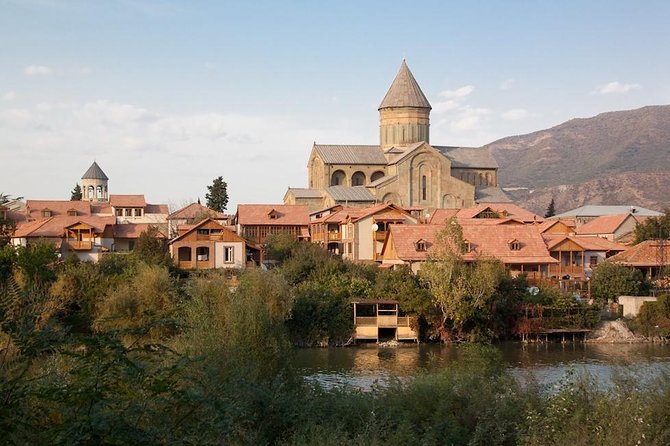
Three stops, centuries of Georgia, one tidy half-day. This private tour links Jvari Monastery and Mtskheta, two UNESCO-listed sites tied to Georgia’s religious past, with the striking Chronicles of Georgia monument. I like the compact route and the chance to travel with an English-speaking guide rather than simply shuttle between monuments.
I also like the personal pickup from any Tbilisi address, the air-conditioned car, and the freedom that comes with a private group. Guides such as George, Gogita, Gogi, and Giorgi have been praised for clear stories, warm conversation, and useful local advice. The main consideration is time: four hours is efficient, but it leaves little room for a slow visit, extended shopping, or an unplanned meal.
In This Review
- Key points to know before you book
- Why this four-hour route works so well
- Jvari Monastery and the meeting of two rivers
- Mtskheta, Georgia’s former capital
- Svetitskhoveli Cathedral and Georgia’s sacred center
- The Chronicles of Georgia, history in huge stone panels
- What the guide adds to the drive
- Timing, transport, and the value of going private
- Who will get the most from this tour
- Should you book the Mtskheta and Jvari tour?
- FAQ
- How long does the tour last?
- What places does the tour visit?
- Is Jvari Monastery an ancient site?
- What can I see from Jvari Monastery?
- Why is Mtskheta important?
- What is special about Svetitskhoveli Cathedral?
- What is the Chronicles of Georgia?
- Does the tour include transportation?
- Is the tour private?
- Can I cancel the booking?
Key points to know before you book
- Jvari comes first: Reach a sixth-century monastery above the meeting point of the Aragvi and Kura rivers, with broad views across the surrounding countryside.
- Mtskheta carries major spiritual weight: Visit Svetitskhoveli Cathedral, linked to the burial site of Christ’s Robe and regarded as one of Georgia’s most sacred places.
- The route suits a short stay: In four hours, you see three major sights without committing a full day outside Tbilisi.
- Private transport adds real value: Hotel or address pickup, drop-off, air conditioning, and WiFi keep the trip simple.
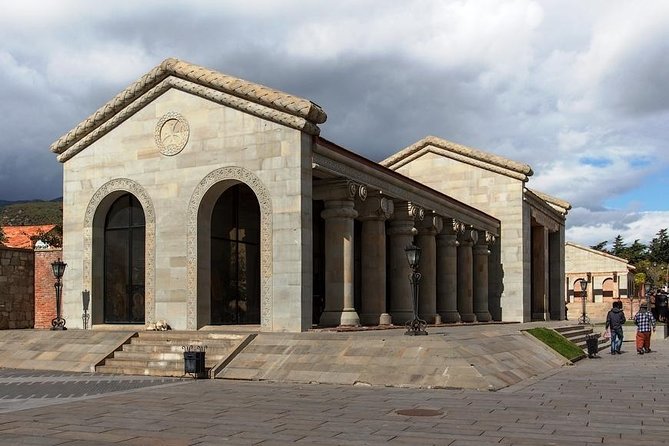
- The Chronicles of Georgia changes the mood: Its huge carved columns and view over Tbilisi Sea provide a dramatic modern finish to an ancient-history tour.
- The guiding is the main strength: The experience has a 4.8 rating from 49 bookings, and 97 percent of ratings for transport are perfect.
Why this four-hour route works so well
This is a compact introduction to the part of Georgia that links faith, royal power, and national memory. Mtskheta was inhabited for more than 2,600 years and served as the capital of the early Georgian Kingdom of Iberia. Jvari adds a mountain-top church and a strong connection to Georgia’s conversion to Christianity. The Chronicles of Georgia then shifts the focus toward a grand modern monument built to recall the country’s past.
I like the order. You begin with a high viewpoint at Jvari, continue into the old capital, and finish near Tbilisi with a large-scale artwork. The route has a clear rhythm instead of feeling like three unrelated photo stops.
At $31 per person, the price is particularly attractive for a private outing. You get transport, pickup and drop-off, an air-conditioned vehicle, onboard WiFi, and a live English-speaking guide. A private car also means you are not tied to the pace of strangers. That matters when one person wants to examine church carvings while another prefers to take photographs.
The low price does come with a practical tradeoff. Four hours is a brisk half-day. You should expect an introduction to each place, not a long archaeological visit with time for every shop and side street. If you want a meal in Mtskheta, extensive wine tasting, or a leisurely look at every monument, you may need a separate visit.
More Mtskheta and Gori trips:
- Tbilisi: Mtskheta, Jvari, Gori and Uplistsikhe Day Tour
★ 4.9 · 2,396 reviews - Day Trip to Mtskheta Gori and Uplistsikhe
★ 5.0 · 1,801 reviews - Tbilisi: Mtskheta Jvari Bazaar, Chronicles of Georgia & Wine
★ 5.0 · 1,088 reviews
Jvari Monastery and the meeting of two rivers
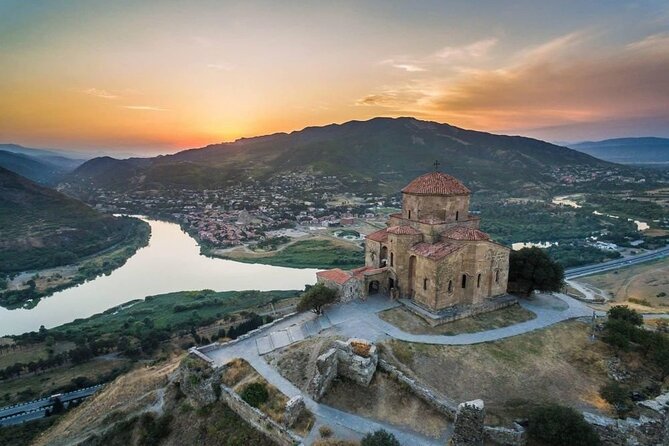
Jvari Monastery is the first major stop, and it gives you the best sense of Georgia’s dramatic setting. The sixth-century church sits on a high mountain near Mtskheta, overlooking the confluence of the Aragvi and Kura rivers. From here, you can look across the old capital and understand why this location has mattered for so long.
The view is not just a pleasant extra. It explains the geography of the area in a way that a city street cannot. You see Mtskheta below, the rivers coming together, and the hills that helped shape the old kingdom’s power and movement.
The monastery’s name means Cross in Georgian. Your guide is expected to explain the story behind that name and the church’s spiritual role. This is where a private guide can make a real difference. The stone building is impressive on its own, but the meaning becomes clearer when someone connects the site to Georgia’s Christian tradition and early medieval rulers.
The architecture is restrained compared with the huge Chronicles monument you will see later. That contrast is useful. At Jvari, the setting and age do much of the work. You are looking at an ancient religious building in a high, open position, not a modern attraction built for spectacle.
Bring shoes that feel secure for walking around an old hilltop site. The supplied details do not promise a particular walking distance or surface, so you should be ready for some movement away from the vehicle. The stop is especially appealing if you care about religious heritage, old stone churches, photography, or views from above.
Mtskheta, Georgia’s former capital
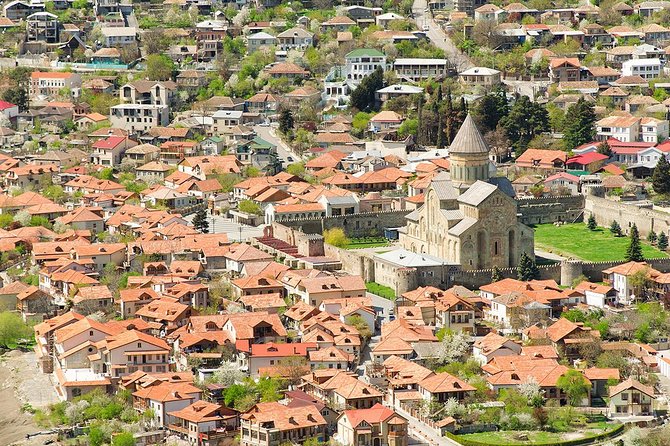
From Jvari, the tour continues to Mtskheta, the ancient capital of Georgia. The historic center is reached on foot from the parking area, so this part of the outing feels more like a town visit than a roadside stop.
The walk takes you through narrow streets lined with souvenir shops, wine tastings, and traditional Georgian sweets. That commercial strip is part of the experience, but it is also where the short schedule becomes noticeable. You may want to browse, taste wine, and buy churchkhela or another sweet, yet the main purpose of the stop is the cathedral.
Mtskheta has been occupied for more than 2,600 years and was once the capital of Iberia, the early Georgian kingdom. That gives the town a special place in Georgia’s story. It is not simply an old settlement with attractive lanes. It was a political and religious center long before modern Tbilisi became the country’s main city.
Svetitskhoveli Cathedral and Georgia’s sacred center
The key sight in Mtskheta is Svetitskhoveli Cathedral. It is described as the burial site of Christ’s Robe and is one of the most revered religious places in Georgia. Even if you are not visiting for religious reasons, this helps explain the cathedral’s importance to Georgian identity.
I would give this stop your full attention. Listen to the guide’s explanation, look closely at the architecture, and allow a few quiet moments rather than treating the cathedral as a quick background for photographs. The setting carries both national and spiritual meaning.
The strongest guiding comments focus on this combination of faith and history. Gogita, for example, has been praised for explaining the religious and historical significance with care and depth. Other guides, including George and Giorgi, have been appreciated for connecting formal information with stories about Georgian culture and society.
That personal explanation is one of the tour’s best features. You can ask follow-up questions in the car or at the sites, rather than waiting for a scripted group talk to finish. Several guide names appear in the feedback, so the exact personality of your outing may vary. The common thread is a guide who can explain Georgia’s past in accessible language and keep the conversation friendly.
Mtskheta is also the best place on this route to notice the difference between seeing a place and understanding it. Without context, you see a handsome old town and a major church. With context, you see the former capital, a center of Christian devotion, and a place connected to the formation of Georgian identity.
A few more options to weigh up in Mtskheta and Gori
- Mtskheta-Jvari-Uplistsike-Chronicle of Georgia, PRIVATE Trip
★ 5.0 · 105 reviews - Private Day Trip to Gudauri and Kazbegi from Tbilisi via Jvari and Mtskheta
★ 5.0 · 57 reviews - Mtskheta – Jvari Private Tour + Chronicles of Georgia
★ 5.0 · 31 reviews - Private 4 days Food & Wine and Sightseeing tour to Kakheti, Kazbegi, Mtskheta.
★ 5.0 · 25 reviews
The Chronicles of Georgia, history in huge stone panels
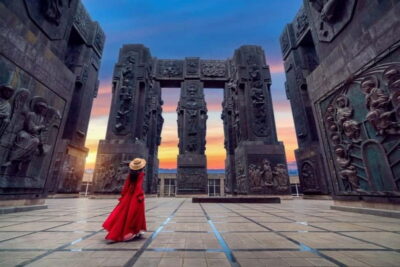
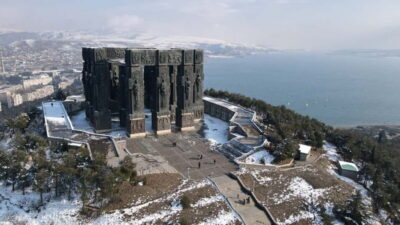
The final stop is the Chronicles of Georgia, a massive monument on the outskirts of Tbilisi. It is sometimes called the Georgian Stonehenge or the Georgian History Memorial. The comparison helps you picture the scale, but the monument has its own character and purpose.
The site consists of 16 gigantic columns, each about 35 meters high. The carved surfaces show kings, queens, heroes, and scenes linked to more than 3,000 years of Georgian history. It was designed by the sculptor Zurab Tsereteli, giving the tour a modern artistic counterpoint to Jvari and Svetitskhoveli.
I like this as the final stop because it broadens the story. Jvari and Mtskheta take you into early Christianity and the old Georgian kingdom. The Chronicles of Georgia presents a monumental version of the nation’s long historical memory. You do not need to know every figure depicted to appreciate the scale and ambition.
The monument also gives you a broad view over Tbilisi Sea, also called Tbilisi Lake. This creates a strong closing photograph and a change of scenery after the older churches and narrow streets.
Do not expect the same atmosphere here as at Mtskheta. This is not an ancient ruin or working cathedral. It is a modern memorial with oversized forms and a bold visual style. Some people will find it powerful and unusual; others may prefer the older religious sites. The appeal depends on your taste, but the stop adds variety and prevents the tour from becoming three versions of the same church visit.
What the guide adds to the drive
The drive between stops is part of the experience, not just dead time. The strongest comments about the guides focus on clear explanations, humor, good conversation, and the ability to connect Georgian history with present-day culture.
George has been praised for his stories, friendly manner, and calm driving. One account specifically notes that he communicated well before pickup and allowed plenty of freedom at the sites. Another describes his skill in handling Tbilisi traffic while keeping the car comfortable. Gogita has been appreciated for both religious detail and restaurant recommendations, which may be useful if you are deciding where to eat after the tour.
You should think of the guide as a private interpreter, not only a driver. Ask about the meaning of Jvari’s name, the role of Mtskheta in Iberian Georgia, the cathedral’s religious importance, or the figures shown on the Chronicles monument. The more you ask, the more useful a private format becomes.
The guide style may not be identical every time. Names associated with the experience include George, Georges, Giorgi, Gogi, Gogita, and Zura. The consistently positive comments about friendliness and historical explanations suggest that the human side of the tour is a major reason it receives strong marks, but the exact guide remains an important variable.
Timing, transport, and the value of going private
A four-hour duration makes this an easy addition to a Tbilisi stay. You do not need to surrender an entire day, and pickup is available from all hotels or any address in Tbilisi. Drop-off is included as well, which removes the need to arrange a taxi at the end.
The private group format is valuable for couples, families, and small groups with shared interests. You can keep the visit moving if everyone wants a short introduction, or spend more time at a favorite site when the schedule allows. The tour is not presented as a fixed large-group departure.
The air-conditioned vehicle matters during warmer months, while WiFi onboard can help you stay connected between stops. Transport receives particularly strong marks, with 97 percent of ratings giving it a perfect score. That is a useful signal because road time and pickup are often where short excursions become frustrating.
There was one reported organizational problem: a scheduled activity did not initially appear in the provider’s app, causing a 30-minute delay. The issue was resolved, but it is a reminder to keep some flexibility around the stated start time, especially if you have a flight, train, or timed reservation afterward.
You can cancel up to 24 hours in advance for a full refund, and the reserve-now, pay-later option lets you hold a place without paying immediately. Those terms are helpful if your Tbilisi plans are still shifting.
Who will get the most from this tour
I would recommend this outing to anyone visiting Tbilisi for a short stay who wants to see more than the city center. It is particularly well suited to people interested in Georgian Christianity, medieval history, national identity, architecture, and scenic viewpoints.
It also works well for first-time visitors who want orientation before exploring further. After four hours, you will have seen the old capital, one of the country’s most important cathedrals, a mountain monastery, and a modern historical memorial. That is a lot of context for one half-day.
The tour may be less suitable if you prefer long, unstructured stops. Mtskheta’s shops and tastings could tempt you to linger, while the cathedral and monuments deserve time for careful viewing. Four hours gives you a strong overview, but not an unhurried day.
It is also a good choice for Christian visitors who want the religious meaning explained respectfully. The cathedral and Jvari are not merely scenic buildings. Their significance is central to the route, and guides have been praised for treating that subject seriously without making the experience difficult for visitors from other backgrounds.
Should you book the Mtskheta and Jvari tour?
Book it if you want a well-priced private half-day from Tbilisi that combines major religious sites with a striking modern monument. The route is efficient, the transport package is generous for $31 per person, and the guides receive unusually strong praise for warmth, storytelling, and historical explanation.
Go in with realistic expectations. You will see the highlights rather than explore every corner, and the exact guide can shape the experience. Leave a little time around the four-hour window in case pickup runs late, and ask your guide for restaurant advice if you plan to eat afterward.
For a first visit to Georgia, this is an easy and worthwhile choice. It gives you a clear sense of why Mtskheta matters, why Jvari is sacred, and how Georgia presents its long past in stone.
FAQ
How long does the tour last?
The tour lasts four hours.
What places does the tour visit?
It visits Jvari Monastery, the historic center of Mtskheta including Svetitskhoveli Cathedral, and the Chronicles of Georgia monument.
Is Jvari Monastery an ancient site?
Yes. Jvari Monastery dates from the sixth century AD.
What can I see from Jvari Monastery?
Jvari sits on a high mountain and offers panoramic views of the confluence of the Aragvi and Kura rivers, along with views toward Mtskheta.
Why is Mtskheta important?
Mtskheta has been inhabited for more than 2,600 years and once served as the capital of the early Georgian Kingdom of Iberia.
What is special about Svetitskhoveli Cathedral?
It is associated with the burial site of Christ’s Robe and is one of the most sacred and revered places in Georgia.
What is the Chronicles of Georgia?
It is a large historical monument designed by sculptor Zurab Tsereteli. The site has 16 columns, each about 35 meters high, with scenes from more than 3,000 years of Georgian history.
Does the tour include transportation?
Yes. Private transportation in an air-conditioned vehicle is included, along with hotel or address pickup and drop-off in Tbilisi.
Is the tour private?
Yes. It is offered for a private group with a live English-speaking guide.
Can I cancel the booking?
Yes. You can cancel up to 24 hours in advance for a full refund. You can also reserve now and pay later.
Just added in Mtskheta and Gori
- From Tbilisi: Uplistsikhe Caves and Mtskheta Town Day tour★ 5.0 · 2 reviews
- Mtskheta and Tbilisi Tour: Highlights of Georgia★ 5.0 · 2 reviews
- full day Kazbegi-Gudauri-jvari -from Tbilisi★ 5.0 · 6 reviews
- Private Walking Tour in Tbilisi and Mtskheta Old Town★ 5.0 · 4 reviews
- Visit to unique Uplistsikhe, Gori and Borjomi – One Day Private Tour★ 5.0 · 1 review
- Two Capitals in One Day: Tbilisi and Mtskheta Combo Tour★ 5.0 · 3 reviews
- Uplistsikhe-Borjomi-Gori-Mtskheta★ 5.0 · 5 reviews
- UNESCO protected sites and Antique cities in Georgia – Mtskheta and Uplistikhe★ 5.0 · 1 review
Mtskheta and Gori Tours, compared.
Mtskheta, Jvari, Gori and Uplistsikhe Day Tour
Read our review →
Mtskheta Jvari Bazaar, Chronicles of Georgia & Wine
Read our review →
Mtskheta,Jvari,Bazaar,wine tasting,Chronicles of Georgia
Read our review →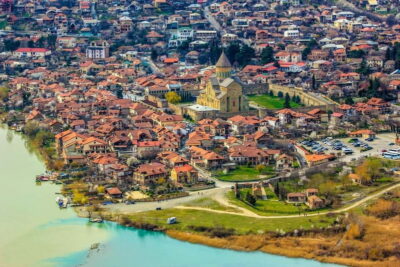
The Chronicles of Georgia, Jvari & Mtskheta Tour
Read our review →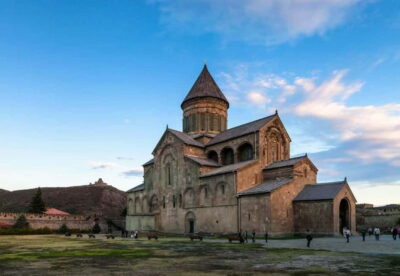
Browse the lists this tour appears in