
Reviewed · MTSKHETA AND GORI TOURS
Mtskheta and Tbilisi Tour: Highlights of Georgia
Georgia’s past and present meet here. This private day tour links ancient Mtskheta with Tbilisi’s churches, fortress, baths, markets, and riverfront, giving you a broad first look at the country without arranging several separate outings. I especially like the private format, which lets your group set the pace, and the useful mix of car sightseeing outside the city and walking in the Old Town. The main drawback is the packed schedule: eight to ten hours is a long day, and some stops are brief.
I also like that pickup, private transportation, bottled water, and one cable-car ride are included in the $98 price per person. Guide Aleksi received particularly warm praise for making the day worthwhile, which matters on a tour where good timing and clear explanations can shape the whole experience. You should still expect lunch to be at your own expense and confirm how much time your group wants for meals before setting off.
In This Review
- Five things to know before booking
- Why this one-day plan works
- Rike Park and the Bridge of Peace
- Riding above Tbilisi to Narikala Fortress
- Water, baths, and trade in the Old Town
- Tbilisi’s oldest church and a handmade theater
- Sameba Cathedral and the shift to Mtskheta
- Jvari Church above ancient Mtskheta
- Svetitskhoveli Cathedral and Mtskheta’s small-town streets
- The Chronicles of Georgia as a final visual stop
- Timing, transport, and the lunch question
- Who should book this tour?
- Final verdict
- FAQ
- How long does the Mtskheta and Tbilisi tour last?
- Is this a private tour?
- Is pickup and drop-off provided?
- Is the cable-car ride included?
- Is lunch included?
- Which places in Mtskheta does the tour visit?
- Does the tour include Tbilisi’s Old Town?
- What is the cancellation policy?
Five things to know before booking
- Two historic centers in one day: You visit Tbilisi and Mtskheta, Georgia’s former capital, without needing separate transport arrangements.
- A private car and walking combination: The vehicle handles the longer connections, while the central Tbilisi sights are explored on foot.
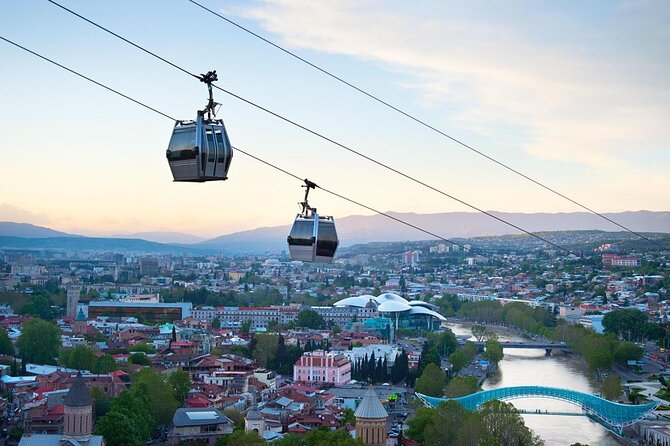
- A one-way cable-car ride is included: The aerial tramway connects Rike Park with the Narikala area and gives you a quick look over the city.
- Flexible pacing matters: Your group can decide what deserves more attention, which is useful at churches, markets, and viewpoints.
- The day is full but practical: Fourteen stops cover major sights, yet several visits last only 15 to 20 minutes.
- Guide quality is important: Aleksi was singled out for excellent service, a helpful detail when choosing a private experience.
Why this one-day plan works
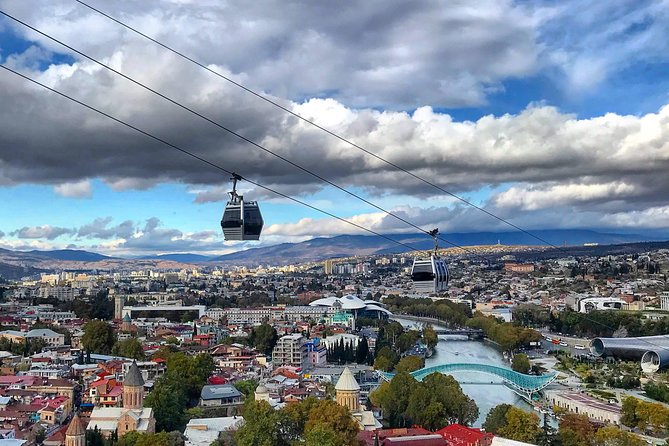
Tbilisi and Mtskheta are close enough to combine, but they offer different impressions of Georgia. Tbilisi is the country’s energetic capital, with old lanes, sulfur baths, churches, cafés, and modern public buildings. Mtskheta feels quieter and more ceremonial, with major religious sites and a small-town center.
I like the way this tour divides the day into two types of sightseeing. In Tbilisi, you walk through a compact run of attractions. For Mtskheta and the Chronicles of Georgia, private transportation saves time and energy. That matters because trying to arrange all these stops independently in one day could become a tangle of taxis, public transport, and return trips.
The private setup is the strongest feature. A fixed group tour can make you hurry through a church or wait while other people take photographs. Here, your group can ask for more time at a favorite stop or move on when a place has given you enough. The tradeoff is that the quality of the day depends partly on how well you and your guide manage the clock.
At $98 per person, the price is easier to justify for a small group that values convenience. Private transportation, pickup and drop-off, bottled water, a guide, and the included cable-car journey are bundled together. For one person, the cost is less modest, but the time saved and the number of major sights covered add real value.
More things to do in Tbilisi:
- Tbilisi: Day Trip to Kazbegi, Gudauri, Gergeti, and Ananuri
★ 4.9 · 3,203 reviews - Day Trip to Kakheti Wine Region Including 9 Wine Tastings
★ 5.0 · 2,774 reviews - Highlights of Caucasus Mountains-Jinvali,Ananuri,Gudauri,Kazbegi(Group tour)
★ 5.0 · 2,682 reviews
Rike Park and the Bridge of Peace
Rike Park is a logical place to begin a Tbilisi walking route. It sits on the left bank of the Mtkvari River, with its main entrance near the Bridge of Peace. The park is modern and family-friendly, with fountains, paths, quiet corners, a climbing wall, a children’s maze, and a giant chess board.
You also find cafés and restaurants here, along with the lower station for the cable car to Narikala. The planned 25 minutes gives you enough time to get oriented without turning the park into a major stop. If you are eager to reach the Old Town, you will probably appreciate keeping this part short.
The Bridge of Peace is one of Tbilisi’s most recognizable modern structures. Its curved glass and steel form creates a sharp contrast with the older buildings nearby. The design is not subtle, and that is part of its appeal. You may admire it, dislike it, or do both from different angles.
The 15-minute visit is enough for photographs and a short look across the river. It also shows how Tbilisi has added bold modern architecture beside older religious and residential quarters.
Riding above Tbilisi to Narikala Fortress
The one-way aerial tramway ride is included, so you do not need to handle that extra ticket during the tour. From the cable car, you get a broad view toward the river, Old Town, and the hilltop fortress.
The ride itself is short, listed at about 15 minutes as part of the stop. The important point is not the length but the change in viewpoint. Tbilisi can feel like a maze at street level, while the tramway lets you see how the river, hills, bridges, and historic quarter fit together.
Narikala Fortress dates back to the fourth century, when it began as a Persian citadel. Much of the visible construction came later, including work from the eighth century under Arab rulers. Georgians, Turks, and Persians all controlled or repaired the fortress over time.
Today, Narikala is largely a picturesque ruin, with walls surviving after a Russian munitions explosion damaged the site in 1827. The 15-minute stop will not allow for a long exploration, but it gives you the fortress and its views without demanding a strenuous half-day visit. Wear sensible shoes, since historic fortifications rarely offer perfectly smooth footing.
Water, baths, and trade in the Old Town
The walk continues toward the Dzveli Tbilisi sulfur waterfall, also called Leghvtakhevi. The waterfall sits in a narrow setting near the center of the city, surrounded by cliffs and paths. It is a pleasant contrast to the broad city views from the cable car and fortress.
You have about 15 minutes here. That is enough for a look and photographs, though not for lingering. The stop works best as part of the route rather than as a separate destination.
Nearby Abanotubani explains one of Tbilisi’s defining features. The name combines the Georgian words for bathhouse and district. The baths still operate, and the district developed between the sixteenth and nineteenth centuries, with buildings repaired and changed over time.
The area is tied to the traditional story of Tbilisi’s beginnings, centered on its hot sulfur waters. Even if you do not use a bath during this tour, you can see why the springs mattered to the city’s identity. The planned 20 minutes gives you time to look at the bath district, but a bathing session is not listed as part of the experience.
Meidan Bazaar follows with another view of old Tbilisi. The square was once known as Fortress Square and later carried names linked to its trading role and changing rulers. It was historically a place to buy food, drinks, and precious goods.
Today, the bazaar gives you a chance to browse local products and souvenirs. The stop lasts about 15 minutes, so treat it as a quick look rather than a serious shopping session. If you want to purchase something, keep your choices focused.
Jan Shardeni Street is another 20-minute walk through the Old Town. This pedestrian street is one of the city’s best-known social areas, with restaurants, cafés, and attractive historic surroundings. It can feel more polished and visitor-oriented than some of the quieter lanes, but it is still useful for understanding how old Tbilisi functions today.
More Mtskheta and Gori trips:
- Tbilisi: Mtskheta, Jvari, Gori and Uplistsikhe Day Tour
★ 4.9 · 2,396 reviews - Day Trip to Mtskheta Gori and Uplistsikhe
★ 5.0 · 1,801 reviews - Tbilisi: Mtskheta Jvari Bazaar, Chronicles of Georgia & Wine
★ 5.0 · 1,088 reviews - Tbilisi:Mtskheta,Jvari,Bazaar,wine tasting,Chronicles of Georgia
★ 5.0 · 730 reviews
Tbilisi’s oldest church and a handmade theater
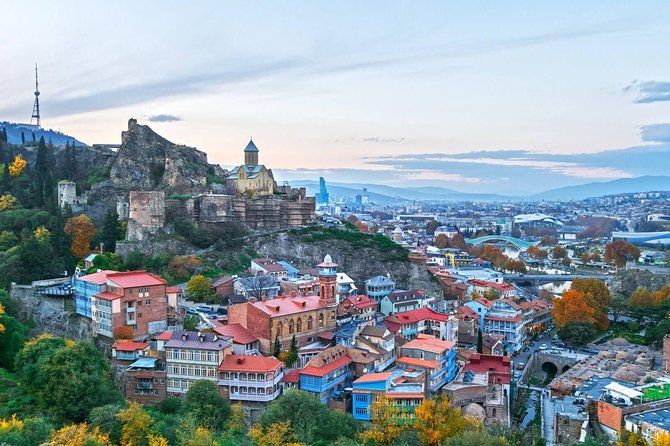
Anchiskhati Basilica is identified as the oldest surviving church in Tbilisi. King Vakhtang Gorgasali’s son Dachi built it at the beginning of the sixth century. The church was once known as the church of the bells because it was the only place where bell ringing was permitted.
The 20-minute visit is well judged. You can take in the age and religious importance of the building without needing a long formal tour. As with other churches, dress and behavior should be respectful.
The nearby Rezo Gabriadze Marionette Theater adds a completely different note. The theater is in the heart of the Old Town, and its distinctive building was designed by Gabriadze himself. Its repertoire includes The Autumn of My Spring, Stalingrad, Ramona, and Diamond of Marshal de Fant’e.
The tour does not include a performance, and the 15-minute stop is mainly architectural and photographic. Still, it is a worthwhile pause because it shows Tbilisi’s creative side, not just its fortresses and churches.
Sameba Cathedral and the shift to Mtskheta
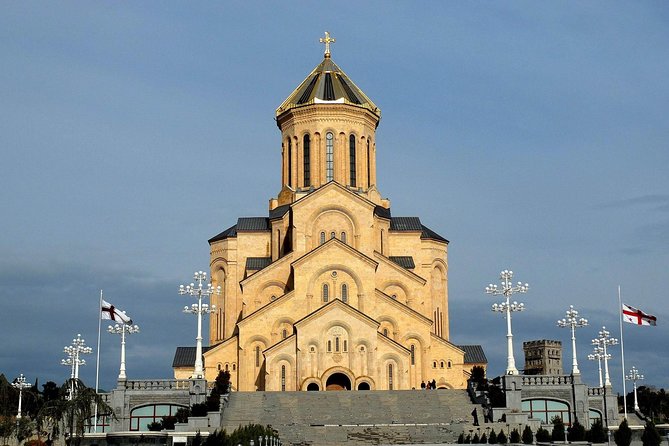
The Holy Trinity Cathedral, commonly called Sameba, is the main cathedral of the Georgian Orthodox Church. The 30-minute visit gives you more time than several of the Old Town stops, which is appropriate for such a large and important religious complex.
Sameba is a useful counterpoint to Anchiskhati Basilica. One is an early surviving church in the old city, while the other represents a major cathedral of modern Georgian religious life. The difference helps you see that Tbilisi is not simply an open-air museum. It remains a living capital with active places of worship.
After Sameba, the tour shifts to Mtskheta by private car. This is where the transportation becomes especially valuable. You avoid spending your limited sightseeing time working out the connection between the capital and the older city.
Jvari Church above ancient Mtskheta
Jvari Church sits on a hill near Mtskheta, with wide views over the ancient city and its surroundings. The 45-minute stop is one of the longer visits of the day, and it deserves that time.
The hilltop position gives Jvari much of its power. You can understand the relationship between the church and the old city below, rather than seeing the building in isolation. It is also a good place to pause after the denser streets of Tbilisi.
The schedule allows time for the church and the view, but the tour still has several stops afterward. If this is one of your priorities, tell your guide early. The private format gives you a better chance of making room for photographs or a slower look.
Svetitskhoveli Cathedral and Mtskheta’s small-town streets
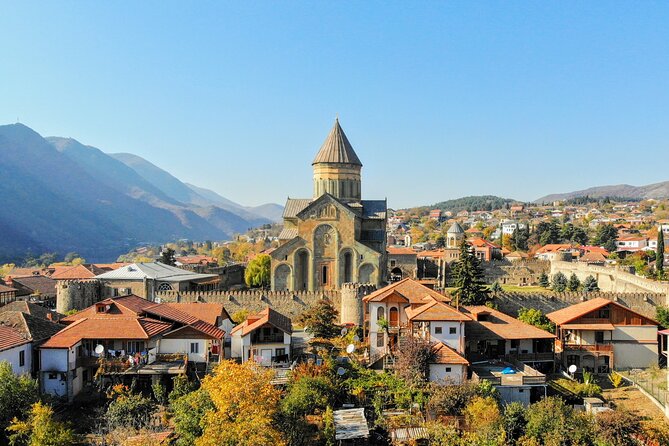
Svetitskhoveli Cathedral is an eleventh-century church and one of Georgia’s most sacred religious sites. Its location is linked to the tradition that the robe of Jesus is buried beneath the cathedral.
You have around 30 minutes for the cathedral and a walk through Mtskheta. The town’s streets are more relaxed than central Tbilisi, and a large bazaar offers Georgian natural sweets and other goods. This is a good place to try something local, but remember that food purchases are not included.
The pairing of Jvari and Svetitskhoveli is one of the tour’s best ideas. Jvari gives you the hilltop view and a sense of place. Svetitskhoveli brings you into the religious center itself. Seeing both in one visit gives Mtskheta more meaning than stopping at only one church.
The Chronicles of Georgia as a final visual stop
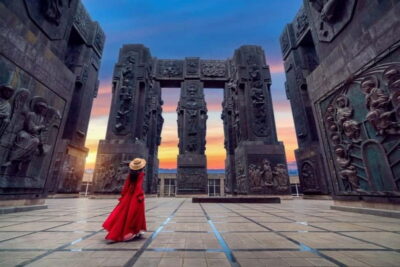
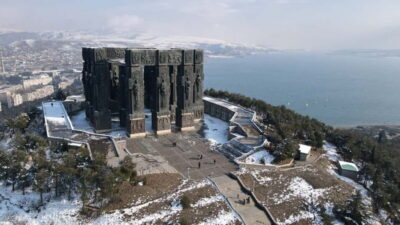
The Chronicles of Georgia is a huge stone monument made from tall pillars. Its carvings depict scenes from the life of Christ and episodes from Georgian history. It is sometimes compared with Stonehenge because of its size and dramatic arrangement.
The 30-minute stop makes a striking finish to a day filled with churches and Old Town streets. The monument is not another medieval building. Instead, it presents Georgian identity through enormous carved panels and a grand setting.
Because the day already includes many religious and historic sites, this final stop helps vary the experience. You get a large-scale monument rather than another interior. If you enjoy photography, give yourself time to look closely at the carved scenes instead of taking only a quick wide shot.
Timing, transport, and the lunch question
The advertised duration is approximately eight to ten hours. That range is sensible for a private tour with fourteen stops, since your actual pace can change depending on traffic, church visits, photographs, and how long your group spends at the bazaar.
Several stops last only 15 minutes. That keeps the route moving, but it also means you should not expect a deep visit at every location. The longer 30-minute and 45-minute stops are where you can slow down.
Pickup and drop-off make the experience easier, especially when you are unfamiliar with Tbilisi. Private transportation is included, along with bottled water. The tour is also near public transportation, though the included pickup reduces the need to use it.
Lunch is not included. Since the day is long, ask your guide how the schedule handles a meal. You may prefer a proper break, while another group might choose a quicker stop and spend more time in Mtskheta or Tbilisi.
Free cancellation is available if you cancel at least 24 hours before the start time. Changes or cancellations within 24 hours are not refundable.
Who should book this tour?
I would choose this tour if you have limited time in Georgia and want a first look at both Tbilisi and Mtskheta. It suits couples, families, and small groups who value a private vehicle and do not want to coordinate several separate trips.
It is also a good fit if you want to adjust the day around your interests. You can ask for more attention at a church, a viewpoint, or a market rather than following a rigid group schedule. The positive praise for guide Aleksi is encouraging, since personal guidance is a major part of the experience.
I would hesitate if you prefer slow travel. Fourteen stops create variety, but they also create a brisk rhythm. You will not have unlimited time at Narikala, Meidan Bazaar, the waterfall, or the marionette theater.
The tour has a top rating from two submitted ratings, with Aleksi receiving particular praise for his work. That is a small sample, so I would treat it as a useful sign rather than a guarantee. The private format, included transportation, and well-chosen route are the stronger reasons to consider it.
Final verdict
Book this tour if you want an efficient, private introduction to Georgia’s capital and former capital in one day. The best parts are the combination of Mtskheta’s sacred sites, Tbilisi’s Old Town walk, the cable-car view, and the freedom to set your group’s pace.
Skip it if your ideal day means lingering over lunch, exploring every church slowly, or spending hours shopping. At $98 per person, the value is strongest when convenience and coverage matter more than an unhurried schedule.
FAQ
How long does the Mtskheta and Tbilisi tour last?
The tour lasts approximately eight to ten hours.
Is this a private tour?
Yes. Only your group participates in the private tour or activity.
Is pickup and drop-off provided?
Yes. Pickup and drop-off are provided, and private transportation is included.
Is the cable-car ride included?
Yes. One one-way cable-car ride is included in the tour price.
Is lunch included?
No. Lunch is not included.
Which places in Mtskheta does the tour visit?
The tour visits Jvari Church and Svetitskhoveli Cathedral. It also includes a walk through the streets and bazaar of Mtskheta.
Does the tour include Tbilisi’s Old Town?
Yes. The Tbilisi route includes Rike Park, the Bridge of Peace, Narikala Fortress, the sulfur waterfall, Abanotubani, Meidan Bazaar, Jan Shardeni Street, Anchiskhati Basilica, and the Rezo Gabriadze Marionette Theater.
What is the cancellation policy?
You can cancel at least 24 hours before the start time for a full refund. Cancellations or changes made less than 24 hours before the start time are not accepted for a refund.
Just added in Tbilisi
- Wine Tasting feel the Difference of Qvevri or Classical Wine★ 4.4 · 10 reviews
- From Tbilisi: Kakheti and Kazbegi 2-Day 4X4 Jeep Tour pack★ 5.0 · 6 reviews
- Walking Tour in Old Tbilisi – Group Tour★ 4.5 · 8 reviews
- Uforgatable Kakheti Tour with wine tasting – in Georgia★ 4.9 · 5 reviews
- From Tbilisi: Uplistsikhe Caves and Mtskheta Town Day tour★ 5.0 · 2 reviews
- Tbilisi: Vintage Fashion and Secondhand Thrifting Tour★ 5.0 · 11 reviews
- Tbilisi Airport to Gudauri, Bakuriani, Batumi, Tbilisi★ 5.0 · 3 reviews
- Private Adorable City Tour of Tbilisi★ 5.0 · 3 reviews
Mtskheta and Gori Tours, compared.
Mtskheta, Jvari, Gori and Uplistsikhe Day Tour
Read our review →
Mtskheta Jvari Bazaar, Chronicles of Georgia & Wine
Read our review →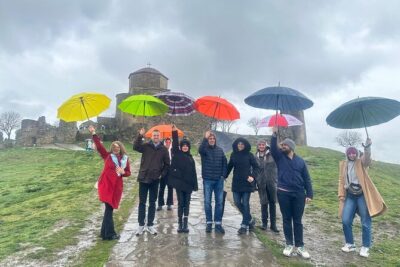
Mtskheta,Jvari,Bazaar,wine tasting,Chronicles of Georgia
Read our review →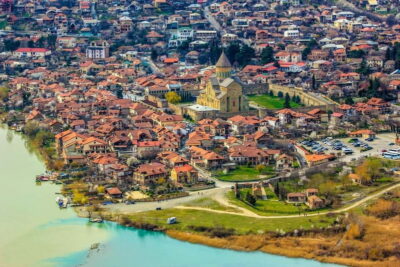
The Chronicles of Georgia, Jvari & Mtskheta Tour
Read our review →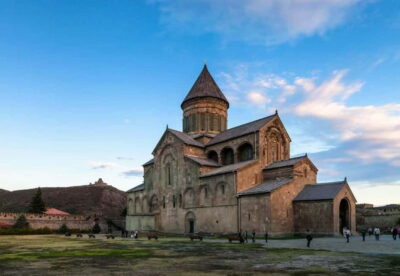
Browse the lists this tour appears in