

Reviewed · WALKING TOURS
Classic Tbilisi Walking Tour
Tbilisi reveals itself one uphill street at a time. This three-hour walk links Freedom Square, old churches, Narikala Fortress, and Abanotubani, giving you a useful first look at the city without wasting time on a bus. I especially like the cable-car ride to the fortress and the chance to see both old and modern Tbilisi in one outing. The guide-led route also helps you make sense of the city’s Soviet-era past, which can be easy to miss when you are focused on handsome balconies and cobbled lanes.
The main drawback is the amount of uphill walking and stairs, particularly on the way to the Betlemi churches. The tour also has a listed price of $134 per person, so it makes the most sense if you value a private-feeling introduction, strong guiding, and a carefully arranged route. Since the advertised tour lasts about three hours but one published account describes a five-hour version, I would confirm the exact timing before booking.
In This Review
- Key points at a glance
- Why this is a useful first look at Tbilisi
- Meeting at Freedom Square at 10:00 am
- Sololaki and Gudiashvili Square
- The uphill route to the Betlemi churches
- Crossing the Mtkvari on the Bridge of Peace
- Taking the cable car to Narikala Fortress
- Descending into Abanotubani and Meidan Square
- Guide quality can make or break the morning
- Is $134 a fair price?
- Who should book this Tbilisi walk?
- Final call: a strong orientation, with two important caveats
- FAQ
- Where does the Classic Tbilisi Walking Tour start?
- What time does the tour begin?
- Where does the tour end?
- How long does the tour last?
- Is the cable-car ride included?
- Is transportation between attractions included?
- Is the tour offered in English?
- What should women wear in the churches?
- What should men wear in the churches?
- Can I cancel for a full refund?
Key points at a glance
- The route begins at Freedom Square: Meet at 10:00 am near the old city hall, outside the Chronograph store.
- You walk through Sololaki and Kldisubani: These districts bring you close to renovated squares, old streets, and the city’s layered past.
- The Betlemi section includes steep steps: Lower and Upper Betlemi Churches reward the climb with city views, but church dress rules apply.
- The cable car is included: Your ride to Narikala Fortress saves a tiring uphill stretch and adds a fine view over Tbilisi.
- The tour ends in Abanotubani: You finish beside the Monument Fountain Falcon and Pheasant, close to the sulfur bath district and Meidan Square.
- The guide matters greatly: One named guide, Eka, was praised for her friendly manner, humor, flexibility, and strong command of Georgia’s story.
Why this is a useful first look at Tbilisi
Tbilisi is not a city you understand by checking off monuments. Its appeal comes from the way old neighborhoods, religious buildings, Soviet traces, modern design, and steep hills fit together. This walk gives you that broad picture in a short morning.
I like the route because it moves through several different parts of the center rather than staying in one square. You begin in the more formal setting of Freedom Square, pass through Sololaki and Gudiashvili Square, climb toward the Betlemi churches, cross the Mtkvari River on the Bridge of Peace, and then rise to Narikala Fortress before descending to Abanotubani.
That sequence gives the tour a clear shape. You start at street level, gain height for views, then finish in one of Tbilisi’s most atmospheric old districts. If you are in town for a long weekend, this is a sensible way to get your bearings early in the visit.
The best part depends on the guide. One account singled out Eka for being friendly, engaging, funny, flexible, and able to answer questions about Georgia. That combination is worth paying attention to. A walking tour can be flat if the guide only recites dates, but a guide who adjusts to your interests can make the route much more useful.
More Walking Tours in Tbilisi:
- Tbilisi Walking Tour Including Cable Car and Traditional Bakery
★ 5.0 · 1,310 reviews - Tbilisi: City Highlights Guided Walking Tour
★ 4.9 · 1,114 reviews - Tbilisi:Evening Walking & Talking Tour with Wine & Boat Ride
★ 5.0 · 572 reviews
Meeting at Freedom Square at 10:00 am
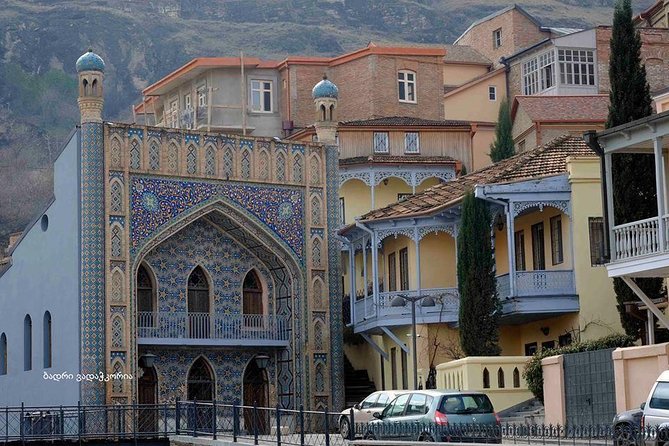
The meeting point is at the Chronograph store at Freedom Square, near the old city hall. This is a practical starting place in central Tbilisi, and the tour begins at 10:00 am.
Arrive with enough time to find the store and settle in. The tour does not include hotel pickup, vehicle transport, lunch, or dinner, so you are responsible for reaching the square on your own. Freedom Square is also a useful place to begin because it introduces Tbilisi’s modern public center before you enter the older lanes.
From here, the walk heads into Sololaki along recently renovated streets. The renovation work gives this first part a tidier appearance, but the value is not only visual. Your guide can help connect the buildings and public spaces with the city’s political and social changes, including the Soviet period.
The first stop is scheduled for about 15 minutes. That is enough for an introduction and a look around, but not enough for a slow architectural study of every building. If you want detailed photographs, keep moving with the group and save extra exploring for later.
Sololaki and Gudiashvili Square
The route continues to Lado Gudiashvili Square, another recently renovated public space. From there, you follow Asatiani Street toward the Kldisubani district.
This section is valuable because it shows how quickly Tbilisi changes from broad civic spaces to smaller, more intimate streets. You get a sense of the old center as a collection of districts rather than one single historic zone.
The stop at Gudiashvili Square lasts about 15 minutes. The guide’s commentary is important here, since the square itself may not tell you why it matters. This is a good point to ask about the city’s Soviet-era development, recent restoration work, and how the older districts fit into present-day Tbilisi.
Do not expect a long independent break at this point. The tour keeps a steady pace, and the route soon turns uphill. Wear shoes with a firm grip, especially if the weather is wet.
The uphill route to the Betlemi churches
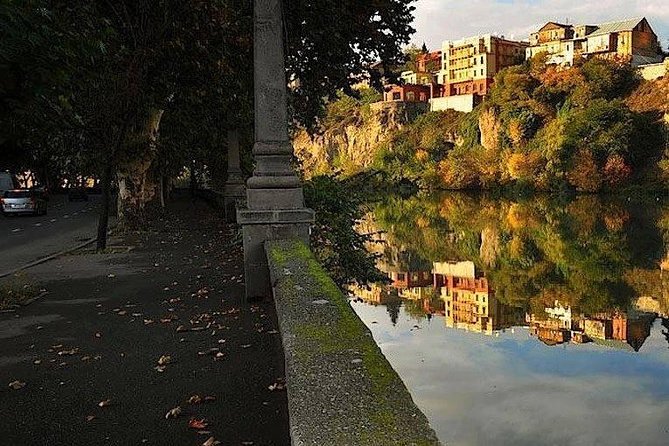
The walk to the Lower and Upper Betlemi Churches is one of the more demanding parts of the morning. The route uses pedestrian stairs and climbs into Kldisubani, so this is not a flat city stroll.
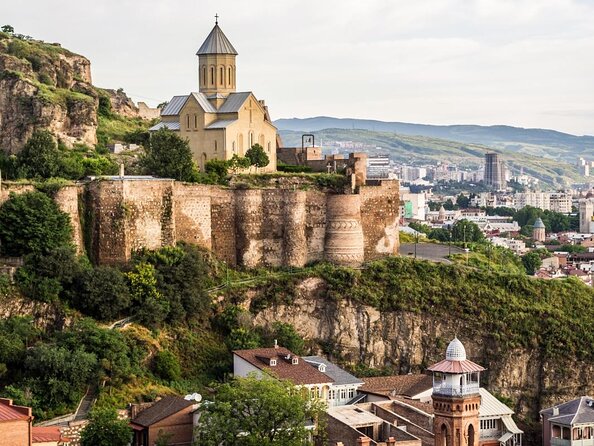
The two churches are a strong stop because they show Tbilisi’s religious layers in a compact area. The route also includes the remains of a Zoroastrian Ateshgah fire temple dating from the fifth century. That detail gives you a useful reminder that the city’s story reaches beyond its better-known Christian buildings.
You are scheduled to spend about 30 minutes here. The reward is not only the buildings. The elevated position opens views across the city, making this one of the first places where Tbilisi’s hills and river setting become clear.
There are dress requirements inside the churches. Women are expected to wear a head scarf and a dress, while men should wear long trousers. Carry suitable clothing rather than assuming you can enter in whatever you wore for a hot morning walk.
This section may be less comfortable for anyone who has trouble with stairs. The tour says most people can participate, but the uphill route remains a real consideration. If you want a slower pace, tell the guide early. Eka was specifically praised for being flexible, and that quality can matter on a route with steps.
More things to do in Tbilisi:
- Tbilisi: Day Trip to Kazbegi, Gudauri, Gergeti, and Ananuri
★ 4.9 · 3,203 reviews - Day Trip to Kakheti Wine Region Including 9 Wine Tastings
★ 5.0 · 2,774 reviews - Highlights of Caucasus Mountains-Jinvali,Ananuri,Gudauri,Kazbegi(Group tour)
★ 5.0 · 2,682 reviews - From Tbilisi: Kakheti Wine Region Tour with 9 Wine Tastings
★ 4.9 · 2,541 reviews
Crossing the Mtkvari on the Bridge of Peace
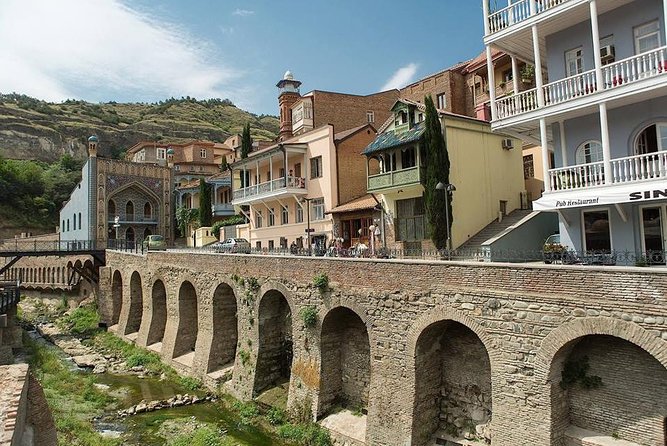
After the older streets and churches, the tour shifts to modern Tbilisi at the Bridge of Peace. This pedestrian bridge crosses the Mtkvari River in a bow-like shape made from glass and steel.
The contrast is the point. Within one morning, you move from historic churches and narrow streets to a highly contemporary structure. The bridge is also a natural pause in the route, since it links the central areas with the route toward the cable-car station.
The scheduled time here is about 30 minutes. That allows for photographs and an explanation of the bridge’s place in modern Tbilisi. If you prefer old buildings to modern architecture, this may be the least interesting stop, but it helps show that the city is not preserved in one fixed period.
The bridge can also be a good moment to ask the guide for practical advice about the rest of your visit. One strong reason to take this tour near the start of your stay is that a good guide can point you toward streets and places worth returning to on your own.
Taking the cable car to Narikala Fortress
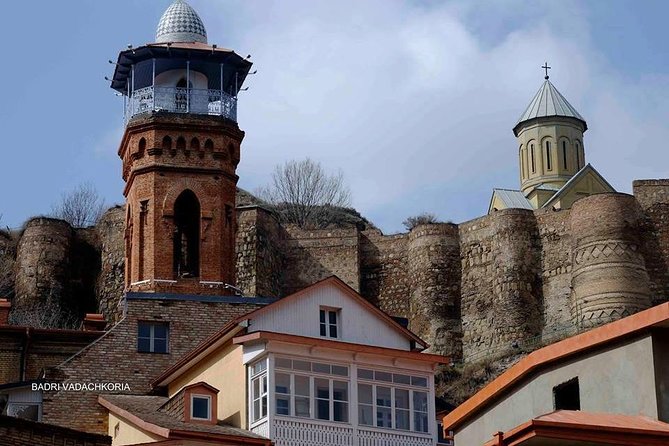
The included aerial cable-car ride is the clearest practical benefit of the tour. Instead of making the full climb to Narikala Fortress on foot, you reach the station and ride up over the city.
The ride adds a little fun, but its main value is time and energy. Tbilisi is hilly, and you already have stairs earlier in the walk. The cable car lets you reach the fortress without turning the morning into a strenuous hike.
Narikala Fortress dates from the fourth century and sits above the city. The one-hour stop is the longest part of the tour, which is sensible. You need time to walk around the fortress area, hear its story, and look over Tbilisi from above.
The views are a major reason to come up here. From the hill, the city’s shape makes more sense: the old districts, the Mtkvari, the surrounding slopes, and the mix of historic and newer buildings. I find this kind of high viewpoint particularly useful early in a visit because it turns a confusing city map into something you can picture.
The fortress itself is not presented as a fully restored palace or museum complex. Expect an atmospheric historic site and open views rather than a large indoor collection. Weather matters here. The tour operates in all conditions, so bring a rain layer or sun protection as needed.
Descending into Abanotubani and Meidan Square
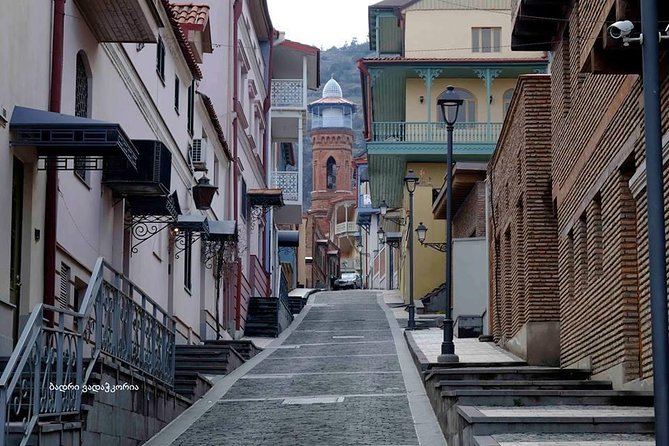
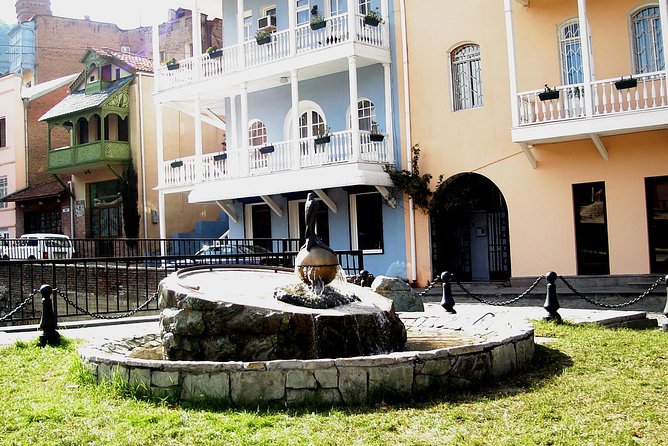
After Narikala, the route heads down toward the sulfur bath district of Abanotubani. You also reach Meidan Square and the surrounding old streets before ending near the Monument Fountain Falcon and Pheasant.
This descent gives the tour a satisfying finish. You have seen Tbilisi from above, and now you return to the street-level center where the city’s old lanes, bathhouses, and public spaces come together.
The final section lasts about 30 minutes. It is not simply a walk back to the meeting point. The tour ends in an area that deserves more of your time, so you can continue exploring after the guide departs.
The end point is especially convenient if you want to eat, look for a sulfur bath, or wander around the old center. Lunch is not included, so plan to make your own arrangements afterward. The tour does not provide dinner either.
Guide quality can make or break the morning
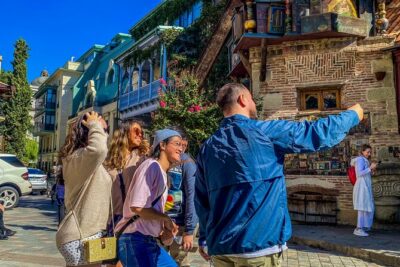
The strongest praise connected with this experience concerns the guide. Eka was described as fluent in English, friendly, funny, flexible, and able to answer questions about Georgia. That is exactly the mix I want on a city introduction.
You should expect the guide to explain more than the names and dates of buildings. The advertised focus includes Tbilisi’s Soviet-era history, and that subject adds useful context to the renovated squares, changing neighborhoods, and modern architecture.
The group size can reach 99 people, which is a large maximum for a walking tour. The actual experience may feel smaller, but the published limit means you should not assume an intimate group. A large group can make it harder to hear on busy streets and can slow movement through narrow lanes.
The positive guide feedback makes this less worrying, but it remains a fair point to weigh against the $134 price. If you are paying for a group tour at that rate, guide quality and organization need to be strong.
One published account refers to a five-hour tour rather than the approximately three hours described here. That may reflect a different version, added time, or a confused review, but it is worth confirming the expected duration with Georgian Holidays before you book.
Is $134 a fair price?
At $134 per person, this is not a budget walking tour. The fee includes a professional English-speaking guide and the aerial cable-car ride to Narikala Fortress. It does not include meals, tips, hotel transport, or vehicle service between attractions.
The value depends on what you want from your first morning. If you mainly want a cheap orientation walk, the price may feel high. You can explore Freedom Square, the Bridge of Peace, Abanotubani, and many old streets without paying an admission fee.
The guided context is the part you are buying. You also avoid arranging the route yourself and get the cable-car ride included. For a short stay, that can be worthwhile because the tour links several areas that you might otherwise visit in a less logical order.
The tour makes more sense for you if you are new to Tbilisi, want an English-speaking guide, and prefer a planned introduction. It makes less sense if you already know the center, dislike group activities, or want to spend long periods inside individual churches and historic sites.
Tips are not included. Bring water and dress for the weather, since the route operates in rain or shine and includes outdoor walking, stairs, a fortress, and exposed viewpoints.
Who should book this Tbilisi walk?
I would recommend it to a first-time visitor with a short stay who wants the city explained, not just photographed. It also suits anyone who likes mixing history, street life, city views, religious sites, and modern design in one route.
It can work well at the beginning of a long weekend. Afterward, you will know where Freedom Square, Meidan Square, Abanotubani, Narikala, and the Bridge of Peace sit in relation to one another. You can then return independently to the places that caught your attention.
You should think twice if stairs are difficult for you, if you want a very slow pace, or if $134 feels too steep for a three-hour walk. The possible 99-person maximum also means this is not guaranteed to be a small-group experience.
The tour is offered in English and has mobile ticketing. Confirmation is provided at booking, and free cancellation is available if you cancel at least 24 hours before the start time. Changes or cancellations made inside that period are not accepted for a refund.
Final call: a strong orientation, with two important caveats
I would book the Classic Tbilisi Walking Tour if I were arriving for a first visit and wanted a guide-led introduction to the city’s old center. The route is well chosen, the Narikala cable car is included, and the finish in Abanotubani leaves you in a useful area for further exploring.
My two cautions are the price and the physical route. You are paying for the guide’s interpretation and organization, not a long list of included admissions. Confirm the duration, ask about the expected group size if that matters to you, wear proper shoes, and bring church-appropriate clothing. With those points settled, this is a practical way to get Tbilisi under your feet.
FAQ
Where does the Classic Tbilisi Walking Tour start?
It starts at the Chronograph store at Freedom Square in Tbilisi, near the old city hall.
What time does the tour begin?
The meeting time is 10:00 am.
Where does the tour end?
It ends in Abanotubani near the Monument Fountain Falcon and Pheasant.
How long does the tour last?
The stated duration is approximately three hours.
Is the cable-car ride included?
Yes. The aerial cable-car ride to Narikala Fortress is included.
Is transportation between attractions included?
No. The tour does not include a vehicle for transportation to or from attractions. The route is primarily a walking tour, with the cable car to Narikala Fortress.
Is the tour offered in English?
Yes. It is offered in English.
What should women wear in the churches?
Women are expected to wear a head scarf and a dress inside the churches.
What should men wear in the churches?
Men should wear long trousers inside the churches.
Can I cancel for a full refund?
Yes, if you cancel at least 24 hours before the experience starts. Cancellations or changes made less than 24 hours before the start time are not accepted for a refund.
Just added in Tbilisi
- Wine Tasting feel the Difference of Qvevri or Classical Wine★ 4.4 · 10 reviews
- From Tbilisi: Kakheti and Kazbegi 2-Day 4X4 Jeep Tour pack★ 5.0 · 6 reviews
- Walking Tour in Old Tbilisi – Group Tour★ 4.5 · 8 reviews
- Uforgatable Kakheti Tour with wine tasting – in Georgia★ 4.9 · 5 reviews
- From Tbilisi: Uplistsikhe Caves and Mtskheta Town Day tour★ 5.0 · 2 reviews
- Tbilisi: Vintage Fashion and Secondhand Thrifting Tour★ 5.0 · 11 reviews
- Private Adorable City Tour of Tbilisi★ 5.0 · 3 reviews
- Tbilisi Airport to Gudauri, Bakuriani, Batumi, Tbilisi★ 5.0 · 3 reviews
Walking Tours, compared.
Tbilisi Walking Tour Including Cable Car and Traditional Bakery
Read our review →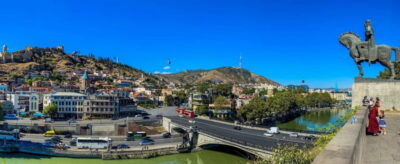

Evening Walking & Talking Tour with Wine & Boat Ride
Read our review →
Evening Walking Tour with Wine & Boat Ride Options
Read our review →
Old Tbilisi Highlights walking tour with wine & 10 tastings
Read our review →
Old Tbilisi Tour: Private Walking Tour With Wine Tasting
Read our review →

Private Tbilisi Food Tour: 9 Tastings Walk in Bohemian District
Read our review →Browse the lists this tour appears in