
Reviewed · WALKING TOURS
3 Hour Walking Tour in Tbilisi
Tbilisi rewards curious walkers. This three-hour outing links famous sights with less obvious corners of Old Tbilisi, making it a useful first look at Georgia’s capital. I like the small group of up to 10 and the chance to shape the museum stop around your interests and mood. The English-speaking guide, including Roma on one highly praised outing, adds a personal touch.
I also like the low starting price of $12.83, especially for a route covering churches, city views, a waterfall, a bridge, and the old town. The catch is the walking itself: you need good stamina, and the $45 museum fee listed in the tour details can change the final cost considerably.
In This Review
- Key points at a glance
- Why this $12.83 walking tour works
- Starting at Sameba Cathedral
- Metekhi Cathedral above the Kura River
- Crossing the Bridge of Peace
- Following the water to Leghvtakhevi
- Spending an hour in the botanical garden
- Meeting Rezo Gabriadze’s clock tower
- The route, pace, and practical demands
- Museums and the flexible part of the outing
- Is the price good value?
- Who should book this walk?
- Should you book the Tbilisi walking tour?
- FAQ
- How long is the Tbilisi walking tour?
- How much does the tour cost?
- Where does the tour start?
- What time does the tour begin?
- Where does the tour end?
- Is an English-speaking guide included?
- How many people can join the tour?
- Is admission to the National Botanical Garden included?
- Are museum fees included?
- Can I cancel for a full refund?
Key points at a glance
- Sameba Cathedral begins the morning with a grand view of Georgian religious architecture.
- Metekhi Cathedral and the Bridge of Peace show Tbilisi’s old and modern faces within one short walk.
- Leghvtakhevi Waterfall offers a cool, surprisingly quiet break inside the city.
- The botanical garden takes a full hour, but its admission is not included.
- The Rezo Gabriadze clock tower may include the small Circle of Life puppet show at noon or 7 p.m.
- The route starts at Avlabari Square at 10 a.m. and ends at Freedom Square.
Why this $12.83 walking tour works
Tbilisi is a city best understood on foot. Its churches, cliffs, courtyards, river crossings, sulfur-bath district, and older streets sit close together, but the route between them is not always obvious. A guide saves you from spending your first morning simply figuring out where the next sight is.
The price is unusually modest for three hours with an English-speaking guide. You are paying for orientation and local explanation more than for costly admissions. Several stops are free or included, while the National Botanical Garden and museum visits can add to the bill.
The group limit matters. With no more than 10 people, you should have a better chance of hearing the guide and asking questions than you would on a large city walk. The one published five-star account praised Roma specifically and described the outing as a fun way to cover Tbilisi’s famous spots.
Still, keep your expectations sensible. This is a brisk sightseeing walk, not a relaxed café crawl. The route includes hills, uneven old-city surfaces, and enough distance to make comfortable shoes essential.
More Walking Tours in Tbilisi:
- Tbilisi Walking Tour Including Cable Car and Traditional Bakery
★ 5.0 · 1,310 reviews - Tbilisi: City Highlights Guided Walking Tour
★ 4.9 · 1,114 reviews - Tbilisi:Evening Walking & Talking Tour with Wine & Boat Ride
★ 5.0 · 572 reviews
Starting at Sameba Cathedral
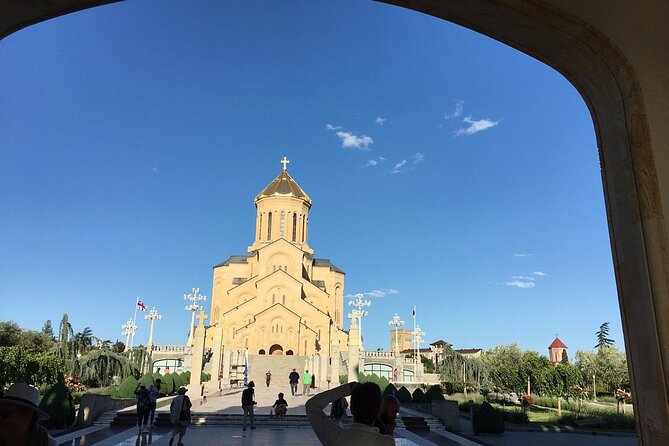
The morning begins at Avlabari Square at 10 a.m. From there, the first stop is the Holy Trinity Cathedral of Tbilisi, usually called Sameba. You get about 30 minutes here, with admission included.
Sameba is a relatively new building by cathedral standards. Construction took place from 1995 to 2004, yet its design draws on several periods of Georgian church architecture, with some Byzantine influence. That mix makes the building useful as an introduction to Georgia’s religious identity and architectural traditions.
I like beginning here because the scale immediately resets your sense of Tbilisi. The cathedral is one of the world’s largest religious buildings by total area and the third-tallest Eastern Orthodox cathedral. You do not need to be an architecture specialist to appreciate its size.
Thirty minutes is enough for a first look, but not enough for a slow study of every detail. If Sameba becomes your favorite stop, you may want to return later on your own. The tour keeps moving, and the day has several more places to cover.
As with any active Orthodox church, dress and behavior should be respectful. The tour information does not set out a specific dress code, so listen to the guide at the entrance and follow the local rules.
Metekhi Cathedral above the Kura River
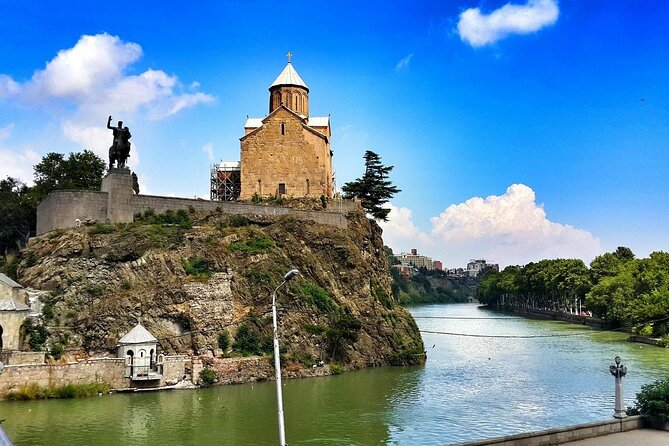
The next major stop is Metekhi Cathedral, where the mood shifts from broad cathedral grounds to a dramatic position above the Kura River. You get about 30 minutes, and admission is included.
Metekhi sits on a cliff opposite the old town. Much of the current church dates from the medieval period, particularly construction carried out between 1278 and 1289 under King Demetrius II. Oral tradition traces its beginnings much further back, to the fifth century.
That contrast with Sameba gives the first part of the walk a clear shape. Sameba represents a modern expression of Georgian Orthodox faith, while Metekhi connects you with medieval Tbilisi. The cliff setting also gives this stop more visual drama than a church viewed from a flat city street.
The stop is short enough to keep the outing moving, but long enough for your guide to explain why this church matters. I would pay attention to the position of the building as much as the interior. The relationship between the church, the river, and the old town is part of the experience.
Crossing the Bridge of Peace
The Bridge of Peace takes only about 10 minutes, but it is one of Tbilisi’s easiest landmarks to recognize. This bow-shaped pedestrian bridge crosses the Kura River between Rike Park and the old town.
Steel, glass, and a large number of LED lights give the bridge a very different character from Metekhi Cathedral. It opened in 2010 and has become both a practical crossing and a major city sight. In a few minutes, you see how quickly Tbilisi can shift from medieval religious buildings to bold modern design.
This is a photo stop rather than a long visit. The brief timing makes sense, though anyone who likes city photography may wish for more time. You can take in the bridge, river, and surrounding views, then keep walking before the schedule loses momentum.
More things to do in Tbilisi:
- Tbilisi: Day Trip to Kazbegi, Gudauri, Gergeti, and Ananuri
★ 4.9 · 3,203 reviews - Day Trip to Kakheti Wine Region Including 9 Wine Tastings
★ 5.0 · 2,774 reviews - Highlights of Caucasus Mountains-Jinvali,Ananuri,Gudauri,Kazbegi(Group tour)
★ 5.0 · 2,682 reviews - From Tbilisi: Kakheti Wine Region Tour with 9 Wine Tastings
★ 4.9 · 2,541 reviews
Following the water to Leghvtakhevi
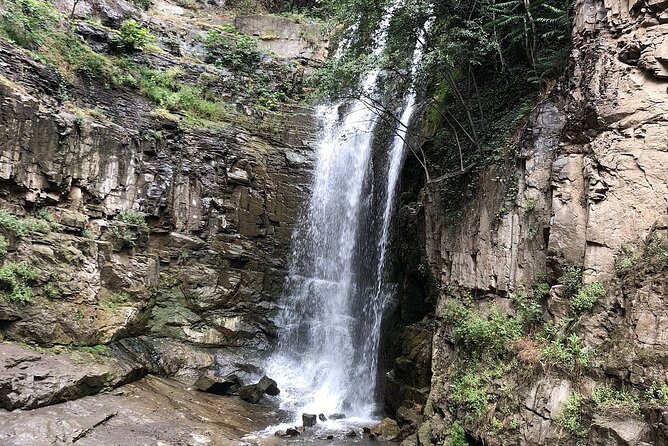
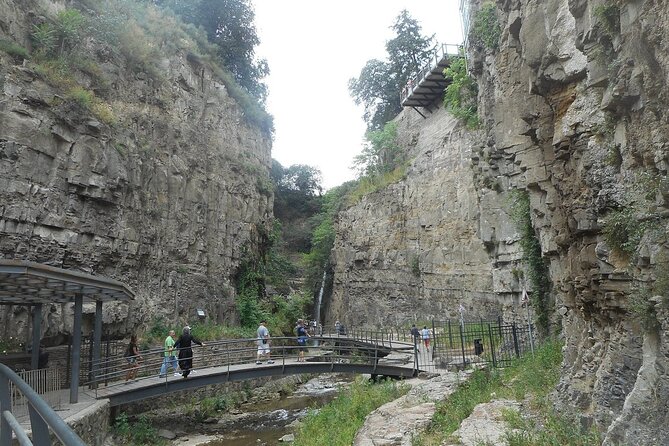
The route then reaches Leghvtakhevi Waterfall, with about 15 minutes at the stop. The story here is tied to the small river corridor and the city’s efforts to control flooding.
In earlier centuries, a bridge and gate crossed the river in this area. Fighting destroyed them in 1795, and the crossing was rebuilt more than once. Frequent floods eventually led to a concrete tunnel being built in 1959 to contain the water.
That history gives the waterfall more meaning than a simple photo opportunity. You are seeing a small natural feature shaped by centuries of urban change. The setting can feel like a sharp break from the traffic and buildings around central Tbilisi.
A further five-minute stop on Leghvtakhevi Street brings you to the Bridge of Lovers. Its railings carry padlocks marked with couples’ names and messages in several languages. It is a light, slightly cheesy moment, but it also shows how visitors and local customs keep adding new layers to an old place.
The waterfall can freeze in winter. In summer, the narrow area is cooler than the streets nearby. The tour gives you only a short time here, so do not expect a long nature walk. You are getting a compact city escape tucked into the old town.
Spending an hour in the botanical garden

The National Botanical Garden of Georgia receives the longest scheduled visit, at one hour. It lies in the Tsavkisis-Tskali Gorge on the southern foothills of the Sololaki Range and covers 161 hectares, with more than 4,500 taxonomic plant groups.
That size explains both the appeal and the limitation. One hour gives you a useful taste of the garden, but not a full exploration. I would treat this as a green pause in the middle of a very active walking route, not as a complete garden tour.
Admission is not included. This is one of the key costs to check before booking, especially because the overall price looks so low. The tour details also list a $45 museum fee, although they do not explain exactly which museums that amount covers. Ask for clarification before you commit to any optional museum visits.
The garden may suit you if you want shade, plants, and a slower hour after several historic sights. If your main goal is churches and old streets, you may see the garden as less essential. The guide can apparently suggest museums according to your taste and mood, so your priorities may shape how this part of the experience feels.
Meeting Rezo Gabriadze’s clock tower
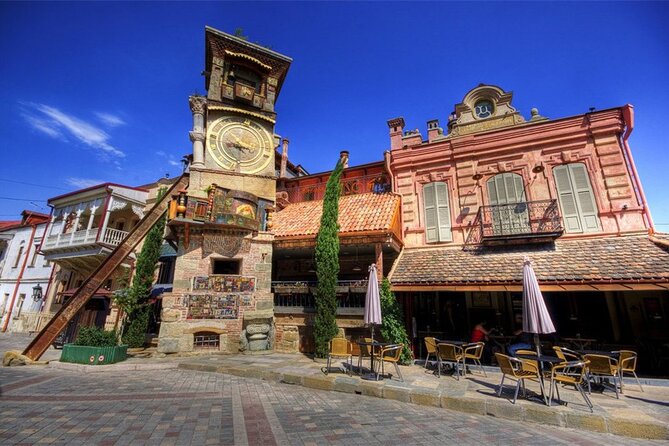
The final named stop is the Rezo Gabriadze Marionette Theater, with about 30 minutes included. Next to the theater, Rezo Gabriadze built a distinctive clock tower in 2010.
Every hour, an angel emerges with a small hammer and rings the bell. It is the kind of odd, theatrical detail that makes a city walk memorable. The tower does not try to look grand in the way Sameba does. Its appeal comes from its character and surprise.
A small puppet theater sits inside the tower. At noon and 7 p.m., you may see a performance called The Circle of Life. The tour starts at 10 a.m., so the noon show could fit depending on the walking pace and the guide’s timing. The 7 p.m. performance falls well after the scheduled tour, but you could return independently if you want to see it.
This is also where the timing deserves attention. A three-hour route covering seven stops has to keep moving. If the clock show is important to you, confirm whether the schedule will allow it rather than assuming it is guaranteed.
The route, pace, and practical demands
The walk begins at Avlabari Square and ends at Freedom Square. Both points are near public transportation, which makes the tour easy to fit into a wider day in Tbilisi. The fixed 10 a.m. start also leaves you with much of the afternoon free.
The route is not a flat stroll. The itinerary includes a cathedral on a hill, a river cliff, old streets, a gorge, a waterfall, and a large botanical garden. The exact surface and elevation details are not provided, so I would plan for uneven ground and some uphill walking rather than treating this as an effortless city tour.
Wear shoes that you can use comfortably for three hours. Carry water, especially in warm weather. The waterfall area can be cooler than the surrounding city, while the outdoor cathedral and garden stops may expose you to sun.
The tour suits most people who are comfortable walking, and the group is capped at 10. The information says most people can participate, but it does not provide a detailed accessibility assessment. If you need step-free access or have mobility concerns, contact the provider before booking.
The tour requires good weather. If poor weather cancels it, you are offered another date or a full refund. It also requires a minimum number of participants, so a cancellation for that reason brings the same choices.
Museums and the flexible part of the outing
One unusual feature is the promise of fun museums selected on the spot according to your interests and mood. That can be a welcome change from a rigid route, particularly if you already know the main churches or prefer quirky cultural stops.
The tradeoff is uncertainty. The published schedule names the main sights but does not identify the museums or say how many are included. It also lists a $45 museum fee among the exclusions. For a clear budget, ask the guide what that fee covers and which museums might be proposed.
I like the idea for repeat visitors and curious first-timers. You might be interested in art, local customs, unusual objects, or city stories, and a flexible choice could make the walk feel more personal. If you prefer knowing every stop in advance, this part may feel too loose.
Is the price good value?
At $12.83 per person, the tour is strong value if you want a quick orientation to central Tbilisi. You receive three hours with an English-speaking guide, a small group, and a route that joins major landmarks with less expected places such as Leghvtakhevi Waterfall and the Gabriadze clock tower.
The low price does not mean every expense is covered. Sameba, Metekhi, the Bridge of Peace, Leghvtakhevi, and the clock tower are listed with included admission, while the botanical garden is not. The separate $45 museum fee is the item most likely to affect your budget, so clarify it before you go.
You are also buying efficiency. Seeing these places alone is possible, but connecting them in the right order takes time and map work. A guide gives you context while you walk, and the small group should make the experience more personal than a large coach-based tour.
Who should book this walk?
I would choose this tour if you have limited time in Tbilisi and want a broad first look rather than a deep visit to one museum or church. It is also a good match for anyone who likes walking, changing scenery, and a little surprise in the schedule.
The route may suit couples who enjoy the Bridge of Lovers, architecture fans interested in Sameba and Metekhi, and curious visitors who want to see more than the standard old-town streets. The praise for guide Roma suggests that the guide can make a strong difference to the experience.
I would hesitate if you dislike hills, need a slow pace, or want guaranteed time inside specific museums. I would also avoid booking without checking the extra museum cost if you are working with a tight budget.
Should you book the Tbilisi walking tour?
Book it if you want a compact, inexpensive introduction to Tbilisi and are happy to walk for three hours. The combination of grand churches, modern design, river scenery, a waterfall, a botanical garden, and puppet theater gives you a lively sample of the city.
Before paying, confirm the museum fee, ask how the flexible museum choices work, and check whether the Rezo Gabriadze puppet show can fit your morning schedule. If the forecast is poor, remember that the tour may be moved or refunded.
Free cancellation is available up to 24 hours before the start time. After that, changes and refunds are not accepted. With those details clear, this is a smart first-day choice for an active visitor who wants guidance without spending much.
FAQ
How long is the Tbilisi walking tour?
The tour lasts approximately three hours.
How much does the tour cost?
The listed price is $12.83 per person.
Where does the tour start?
It starts at Avlabari Square in Tbilisi.
What time does the tour begin?
The scheduled start time is 10 a.m.
Where does the tour end?
The tour ends at Freedom Square in Tbilisi.
Is an English-speaking guide included?
Yes, an English-speaking guide is included.
How many people can join the tour?
The maximum group size is 10 people.
Is admission to the National Botanical Garden included?
No. Admission to the National Botanical Garden is not included.
Are museum fees included?
No. The tour information lists a $45 museum fee as not included.
Can I cancel for a full refund?
Yes, you can cancel for a full refund if you cancel at least 24 hours before the experience start time.
Just added in Tbilisi
- Wine Tasting feel the Difference of Qvevri or Classical Wine★ 4.4 · 10 reviews
- From Tbilisi: Kakheti and Kazbegi 2-Day 4X4 Jeep Tour pack★ 5.0 · 6 reviews
- Walking Tour in Old Tbilisi – Group Tour★ 4.5 · 8 reviews
- Uforgatable Kakheti Tour with wine tasting – in Georgia★ 4.9 · 5 reviews
- From Tbilisi: Uplistsikhe Caves and Mtskheta Town Day tour★ 5.0 · 2 reviews
- Tbilisi: Vintage Fashion and Secondhand Thrifting Tour★ 5.0 · 11 reviews
- Tbilisi Airport to Gudauri, Bakuriani, Batumi, Tbilisi★ 5.0 · 3 reviews
- Private Adorable City Tour of Tbilisi★ 5.0 · 3 reviews
Walking Tours, compared.
Tbilisi Walking Tour Including Cable Car and Traditional Bakery
Read our review →

Evening Walking & Talking Tour with Wine & Boat Ride
Read our review →
Evening Walking Tour with Wine & Boat Ride Options
Read our review →
Old Tbilisi Highlights walking tour with wine & 10 tastings
Read our review →
Old Tbilisi Tour: Private Walking Tour With Wine Tasting
Read our review →

Private Tbilisi Food Tour: 9 Tastings Walk in Bohemian District
Read our review →Browse the lists this tour appears in