

Reviewed · WALKING TOURS
3-Hour Private Guided Walking Tour in Tbilisi
Tbilisi reveals itself on foot. This private tour links the old town’s churches, courtyards, monuments, and river views in one well-planned route, making it a useful first look at Georgia’s capital. I especially like the private format, which lets you ask questions and adjust the pace, and the way the walk mixes major sights with less obvious streets. At $25 per person, it offers strong value if you want a guide without joining a large group.
The main consideration is the timing. The sightseeing portion takes about three hours, but walking between the starting point at Freedom Square and the ending point at Sioni Cathedral adds roughly an hour. The full outing is described as about four hours, with around 4 kilometers of walking, so you should wear comfortable shoes and expect a steady morning or afternoon on foot.
In This Review
- Key points at a glance
- Why this private Tbilisi walk works well
- Starting at Freedom Square and finding your bearings
- Gabriadze’s Clocktower and Anchiskhati Basilica
- Crossing the Peace Bridge into Rike Park
- Metekhi Cathedral and the city founder
- Riding from Rike Park toward Narikala
- Mother of Kartli and a Soviet-era symbol
- Abanotubani, the sulfur baths, and the beginning of Tbilisi
- The Tamada statue and Tbilisi’s social traditions
- Sioni Cathedral and Tbilisi’s multicultural past
- Timing, walking, and the cable car closure
- Who gets the most from this $25 experience
- Should you book this Tbilisi walking tour?
- FAQ
- Where does the tour begin?
- Where does the tour end?
- How long does the experience take?
- How far do you walk?
- Is the cable car included?
- Can you visit Narikala Fortress?
Key points at a glance
- A private route through central Tbilisi: Only your group takes part, so you can ask about Georgian customs, religion, architecture, and local history as you go.
- Eight major sights plus the streets between them: The route covers the Gabriadze Clocktower, Anchiskhati Basilica, Peace Bridge, Metekhi Cathedral, Mother of Kartli, Abanotubani, the Tamada statue, and Sioni Cathedral.
- A useful first-day orientation: The walk connects the main old-town districts instead of treating each sight as a separate stop.
- Cable car views are included: The ride from Rike Park toward Narikala adds a quick change of pace and broad views over Tbilisi.
- A guide who can shape the experience: Luka is praised for his history, culture, and architecture background, as well as his willingness to accommodate requests.
- Good value at $25 per person: Free admission at most stops keeps the price focused on the guide’s time, with the cable car ride included.
Why this private Tbilisi walk works well
Tbilisi can feel confusing at first. The old town climbs hills, the Mtkvari River cuts through the center, and important sights appear in different districts rather than around one neat square. This tour gives you a clear route from Freedom Square to Sioni Cathedral, with the guide filling in the connections along the way.
That route matters. You are not simply driven to a church, handed a few facts, and moved on. You walk through the city, cross the river, pass through Rike Park, ride above the rooftops, and finish among the old town’s religious and culinary landmarks. I like this kind of introduction because it helps you understand how the parts of Tbilisi fit together.
The tour is private, and that makes the $25 price especially appealing. The listed rate is per person, and group discounts are available, so the value improves if you are traveling with family or friends. You are paying mainly for the guide’s time and explanations rather than expensive entrance tickets. Admission is free at the churches, monuments, and viewpoints listed here, while the cable car ride is included.
The route is offered in English. A previous experience with Luka was praised for its coverage of the city’s main old-town sights, extra places along the way, and thoughtful handling of requests. That is exactly where a private walk can be better than a fixed group outing. You can ask why a building looks the way it does, pause for a photo, or request more attention to Georgian religion, Soviet-era design, or daily life.
More Walking Tours in Tbilisi:
- Tbilisi Walking Tour Including Cable Car and Traditional Bakery
★ 5.0 · 1,310 reviews - Tbilisi: City Highlights Guided Walking Tour
★ 4.9 · 1,114 reviews - Tbilisi:Evening Walking & Talking Tour with Wine & Boat Ride
★ 5.0 · 572 reviews
Starting at Freedom Square and finding your bearings
The walk begins at Freedom Square, one of the easiest central places to reach in Tbilisi. From here, the route heads into the old town, where the city’s scale changes quickly from a broad urban square to narrower streets and historic buildings.
The first part is useful for getting oriented. You are close to major public transportation, and the meeting point is central rather than tucked away in a difficult-to-find neighborhood. Still, allow enough time to reach Freedom Square. The tour is private, but the guide cannot begin the route if you arrive late and the walking schedule is already tight.
Because the full outing includes about 4 kilometers on foot, this opening section sets the pace for the day. The walk is not described as strenuous, but you should have a moderate level of physical fitness. Tbilisi’s old town includes uneven streets and uphill sections, especially as the route moves toward the Metekhi area and the Mother of Kartli.
Gabriadze’s Clocktower and Anchiskhati Basilica

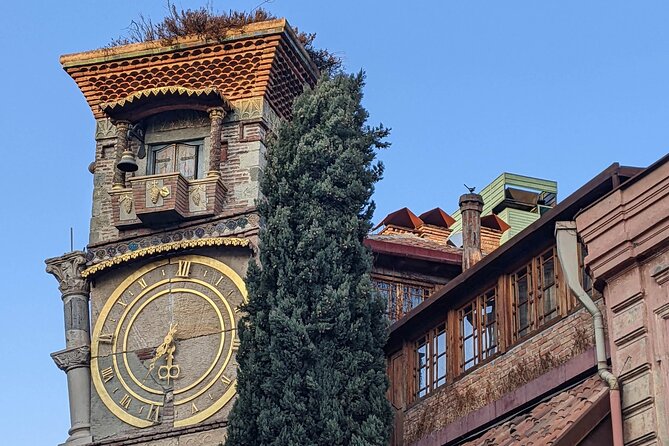
The Rezo Gabriadze Marionette Theater is a short first stop, with about five minutes to see the building and its famous Clocktower. This is a quick look rather than a theater performance, but it gives the route an immediate sense of Tbilisi’s artistic side.
The building is popular for its unusual architecture. Its playful, hand-built look feels very different from the city’s older churches and stone structures, which makes it a good visual introduction to Tbilisi’s mixed character. The stop is brief, so you will want your camera ready before the guide moves the group onward.
Next comes Anchiskhati Basilica, the oldest church still standing in Tbilisi. It was originally built in the sixth century and remains one of the old town’s key religious and historical buildings. The scheduled visit lasts about 15 minutes, enough for a look inside and an explanation of why this church matters.
This is one of the places where a guide adds real value. From the outside, Anchiskhati may seem modest compared with larger cathedrals. Its importance comes from its age and continuity, and a good explanation helps you see why a small church can be one of the city’s most important sights.
Church visits require respectful clothing. Shorts are not allowed for men or women. Women should bring a scarf or hat to cover their head. This is practical advice, not a minor detail, because dressing correctly helps you enter religious sites without awkward delays.
Crossing the Peace Bridge into Rike Park
The Peace Bridge opened in 2010 and is one of Tbilisi’s most recognizable modern structures. Its glass and steel form contrasts sharply with the older buildings around the river, and the design caused mixed reactions when it first appeared.
The tour gives you about ten minutes here. That is enough to cross, look back toward the old town, and see how the bridge changes the riverfront view. I appreciate that the guide does not present the bridge as universally admired. Its appeal is partly the argument it creates: Tbilisi is a historic city that is still adding bold modern architecture.
After crossing, you continue through Rike Park toward the Metekhi area. This connecting walk is part of the experience, not wasted time. You see how the riverfront has been reshaped and how the newer park and bridge sit beside some of the city’s oldest religious and defensive sites.
More things to do in Tbilisi:
- Tbilisi: Day Trip to Kazbegi, Gudauri, Gergeti, and Ananuri
★ 4.9 · 3,203 reviews - Day Trip to Kakheti Wine Region Including 9 Wine Tastings
★ 5.0 · 2,774 reviews - Highlights of Caucasus Mountains-Jinvali,Ananuri,Gudauri,Kazbegi(Group tour)
★ 5.0 · 2,682 reviews - From Tbilisi: Kakheti Wine Region Tour with 9 Wine Tastings
★ 4.9 · 2,541 reviews
Metekhi Cathedral and the city founder
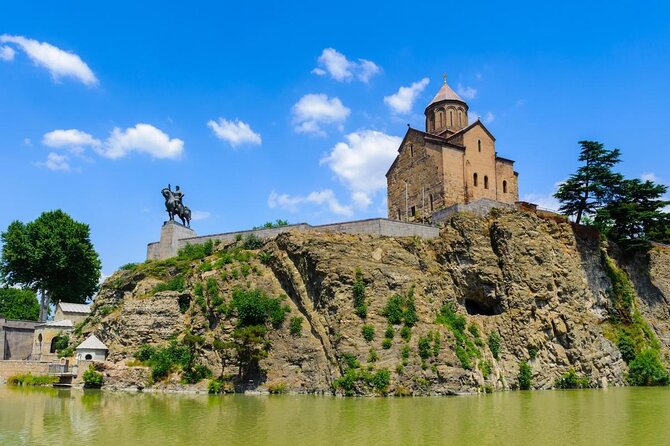
Metekhi Cathedral is one of the best viewpoints on the route. From the churchyard, you get broad views across the old town and the Mtkvari River, while the elevated position helps explain Tbilisi’s unusual shape.
The yard also holds a statue of Vakhtang Gorgasali, the legendary king associated with the founding of the city. This gives the stop a strong connection to Georgian national tradition. Your guide can help separate legend, religious memory, and the city’s long development without reducing the story to a quick date and name.
The planned stop here is about 30 minutes, one of the longer visits on the walk. That extra time is welcome. You can take in the view, hear the story behind the cathedral, and get a better sense of the old town’s hills and river crossings.
This is also where the walking can feel more demanding. The tour data describes a moderate fitness level, and that is sensible. You do not need specialist hiking ability, but comfortable shoes will make the route much more pleasant.
Riding from Rike Park toward Narikala
The Rike-Narikala Cable Car is the tour’s included transport section. The ride takes you upward toward the Narikala fortress area and gives you a quick panoramic look across Tbilisi.
The information provided for the experience notes that Narikala Fortress is closed because of reconstruction. That is important: you should not book this tour expecting a full fortress visit. The cable car and the views remain part of the plan, but access to the fortress itself may not be available during reconstruction.
Even with that limitation, the cable car is worthwhile because it breaks up the walking and changes your view of the city. From above, you can better understand the relationship between the river, old town, hills, and major monuments. It is a short ride, listed at about ten minutes, but it adds a memorable shift in perspective.
The cable car is also the only listed paid transport element, and its inclusion helps explain the tour’s good value. Most other stops have no admission charge, so you are not facing a string of extra ticket costs.
Mother of Kartli and a Soviet-era symbol
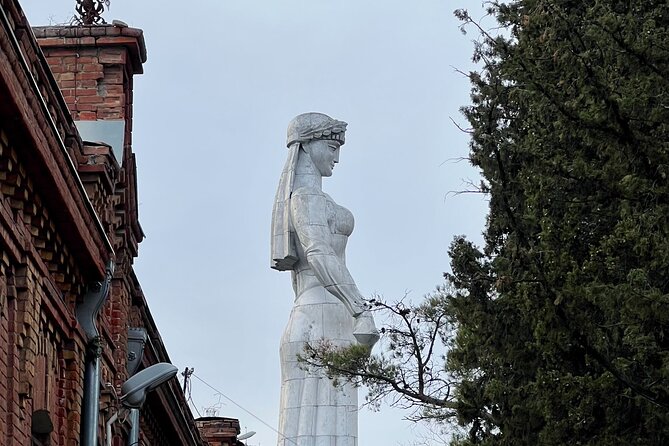
The Mother of Kartli monument is scheduled for about 15 minutes. This large female figure overlooking Tbilisi is one of the city’s best-known symbols, and the guide connects it with the Soviet period as well as Georgian identity.
The statue carries a sword in one hand and a bowl in the other, a familiar image of welcome to friends and defense against enemies. The supplied description calls the monument full of Soviet spirit while also saying it reflects Georgian people well. That tension is worth discussing. The statue belongs to a political era, but it has also become part of the way Tbilisi presents itself.
This stop is more than a photo opportunity. It lets you consider how Georgia uses public monuments to express hospitality, strength, national pride, and memory. You may find the monument less delicate than the old churches, but its position and symbolism make it an important part of the city’s story.
Abanotubani, the sulfur baths, and the beginning of Tbilisi
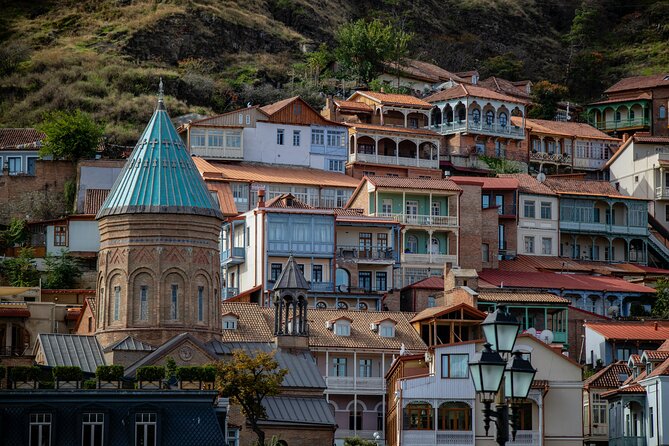
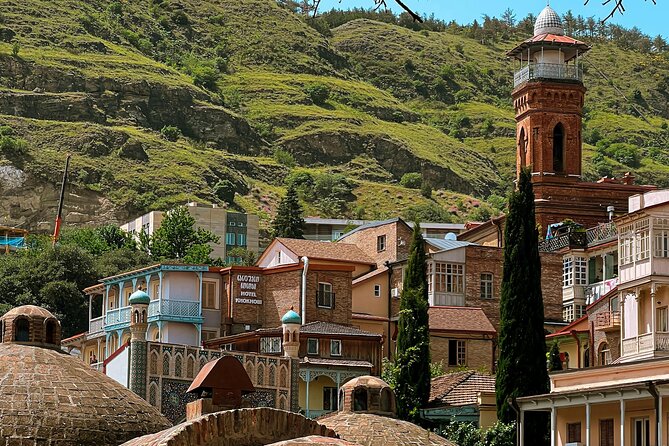
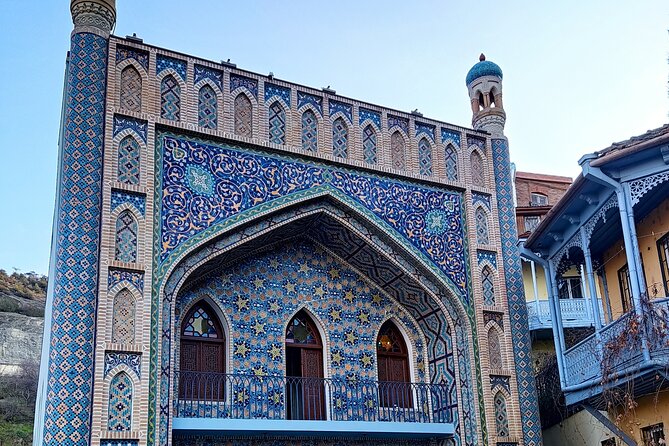
The route then descends toward Abanotubani, the sulfur bath district. You have about 20 minutes here, enough to see the domed bathhouses and hear the legend connected with the city’s origin.
The name Tbilisi is tied to warm waters, and the sulfur baths remain one of the clearest places to connect the modern city with its founding story. This district also shows how Tbilisi’s old town is not just a collection of churches and viewpoints. It is a place shaped by bathing, trade, food, religion, and public life.
I like this stop because it adds texture to the route. The earlier sights focus on architecture and national history. Abanotubani brings you into the city’s everyday traditions and explains why this particular valley became important.
The tour does not list a bath visit, so you should treat this as a guided look at the district rather than a bathing session. If you want to use a sulfur bath during your stay, you will need to arrange that separately.
The Tamada statue and Tbilisi’s social traditions
The Tamada, or toastmaster, statue is a very short five-minute stop. It honors one of Georgia’s most familiar social figures, the person who leads formal toasts at a traditional feast.
The original version of the monument was found near Vani in western Georgia and dates to the seventh century BC. That detail gives the statue a much older cultural connection than its modern appearance might suggest.
This is a small stop, but it helps broaden the tour beyond buildings. Georgian hospitality is often expressed through long meals and carefully led toasts, and the tamada represents that tradition. Your guide can also place the monument within the wider story of Georgia’s ancient cultures and regional customs.
Sioni Cathedral and Tbilisi’s multicultural past
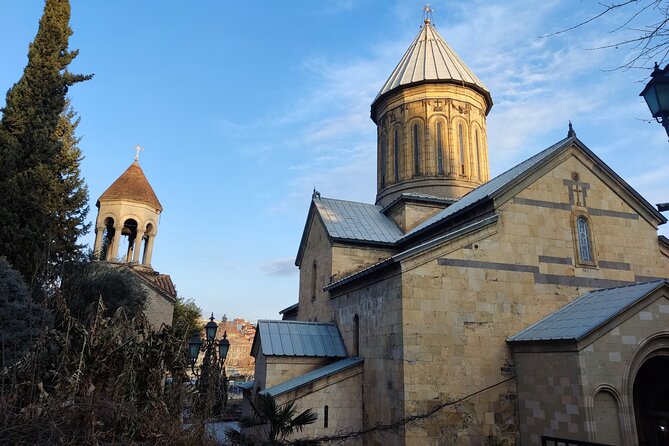
The walk ends at Sioni Cathedral of the Dormition, at 3 Sioni Street. The tour allows about 30 minutes here, making it another substantial stop rather than a quick final glance.
Sioni was once the main cathedral of Tbilisi. It has survived repeated invasions and destruction and remains in the heart of the old town. Inside, it preserves the St. Nino Cross, one of the most important religious relics for Georgians.
The cathedral is a fitting end because it brings together the religious and political threads introduced earlier. Anchiskhati shows the age of Tbilisi’s Christian buildings. Metekhi links the city to its legendary founder. Sioni gives you a place to consider Georgia’s continuing religious identity.
The walk also touches on Tbilisi’s multicultural past. The city once had about 50,000 Jewish residents before 1991. The community is much smaller today, but the strong friendship between Georgian and Israeli people remains part of the city’s modern story. This detail is easy to miss if you only visit the headline sights, so it adds welcome social context.
Sioni is the official ending point. That is useful for planning, since you finish in the old town rather than returning to Freedom Square. You can continue exploring nearby on your own, but the experience itself ends at the cathedral.
Timing, walking, and the cable car closure
The duration needs a careful reading. The tour is described in one place as approximately three hours and 30 minutes, while the practical notes explain that the sightseeing takes about three hours and the walking between the start and end adds about one hour. The total should therefore be treated as roughly four hours, with some variation depending on pace and questions.
The total walking distance is around 4 kilometers. That is manageable for most people with moderate fitness, but the route is not a flat promenade. Tbilisi’s hills, church approaches, and old streets call for supportive footwear.
Plan for the following:
- Wear comfortable walking shoes.
- Bring a scarf or hat for church visits.
- Do not wear shorts at the religious sites.
- Allow extra time if you like photographs or extended questions.
- Check the current status of Narikala Fortress because the listed information says it is closed for reconstruction.
- Remember that the end point is Sioni Cathedral, not Freedom Square.
Service animals are allowed, and the meeting area is near public transportation. Confirmation is provided when you book. The activity is private, so only your own group participates.
Who gets the most from this $25 experience
I would choose this tour for a first visit to Tbilisi, especially if I wanted a clear introduction before exploring alone. It covers the city’s main old-town sights while adding useful details about religion, public monuments, ancient customs, and the city’s multicultural past.
It suits couples, families, and small groups who prefer conversation to a fixed lecture. The private format also helps if one person in your group wants more architecture while another wants food, religion, or local customs. Luka’s reported willingness to accommodate requests is encouraging for this reason.
The tour may be less suitable if you want a slow photography walk, a full Narikala Fortress visit, or a long stop at every church. The schedule includes many sights, and some stops last only five or ten minutes. You will see a lot, but you will not have unlimited time at each place.
At $25 per person, the price is fair because the route is private, conducted in English, and includes the cable car ride. Group discounts can make it even better for a party of several people. Since most admissions are free, you are not paying for a bundle of attractions you may not care about. You are paying for structure, context, and a guide who can help you read the city.
Should you book this Tbilisi walking tour?
Book it if you want an efficient first look at central Tbilisi, prefer a private guide, and are comfortable walking about 4 kilometers over roughly four hours. The combination of churches, river views, modern architecture, a cable car ride, sulfur baths, monuments, and local stories gives you a broad introduction for a modest price.
Skip it if your priority is entering Narikala Fortress, spending a long time at each stop, or avoiding hills and uneven streets. Also confirm the current fortress situation before booking, since reconstruction affects that part of the route.
For most first-time visitors, I think this is a sensible way to get oriented. You finish at Sioni Cathedral with a stronger sense of how Tbilisi’s old town fits together, and you can then return to the places that caught your attention most.
FAQ
Where does the tour begin?
The tour begins at Freedom Square in Tbilisi, Georgia.
Where does the tour end?
The tour ends at Sioni Cathedral of the Dormition at 3 Sioni Street in Tbilisi.
How long does the experience take?
The sightseeing portion takes about three hours, with roughly one additional hour for walking between the starting and ending points. The total duration is best treated as about four hours, although the experience is also listed as approximately three hours and 30 minutes.
How far do you walk?
The total walking distance is around 4 kilometers. A moderate level of physical fitness is recommended.
Is the cable car included?
Yes. The Rike-Narikala Cable Car ride is included in the tour price.
Can you visit Narikala Fortress?
The provided tour information says Narikala Fortress is closed because of reconstruction. The route includes the cable car ride and views toward the area, but fortress access is not available while it remains closed.
Just added in Tbilisi
- Wine Tasting feel the Difference of Qvevri or Classical Wine★ 4.4 · 10 reviews
- From Tbilisi: Kakheti and Kazbegi 2-Day 4X4 Jeep Tour pack★ 5.0 · 6 reviews
- Walking Tour in Old Tbilisi – Group Tour★ 4.5 · 8 reviews
- Uforgatable Kakheti Tour with wine tasting – in Georgia★ 4.9 · 5 reviews
- From Tbilisi: Uplistsikhe Caves and Mtskheta Town Day tour★ 5.0 · 2 reviews
- Tbilisi: Vintage Fashion and Secondhand Thrifting Tour★ 5.0 · 11 reviews
- Tbilisi Airport to Gudauri, Bakuriani, Batumi, Tbilisi★ 5.0 · 3 reviews
- Private Adorable City Tour of Tbilisi★ 5.0 · 3 reviews
Walking Tours, compared.
Tbilisi Walking Tour Including Cable Car and Traditional Bakery
Read our review →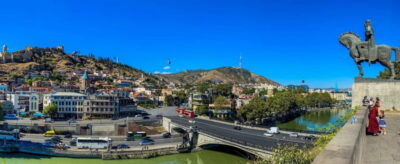
Evening Walking & Talking Tour with Wine & Boat Ride
Read our review →
Evening Walking Tour with Wine & Boat Ride Options
Read our review →
Old Tbilisi Highlights walking tour with wine & 10 tastings
Read our review →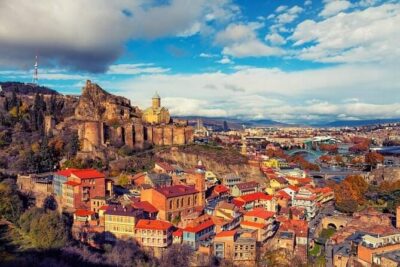
Old Tbilisi Tour: Private Walking Tour With Wine Tasting
Read our review →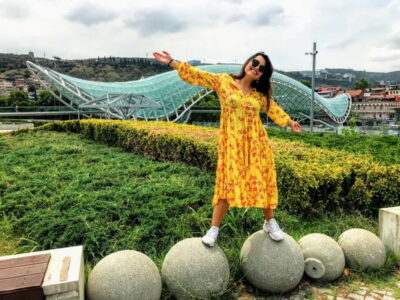

Private Tbilisi Food Tour: 9 Tastings Walk in Bohemian District
Read our review →Browse the lists this tour appears in