
Reviewed · MUSEUMS
Tour to Didgori Valley from Tbilisi (Turtle Lake, Ethnographic Museum, Kojori)
Georgia’s past comes alive beyond Tbilisi. This private day trip links Turtle Lake, the Open Air Museum of Ethnography, Udzo Mountain, Azeula Fortress, and the Didgori battlefield in one unhurried route. I especially like the personal vehicle and hotel pickup, which make a long day much easier, and the way the tour mixes nature, architecture, religion, and military history rather than repeating the same kind of stop.
The pace is another strong point. You have time to look around instead of rushing from one photo stop to the next. The main drawback is that lunch is not included, and the day involves several outdoor and elevated sites, so comfortable shoes, warm clothing, and some planning matter.
In This Review
- Key points to know before booking
- Why this full-day route works so well
- Turtle Lake: an easy start at 686.7 meters
- The Ethnographic Museum: Georgia in one open-air village
- Azeula Fortress and Kojori’s difficult chapter
- Udzo Mountain and the story of St. George
- Didgori Valley and the battle that changed Georgia
- Transport, timing, and comfort
- Who will get the most from this tour?
- Should you book the Didgori Valley tour?
- FAQ
- How long does the Didgori Valley tour last?
- Is hotel pickup and drop-off available?
- Is this a private tour?
- What transportation is provided?
- Is lunch included?
- Are entrance tickets included?
- What should I wear to the monastery?
- What happens if bad weather cancels the tour?
Key points to know before booking
- Five very different stops take you from a lakeside recreation area to a medieval battlefield.
- A private, air-conditioned vehicle with Wi-Fi keeps the long day comfortable.
- The Ethnographic Museum covers 52 hectares, with around 70 buildings and more than 8,000 objects.
- Azeula Fortress gives the day its finest view, along with a connection to Georgia’s 1921 struggle.
- Didgori recalls the 1121 victory that helped begin Georgia’s medieval Golden Age.
- Church clothing rules apply, including head scarves and dresses for women and no short trousers for men.
Why this full-day route works so well
The tour begins at 9:00 a.m. and lasts about nine hours. That gives you a full day outside central Tbilisi without asking you to organize several separate taxi rides, museum visits, and mountain stops.
I like the shape of the route because it tells a broad Georgian story. Turtle Lake offers a simple break in nature. The museum introduces the country’s regional homes and crafts. Kojori and Udzo bring in religious and military traditions. Didgori then gives the day its grand historical finish.
A private tour also changes the mood. You travel only with your own group, and the vehicle includes air conditioning, Wi-Fi, and bottled water. That is practical rather than glamorous, but practical is exactly what you want on a nine-hour outing. You can keep the pace relaxed and spend more time at the places that interest you.
The listed cost is $197.50 per person. That is not a budget outing, especially for a solo visitor, but the price needs to be judged against what is included: private transportation, hotel pickup and drop-off, a dedicated vehicle, fuel, and a full day of routing outside Tbilisi. For a small group, the cost may feel more reasonable because the experience is private rather than shared.
Lunch is the main extra to plan for. Since it is not included, ask about the day’s meal arrangements before setting off or bring something with you. The supplied details do not specify a restaurant stop, so do not assume lunch will appear between the fortress and battlefield.
More museums in Tbilisi:
- Private Tour to Mtskheta Stalin Museum Uplistsikhe Caves
★ 5.0 · 16 reviews - Soviet Story – Private day trip to Chiatura, Stalin’s museum and Katskhi pillar
★ 4.5 · 15 reviews - Day Tour to Mtskheta, Gori (Stalin museum) and Uplistsikhe
★ 4.5 · 8 reviews
Turtle Lake: an easy start at 686.7 meters
Turtle Lake sits on the outskirts of Tbilisi at about 686.7 meters above sea level. Its name comes from the turtles once thought to be common in the area. Today, it is mainly a recreation zone where people come for fresh air, a walk, and time beside the water.
The stop lasts about one hour, and admission is free. That makes it a gentle opening to the day. You can stretch your legs, take photographs, and get away from the city’s traffic before the more serious historical stops begin.
The lake area is also used for festivals and concerts, especially during busy periods. If you visit on a weekend, you might find a livelier public atmosphere than on a quiet weekday. The tour does not promise a long hike here, so think of Turtle Lake as a pleasant pause rather than a major wilderness outing.
This first stop is useful because it sets up the contrast that defines the whole tour. Within the same day, you move from a familiar local recreation spot to buildings collected from nearly every part of Georgia. I would not book the tour solely for Turtle Lake, but it is a pleasant way to begin.
The Ethnographic Museum: Georgia in one open-air village
The Giorgi Chitaia Open Air Museum of Ethnography is the most substantial stop on the route. It was founded in 1966 by Georgian ethnographer Giorgi Chitaia and occupies 52 hectares. The museum is arranged in eleven zones and contains around 70 buildings plus more than 8,000 objects.
The clever idea is simple: traditional buildings from Georgia’s different territorial regions were moved here and placed together. Instead of seeing one isolated house with a small display, you get a broad look at how architecture, materials, and daily life changed from one part of the country to another.
The collection includes eastern Georgian stone houses with traditional darbazi designs, along with wooden houses featuring gable roofs made from straw or boards. Craftwork and household objects add detail to the buildings. The result is less like a standard indoor museum and more like walking through a historic village spread over open ground.
You have about one hour here, with admission included. That is enough for a useful introduction, but not enough to inspect every corner of 52 hectares. If old buildings and folk culture are your main interests, you may wish the stop were longer. Still, the private format gives you a better chance to use your time sensibly instead of being held to a large group’s fixed pace.
I particularly value this stop because it gives context to the rest of a Georgia visit. You see that the country is not one architectural block. Regional building traditions, roof forms, stonework, woodwork, and household crafts vary widely. If you have only a short time in Georgia, this museum provides a compact way to see that variety.
Wear comfortable shoes here. The museum covers a large outdoor area, and the route is not simply a few rooms beside a parking area.
Azeula Fortress and Kojori’s difficult chapter
Azeula Fortress, also associated with Kojori Fortress, brings the tour into a more dramatic setting. The earliest layers date to the late 11th century, while much of what you see today comes from the 16th through 18th centuries.
The site also recalls the fighting that took place around Kojori during the Red Army invasion of Georgia in February 1921. Georgian and Russian SFSR forces fought for the heights here. A monument erected in the 1990s honors the Georgian Junker cadets who died in that battle.
You have about one hour at the fortress, and admission is free. The standout feature is the view. The fortress position gives you a strong sense of why high ground mattered in both older warfare and the 1921 fighting. I would allow time to pause rather than treating the site as a quick walk to a ruin.
The setting can also make this the most physically demanding stop. The supplied information does not give a precise walking distance or trail condition, so bring sensible footwear and do not expect a polished indoor museum visit. A warm jacket is a good idea, particularly because the route reaches higher ground and weather can change.
This is where the tour’s balance works well. The museum gives you homes and crafts. Azeula gives you fortifications, open views, and a modern national memory. You are not just looking at old stones. You are seeing a place tied to Georgia’s effort to defend its independence.
More things to do in Tbilisi:
- Tbilisi: Day Trip to Kazbegi, Gudauri, Gergeti, and Ananuri
★ 4.9 · 3,203 reviews - Day Trip to Kakheti Wine Region Including 9 Wine Tastings
★ 5.0 · 2,774 reviews - Highlights of Caucasus Mountains-Jinvali,Ananuri,Gudauri,Kazbegi(Group tour)
★ 5.0 · 2,682 reviews - From Tbilisi: Kakheti Wine Region Tour with 9 Wine Tastings
★ 4.9 · 2,541 reviews
Udzo Mountain and the story of St. George
The road to Udzo Mountain reaches about 1,416 meters and leads to St. George Fathers’ Monastery. The stop is scheduled for roughly 30 minutes, shorter than the museum, fortress, or Didgori Valley.
A local religious story gives the site its special meaning. According to the tradition, a childless man built a church and prayed to St. George for a child. His request was granted, and childless women later came to pray for the same blessing. Offerings were left on a tree still called the Christmas tree.
The name Udzo is connected with the mountain and church. St. George’s Day is observed here on the Tuesday after Easter, when people from nearby villages gather on the hill. That detail helps explain why this is more than a scenic roadside stop. It remains part of local religious life.
The tour calls this stop Udzo Monastery Road, so the time may include the approach and a short visit rather than a long monastery tour. Do not expect an extended service or a major museum display. Its value lies in the setting, the legend, and the chance to see a living place of Georgian Orthodox devotion.
Dress carefully if you plan to enter an Orthodox church. Women need head scarves and dresses, while men cannot wear short trousers. Scarves and dresses may be available near church entrances, but I would still carry suitable clothing so you are not depending on supplies at the door.
Didgori Valley and the battle that changed Georgia
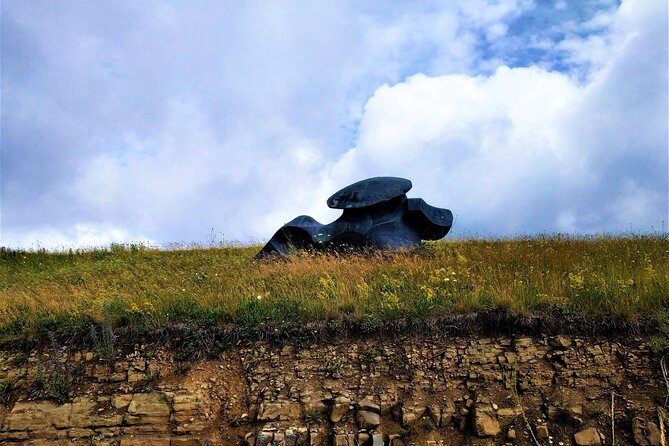
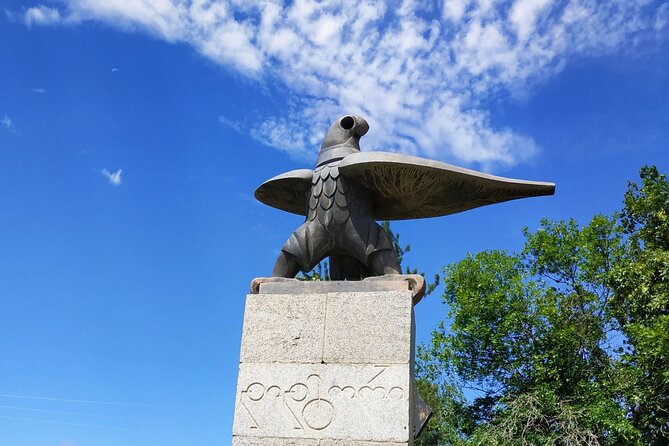
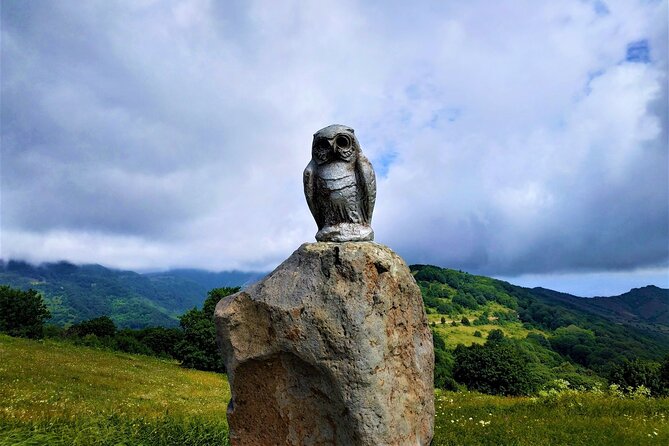
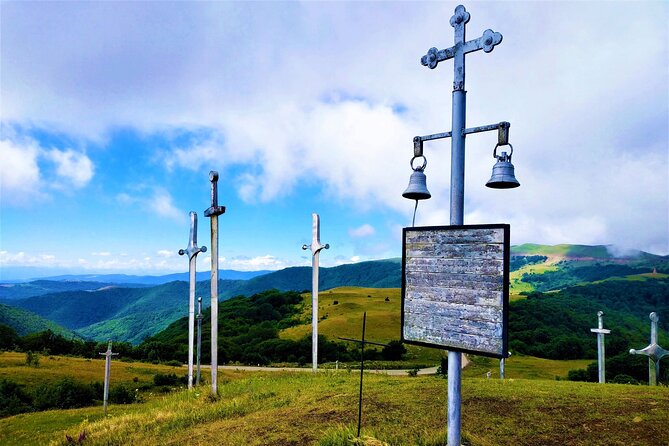
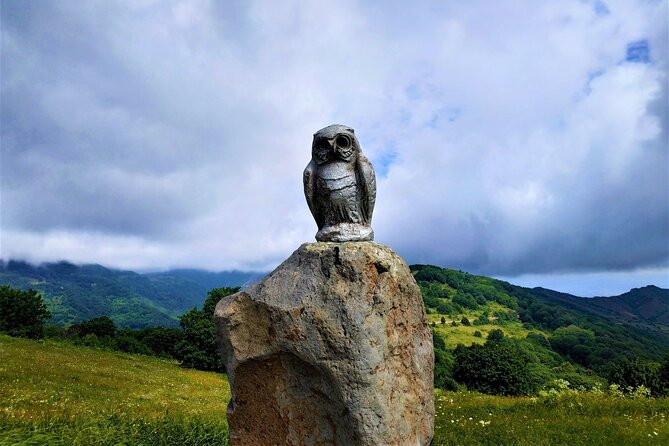
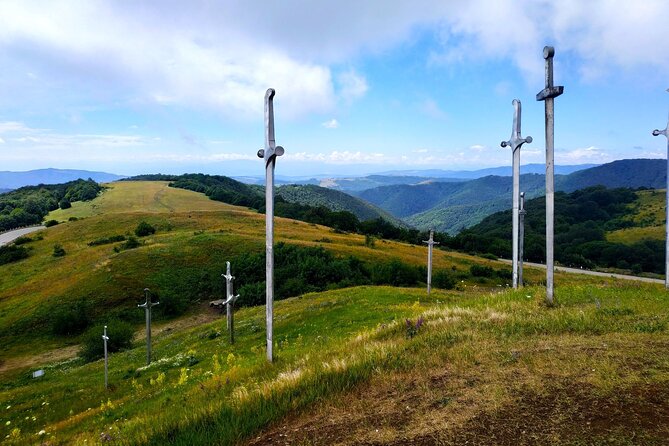
The final major stop is Didgori Valley, where the famous Battle of Didgori took place on August 12, 1121. King David IV of Georgia led his forces against a much larger army of the Great Seljuq Empire under Ilghazi.
The Georgian victory was decisive. The Seljuq army could not maneuver effectively and suffered a devastating defeat. The battle helped Georgia retake Tbilisi in 1122, after which King David moved the capital from Kutaisi to Tbilisi.
That is why Didgori matters so much in Georgian history. The victory helped open the period remembered as the medieval Georgian Golden Age. Georgian chronicles call it a miraculous victory, and the battlefield remains a powerful place to connect national history with physical geography.
You have about one hour here, and admission is free. The site is not simply a list of dates. When you look across the valley, you can think about troop movement, high ground, and the limits of a large army in difficult terrain. The setting gives the story more weight than a paragraph in a guidebook.
The tour’s relaxed pace is especially helpful here. You do not need to rush through a monument, snap a picture, and leave. You can take in the setting and consider how one battle affected the location of Georgia’s capital and the country’s wider political future.
For anyone interested in Georgian identity, this may be the emotional high point. The fortress shows conflict in one period, while Didgori shows a victory that became central to the country’s historical memory.
Transport, timing, and comfort
Hotel pickup and drop-off in Tbilisi simplify the day. You do not need to find a meeting point before breakfast or navigate the city at the end of a long outing. The start time is 9:00 a.m., and the total duration is approximately nine hours.
The air-conditioned private vehicle matters because the route includes several stops at different elevations. Wi-Fi on board is a useful bonus, while bottled water removes one small chore from the day. Since only your group participates, you can enjoy a more personal rhythm than on a standard coach excursion.
The five listed visits account for about three and a half hours of stop time:
- Turtle Lake: one hour
- Open Air Museum of Ethnography: one hour
- Azeula Fortress: one hour
- Udzo Monastery Road: 30 minutes
- Didgori Valley: one hour
The remaining time covers driving, pickup, drop-off, and transitions. That makes the schedule believable for a full-day trip, but you should not expect long, unplanned stops at every location. The private setup gives you flexibility, yet the route still has to fit within the day.
Because the excursion requires good weather, conditions can affect the plan. If poor weather causes cancellation, you are offered another date or a full refund. You can cancel for a full refund up to 24 hours before the start time, but changes or cancellations inside that window are not accepted.
Who will get the most from this tour?
I would recommend this excursion to you if you want a broad introduction to Georgia outside Tbilisi without arranging transport yourself. It suits people who enjoy a mix of scenery, architecture, religious sites, fortresses, and national history.
It is also a good fit for couples, families, and small private groups who dislike being hurried. The single published rating is positive, with particular praise for the leisurely pace, the collection of old Georgian houses, the fortress view, and the honor of visiting the Didgori battlefield. Those are exactly the qualities that define the trip.
You may want a different outing if your main goal is a long mountain hike, a food-focused day, or a very detailed museum visit. The schedule includes outdoor stops, but it is not described as a trekking trip. Lunch is also outside the price, and no specific restaurant is named.
Should you book the Didgori Valley tour?
Book it if you want one well-organized day that connects Tbilisi with Georgia’s rural scenery and major historical themes. The best reasons are the private vehicle, the unhurried rhythm, and the variety of stops. The Ethnographic Museum and Didgori Valley are the strongest anchors, while Azeula Fortress adds the day’s best view and a serious chapter of modern Georgian history.
Before booking, plan for the $197.50 per-person price, bring money or food for lunch, wear walking shoes, and pack a warm jacket. If you plan to enter Udzo Monastery, bring appropriate church clothing or be ready to use clothing provided near the entrance.
For a comfortable, history-heavy escape from Tbilisi, this is a well-balanced choice. It gives you much more than a scenic drive, but it does so without turning the day into a race.
FAQ
How long does the Didgori Valley tour last?
The tour lasts approximately nine hours, beginning at 9:00 a.m.
Is hotel pickup and drop-off available?
Yes. Front-door pickup and drop-off from your Tbilisi hotel are provided.
Is this a private tour?
Yes. Only your group participates in the activity.
What transportation is provided?
The tour includes private transportation in an air-conditioned vehicle with Wi-Fi on board.
Is lunch included?
No. Lunch is not included in the tour price.
Are entrance tickets included?
Admission to the Open Air Museum of Ethnography is included. Turtle Lake, Azeula Fortress, Udzo Monastery Road, and Didgori Valley are listed with free admission.
What should I wear to the monastery?
Women need head scarves and dresses in Georgian Orthodox churches. Men may not wear short trousers. Comfortable shoes and a warm jacket are also recommended.
What happens if bad weather cancels the tour?
If poor weather causes cancellation, you will be offered another date or a full refund. You can also cancel up to 24 hours before the start time for a full refund.
Just added in Tbilisi
- Wine Tasting feel the Difference of Qvevri or Classical Wine★ 4.4 · 10 reviews
- From Tbilisi: Kakheti and Kazbegi 2-Day 4X4 Jeep Tour pack★ 5.0 · 6 reviews
- Walking Tour in Old Tbilisi – Group Tour★ 4.5 · 8 reviews
- Uforgatable Kakheti Tour with wine tasting – in Georgia★ 4.9 · 5 reviews
- From Tbilisi: Uplistsikhe Caves and Mtskheta Town Day tour★ 5.0 · 2 reviews
- Tbilisi: Vintage Fashion and Secondhand Thrifting Tour★ 5.0 · 11 reviews
- Private Adorable City Tour of Tbilisi★ 5.0 · 3 reviews
- Tbilisi Airport to Gudauri, Bakuriani, Batumi, Tbilisi★ 5.0 · 3 reviews
Museums, compared.
Private Tour to Mtskheta Stalin Museum Uplistsikhe Caves
Read our review →
Soviet Story – Private day trip to Chiatura, Stalin’s museum and Katskhi pillar
Read our review →
Day Tour to Mtskheta, Gori (Stalin museum) and Uplistsikhe
Read our review →
Museum of illusions,Digital Space and Ethnography in Tbilisi
Read our review →
Jvari-Gori-Uplistsikhe-Stalins Museum All inclusive tour
Read our review →
Combined ticket: Digital Exhibition & Museum of Illusions
Read our review →
Browse the lists this tour appears in