Reviewed · TOURS
Tbilisi: Where Tourists Don’t Go – The Forgotten Rails Tour
Tbilisi has a rougher story to tell. The Forgotten Rails Tour leaves the polished center behind and follows the city’s railway and metro past, from historic workers’ homes and abandoned train equipment to restricted industrial sites. I like its unusual focus and the way guides such as Chinka, Diana, Lasha, and Nathalie connect railway structures with everyday Georgian life.
I also like the human side of the route. You hear about Soviet planning, railway workers, Abkhazian refugees, and neighborhoods shaped by political decisions. The main consideration is that this is not a tidy sightseeing walk: expect rougher surroundings, abandoned infrastructure, and plenty of walking, so comfortable shoes are essential and wheelchair users cannot take part.
In This Review
- Key points at a glance
- Starting at Rustaveli Metro Station
- Riding the metro back to 1966
- The first railway workers’ homes
- Abandoned locomotives and railway repair yards
- A mine, an electric depot, and the city’s rough edges
- Soviet decisions and modern Tbilisi
- How much does $28 buy you?
- Who should book the Forgotten Rails Tour?
- Practical advice before you go
- Should you book it?
- FAQ
- Where does the Forgotten Rails Tour meet?
- How long does the tour last?
- How much does the tour cost?
- Is a metro ride included?
- What languages are available?
- Is the tour suitable for wheelchair users?
- What should I wear?
Key points at a glance
- A rare look at Soviet transport design: Learn about Tbilisi Metro, opened in 1966, and the railway system built around the city.
- Restricted places with local access: Visit a sealed railway repair station and other areas you could not reasonably reach alone.
- Railway workers’ homes: See historic housing linked to Georgia’s first railway workers and hear how railway communities developed.
- Abandoned trains and industrial remains: Look for old locomotives, repair buildings, electric infrastructure, and a 20th-century mine.
- Recent history, not just old machinery: The route includes a depot now used as shelter by war refugees from Abkhazia.
- Good value at $28: Two hours of guiding, a metro ride, and access to unusual sites make this a strong choice for curious visitors.
Starting at Rustaveli Metro Station
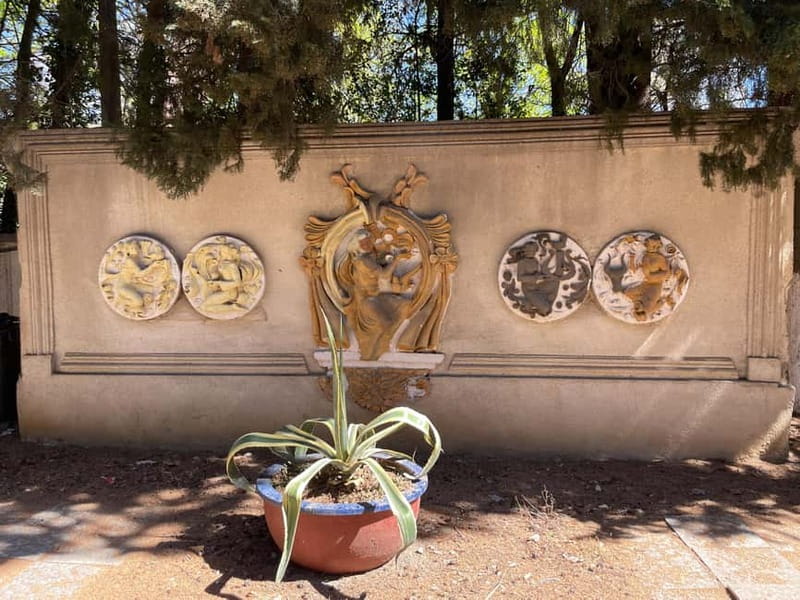
The meeting point is in front of Rustaveli Metro Station, a convenient place to begin because the metro itself is part of the story. Your guide leads the group from there rather than simply giving a talk beside one monument.
The tour looks at Tbilisi as a working city. That matters because the railway is not treated as a collection of old machines. It is tied to housing, industry, migration, Soviet government, and the decisions that still shape neighborhoods today.
Guides speak English or Russian. The strongest feature of the experience is clearly the guiding style. Chinka is described as energetic and eloquent, while Diana, Nathalie, Christina, and Lasha are praised for warmth, humor, and personal knowledge of the areas visited.
Lasha grew up in the neighborhoods covered by the route, and one guide is connected to the railway community itself. That local background gives the walk a natural feel. You can ask questions as you go, rather than move through a fixed script with no room for conversation.
The group may be small. One person had the slot to themselves, turning the outing into something close to a private walk. That cannot be guaranteed, but the two-hour format should still leave enough time for questions when the group is manageable.
More things to do in Tbilisi:
- Tbilisi: Day Trip to Kazbegi, Gudauri, Gergeti, and Ananuri
★ 4.9 · 3,203 reviews - Day Trip to Kakheti Wine Region Including 9 Wine Tastings
★ 5.0 · 2,774 reviews - Highlights of Caucasus Mountains-Jinvali,Ananuri,Gudauri,Kazbegi(Group tour)
★ 5.0 · 2,682 reviews
Riding the metro back to 1966
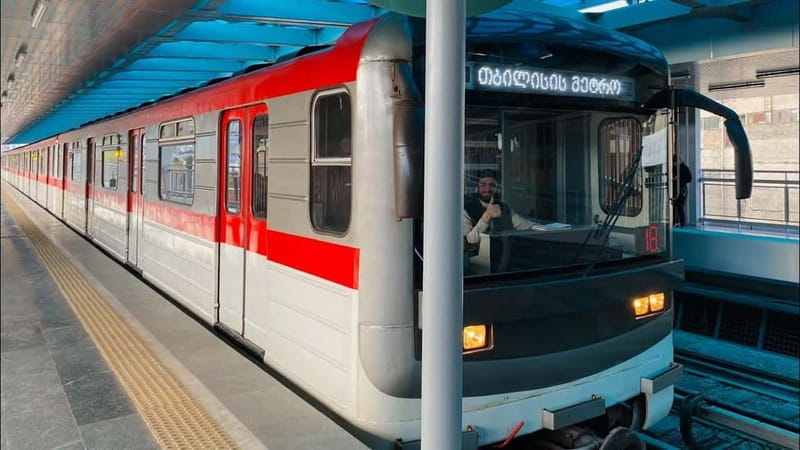
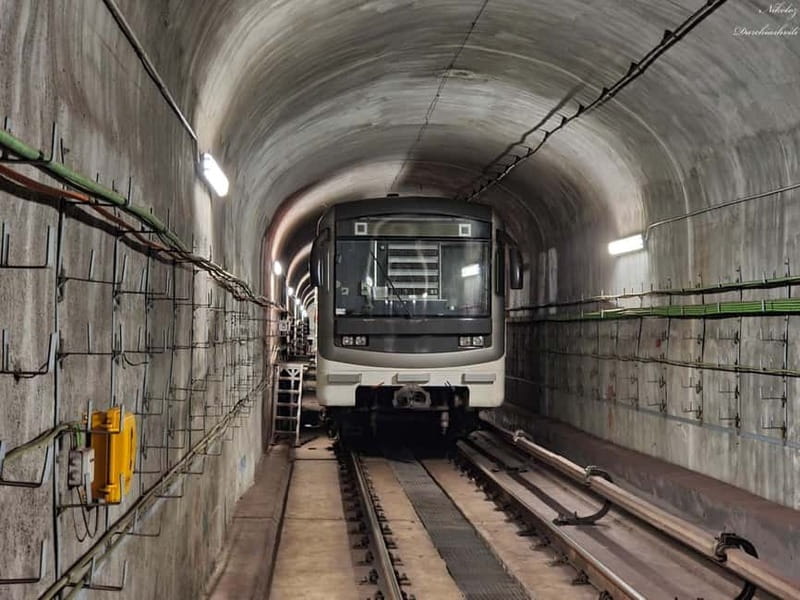
The included metro ride gives the tour a useful change of pace. You are not only looking at disused tracks and empty buildings. You also use part of the transport system that still serves Tbilisi.
The metro opened in 1966, and the tour explains its original Soviet design. For anyone interested in rail systems, this is one of the most valuable parts of the experience. The metro reflects the scale and planning of the Soviet period, while the surrounding districts show how that grand system met ordinary urban life.
I would not book this expecting a technical engineering lecture. The information is broader and more grounded. You learn how the metro and full-gauge railway fit into the city, then connect that infrastructure with the people who built, maintained, and lived around it.
The metro ride also helps break up the walking. Still, do not read the word underground as a promise of a long subterranean expedition. Much of the route involves streets, industrial areas, railway remains, and restricted buildings. The experience is best understood as an urban history walk with transport at its center.
The first railway workers’ homes
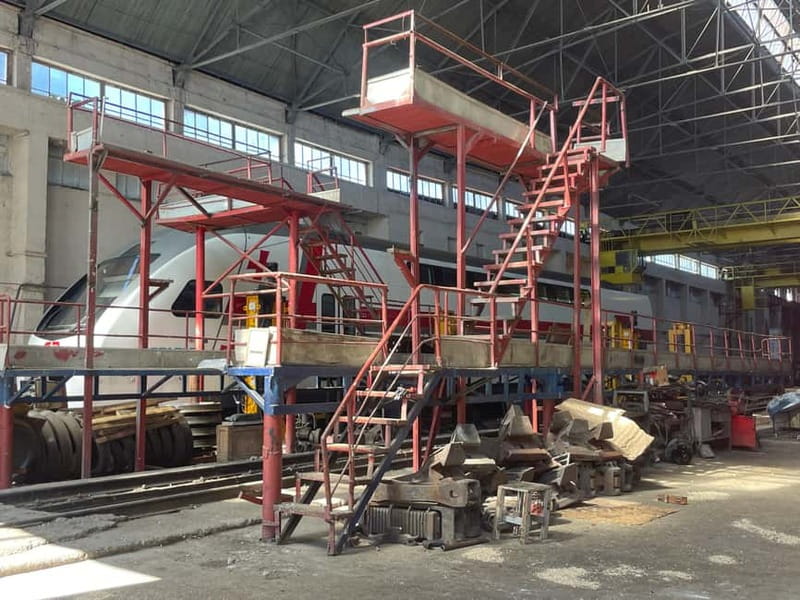
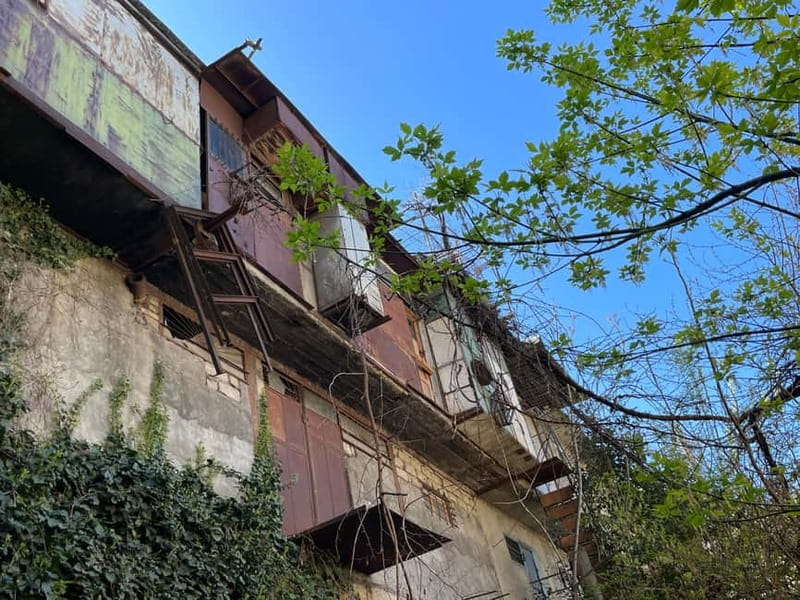
One early focus is the housing built for Georgia’s first railway workers. These homes help explain how the railway changed Tbilisi beyond the tracks themselves.
Railways need people as much as they need engines. Workers require somewhere to live, and communities grow around depots, repair yards, and stations. Seeing the housing makes the social side of railway development easier to understand than a date or construction diagram would.
The buildings are also useful for putting present-day Tbilisi in context. The route moves away from the city center, where visitors often see restored facades, cafes, and major landmarks. Here, you get a more ordinary view of the city, including neighborhoods that have not been arranged for sightseeing.
That contrast is part of the appeal, but it can also feel stark. Some people will find the worn buildings and less polished streets more honest. Others may prefer a traditional city walk with churches, balconies, and grand viewpoints.
The guide makes the difference. The better guides do not simply point at old structures. They explain the people connected with them and show how railway life fitted into the wider story of Georgia.
Abandoned locomotives and railway repair yards
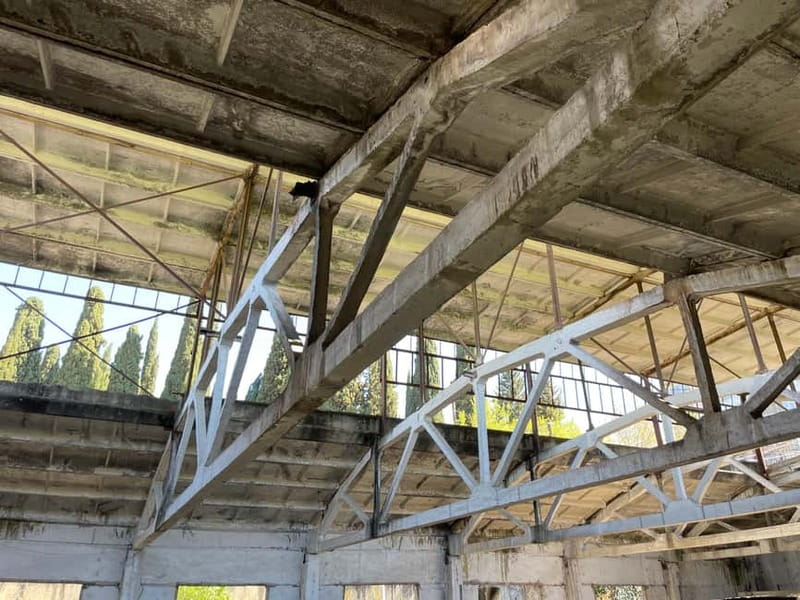
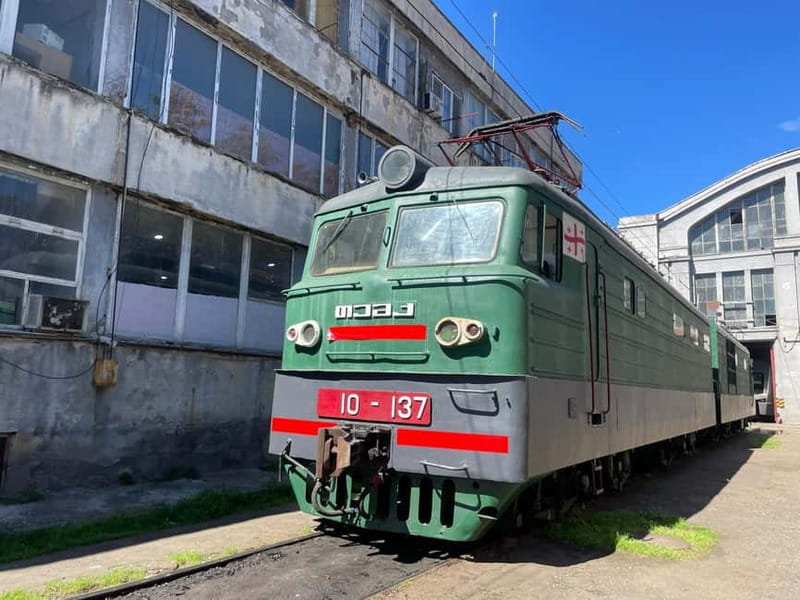
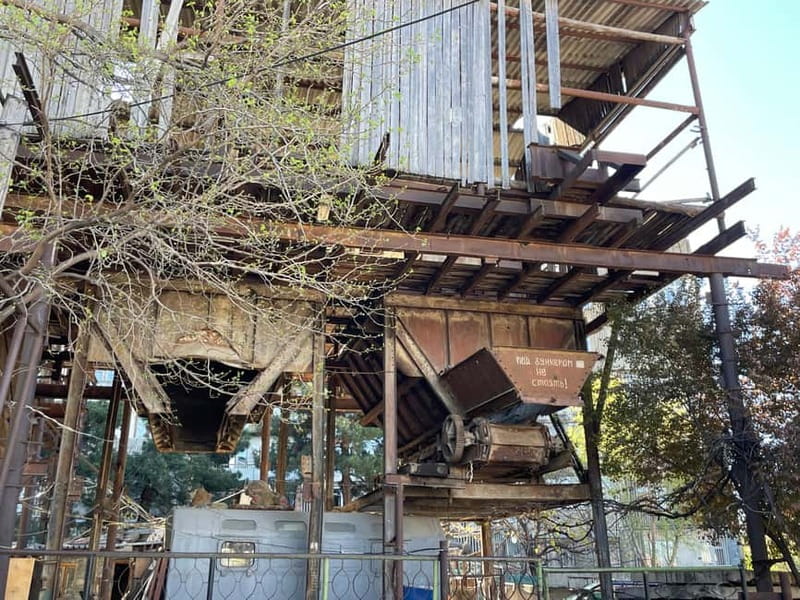
The route then turns toward railway infrastructure that has been left behind. You might see disused train wreckage, old steam locomotives, repair buildings, and pieces of electric transport equipment.
For a train enthusiast, these are the visual prizes of the tour. One stop includes steam locomotives beside buildings said to have been constructed using German prisoners of war after the Second World War. That detail gives the site a complicated past. It is not just an attractive ruin or a backdrop for photographs.
A visitor with an interest in railways described seeing old trains and even getting a photograph on a steam locomotive. The exact access and condition of equipment can vary, so you should not assume every object can be climbed on or entered. Follow the guide’s instructions, especially around damaged structures and machinery.
The repair station is one of the most unusual stops. It has been sealed from the outside world and is difficult to access without local guidance. That makes the visit feel genuinely special, but it also means conditions may be basic. You are visiting a forgotten industrial space, not a restored museum.
This section suits people who enjoy industrial archaeology, Soviet-era design, transport systems, and places with several layers of history. If you need polished exhibits, clear signs, and easy paths, this may feel too raw.
A completely different kind of day:
- From Tbilisi: Kakheti Wine Region Tour with 9 Wine Tastings
★ 4.9 · 2,541 reviews - Tbilisi: Mtskheta, Jvari, Gori and Uplistsikhe Day Tour
★ 4.9 · 2,396 reviews - From Tbilisi to Kazbegi, Ananuri, Gudauri & Gergeti
★ 4.9 · 2,278 reviews - Tbilisi: Kakheti Wine Region Tour with 10 Wine Tastings
★ 5.0 · 2,160 reviews
A mine, an electric depot, and the city’s rough edges
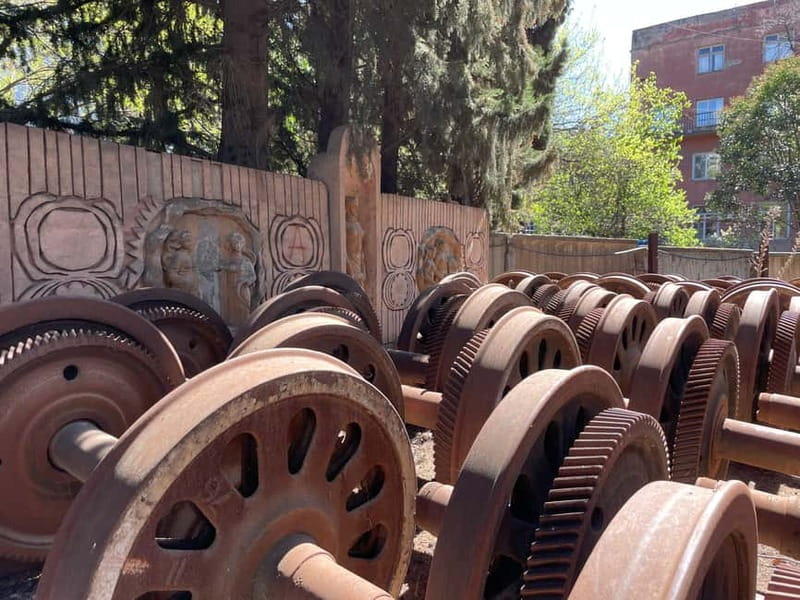
The experience includes a 20th-century mine described as still active. This is an important point to understand before booking. You are not going on a mining adventure, and the information provided does not promise underground mine access. The attraction is the chance to see a working piece of older industrial infrastructure within a city tour.
You also visit an abandoned electric depot. Its current use gives the place a human weight that old machinery alone could not provide. The depot now shelters war refugees who have rebuilt their lives there, including people displaced from Abkhazia.
This is where the tour moves beyond nostalgia for Soviet transport. You are asked to consider how abandoned public or industrial buildings can become part of modern survival. A depot may begin as railway infrastructure, fall out of use, and later become a home. That change says a great deal about war, displacement, housing, and resilience in Georgia.
The subject can be serious. The tour includes stories about refugees, crime, Soviet rule, and the harsher side of city life. Guides are praised for handling these subjects with detail and energy, but the tone is not always light. I would choose another activity if you want two easy hours of scenic sightseeing.
The surroundings may feel rough or neglected. Some visitors specifically value that honesty, while others may find it uncomfortable. The guide’s local connections help the group move through these areas with confidence, but you should still wear practical shoes and pay attention to where you walk.
Soviet decisions and modern Tbilisi
The Forgotten Rails Tour works best when it links physical places with political history. You hear about the Soviet era, the way transport was planned, and how decisions made decades ago affected housing and communities.
The route also brings in more recent events. Stories about Abkhazian refugees show that Georgia’s past is not sealed away in museums. It remains visible in buildings, neighborhoods, and the lives of people who live there.
This is a useful counterpoint to the usual Tbilisi visit. The Old Town can be beautiful and rewarding, but it does not tell the whole story. A city is also its service yards, workers’ housing, abandoned stations, repair sheds, and temporary homes.
Guides add much of the value here. Chinka is praised for mixing facts with stories, and Diana is described as especially energetic and well informed about the communities along the route. Other guides are noted for being friendly, funny, and open to questions.
I like that the tour can feel conversational rather than mechanical. You may hear about local neighborhoods as you walk through them, not just about the railway objects themselves. That gives you a better sense of how transport shaped daily life.
The tradeoff is that the content may vary slightly depending on the guide and the sites available that day. The stated route is clear, but abandoned and restricted locations are not as predictable as standard museums. The local access is the point, and local access sometimes comes with practical limits.
How much does $28 buy you?
At $28 per person, this is good value if you want access and interpretation rather than a long list of famous sights. The price includes a two-hour guided route, a metro ride, and entry to restricted or difficult-to-reach railway sites.
You are paying for local knowledge. Without a guide, you might pass near some of these areas without understanding what they were, who used them, or why they matter. You would also be unlikely to locate the sealed repair station or know how to approach the railway remains.
The tour is especially good value for repeat visitors. Someone who has already seen the main Tbilisi sights can use these two hours to understand a different part of the capital. It also makes a strong first or second-day activity for people who want an introduction to Georgian life beyond the postcard center.
The value is weaker if your main aim is architecture, food, churches, or panoramic views. Those are not the focus. This is a specialist urban walk with a social and political side.
Free cancellation is available up to 24 hours before the start, and you can reserve now while paying later. Those policies make it easier to fit the tour around changing plans, but the real decision is simple: do you want unusual access and serious local stories, or a more comfortable sightseeing route?
Who should book the Forgotten Rails Tour?
I would recommend it to:
- People who enjoy railway history and old transport systems
- Visitors interested in Soviet architecture and planning
- Repeat visitors looking beyond Tbilisi’s central sights
- Fans of industrial archaeology and abandoned infrastructure
- Curious photographers who understand that access and photo opportunities may vary
- Anyone who wants to hear about Georgia’s recent political and social history
- Independent-minded visitors who prefer local neighborhoods to standard sightseeing routes
Families may also enjoy it, though the route involves rougher areas and a group with several children can take more effort to keep together. The experience is not suitable for wheelchair users.
I would be cautious about booking if you dislike uneven walking, abandoned buildings, serious subjects, or places that feel neglected. Comfortable walking shoes are not a minor suggestion here. They are part of the preparation.
Late afternoon may suit some people particularly well. One visitor preferred the 17:00 start because the fading light created a stronger atmosphere. That is a personal preference rather than a guaranteed feature, but it is worth considering if you like industrial sites with a more dramatic mood.
Practical advice before you go
Meet your guide in front of Rustaveli Metro Station. Check the starting time when you book, since availability varies.
Wear comfortable walking shoes. Avoid treating this as a fashion stroll through central Tbilisi. The route includes old infrastructure, rougher districts, and restricted areas.
Keep an open mind about what counts as a sight. The most memorable stop may be a workers’ home, a refugee shelter, or a half-forgotten depot rather than a beautiful monument.
Listen closely when the guide explains access rules. A sealed railway station and abandoned equipment are not public attractions in the usual sense. Your ability to see them depends on local guidance and responsible behavior.
The tour is offered in English and Russian. If you want to ask detailed questions about railway technology, Soviet planning, or modern Georgian politics, English-language guiding is available.
Should you book it?
Book the Forgotten Rails Tour if you want Tbilisi to feel less polished, more complicated, and more real. For $28, you get a thoughtful two-hour route through railway communities, Soviet infrastructure, abandoned transport sites, and a depot now linked to displaced families.
The biggest strength is the guides’ personal connection with the city. Chinka, Diana, Lasha, Nathalie, and the other guides bring more than dates and labels. They explain how people lived around the railway and how old decisions still affect the city.
Skip it if you want easy paths, grand monuments, or a light introduction to Tbilisi. Choose it if you are curious about the city behind the center. For railway fans, history-minded visitors, and repeat visitors, this is one of the better ways to spend two unusual hours in the Georgian capital.
FAQ
Where does the Forgotten Rails Tour meet?
The guide waits in front of Rustaveli Metro Station in Tbilisi.
How long does the tour last?
The tour lasts two hours.
How much does the tour cost?
The price is $28 per person.
Is a metro ride included?
Yes. The experience includes a metro ride.
What languages are available?
The live tour guide is available in English or Russian.
Is the tour suitable for wheelchair users?
No. The tour is not suitable for wheelchair users.
What should I wear?
Wear comfortable walking shoes because the route includes walking through railway and industrial areas.
Just added in Tbilisi
- Wine Tasting feel the Difference of Qvevri or Classical Wine★ 4.4 · 10 reviews
- From Tbilisi: Kakheti and Kazbegi 2-Day 4X4 Jeep Tour pack★ 5.0 · 6 reviews
- Walking Tour in Old Tbilisi – Group Tour★ 4.5 · 8 reviews
- Uforgatable Kakheti Tour with wine tasting – in Georgia★ 4.9 · 5 reviews
- From Tbilisi: Uplistsikhe Caves and Mtskheta Town Day tour★ 5.0 · 2 reviews
- Tbilisi: Vintage Fashion and Secondhand Thrifting Tour★ 5.0 · 11 reviews
- Private Adorable City Tour of Tbilisi★ 5.0 · 3 reviews
- Tbilisi Airport to Gudauri, Bakuriani, Batumi, Tbilisi★ 5.0 · 3 reviews
Tours, compared.

Highlights of Caucasus Mountains-Jinvali,Ananuri,Gudauri,Kazbegi(Group tour)
Read our review →
Kakheti Wine Region Tour with 9 Wine Tastings
Read our review →
Mtskheta, Jvari, Gori and Uplistsikhe Day Tour
Read our review →
Kakheti Wine Region Tour with 10 Wine Tastings
Read our review →
Tbilisi Walking Tour Including Cable Car and Traditional Bakery
Read our review →