
Reviewed · WINE TOURS IN TBILISI
Tbilisi: Afternoon Walking tour & wine tasting in Old Town
Old Tbilisi rewards curious walkers. This three-hour private tour links the city’s old lanes, churches, synagogue, mosque, sulfur baths, and Narikala mountain with a cable-car ride and Georgian wine tasting. I especially like the way it combines major sights with smaller cultural details, including the Tamada sculpture and wine-infused ice cream.
I also like that the guide brings the city’s mixed religious identity into focus rather than showing only postcard views. Guides such as Teona have been praised for their passion, humor, and clear answers. The main consideration is physical: steep streets, steps, walking, and the cable-car route make this a poor fit for anyone with mobility impairments.
In This Review
- Key things to know before booking
- Why this three-hour route works
- Starting at Berikaoba and the Gabriadze Theatre
- Anchiskhati Basilica and Georgian church traditions
- The Bridge of Peace and Sioni Cathedral
- The Tamada sculpture and Georgia’s wine culture
- The Great Synagogue and Tbilisi’s mixed faiths
- Rike Park and the cable car to Narikala
- Kartlis Deda and the story of Mother of Georgia
- Tbilisi Central Mosque and the royal baths
- What the tour is worth for your afternoon
- Who should book this Tbilisi walk
- Final verdict: a strong first look at Tbilisi
- FAQ
- How long does the Tbilisi walking tour last?
- Where does the tour start?
- What languages are available?
- Is the tour private?
- Is the cable-car ride included?
- Is wine tasting included?
- What should I wear and bring?
Key things to know before booking
- Start beside the Berikaoba monument: Meet at 17 Ioane Shavteli Street, next to the monument and near Ambassadori Tbilisi Hotel.
- See several faiths in one compact route: The tour visits Orthodox churches, the Great Synagogue, and Tbilisi Central Mosque.
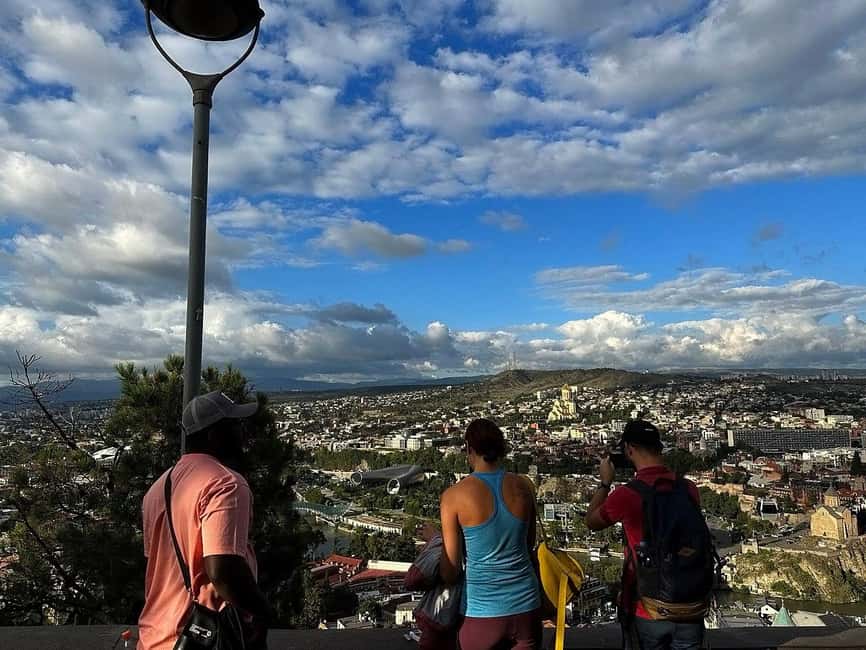
- Ride above the Old Town: The cable car from Rike Park leads toward Narikala and wide views over Tbilisi.
- Taste Georgian wine in a small setting: A private group and a 20-minute tasting make this more personal than a large coach outing.
- Expect a history-led walk: Teona and other guides focus on stories, questions, and the role of women in Georgia.
- Dress carefully for churches: Women need a head covering, and shorts are not allowed inside churches.
Why this three-hour route works
Tbilisi can feel confusing at first. Streets rise and fall, old religious buildings sit close together, and grand Soviet, medieval, and modern sights share the same neighborhood. This tour gives you a useful first reading of the city without taking up an entire day.
The route is also sensibly paced on paper. Most stops last 10 to 20 minutes, so you get an introduction rather than a long interior visit at every building. That is good for a first afternoon, though anyone hoping for detailed museum-style time inside each church will find the schedule brisk.
Because the group is private, you can ask questions as you go. That matters in Tbilisi, where a short explanation can change how you see an ordinary street corner. The strongest guide feedback centers on Teona, described as passionate, resourceful, funny, and good at answering questions. Those qualities are especially useful on a walking tour, where the guide’s storytelling matters as much as the route.
The tour is offered in English or Spanish. Travel time counts within the three hours, so you should not expect a full half-day excursion. Think of it as a compact introduction with wine, views, and a useful sweep through the Old Town.
More Wine Tours in Tbilisi
- Day Trip to Kakheti Wine Region Including 9 Wine Tastings
★ 5.0 · 2,774 reviews - From Tbilisi: Kakheti Wine Region Tour with 9 Wine Tastings
★ 4.9 · 2,541 reviews - Tbilisi: Kakheti Wine Region Tour with 10 Wine Tastings
★ 5.0 · 2,160 reviews
Starting at Berikaoba and the Gabriadze Theatre
You meet next to the Berikaoba monument at 17 Ioane Shavteli Street. The landmark is beside Ambassadori Tbilisi Hotel, giving you a clear reference point in an area where small streets can make meeting instructions feel less simple than they sound.
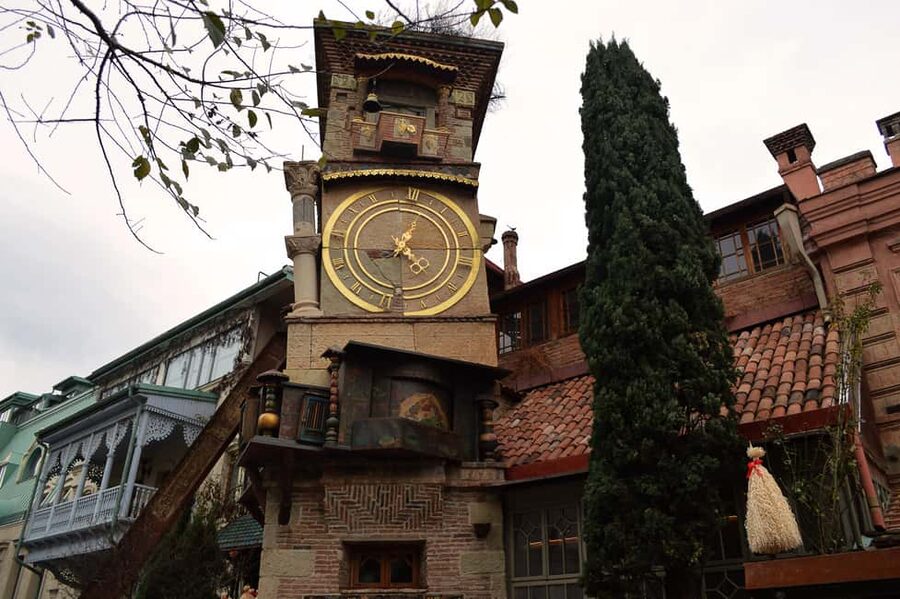
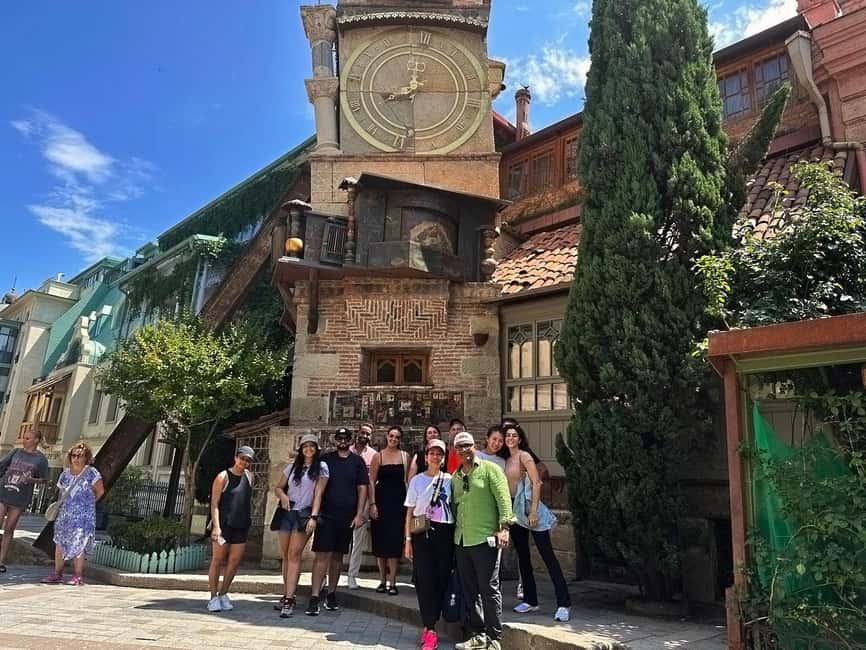
The first main stop is the Rezo Gabriadze Theatre. The visit lasts about 15 minutes and includes a photo stop, a short guided explanation, and views along the way. The theatre is associated with Georgia’s celebrated puppetry and creative arts, so it offers an immediate reminder that Tbilisi is not only about fortresses and churches.
You will not spend a long performance evening here. Instead, the theatre works as a cultural opening to the walk. Bring your camera, but keep the stop short and listen for the guide’s explanation of why the building matters.
Anchiskhati Basilica and Georgian church traditions
The next stop is Anchiskhati Basilica, one of the key early Christian sites on the route. You have around 20 minutes for a visit, photographs, and a guided look at the building and its setting.
This is one of the places where modest surroundings can be more interesting than a grand facade. The tour uses the basilica to explain Georgian Orthodox Christianity and the traditions that shaped Tbilisi. I like this part because it gives the later church stops a frame of reference.
You need to follow the dress rules here and at other churches. Women should bring a head covering, and shorts are not permitted. Photography inside the church is not allowed, so keep your camera ready for exterior views and put it away when entering.
A short 10-minute walk then brings you to the Patriarchate of Georgia. This is a brief guided stop rather than a long visit. It helps place the Orthodox Church within the country’s modern religious life, but the limited time means you should treat it as a narrated pause rather than a full tour.
The Bridge of Peace and Sioni Cathedral
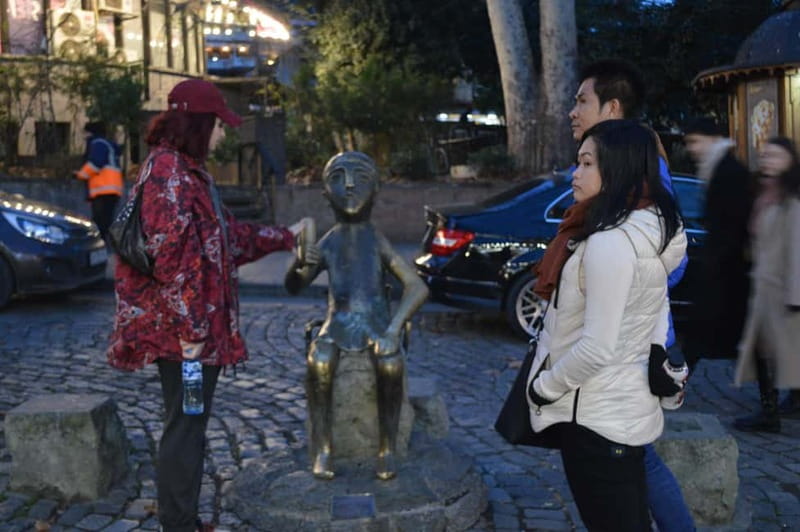
The Bridge of Peace gives the route a sharp change of mood. After older religious buildings, you reach a modern structure with open views and strong photo potential. The stop lasts about 15 minutes, with time to walk, look around, and hear how the newer city connects with the Old Town.
I like this contrast. Tbilisi is easiest to understand when you see old and new beside each other, rather than treating the historic center as a preserved set piece. The bridge also provides a natural transition toward Sioni Cathedral.
At Sioni, you have another 15-minute stop for photographs, sightseeing, and a guided visit. This is a good point to ask questions about Georgian Orthodox practice and the stories attached to important churches. Again, the church rules apply, including the head covering requirement and the ban on shorts.
The walk is not simply a checklist of buildings. The guide’s job is to show how religious landmarks sit within daily city life. The short stops work best if you stay engaged rather than rushing ahead for photographs.
A completely different kind of day:
- Tbilisi: Day Trip to Kazbegi, Gudauri, Gergeti, and Ananuri
★ 4.9 · 3,203 reviews - Highlights of Caucasus Mountains-Jinvali,Ananuri,Gudauri,Kazbegi(Group tour)
★ 5.0 · 2,682 reviews - Tbilisi: Mtskheta, Jvari, Gori and Uplistsikhe Day Tour
★ 4.9 · 2,396 reviews - From Tbilisi to Kazbegi, Ananuri, Gudauri & Gergeti
★ 4.9 · 2,278 reviews
The Tamada sculpture and Georgia’s wine culture
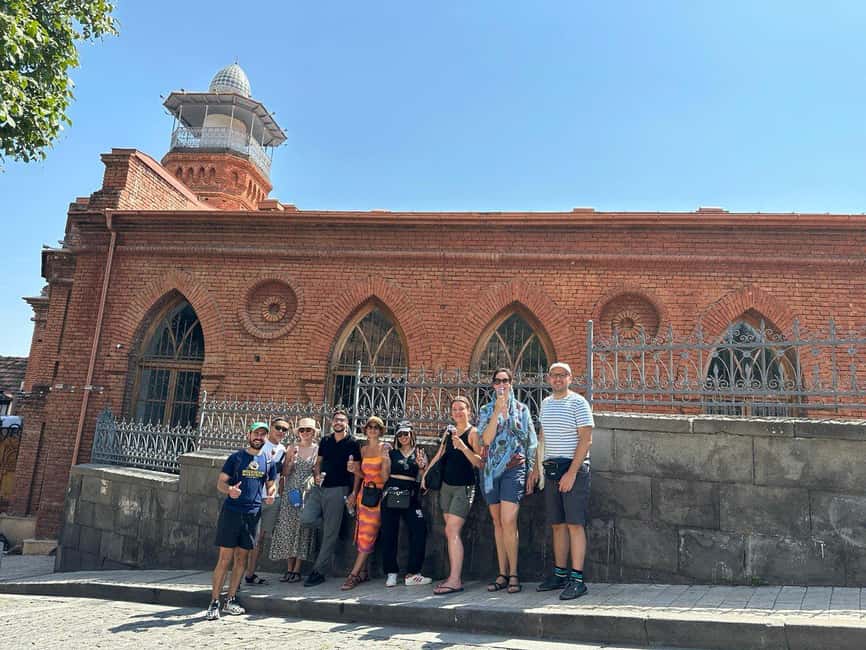
The Tamada sculpture is a small but memorable stop. The figure represents the toastmaster, a central part of Georgian social customs. You get about 10 minutes for a photo and explanation.
This is where the food and drink side of Georgian culture enters the tour before the formal tasting. The sculpture is easy to appreciate even if you know little about local customs, and it gives you a visual link between Tbilisi’s public spaces and the later wine experience.
The tour then makes a secret stop for about 20 minutes. This includes a guided wine tasting and wine-infused ice cream. The word secret means the exact tasting location is not specified in the details, so you should not book expecting a named winery or a large cellar visit.
Still, this is one of the tour’s most appealing elements. Georgia has centuries of winemaking tradition, and tasting a selection of wines gives you a more direct connection to that culture than hearing a short explanation alone. The ice cream adds a playful touch. It is unusual enough to make the tasting feel like more than a standard drink stop.
Wine tasting is for adults aged 18 and over. Bring cash, as it is listed among the useful items to carry, and remember that meals and drinks are not generally included unless specifically stated. The included tasting is part of the experience, but you should not assume that extra food, additional drinks, or bakery items are covered.
The Great Synagogue and Tbilisi’s mixed faiths
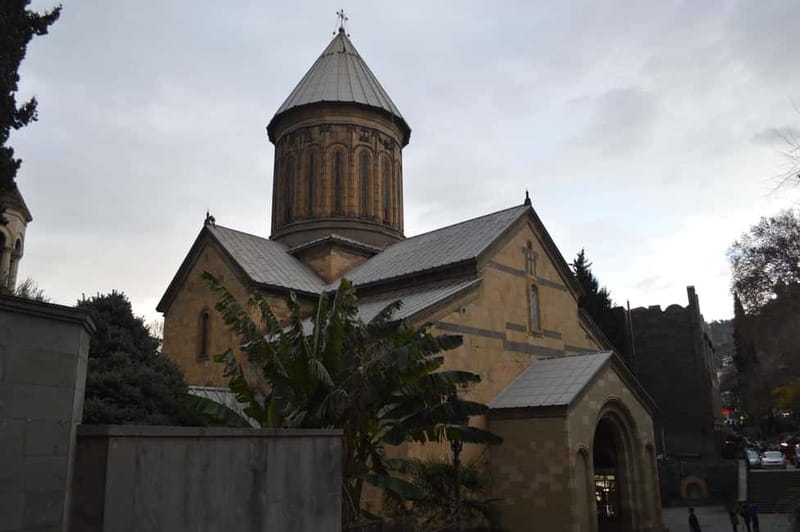
The Great Synagogue receives about 15 minutes. This stop helps explain one of the most important themes of the route: Tbilisi has long brought different religious communities into close contact.
The tour also refers to mosques, Catholic churches, Armenian churches, and Georgian Orthodox sites. Not every one appears as a separate timed stop, but the guide uses the route to show how these traditions fit together in the city.
I value this section because it moves beyond a single national story. You see Tbilisi as a place shaped by several communities, not only as the capital of Georgian Orthodoxy. The synagogue is especially useful in that wider picture, and the compact Old Town route lets you compare sacred buildings within a short afternoon.
The timing is again brief. You will get an introduction and guided context, not an extended study of the building. If a particular religious site matters deeply to you, ask the guide how much time is possible there during your private tour.
Rike Park and the cable car to Narikala
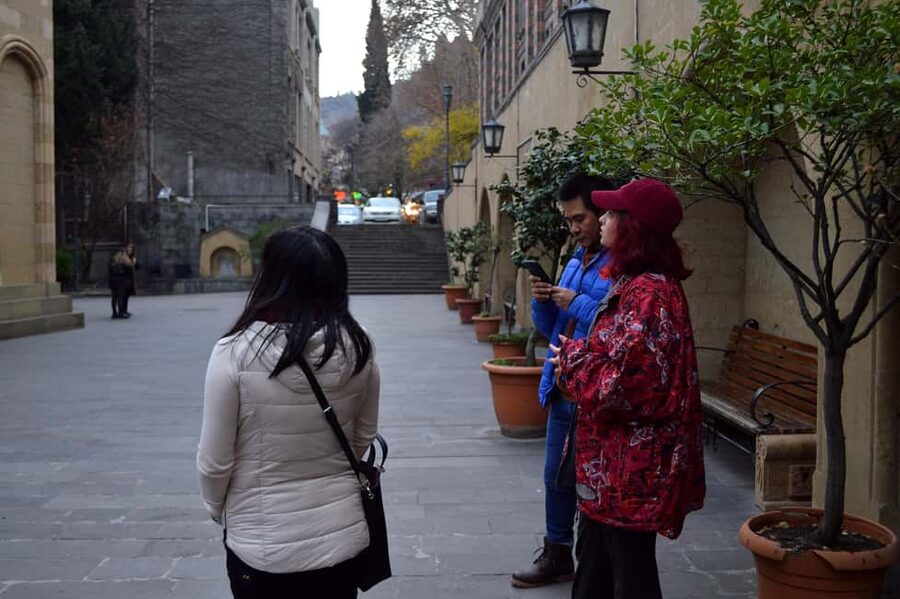
From the Old Town, the route reaches Rike Park for a 10-minute stop and cable-car ride. This is one of the tour’s most practical design choices. Instead of walking every uphill section, you gain height quickly and save energy for the views and the descent.
The ride leads toward Narikala mountain. From above, you can take in broad views across Tbilisi, including the old quarter and the surrounding hills. Bring water and wear comfortable shoes, because the cable car solves only one part of the route. You still have walking at the upper section and later on the way down.
The cable-car portion is short, listed at about 10 minutes, so it is not a leisurely ride through the whole city. It is transportation with a view, and that is exactly why it works. You get a memorable change in perspective without adding a separate transport excursion.
Kartlis Deda and the story of Mother of Georgia
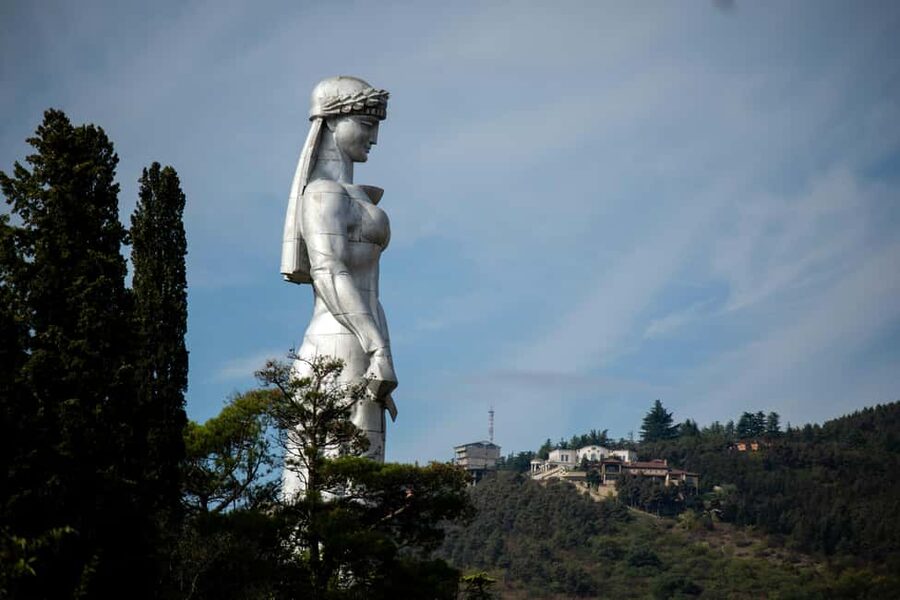
At Kartlis Deda, also called Mother of Georgia, you spend about 15 minutes on a photo stop and guided visit. The monument is one of Tbilisi’s best-known symbols, and the tour uses it to discuss the role of women in Georgian history.
That theme gives the stop more substance than a quick monument photograph. You are not only looking at a figure above the city, but also considering how women have shaped the country’s story and public identity. The supplied guide feedback suggests that this tour is strongest when the guide explains those connections in a personal, engaging way.
The location also makes the views part of the lesson. You can see why Tbilisi developed around its river valley and hills, and why the Old Town feels compact from above. Since weather affects the experience, a cloudy or rainy afternoon may reduce the reward of this section. Poor weather can lead to a different date or a full refund.
Tbilisi Central Mosque and the royal baths
The route continues to Tbilisi Central Mosque for around 15 minutes. This is another important religious stop, and it balances the Christian and Jewish sites visited earlier. The guide can help you understand the mosque’s place within the city’s long mix of faiths and communities.
The final major area is the Royal Baths, part of Tbilisi’s famous sulfur-bath district. You get another 15-minute guided stop and photo opportunity. The baths are more than attractive old buildings. They point to the city’s name, its long association with hot mineral waters, and the way public bathing helped make this area important.
You do not bathe during this tour. The stop is for sightseeing and explanation, so you should book a separate bath visit if you want that experience. The walk down from Narikala toward the baths can be tiring, especially on uneven streets, which is why the operator does not recommend the tour for people with mobility impairments.
The itinerary lists Mother of Georgia as the finish, while the meeting information says the activity ends back at the meeting point. That is a detail I would confirm when booking. It may reflect a final monument stop followed by a return arrangement, but the supplied information does not make the ending fully clear.
What the tour is worth for your afternoon
No price is provided here, so I cannot judge the exact monetary cost. I can judge what you receive: a private guide, three hours of Old Town touring, a wine tasting, wine ice cream, a cable-car ride, and a wide range of cultural stops.
That is good value if you want orientation and interpretation in one booking. You are not paying only for transport or a tasting. You are getting a connected route through Georgian Christianity, Jewish heritage, Islamic history, modern Tbilisi, local wine customs, and the city’s best-known viewpoints.
The value is weaker if you prefer long, quiet visits inside individual buildings. The schedule gives many stops only 10 or 15 minutes, and travel time counts toward the three hours. You will see a lot, but you will not study every site in detail.
Private-group format improves the value for couples, families with adult children, or small groups who want to ask questions without holding up a large crowd. The guide can also explain the pace and dress rules as you go. English and Spanish language choices make it practical for a wider range of visitors.
Who should book this Tbilisi walk
I would choose this tour for a first afternoon in Tbilisi, especially if you want the main Old Town landmarks explained in a sensible order. It suits people who like walking, short cultural visits, city views, and a little food and drink along the way.
It is also a good fit if you want to understand the city’s religious mix. The synagogue, mosque, churches, and bath district create a more rounded picture than a simple fortress-and-photo route.
You should think twice if you have mobility limitations, dislike hills, or want a slow architectural tour. Comfortable shoes, water, a camera, and cash are sensible. The tour needs good weather, and wine tasting is limited to those aged 18 or older.
Cancellation is flexible up to 24 hours before the start for a full refund, and you can reserve now and pay later. Those terms help if your Georgia schedule is still shifting, but they do not remove the need to check the starting time and meeting instructions.
Final verdict: a strong first look at Tbilisi
I would book this experience if I wanted a lively introduction to Tbilisi rather than a specialist history seminar. The best parts are the private guiding, the clear religious and cultural range, the cable-car views, and the unusual wine ice cream.
The most important choice is your walking ability. If you can manage hills and uneven streets, the route packs a great deal into three hours. If you need a slower pace, ask about adapting the private itinerary before you commit.
The praise for Teona’s passion, humor, and answers is a useful sign of what makes this tour work. With the right guide, the monuments become connected stories rather than isolated stops. Confirm the exact ending point, bring suitable church clothing, and book it as an active, compact afternoon in Tbilisi.
FAQ
How long does the Tbilisi walking tour last?
The tour lasts three hours, including travel time. Starting times depend on availability.
Where does the tour start?
Meet at 17 Ioane Shavteli Street, next to the Berikaoba monument near Ambassadori Tbilisi Hotel.
What languages are available?
The tour is available with a live guide in English or Spanish.
Is the tour private?
Yes. The experience is arranged for a private group.
Is the cable-car ride included?
Yes. The cable-car ride from Rike Park toward Narikala mountain is included.
Is wine tasting included?
Yes. A wine tasting session is included, along with wine-infused ice cream. Wine tasting is limited to people aged 18 and over.
What should I wear and bring?
Wear comfortable shoes and bring water, a camera, and cash. For church visits, women need a head covering, and shorts are not allowed. Photography inside churches is not permitted.
More Walking Tours in Tbilisi
- Tbilisi Walking Tour Including Cable Car and Traditional Bakery
★ 5.0 · 1,310 reviews - Tbilisi: City Highlights Guided Walking Tour
★ 4.9 · 1,114 reviews - Tbilisi:Evening Walking & Talking Tour with Wine & Boat Ride
★ 5.0 · 572 reviews - Tbilisi: Evening Walking Tour with Wine & Boat Ride Options
★ 5.0 · 407 reviews
Just added in Tbilisi
- Wine Tasting feel the Difference of Qvevri or Classical Wine★ 4.4 · 10 reviews
- From Tbilisi: Kakheti and Kazbegi 2-Day 4X4 Jeep Tour pack★ 5.0 · 6 reviews
- Walking Tour in Old Tbilisi – Group Tour★ 4.5 · 8 reviews
- Uforgatable Kakheti Tour with wine tasting – in Georgia★ 4.9 · 5 reviews
- From Tbilisi: Uplistsikhe Caves and Mtskheta Town Day tour★ 5.0 · 2 reviews
- Tbilisi: Vintage Fashion and Secondhand Thrifting Tour★ 5.0 · 11 reviews
- Tbilisi Airport to Gudauri, Bakuriani, Batumi, Tbilisi★ 5.0 · 3 reviews
- Private Adorable City Tour of Tbilisi★ 5.0 · 3 reviews
Wine Tours in Tbilisi, compared.
Day Trip to Kakheti Wine Region Including 9 Wine Tastings
Read our review →
Kakheti Wine Region Tour with 9 Wine Tastings
Read our review →
Kakheti Wine Region Tour with 10 Wine Tastings
Read our review →
Mtskheta Jvari Bazaar, Chronicles of Georgia & Wine
Read our review →
Mtskheta,Jvari,Bazaar,wine tasting,Chronicles of Georgia
Read our review →
Evening Walking & Talking Tour with Wine & Boat Ride
Read our review →
Evening Walking Tour with Wine & Boat Ride Options
Read our review →
Kakheti;City of Love Sighnaghi, Bodbe. KTW. Wine House Group tour
Read our review →Browse the lists this tour appears in