Reviewed · TOURS
Tbilisi: Abandoned Cinema Tour
Old cinemas tell surprising stories. Tbilisi’s abandoned cinema offers a one-hour look at a 1909 architectural masterpiece, where stone carvings, bas-reliefs, mosaics, and painted walls still survive beneath the decay. I like the focus on craftsmanship rather than a standard city walk, and I like that the experience is a private English-language tour, giving you room to ask questions and study the details.
The main consideration is the meeting information. The route begins and ends at Metro Marjanishvili, but the meeting instructions name the entrance to Metro Nadzaladevi. Contact the provider, Tinatin Goguadze, before the tour to confirm the exact place. The cinema is also not suitable for wheelchair users, and comfortable shoes matter.
In This Review
- Key Details Before You Go
- Why This Abandoned Cinema Is Worth Your Time
- Meeting the Guide Near Tbilisi’s Metro
- Entering the Grand Lobby
- What the Carvings and Mosaics Reveal
- Stories Inside a Decaying Public Building
- Photography Inside the Cinema
- Is One Hour Enough?
- What the $55 Price Includes
- Who Will Enjoy This Experience Most?
- Practical Advice for a Smooth Visit
- Should You Book the Abandoned Cinema Tour?
- FAQ
- Where does the tour meet?
- How long does the abandoned cinema tour last?
- What language is the tour offered in?
- Is this a private tour?
- What can I see inside the cinema?
- Is photography allowed?
- What should I bring?
- Is the tour suitable for wheelchair users?
Key Details Before You Go
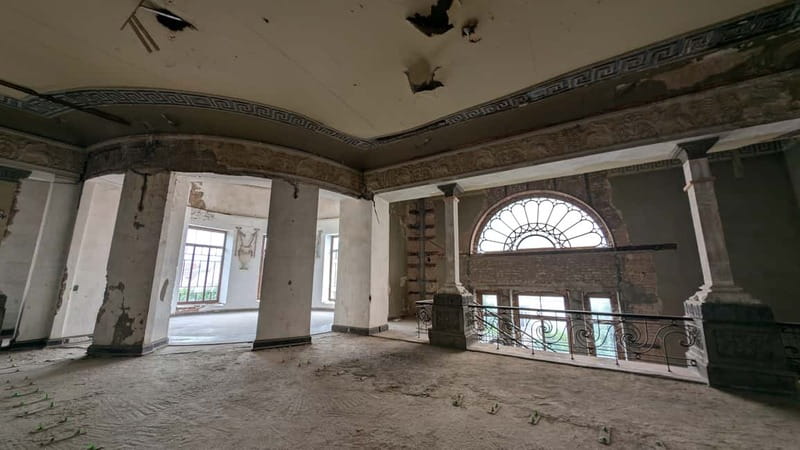
- A 1909 cinema with unusual decoration: Look for bas-reliefs, carved stone, wall paintings, floor mosaics, golden ceilings, and metal engravings.
- A one-hour private visit: The short format works well if you want a focused architectural experience rather than a full day of sightseeing.
- An English-speaking live guide: You receive historical context and stories connected to the cinema and its grand, decaying structure.
- A rare surviving site: The cinema is presented as one of only a few places of its kind in the world.
- Photography is allowed: Bring your camera or phone, but wear shoes suited to walking through an abandoned building.
- Confirm the meeting point: The tour information names both Metro Marjanishvili and Metro Nadzaladevi, so message the provider before arrival.
Why This Abandoned Cinema Is Worth Your Time
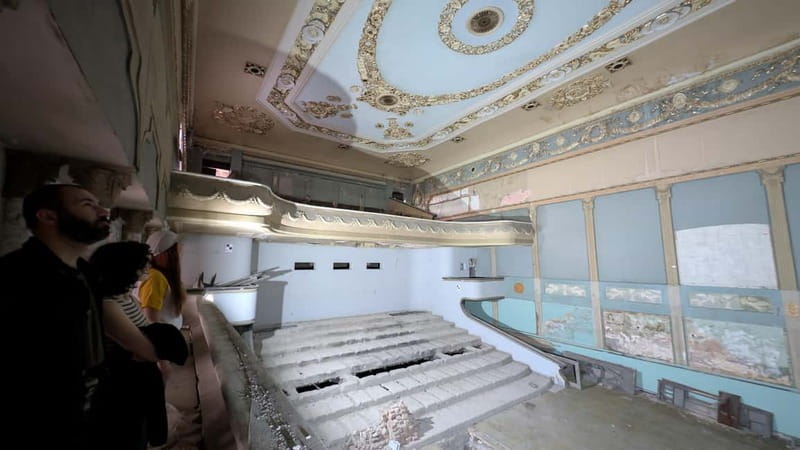
Tbilisi is known for old balconies, churches, bathhouses, and grand public buildings. This cinema adds a different piece to the city’s story: early 20th-century entertainment architecture, built with the kind of decorative care often reserved for palaces or civic halls.
The attraction is not a polished theater restored for modern performances. It is an abandoned structure, and that changes the mood. The peeling and decaying surroundings let you see how much effort went into the original design. You are not simply looking at an old cinema. You are seeing what happens when an ambitious public building loses its purpose but keeps its artistic shell.
I find that especially appealing because the decoration is the main event. The tour gives you time to notice the small work: carved surfaces, metal details, painted walls, patterned floors, and ceilings finished in gold. These are the details that are easy to miss from a quick photograph or a passing look from the street.
The building is also linked to Tbilisi’s first electronic cinema. That gives the visit a useful historical angle. The site is not only old, it represents a moment when cinema itself was a new form of entertainment and technology.
More things to do in Tbilisi:
- Tbilisi: Day Trip to Kazbegi, Gudauri, Gergeti, and Ananuri
★ 4.9 · 3,203 reviews - Day Trip to Kakheti Wine Region Including 9 Wine Tastings
★ 5.0 · 2,774 reviews - Highlights of Caucasus Mountains-Jinvali,Ananuri,Gudauri,Kazbegi(Group tour)
★ 5.0 · 2,682 reviews
Meeting the Guide Near Tbilisi’s Metro
The tour information needs careful reading before you set out. The itinerary lists Metro Marjanishvili as the starting location and return point, while the meeting instructions say the guide will meet you at the entrance of Metro Nadzaladevi.
That difference could create an avoidable problem, especially if you arrive in Tbilisi without local mobile service or are trying to fit the tour between other plans. Send a direct message to Tinatin Goguadze before the day of your visit and confirm the station, entrance, and contact details.
Once the meeting place is clear, the metro connection gives the experience a practical city-based start. You do not need to plan a long excursion outside Tbilisi. The cinema visit is designed as a compact stop, making it easy to pair with other time in the city.
The group is private, which is a real advantage in a small, detail-heavy space. You can stop when something catches your eye, ask about a carving, or request more explanation about the building without trying to keep up with a large crowd.
Entering the Grand Lobby
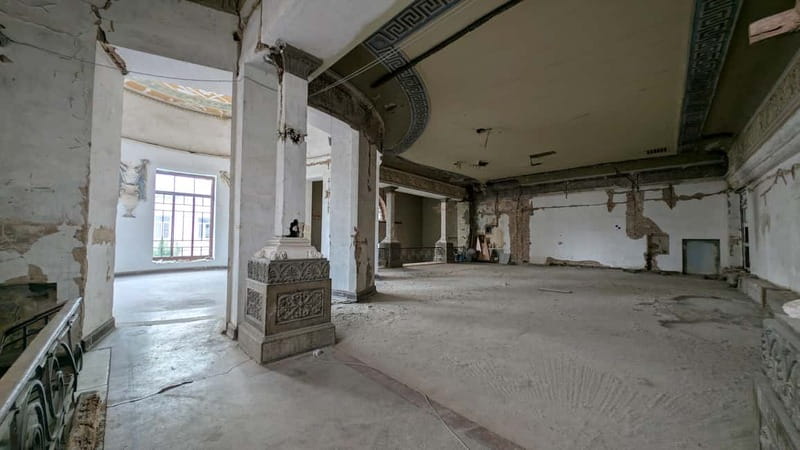
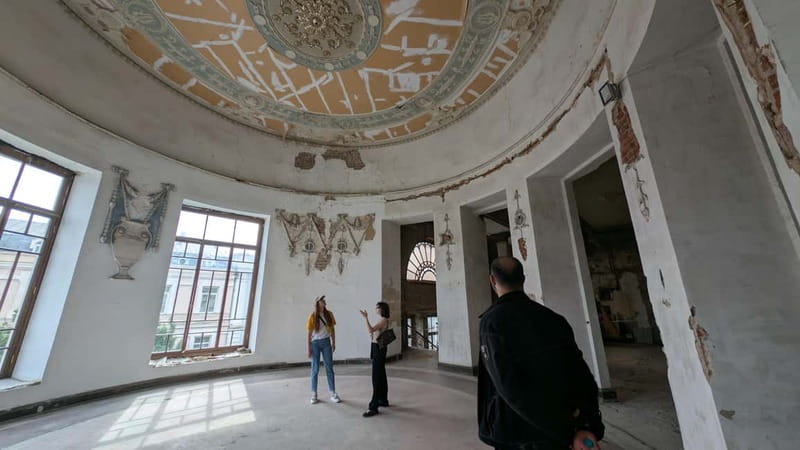
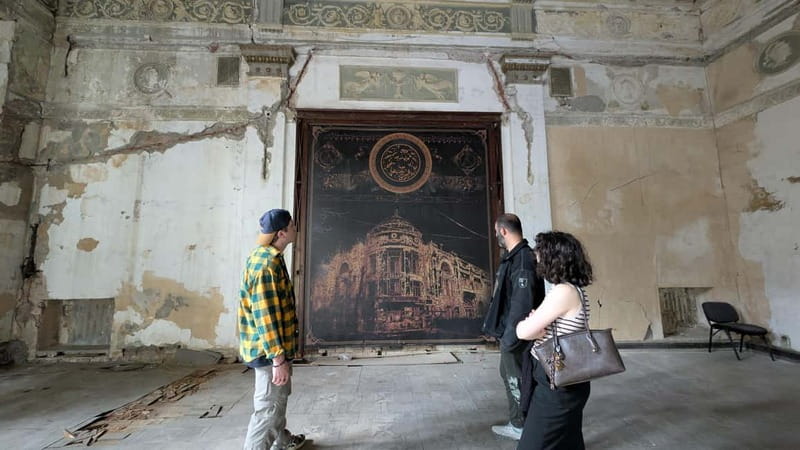
The visit begins in the cinema’s grand lobby. This is where the building’s original ambition becomes clear. Instead of a plain entrance designed only to move people toward the screening room, the lobby is presented as a decorated public space in its own right.
You can expect to see intricate bas-reliefs and stone carvings, along with wall paintings, floor mosaics, and golden ceilings. The mix of materials matters. Stone gives the building weight, mosaics add pattern underfoot, and the painted and gilded surfaces bring a ceremonial feel to a place built for moving pictures.
I would take this first section slowly. A one-hour tour is short, but the lobby may reward close looking more than hurried photography. Ask the guide to point out the details that are easy to miss, especially the metal engravings and areas where several decorative techniques appear together.
The cinema’s decay is part of what you are seeing, not an inconvenience to ignore. Surviving fragments can feel more powerful because they sit beside signs of neglect. You get a direct view of both the original craftsmanship and the passage of time.
What the Carvings and Mosaics Reveal
The bas-reliefs and stone carvings are among the strongest reasons to book this experience. They show how much attention went into the building’s surfaces. If you enjoy architecture, you will likely spend much of the hour studying texture, repeated patterns, and the way decorative work frames the interior.
The floor mosaics deserve equal attention. A mosaic is easy to treat as a background feature, yet it helped shape the first impression for anyone entering the cinema. Look down as well as up. The golden ceilings may draw your eyes immediately, but the floor patterns complete the room’s design.
Wall paintings add another layer. The information provided for the tour does not identify every artist, subject, or surviving scene, so you should not expect a full catalog of the decoration. Still, the combination of paintings, carved stone, and metalwork gives you a clear sense of the creative effort behind the building.
That is where the site feels most valuable. You are not being shown a single grand object. You are being shown a complete interior concept, with architecture and decoration working together.
A completely different kind of day:
- From Tbilisi: Kakheti Wine Region Tour with 9 Wine Tastings
★ 4.9 · 2,541 reviews - Tbilisi: Mtskheta, Jvari, Gori and Uplistsikhe Day Tour
★ 4.9 · 2,396 reviews - From Tbilisi to Kazbegi, Ananuri, Gudauri & Gergeti
★ 4.9 · 2,278 reviews - Tbilisi: Kakheti Wine Region Tour with 10 Wine Tastings
★ 5.0 · 2,160 reviews
Stories Inside a Decaying Public Building
The guide’s role is to explain the cinema’s history and the stories connected to it. Those stories give meaning to the rooms, especially when the building’s current condition leaves parts of its past unclear.
The cinema offers a glimpse into early 20th-century innovation. In 1909, a purpose-built cinema represented a modern kind of public entertainment. The building’s decorative style, however, looks back toward older ideas of grandeur. That contrast is one of the most interesting parts of the visit: new technology housed in a setting made to feel permanent and impressive.
The abandoned condition also raises natural questions. What happened to the cinema? How long did it operate? Which parts of the original building remain? The tour is intended to address the history and stories of the site, but the supplied details do not promise a complete timeline or a technical lecture. If a particular part of the cinema’s past matters to you, ask the guide directly.
I appreciate that the experience appears to keep its attention on the structure rather than padding the hour with unrelated sightseeing. You come for the cinema, and the tour keeps returning you to its materials, rooms, and surviving decoration.
Photography Inside the Cinema
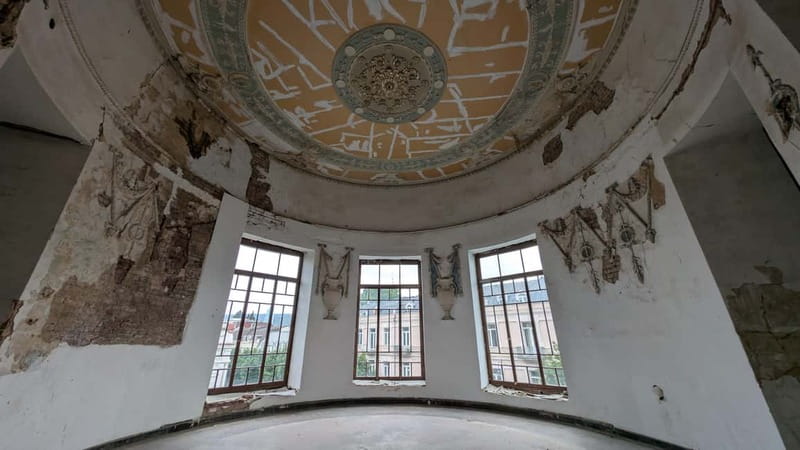
Photography is allowed, which is good news for anyone drawn to architectural detail. The lobby’s carvings, mosaics, paintings, ceilings, and metal engravings offer plenty of subjects without needing a staged photo stop.
Try to photograph the building as a whole as well as its smaller parts. A close image of a carving can show its workmanship, but a wider view explains how that detail fits into the lobby. The contrast between decorated surfaces and the building’s decay may also be an important part of your record of the visit.
Keep your camera work sensible. This is an abandoned site, not a modern museum arranged for easy movement. Comfortable shoes are specifically recommended, and you should pay attention to where you walk rather than stepping backward for a better picture.
The hour passes quickly. If photography is your main reason for booking, leave enough time to listen to the guide. The stories behind the structure are what turn a collection of attractive surfaces into a meaningful visit.
Is One Hour Enough?
For this experience, one hour is a sensible length. The tour concentrates on one cinema rather than trying to combine it with a broad walking tour of Tbilisi. You can see the main interior features, hear the site’s story, and return to the metro area without giving up half a day.
The short duration also limits what the tour can cover. You should not expect an extended architectural survey, a full neighborhood walk, or a long visit through multiple buildings. The information specifically describes a focused cinema tour, with a photo stop, guided visit, and free time within the one-hour schedule.
That makes it a good fit for a busy city plan. You can place it between other appointments or sightseeing stops, provided you allow enough time to reach the confirmed meeting point.
The private format helps the short schedule feel less rushed. A large group can lose minutes waiting for people to gather or hear the guide. With a private group, your pace can remain more direct.
What the $55 Price Includes
At $55 per person, this is not the cheapest way to spend an hour in Tbilisi. The value depends on what you want from the visit. If you are mainly looking for a general introduction to the city, the price may feel high for such a short activity.
The cost makes more sense if you care about unusual architecture and prefer a private experience. You are paying for access to a rare abandoned cinema, an English-speaking live guide, and an explanation of the building’s history and decorative work. The visit includes the cinema tour, not just an exterior viewing.
The listed inclusions cover the major features: bas-reliefs, stone carvings, wall paintings, floor mosaics, metal engravings, and golden ceilings. For an architecture fan, that is a more focused use of money than a generic sightseeing stop.
You should also note what is not included. This is not a broader guided walking tour of Tbilisi. The experience is centered on the cinema, so book it for the building itself rather than expecting a city orientation.
Who Will Enjoy This Experience Most?
I would recommend this tour most strongly to people who enjoy old buildings, decorative arts, photography, and places with a strong sense of time. You do not need to be an architectural expert. Curiosity is enough, especially if you like asking how a public building once worked and why its design looked the way it did.
It also suits visitors who have already seen some of Tbilisi’s better-known sights and want something less standard. The cinema offers a different view of the city, one tied to entertainment, technology, and public design.
The private group is useful for couples, friends, or families who prefer a more personal pace. An English-speaking guide makes the tour accessible to those who want explanations rather than simply wandering through the building.
I would hesitate to recommend it if you need step-free access or cannot walk comfortably. The experience is not suitable for wheelchair users, and comfortable shoes are required. I would also skip it if you dislike abandoned or decaying places. The condition of the building is central to its character.
Practical Advice for a Smooth Visit
Wear sturdy, comfortable shoes. This is the clearest practical tip in the tour information, and it matters more here than it would on a standard indoor museum visit.
Confirm the meeting point in writing. The two metro references are the one confusing detail in the arrangements. Ask Tinatin Goguadze to confirm whether you should meet at Metro Marjanishvili or Metro Nadzaladevi, and make sure the guide has a reliable way to contact you.
Plan to arrive ready to walk and listen. Since the tour lasts only one hour, you will get more from it if you do not spend the first part sorting out directions or equipment.
Photography is permitted, so bring a phone or camera if you care about architectural images. Alcohol and drugs are not allowed, and the site should be treated with care.
Free cancellation is available up to 24 hours before the tour for a full refund. You can also reserve now and pay later, which helps if your Tbilisi schedule is still changing.
Should You Book the Abandoned Cinema Tour?
Book it if you want a short, private encounter with one of Tbilisi’s most unusual interiors. The strongest reasons are the 1909 setting, the first electronic cinema connection, the surviving carvings and mosaics, and the chance to see early cinema architecture in a decaying state.
Skip it if you want a full city tour, need wheelchair access, or prefer restored buildings with clear visitor facilities. Before paying, settle the metro meeting point with the provider.
For the right visitor, $55 buys more than a photo stop. It gives you an hour to look closely at work that was made to impress a crowd long ago, then hear the stories that still cling to the walls.
FAQ
Where does the tour meet?
The meeting instructions say the guide will meet you at the entrance of Metro Nadzaladevi. The itinerary also lists Metro Marjanishvili as the starting and return location, so contact Tinatin Goguadze to confirm the exact meeting point.
How long does the abandoned cinema tour last?
The tour lasts one hour, including the guided visit, photo stop, and free time at the cinema.
What language is the tour offered in?
The live tour guide speaks English.
Is this a private tour?
Yes. The experience is organized for a private group.
What can I see inside the cinema?
You can see bas-reliefs, stone carvings, wall paintings, floor mosaics, golden ceilings, and metal engravings.
Is photography allowed?
Yes, photography is allowed inside the site.
What should I bring?
Bring comfortable shoes for walking. A camera or phone is also useful because photography is permitted.
Is the tour suitable for wheelchair users?
No. The experience is not suitable for wheelchair users.
Just added in Tbilisi
- Wine Tasting feel the Difference of Qvevri or Classical Wine★ 4.4 · 10 reviews
- From Tbilisi: Kakheti and Kazbegi 2-Day 4X4 Jeep Tour pack★ 5.0 · 6 reviews
- Walking Tour in Old Tbilisi – Group Tour★ 4.5 · 8 reviews
- Uforgatable Kakheti Tour with wine tasting – in Georgia★ 4.9 · 5 reviews
- From Tbilisi: Uplistsikhe Caves and Mtskheta Town Day tour★ 5.0 · 2 reviews
- Tbilisi: Vintage Fashion and Secondhand Thrifting Tour★ 5.0 · 11 reviews
- Tbilisi Airport to Gudauri, Bakuriani, Batumi, Tbilisi★ 5.0 · 3 reviews
- Private Adorable City Tour of Tbilisi★ 5.0 · 3 reviews
Tours, compared.
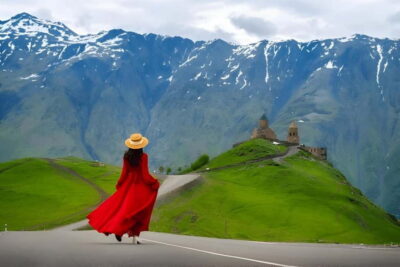
Highlights of Caucasus Mountains-Jinvali,Ananuri,Gudauri,Kazbegi(Group tour)
Read our review →
Kakheti Wine Region Tour with 9 Wine Tastings
Read our review →
Mtskheta, Jvari, Gori and Uplistsikhe Day Tour
Read our review →
Kakheti Wine Region Tour with 10 Wine Tastings
Read our review →
Tbilisi Walking Tour Including Cable Car and Traditional Bakery
Read our review →