Reviewed · TOURS
Soviet Tour – Hidden Tbilisi
Soviet Tbilisi rewards curious eyes. This small-group tour takes you beyond the usual old-town route to unusual buildings, monuments, and places tied to Georgia’s Soviet past. I like the way it joins striking architecture with personal stories, and I like that guides such as Giorgi, Irakli, and David explain how these places still fit into modern Georgia.
The maximum group size of six should make questions easy and keep the outing personal. Air-conditioned transport also matters, since the stops are spread across Tbilisi rather than packed into one walkable district. The main drawback is timing: it is advertised at about three to four hours, but one detailed account ran close to five hours, so you should leave room in your day.
In This Review
- Key points to know before booking
- Why Soviet history changes the way you see Tbilisi
- Beginning at Rose Revolution Square
- The Bank of Georgia: bold form with a practical purpose
- Chronicles of Georgia and the suburban panorama
- Stalin’s underground printing house
- Personal stories make the history easier to grasp
- The optional Soviet car museum
- What $99 means in practical value
- Who will enjoy this tour most
- Booking details and a few smart tips
- Should you book Soviet Tour: Hidden Tbilisi?
- FAQ
- Where does the Soviet Tour: Hidden Tbilisi begin?
- Where does the tour end?
- How long does the tour take?
- How many people can join the tour?
- Is transportation included?
- Is admission included at every stop?
Key points to know before booking
- The Bank of Georgia building has a practical design reason: its unusual stacked form is more than a bold Soviet-era shape.
- Chronicles of Georgia offers wide city views: the monumental columns provide a strong example of Socialist monumentalism.
- Stalin’s underground printing house adds a human scale: this museum connects political history with secret work, propaganda, and resistance.
- The tour reaches places you likely would not find by chance: the stops are spread around Tbilisi and are easier to visit by vehicle.
- Guide quality is a major part of the experience: Giorgi, Irakli, David, and George are praised for clear explanations and flexible conversation.
- A Soviet car museum may be available as an extra stop: one account describes restored cars and bikes as an excellent addition.
Why Soviet history changes the way you see Tbilisi
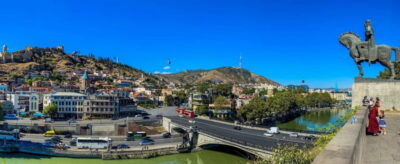
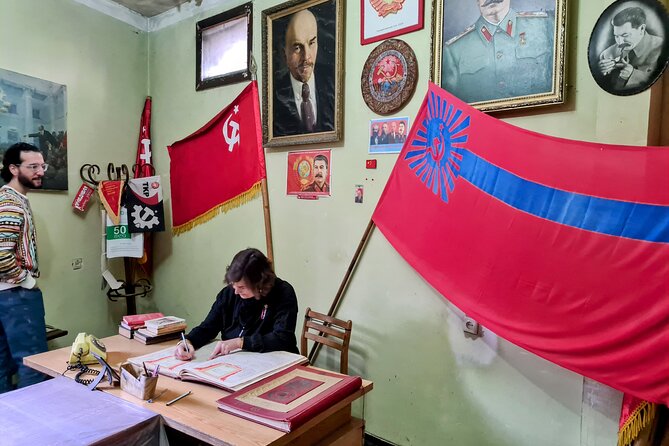
Tbilisi is often introduced through its old lanes, sulfur baths, balconies, churches, and hilltop views. Those sights matter, but they tell only part of the city’s story. This tour shifts your attention to the twentieth century, when Soviet planning, political control, public art, and state architecture altered the city in visible and less visible ways.
I like this approach because it treats architecture as evidence. A building is not only a place to photograph. Its shape may reveal how Soviet institutions worked, what they wanted citizens to see, or how the city was reorganized around public administration and ideology.
The tour also helps you connect large political events with everyday life. Guides explain how Soviet influence affected buildings, monuments, public use, and culture. One especially useful detail from the experience is the mention of cartoon characters being banned in some communist countries. Small facts like that can make a major political system easier to understand.
You travel with a professional local guide who has a strong interest in Georgian and Soviet history. The names attached to especially well-praised tours include Giorgi, Irakli, David, and George. Their reported strengths are different but complementary: clear communication, strong background stories, patience with questions, and a willingness to adjust the route when time allows.
More things to do in Tbilisi:
- Tbilisi: Day Trip to Kazbegi, Gudauri, Gergeti, and Ananuri
★ 4.9 · 3,203 reviews - Day Trip to Kakheti Wine Region Including 9 Wine Tastings
★ 5.0 · 2,774 reviews - Highlights of Caucasus Mountains-Jinvali,Ananuri,Gudauri,Kazbegi(Group tour)
★ 5.0 · 2,682 reviews
Beginning at Rose Revolution Square
The meeting point is at 2 Rose Revolution Square, close to public transportation. You then travel in an air-conditioned vehicle, with the tour ending back at the same meeting point.
That setup is practical. Tbilisi’s Soviet-era sights are scattered across the city, and trying to link them by public transport would take time away from the places themselves. A vehicle also makes the tour more useful on a hot day or when you want a history outing without a long series of uphill walks.
The group limit is six people. I see this as one of the tour’s strongest features. A large bus can make architectural commentary feel distant and rushed. With six or fewer, you can ask why a building looks the way it does, stop to clarify a political point, or request more detail about a place that catches your attention.
The timing needs a little care. The stated duration is approximately three to four hours, and the listed stops add up to about three hours and 25 minutes before accounting for driving. One account described a five-hour outing, with five Soviet-related places and conversations with two historians. That may reflect extra stops, traffic, or a guide allowing more time. I would avoid booking a tight afternoon appointment afterward.
The Bank of Georgia: bold form with a practical purpose
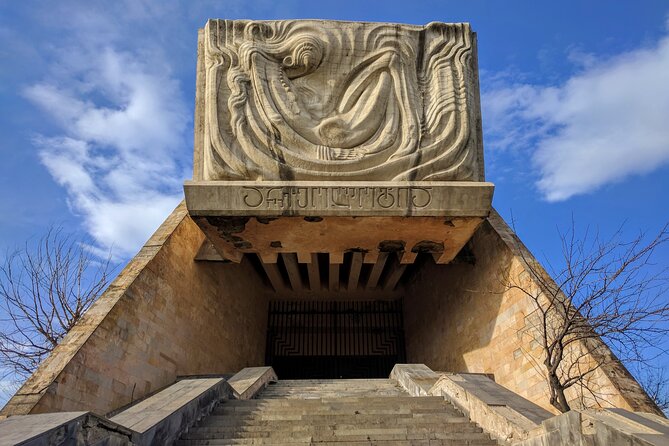
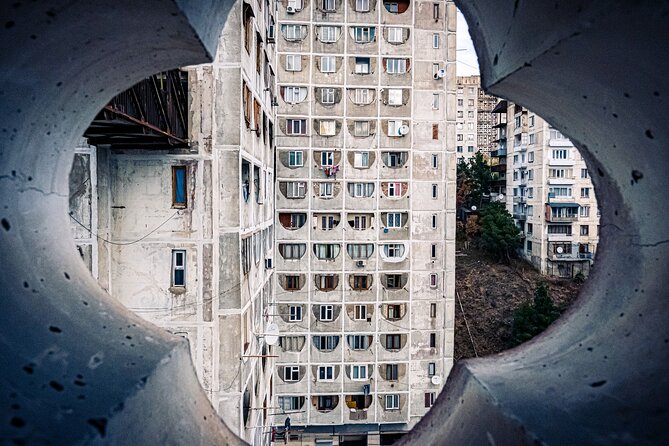
The head office of the Bank of Georgia is one of the tour’s most memorable architectural stops. It is frequently placed among the top examples of Soviet architecture, and its shape immediately explains why.
The building is not presented simply as an odd-looking office block. Its form had a practical reason, which gives the stop more substance than a quick photo opportunity. Your guide can help you look at the building as a solution to space, structure, and institutional needs, rather than as a strange object dropped into the city.
You have about 15 minutes here, and admission is free. That is enough for an explanation, photographs, and a closer look at the building’s arrangement. It is not a museum visit, so do not expect a long indoor presentation. The value comes from the guide’s interpretation and from seeing a major Soviet-era design in its urban setting.
I would pay attention to how the building relates to its surroundings. Soviet architecture often aimed to project order, power, or progress. Here, the unusual structure gives you a useful starting point for discussing how that ambition could produce architecture that was both functional and theatrical.
Chronicles of Georgia and the suburban panorama
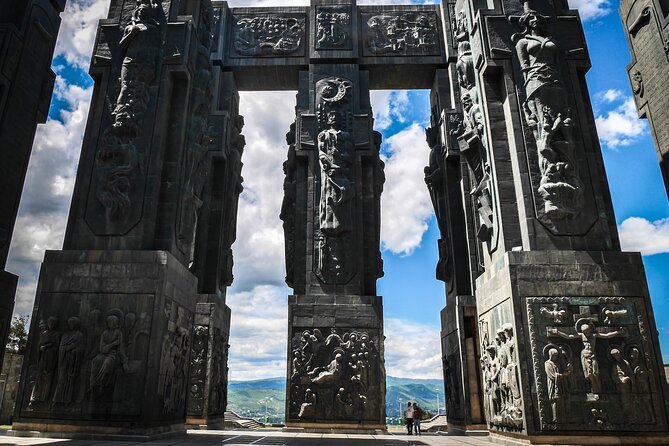
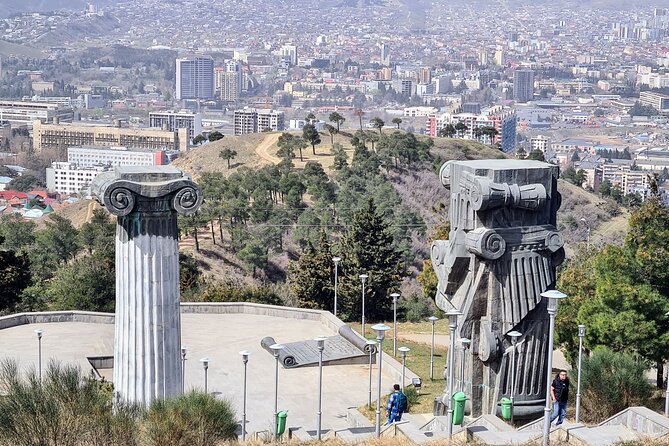
The Chronicles of Georgia is often called the Stonehenge of Tbilisi. The nickname is easy to remember, but the monument deserves a more precise look. Its tall stone columns and carved surfaces are an example of Socialist monumentalism, a style that used scale and public placement to communicate historical and political ideas.
You spend about 30 minutes here, with no admission fee. The site also offers a broad panorama of Tbilisi’s suburbs, giving the stop a second purpose. You are not only looking at a monument. You are also seeing how the city spreads beyond its historic center.
This is one of the places where the tour’s vehicle-based format pays off. The monument is not part of the standard old-town circuit, and it can be awkward to fit into a short independent visit. With a guide, you get context while standing among the columns rather than trying to decode the site from a few lines in a guidebook.
The setting may appeal to photographers, but the history matters more than the scale alone. Ask your guide how the monument reflects Soviet ideas about public memory and national stories. The stop works best when you compare the monument’s grand message with Georgia’s later political and cultural identity.
A completely different kind of day:
- From Tbilisi: Kakheti Wine Region Tour with 9 Wine Tastings
★ 4.9 · 2,541 reviews - Tbilisi: Mtskheta, Jvari, Gori and Uplistsikhe Day Tour
★ 4.9 · 2,396 reviews - From Tbilisi to Kazbegi, Ananuri, Gudauri & Gergeti
★ 4.9 · 2,278 reviews - Tbilisi: Kakheti Wine Region Tour with 10 Wine Tastings
★ 5.0 · 2,160 reviews
Stalin’s underground printing house
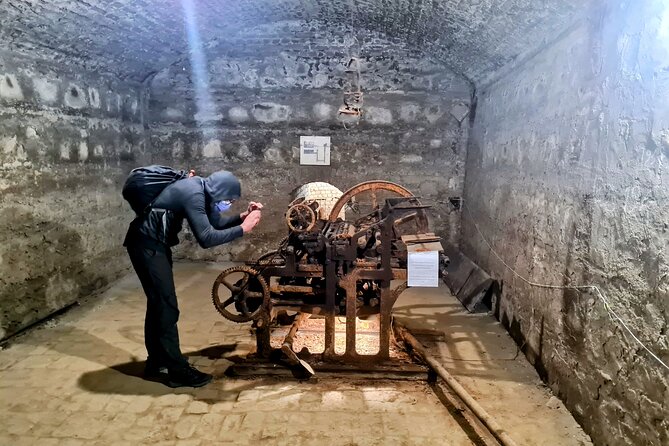
The J. Stalin Underground Printing House Museum gives the tour its most direct link to revolutionary activity. This is an underground printing house where Stalin and his supporters produced plans and propaganda leaflets.
You have about 40 minutes here, and admission is included. Compared with the quick architectural stop at the Bank of Georgia, this is a more focused museum visit. The underground setting makes the history feel practical and secretive. Political movements depend on communication, and a printing operation shows how ideas were produced, copied, and spread.
I find this stop valuable because it moves the tour away from monumental buildings and into political action. You are not only studying what the Soviet period looked like after it took shape. You are also looking at an earlier stage of revolutionary organizing and propaganda.
The experience may feel more intense than the architecture stops. If your interest is limited to design, this museum could be less immediately appealing. If you want to understand how political movements build support and control messages, it is likely to be one of the most meaningful parts of the day.
A guide can also help you place Stalin within Georgia’s own history rather than treating him as a distant Soviet figure. That local connection is important. The museum is not just about a famous leader. It is about the people, methods, and risks behind underground political work.
Personal stories make the history easier to grasp
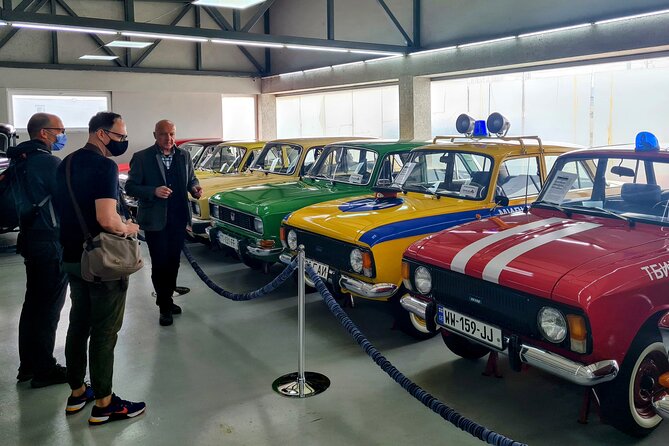
The strongest praise for this experience centers on the guides. That is significant because Soviet history can become a stream of dates, labels, and heavy political terms. A good guide turns those facts into a conversation about buildings, public life, and choices.
Giorgi is described as taking visitors to five places with Soviet characteristics, explaining how each represented a different effect of the period on architecture and use. He also introduced two historians connected with the places visited. Those conversations added personal views about life under Soviet rule and how people understand the world around them now.
Irakli is praised for answering questions and explaining both Georgian history and the Soviet period. David is described as offering relevant background stories about architecture and its connection to historic and modern Georgia. George is noted for friendly communication before the tour, a steady flow of information, and flexibility when the group wanted to consider something outside the planned route.
These details help you set realistic expectations. The experience depends partly on who leads it and how much you engage. I would arrive with a few questions ready. Ask about how a building was used, how ordinary people experienced the period, or which Soviet-era features remain in daily use.
The guide may also add a personal touch. One particularly memorable account included a surprise khachapuri filled with beans at the end of the trip. That is not listed as a standard inclusion, so you should not book expecting food. Still, it shows the kind of warm, locally grounded gesture that can turn a formal history tour into a more personal outing.
The optional Soviet car museum
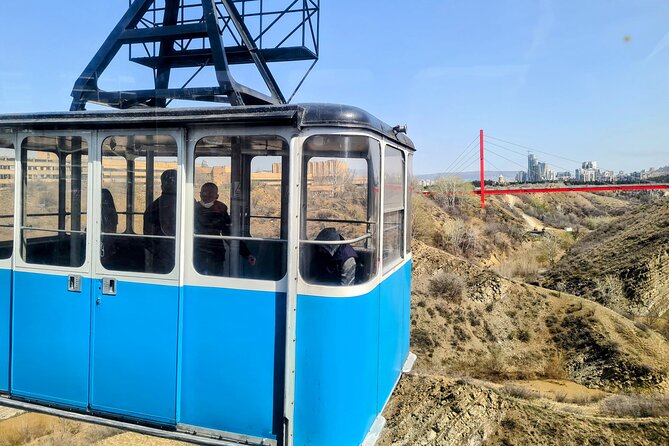
One account included an additional stop at a Soviet car museum, with restored cars and bikes. This is not part of the clearly listed core itinerary, so treat it as a possible extra rather than a guaranteed feature.
If it is available, the museum could broaden the tour in a useful way. Cars and bikes show how state production, design, status, and daily movement appeared outside official monuments. Restored vehicles also offer an easier entry point for anyone who is interested in objects and technology more than political theory.
Ask the guide about the extra stop when you meet. You will want to know how it affects the duration and whether it replaces or adds to another location. Since one outing already lasted close to five hours, an added museum could make the day substantially longer.
What $99 means in practical value
The price is $99 per person. That is not a budget sightseeing ride, so the value depends on what you want from a tour.
You are paying for a small group, private vehicle transport between scattered sights, an English-speaking local guide, and admission to the underground printing house. The Bank of Georgia and Chronicles of Georgia do not charge admission, but reaching them efficiently and understanding their design is the point of the service.
For two to six people, the price can make sense if you value direct conversation and specialist subject matter. The group limit is much smaller than a standard city tour, and the topic is narrow enough that a general sightseeing guide may not cover it with the same attention.
The price is harder to justify if you only want a quick look at Soviet buildings. You could see some exterior sites independently, although you would lose the transport, historical explanation, and access to the underground museum. I would book this for the interpretation, not simply for the number of stops.
Group discounts are available, which may improve the per-person cost for a larger booking. Mobile tickets are also offered, and confirmation arrives at booking. The experience is available in English.
Who will enjoy this tour most
I would recommend it first to anyone interested in Soviet history, political architecture, or the way modern Georgia was shaped by the twentieth century. It suits people who have already seen Tbilisi’s central sights and want a different angle on the city.
It also works well for visitors who enjoy asking questions. The guides receive strong praise for their conversation and flexibility, and a small group gives you room to follow an unexpected topic.
You do not need to be an architecture specialist. The buildings and monuments are visually unusual, while the guide supplies the background. The tour can also suit history-minded families, provided everyone is comfortable with political subjects and an underground museum.
I would think twice if you prefer a relaxed walking tour with cafés and old-town streets. This is a vehicle outing built around scattered sites. The subject is serious, and the tour may run longer than the advertised three to four hours.
Booking details and a few smart tips
The tour starts and ends at 2 Rose Revolution Square. Transfers to and from the meeting point are not included, so plan your own way there and back. The meeting point is near public transportation.
You can cancel for a full refund if you do so at least 24 hours before the start time. Changes or cancellations made less than 24 hours before the start time are not accepted for a refund.
Confirmation is provided when you book. Most people can take part, and the group can include no more than six participants. Since the route crosses the city and may include extra conversation or an optional museum, I would keep the rest of the day open.
A simple plan will improve the experience:
- Bring questions about Soviet architecture and daily life.
- Allow more than four hours if your schedule is tight.
- Ask whether the Soviet car museum can be added.
- Wear comfortable shoes for the monument and museum stops.
- Keep the small group format in mind when comparing prices.
Should you book Soviet Tour: Hidden Tbilisi?
Book it if you want Tbilisi explained through unusual buildings, political memory, and local stories rather than only through its famous historic center. The combination of the Bank of Georgia, Chronicles of Georgia, and Stalin’s underground printing house gives the tour a clear arc, from monumental public design to private political work.
The best reason to choose it is the guide-led interpretation. Giorgi, Irakli, David, and George are praised for strong explanations, friendly communication, and flexibility. The main caution is time. Expect the possibility of a longer outing, especially if you add the Soviet car museum or spend extra time talking.
At $99, it is a specialist tour rather than a cheap orientation ride. For a small group that wants a serious but approachable look at Georgia’s Soviet past, I think the price can be fair. For a quick checklist of sights, it is probably more than you need.
FAQ
Where does the Soviet Tour: Hidden Tbilisi begin?
It begins at 2 Rose Revolution Square, Tbilisi 0108, Georgia.
Where does the tour end?
The activity ends back at the meeting point at 2 Rose Revolution Square.
How long does the tour take?
The listed duration is approximately three to four hours. One detailed experience lasted about five hours, so you should allow extra time.
How many people can join the tour?
The tour has a maximum of six travelers.
Is transportation included?
An air-conditioned vehicle is included for the tour. Transport to and from the meeting point is not included.
Is admission included at every stop?
Admission to the underground printing house museum is included. The Bank of Georgia and Chronicles of Georgia are listed with free admission.
Just added in Tbilisi
- Wine Tasting feel the Difference of Qvevri or Classical Wine★ 4.4 · 10 reviews
- From Tbilisi: Kakheti and Kazbegi 2-Day 4X4 Jeep Tour pack★ 5.0 · 6 reviews
- Walking Tour in Old Tbilisi – Group Tour★ 4.5 · 8 reviews
- Uforgatable Kakheti Tour with wine tasting – in Georgia★ 4.9 · 5 reviews
- From Tbilisi: Uplistsikhe Caves and Mtskheta Town Day tour★ 5.0 · 2 reviews
- Tbilisi: Vintage Fashion and Secondhand Thrifting Tour★ 5.0 · 11 reviews
- Private Adorable City Tour of Tbilisi★ 5.0 · 3 reviews
- Tbilisi Airport to Gudauri, Bakuriani, Batumi, Tbilisi★ 5.0 · 3 reviews
Tours, compared.

Highlights of Caucasus Mountains-Jinvali,Ananuri,Gudauri,Kazbegi(Group tour)
Read our review →
Kakheti Wine Region Tour with 9 Wine Tastings
Read our review →
Mtskheta, Jvari, Gori and Uplistsikhe Day Tour
Read our review →
Kakheti Wine Region Tour with 10 Wine Tastings
Read our review →
Tbilisi Walking Tour Including Cable Car and Traditional Bakery
Read our review →