
Reviewed · DAY TRIPS TO ARMENIA
Private Visit to Armenia from Tbilisi, HAghpat, Sanahin, Akhtala
Ancient Armenia is only a day trip away. This private excursion from Tbilisi combines three important sites in Lori, with the freedom of a car reserved for your own group. I like the UNESCO-listed Haghpat and Sanahin monasteries, and I like that private transport removes the hassle of managing a shared group. The main drawback is the tight schedule: about eight hours includes the drive, so each major stop gets roughly one hour.
You should also plan for lunch on your own, since it is not included. The itinerary begins at 9:00 am, and the tour includes an air-conditioned vehicle, pickup, and admission where specified. The experience has a perfect 5 rating from two submitted reviews, with praise for the scenery and the way Zurab explained the ancient history.
This is a good choice if you want to see Armenia from Tbilisi without arranging separate transport. It is less suitable if you prefer long, quiet visits at each monastery or want a full meal and extensive time at every ruin.
In This Review
- Key points to know before you book
- Crossing from Tbilisi into Armenia for the day
- Haghpat, the first great monastery stop
- Sanahin and the father-son legend
- Akhtala, fortress walls and copper country
- What private transportation adds to the price
- The guide’s role in making old stones readable
- Who will enjoy this Armenian day trip most
- Practical planning for the 9:00 am departure
- Should you book the Haghpat, Sanahin, and Akhtala tour?
- FAQ
- What time does the tour start?
- How long does the experience last?
- Is transportation included?
- Are Haghpat, Sanahin, and Akhtala admission fees included?
- Is lunch included?
- Can I cancel for a full refund?
Key points to know before you book
- Three Armenian sites in one day: Visit Haghpat, Sanahin, and Akhtala in the Lori district.
- A private vehicle: Your own group travels together in air-conditioned private transportation.
- Two monasteries with a shared story: Haghpat and Sanahin are closely linked, and legend connects their construction to a father and son.
- A UNESCO connection: Haghpat and Sanahin are recognized for their important medieval architecture and religious heritage.
- A short but useful schedule: Each listed stop takes about one hour, leaving the rest of the eight-hour day for travel.
- Lunch is not included: Bring money and allow time for your own meal.
Crossing from Tbilisi into Armenia for the day
The tour starts at 9:00 am in Tbilisi and lasts about eight hours. That makes it a compact border-crossing excursion rather than a slow Armenian history tour. You get three major stops, but the road time between Georgia and northern Armenia takes a meaningful part of the day.
The private format matters here. You are not working around strangers, a large coach, or a fixed group rhythm. Your group has the vehicle to itself, which should make the long stretches between sites more comfortable and gives the outing a more personal feel.
The provided details do not specify the exact pickup point, border procedure, vehicle model, or driving time in each direction. Confirm those points when booking, especially if you need hotel pickup or have questions about the Armenia-Georgia crossing. Your booking confirmation is issued at the time of reservation.
The setting is also part of the appeal. One submitted review praised the Georgian scenery and the guide’s explanation of ancient history. That combination, changing views from the road and stories at the monuments, is what gives this day more value than simply ticking off three addresses.
Still, keep your expectations practical. An eight-hour tour cannot offer an unhurried examination of every chapel, tomb, carving, and wall. You are paying for access to a difficult-to-arrange cluster of sites, not for a full archaeological study.
More day trips into Armenia:
- Day Trip to Armenia Including Homemade Lunch
★ 5.0 · 1,162 reviews - From Tbilisi: Day Trip to Armenia with Homemade Lunch
★ 4.9 · 310 reviews - Discover Armenia: Tbilisi-Haghpat-Dilijan-Sevan-Yerevan-Tbilisi
★ 4.5 · 162 reviews
Haghpat, the first great monastery stop
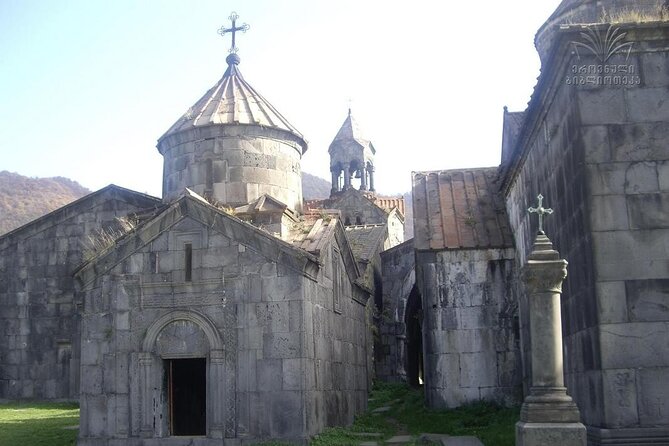
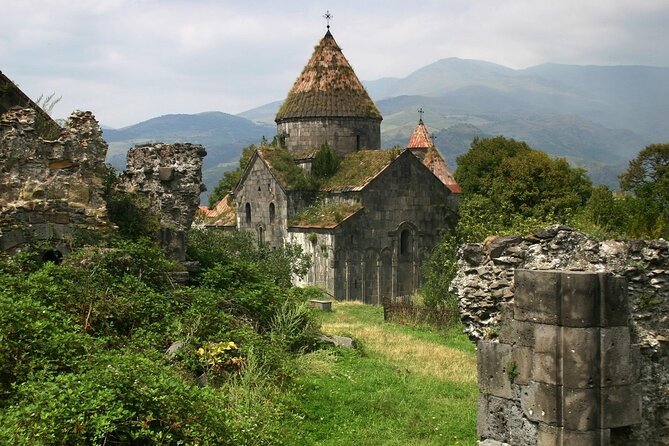
Haghpat is the tour’s first visit and receives about one hour. Founded in 976 by Queen Khosrovanush, wife of King Ashot III of Armenia, the monastery gives you a clear introduction to medieval Armenian religious architecture.
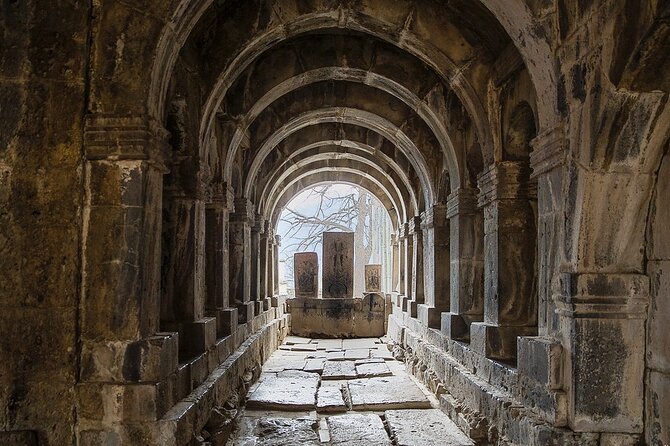
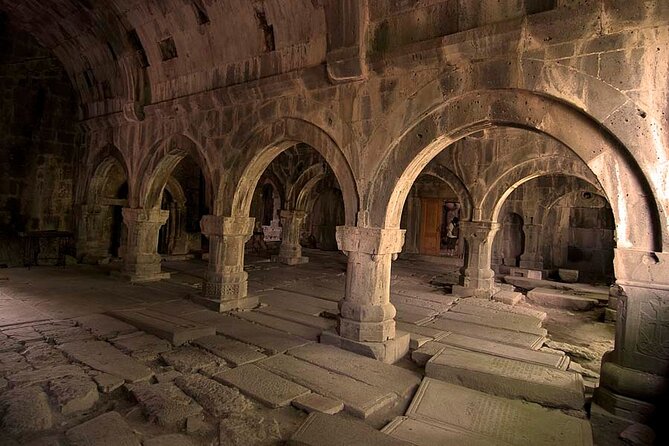
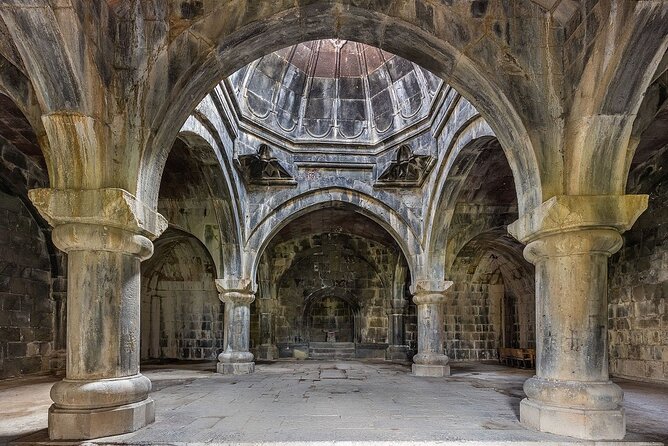
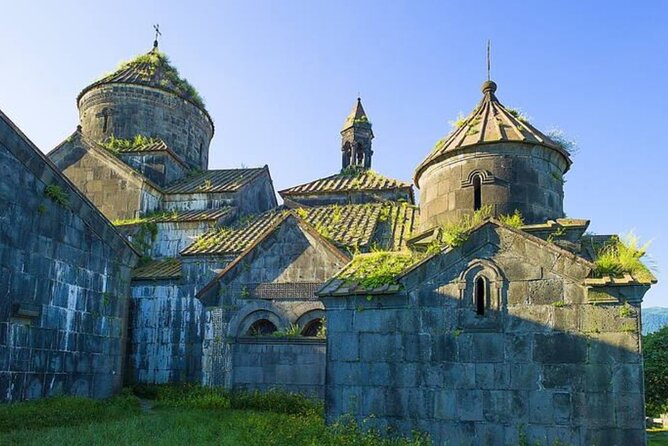
The complex includes a narthex, two corridors used as tombs, a refectory, a scriptorium, the Hamazasp chapel, a bell tower, and several smaller chapels. Tombs and khachkars, traditional Armenian carved stone crosses, add a personal and artistic side to the site.
I would use the hour with a simple plan. First, take in the overall arrangement of the buildings. Then look for the carved crosses and tombs, before giving attention to the parts of the complex connected with daily monastic life, such as the refectory and scriptorium.
Haghpat is not only a religious site. Its architecture shows how a monastery could serve as a place of worship, learning, burial, and administration. The scriptorium is especially useful for understanding that monks were not simply praying behind stone walls. They also copied and preserved texts.
The site is included with free admission according to the tour details. That helps the value of the day, since you are not paying separate entry charges at every stop. The more important cost is the private vehicle and the organized route from Tbilisi.
You are free to explore Haghpat at your own pace, but one hour is not a long time. If you enjoy photographing architectural details or reading every sign, you may feel rushed. If you want a strong first look and a guide-led explanation, the time should be enough for a satisfying introduction.
Sanahin and the father-son legend
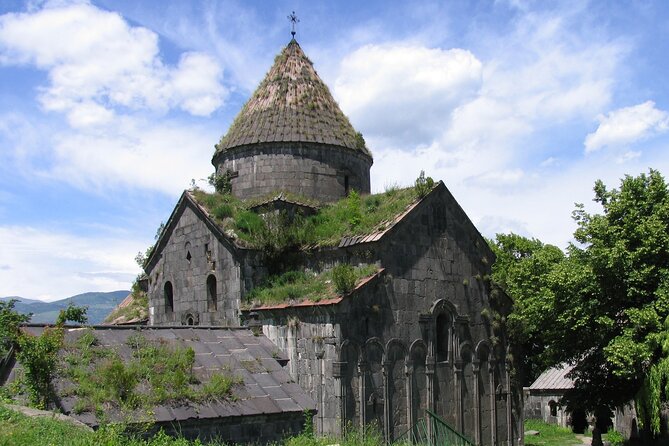
The second stop is Sanahin, another monastery in the Lori district dating from the 10th century. The name Sanahin is commonly explained as meaning it is older than the others, a reference to its earlier foundation compared with Haghpat.
A local legend says the two monasteries were built by a father and son who were both masons. The father built Sanahin first, while the son later created Haghpat. You should treat this as a story rather than a documented construction record, but it gives the pair a memorable human connection.
The two monasteries are closely linked and sit about a 40-minute walk from one another. That walking route is not part of the stated tour plan, so you should expect to reach Sanahin by vehicle rather than using the path between them. The separate drive is practical for a day tour from Tbilisi, even if it means missing a chance to connect the sites on foot.
Sanahin served important roles under the Kyurikian Bagratids in the 10th and 11th centuries. It was an administrative center, a family burial place, and the episcopal residence of the diocese until the 11th century. Those details change how you read the buildings. This was not an isolated chapel. It was part of a wider religious and political system.
You have about one hour here, with admission included. I would pay attention to the relationship between the buildings and the way the complex feels like a working center rather than a single monument. The exact features you can enter or inspect may vary, so your guide’s explanation will help give the stones a clear purpose.
Sanahin and Haghpat are often considered together because of their shared setting, period, and cultural importance. Seeing both on the same day lets you compare them directly. The limitation is time. You will gain a useful overview, but you will not have much room for a long walk, a leisurely sketch, or detailed study of every carved surface.
Akhtala, fortress walls and copper country
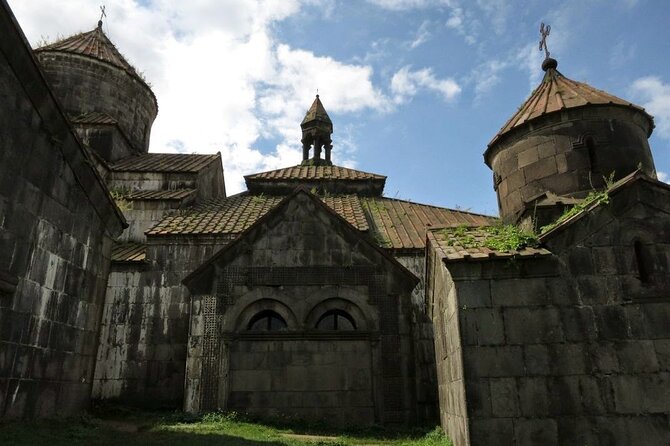
Akhtala gives the day a different character. Instead of focusing only on a monastery complex, you also see a partially ruined fortress built on foundations connected to the Bronze and Iron Age. The fortress was built at the end of the 10th century by the Kyurikids.
The territory has a long past. The settlement was known as Agaraki in the 5th century, while the site itself reaches back even earlier. The name Akhtala is thought to have Turkish roots meaning white gate. Phhindzahank, another name connected with the area, literally means copper mine.
These names point to the site’s wider story. Akhtala was not just a religious stop placed in an empty valley. It was tied to settlement, defense, and mineral resources. The partially destroyed walls help you picture a place shaped by both faith and practical power.
You get about one hour at Akhtala, and admission is included. This is enough time to see the main remains and understand the relationship between the monastery and fortress, though it will not allow for a long archaeological survey.
I would save some attention for the condition of the site. Ruins can be more revealing than polished monuments because missing walls show how a place changed over time. At Akhtala, the incomplete fortress is part of the experience, not a disappointment to hide.
The three-stop order also works well in terms of variety. Haghpat introduces the medieval monastic world, Sanahin adds a closely related religious and administrative center, and Akhtala brings in defense, settlement, and mining. You are not looking at three identical buildings.
More things to do in Tbilisi:
- Tbilisi: Day Trip to Kazbegi, Gudauri, Gergeti, and Ananuri
★ 4.9 · 3,203 reviews - Day Trip to Kakheti Wine Region Including 9 Wine Tastings
★ 5.0 · 2,774 reviews - Highlights of Caucasus Mountains-Jinvali,Ananuri,Gudauri,Kazbegi(Group tour)
★ 5.0 · 2,682 reviews - From Tbilisi: Kakheti Wine Region Tour with 9 Wine Tastings
★ 4.9 · 2,541 reviews
What private transportation adds to the price
The listed price is $110 per person. The exact value depends on the size of your group, because the tour is private rather than shared. For one or two people, that price reflects the convenience of private transport from Tbilisi, an air-conditioned vehicle, and a planned route across the border into Armenia. For a larger group, the per-person cost may feel more favorable.
You are not simply paying for entry. Admission is free at Haghpat and included at Sanahin and Akhtala, so the main benefit is the transport and organization. The route would be awkward to handle independently in a single day, particularly if you do not want to combine public transport, taxis, and border timing.
The private setup is also valuable if your group has different interests. You can spend your hour looking at carvings, listening to explanations, taking photos, or simply absorbing the setting without being separated from a large tour party.
There are tradeoffs. Private does not mean unlimited time. The day still runs on an eight-hour clock, and the three one-hour visits leave limited space for delays, long meals, or extra stops. Lunch is not included, and no restaurant or meal arrangement is specified.
Ask about the meal plan before departure. You may want to carry a snack, but the supplied information does not confirm whether food can be eaten in the vehicle or where the lunch stop will occur. A little planning will keep the middle of the day from becoming a scramble.
The guide’s role in making old stones readable
The written tour information identifies the provider as Ushba Travel and gives the name Zurab in the provider’s responses. It does not identify the guide assigned to every departure, so you should not assume Zurab will personally lead your group.
Still, the feedback places real value on historical explanation. One review described the day as unforgettable because of the old sites and beautiful scenery. Another praised the guide’s account of the ancient history of Georgia and recommended visiting the region.
That is important because these monasteries can be hard to read without context. A bell tower is easy to recognize, but its role in the larger complex is less obvious. A khachkar is more meaningful when you understand that it is not simply decoration. A ruined fortress becomes more interesting when you know it was built over much older foundations.
I would ask the guide to point out the main architectural differences between Haghpat and Sanahin. I would also ask how Akhtala’s fortress and monastery worked together, and which parts belong to the Kyurikid period. These questions fit the information provided and should help you use the short visits well.
The two positive reviews are enthusiastic but limited in number. They support the idea that the scenery and historical storytelling are strong points, but they do not provide enough evidence to promise a particular guiding style, language, or level of detail on every departure.
Who will enjoy this Armenian day trip most
This experience fits you well if you are staying in Tbilisi and want to add Armenia without booking an overnight trip. It is especially useful for people who prefer a private car, want a fixed route, and care more about seeing several major sites than lingering at one monument.
It also suits small groups of friends or family. Everyone travels together, the vehicle is air-conditioned, and the day does not require you to organize separate rides between Haghpat, Sanahin, and Akhtala.
History-minded visitors will get the most from the route. You can connect royal patronage, medieval church architecture, burial customs, administration, fortress building, and mining in one day. The stories about Queen Khosrovanush and the father-son masons give the monuments a human frame.
You may want a different plan if your priority is a relaxed meal, long walks, or detailed photography. The 40-minute walk between Haghpat and Sanahin is an interesting connection, but the stated tour does not say that you will walk it. Confirm the day’s exact movement before booking if that path is important to you.
The tour is described as suitable for most participants, but no detailed accessibility information is supplied. If you have mobility concerns, ask about surfaces, walking distances, steps, and vehicle access before you reserve.
Practical planning for the 9:00 am departure
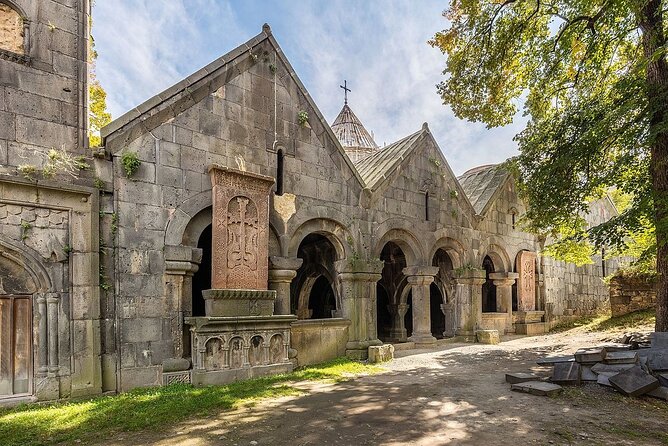
Your day begins at 9:00 am. Since the tour crosses from Tbilisi into Armenia, bring the travel documents required for your own border crossing and confirm current entry rules before departure. The tour details do not specify nationality requirements or border procedures, so this is one point you must check yourself.
Wear shoes suitable for historic sites. The details do not promise smooth paths, and monasteries and fortress remains naturally involve old stone surfaces. Comfortable clothing will also help during a full day of driving and site visits.
Set aside time for photography, but do not let the camera take the entire hour. The strongest value of Haghpat and Sanahin comes from seeing their parts as a whole: chapels, tombs, bell towers, corridors, and open spaces working together.
The tour offers mobile tickets, and confirmation arrives at booking. Pickup is offered, but the exact meeting arrangements are not provided in the supplied details. Read your confirmation carefully and verify the pickup location and time.
Cancellation is free if you cancel at least 24 hours before the local start time. Within 24 hours, you should expect no refund, and changes made inside that period are not accepted. That rule matters for a cross-border day trip, so book only after checking your schedule and documents.
Should you book the Haghpat, Sanahin, and Akhtala tour?
I would book this tour if you want a practical Armenia side trip from Tbilisi and value private transport more than a slow pace. The strongest reasons are the three-site route, the air-conditioned vehicle, the private format, and the chance to see Haghpat and Sanahin together.
At $110 per person, the value is best for a small group that would otherwise need to arrange several transport connections. The included admissions also keep extra costs down, though you still need to budget for lunch.
I would skip it if you want to spend half a day at one monastery, walk between Haghpat and Sanahin, or take your time with every architectural detail. For everyone else, this is a sensible, history-focused day with an appealing mix of monasteries, ruins, scenery, and local stories.
FAQ
What time does the tour start?
The tour starts at 9:00 am.
How long does the experience last?
The tour lasts approximately eight hours.
Is transportation included?
Yes. The experience includes private transportation in an air-conditioned vehicle.
Are Haghpat, Sanahin, and Akhtala admission fees included?
Admission at Haghpat is listed as free. Admission is included at Sanahin and Akhtala.
Is lunch included?
No. Lunch is not included in the tour price.
Can I cancel for a full refund?
Yes, if you cancel at least 24 hours before the experience start time. Cancellations made within 24 hours are not refunded, and changes during that period are not accepted.
Just added in Tbilisi
- Wine Tasting feel the Difference of Qvevri or Classical Wine★ 4.4 · 10 reviews
- From Tbilisi: Kakheti and Kazbegi 2-Day 4X4 Jeep Tour pack★ 5.0 · 6 reviews
- Walking Tour in Old Tbilisi – Group Tour★ 4.5 · 8 reviews
- Uforgatable Kakheti Tour with wine tasting – in Georgia★ 4.9 · 5 reviews
- From Tbilisi: Uplistsikhe Caves and Mtskheta Town Day tour★ 5.0 · 2 reviews
- Tbilisi: Vintage Fashion and Secondhand Thrifting Tour★ 5.0 · 11 reviews
- Private Adorable City Tour of Tbilisi★ 5.0 · 3 reviews
- Tbilisi Airport to Gudauri, Bakuriani, Batumi, Tbilisi★ 5.0 · 3 reviews
Day Trips to Armenia, compared.
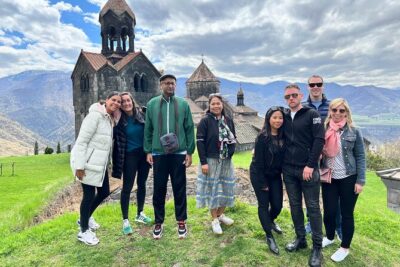
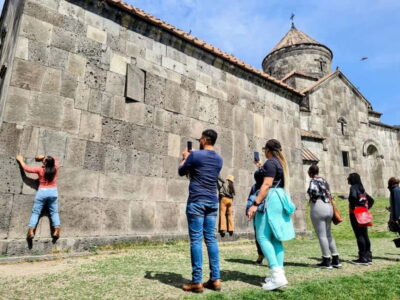
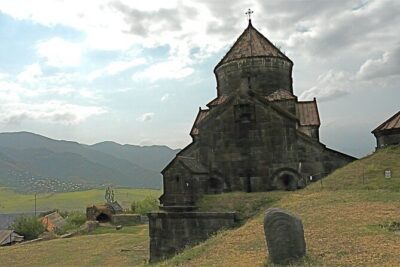
Discover Armenia: Tbilisi-Haghpat-Dilijan-Sevan-Yerevan-Tbilisi
Read our review →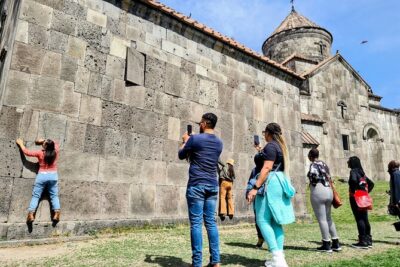
1 Day Private Armenia: UNESCO, Soviet & Curated Family Lunch
Read our review →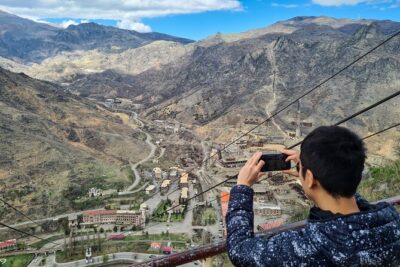
Armenia: 1 Day Soviet gems, UNESCO + Family lunch (Small group)
Read our review →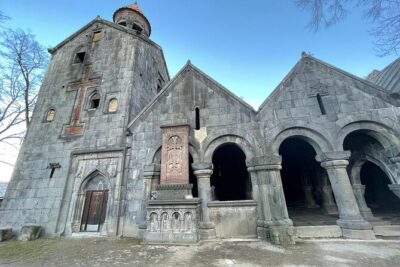
1 Day detour to Armenia from Tbilisi & Local family lunch
Read our review →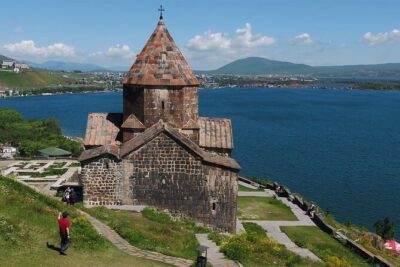
Best of Armenia: private 2-3 days tour to Yerevan w/ family lunch
Read our review →
Day tour Armenia Dilijan and Sevan Lake from Tbilisi
Read our review →Browse the lists this tour appears in