
Reviewed · MTSKHETA AND GORI TOURS
Mtskheta – Jvari Private Tour / UNESCO Sites
Two UNESCO sites, one easy morning. This four-hour private outing links Jvari Monastery and the ancient town of Mtskheta without asking you to give up a full day. I like the simple hotel pickup and drop-off, and I like the balance between grand views, sacred places, and time to wander. The main consideration is that the tour is not suitable for wheelchair users or people with back problems.
The price is $33 per person, which is strong value if you want private transport and a live English-speaking guide rather than arranging two separate visits yourself. Guide George has been praised for making the history clear and enjoyable, a useful quality in places where dates, kings, churches, and religious traditions can quickly blur together.
In This Review
- Key points to know before booking
- Why this short trip matters
- Leaving Tbilisi for Jvari Monastery
- The story behind Jvari’s name
- Exploring Mtskheta, Georgia’s old capital
- Svetitskhoveli Cathedral and the story of Christ’s Robe
- What the four-hour schedule feels like
- Is $33 per person a good value?
- Who will enjoy this tour most?
- Booking and timing advice
- Should you book the Mtskheta and Jvari tour?
- FAQ
- How long does the Mtskheta and Jvari tour last?
- Where does pickup take place?
- Is transportation included?
- Is this a private tour?
- What language does the guide speak?
- Is the tour suitable for wheelchair users or people with back problems?
Key points to know before booking
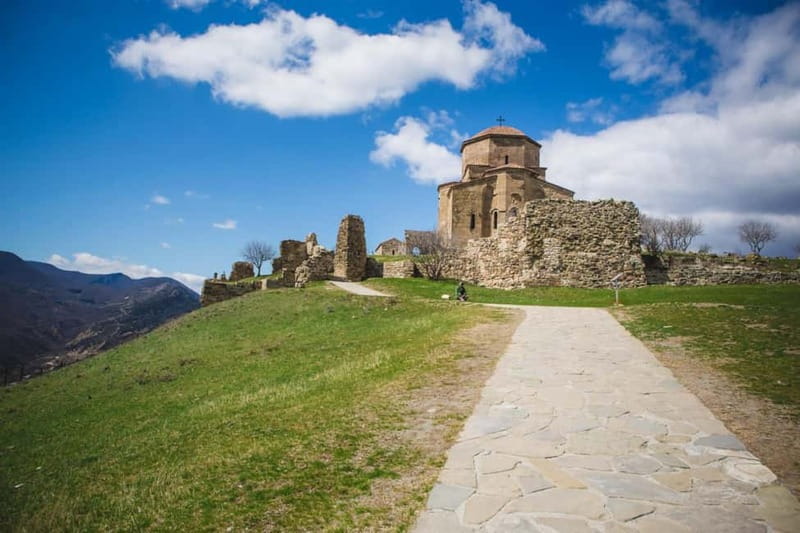
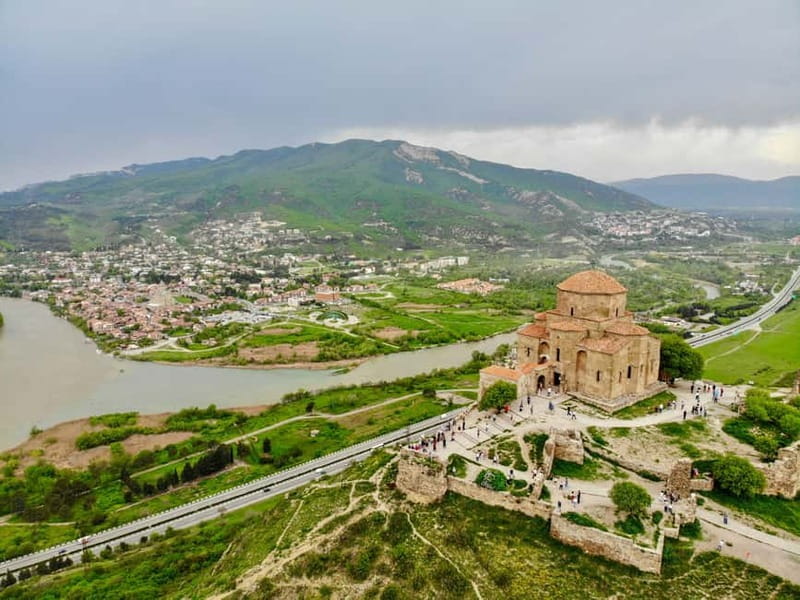
- Jvari Monastery comes first, with a high viewpoint over the meeting point of the Aragvi and Kura rivers.
- Mtskheta has more than 2,600 years of settlement, and it was once the capital of the early Kingdom of Iberia.
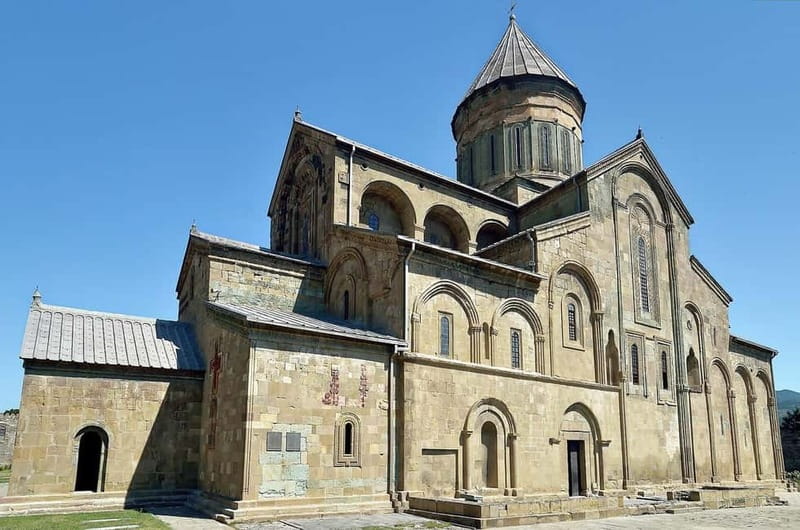
- Svetitskhoveli Cathedral is the main stop in Mtskheta, known as the burial site of Christ’s Robe.
- The tour lasts four hours, making it a good choice if you want culture without a tiring full-day schedule.
- Pickup is available anywhere within Tbilisi city limits, including hotels, apartments, and private addresses.
- The tour is private, so you can explore with your own group and guide rather than joining a large coach party.
Why this short trip matters
Mtskheta and Jvari are close to Tbilisi, but they feel like a proper change of scene. In a few hours, you move from the modern capital to two places tied closely to Georgia’s early political and religious life.
I like this outing because it does not try to pack in every possible sight. You get one hilltop monastery, one historic town, and enough time to understand why both are protected as UNESCO World Heritage Sites. The result is more focused than a long regional tour, and it leaves room in your day for other plans in Tbilisi.
The private format also changes the pace. You are not waiting for a large group at every turn. Your guide meets you at your Tbilisi address, handles the private transportation, and explains the sites in English as you go.
Still, four hours is a compact schedule. You will see the main points, but you will not have time for a broad tour of the wider Mtskheta-Mtianeti region. If your goal is a slow day among several churches and archaeological sites, choose a longer excursion.
More things to do in Tbilisi:
- Tbilisi: Day Trip to Kazbegi, Gudauri, Gergeti, and Ananuri
★ 4.9 · 3,203 reviews - Day Trip to Kakheti Wine Region Including 9 Wine Tastings
★ 5.0 · 2,774 reviews - Highlights of Caucasus Mountains-Jinvali,Ananuri,Gudauri,Kazbegi(Group tour)
★ 5.0 · 2,682 reviews
Leaving Tbilisi for Jvari Monastery
Your guide meets you at your hotel, apartment, or another address within Tbilisi city limits. From there, the drive to Jvari Monastery takes about 40 minutes.
That transfer is useful rather than wasted time. You leave the city behind and head toward the old capital, with your guide able to provide background before you arrive. Since this is a private group, you can ask questions as the setting and story begin to make sense.
Jvari is the first major stop because its position gives you the best introduction to the area. The monastery sits high on a mountain near Mtskheta, looking toward the ancient city below and the point where the Aragvi and Kura rivers meet.
This view is one of the tour’s strongest features. It helps you understand Mtskheta’s location at a glance. Instead of hearing that the town was important, you can see why a settlement here mattered. Rivers, routes, and the raised ground around them helped make this a significant center.
The visit also gives you a useful contrast. Jvari feels remote and elevated, while Mtskheta below is a lived-in historic town with streets, shops, and places to stop. The two sites belong together, but they offer different kinds of experiences.
The story behind Jvari’s name
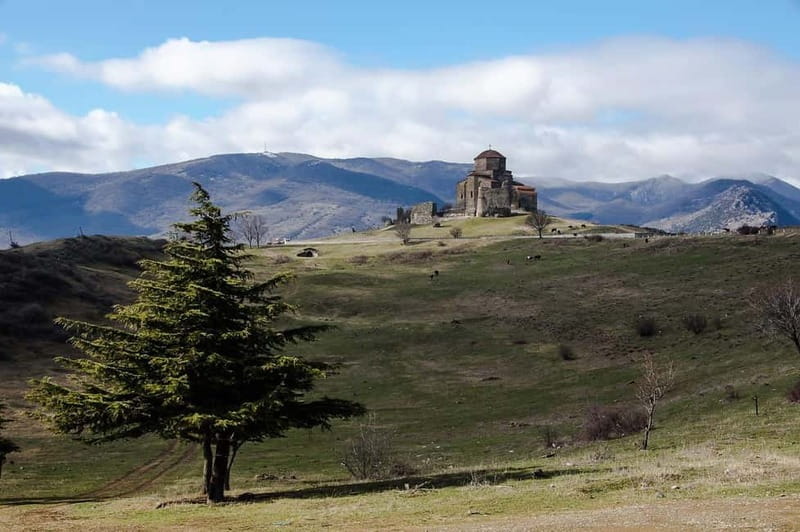
Jvari means Cross in Georgian. That name points to the monastery’s religious purpose and to the story connected with the site, which your guide will explain during the visit.
The present temple dates from the sixth century AD. Its age is easy to appreciate once you remember that this is not a recently restored attraction built to imitate the past. Jvari is an early Georgian church with a long religious and cultural role.
The architecture is another reason to pay attention. The building has a firm, compact form that suits its exposed mountaintop position. At Jvari, the setting is not an extra detail added around the monument. It is part of what makes the visit work.
Jvari has been a UNESCO World Heritage Site since 1994. That recognition reflects its cultural importance, but you do not need to be an architecture specialist to enjoy it. I suggest taking time to look both at the church and outward from the hill. The relationship between the building, the rivers, and Mtskheta is the real lesson here.
Practical point: the tour is not suitable for wheelchair users or people with back problems. The high location and site conditions may be difficult for anyone who needs fully accessible paths or has trouble with uneven walking. The supplied information does not give a step-by-step accessibility description, so ask the provider before booking if mobility is a concern.
Exploring Mtskheta, Georgia’s old capital
After Jvari, the tour continues to Mtskheta. The town has been inhabited for more than 2,600 years and once served as the capital of the early Kingdom of Iberia.
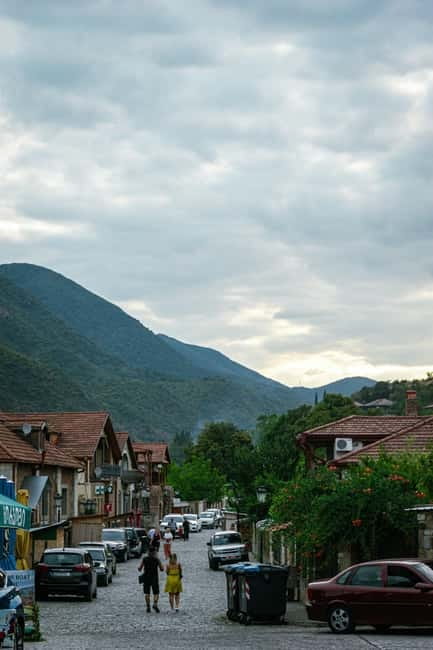
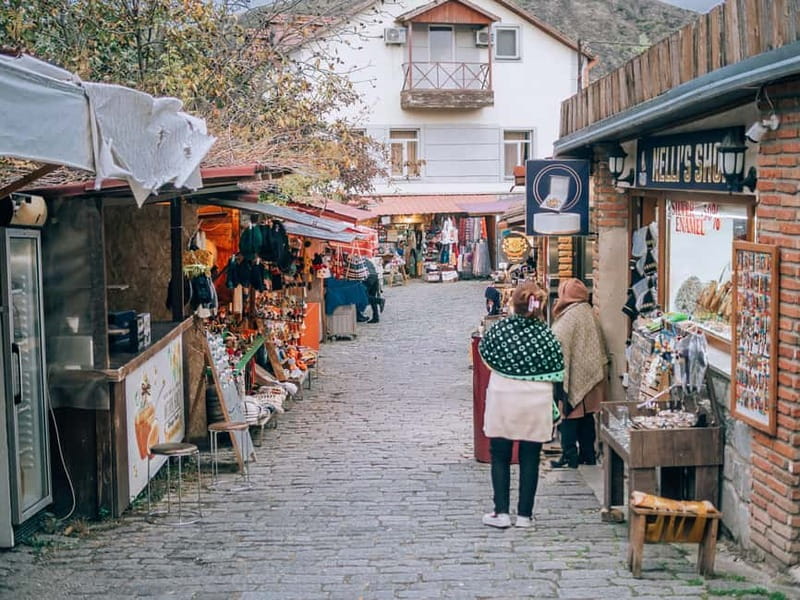
That long timeline gives Mtskheta a different mood from Jvari. Here, you are not simply visiting an isolated monument. You are walking through a historic town where the old center includes narrow streets, shops, tastings, and food displays.
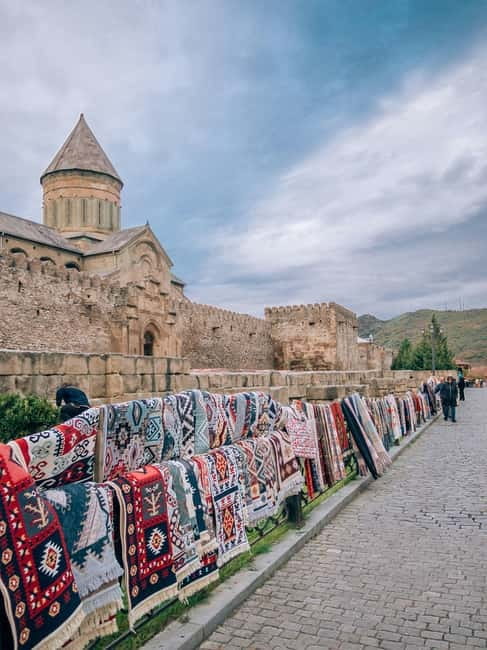
The route includes souvenir shops, wine tastings, and traditional Georgian sweets. These stops are not the main reason to book the tour, but they give you a chance to slow down after the monastery visit. You can browse for a small gift, sample local wine, or try a sweet connected with Georgian food traditions.
The shopping area may feel more commercial than the hilltop monastery. That is worth knowing in advance. Mtskheta’s central streets are designed for people exploring the town, and souvenir shops are part of that experience. If you prefer only silent ruins and empty lanes, this section may feel less secluded.
I like the change of pace. The town gives you a chance to take photos, look around without rushing, and absorb the setting in a more casual way. Your free time is especially useful because the tour does not force every minute into a formal explanation.
More Mtskheta and Gori trips:
- Tbilisi: Mtskheta, Jvari, Gori and Uplistsikhe Day Tour
★ 4.9 · 2,396 reviews - Day Trip to Mtskheta Gori and Uplistsikhe
★ 5.0 · 1,801 reviews - Tbilisi: Mtskheta Jvari Bazaar, Chronicles of Georgia & Wine
★ 5.0 · 1,088 reviews - Tbilisi:Mtskheta,Jvari,Bazaar,wine tasting,Chronicles of Georgia
★ 5.0 · 730 reviews
Svetitskhoveli Cathedral and the story of Christ’s Robe
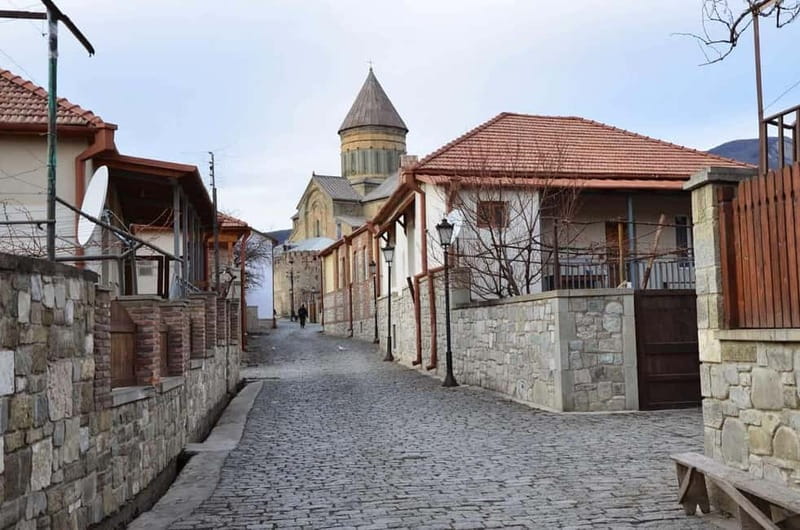
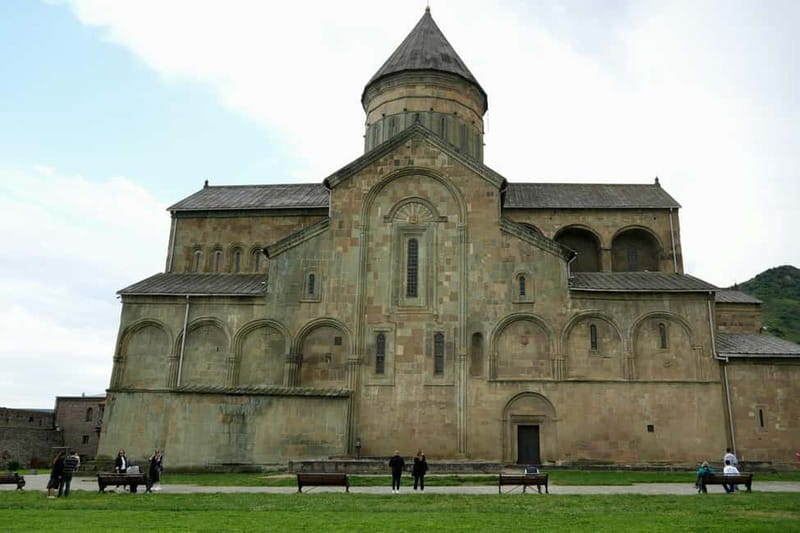
The central religious stop in Mtskheta is Svetitskhoveli Cathedral. It is one of Georgia’s most sacred places and is described as the burial site of Christ’s Robe.
That tradition gives the cathedral importance well beyond its size or design. Even if you are not visiting mainly for religious reasons, it helps explain why Mtskheta remains a central place in Georgia’s cultural memory.
Your guide can add the context that turns a beautiful building into a meaningful one. This is where guide quality matters. George has been praised for knowing the history and keeping the visit pleasant rather than turning it into a dry list of dates.
I would give the cathedral your full attention before heading back into the town streets. Look at the building as a place of worship, not only as a photo stop. The religious role is central to understanding Mtskheta.
The information provided does not specify the amount of time inside the cathedral, so the exact balance between guided explanation and free exploration may vary. You should expect the cathedral to be the main focus of the Mtskheta visit, followed by time to walk, photograph, shop, and enjoy the town.
What the four-hour schedule feels like
A four-hour tour is the main selling point for people with limited time. You get the drive from Tbilisi, Jvari, Mtskheta, the cathedral, and free time in the old town without committing your entire day.
That schedule suits you if you want an introduction to Georgia’s early religious and political centers but still plan to return to Tbilisi for lunch, museums, or an evening meal. It is also a good fit for a short stay in the capital.
The pace should be manageable for many people because the tour is short and uses private transport between the main places. It is not a long walking expedition. Still, you will be on your feet at the historic sites, and the experience is not recommended for people with back problems.
You should also keep your expectations practical. This is an overview, not an exhaustive study of Mtskheta. The tour gives you the key sites and a clear sense of their importance. It does not promise hours of independent research time or visits to every nearby monument.
Is $33 per person a good value?
At $33 per person, the tour offers a useful combination: hotel pickup, hotel drop-off, private transportation, a private group, and a live English-speaking guide.
The value becomes especially good if you are traveling with one or more companions. A private car and guide can be more convenient than working out transport to two separate UNESCO sites. You also avoid the uncertainty of coordinating taxis or trying to fit both places into a short independent visit.
The price does not include every possible expense. The supplied details list transportation and pickup and drop-off as included, but they do not list food, drinks, souvenirs, or any separate admission charges. Ask the provider if you want a firm answer about possible costs at the sites.
I would not choose this tour only because it is inexpensive. I would choose it because the price matches the shape of the day. You get the two most important stops near Tbilisi, a guide to explain them, and a private ride in a compact package.
Who will enjoy this tour most?
This outing suits you if you want:
- A short cultural trip from Tbilisi
- A private group instead of a large shared tour
- UNESCO sites with historical and religious importance
- An English-speaking guide
- Hotel pickup and drop-off within Tbilisi
- A manageable introduction to Mtskheta and Jvari
It is also a good choice for first-time visitors who want a clear connection between Georgia’s ancient capital, early Christianity, and the surrounding geography.
You may want a different tour if you need wheelchair access, have back problems, or prefer a slower schedule with more time at each site. The tour is also less suitable if you want a food-focused outing, since tastings and sweets appear as part of the town walk rather than the main purpose of the experience.
The only written rating available is five out of five, and the specific praise centers on George’s historical knowledge and friendly way of guiding the route. That is the kind of praise that matters here. These sites are rewarding, but a guide who explains the stories without making them feel like homework can make the short visit much more useful.
Booking and timing advice
You can cancel up to 24 hours before the tour for a full refund, and you can reserve now while paying later. That flexibility helps if your Tbilisi schedule is still changing.
Starting times are subject to availability. When booking, provide the exact name or address of your hotel, apartment, or other pickup point within Tbilisi city limits. This is important because pickup is included only for addresses inside the stated city limits.
The tour is offered in English and operates as a private group. If you want another language, the provided information does not confirm that option, so ask before reserving.
The activity also lists nudity as not allowed. That is a basic conduct rule rather than a special feature, but remember that Jvari and Svetitskhoveli are religious sites. Modest, respectful clothing is a sensible choice.
Should you book the Mtskheta and Jvari tour?
Book it if you want the best short introduction to two major historic sites near Tbilisi. The four-hour length, private transport, central pickup, and English guide make the day easy to fit into a busy itinerary.
The strongest reason to choose it is the combination of Jvari’s hilltop setting and Mtskheta’s old streets and cathedral. You get scenery, architecture, religious tradition, and ancient political history in one compact trip.
Skip it if you need wheelchair access, cannot manage site walking, or want a full-day exploration of the wider region. For everyone else, $33 per person is a sensible price for a focused private outing, especially if George is your guide and you value clear historical explanations.
FAQ
How long does the Mtskheta and Jvari tour last?
The tour lasts four hours, including the visits to Jvari Monastery and Mtskheta.
Where does pickup take place?
Pickup is available from any hotel, apartment, or address within Tbilisi city limits. You need to provide the exact hotel name or address when booking.
Is transportation included?
Yes. Private transportation, hotel pickup, and hotel drop-off are included.
Is this a private tour?
Yes. The activity is offered for a private group rather than as a shared group tour.
What language does the guide speak?
The live tour guide speaks English.
Is the tour suitable for wheelchair users or people with back problems?
No. The tour is listed as not suitable for wheelchair users or people with back problems.
Just added in Tbilisi
- Wine Tasting feel the Difference of Qvevri or Classical Wine★ 4.4 · 10 reviews
- From Tbilisi: Kakheti and Kazbegi 2-Day 4X4 Jeep Tour pack★ 5.0 · 6 reviews
- Walking Tour in Old Tbilisi – Group Tour★ 4.5 · 8 reviews
- Uforgatable Kakheti Tour with wine tasting – in Georgia★ 4.9 · 5 reviews
- From Tbilisi: Uplistsikhe Caves and Mtskheta Town Day tour★ 5.0 · 2 reviews
- Tbilisi: Vintage Fashion and Secondhand Thrifting Tour★ 5.0 · 11 reviews
- Tbilisi Airport to Gudauri, Bakuriani, Batumi, Tbilisi★ 5.0 · 3 reviews
- Private Adorable City Tour of Tbilisi★ 5.0 · 3 reviews
Mtskheta and Gori Tours, compared.
Mtskheta, Jvari, Gori and Uplistsikhe Day Tour
Read our review →
Mtskheta Jvari Bazaar, Chronicles of Georgia & Wine
Read our review →
Mtskheta,Jvari,Bazaar,wine tasting,Chronicles of Georgia
Read our review →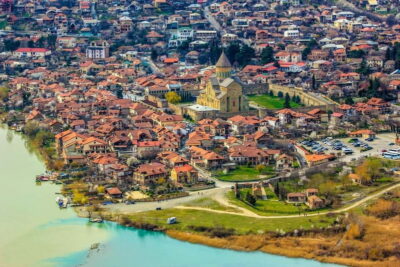
The Chronicles of Georgia, Jvari & Mtskheta Tour
Read our review →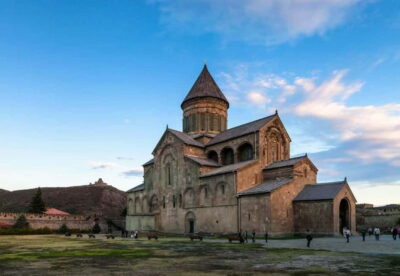
Browse the lists this tour appears in