
Reviewed · MTSKHETA AND GORI TOURS
Mtskheta: Day Tour to Oldest City in Georgia
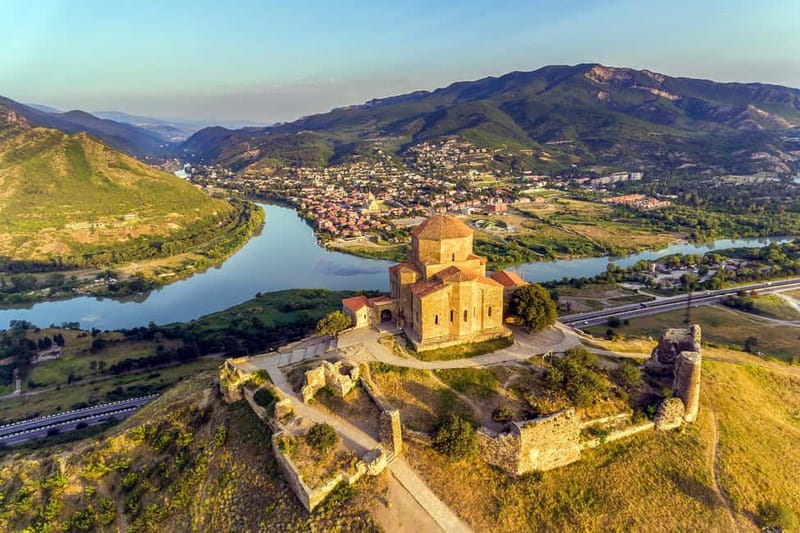
Georgia’s story begins near Tbilisi. This four-hour outing takes you to Mtskheta, the country’s former capital and a UNESCO World Heritage Site, with stops at Jvari Monastery, Svetitskhoveli Cathedral, Samtavro Monastery, and a Georgian wine tasting. I like the efficient route and the chance to see several major religious sites in one morning or afternoon. I also like the live commentary in English or Russian, which helps make sense of places that can otherwise feel visually beautiful but historically difficult to follow.
The main tradeoff is focus. This is a church-and-monastery tour, not a relaxed town visit, so you get little time for wandering through Mtskheta, shopping, or sitting down for a local meal. Cars have also drawn criticism for being uncomfortable and dusty, and one passenger reported unsafe phone use by the driver. For a short introduction to Georgia’s spiritual center, though, the $41 price can be fair.
In This Review
- Key points to know before you go
- Why Mtskheta matters to Georgian history
- Meeting at Kote Abkhazi Street 44
- Jvari Monastery and the meeting of two rivers
- Svetitskhoveli Cathedral and the robe of Christ
- Samtavro Monastery and Georgia’s royal conversion
- The wine tasting stop
- Is four hours enough for Mtskheta?
- Transport, comfort, and safety
- What the $41 price really buys you
- Who should book this Mtskheta tour?
- Should you book it?
- FAQ
- How long does the Mtskheta tour last?
- Where is the meeting point?
- Which languages are available?
- What places are included in the tour?
- Is food included?
- What should women bring for the monastery visit?
- Can the tour be canceled for a full refund?
Key points to know before you go
- Mtskheta was Georgia’s early capital: The city served as the capital of the Kingdom of Iberia from the 3rd century BC to the 5th century AD.
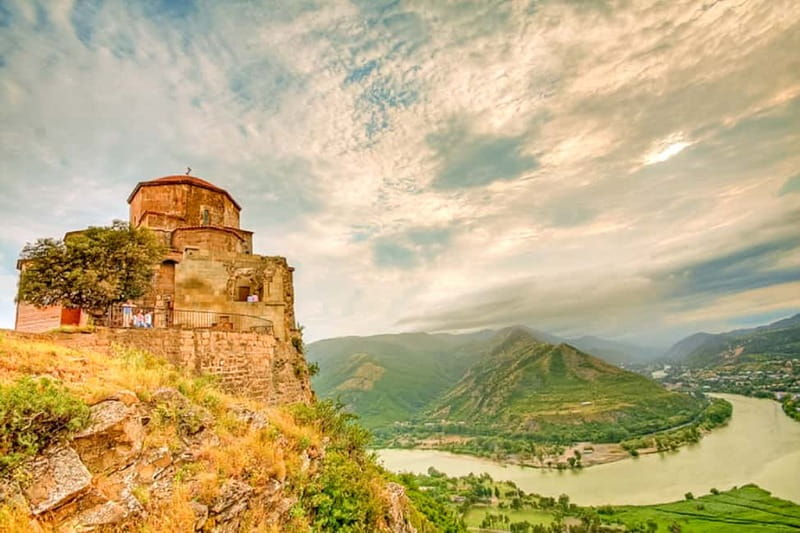
- Jvari gives you the big view: The 6th-century monastery overlooks the meeting point of the Aragvi and Mtkvari rivers.
- Svetitskhoveli carries the strongest religious weight: The cathedral is linked with Christ’s robe and the burial place of Georgian kings.
- Samtavro connects royal and monastic history: The complex includes the graves of Queen Nana and King Mirian III.
- Wine is part of the outing: A tasting stop lets you sample and buy Georgian wine.
- The schedule is compact: Four hours is enough for the major sights, but not for a slow exploration of Mtskheta.
Why Mtskheta matters to Georgian history
Mtskheta is not simply an old town near Tbilisi. It was the capital of the early Georgian Kingdom of Iberia for many centuries, from the 3rd century BC until the 5th century AD. That long political role helps explain why so many important churches and burial sites are concentrated here.
The city also has a central place in Georgian Christianity. Georgians accepted Christianity in 317, and Mtskheta remains the headquarters of the Georgian Orthodox and Apostolic Church. You are therefore visiting a living religious center, not only an archaeological site.
That distinction matters. The churches are still places of worship, and visitors need to dress and behave accordingly. Women are asked to bring a scarf to cover their heads when entering the monastery. Bring one from Tbilisi rather than relying on finding one at the site.
The tour gives you a useful outline of this story without requiring a full day away from Tbilisi. Guide Stevan received particular praise for explaining the sights, managing the group, and answering questions. That kind of guide can make a major difference here, since the importance of Mtskheta is easier to understand when the buildings are placed in a clear sequence.
More things to do in Tbilisi:
- Tbilisi: Day Trip to Kazbegi, Gudauri, Gergeti, and Ananuri
★ 4.9 · 3,203 reviews - Day Trip to Kakheti Wine Region Including 9 Wine Tastings
★ 5.0 · 2,774 reviews - Highlights of Caucasus Mountains-Jinvali,Ananuri,Gudauri,Kazbegi(Group tour)
★ 5.0 · 2,682 reviews
Meeting at Kote Abkhazi Street 44
The stated meeting point is Kote Abkhazi Street 44, in central Tbilisi. You should allow enough time to find the exact spot, since the road is in a busy part of the old city and group departures depend on everyone being ready.
The tour lasts four hours, so the timing is built around the main monuments rather than long breaks. That is useful if you have only a short stay in Tbilisi or want to fit Mtskheta around other plans. It also means you should not expect a leisurely morning with plenty of unscheduled time.
The guide speaks English or Russian. Commentary is included, which is important because the value of the tour comes less from simply seeing church walls and more from learning why each site matters.
One practical weakness is that meeting instructions can feel unclear at some stops. You should listen carefully when the guide gives a time and place to regroup. If you wander off without confirming the meeting point, a short visit can become unnecessarily stressful.
Jvari Monastery and the meeting of two rivers
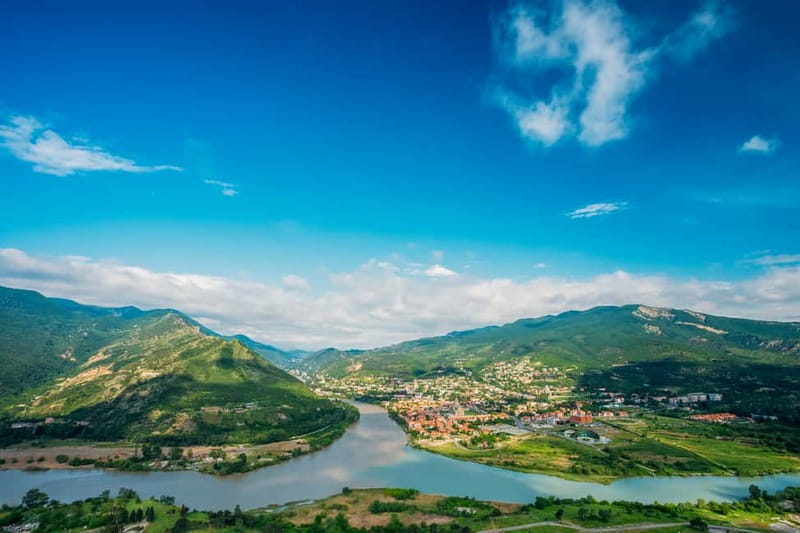
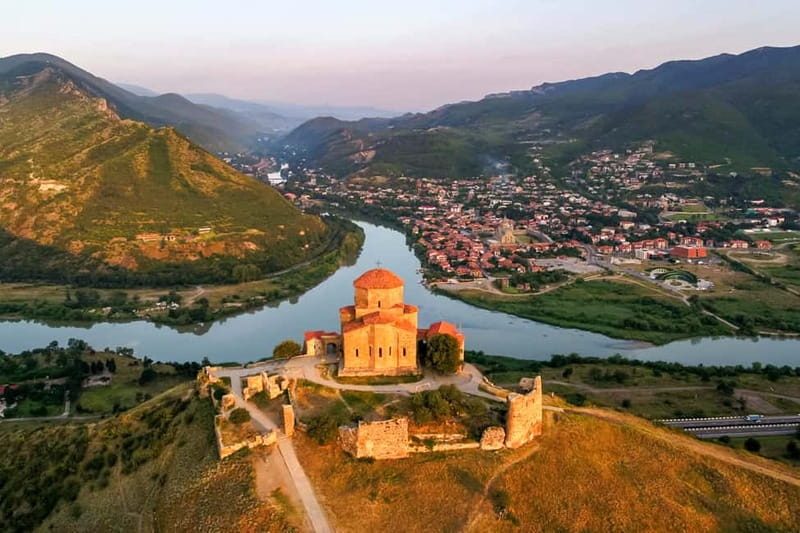
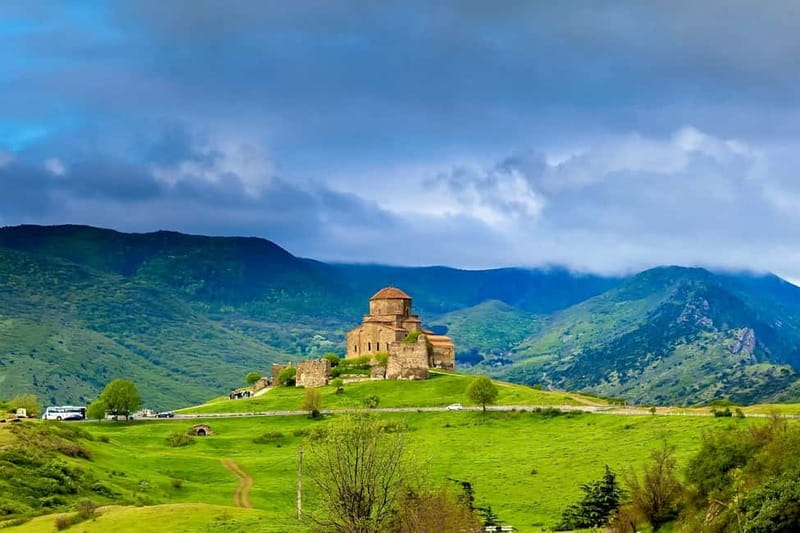
The first major stop is usually the hilltop Jvari Monastery, a 6th-century Georgian Orthodox monastery whose name means Monastery of the Cross. Its setting is the immediate attraction: from the hill, you look toward the confluence of the Aragvi and Mtkvari rivers and across the historic area of Mtskheta.
Jvari is also important for its architecture. The church represents a high point in the development of Georgian church design, with a strong central form that fits its exposed hilltop setting. The building is not large in the way a later cathedral can be, but its shape and position give it a powerful presence.
I especially like this stop because it gives you geographic context before you walk through Mtskheta itself. From above, the old capital becomes easier to read as a strategic place near two rivers, rather than a collection of unrelated monuments.
The hilltop location may require some walking and standing outdoors. The information provided does not give a detailed accessibility plan, so anyone with mobility concerns should ask the operator before booking. The tour is short, and the stop is designed for viewing, photography, and explanation rather than a long period inside the monastery.
Svetitskhoveli Cathedral and the robe of Christ
Svetitskhoveli Cathedral is the emotional center of the visit. The current building dates from the 11th century, but the religious site reaches back to the early 4th century. It is one of the most important churches in Georgia and the second-largest church building in the country.
The cathedral is linked with the burial place of Christ’s robe, a belief that has made Mtskheta a major pilgrimage center. It was also a key pilgrimage stop along the Silk Road, adding a wider connection to the religious and commercial routes that crossed the region.
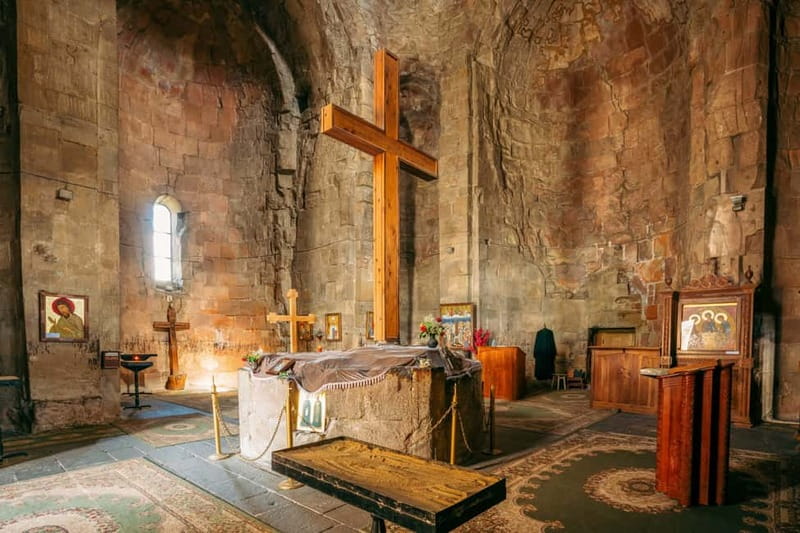
Inside, you can expect a solemn Orthodox church filled with religious meaning, royal associations, and architectural detail. The building’s elongated cross form is meant to reach toward the sky, and its scale gives the visit a different feel from Jvari’s compact hilltop church.
Svetitskhoveli also contains the tombs of Georgian kings. That combination of faith and royal history makes it more than a stop for church architecture. You are seeing a place tied to Georgia’s conversion, monarchy, and national identity.
The drawback is the amount of religious information packed into a short tour. If you have little interest in church history, the explanations may begin to feel repetitive, especially after Jvari. The best approach is to focus on the key ideas: Christianity reached Georgia here, the cathedral is tied to Christ’s robe, and Georgian rulers were buried on this sacred ground.
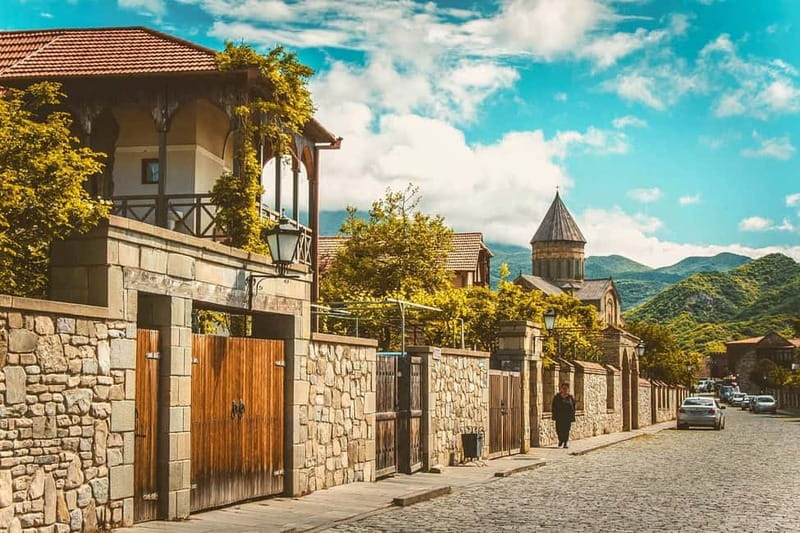
The cathedral and the other historic monuments of Mtskheta are part of the UNESCO World Heritage designation. That status helps explain why this stop receives so much attention, but it does not turn the visit into a museum experience. It remains an active place of worship, so quiet clothing and respectful conduct are important.
More Mtskheta and Gori trips:
- Tbilisi: Mtskheta, Jvari, Gori and Uplistsikhe Day Tour
★ 4.9 · 2,396 reviews - Day Trip to Mtskheta Gori and Uplistsikhe
★ 5.0 · 1,801 reviews - Tbilisi: Mtskheta Jvari Bazaar, Chronicles of Georgia & Wine
★ 5.0 · 1,088 reviews - Tbilisi:Mtskheta,Jvari,Bazaar,wine tasting,Chronicles of Georgia
★ 5.0 · 730 reviews
Samtavro Monastery and Georgia’s royal conversion
Samtavro Monastery adds a personal and royal layer to the story. The 11th-century complex contains the graves of Queen Nana and King Mirian III, the ruler associated with establishing Christianity as Georgia’s official religion.
After visiting Svetitskhoveli, this stop helps connect national conversion with individual people. King Mirian III is not only a name in a timeline. His burial place makes the political change feel more grounded, while Queen Nana adds another important figure to the story.
Samtavro church also contains the grave of the Georgian monk Gabrieli. That detail shows how the complex links different periods of Georgian religious life, from the royal adoption of Christianity to the country’s later monastic tradition.
As with Jvari and Svetitskhoveli, you should expect a religious site rather than an open-air attraction built mainly for sightseeing. You may spend more time listening to the guide than wandering freely. For a first visit, that structure is helpful. For a repeat visitor, or someone hoping to explore local streets and shops, it may feel too tightly programmed.
The wine tasting stop
Georgian wine gives the tour a welcome change of pace. The program includes a wine degustation, where you can taste and buy Georgian wine.
This stop is useful because wine is an important part of Georgian culture, and tasting is more informative than seeing bottles on a shop shelf. You can get a sense of local styles and decide if you want to take a bottle home.
Food and drinks are not included, so you should treat the tasting as a separate stop rather than a meal. The information does not specify how many wines are served, how long the tasting lasts, or whether snacks are provided. If you need lunch, do not assume this tour will cover it.
Time is the bigger question. One passenger specifically wanted more time for local stores and a meal in a restaurant instead of visiting so many churches. That is a fair criticism. The wine stop adds local flavor, but it does not replace a proper break in Mtskheta.
Is four hours enough for Mtskheta?
Four hours is enough to cover the main highlights. You can see the hilltop monastery, the major cathedral, the Samtavro complex, and sample Georgian wine without committing an entire day.
I would choose this schedule if you want a clear first look at Mtskheta and prefer someone else to organize the transport. It also suits a short Tbilisi visit, since the tour delivers the key religious sites in a compact package.
Four hours is not enough for everything. You will have limited time to walk around the town, browse local stores, eat in a restaurant, or linger at a church after the guide’s explanation. The route favors coverage over freedom.
That choice is neither right nor wrong. It depends on your travel style. If you like seeing the essential monuments and moving on, the pace should work. If you want to sit with a coffee, explore side streets, and make your own discoveries, a longer private visit would likely suit you better.
Transport, comfort, and safety
Transport is provided, but the available information does not specify the vehicle type or group size. You should expect a shared ride rather than a fully customized private excursion.
Comfort may be the weakest part of the experience. Cars were described as uncomfortable and dusty, which matters on a short tour because a large share of your time is spent moving between sites. If you are sensitive to cramped seating or want a polished vehicle, ask the operator for details before paying.
Driving standards also deserve attention. One passenger reported seeing the driver use a phone for much of the return trip, including a video call. That is a serious safety concern, even though it may not reflect every departure or driver.
I would not ignore that issue when deciding. If you notice unsafe driving, tell the guide directly and ask for the vehicle to stop before raising the concern. The guide’s work may be excellent, but safe transport is part of the tour’s value.
What the $41 price really buys you
At $41 per person, this is priced as an affordable half-day introduction rather than a luxury outing. The cost covers the organized route and live commentary, and it saves you the work of arranging transport between several sites near Tbilisi.
The value is strongest if you want historical context. Without a guide, you can admire Jvari’s hilltop view and Svetitskhoveli’s architecture, but you may miss the connections between Georgia’s capital, royal burials, Christianity, and the Silk Road.
The price is less attractive if you mainly want free time. Food and drinks are extra, and the short schedule leaves little room for a restaurant meal or extended shopping. You are paying for a focused sightseeing route, not an unhurried day in the town.
The overall rating is 4.4 from 26 reviews, with strong praise for organization and guide quality. Alexei described the organization, places, and guide as very good, while another passenger found the route efficient and the explanations clear. Those strengths support the price, but the transport concerns and limited free time keep this from being an automatic choice for everyone.
Who should book this Mtskheta tour?
I would recommend it to first-time visitors who want to understand why Mtskheta matters. It is especially useful if you have only a few days in Georgia, speak English or Russian, and prefer a guide to connect the monuments into one story.
It also suits visitors who want to see UNESCO-listed places without planning a complicated route. The combination of Jvari, Svetitskhoveli, and Samtavro gives you a strong introduction to Georgian Orthodox architecture and the country’s early Christian history.
I would be more cautious if your main goal is a relaxed town visit. The schedule gives priority to churches and monasteries, and the local town receives less attention. Families or anyone needing a comfortable vehicle should also confirm transport details first.
Remember the head-covering rule for women entering the monastery. Bring a scarf, wear respectful clothing, and keep some flexibility around meeting instructions. Those small preparations can make the four-hour schedule much easier.
Should you book it?
Book this tour if you want the major sacred sites of Mtskheta in four hours, with a guide explaining the history and a wine tasting added at the end. The route is efficient, the price is reasonable for organized transport and commentary, and the best guides can make the churches far more meaningful.
Skip it if you want a slow lunch, local shopping, or plenty of time to explore on your own. Before booking, I would also ask about the vehicle and confirm how regrouping works at each stop. For a focused first visit, this is a useful and fairly priced choice, as long as you accept its tight schedule and keep your expectations realistic about comfort.
FAQ
How long does the Mtskheta tour last?
The tour lasts four hours.
Where is the meeting point?
The meeting point is Kote Abkhazi Street 44.
Which languages are available?
Live tour commentary is available in English and Russian.
What places are included in the tour?
The route includes Mtskheta, Jvari Monastery, Svetitskhoveli Cathedral, Samtavro Monastery complex, and a Georgian wine tasting stop.
Is food included?
No. Food and drinks are not included in the price.
What should women bring for the monastery visit?
Women should bring a scarf to cover their heads when visiting the monastery.
Can the tour be canceled for a full refund?
Yes. Cancellation is allowed up to 24 hours in advance for a full refund.
Just added in Tbilisi
- Wine Tasting feel the Difference of Qvevri or Classical Wine★ 4.4 · 10 reviews
- From Tbilisi: Kakheti and Kazbegi 2-Day 4X4 Jeep Tour pack★ 5.0 · 6 reviews
- Walking Tour in Old Tbilisi – Group Tour★ 4.5 · 8 reviews
- Uforgatable Kakheti Tour with wine tasting – in Georgia★ 4.9 · 5 reviews
- From Tbilisi: Uplistsikhe Caves and Mtskheta Town Day tour★ 5.0 · 2 reviews
- Tbilisi: Vintage Fashion and Secondhand Thrifting Tour★ 5.0 · 11 reviews
- Tbilisi Airport to Gudauri, Bakuriani, Batumi, Tbilisi★ 5.0 · 3 reviews
- Private Adorable City Tour of Tbilisi★ 5.0 · 3 reviews
Mtskheta and Gori Tours, compared.
Mtskheta, Jvari, Gori and Uplistsikhe Day Tour
Read our review →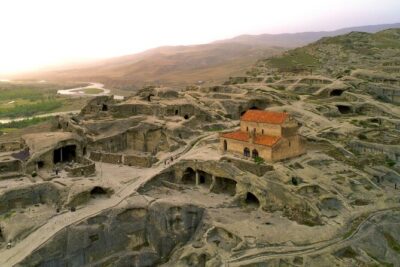
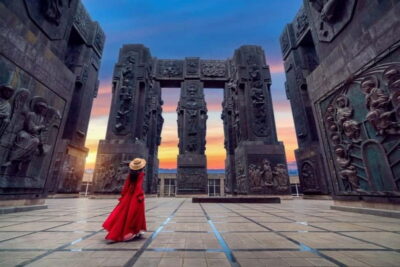
Mtskheta Jvari Bazaar, Chronicles of Georgia & Wine
Read our review →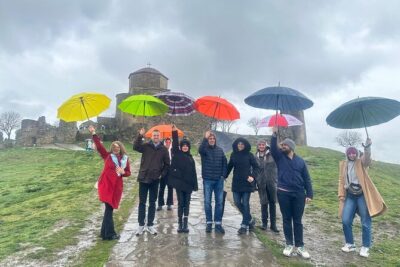
Mtskheta,Jvari,Bazaar,wine tasting,Chronicles of Georgia
Read our review →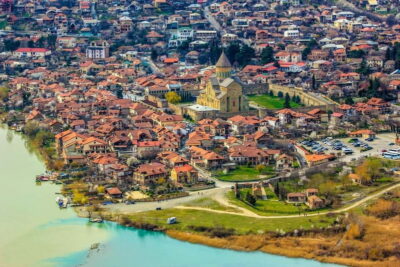
The Chronicles of Georgia, Jvari & Mtskheta Tour
Read our review →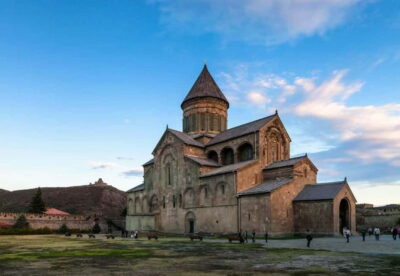
Browse the lists this tour appears in