Reviewed · TBILISI TOURS
Maia and Nina’s Magic Kitchen
Food can explain a country quickly. Maia and Nina’s Magic Kitchen gives you a private, hands-on introduction to Georgian cooking in Tbilisi, with time to prepare traditional dishes, ask questions, and sit down for the meal you helped make. I especially like the personal setting and the fact that this is a real cooking lesson, not simply a demonstration. You also get a useful cultural exchange over dinner, local red wine, and conversation with Maia and Nina.
The main consideration is the location and transport. Pickup and drop-off are offered at Vaja-Pshavela Metro, but private transportation is not included, so you need to reach that meeting point yourself. The class takes about two and a half hours, and the food is generous, which may mean carrying leftovers back to your hotel.
In This Review
- Key points to know before booking
- Why this cooking class feels personal
- The cooking session: khinkali, khachapuri, and Georgian starters
- Making khinkali
- Preparing khachapuri
- Eggplant with walnuts
- Mushrooms baked with cheese
- From cooking lesson to Georgian dinner table
- What $70 buys you in Tbilisi
- Timing, meeting point, and the practical side
- Who will enjoy Maia and Nina’s kitchen most
- Small details that make the class useful at home
- Should you book Maia and Nina’s Magic Kitchen?
- FAQ
- Where does Maia and Nina’s Magic Kitchen take place?
- How long does the cooking class last?
- Is the class private?
- Is dinner included in the price?
- What dishes might I learn to make?
- Can dietary restrictions be accommodated?
- What is the cancellation policy?
Key points to know before booking
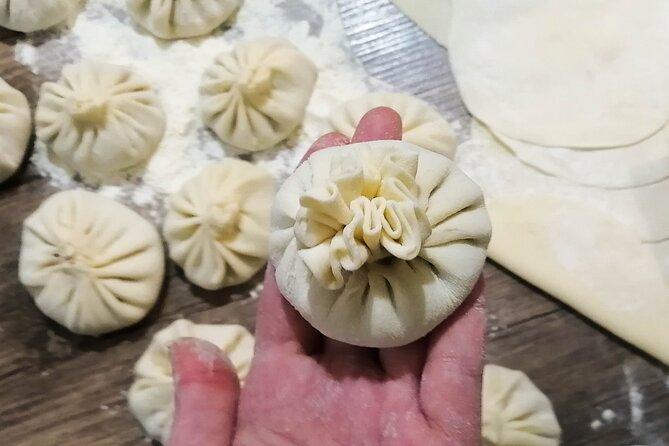
- Khinkali is made by hand: You learn the folding technique behind Georgia’s famous soup dumplings, with meat or vegetarian options depending on the menu.
- The class is private: Only your own party takes part, making it easier to ask questions and adjust the pace.
- Maia and Nina teach while you cook: Dough preparation may sometimes be done ahead of time when it needs several hours to rest, but the class remains practical rather than a watch-only demonstration.
- Dinner and wine are included: After cooking, you eat the meal together at the hosts’ dining table with local red wine.
- Leftovers may become tomorrow’s lunch: The portions are large, and the hosts have packaged extra food for people to take away.
- Dietary needs can be discussed ahead of time: Vegetarian menus have included potato khinkali, Adjaruli khachapuri, stuffed mushrooms, and walnut-filled eggplant.
Why this cooking class feels personal
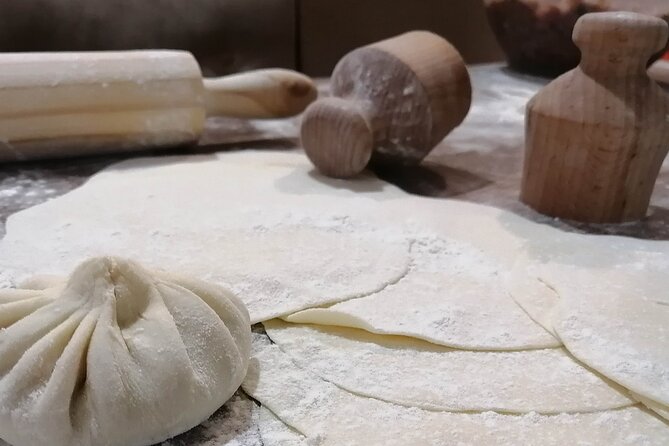
Many food classes take place in a polished studio with a row of identical workstations. This one happens in Maia and Nina’s home kitchen, followed by dinner in their living room. That setting gives the experience a more personal Georgian character, and it creates room for conversation that goes beyond ingredients and cooking times.
Maia and Nina are not simply showing you how to prepare food. They explain the steps, demonstrate techniques, and let you do the work. The class is suitable for beginners, and the hosts keep the flow moving by arranging the tasks so you are usually preparing one dish while another cooks.
That matters because Georgian food can look simple on the plate but involve some careful handling. Khinkali needs the right amount of filling and a neat series of folds. Khachapuri requires dough, cheese, and shaping. Eggplant with walnut paste depends on getting the balance between the roasted vegetable and the seasoned filling right.
You also have the chance to ask about the food as you go. Nina has shared advice on Georgian culture during dinner and offered recipes for later use. Some people have also received a completion certificate and a PDF containing the recipes made in class, along with additional recipes.
More things to do in Tbilisi:
- Tbilisi: Day Trip to Kazbegi, Gudauri, Gergeti, and Ananuri
★ 4.9 · 3,203 reviews - Day Trip to Kakheti Wine Region Including 9 Wine Tastings
★ 5.0 · 2,774 reviews - Highlights of Caucasus Mountains-Jinvali,Ananuri,Gudauri,Kazbegi(Group tour)
★ 5.0 · 2,682 reviews
The cooking session: khinkali, khachapuri, and Georgian starters
The exact menu can vary, so you should check the available choices when booking. A representative menu includes meat khinkali with beef and pork, cheese-filled khachapuri, eggplant wrapped around walnut sauce, and mushrooms with cheese baked in clay vessels.
Making khinkali
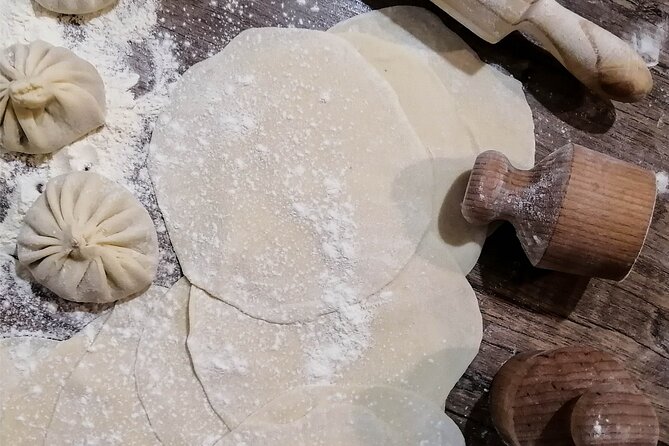
Khinkali is one of the best reasons to book this class. In a restaurant, you can eat these large Georgian dumplings with your hands, but making them gives you a better sense of the skill involved.
You work with the dough and filling, then learn how to shape and close each dumpling. The meat version uses beef and pork, while vegetarian classes have included potato khinkali. This flexibility is helpful if you do not eat meat, though you should state your needs before the class rather than wait until you arrive.
The dumplings are usually a fun part of the session because the technique takes practice. Do not expect every fold to look perfect at first. The point is to learn the method and enjoy the process, not to pass a Georgian pastry exam.
Preparing khachapuri
Khachapuri is Georgia’s famous cheese-filled bread, and it gives the class a different kind of task from khinkali. You learn how to work with the dough and cheese, then shape the bread according to the selected style.
Some menus have included Adjaruli khachapuri, the boat-shaped version associated with the country’s Black Sea region. Other menu details may change, so ask which form you will prepare. Either way, this is a substantial part of the meal, not a small tasting.
Because dough may need time to rest, Maia and Nina can prepare certain elements before you arrive. That is not a weakness in the class. It is a practical choice that lets you spend your limited time on the parts you can actually learn and repeat at home.
A completely different kind of day:
- From Tbilisi: Kakheti Wine Region Tour with 9 Wine Tastings
★ 4.9 · 2,541 reviews - Tbilisi: Mtskheta, Jvari, Gori and Uplistsikhe Day Tour
★ 4.9 · 2,396 reviews - From Tbilisi to Kazbegi, Ananuri, Gudauri & Gergeti
★ 4.9 · 2,278 reviews - Tbilisi: Kakheti Wine Region Tour with 10 Wine Tastings
★ 5.0 · 2,160 reviews
Eggplant with walnuts
Roasted eggplant with walnut paste is a classic Georgian starter and a good introduction to the country’s fondness for walnuts, herbs, and savory vegetable dishes. You prepare the walnut filling and wrap it in eggplant.
This dish is particularly useful for home cooks because it does not depend on specialist equipment. The technique is straightforward enough for a beginner, but the final result feels distinctly Georgian rather than like a generic vegetable appetizer.
Mushrooms baked with cheese
The mushroom starter is prepared with cheese and baked in clay vessels. This adds an oven-based dish to the menu and helps keep the class moving while you work on dumplings, bread, or other items.
A vegetarian menu has also included stuffed mushrooms. If you prefer a meat-free meal, Maia and Nina have shown that the menu can be adjusted, provided you communicate in advance.
From cooking lesson to Georgian dinner table
Once the dishes are ready, you stop working and eat. Dinner is included in the $70 price, along with local red wine, and the meal is served at the hosts’ table rather than sent out as a separate restaurant course.
This transition is one of the strongest parts of the experience. You have handled the dough, shaped the dumplings, prepared the fillings, and watched the food cook. Eating it afterward gives the meal a clear sense of place and effort.
The dinner also gives you time to talk with Maia and Nina about Georgia. That conversation is valuable if you want more than a recipe card. Food becomes a way to understand how people eat, host, and spend time together.
The portions appear to be generous. You might not finish everything during the meal, and the hosts have packaged leftovers for people to take back to their hotels. That is a practical bonus in Tbilisi, especially if you want an easy breakfast or lunch the next day. Bring room in your bag for containers, though the supplied information does not specify their size or packing method for every booking.
What $70 buys you in Tbilisi
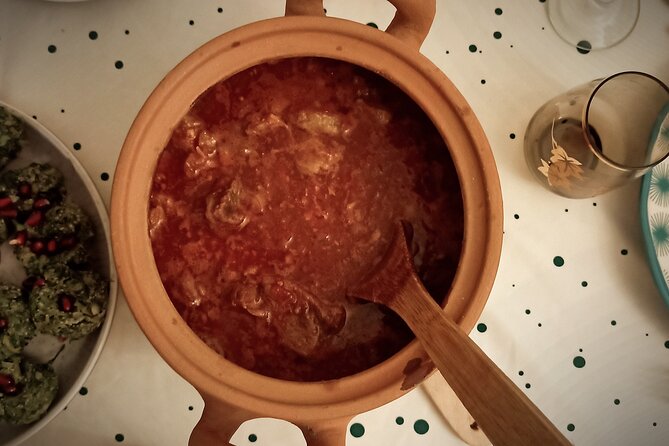
At $70 per person, this is not the cheapest way to eat Georgian food. You can order khinkali and khachapuri at a local restaurant for much less. The value comes from the instruction, private format, dinner, wine, and time spent with local hosts.
A private class is especially useful for couples, families, or a small group of friends. You are not sharing the kitchen with unrelated people, and you can ask for help with every stage of the cooking. Group discounts may also be available, which could make the price more attractive for a larger party.
The food itself adds value because you eat a full meal rather than a few samples. Several dishes may be prepared, and leftovers can stretch the benefit beyond the scheduled two and a half hours.
I would not book this simply to save money on dinner. I would book it if you want to understand Georgian food well enough to recreate some of it at home, and if you value a relaxed evening with local hosts.
Timing, meeting point, and the practical side
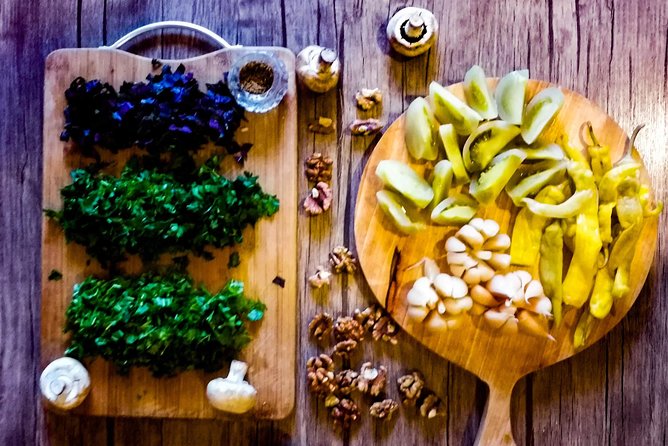
The experience lasts approximately two hours and 30 minutes. The cooking portion generally takes about one to two hours, followed by the meal and conversation. Allow enough time for the full visit rather than planning another tightly timed activity immediately afterward.
Pickup and drop-off are available at Vaja-Pshavela Metro. Private transportation is not included, so you need to make your own way to the metro meeting point. The listed start point is 24, T’bilisi, Georgia, and the activity ends back at the meeting point.
The experience is offered in English. Confirmation is provided when you book, and the class is private for your party only. Service animals are allowed, and the location is near public transportation.
The class is often booked about 30 days ahead. That is useful planning information if your dates in Tbilisi are fixed, especially if you want a private evening or need a vegetarian menu.
Cancellation is free up to 24 hours before the start time for a full refund. Changes or cancellations within 24 hours are not accepted for a refund. The experience also requires a minimum number of participants, and if the hosts cancel because that minimum is not met, you will be offered another date or experience, or a full refund.
Who will enjoy Maia and Nina’s kitchen most
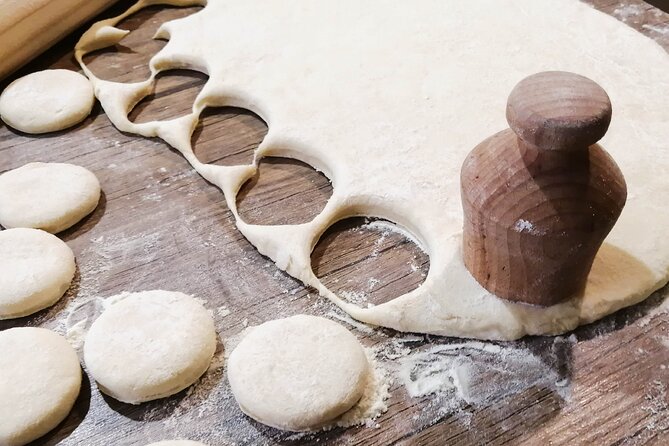
This class suits you if you enjoy doing rather than watching. It is a good choice for first-time cooks because Maia and Nina explain each step and prepare only the elements that genuinely need advance time, such as dough that must rest.
It also works well for families. The hosts have been flexible with children, and the hands-on tasks give younger participants something concrete to do. You should still share the ages of your children and any food restrictions in advance so the menu can be planned sensibly.
Vegetarians have a clear reason to consider this experience. Meat-free menus have included potato khinkali, Adjaruli khachapuri, stuffed mushrooms, and walnut-stuffed eggplant. Since the standard sample menu includes beef and pork khinkali, advance notice is important.
This may be less suitable if you dislike eating in a private home, prefer a short tasting, or need a fully independent schedule. The social part is not an optional extra. Cooking and dining with Maia and Nina are the heart of the experience.
Small details that make the class useful at home
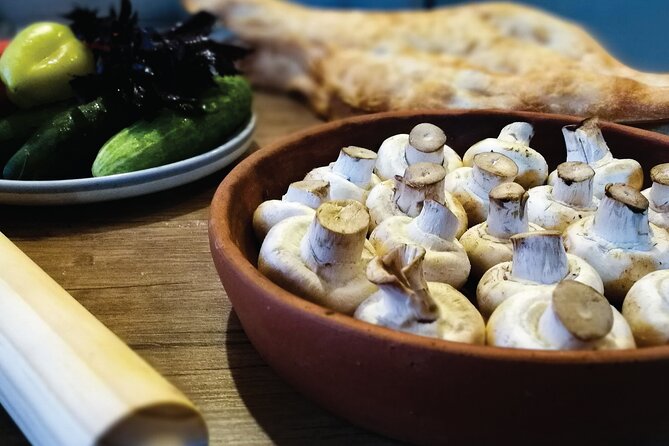
The strongest practical feature is the teaching. You do not just leave knowing that khinkali contains meat or that khachapuri contains cheese. You learn how the food is assembled and what to watch for while making it.
Recipe information is another useful takeaway. Nina has provided recipes and encouraged people to contact her later with questions. A certificate of completion has also been given to some participants, though you should confirm what will be provided for your booking.
The class can also help you order more intelligently during the rest of your time in Georgia. After making walnut-stuffed eggplant, you will recognize the flavor and texture when it appears on a restaurant table. After shaping khinkali, you will have a better appreciation for the folds and the broth held inside each dumpling.
The dinner conversation adds a human element that a standard restaurant meal cannot provide. You are not only learning names of dishes. You are spending an evening with two people who are happy to explain their food and culture.
Should you book Maia and Nina’s Magic Kitchen?
Yes, if you want a personal Georgian food experience rather than a simple meal. The private format, hands-on instruction, generous portions, recipes, and dinner with Maia and Nina make the $70 price reasonable for people who value connection and practical skills.
I would especially recommend it for couples, families, small groups, vegetarian diners who arrange the menu ahead of time, and anyone who wants to recreate Georgian dishes after returning home. The main cautions are the need to reach Vaja-Pshavela Metro yourself, the two-and-a-half-hour commitment, and the fact that this is a home-based social experience.
Book ahead if your schedule is fixed. Then arrive ready to fold imperfect dumplings, eat more than you expect, and carry a little Georgian cooking home with you.
FAQ
Where does Maia and Nina’s Magic Kitchen take place?
The experience begins at 24, T’bilisi, Georgia. Pickup and drop-off are offered at Vaja-Pshavela Metro, and the activity ends back at the meeting point.
How long does the cooking class last?
The full experience lasts approximately two hours and 30 minutes. The cooking portion takes about one to two hours, followed by dinner and conversation.
Is the class private?
Yes. Only your own group participates in the activity.
Is dinner included in the price?
Yes. Dinner is included, along with local red wine.
What dishes might I learn to make?
A sample menu includes beef and pork khinkali, cheese-filled khachapuri, eggplant with walnut sauce, and mushrooms with cheese baked in clay vessels. Other menus can include vegetarian dishes such as potato khinkali, Adjaruli khachapuri, stuffed mushrooms, and walnut-stuffed eggplant.
Can dietary restrictions be accommodated?
You should provide your preferences and dietary restrictions in the booking form before the class. Vegetarian menus have been offered.
What is the cancellation policy?
You can cancel at least 24 hours before the experience for a full refund. Cancellations or changes made within 24 hours are not refunded or accepted.
Just added in Tbilisi
- Wine Tasting feel the Difference of Qvevri or Classical Wine★ 4.4 · 10 reviews
- From Tbilisi: Kakheti and Kazbegi 2-Day 4X4 Jeep Tour pack★ 5.0 · 6 reviews
- Walking Tour in Old Tbilisi – Group Tour★ 4.5 · 8 reviews
- Uforgatable Kakheti Tour with wine tasting – in Georgia★ 4.9 · 5 reviews
- From Tbilisi: Uplistsikhe Caves and Mtskheta Town Day tour★ 5.0 · 2 reviews
- Tbilisi: Vintage Fashion and Secondhand Thrifting Tour★ 5.0 · 11 reviews
- Tbilisi Airport to Gudauri, Bakuriani, Batumi, Tbilisi★ 5.0 · 3 reviews
- Private Adorable City Tour of Tbilisi★ 5.0 · 3 reviews
Tbilisi Tours, compared.

Day Trip to Kazbegi, Gudauri, Gergeti, and Ananuri
Read our review →
Day Trip to Kakheti Wine Region Including 9 Wine Tastings
Read our review →
Highlights of Caucasus Mountains-Jinvali,Ananuri,Gudauri,Kazbegi(Group tour)
Read our review →
Kakheti Wine Region Tour with 9 Wine Tastings
Read our review →
Mtskheta, Jvari, Gori and Uplistsikhe Day Tour
Read our review →
From Tbilisi to Kazbegi, Ananuri, Gudauri & Gergeti
Read our review →
Kakheti Wine Region Tour with 10 Wine Tastings
Read our review →