
Reviewed · KUTAISI TOURS
Kutaisi: Tskaltubo Abandoned Soviet-Era Spas Tour
The past is still standing in Tskaltubo. This four-hour trip from Kutaisi takes you through abandoned Soviet sanatoriums, ornate bathhouses, empty theaters, and hotel corridors where nature is slowly moving in. You get far more than a quick photo stop: the guide explains how Tskaltubo became a famous spa town, why its mineral waters were called the waters of immortality, and what caused its decline.
I especially like the access to Sanatorium Medea, with its long colonnade, fountains, sculptures, and original 1960s interiors. I also like the small-group format, limited to seven people, since it gives you room to ask questions and move carefully through the buildings. The main drawback is the condition of the sites. Broken glass, trash, crumbling concrete, and uneven floors are part of the experience, so this is not a polished sightseeing tour.
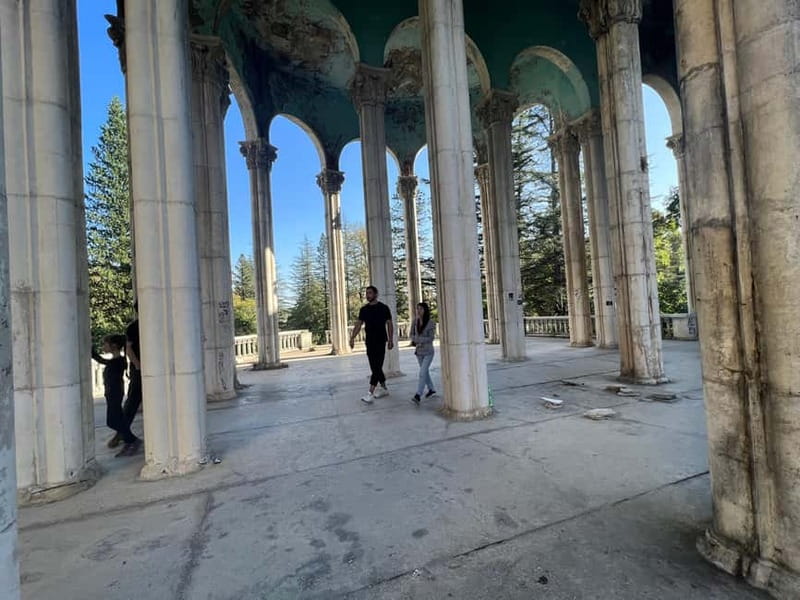
- Sanatorium Medea: Photograph the grand colonnade, old rooms, courtyards, fountains, and Soviet-era decorative details.
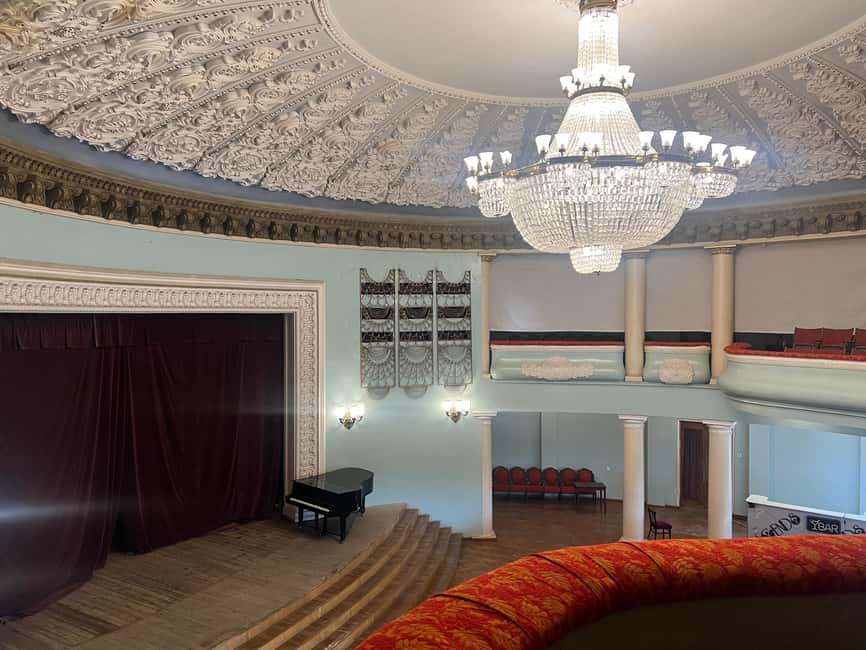
- Sanatorium Metallurgist: See the huge entrance chandelier, metalwork, theater hall, and former restaurant.
- Spring N6: Visit one of Tskaltubo’s few working bathhouses and a bath built especially for Stalin.
- Abandoned bathhouse: Finish with a short visit to another disused spa building.
- Small English-language group: The group limit of seven allows a more personal pace and easier questions.
- Serious Urbex conditions: Wear sturdy shoes and expect hazards inside the buildings.
In This Review
- Why Tskaltubo Feels So Different From Kutaisi
- Meeting the Guide in Kutaisi
- Sanatorium Medea: Colonnades, Rooms, and Fountains
- Sanatorium Metallurgist and Its Empty Public Rooms
- Spring N6 and the Bathhouse Built for Stalin
- The Final Abandoned Bathhouse
- Safety Comes Before the Perfect Photograph
- How Much Time You Really Get
- Value, Flexibility, and Who Should Go
- Should You Book the Tskaltubo Tour?
- FAQ
- How long does the Tskaltubo tour last?
- Where does the tour begin?
- Where does the tour end?
- What language is the tour conducted in?
- How large is the group?
- Which sanatoriums are included?
- What is special about Spring N6?
- Are meals and drinks included?
- What should I wear?
- Is the tour suitable for children or people with mobility impairments?
- Can the locations change?
- Can I cancel the booking?
Why Tskaltubo Feels So Different From Kutaisi
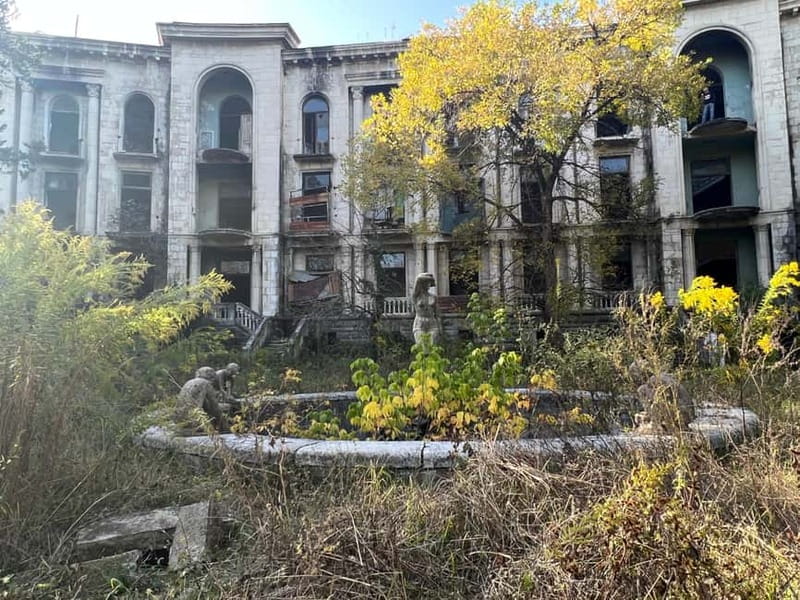
Tskaltubo is close enough to Kutaisi for an easy half-day outing, yet the mood changes quickly. Instead of busy streets and active city life, you encounter large buildings that once served a great many spa visitors. Their scale is striking. These were not modest local bathhouses, but grand Soviet institutions designed to impress.
The town became known for mineral waters believed to have healing powers. The waters were also called the waters of immortality, a name that tells you how important the spa was in its best years. People came for treatments, rest, and the status attached to a stay at a fashionable resort.
The tour also gives you a useful way to understand the town’s rise and fall. You see the polished ambition in the architecture, then the neglect that followed. In some rooms, original details remain. In others, plants, weather, and decay have taken over. That contrast gives Tskaltubo its unusual atmosphere.
I would not treat this as simple ruin photography. The buildings help explain a part of Georgia’s Soviet past that is difficult to understand from museums or city tours alone. You are walking through spaces built for comfort, ceremony, and state-sponsored leisure, now stripped of their former purpose.
Meeting the Guide in Kutaisi
The meeting point is at the columns by Kutaisi Central Park, across from the Colchis Fountain. The park is fenced and under construction, so you should use the fountain and the columns as your main landmarks rather than expecting a normal park entrance.
From there, transportation to Tskaltubo and back is included. That matters because the sites are spread around the spa town, and arranging separate transport would make the half-day less simple. The activity lasts about four hours, with available starting times shown during booking.
The tour is conducted in English and limited to seven participants. That is a useful size for abandoned buildings. A large group would make narrow corridors harder to manage and could turn the visit into a slow queue. In a small group, you can ask about a particular room, architectural detail, or period of the town’s history.
Several guides receive especially warm praise for their friendly manner and flexibility. Ana, Anna, Eva, and Teona are named in the feedback, with Eva praised for creating a safe and interesting experience and Teona for answering questions and driving well. Since the guide assigned to your departure may differ, it is best to think of the strong personal attention as part of the company’s approach rather than expect one particular guide.
More things to do in Kutaisi:
- From Tbilisi: Kutaisi Canyons and Caves Full Day Tour
★ 4.8 · 1,051 reviews - Kutaisi: Martvili & Okatse Canyons & Prometheus Cave Tour
★ 4.9 · 829 reviews - From Kutaisi: Guided Tour of Okatse, Martvili, & Prometheus
★ 4.8 · 520 reviews
Sanatorium Medea: Colonnades, Rooms, and Fountains
Sanatorium Medea is an excellent first stop because it shows the grand side of Tskaltubo immediately. Built between 1954 and 1962, it has the broad, formal appearance associated with major Soviet resort architecture.
The colonnade is the obvious photo spot. Its repeated columns create strong lines and give you a sense of the building’s former importance. It was designed to welcome spa visitors in style, not simply provide a roof over treatment rooms.
Inside, you can explore hotel rooms that retain original 1960s interiors. Do not expect every room to look untouched. The appeal comes from fragments: an arrangement of walls, old fittings, faded surfaces, or a glimpse of how the rooms once worked as part of a large resort hotel.
The patios add another layer. Fountains and sculptures remain in some areas, though they are surrounded by decay. That mixture can feel beautiful and unsettling at the same time. Nature has not erased the architecture completely, but it has begun to claim corners, courtyards, and open spaces.
You should move slowly here and let the guide point out details. The best photographs may not be the grandest views. A corridor, a worn doorway, or a decorative element can show the building’s age more clearly than a wide shot of the facade.
Sanatorium Metallurgist and Its Empty Public Rooms
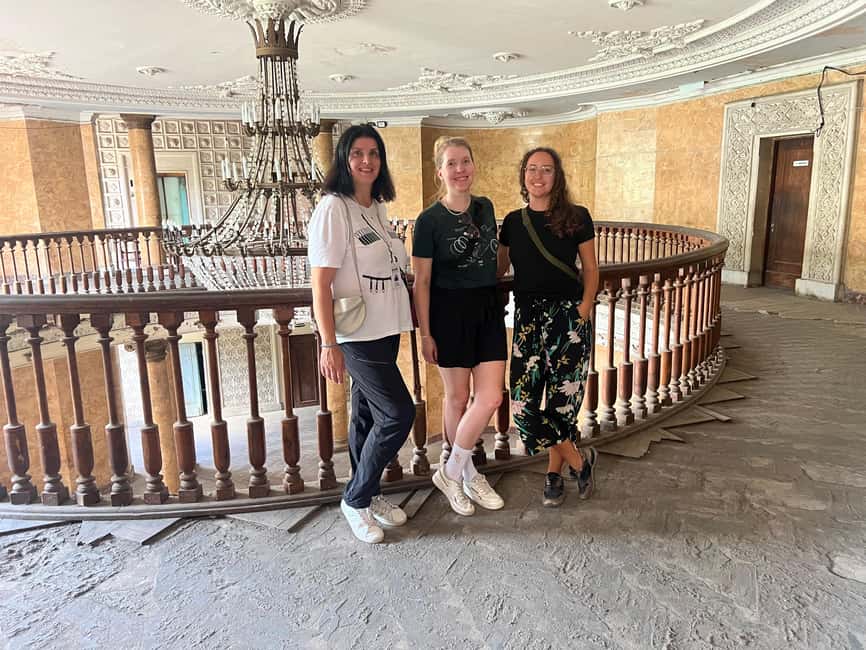
Metallurgist offers a different mood. The entrance features a huge chandelier, an extravagant touch that gives the building a theatrical arrival point. It is easy to picture the original hotel as a place where visitors were meant to feel that they had entered somewhere important.
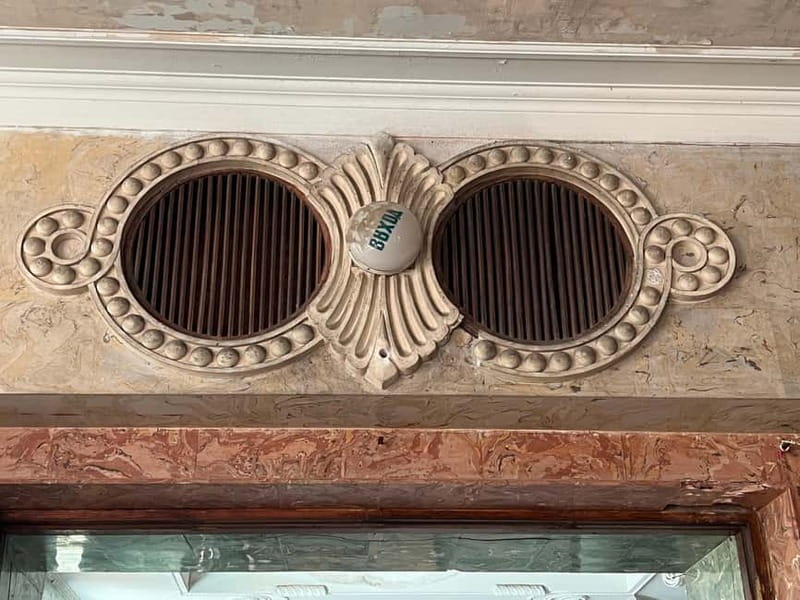
The metalwork throughout the building is another feature to watch for. Decorative metal details can be easy to miss if you hurry, especially in a building where your attention is pulled toward broken surfaces and open ceilings. Your guide helps connect these details to the building’s former design.
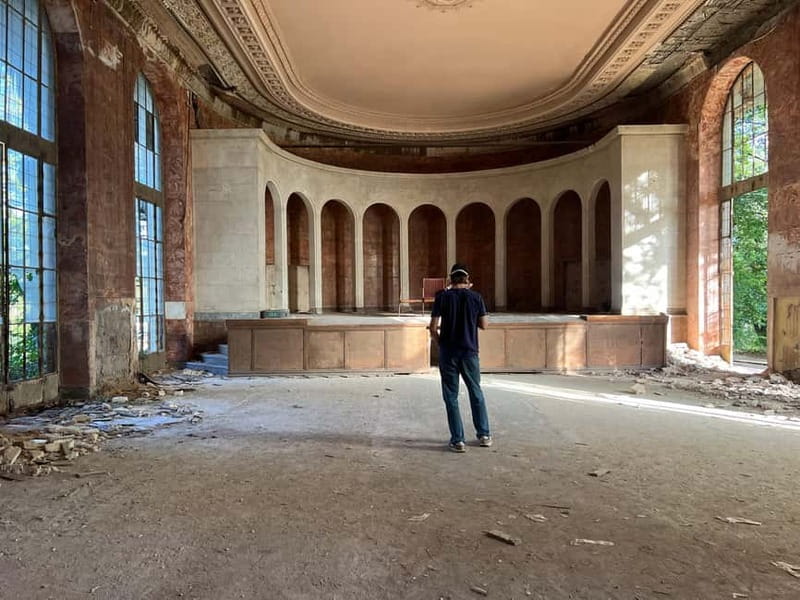
The tour continues through corridors and into larger public rooms. The old theater hall is one of the more memorable spaces, since it hints at the social life that once filled the sanatorium. A spa stay was not only about medical treatment. It also involved entertainment, conversation, dining, and formal public areas.
The restaurant hall gives another sense of scale. These buildings were made to serve many people, and the large rooms show how organized and communal the resort experience once was. Today, an empty restaurant or theater can feel more powerful than a preserved room because the silence makes the change unmistakable.
A practical note: the interiors are not restored. You may find broken glass, splintered wood, trash, and crumbling concrete. The exact route can change if a building becomes inaccessible. That flexibility is sensible, but it means you should view the itinerary as a guided exploration rather than a fixed museum visit.
Spring N6 and the Bathhouse Built for Stalin
Spring N6 provides an important contrast to the abandoned sanatoriums. It is one of the few working bathhouses still operating in Tskaltubo, so you can see that the spa tradition has not vanished entirely.
The most unusual feature is a bathhouse built especially for Stalin’s visit to Tskaltubo. This detail gives the town’s story a direct connection to Soviet political history. It also shows how much importance the resort once carried. A special facility for a major leader was not an ordinary part of a provincial spa.
This stop helps prevent the tour from becoming only a series of ruins. You see an active part of the town’s bathing tradition alongside buildings that have been left behind. The contrast makes the decline easier to understand, while also showing that Tskaltubo is not simply an abandoned movie set.
You should listen closely here because the working bathhouse has a different feel from Medea and Metallurgist. It is less about wandering through empty rooms and more about understanding the function that made the town famous in the first place.
A completely different kind of day:
- Kutaisi Canyons and Caves from Tbilisi Full Day Tour
★ 5.0 · 448 reviews - Kutaisi:Chiatura Tour with Katskhi Pillar & Cable Car
★ 4.9 · 433 reviews - CANYONS & CAVE Tour from Kutaisi – Okatse, Martvili & Prometheus
★ 4.5 · 307 reviews - Kutaisi: Prometheus Cave & Martvili Canyon Guided Tours
★ 4.7 · 206 reviews
The Final Abandoned Bathhouse
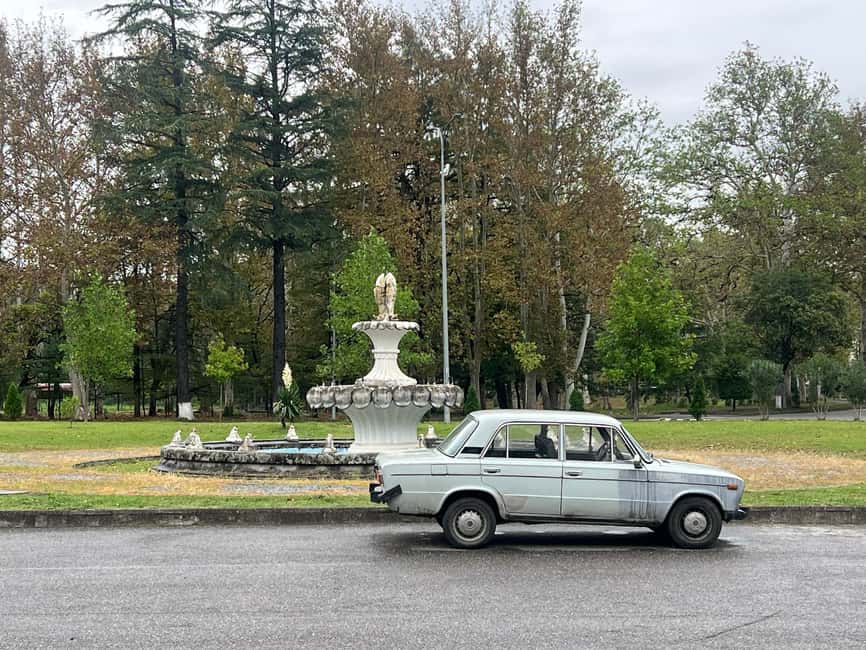
Before returning to Kutaisi, the tour includes a short visit to an abandoned bathhouse nearby. This is a smaller part of the route, but it rounds out the experience by showing another type of spa building.
Bathhouses were central to Tskaltubo’s identity, and this stop lets you see one in a disused state after visiting Spring N6 in operation. The comparison is useful. You can think about how the same basic purpose can lead to two very different settings: one maintained and functioning, the other exposed to neglect.
Because the visit is short and conditions vary, you should not expect a fully accessible building or a long exploration. Treat it as a final atmospheric stop, not the main event. The most important thing is to follow the guide and avoid entering areas that look unstable.
Safety Comes Before the Perfect Photograph
This tour requires more care than a standard walking excursion. The buildings are abandoned, and the hazards are real. Broken glass, splintered wood, loose material, uneven surfaces, and crumbling concrete may appear along the route.
Wear comfortable walking shoes with solid soles. Water is also important, since you will spend much of the four hours walking through large sites and uneven areas. Bring a camera, but keep your attention on where you place your feet.
The basic Urbex rule applies here: take nothing but photographs and leave nothing but footprints. Do not move objects, climb unstable structures, or treat a dramatic room as a safe stage for a photograph. The guide can show you the most interesting areas, but cannot remove the risks created by years of neglect.
The tour is not suitable for children under 12, pregnant women, or people with mobility impairments. That is not a minor technical restriction. The physical conditions of the buildings make it important to be honest about what you can manage.
How Much Time You Really Get
Four hours is enough to see several major sites without turning the day into an exhausting ruin marathon. The schedule allows you to visit Medea, Metallurgist, Spring N6, and an abandoned bathhouse while still leaving time for explanations and photographs.
One possible weakness is that you may want more. Tskaltubo contains enough unusual buildings to keep an architecture fan interested beyond the scheduled route. The tour is designed as a half-day experience, not a full survey of every sanatorium in town.
That shorter length works well if you are fitting Tskaltubo around other Kutaisi plans. It also keeps the experience focused. You get the key contrasts: a grand sanatorium, a decorative hotel interior, an active bathhouse, and another abandoned site.
Starting times depend on availability. Since this is a small-group activity, you should check the departure options that fit your schedule rather than assume a fixed daily time.
Value, Flexibility, and Who Should Go
No price is provided here, so I cannot judge the exact cost. The value depends on how much you would pay for transport, local access, safety guidance, and historical explanation as separate parts of the outing.
For most people, the transport is useful. The small group is also valuable because the guide can keep the route manageable and respond to your interests. Several past departures became private outings when only one booking was made, although you should not count on that happening.
The strongest value comes if you are interested in Soviet architecture, abandoned places, photography, or unusual local history. The tour is less suitable if you want restored interiors, smooth paths, formal museum displays, or a relaxed sightseeing ride.
You may also enjoy it if you like discussions that extend beyond architecture. The guide can place the buildings within wider conversations about Georgian history, politics, literature, and the changes of the 1990s. That extra context helps the empty rooms feel connected to real people and events.
Free cancellation up to 24 hours before the activity and the option to reserve now and pay later add useful flexibility. Meals and drinks are not included, so arrange your own food and water for the half-day.
Should You Book the Tskaltubo Tour?
Book it if you want to see a side of Georgia that is unusual, visually strong, and not polished for easy tourism. The combination of Medea’s colonnade, Metallurgist’s chandelier and theater, Spring N6, and Stalin’s special bathhouse gives you a clear story rather than a random collection of ruins.
I would especially recommend it to adults and older teenagers who can walk carefully on rough surfaces. It is a good choice for a Kutaisi day plan because the tour lasts four hours and returns to the central meeting point.
Skip it if you dislike decay, confined corridors, unstable surfaces, or places where the route may change. But if you accept the conditions and follow the safety rules, this is one of the more distinctive short excursions from Kutaisi. The buildings may eventually be sold to investors, so access could change. That possibility gives the visit a practical urgency, but the tour is worth choosing for the history and architecture, not only for the fear of missing out.
FAQ
How long does the Tskaltubo tour last?
The tour lasts four hours, including transportation from Kutaisi and the return to the meeting point.
Where does the tour begin?
The guide meets participants at the columns by Kutaisi Central Park, across from the Colchis Fountain. The park is currently fenced and under construction.
Where does the tour end?
The activity ends back at the same meeting point in Kutaisi.
What language is the tour conducted in?
The tour is conducted in English with a live guide.
How large is the group?
The group is limited to seven participants.
Which sanatoriums are included?
The tour includes visits to Sanatorium Medea and Sanatorium Metallurgist, along with an exploration of an abandoned bathhouse.
What is special about Spring N6?
Spring N6 is one of the few working bathhouses left in Tskaltubo. It also includes a bathhouse built especially for Stalin’s visit.
Are meals and drinks included?
No. Meals and drinks are not included. You should bring water.
What should I wear?
Wear comfortable walking shoes because the route includes uneven surfaces inside abandoned buildings. Bring a camera if you want to photograph the architecture.
Is the tour suitable for children or people with mobility impairments?
The tour is not suitable for children under 12, pregnant women, or people with mobility impairments.
Can the locations change?
Yes. The locations may change if a building becomes inaccessible.
Can I cancel the booking?
You can cancel up to 24 hours in advance for a full refund. The reserve-now, pay-later option is also available.
Just added in Kutaisi
- Wine & Dine group tour from Kutaisi★ 4.6 · 3 reviews
- Wild Caving Experience in Melouri Cave Near Kutaisi★ 5.0 · 3 reviews
- Private tour from KUTAISI: Bagrati, Gelati and Motsameta★ 5.0 · 5 reviews
- Private Car – From Tbilisi, Kutaisi, Martvili Canyons, caves★ 5.0 · 1 review
- Full Day Tour To Kutaisi, Prometheus Caves, Bagrati and Gelati★ 5.0 · 1 review
- Tour to Kutaisi from Tbilisi (Sataplia Reserve, Bagrati, Gelati, Motsameta)★ 5.0 · 2 reviews
- Kutaisi, Martvili Canyon & Prometheus Cave Tour from Tbilisi★ 5.0 · 3 reviews
- 2-Day Kutaisi Tour: Caves, Canyons & Soviet Sanatoriums★ 5.0 · 12 reviews
Kutaisi Tours, compared.
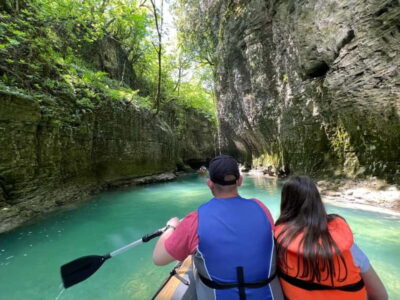
Martvili & Okatse Canyons & Prometheus Cave Tour
Read our review →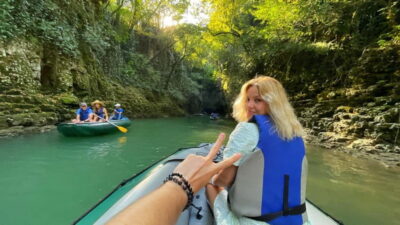
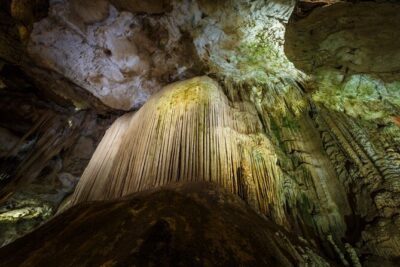
Kutaisi Canyons and Caves from Tbilisi Full Day Tour
Read our review →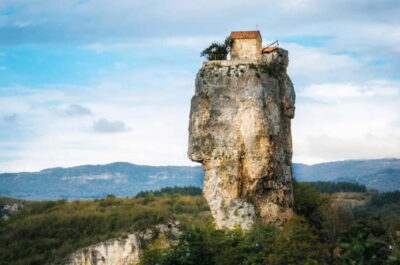
CANYONS & CAVE Tour from Kutaisi – Okatse, Martvili & Prometheus
Read our review →
Prometheus Cave, Martvili & Okatse Canyon from Kutaisi
Read our review →Browse the lists this tour appears in