
Reviewed · KUTAISI TOURS
Kutaisi city tour
Kutaisi reveals itself one bridge at a time. This private, two-hour walking tour links the city’s grand fountain, opera house, old Jewish quarter, market, historic bridges, and Bagrati Cathedral, giving you a useful first look at western Georgia’s cultural center. I especially like the private format, since your group can focus on questions and move at a sensible pace. I also like the local food advice associated with guide Tornike, who is praised for pointing people toward authentic places to eat.
The main consideration is the $56 per person price for roughly two hours. That can be fair for a private English-language tour, especially if you are traveling with a small group, but it is not the cheapest way to see Kutaisi. The schedule is also tight, so this is best viewed as an introduction rather than a slow, detailed visit to every site.
In This Review
- Key points about this Kutaisi walk
- Starting at Colchis Fountain in central Kutaisi
- The opera house and Kutaisi’s public face
- Bridges, river views, and the White Bridge
- The Great Synagogue and the old houses nearby
- Kutaisi Market: the most everyday stop
- The Chain Bridge, Kutaisi’s oldest crossing
- Ending at Bagrati Cathedral above the city
- What $56 per person buys you
- Pace, group size, and practical planning
- Who will get the most from this tour?
- Should you book the Kutaisi city tour?
- FAQ
- How much does the Kutaisi city tour cost?
- How long does the tour last?
- Is the tour private?
- What language is the tour offered in?
- Where does the tour begin and end?
- Can I cancel for a full refund?
Key points about this Kutaisi walk
- Colchis Fountain gives you a quick city orientation before the tour moves into Kutaisi’s streets and landmarks.
- The private format keeps the pace flexible and lets your group ask about local history, architecture, and food.
- The historic district near the Great Synagogue includes centuries-old houses, making it one of the most atmospheric parts of the route.
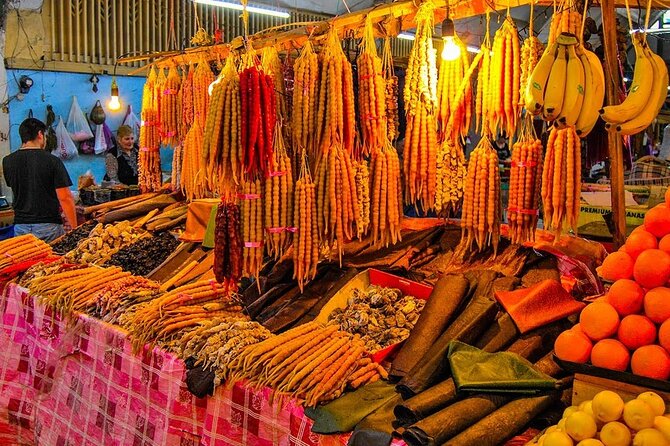
- Kutaisi Market adds everyday local life to a tour otherwise centered on monuments and historic buildings.
- Bagrati Cathedral closes the route with city views, giving you a strong visual sense of Kutaisi.
- Tornike is a useful guide choice if you want personal stories and practical recommendations for eating in town.
Starting at Colchis Fountain in central Kutaisi
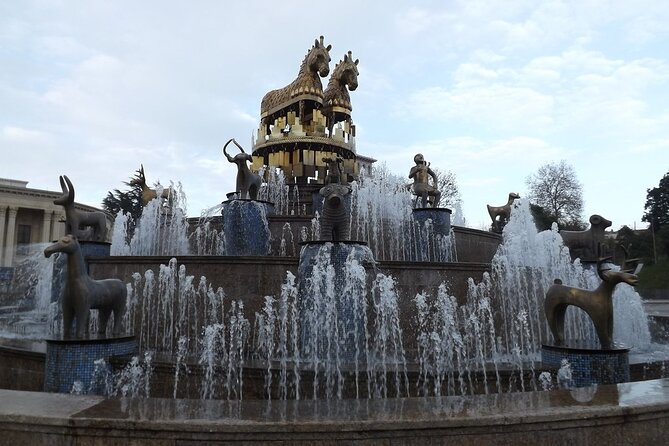
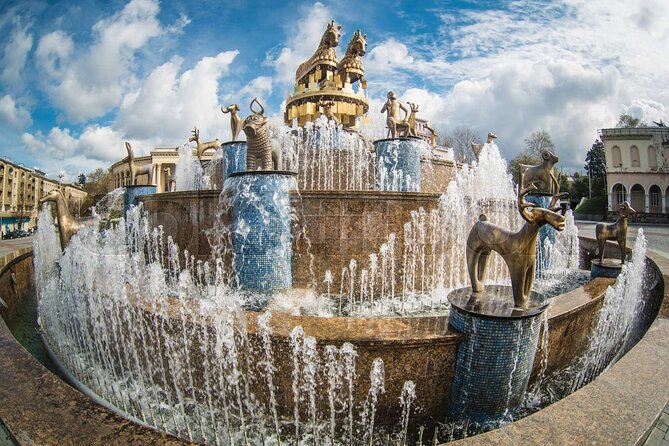
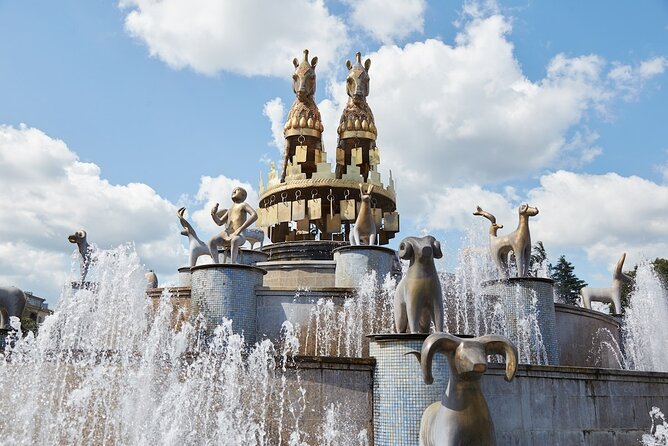
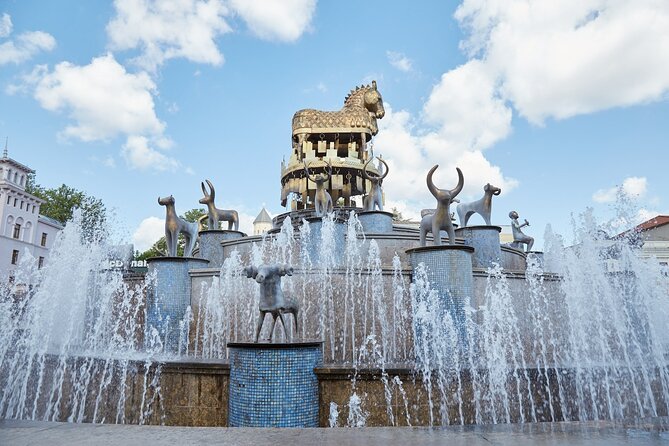
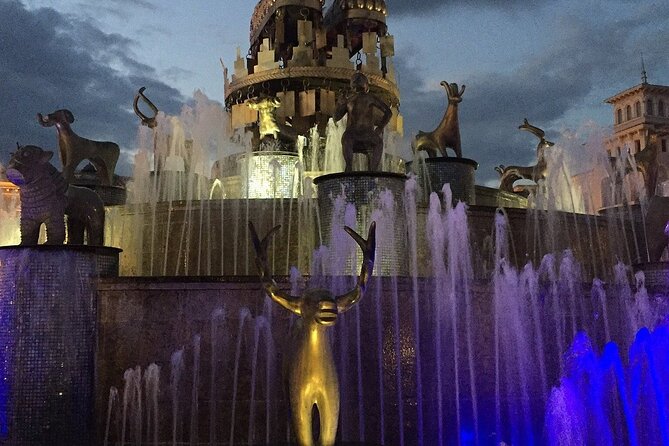
The tour begins at Colchis Fountain, listed at location 7PC4+H5X in Kutaisi. You spend about 20 minutes here, with roughly 10 minutes devoted to an introduction to the city and its past.
That opening matters. Kutaisi can feel less immediately ordered than a compact old town built around one main square. A short orientation helps you understand how the central streets, river crossings, older neighborhoods, and hilltop cathedral fit together. I would use this first stop to ask your guide how the rest of the route connects, especially if you plan to explore on your own afterward.
The fountain itself also gives the tour a clear meeting point. Since the experience returns to the same location, you do not need to work out a separate end point or arrange a pickup across town. The supplied details do not promise hotel transportation, so you should plan to reach the fountain independently.
This first stop is not a long monument visit. Think of it as the opening chapter, not the main event. If you arrive early, you can get settled before the guide begins and keep the introduction focused on questions that will help you read the city during the rest of the walk.
More things to do in Kutaisi:
- From Tbilisi: Kutaisi Canyons and Caves Full Day Tour
★ 4.8 · 1,051 reviews - Kutaisi: Martvili & Okatse Canyons & Prometheus Cave Tour
★ 4.9 · 829 reviews - From Kutaisi: Guided Tour of Okatse, Martvili, & Prometheus
★ 4.8 · 520 reviews
The opera house and Kutaisi’s public face
The next pause is at the Kutaisi State Opera and Ballet Theatre. The scheduled time is about 10 minutes, enough for a short explanation of the building and the monuments nearby.
This is a brief stop, but it adds a different side of Kutaisi. The fountain introduces the city through a public square. The opera house shifts attention to formal architecture, cultural life, and the buildings that gave the city a more polished civic identity. Your guide can explain what you are looking at instead of leaving you to guess which details matter.
Do not expect a performance or a long interior visit. The tour description only promises an outside stop and an explanation of the building’s history. That is useful for orientation, but anyone hoping to spend time inside should treat that as a separate plan.
The short timing also tells you something about the tour’s style. It is designed to connect several places rather than linger at one landmark. You get a broad look at Kutaisi, then can return later to the spots that catch your interest.
Bridges, river views, and the White Bridge
The White Bridge receives about 20 minutes. Here the subject changes from civic buildings to the ways Kutaisi has crossed and connected itself over time. The guide discusses the history and architecture of the bridges, giving you a reason to look beyond the water and notice structure, materials, and placement.
A bridge is often where a city becomes easiest to understand. It shows how neighborhoods relate to one another and how the river shapes daily movement. In Kutaisi, the bridges also give the tour natural pauses between districts. You can take in the surrounding scene without the stop feeling like a formal museum visit.
The White Bridge is a good place to ask practical questions about the city. If you want to return to the market, old quarter, or cathedral on your own, this is the sort of point where a local guide can help you understand the routes. The supplied details do not specify whether the tour enters any bridge-related buildings or includes a long riverside walk, so plan on a short guided stop rather than a separate river excursion.
Because the tour is private, you can make the most of this section by asking about the bridge’s design and the changes Kutaisi has experienced around it. A larger group might move on quickly. With your own party, the discussion can be more personal and focused.
The Great Synagogue and the old houses nearby
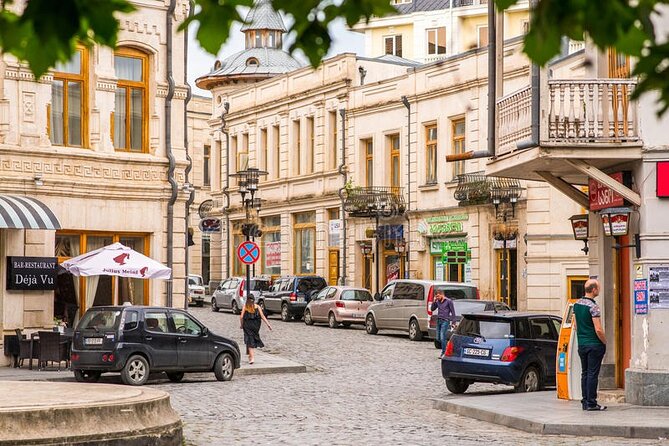
The stop at the Great Synagogue lasts about 20 minutes and takes you into the historic district. This is one of the strongest parts of the route because it adds texture to the city’s story. Instead of seeing Kutaisi only through major monuments, you look at the stages of its development through older streets and centuries-old houses.
The guide points out the architecture of these homes and explains how the city changed over time. That kind of commentary is valuable because old buildings can be easy to pass without understanding their purpose, age, or connection to the people who lived there. You are not simply collecting photographs. You are getting a framework for reading the neighborhood.
The Great Synagogue also broadens the cultural picture. Its presence reminds you that Kutaisi’s past includes different communities and traditions, not only royal, religious, or civic landmarks. The tour description does not state that you enter the synagogue, so expect to discuss the site and surrounding district rather than assume an interior visit.
This area may be especially rewarding for anyone who prefers ordinary streets to grand viewpoints. The old houses carry much of the city’s character, and the guide’s explanation can help you notice balconies, facades, and layers of repair that you might otherwise overlook. Still, 20 minutes passes quickly. If the architecture interests you, mark the district for a longer return visit.
More city tours in Kutaisi:
- Batumi City – Botanical Garden – Petra Fortress from Kutaisi
★ 4.7 · 59 reviews - KUTAISI: City Tour, Historical Churches, Plus Tskaltubo
★ 5.0 · 9 reviews - Day Tour to Georgian sky venice, Soviet city Chiatura
★ 5.0 · 5 reviews - Kutaisi, Wine & Dine – group tour around the city
★ 5.0 · 5 reviews
Kutaisi Market: the most everyday stop
The central market receives another 20 minutes. This is where the tour moves closest to daily life. Monumental sites tell you what a city chooses to preserve and display. A market shows what people buy, sell, prepare, and talk about now.
I like this stop because it breaks up the historical sequence. After the opera house, bridges, synagogue, and old homes, the market gives you a more direct sense of Kutaisi as a lived-in place. You can look at the stalls, notice the range of goods, and ask your guide about local foods. The detailed praise for Tornike highlights his help with authentic places to eat, which may be one of the most useful parts of the experience for food-minded visitors.
Keep your expectations realistic. The schedule provides time to see the central market, not to shop at length or sit down for a full meal. The details do not promise tastings, food purchases, or a cooking demonstration. If you want to buy something, you should ask your guide what is practical during the available time.
This is also a good moment to request restaurant suggestions for later. Tornike is specifically praised for personalized recommendations, so you may get more value from the conversation if you explain what sort of food and setting you prefer. The tour price includes the guide, not meals or market purchases.
The Chain Bridge, Kutaisi’s oldest crossing
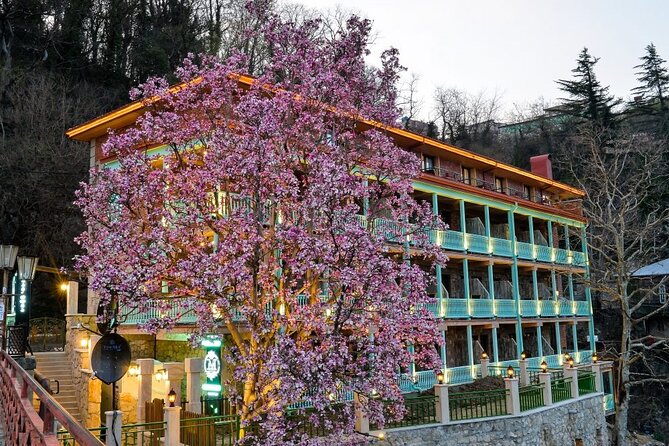
The route then reaches ჯაჭვის ხიდი, identified as the oldest bridge in the city. The stop lasts about 10 minutes, so it is a quick historical marker rather than a long architectural study.
Its place in the itinerary works well. The White Bridge gives you a longer discussion of bridge design and history, while the Chain Bridge lets you compare that earlier crossing with another stage in Kutaisi’s development. Even a short stop can make the city’s age feel more concrete, especially after seeing the older homes near the synagogue.
The Georgian name is included in the tour details, so it may be useful to confirm the pronunciation and meaning with your English-speaking guide. Small questions like that often make a place easier to remember. The tour is offered in English, and the guide’s role is to explain the history and architecture in accessible terms.
Ten minutes is enough for a quick look and discussion, but not enough for an unhurried photography session or a long walk around the crossing. If bridges are a special interest, you may want to revisit this one after the tour.
Ending at Bagrati Cathedral above the city
Bagrati Cathedral is the longest scheduled stop, at about 20 minutes. It is also the route’s natural finale, since the cathedral offers broad views over Kutaisi.
The setting gives the tour a strong finish. After seeing streets, buildings, bridges, and market life at ground level, you look out over the city and connect those pieces. From this vantage point, the earlier explanations about Kutaisi’s layout become easier to grasp.
The cathedral is described as protected by UNESCO, and its historic importance makes it one of the essential Kutaisi sights. The tour details focus on the building and the views rather than promising a long interior visit or a formal religious service. Dress and behavior should be respectful at a working place of worship, even if the visit is brief.
The views are a practical reason to keep this stop until the end. You can ask your guide to point out areas you have already seen and places worth visiting next. Since the tour returns to the Colchis Fountain meeting point, the cathedral is not the final drop-off location. Make sure you understand how the group will return to the starting point before setting off.
What $56 per person buys you
At $56 per person, this tour is priced as a private English-language introduction, not as a low-cost group walk. The value depends heavily on how many people are in your booking. A small group pays more per head, but you get the advantage of having the guide’s attention for your own questions and interests. Group discounts are available, which may improve the price for larger parties.
You are paying for interpretation as much as movement between sights. The route itself is easy to identify on a map. The useful part is hearing why the bridges matter, how the old district developed, what to notice in the architecture, and where to eat afterward.
The two-hour duration keeps the cost from becoming a full-day commitment. You can take the tour early in your stay, use it to get oriented, and then decide which places deserve more time. If you already know Kutaisi well, the price may feel high for a short overview. If you have limited time and want a personal guide, it can be a sensible purchase.
Admission is listed as free at every stop. That means your budget is not being spent on entry tickets. It also means the tour’s value rests on the guide, route, and conversation rather than on access to paid attractions.
Pace, group size, and practical planning
This is a private activity, so only your group participates. That is helpful for families, couples, and friends who want to keep the walk focused. It also makes it easier to pause for photos or ask about food, architecture, and local history without worrying about a large crowd.
The tour lasts approximately two hours, with scheduled stops ranging from 10 to 20 minutes. The timing suggests a steady city walk with short explanations at each place. Wear comfortable shoes and avoid packing the schedule too tightly afterward, since the duration is approximate.
The meeting point is Colchis Fountain, and the activity ends back there. The location is near public transportation, but no specific route or hotel pickup is provided in the supplied details. Service animals are allowed, and most people can participate.
You receive confirmation when booking. Free cancellation is available if you cancel at least 24 hours before the local start time. Cancellations or changes made less than 24 hours before the start are not accepted for a refund.
Who will get the most from this tour?
I would choose this tour if you are visiting Kutaisi for the first time and want a clear introduction without committing to a full-day outing. It suits people who enjoy a mix of architecture, local history, city views, and everyday market scenes.
It is also a good fit for anyone who values personal recommendations. Tornike’s praised food suggestions could be especially useful if you want to eat in places that feel connected to the city rather than simply choosing the nearest restaurant.
Families and private groups may appreciate the format, since the guide can keep the conversation suited to the group. History-minded visitors will enjoy the Great Synagogue district, old houses, bridges, and cathedral. Photographers will find several natural pauses, though the schedule does not allow long sessions at every stop.
I would be more cautious if you want extensive interior visits, a slow food tour, or a full historical study of each landmark. The route covers a lot in two hours, and that means each place receives only a short look.
Should you book the Kutaisi city tour?
Book it if you want a compact private orientation with an English-speaking guide, a useful mix of major sights, and personal advice about where to eat. The Great Synagogue district, central market, historic bridges, and Bagrati Cathedral give the tour more range than a simple monument loop.
Skip it if you prefer to explore slowly on your own or if $56 per person feels high for a two-hour overview. In that case, you could visit the free sights independently, then spend your time in the old district or market.
For a first visit, I think the tour makes the most sense near the beginning of your stay. You return to the fountain with a better sense of the city, a list of places worth revisiting, and possibly a good local meal recommendation from Tornike. That is a practical payoff for a short tour.
FAQ
How much does the Kutaisi city tour cost?
The price is $56 per person. Group discounts are available.
How long does the tour last?
The tour lasts approximately two hours.
Is the tour private?
Yes. Only your group participates in the activity.
What language is the tour offered in?
The tour is offered in English.
Where does the tour begin and end?
It begins at Colchis Fountain in Kutaisi, at location 7PC4+H5X. The activity ends back at the meeting point.
Can I cancel for a full refund?
Yes, if you cancel at least 24 hours before the experience start time. Cancellations or changes made less than 24 hours before the start are not accepted for a refund.
Just added in Kutaisi
- Wine & Dine group tour from Kutaisi★ 4.6 · 3 reviews
- Wild Caving Experience in Melouri Cave Near Kutaisi★ 5.0 · 3 reviews
- Private tour from KUTAISI: Bagrati, Gelati and Motsameta★ 5.0 · 5 reviews
- Private Car – From Tbilisi, Kutaisi, Martvili Canyons, caves★ 5.0 · 1 review
- Full Day Tour To Kutaisi, Prometheus Caves, Bagrati and Gelati★ 5.0 · 1 review
- Tour to Kutaisi from Tbilisi (Sataplia Reserve, Bagrati, Gelati, Motsameta)★ 5.0 · 2 reviews
- Kutaisi, Martvili Canyon & Prometheus Cave Tour from Tbilisi★ 5.0 · 3 reviews
- 2-Day Kutaisi Tour: Caves, Canyons & Soviet Sanatoriums★ 5.0 · 12 reviews
Kutaisi Tours, compared.

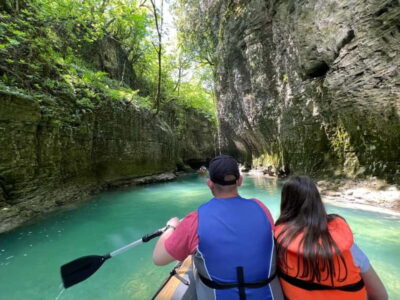
Martvili & Okatse Canyons & Prometheus Cave Tour
Read our review →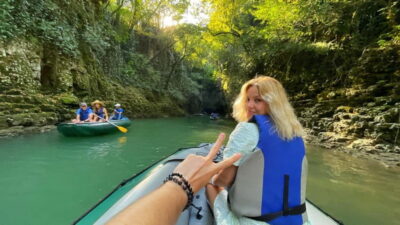
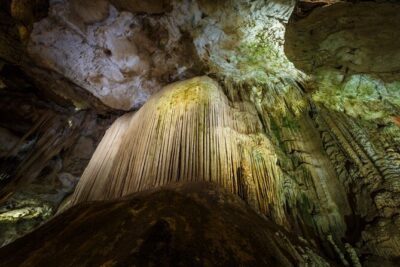
Kutaisi Canyons and Caves from Tbilisi Full Day Tour
Read our review →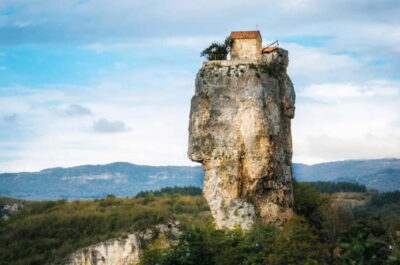
CANYONS & CAVE Tour from Kutaisi – Okatse, Martvili & Prometheus
Read our review →

Prometheus Cave, Martvili & Okatse Canyon from Kutaisi
Read our review →Browse the lists this tour appears in