
Reviewed · KUTAISI TOURS
Kutaisi: Chiatura Cable Cars & Katskhi Pillar Guided Tour
Georgia gets wonderfully strange here. This seven-hour trip combines Chiatura’s cliffside cable cars with the remarkable Katskhi Pillar and a quiet cave convent, giving you three very different views of western Georgia in one day. I like the unusual mix of Soviet industrial history and old religious sites, and I like the small group size, limited to seven people. The main drawback is the amount of time spent in the van, with about three and a half hours on the road.
At $28 per person, the tour offers strong value if you want to see places that are awkward to reach without a car. Guides such as Ana, Jemali, Sandra, Eva, and Jamal have been praised for their English, warmth, and willingness to adjust the day around the group. Bring snacks, wear shoes with a good grip, and expect a day that feels more like an outing with a local guide than a polished sightseeing production.
In This Review
- What makes this day trip special
- Leaving Kutaisi for the Katskhi Pillar
- Katskhi Pillar: a church above the valley
- Chiatura and the cable cars that shaped the town
- Soviet Chiatura beyond the cable cars
- Mghvimevi Convent, a quieter final stop
- The guide can make or break the experience
- Is $28 a good price?
- Practical tips for a smoother day
- Who should book this tour?
- FAQ
- How long does the tour last?
- Where does the tour start?
- Is the Chiatura cable car ride included?
- Is food included?
- What language does the guide speak?
- Can wheelchair users join?
- Should you book it?
What makes this day trip special
- Chiatura still uses cable cars as local transport: You ride a newer gondola line while old cars remain suspended on abandoned routes nearby.
- Katskhi Pillar rises 40 meters above the valley: A small church sits at its foot, while the top church and its former resident make the site especially unusual.
- Mghvimevi Convent is built into rock: Its cave spaces, frescoes, and sacred springs offer a peaceful contrast to Chiatura’s industrial setting.
- Small groups change the mood: With no more than seven participants, you can ask questions and avoid the feel of a crowded coach trip.
- The tour gives you western Georgia’s contrasts: Mining town, mountain scenery, Soviet-era monuments, Orthodox tradition, and forest roads all appear in one outing.
- The price includes the cable car ride: Transport, guiding, and the ride on one Chiatura line are covered, though food and drinks are not.
Leaving Kutaisi for the Katskhi Pillar
The day begins at the Kutaisi Central Park Columns, across from the Colchis Fountain. Because the park is fenced for construction, finding the exact pickup point may take a little care. The operator sends the vehicle and guide details by WhatsApp or email, so check those messages before leaving your accommodation.
The first drive takes about 80 minutes. That is a useful warning for anyone who prefers nonstop sightseeing. You will spend a good part of the morning watching western Georgian scenery pass by from the van, rather than walking from one sight to another.
The ride also helps explain why this is better booked as a guided trip than attempted as a quick public transport outing. Katskhi Pillar, Chiatura, and Mghvimevi are separate stops, and reaching them in the right order by local transport would take more time and planning. Here, the driver handles the distance while the guide fills in the setting and history.
The vehicle is described as a large 4×4 with room for a small group, rather than a full-size bus. That matters on a day with several hours of driving. You have a better chance of hearing the guide clearly, asking questions, and getting a more relaxed ride.
More things to do in Kutaisi:
- From Tbilisi: Kutaisi Canyons and Caves Full Day Tour
★ 4.8 · 1,051 reviews - Kutaisi: Martvili & Okatse Canyons & Prometheus Cave Tour
★ 4.9 · 829 reviews - From Kutaisi: Guided Tour of Okatse, Martvili, & Prometheus
★ 4.8 · 520 reviews
Katskhi Pillar: a church above the valley
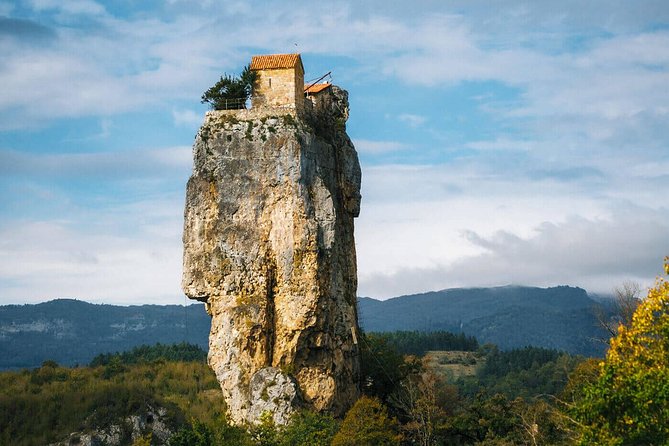
Katskhi Pillar is a 40-meter limestone monolith rising from the surrounding countryside. A small church sits at ground level, and you have around 40 minutes for a guided visit and photographs.
The pillar is striking because it looks less like a conventional hilltop church and more like a column of stone pushed up from the valley. The church on top is not simply an attractive viewpoint. It reflects a tradition of isolation and religious devotion that gives the place its force.
Your guide will explain the story of the monk who lived on top of the pillar in recent times, separated from ordinary life. That detail turns a quick photo stop into a human story. You are not just looking at an unusual rock. You are hearing about someone who chose an extremely demanding form of religious solitude.
The visit includes the small church at the foot of the pillar. Do not expect a long hike to the summit. The attraction is the view of the monolith, the church below, and the explanation of the site’s spiritual importance.
The 40-minute stop should be enough for photographs and a guided explanation, but it is not a long free period. If you want carefully composed pictures, use the drive to decide what you hope to capture. Weather also matters here. Mist or rain can soften the views, while clear conditions make the pillar easier to appreciate.
Chiatura and the cable cars that shaped the town
After about 20 minutes in the van, you reach Chiatura for roughly two hours of sightseeing. This is the heart of the excursion.
Chiatura grew around manganese mining and was once a leading center of the industry. The town sits among steep hills and narrow valleys, which made ordinary roads an inefficient way to move miners and residents. In the 1950s, Soviet authorities installed a cable car network to connect the town with its hillside communities and workplaces.
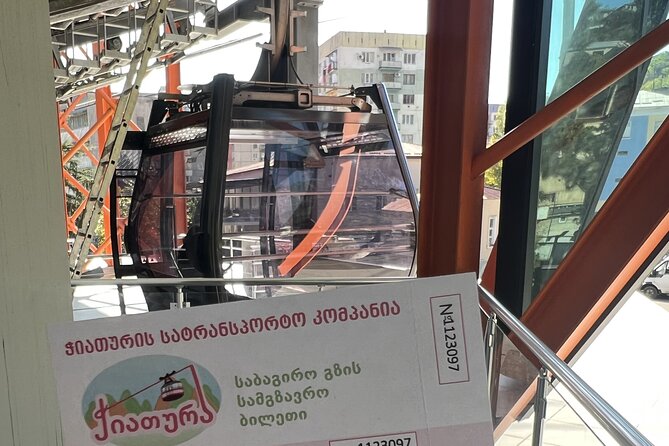
The unusual part is that cable cars were not built only for tourists. They became part of daily public transport. On this tour, you ride one of the newer gondola lifts, using the same basic system that still helps connect parts of Chiatura.
The ride gives you a different view of the town. Instead of seeing Chiatura from street level, you look across steep slopes and valleys from above. The aerial perspective helps you understand why the cable cars were practical in the first place. Roads wind through difficult terrain, while a cable can travel directly from one hillside to another.
The newer gondolas are a more comfortable choice than the old cars, but the older system remains visible. Abandoned cable cars hang on unused lines, earning the grim nickname flying coffins. They are a powerful reminder of the town’s Soviet industrial past, though you should not assume that every old line is operating or available to ride.
The included ride covers one line in both directions. That is important: you get an actual cable car experience, not just a roadside photograph of a station. The exact line may depend on local operation, but the tour description confirms that you ride a functioning newer gondola.
Soviet Chiatura beyond the cable cars
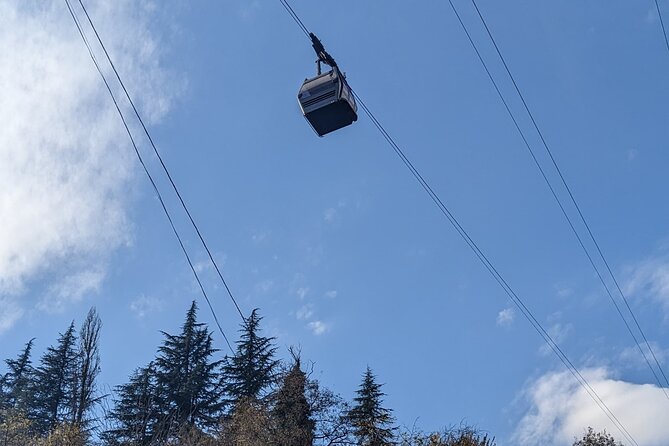
The cable cars are the obvious attraction, but I would not rush through the rest of Chiatura. The town offers a rare look at a place shaped by mining, Soviet planning, and steep geography.
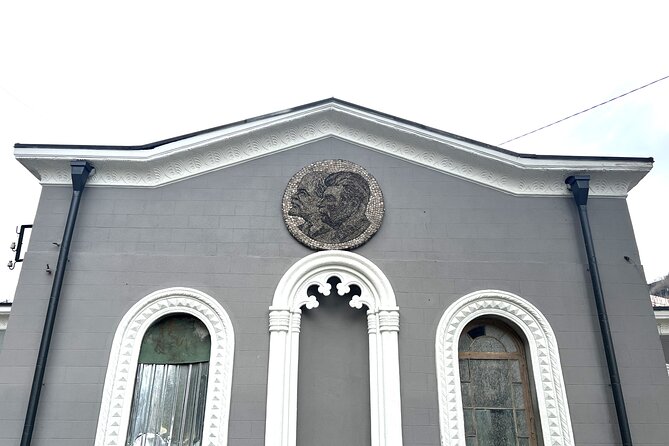
Your guide points out Soviet monuments, mosaics, and typical residential buildings. These details make the visit more useful than a simple ride up and down the valley. You see how public art, apartment blocks, transport routes, and industry worked together in a Soviet town.
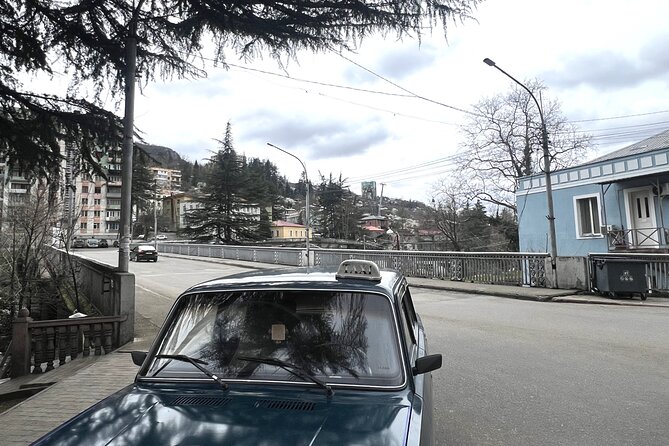
Some of the older cable car stations are abandoned. The contrast between working gondolas and disused infrastructure gives Chiatura a slightly eerie character. It is not a polished heritage center, and that is part of the appeal. You are seeing a living town with worn edges, not a reconstructed museum display.
Allow yourself time to look at the town from street level. The aerial views are memorable, but the Soviet apartment blocks and public spaces help explain how people live around the old mining infrastructure. You may also see monuments and mosaics that are easy to miss if you focus only on the cable car.
The two-hour Chiatura segment includes photographs, guided sightseeing, views from above, and time around the town. For many people, this will feel like the most memorable part of the day. If you have a strong interest in Soviet architecture, industrial history, or unusual public transport, Chiatura alone gives the tour a clear purpose.
A few more options to weigh up in Kutaisi
- Kutaisi: Prometheus Cave & Martvili Canyon Guided Tours
★ 4.7 · 206 reviews - Kutaisi: Martvili Canyon and Prometheus Cave Guided Day Trip
★ 4.7 · 72 reviews - From Kutaisi: Martvili & Okatse Canyons & Cave Guided Tour
★ 5.0 · 23 reviews - Kutaisi: Guided Walking Tour with Local Snack
★ 5.0 · 16 reviews
Mghvimevi Convent, a quieter final stop
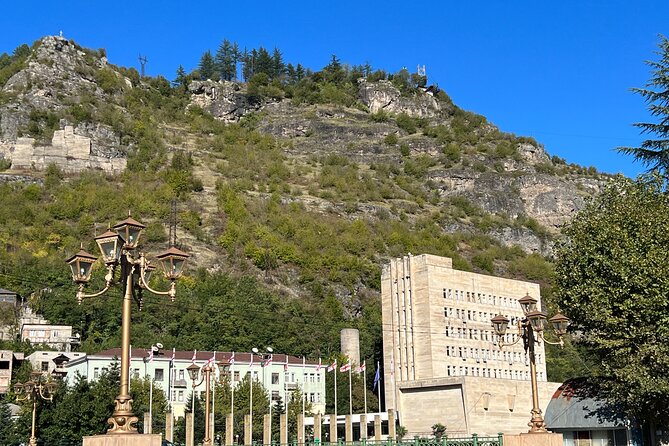
A short 10-minute drive takes you to Mghvimevi Convent, where you spend about 30 minutes. The convent is associated with the sixth century and is set among wooded surroundings near Chiatura.
This stop changes the rhythm completely. After the concrete buildings, mining references, and cable car machinery, you move into a religious site linked to rock-cut spaces, frescoes, ancient cave dwellings, and sacred springs.
The convent’s compact size makes it a good final stop. You can walk through the grounds, look at the architecture, and listen to the guide without needing another major climb or long visit. The rock-carved church is especially notable. One tour group described the small cave church as a highlight, and I can understand why: it offers the most intimate setting of the three main stops.
Dress respectfully for an Orthodox religious site. The tour description does not specify a strict dress code, but weather-appropriate clothing that is also modest is the sensible choice.
The convent is not a replacement for a large monastery complex with hours of art and architecture. Its value comes from atmosphere, age, and the way it is shaped by the rock. Give it your attention instead of treating it as a quick final tick on the schedule.
The guide can make or break the experience
This tour depends heavily on the guide. Much of the value comes from explanations during the drives and at places where signs may be limited.
English is the guiding language. Guides named in the feedback include Ana, Sandra, Jemali, Jamal, Jacob, Teona, Eva, and Mikheili. Their strengths are described in consistent terms: clear English, local stories, good humor, attention to individual interests, and a willingness to make extra stops when time allows.
That flexibility appears to be one of the tour’s strongest features. Some groups were offered pickup help during bad weather, while others received additional stops or a different route back after explaining what they had missed elsewhere. You should not treat an extended itinerary as guaranteed, but it shows that the day can be responsive rather than rigid.
A small group helps here. With a maximum of seven people, the guide can answer questions without addressing a crowd. It also makes it easier to pause for a photograph or discuss food, daily life, and Georgian traditions.
The company’s transport received a perfect rating from 96 percent of customers, and punctual pickup is another practical strength. Still, it is wise to keep your phone available in the morning because vehicle and guide details arrive by WhatsApp or email.
Is $28 a good price?
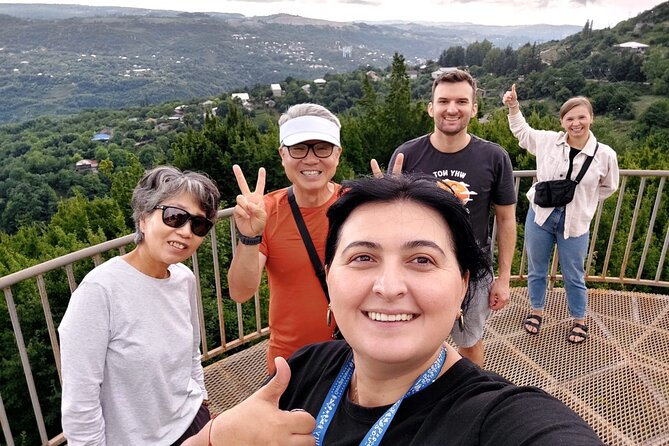
For $28, this is an inexpensive way to reach three separate locations from Kutaisi. The cost includes round-trip transport, a live English-speaking guide, guided visits, and the Chiatura cable car ride in both directions.
You still need to pay for food and drinks, and personal expenses are not included. The itinerary lists no meal stop, so bring snacks and water. That is especially important because the tour lasts seven hours and includes long road sections.
The value is strongest if you do not have a rental car. Hiring a vehicle and arranging the route yourself would require more planning, while local transport could make the day slower and less predictable. You are paying not only for a seat in a van, but also for someone who knows how to connect these sites efficiently and explain what you are seeing.
The price is less compelling if you want a slow, highly detailed visit at each location. The schedule allows roughly 40 minutes at Katskhi, two hours in Chiatura, and 30 minutes at Mghvimevi, with driving between them. That is enough for a strong overview, not an extended study of every church, station, or town detail.
Practical tips for a smoother day
Wear comfortable shoes. The tour includes walking around a town, visiting a convent, and moving through sites where surfaces may not be perfectly even.
Pack snacks and drinks. Since food is excluded and no meal is promised, do not depend on finding lunch during the route.
Dress for the weather. Conditions can affect visibility at Katskhi Pillar and comfort during outdoor sightseeing in Chiatura. Layers are useful because you move between a vehicle, open viewpoints, town streets, and a religious site.
Keep your camera ready in Chiatura. The combination of cable cars, steep hills, old stations, apartment buildings, and Soviet public art gives you more than one kind of photograph.
Do not expect to ride the old abandoned cars. You will see some of them hanging on unused lines, but the included ride is on a newer operating gondola.
The meeting point can be confusing while the park is under construction. Read the operator’s message carefully, and contact the guide if you cannot identify the columns across from the Colchis Fountain.
The tour is not suitable for wheelchair users. If you have limited mobility for another reason, ask the operator before booking, since the provided information does not describe every surface, step, or boarding condition.
Who should book this tour?
I would choose this tour if you want an unusual day outside Kutaisi and care more about character than famous-name sightseeing. Chiatura is particularly suited to you if Soviet-era infrastructure, mining towns, cable cars, and imperfect but genuine urban places interest you.
It also works well for first-time visitors to western Georgia who want several types of scenery in one day. Katskhi Pillar brings a dramatic religious landmark, Chiatura provides industry and public transport, and Mghvimevi adds a quiet spiritual setting.
The trip may not suit you if you dislike long drives, want a full meal included, or prefer to spend most of the day hiking. The tour includes scenic views and walking, but it is not a trekking trip. The cable car ride is brief compared with the total time on the road.
The small group makes it a good choice for solo visitors, couples, or friends who want conversation and questions rather than a large bus format. The guides’ friendly approach also seems useful if you want cultural context, not just transport between stops.
FAQ
How long does the tour last?
The tour lasts seven hours, including the drives between Kutaisi, Katskhi Pillar, Chiatura, and Mghvimevi Convent.
Where does the tour start?
It starts at the Kutaisi Central Park Columns across from the Colchis Fountain. The park is currently fenced because of construction, and vehicle and guide details are sent by WhatsApp or email.
Is the Chiatura cable car ride included?
Yes. The tour includes a ride on one operating Chiatura gondola line, in both directions.
Is food included?
No. Food and drinks are not included, so bring snacks and drinks for the seven-hour outing.
What language does the guide speak?
The live tour is conducted in English.
Can wheelchair users join?
No. The tour is not suitable for wheelchair users.
Should you book it?
Book this day trip if you want Chiatura’s working cable car system, a 40-meter religious pillar, and a rock-cut convent without arranging several separate connections yourself. At $28, the combination of transport, guiding, and the included gondola ride is hard to fault.
I would skip it only if long van rides are a dealbreaker or if you need a relaxed schedule with long visits and a planned meal. For curious visitors who want to see a less familiar side of Georgia, the tour offers a memorable blend of steep valleys, Soviet remains, local transport, and old religious traditions, all in a manageable small group.
Just added in Kutaisi
- Wine & Dine group tour from Kutaisi★ 4.6 · 3 reviews
- Wild Caving Experience in Melouri Cave Near Kutaisi★ 5.0 · 3 reviews
- Private tour from KUTAISI: Bagrati, Gelati and Motsameta★ 5.0 · 5 reviews
- Private Car – From Tbilisi, Kutaisi, Martvili Canyons, caves★ 5.0 · 1 review
- Full Day Tour To Kutaisi, Prometheus Caves, Bagrati and Gelati★ 5.0 · 1 review
- Tour to Kutaisi from Tbilisi (Sataplia Reserve, Bagrati, Gelati, Motsameta)★ 5.0 · 2 reviews
- Kutaisi, Martvili Canyon & Prometheus Cave Tour from Tbilisi★ 5.0 · 3 reviews
- 2-Day Kutaisi Tour: Caves, Canyons & Soviet Sanatoriums★ 5.0 · 12 reviews
Kutaisi Tours, compared.
Martvili & Okatse Canyons & Prometheus Cave Tour
Read our review →
Kutaisi Canyons and Caves from Tbilisi Full Day Tour
Read our review →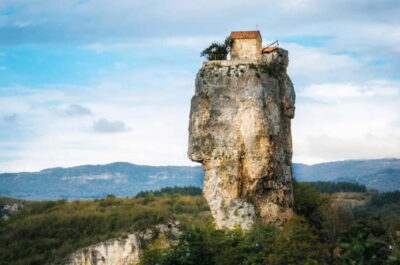
CANYONS & CAVE Tour from Kutaisi – Okatse, Martvili & Prometheus
Read our review →
Prometheus Cave, Martvili & Okatse Canyon from Kutaisi
Read our review →Browse the lists this tour appears in