
Reviewed · MTSKHETA AND GORI TOURS
Into the footsteps of Joseph Stalin – Individual tour
Stalin’s story begins underground. This private five-hour tour links Tbilisi and Gori through the places tied to Joseph Stalin’s early life and political rise. I like the unusual mix of a major museum and a little-known underground printing house, and I like having a driver-guide who can explain the exhibits between stops. The main drawback is the pace: five hours covers a lot, and the Stalin Museum can feel intense if you prefer a lighter sightseeing day.
The tour works especially well for history-minded visitors, documentary fans, couples, solo visitors, and families with older children. Guide Esto has received particular praise for adding context during the drives, answering questions, and offering extra suggestions around Tbilisi. Lunch is not included, and the experience is focused firmly on Stalin and revolutionary history rather than broad Georgian sightseeing.
In This Review
- Key points to know before booking
- Why this Stalin-themed tour is different
- Leaving Tbilisi with a private driver-guide
- Gori and the museum’s six chronological halls
- Stalin’s childhood house and the private railway carriage
- The artifacts that make the museum memorable
- Tbilisi’s illegal underground printing house
- How the timing works over five hours
- Who will get the most from this experience
- Practical details that affect your decision
- Should you book this Stalin tour?
- FAQ
- Where does the tour begin and end?
- How long does the tour last?
- Is the tour private?
- What language is the tour offered in?
- What places do you visit in Gori?
- What can you see at the Stalin Museum?
- Is Stalin’s railway carriage included?
- What is the underground printing house?
- Are entrance tickets included?
- Is lunch included?
- How much does the tour cost?
- Can I cancel for a full refund?
- Can I reserve now and pay later?
Key points to know before booking
- Gori is Stalin’s hometown: Visit the museum complex, his childhood house, and the green railway carriage used for heavily guarded Soviet journeys.
- The museum uses six chronological halls: Expect photographs, documents, paintings, newspaper cuttings, and personal objects covering Stalin’s life and political career.
- Tbilisi’s underground printing house is the surprise stop: See the restored illegal press whose machinery was carried piece by piece from Germany.
- The tour is private: You travel with a driver-guide rather than a large group, with pickup and drop-off at your Tbilisi accommodation.
- Five hours keeps the day manageable: The schedule gives about two hours for the Gori visit, with the remaining time shared between driving and the Tbilisi sites.
- The cost is $111 per person: That includes transport, a private guide, entrance tickets, and bottled water, but not lunch.
Why this Stalin-themed tour is different
Many history tours simply take you to a museum and let the displays do the talking. This one connects three parts of Stalin’s story: his hometown in Gori, his public image as a Soviet leader, and the underground revolutionary work carried out in Tbilisi.
That combination gives the subject a useful human scale. In Gori, you see the place where Stalin was born and the objects associated with his later power. In Tbilisi, you see the secretive political machinery that helped revolutionary groups print material under tsarist rule.
I appreciate that the tour does not treat Stalin as a distant name in a textbook. The focus is on physical places and objects. You can look at the desk from his Kremlin study, his death mask, the green railway carriage, and the printing equipment connected to his early political activity.
Still, this is not a neutral sightseeing sampler. The entire day revolves around one controversial historical figure. You should book it because you want a focused look at Stalin’s life, not because you are seeking a general introduction to Georgian culture.
More things to do in Tbilisi:
- Tbilisi: Day Trip to Kazbegi, Gudauri, Gergeti, and Ananuri
★ 4.9 · 3,203 reviews - Day Trip to Kakheti Wine Region Including 9 Wine Tastings
★ 5.0 · 2,774 reviews - Highlights of Caucasus Mountains-Jinvali,Ananuri,Gudauri,Kazbegi(Group tour)
★ 5.0 · 2,682 reviews
Leaving Tbilisi with a private driver-guide
Your day begins with pickup in Tbilisi. You provide the address of your accommodation, and the same arrangement covers the return journey. Since the group is private, you do not have to wait for a busload of strangers or follow a fixed large-group rhythm.
The driver also serves as your guide. That matters here because the drives are part of the learning experience. You can ask questions as the day develops, and the guide can explain material that may come at you quickly inside the museum.
Esto has been especially praised for this role. He explains the historical setting during the drive, helps visitors make sense of the museum displays, and adds personal recommendations for places to visit in Tbilisi. One account also notes that he showed the early medieval Jvari Monastery as an extra stop, though you should not assume this is guaranteed on every departure.
A private guide also makes the tour a better fit for a solo visitor or couple with a specific interest in Soviet history. Families may appreciate the flexibility, though the subject matter includes dictatorship, imprisonment, political repression, and revolutionary activity. Younger children may find the museum heavy unless they already have an interest in history.
Gori and the museum’s six chronological halls
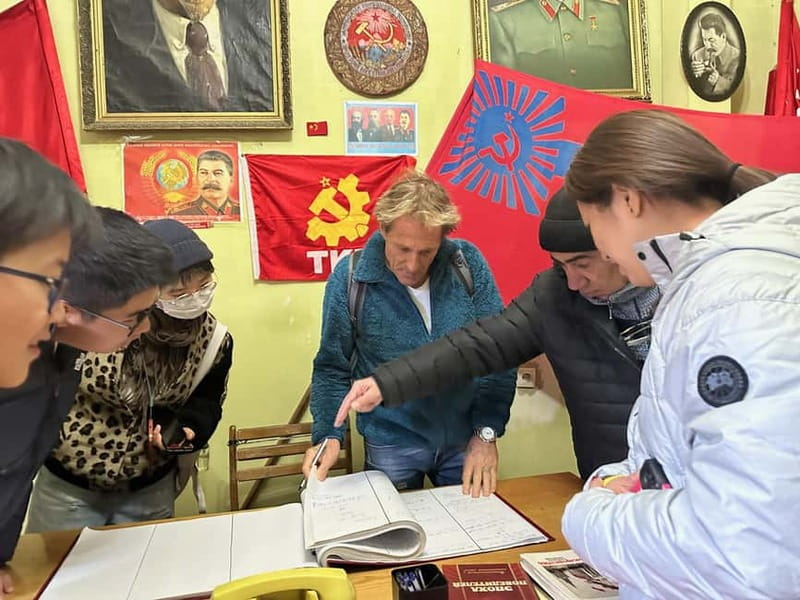
Gori is the heart of the tour. It is Stalin’s hometown, and the museum presents his life in a sequence of six chronological halls. This layout helps you follow his path from his early years in Georgia, through political activity and jail terms under tsarist rule, to his rise in the Soviet system and eventual position in the Kremlin.
You will see thousands of photographs, documents, paintings, and newspaper cuttings. That sheer amount of material can be useful if you want a detailed account, but it can also feel overwhelming. Plan to pause and ask your guide to explain the objects that matter most rather than trying to absorb every display.
I like the way the museum’s material brings together public myth and private artifacts. Newspaper cuttings show how Stalin was presented to the public. Personal objects and photographs point toward the man behind the official image. The displays are not just a timeline of political offices. They also show how carefully a leader’s image can be built and preserved.
The planned guided visit in Gori lasts about two hours. That is enough time to get a meaningful look at the museum complex without giving the entire day to one building. Still, the exact balance depends on your interests and the flow of the visit. If you want to read every document closely, you may wish for more time.
Stalin’s childhood house and the private railway carriage
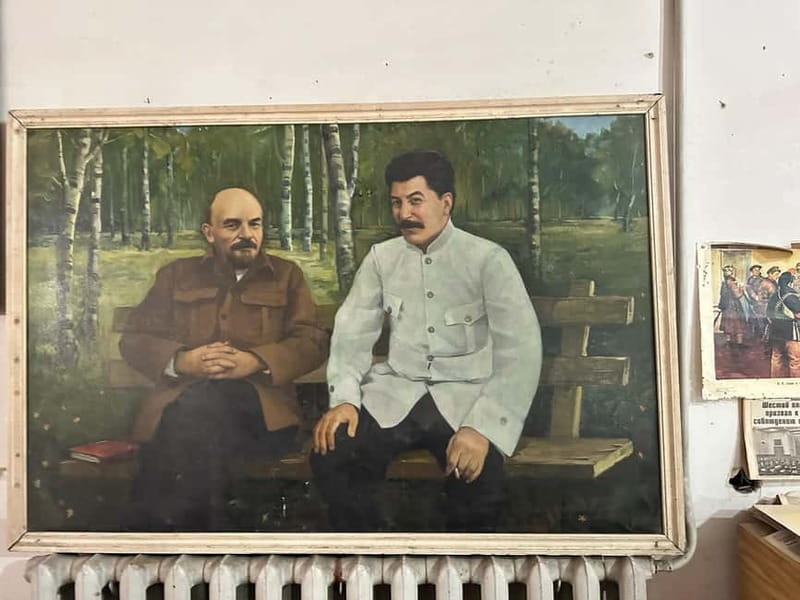
The museum visit includes Stalin’s childhood house, a modest building that gives the site a physical connection to his early life. After the vast museum displays, the house provides a smaller and more personal point of reference.
The contrast is part of the appeal. You move from the story of a ruler who shaped a huge state to the home associated with his beginnings in Gori. It helps you understand why the museum has such power for a visitor: Stalin is not presented only as a figure from Moscow or the Kremlin. His local origin is placed directly in front of you.
Another major object is Stalin’s green private railway carriage. He used it to travel around the Soviet Union in heavily armored seclusion. The carriage reflects both his status and his fear of attack. It is an unusually tangible reminder of how Soviet leaders moved through their country.
The carriage is also a good example of why this tour suits people who enjoy documentary-style history. Rather than merely hearing that Stalin traveled under extreme security, you see the private transport connected with that life. The object makes the scale of his isolation easier to picture.
More Mtskheta and Gori trips:
- Tbilisi: Mtskheta, Jvari, Gori and Uplistsikhe Day Tour
★ 4.9 · 2,396 reviews - Day Trip to Mtskheta Gori and Uplistsikhe
★ 5.0 · 1,801 reviews - Tbilisi: Mtskheta Jvari Bazaar, Chronicles of Georgia & Wine
★ 5.0 · 1,088 reviews - Tbilisi:Mtskheta,Jvari,Bazaar,wine tasting,Chronicles of Georgia
★ 5.0 · 730 reviews
The artifacts that make the museum memorable
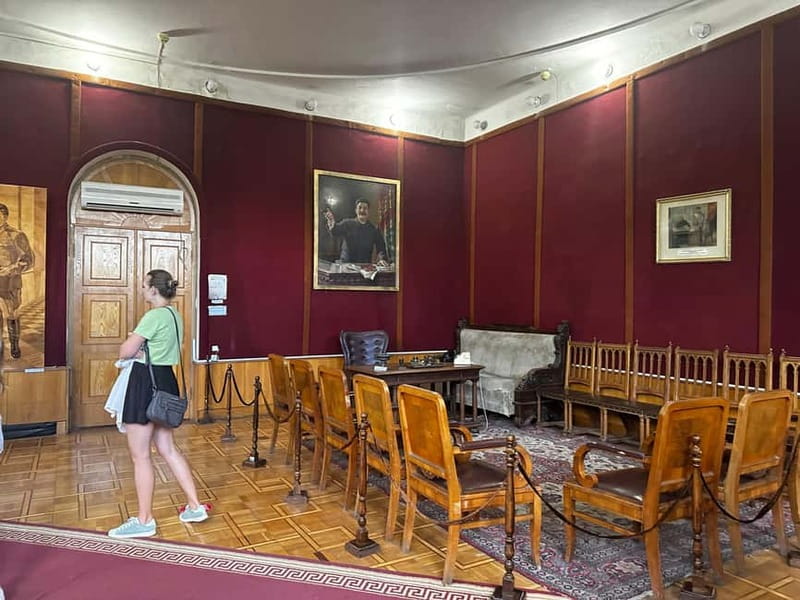
Several objects deserve special attention. The death mask is an unsettling item, but it gives the museum a direct physical link to Stalin’s final days. The desk from his Kremlin study brings the story back to the business of governing, signing, and directing policy.
These objects can feel overwhelming because they carry different meanings at once. One is tied to death, another to power, and the railway carriage to security and isolation. I would not rush past them. Even if you do not agree with the way Stalin is represented, the objects raise useful questions about propaganda, memory, and the way nations preserve difficult figures.
The displays include material about Stalin’s jail terms under tsarist rule. That part of the story is important because it shows the earlier revolutionary phase before he became a Soviet dictator. The underground press in Tbilisi adds another layer to that period.
You may find the presentation more focused on objects and chronology than on a long debate about Stalin’s crimes. If you want extensive analysis of the wider Soviet system, you will need to bring your own background or ask the guide questions. Esto’s ability to explain material during and after the museum visit is valuable for this reason.
Tbilisi’s illegal underground printing house
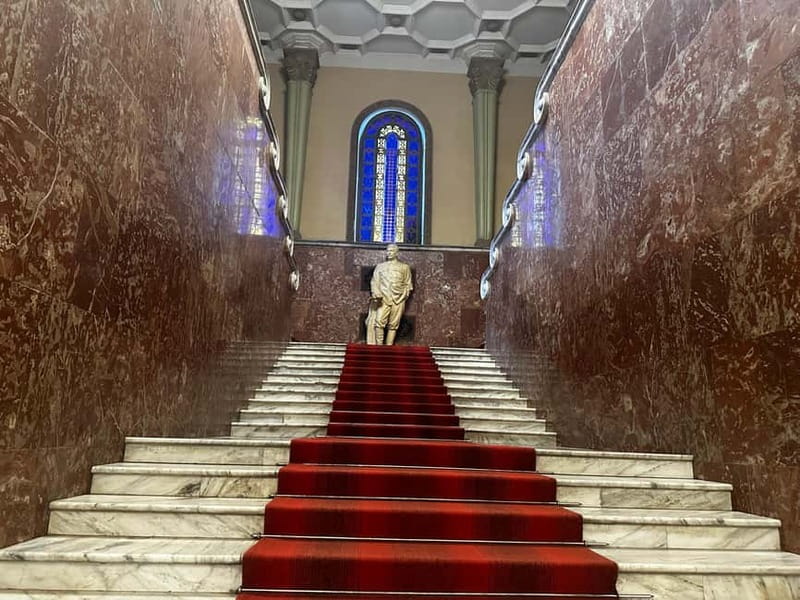
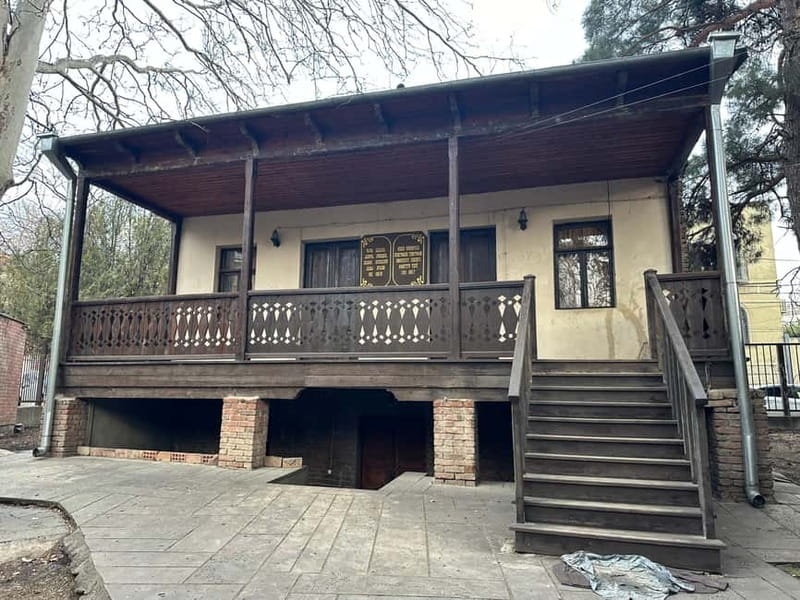
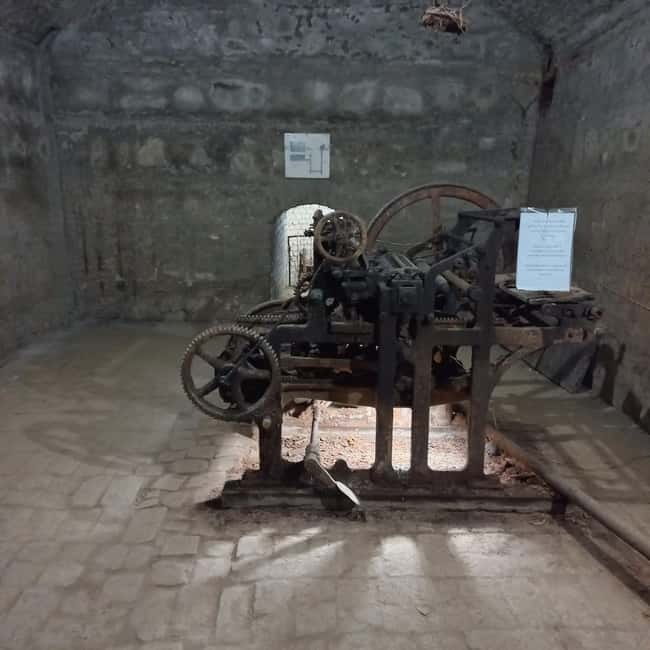
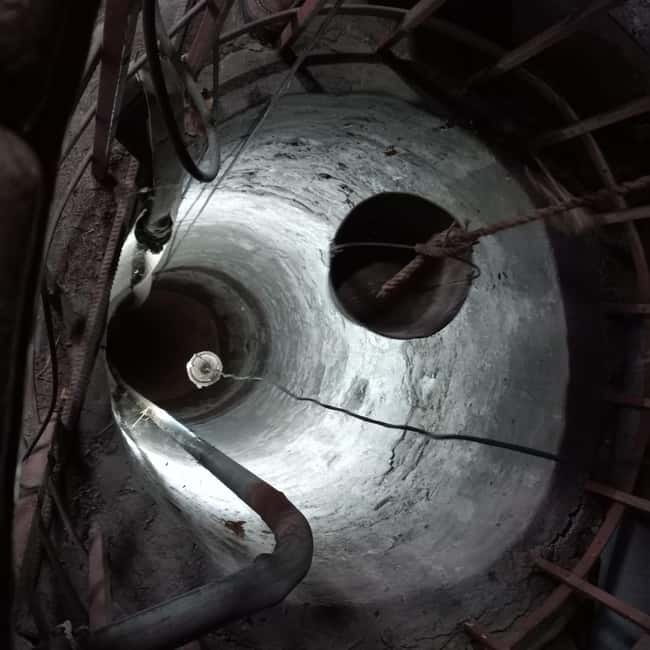
The Tbilisi printing house is the tour’s most unexpected stop. It was an illegal underground press connected with revolutionary activity, and the restored museum shows the machinery used to produce printed material in secret.
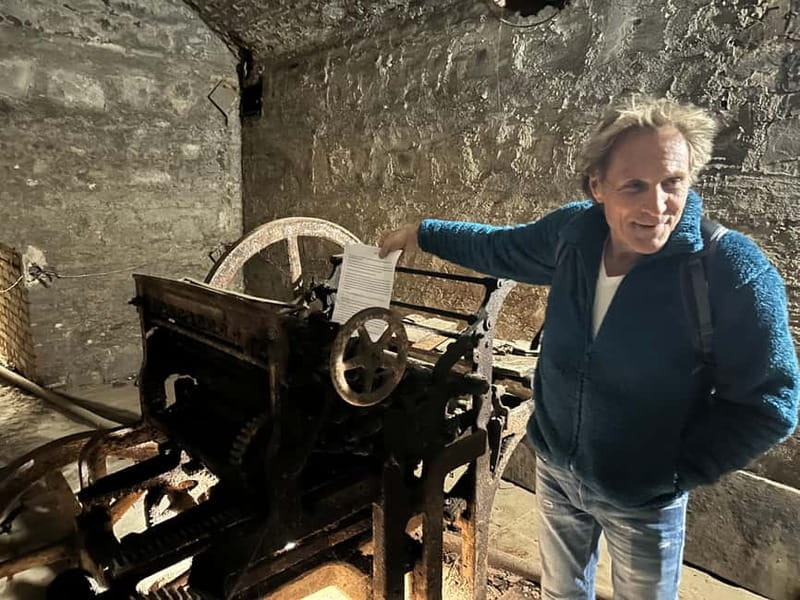
The printing press was carried piece by piece from Germany. That detail makes the site especially striking. You are not looking at a generic reconstruction or a modern display labeled underground printing house. You are seeing the equipment associated with a specific effort to create and distribute political material under dangerous conditions.
The location also changes the tone of the day. Gori presents Stalin through a formal museum, personal artifacts, and an official hometown connection. The printing house feels closer to clandestine political work. It shows the practical side of organization: machinery, secrecy, and the physical labor needed to produce printed pages.
I would give this stop your full attention. It may not be as famous as the Gori museum, but it is the part that can change your understanding of Stalin’s early political world. One visitor described arriving without expecting it, which is understandable since the Gori museum tends to dominate the tour’s reputation.
The stop is in Tbilisi, and the schedule includes a visit, guided explanation, a photo stop, and break time. The exact order may vary, but the tour returns to Tbilisi after Gori for this part of the experience.
How the timing works over five hours
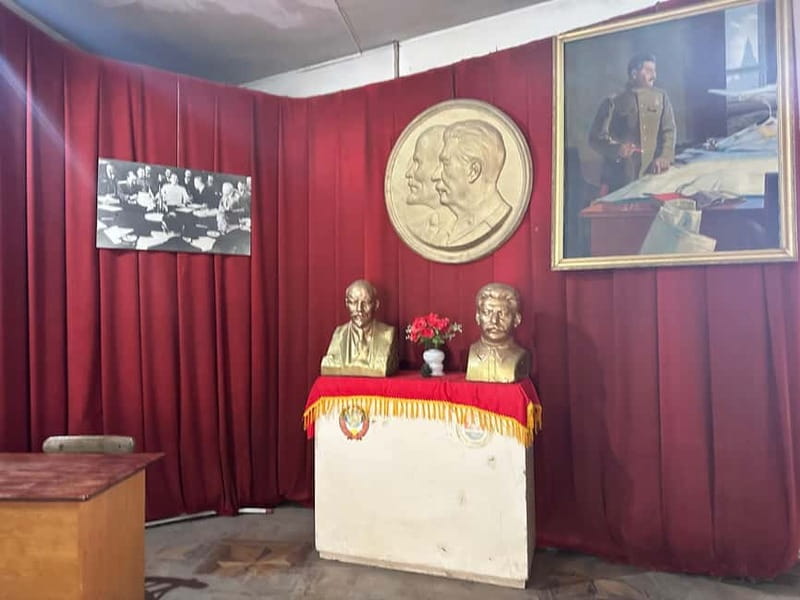
Five hours is a sensible length for this focused outing. It allows you to leave Tbilisi, spend about two hours in Gori, return, and visit the underground printing house without turning the day into a full-day marathon.
The trade-off is that this is a concentrated schedule. You will not have unlimited time at each display, and lunch is not included. If you need a proper meal during the day, plan around the break time or ask the provider how the schedule will handle it before departure.
The private format helps make the short duration more workable. A driver-guide can keep the day moving and explain key points in the car. You also avoid the delays that often come with a large group.
The tour includes bottled water, entrance tickets, and transportation with the driver-guide. At $111 per person, the value depends on your group size and interest. For a solo visitor, the price is higher than a shared bus outing, but you are paying for a private vehicle, a dedicated guide, and a tightly organized route between two cities. For a couple or small family, the private arrangement can make more sense, particularly if you value questions and flexibility.
Who will get the most from this experience
I would choose this tour if you enjoy political history, Soviet history, biographies of major leaders, or documentary films. The chronological museum halls give you plenty to study, while the railway carriage and printing press add memorable physical evidence.
It also suits visitors who want a history day without arranging separate transport to Gori. Pickup and drop-off in Tbilisi remove much of the practical work. The English-speaking guide makes the tour accessible to visitors who do not read Georgian or Russian.
Solo visitors benefit from having a private guide available for questions. Couples can set the pace more easily than they could in a large group. Families with older children may find the printing house especially useful because it shows how political history involved real machinery and hidden work, not only speeches and portraits.
I would hesitate to recommend it if you have only a short time in Tbilisi and want to see the city’s main churches, markets, and neighborhoods. The tour gives priority to Stalin, Gori, and revolutionary history. It is also not the best match if you dislike museums with a large amount of documentation or find politically difficult subjects tiring.
Practical details that affect your decision
The tour is offered in English with a live guide, and the group is private. Pickup is included, but you must provide your Tbilisi accommodation address for both pickup and drop-off.
The advertised duration is five hours. Starting times depend on availability, so check the departure options before booking. Entrance tickets and bottled water are included. Lunch is not included.
You can cancel up to 24 hours before departure for a full refund, and the reserve-now, pay-later option gives you some flexibility while planning your Georgia trip. Those terms are useful if your Tbilisi schedule is still changing.
The overall rating is perfect across five published bookings, with especially strong praise for the guide’s historical explanations and personal help. The repeated praise for Esto is worth noting, though guide availability can change. If you care about having him specifically, ask the provider before reserving.
Should you book this Stalin tour?
Book it if you want a private, tightly focused history outing with real objects, a hometown museum, and an unusual underground site. The strongest reasons are the green railway carriage, the restored printing press, and the chance to have a guide explain the material while you travel between Tbilisi and Gori.
At $111 per person, it is not the cheapest way to reach Gori, but the price includes private transport, a driver-guide, entrance tickets, and water. That is fair value for a solo visitor or small group that wants a dedicated guide rather than a basic transfer.
Skip it if you are looking for a broad Georgian cultural tour or a relaxed day with long meals and open-ended sightseeing. This experience is serious, object-heavy, and centered on one of the twentieth century’s most disputed political figures.
For the right reader, it can make history feel immediate: a childhood home, a guarded railway carriage, a death mask, and a printing press hidden beneath Tbilisi. Those are strong reasons to give this five-hour tour a place in your plans.
FAQ
Where does the tour begin and end?
The tour begins in Tbilisi and returns to Tbilisi. Pickup and drop-off are included at your accommodation address.
How long does the tour last?
The experience lasts five hours.
Is the tour private?
Yes. It is a private individual tour with a driver-guide and a private group.
What language is the tour offered in?
The live tour guide speaks English.
What places do you visit in Gori?
You visit Gori, including the Stalin Museum and his childhood house. The guided visit in Gori lasts about two hours.
What can you see at the Stalin Museum?
The museum has six chronological halls with photographs, documents, paintings, newspaper cuttings, and other material about Stalin’s life and political career.
Is Stalin’s railway carriage included?
Yes. The tour includes a visit to Stalin’s green private railway carriage, used for heavily armored travel around the Soviet Union.
What is the underground printing house?
It is a restored illegal printing house museum in Tbilisi. The original printing press was carried piece by piece from Germany.
Are entrance tickets included?
Yes. Entrance tickets and a bottle of water are included.
Is lunch included?
No. Lunch is not included in the tour price.
How much does the tour cost?
The listed price is $111 per person.
Can I cancel for a full refund?
Yes. You can cancel up to 24 hours in advance for a full refund.
Can I reserve now and pay later?
Yes. The reserve-now, pay-later option allows you to book without paying immediately.
Just added in Tbilisi
- Wine Tasting feel the Difference of Qvevri or Classical Wine★ 4.4 · 10 reviews
- From Tbilisi: Kakheti and Kazbegi 2-Day 4X4 Jeep Tour pack★ 5.0 · 6 reviews
- Walking Tour in Old Tbilisi – Group Tour★ 4.5 · 8 reviews
- Uforgatable Kakheti Tour with wine tasting – in Georgia★ 4.9 · 5 reviews
- From Tbilisi: Uplistsikhe Caves and Mtskheta Town Day tour★ 5.0 · 2 reviews
- Tbilisi: Vintage Fashion and Secondhand Thrifting Tour★ 5.0 · 11 reviews
- Private Adorable City Tour of Tbilisi★ 5.0 · 3 reviews
- Tbilisi Airport to Gudauri, Bakuriani, Batumi, Tbilisi★ 5.0 · 3 reviews
Mtskheta and Gori Tours, compared.
Mtskheta, Jvari, Gori and Uplistsikhe Day Tour
Read our review →
Mtskheta Jvari Bazaar, Chronicles of Georgia & Wine
Read our review →
Mtskheta,Jvari,Bazaar,wine tasting,Chronicles of Georgia
Read our review →
The Chronicles of Georgia, Jvari & Mtskheta Tour
Read our review →
Browse the lists this tour appears in