
Reviewed · BATUMI TOURS
Group tour from Batumi to Kutaisi and Tskaltubo
Old Georgia meets Soviet decay here. This 12-hour trip from Batumi combines a guided walk through Kutaisi with the abandoned sanatoriums of Tskaltubo, making it a strong choice if you want more than a quick city stop. I especially like the contrast between Kutaisi’s fountains, bridges, markets, and civic buildings and Tskaltubo’s faded medical resorts. I also like that guide Giorgi has been praised for clear English, humor, and giving people time to look around. The main concern is the long return drive, with transport arrangements needing attention on some departures.
At $53 per person, the tour offers a lot for a full day: transport from Batumi, a city walk, and several Tskaltubo sites that would be difficult to connect on your own. Still, you should be ready for a packed schedule, a lunch break at your own expense, and the possibility that the driver may not speak English.
In This Review
- Key points to know before booking
- A long day with two very different faces
- Starting in Kutaisi’s downtown
- The White Bridge and Park of Love
- Mtsvane Bazari before the lunch break
- Spring No. 6 and the story of occupation
- The former sanatoriums of Tskaltubo
- Ending at Tskaltubo’s train station
- Guide quality and transport matter
- Is $53 good value?
- Who should book this day trip?
- Should you book the Kutaisi and Tskaltubo tour?
- FAQ
- Where does the tour start in Batumi?
- What time does the tour begin and end?
- How long is the experience?
- Which languages are available?
- What places do I visit in Kutaisi?
- Which Tskaltubo sites are included?
- Is lunch included?
- Can I cancel the booking?
Key points to know before booking
- Kutaisi comes first: You walk through the downtown area before lunch, covering fountains, parks, bridges, civic buildings, and the central market.
- Tskaltubo is the main event: Spring No. 6, Spring No. 8, and three former sanatoriums reveal the resort’s Soviet-era past.
- Sanatorium Gelati was built for children: Its old playground and view into the inner construction add a poignant detail to the stop.
- Guide Giorgi receives the strongest praise: He is described as friendly, funny, clear in English, and generous with time at the sites.
- The day runs from 09:00 to 21:00: That includes the road between Batumi, Kutaisi, Tskaltubo, and Batumi.
- The price is good for the coverage: You get a full-day route, but lunch and any personal purchases are not listed as included.
A long day with two very different faces
This is not a relaxed afternoon outing. You leave the Budget Georgia office at 56 Gen. G. Mazniashvili Street in Batumi at 09:00 and return around 21:00. The first part focuses on Kutaisi, Georgia’s old western center, while the second moves into Tskaltubo, a former spa town filled with abandoned Soviet-era buildings.
I like the structure because the two places explain different sides of the region. Kutaisi gives you a working city with public squares, shops, bridges, and local life. Tskaltubo feels quieter and more atmospheric, with grand resort buildings that have lost their original purpose.
The schedule also explains the $53 price. A private taxi or self-arranged day trip would require more planning and separate transport between several scattered stops. Here, the route is put together for you. The tradeoff is that you follow the group’s timetable and spend many hours on the road.
More things to do in Kutaisi:
- From Tbilisi: Kutaisi Canyons and Caves Full Day Tour
★ 4.8 · 1,051 reviews - Kutaisi: Martvili & Okatse Canyons & Prometheus Cave Tour
★ 4.9 · 829 reviews - From Kutaisi: Guided Tour of Okatse, Martvili, & Prometheus
★ 4.8 · 520 reviews
Starting in Kutaisi’s downtown
The city walk begins after arriving in Kutaisi. Your guide introduces the history of Georgia and the city as you move through the center, rather than leaving you to identify monuments from the outside. That matters because many stops are best understood as part of Kutaisi’s civic and cultural story, not as isolated photo points.
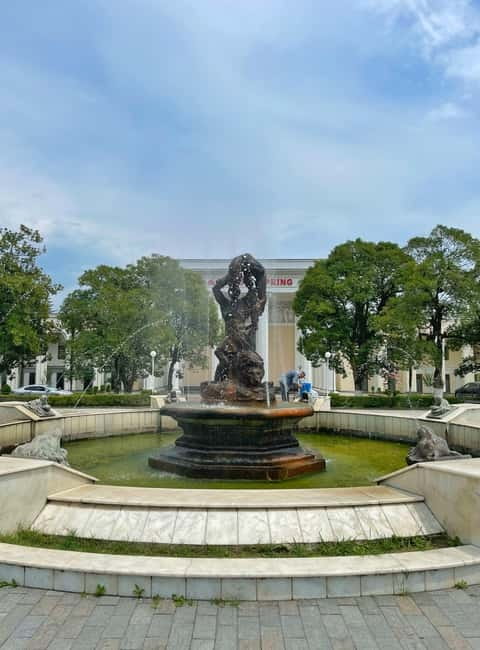
The fountain is an early place to pause for pictures. From there, the group continues toward the central park, where you see the statue of the sisters known as Ishkhnelebi and the memorial to 9 April. These are brief stops, but they give the walk a local focus. You are not simply checking off grand buildings. You are seeing public memorials and figures connected with Georgian identity.
Next comes Kutaisi City Hall and the Opera House. The route then reaches the Mon Plasir arch, a distinctive urban feature that breaks up the walk and gives you another good photograph. Guide Giorgi has received particular praise for choosing good viewpoints and explaining what you are seeing in plain English.
The itinerary covers a surprising amount of the center. You pass the first gymnasium, then cross the White Bridge. After that, the route goes through the Park of Love before reaching the Golden Marquee Palace. Each stop is fairly short, so do not expect a museum-style visit with extended indoor time. This is a walking overview, designed to help you read the city streets.
The White Bridge and Park of Love
The White Bridge is one of the more memorable points on the route because it changes your view of Kutaisi. Instead of looking at the city from a square, you get a crossing point and a sense of the river setting. The walk through the Park of Love adds a softer pause before the group returns to the city’s more formal buildings.
I would treat this section as a guided orientation rather than a full historical tour. The supplied schedule does not include museum admissions or long interior visits. If you want to explore Kutaisi’s museums in detail, you would need a separate visit.
The guide’s role matters here. A short city walk can feel rushed if the explanations are vague. The strongest feedback names Giorgi as friendly, humorous, and easy to understand. That combination is useful on a route with many brief stops, since you can get the point of each place without a long lecture.
Mtsvane Bazari before the lunch break
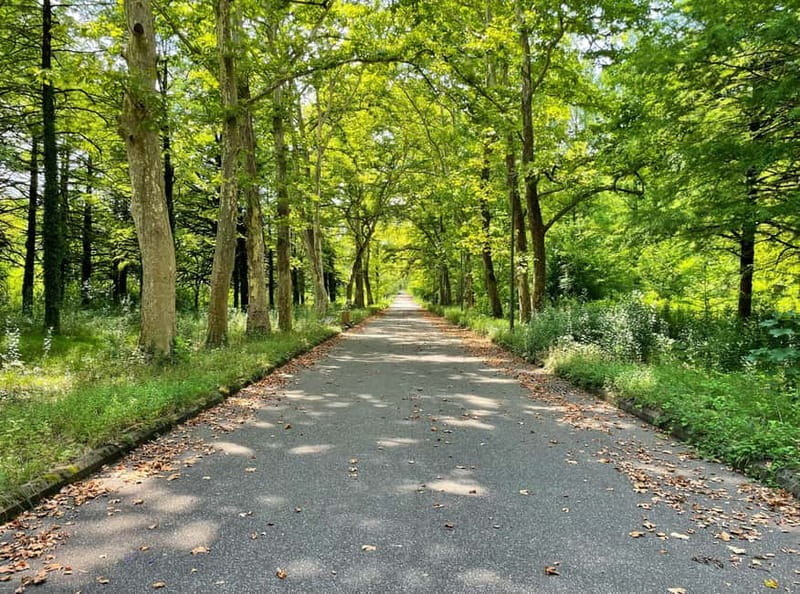
The final Kutaisi stop is Mtsvane Bazari, the central grocery market. This is one of the most useful parts of the walk for anyone who wants to see an ordinary side of the city. Markets show what people buy, how food is presented, and how a city works beyond its monuments.
You then have a lunch break before driving to Tskaltubo. The provided details do not state that lunch is included, so plan to pay for your own meal. The break is also your main chance to eat before the afternoon visits, making it sensible to keep the timing in mind rather than lingering too long at earlier stops.
Because the tour covers two towns, the market stop helps prevent the Kutaisi portion from feeling like a string of monuments. It brings you back to daily life before the mood changes completely in Tskaltubo.
More things to do in Batumi:
- Batumi City – Botanical Garden – Petra Fortress from Kutaisi
★ 4.7 · 59 reviews - From Kutaisi: Batumi, Petra Fortress and Botanical garden
★ 4.9 · 34 reviews - Batumi & Mtirala N.P. hike group tour from Kutaisi
★ 4.8 · 33 reviews - Batumi & Mtirala N.P. Hiking tour from Kutaisi
★ 4.5 · 23 reviews
Spring No. 6 and the story of occupation
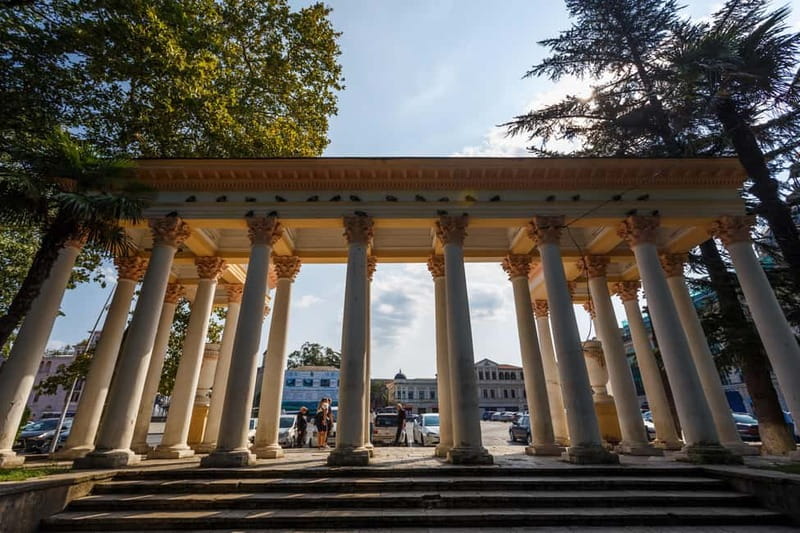
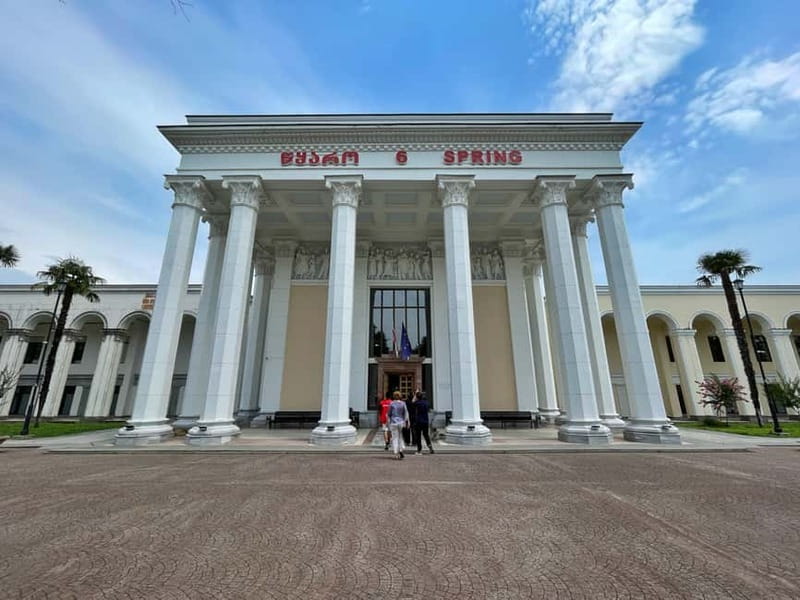
After lunch, the group drives to Tskaltubo. The first stop is Spring No. 6, where the guide discusses the Soviet occupation. This gives the afternoon a clear historical frame. Tskaltubo was known for its mineral springs and treatment facilities, and the remaining structures make more sense when you understand how the resort functioned during the Soviet period.
The stop is not only about looking at old architecture. It connects the buildings to political history and to the way Soviet institutions shaped public life. A good guide can make that difference clear, and this is one of the places where English explanations are especially valuable.
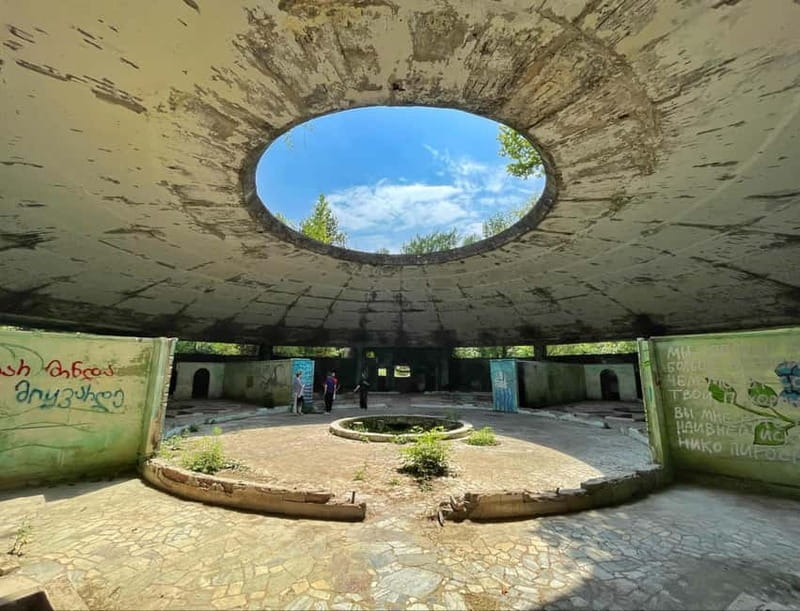
The route then continues on foot to Spring No. 8. This spring is described as having the most unusual architecture among Tskaltubo’s springs. That makes it a worthwhile contrast with Spring No. 6. You get to compare two structures instead of seeing only one example and assuming it represents the whole town.
The former sanatoriums of Tskaltubo
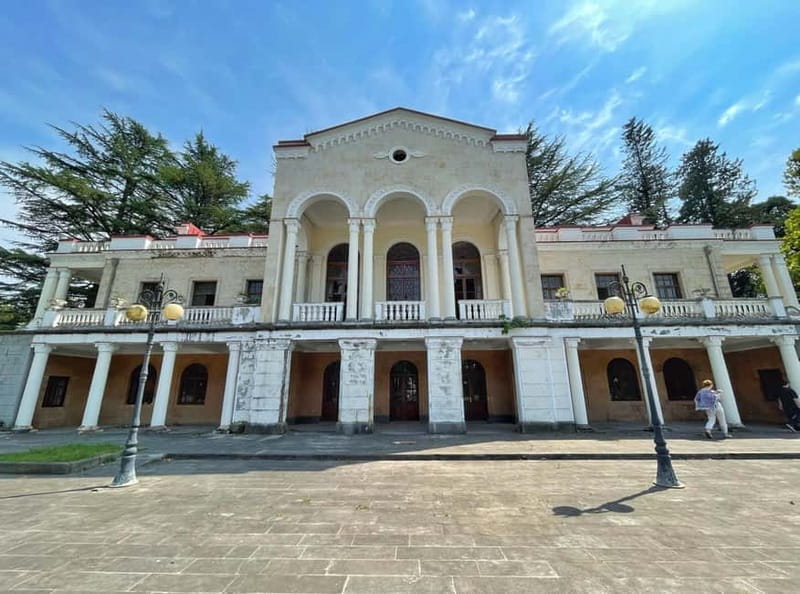
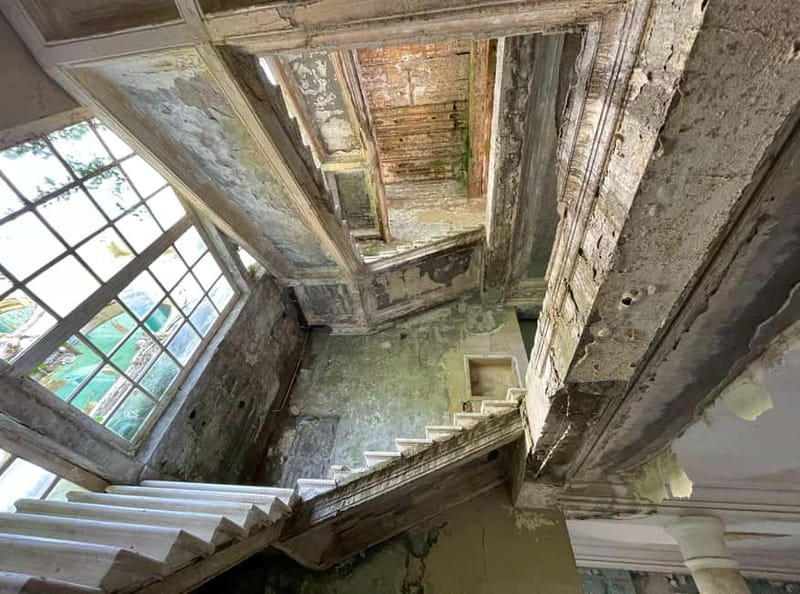
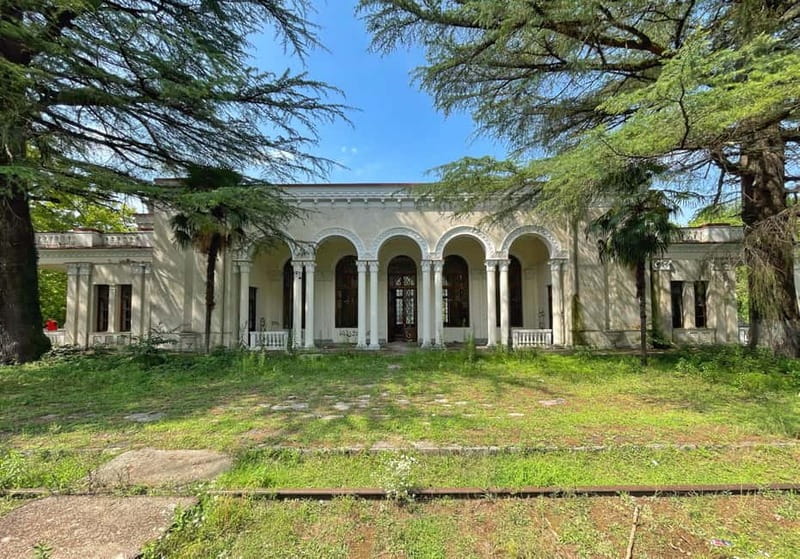
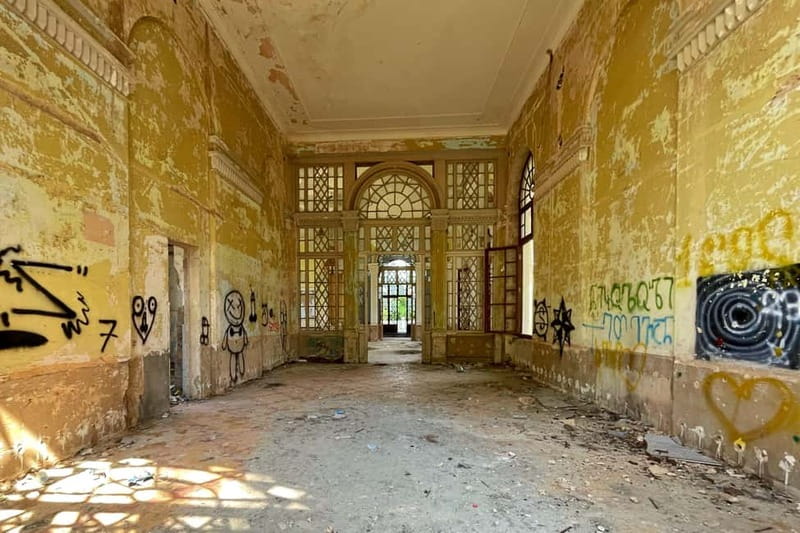
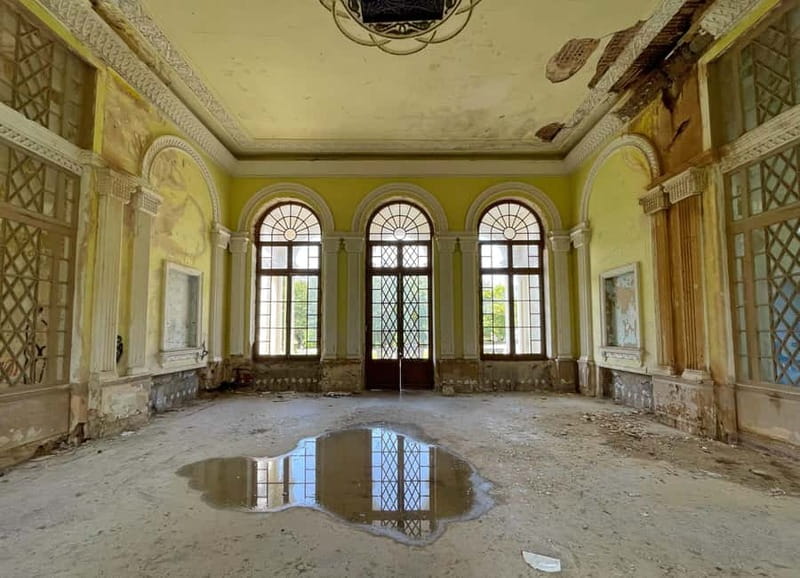
The sanatoriums are the reason many people will choose this trip. These abandoned facilities are not polished attractions. Their appeal comes from the traces of an earlier world: large public buildings, faded interiors, unusual construction, and spaces that no longer serve their original purpose.
The first is Sanatorium Gelati. It was specially built for children, and the old playground remains. That detail changes the way you look at the site. A playground in an abandoned medical complex is more affecting than another empty corridor because it points to the families and children who once used the resort.
Gelati also offers a viewpoint over the inner construction. The wording suggests that you can see into the building’s internal arrangement rather than only viewing its outer facade. Give yourself time here. The beauty is in the contrast between the scale of the structure and its present condition.
After Gelati, you walk to Sanatorium Medea. The itinerary does not specify a separate story or architectural feature for Medea, so the value is in seeing another former resort building within the wider Tskaltubo sequence. The guide can help you compare the sites and explain what you are looking at.
The final sanatorium is Druzhba. As with Medea, the attraction is the building itself and the chance to see another piece of the town’s former resort network. These locations are best approached with care and attention. You are visiting abandoned structures, not a restored museum complex, so stay with the group and follow the guide’s directions.
The strongest praise for the Tskaltubo portion centers on the time allowed to look around. Thomas from Germany specifically rated the outing highly and singled out Giorgi’s guidance and the chance to explore the abandoned facilities without being hurried. That is important. Old buildings reveal more when you can stop, look upward, compare rooms, and notice small details.
Ending at Tskaltubo’s train station
The last stop is Tskaltubo train station. Ending here makes sense because transport helped shape the town’s role as a resort destination. A station is not as visually dramatic as an abandoned sanatorium, but it adds another piece to the story of how people reached Tskaltubo.
By this stage, you have already spent several hours walking and examining old structures. The station functions as a final chapter rather than another major attraction. Then the group begins the journey back to Batumi, with the expected finish around 21:00.
The return time deserves serious attention. This is a full-day excursion, and delays can push the arrival later. One problematic departure involved a changed itinerary, extra waiting, and a late return after road complications. That situation was not the regular Tskaltubo plan, but it shows why I would avoid scheduling an important evening commitment after this tour.
Guide quality and transport matter
The guides are the strongest part of the experience. Giorgi is described as friendly, funny, clear in English, and good at showing the best places. Pavel from Finland also gave the tour a top rating and specifically encouraged people to take it, with Giorgi’s personality adding to the day.
Transport is less consistent in the available feedback. Levani, named as a driver on one highly positive trip, was praised for a modern and comfortable vehicle and good driving. Another departure had a driver who spoke Georgian and Russian but not English, which made communication difficult.
That does not automatically ruin the tour, since the main explanations come from the English-speaking guide. But it is worth knowing that the driver may not be able to answer questions in English. There was also an account of an unexplained 45-minute wait for additional passengers on the return journey. If you need a precise arrival time in Batumi, allow a generous margin.
The route itself is long enough that vehicle comfort matters. You travel from Batumi to Kutaisi, then onward to Tskaltubo, and back to Batumi. A modern vehicle can make the road sections much easier, especially after the walking portions.
Is $53 good value?
I consider $53 a fair price for the amount covered. You get round-trip transport from Batumi, a guided Kutaisi walk, a lunch break, transport to Tskaltubo, and several unusual sites in one day. The itinerary would be awkward to reproduce without a car, local directions, and a good sense of where the former facilities are located.
The value is strongest if you want variety. You are not paying only for a standard city tour. You see a market, memorials, bridges, public buildings, mineral springs, an old train station, and three former sanatoriums.
The value is weaker if you prefer slow travel. The tour cannot give every Kutaisi stop a long visit, and the 12-hour day leaves little room for an unplanned café stop or independent wandering. Lunch is a break, not an extended restaurant experience, based on the schedule provided.
Free cancellation up to 24 hours before departure and the option to reserve now and pay later make the booking less rigid. Those terms are useful if your Batumi plans are still shifting, but the main decision remains your tolerance for a long group day.
Who should book this day trip?
I would recommend it to you if you enjoy unusual architecture, modern Georgian history, and places that feel different from the standard sightseeing circuit. It is also a good choice if you are staying in Batumi without a car and want to see Kutaisi and Tskaltubo in one outing.
The tour should suit people who like guided context. The sanatoriums are more rewarding when someone explains the Soviet period and the former role of the springs. You will also benefit from having a guide point out the best views and photo locations in Kutaisi.
I would think twice if you dislike long road transfers, fixed group schedules, or abandoned buildings. The tour includes a lot of walking, several stops with limited detail provided in advance, and a late return to Batumi. It is not the right pick for a slow, leisurely day.
Wear practical shoes and bring patience for the road. The schedule moves from city streets to parks, springs, sanatorium grounds, and a train station, so comfort matters more than dressing for a formal city outing.
Should you book the Kutaisi and Tskaltubo tour?
Book it if the abandoned sanatoriums are your main reason for going. Sanatorium Gelati, with its old children’s playground and inner view, sounds like the emotional center of the day, while Spring No. 8 adds unusual architecture and Spring No. 6 supplies the historical explanation.
Book it also if you want a ready-made route from Batumi and value an English-speaking guide. Giorgi’s clear explanations, humor, and unhurried approach are the most dependable reasons to choose this experience.
Skip it if you need a guaranteed early return or a driver who speaks English. Ask about the exact vehicle, the guide assigned to your departure, and the expected return time before you pay. For most people with one open day and an interest in Georgia’s Soviet-era past, $53 is a sensible price for a wide-ranging, slightly demanding excursion.
FAQ
Where does the tour start in Batumi?
The tour starts at the Budget Georgia office at 56 Gen. G. Mazniashvili Street.
What time does the tour begin and end?
The scheduled start is 09:00, and the tour finishes in Batumi at approximately 21:00.
How long is the experience?
The full tour lasts 12 hours.
Which languages are available?
The live tour guide speaks English. English is the only guide language specified for the activity.
What places do I visit in Kutaisi?
The walk includes the downtown fountain, central park, the Ishkhnelebi statue, the 9 April memorial, Kutaisi City Hall, the Opera House, the Mon Plasir arch, the first gymnasium, the White Bridge, the Park of Love, the Golden Marquee Palace, and Mtsvane Bazari market.
Which Tskaltubo sites are included?
The route includes Spring No. 6, Spring No. 8, Sanatorium Gelati, Sanatorium Medea, Sanatorium Druzhba, and Tskaltubo train station.
Is lunch included?
The schedule includes a lunch break, but the provided tour information does not state that lunch is included in the price.
Can I cancel the booking?
You can cancel up to 24 hours in advance for a full refund. You can also reserve now and pay later.
Just added in Kutaisi
- Wine & Dine group tour from Kutaisi★ 4.6 · 3 reviews
- Wild Caving Experience in Melouri Cave Near Kutaisi★ 5.0 · 3 reviews
- Private tour from KUTAISI: Bagrati, Gelati and Motsameta★ 5.0 · 5 reviews
- Private Car – From Tbilisi, Kutaisi, Martvili Canyons, caves★ 5.0 · 1 review
- Full Day Tour To Kutaisi, Prometheus Caves, Bagrati and Gelati★ 5.0 · 1 review
- Tour to Kutaisi from Tbilisi (Sataplia Reserve, Bagrati, Gelati, Motsameta)★ 5.0 · 2 reviews
- Kutaisi, Martvili Canyon & Prometheus Cave Tour from Tbilisi★ 5.0 · 3 reviews
- 2-Day Kutaisi Tour: Caves, Canyons & Soviet Sanatoriums★ 5.0 · 12 reviews
Batumi Tours, compared.

Wine & Dine Tour To Waterfalls – Mountainous Adjara
Read our review →

Mtirala ATV, Buggy Maverick & Horse Riding Adventure
Read our review →

Batumi to Mtirala National park – Half day hiking group tour
Read our review →
Makhuntseti, Machakheta, & Mirveti Tour with Lunch
Read our review →
Batumi City – Botanical Garden – Petra Fortress from Kutaisi
Read our review →Browse the lists this tour appears in