
Reviewed · KUTAISI TOURS
Gelati Monastery, Motsameta Monastery & Bagrati Cathedral
Ancient churches, short drives, and a very fair price. This three-hour outing links Gelati Monastery, Motsameta Monastery, and Bagrati Cathedral in one compact trip from Kutaisi. I like the mix of major Georgian monuments and the small-group format, which keeps the day personal without making it expensive. I also like that transportation, a guide, bottled water, and onboard Wi-Fi are included.
The main thing to consider is Gelati’s restoration work. A February 2026 visit found parts of the monastery under repair, with work expected to continue for several years. That can limit what you see, though the other two stops still make this a useful introduction to Georgian church history and the surroundings of Kutaisi.
The guide can speak English, Georgian, or Russian, and the van carries no more than seven participants. Archil received specific praise for his guiding, while other visitors highlighted the humor, clear explanations, clean vehicle, and comfortable ride. Wear proper shoes, since each stop includes walking and the route includes a moderate amount of it.
In This Review
- Key points at a glance
- Why this short Georgian monastery tour works
- Motsameta Monastery and its mountain setting
- Gelati Monastery, founded in 1106
- Bagrati Cathedral on Uchimerion Hill
- What the small minivan adds
- The guide can shape the whole experience
- Is $18 a good value?
- Who should book this experience?
- Should you book it?
- FAQ
- How long does the tour last?
- Where does the tour begin and end?
- Which sites are included?
- How many people can join the group?
- Which languages are available?
- Is transportation included?
- What else is included?
- Are meals included?
- Can I cancel the booking?
Key points at a glance
- Three important churches in three hours: You visit Motsameta, Gelati, and Bagrati without arranging separate transport.
- Gelati was founded in 1106: The monastery began under Davit Agmashenebeli and includes buildings from mainly the 12th and 13th centuries.
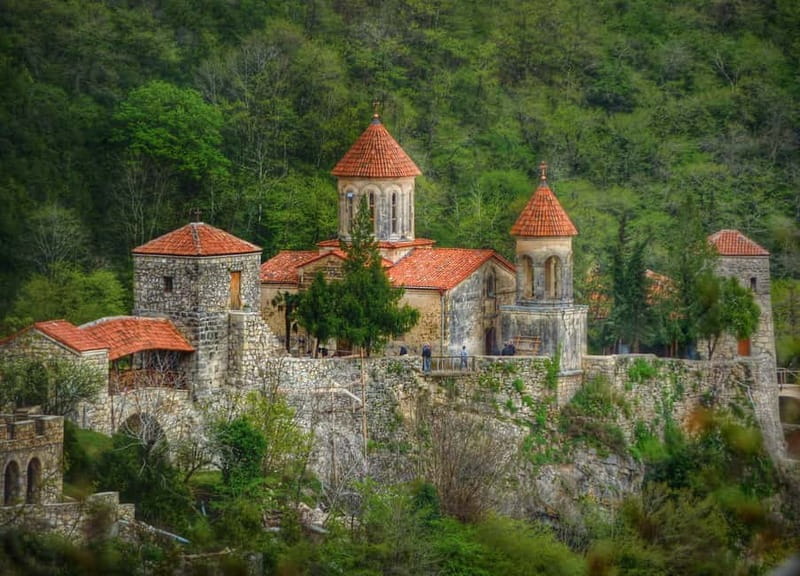
- Motsameta has the most dramatic setting: Its walled monastery sits on a rocky, forested mountain outside the city.
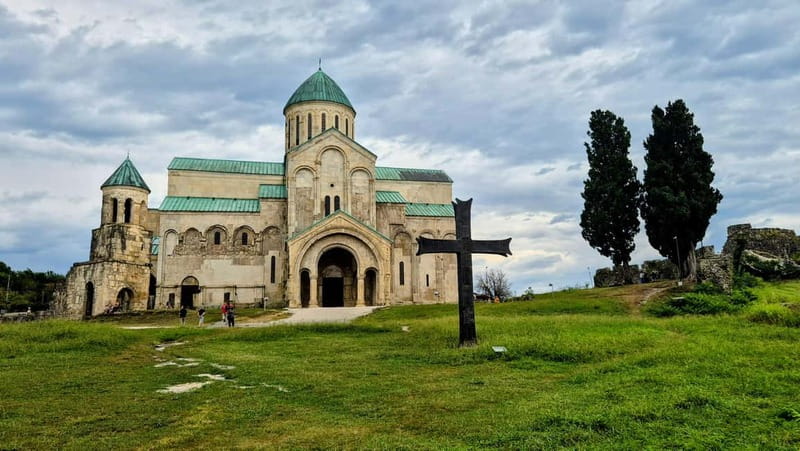
- Bagrati brings you back to Kutaisi: Built in 1003 under Bagrat III, the cathedral occupies Uchimerion Hill.
- Small groups keep the price strong: With a maximum of seven people and a cost of $18 per person, this is unusually economical for guided transport.
- Check Gelati’s condition before booking: Restoration may affect access and the full visual impact of the monastery.
Why this short Georgian monastery tour works
This is a good example of a compact sightseeing trip that does not waste time on long transfers. The three sites are close enough to visit in one half-day, yet each offers a different reason to stop. Motsameta gives you a memorable setting, Gelati supplies the major historical importance, and Bagrati connects the religious story to Kutaisi itself.
I especially like the way the route combines a guided explanation with free time to walk around each monument. Thirty minutes at each stop is not enough for a slow architectural study, but it is enough to see the main features, hear the basic story, and decide which place deserves a longer return visit.
The tour begins and ends at the See Georgia Tour Agency office. From there, you ride in a comfortable minivan, with roughly 30 minutes to Motsameta, 30 minutes to Gelati, and another 30 minutes to Bagrati. The final drive back takes about 15 minutes. Add the three guided visits, and the advertised three-hour length makes sense.
You should think of this as an efficient orientation, not a full-day cultural study. If you want long photography stops, extended time inside each church, or a leisurely meal, you will find the pace brisk.
More things to do in Kutaisi:
- From Tbilisi: Kutaisi Canyons and Caves Full Day Tour
★ 4.8 · 1,051 reviews - Kutaisi: Martvili & Okatse Canyons & Prometheus Cave Tour
★ 4.9 · 829 reviews - From Kutaisi: Guided Tour of Okatse, Martvili, & Prometheus
★ 4.8 · 520 reviews
Motsameta Monastery and its mountain setting
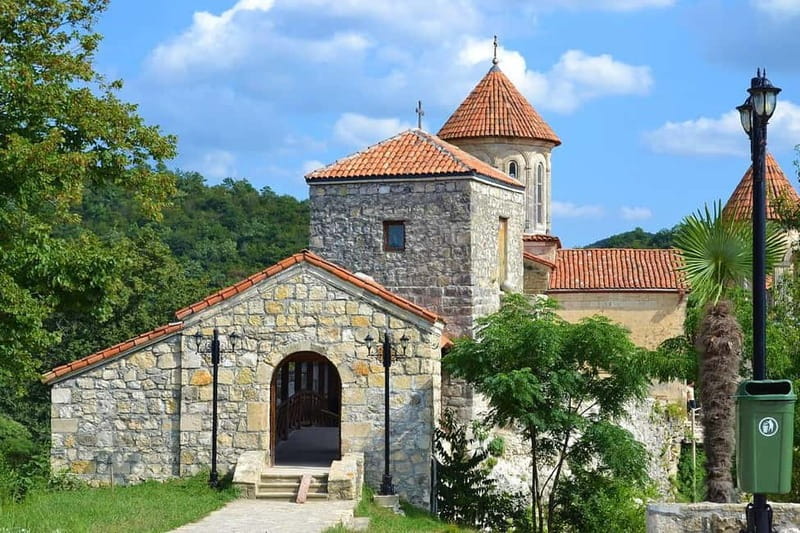
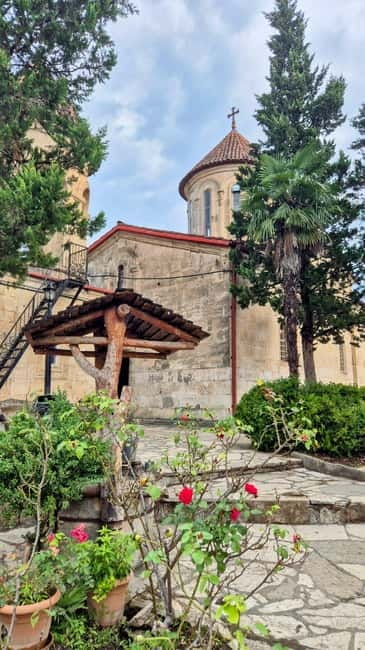
Motsameta is the first major stop, reached after about 30 minutes in the van. The monastery is built on a rocky, forested mountain, and its walled form gives the visit a sense of separation from the city. The setting is a major part of the appeal here. You are not simply checking off another church in a town square.
The walk lasts about 30 minutes and is guided. Comfortable shoes matter because the route includes a moderate amount of walking, and the mountain location may make the ground less easy than a flat urban pavement. The tour information does not promise a difficult hike, but you should still dress for outdoor conditions and check the weather before leaving.
Motsameta is also a good early stop because it gives you a strong visual impression before the more formal historical explanations at Gelati. You can take in the stone walls, the wooded surroundings, and the way the monastery occupies the rocky site. The tour presents it as one of the important monuments of ancient Georgian culture, so expect the guide to place the building within Georgia’s religious and national story.
One practical point: the stop is short. I would listen carefully during the guide’s explanation, then use the remaining time for photographs and a quiet look around. If the setting catches your attention, you may wish the schedule allowed more than half an hour.
Gelati Monastery, founded in 1106
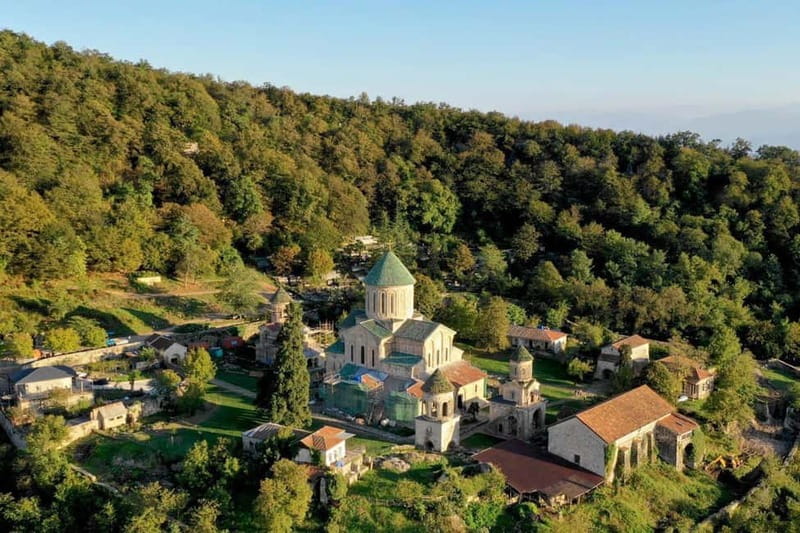
Gelati is the centerpiece of the outing. Davit Agmashenebeli founded the monastery in 1106, and the complex includes buildings from different periods, mainly the 12th and 13th centuries. That long span gives the guide plenty to explain, from the monastery’s founding to its place in Georgian culture and architecture.
The visit includes a guided walk of about 30 minutes. I would pay attention to the contrast between the age of the site and the condition of individual buildings. Historic monuments rarely appear untouched, and Gelati is an important reminder that preservation work is part of visiting old places.
As of the recent information available for this tour, Gelati is undergoing restoration. One visitor described the work as likely to continue for roughly five years. That does not make the stop pointless, but it may mean restricted access, scaffolding, or a less complete view than you expect from photographs.
This is the tour’s clearest drawback, and it affects the value calculation. Gelati is one of the main reasons to book the trip, so you should check its current condition before paying if seeing the full complex is essential to you. Restoration schedules can change, and the exact areas affected may vary.
Even with repair work, the site remains important. The foundation date, the medieval buildings, and the guide’s historical context give the stop real substance. If you are interested in Georgian religious architecture, this is not a place to skip simply because parts may be under repair. Just set your expectations correctly.
Bagrati Cathedral on Uchimerion Hill
The final sightseeing stop is Bagrati Cathedral, the Assumption Cathedral in Kutaisi. It was built in 1003 during the reign of Bagrat III, who ruled from 975 to 1014. The cathedral sits on Uchimerion Hill and is regarded as a major example of Georgian medieval church architecture.
Bagrati adds a different mood to the route. Motsameta feels tied to its mountain setting, while Gelati presents a monastery complex with a long institutional history. Bagrati is more directly connected with the city, and its hilltop position gives the visit a clear sense of place.
The tour allows about 30 minutes for a guided walk. That is enough to learn why the cathedral matters architecturally and symbolically, then look around the monument itself. The guide can also help you understand the cathedral as more than an old stone church. Its importance comes from both its design and its role in Georgia’s medieval history.
Bagrati may be especially useful if you are staying in Kutaisi and have not arranged a city walk. It is easier to reach from the city than Motsameta or Gelati, but this tour removes the need to organize a separate visit. The convenience is valuable when your time is limited.
The tradeoff is the same as at the other stops: 30 minutes passes quickly. You will receive a focused visit rather than an unhurried one. If you prefer to sit, sketch, photograph, or study architectural details at length, plan a separate return.
A completely different kind of day:
- Kutaisi Canyons and Caves from Tbilisi Full Day Tour
★ 5.0 · 448 reviews - Kutaisi:Chiatura Tour with Katskhi Pillar & Cable Car
★ 4.9 · 433 reviews - CANYONS & CAVE Tour from Kutaisi – Okatse, Martvili & Prometheus
★ 4.5 · 307 reviews - Kutaisi: Prometheus Cave & Martvili Canyon Guided Tours
★ 4.7 · 206 reviews
What the small minivan adds
Transportation is included in the $18 price, and the group is limited to seven participants. That combination is one of the strongest parts of the experience. You avoid the work of finding a taxi for three separate sites, while still traveling in a group small enough for questions and direct conversation.
The schedule includes 30-minute van rides between the agency office and the first two sites, followed by another 30-minute transfer to Bagrati. The return to the See Georgia Tour Agency office takes about 15 minutes. Those drives are not wasted time, since they connect sites that are awkward to combine independently in a short morning or afternoon.
The vehicle is described as comfortable and clean, and 85 percent of the available transport ratings were perfect. Bottled water and onboard Wi-Fi are included as well. These are small touches, but they matter on a tightly timed route. You can settle into the van instead of worrying about every transfer.
The group limit is particularly useful for this kind of tour. A large coach would make three short walking visits feel rushed and impersonal. With up to seven people, you have a better chance to hear the guide clearly and ask about Georgian history, local customs, or the buildings you are seeing.
Smoking is not allowed. Meals are not included, so eat beforehand or plan food for after the tour. The schedule does not include a meal break.
The guide can shape the whole experience
The monuments provide the setting, but the guide makes the connections. The tour is available in English, Georgian, and Russian, so choose the language that will let you follow the history most easily. The guide explains the monastery foundations, the medieval dates, and the cultural importance of the sites rather than simply pointing out buildings.
The available feedback is especially positive about the human side of the outing. One guide, Archil, received specific praise, while other comments describe the guide as friendly, funny, and good at explaining Georgian history. That matters on a short tour, because a clear storyteller can make 30 minutes feel useful rather than hurried.
You should also feel free to ask questions during the drives. The van rides give you time to move from one monument to the next, and a small group makes conversation easier. The guide may be able to explain how the three churches fit into Georgia’s past, rather than treating each stop as an isolated photo opportunity.
Guide quality can vary by departure, so I would not assume Archil leads every outing. Still, the repeated praise for the guiding style is encouraging. This is a better choice for you if you want context and conversation, not just a vehicle and a list of stops.
Is $18 a good value?
At $18 per person, this is strong value if you want to see all three sites in one short outing. You receive transportation, a professional guide, bottled water, and Wi-Fi, with no need to arrange taxis or negotiate separate fares. For a small group, the price is particularly attractive.
The value is less obvious if you want maximum time at each monument. Three hours has to cover four drives, three walking visits, and the guide’s explanations. You are paying for access and efficiency, not a slow day at each monastery.
Personal expenses and meals are not included. That is normal for a three-hour excursion, but it means your $18 is not the entire cost of your outing if you need food or other purchases. The tour also does not promise entry tickets because no separate entrance charge is listed. You should confirm current arrangements if that detail matters to your budget.
Free cancellation up to 24 hours before departure and the option to reserve now and pay later make the booking less rigid. Starting times depend on availability. Those terms are useful if your Kutaisi plans are still changing, but you should still check the chosen departure time and Gelati’s restoration status before committing.
Who should book this experience?
I would recommend this tour to first-time visitors who want a clear introduction to the religious monuments around Kutaisi. It suits you if you have only a few hours, prefer a guide, and do not want to arrange local transport yourself.
It is also a good match for solo visitors and couples who value a small group. With a maximum of seven people, you get the social ease of a shared trip without the feel of a full coach excursion.
You may want another option if your main goal is detailed photography or extended time at Gelati. The restoration work is the biggest question, and the 30-minute stop may feel short if you have traveled specifically to study the monastery.
Bring comfortable walking shoes and dress for the forecast. The information provided does not list accessibility details, so you should ask the operator directly if you need specific assistance with walking surfaces or access.
Should you book it?
Book this tour if you want three major Georgian monuments in one easy half-day, especially at a price of $18. The guide, clean minivan, small group, and strong comments about the explanations give it a practical advantage over arranging the route yourself.
Before booking, check Gelati’s current restoration status. If access remains limited, view the trip as a Motsameta and Bagrati visit with a historically important, partly restricted stop at Gelati. If that sounds fair, this is a sensible and inexpensive way to get your bearings around Kutaisi.
FAQ
How long does the tour last?
The tour lasts three hours, including transportation between the meeting office and the three monuments.
Where does the tour begin and end?
It begins and ends at the See Georgia Tour Agency office.
Which sites are included?
The tour visits Motsameta Monastery, Gelati Monastery, and Bagrati Cathedral.
How many people can join the group?
The tour is limited to seven participants.
Which languages are available?
The live guide can provide the tour in English, Georgian, or Russian.
Is transportation included?
Yes. Transportation is provided in a comfortable minivan.
What else is included?
A professional guide, one bottle of water, and Wi-Fi onboard are included.
Are meals included?
No. Meals and personal expenses are not included.
Can I cancel the booking?
You can cancel up to 24 hours in advance for a full refund. You can also reserve now and pay later.
Just added in Kutaisi
- Wine & Dine group tour from Kutaisi★ 4.6 · 3 reviews
- Wild Caving Experience in Melouri Cave Near Kutaisi★ 5.0 · 3 reviews
- Private tour from KUTAISI: Bagrati, Gelati and Motsameta★ 5.0 · 5 reviews
- Private Car – From Tbilisi, Kutaisi, Martvili Canyons, caves★ 5.0 · 1 review
- Full Day Tour To Kutaisi, Prometheus Caves, Bagrati and Gelati★ 5.0 · 1 review
- Tour to Kutaisi from Tbilisi (Sataplia Reserve, Bagrati, Gelati, Motsameta)★ 5.0 · 2 reviews
- Kutaisi, Martvili Canyon & Prometheus Cave Tour from Tbilisi★ 5.0 · 3 reviews
- 2-Day Kutaisi Tour: Caves, Canyons & Soviet Sanatoriums★ 5.0 · 12 reviews
Kutaisi Tours, compared.

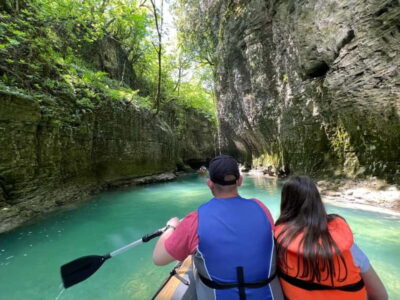
Martvili & Okatse Canyons & Prometheus Cave Tour
Read our review →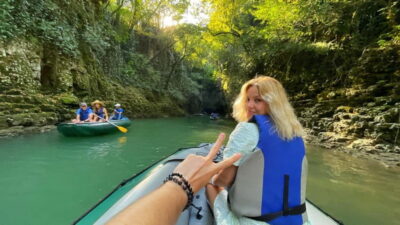
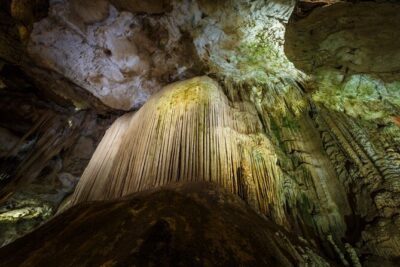
Kutaisi Canyons and Caves from Tbilisi Full Day Tour
Read our review →
CANYONS & CAVE Tour from Kutaisi – Okatse, Martvili & Prometheus
Read our review →
Prometheus Cave, Martvili & Okatse Canyon from Kutaisi
Read our review →Browse the lists this tour appears in