
Reviewed · DAY TRIPS IN TBILISI
From Tbilisi: Mtskheta, Uplistsikhe, Gori Day Trip
History changes fast here. This private day trip links Uplistsikhe’s rock-cut city, Stalin-era Gori, and Georgia’s old spiritual capital, Mtskheta, in one long outing. I like the sharp contrast between pagan temples, medieval churches, Soviet relics, and the giant Chronicle of Georgia monument. I also like the private vehicle and hotel pickup, which make a demanding route much easier.
The main drawback is the length. At 8.5 to 11 hours, this is a full day with several stops and plenty of time in the car. Uplistsikhe also has uneven ground and natural steps, so it is a poor fit for anyone with serious knee or hip problems. Wear firm walking shoes, not fashion footwear.
In This Review
- Key points to know before booking
- Why this route tells Georgia’s story so well
- Uplistsikhe, where the road becomes stone
- Gori, Stalin, and the awkward side of history
- Lunch in Gori, a practical pause
- Mtskheta, Georgia’s spiritual heart
- The Chronicle of Georgia and its Soviet Stonehenge nickname
- The guide can make or break the day
- Transport, timing, and the real cost
- Who should book this day trip?
- Should you book the Mtskheta, Uplistsikhe, and Gori tour?
- FAQ
- How long does the day trip last?
- Does the tour include hotel pickup?
- Is this a private tour?
- Which languages are available?
- Are entrance fees included?
- Is lunch included?
- What should I wear to the churches?
- Is Uplistsikhe suitable for people with mobility problems?
- Can young children join the tour?
- Can I cancel the booking?
Key points to know before booking
- Uplistsikhe is the physical highlight: You walk through ancient rooms, tunnels, wine cellars, temples, and rough-hewn paths cut into a rocky ridge.
- Jvari gives you Georgia’s classic view: From the monastery, you look down at the meeting of the Mtkvari and Aragvi rivers near Mtskheta.
- Gori adds a difficult modern chapter: Stalin’s birthplace, personal bulletproof train carriage, and museum offer a close look at Soviet memory.
- The Chronicle of Georgia changes the mood: This huge late-20th-century monument near the Tbilisi Sea feels remote, stark, and unlike the usual Georgian sights.
- The guide matters: Guides named David and Saba have been praised for kindness, clear explanations, and taking good photographs.
- The price needs context: At $152 per person, the tour is costly for one day, but the private transport, hotel service, guide, and number of major sites help explain it. Meals and entry fees cost extra.
Why this route tells Georgia’s story so well
Many day trips from Tbilisi give you one historic town and a church or two. This one works differently. It moves across roughly 3,000 years of Georgian history, from an Iron Age settlement to medieval Christianity and then to the Soviet period.
I like that change of mood. At Uplistsikhe, the past feels rough and physical. At Mtskheta, it feels sacred and royal. In Gori, history becomes political and personal. At the Chronicle of Georgia, it becomes monumental and modern.
You also get a private group rather than a large coach party. That matters on a route with many questions and several sites where context makes the visit far more interesting. You can ask about religion, Stalin, Georgian kings, or the Soviet Union without waiting for a guide to finish addressing 30 people.
The day is still busy. You should not book this expecting a slow village outing with long café breaks. It is better for someone who wants a large amount of Georgian history in a single day and accepts that the schedule will feel full.
More Day Trips in Tbilisi
- Tbilisi: Day Trip to Kazbegi, Gudauri, Gergeti, and Ananuri
★ 4.9 · 3,203 reviews - Day Trip to Kakheti Wine Region Including 9 Wine Tastings
★ 5.0 · 2,774 reviews - Day Trip to Kazbegi and Gudauri
★ 5.0 · 2,009 reviews
Uplistsikhe, where the road becomes stone
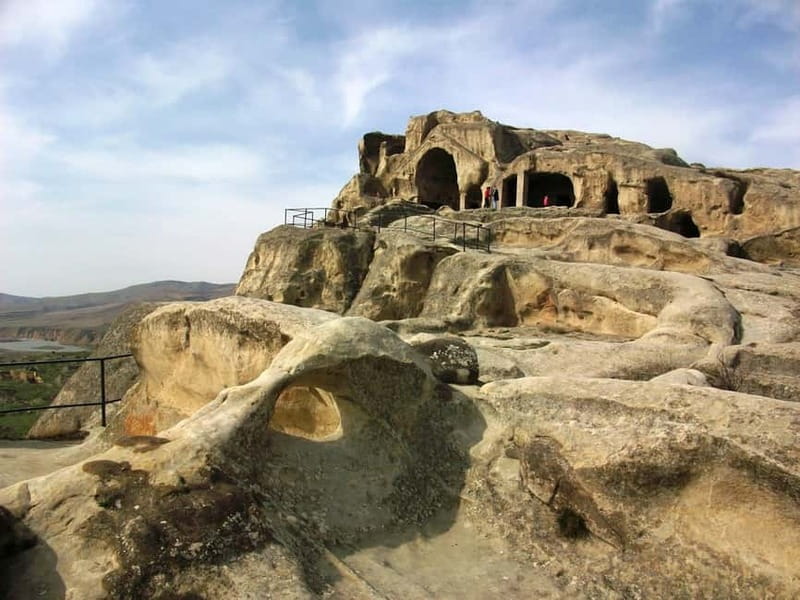
Uplistsikhe is the most unusual stop on the route. The ancient settlement is carved into rock, with chambers, paths, tunnels, religious spaces, and storage areas spread across a broad site. You do not simply look at a ruin from a distance. You walk through it.
The setting helps you understand why this place mattered. Uplistsikhe was a major settlement and trading point connected to routes crossing Georgia. Its rock-cut rooms show how people adapted a natural ridge for living, worship, storage, and movement.
I would give this stop your best walking shoes and your full attention. Some paths are uneven, with natural steps and uphill sections. The surface can make slow progress necessary, especially if you want to look inside the smaller spaces or hear the guide properly.
You may see old wine cellars and tunnels, as well as pagan-era religious areas. The attraction is not polished. That is part of its appeal, but it also means you need to watch your footing. High heels are a bad idea, and the site is not suitable for toddlers or people with significant mobility limits.
The guide can make a major difference here. Without explanation, Uplistsikhe can feel like a maze of empty rooms. With a good guide, the cut stone begins to show a city with purpose. You learn to distinguish places used for worship, storage, movement, and daily life.
Plan for wind and sun as well. The site is open and exposed, and the walk includes ascent. A bottle of water is supplied, but you should still dress for a long outdoor stop.
Gori, Stalin, and the awkward side of history
Gori introduces a very different Georgia. This is the hometown of Joseph Stalin, and the visit focuses on the Stalin Museum, his birthplace, and his personal bulletproof train carriage.
The carriage is a striking object. Standing beside it gives you a sense of the scale and precautions surrounding one of the 20th century’s most powerful and feared leaders. It is not an abstract history lesson. You are looking at a real vehicle tied to Stalin’s public life.
The small house where he was born offers an equally sharp contrast. The modest structure sits beside the larger museum complex, creating an uneasy visual connection between a simple childhood and a huge political legacy.
I appreciate the chance to approach this stop with some balance. Gori is not only a place for admiration, condemnation, or quick photo opportunities. It raises harder questions about how countries remember famous and troubling figures. Your guide can help explain the Georgian and Soviet setting, then answer your questions directly.
The Gori Stalin Museum requires a separate entrance payment. The listed estimate for Uplistsikhe and the museum together is about €7 per person, though you should check the current amount when booking. Meals are also not included.
Gori is a sensible place for lunch because the day is long and the next sites are still ahead. You can eat at a local restaurant chosen with help from the guide, rather than being tied to a large tour-bus buffet. Georgian comfort food such as Gori cutlets or beans cooked in a clay pot is a good match for a busy day.
Because lunch is at your own expense, you have control over what you order and how much you spend. That flexibility is useful, though it means the final cost will be higher than the advertised tour price.
Lunch in Gori, a practical pause
A midday meal here is not just a break from sightseeing. It helps divide the day into two clear parts: the ancient and Soviet chapters before lunch, then the religious and monumental sights after it.
I like the freedom to order with local help. If Georgian menus look unfamiliar, the guide can explain the dishes and help you choose. You are not forced into a fixed meal, and you can keep the stop simple if you prefer to return to the road quickly.
Do remember that a private trip does not mean every part of the schedule is completely unstructured. The route covers many sites, so a long meal could make the final stops feel rushed. A relaxed but sensible lunch works best.
More things to do in Tbilisi:
- Highlights of Caucasus Mountains-Jinvali,Ananuri,Gudauri,Kazbegi(Group tour)
★ 5.0 · 2,682 reviews - From Tbilisi: Kakheti Wine Region Tour with 9 Wine Tastings
★ 4.9 · 2,541 reviews - Tbilisi: Mtskheta, Jvari, Gori and Uplistsikhe Day Tour
★ 4.9 · 2,396 reviews - From Tbilisi to Kazbegi, Ananuri, Gudauri & Gergeti
★ 4.9 · 2,278 reviews
Mtskheta, Georgia’s spiritual heart
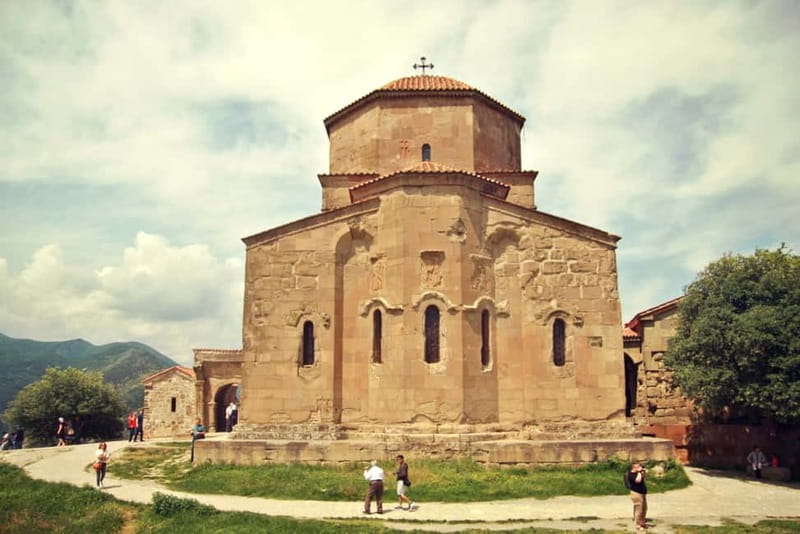
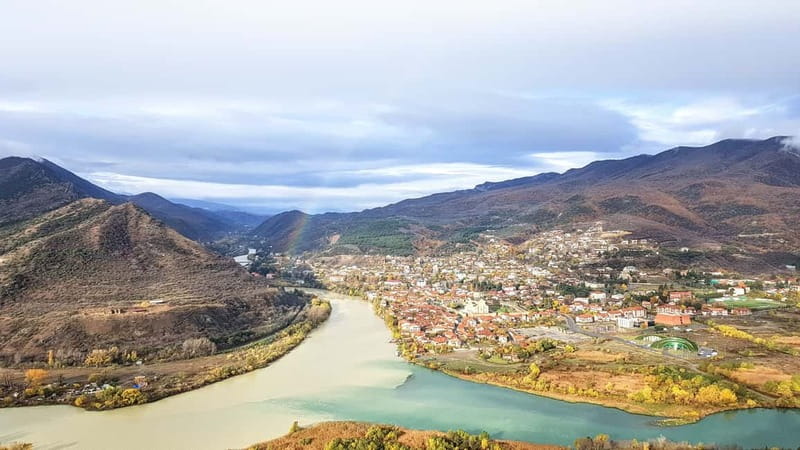
Mtskheta was an important center of Georgian Christianity and remains one of the country’s key religious places. The visit begins above town at Jvari Monastery, where the view is the main event.
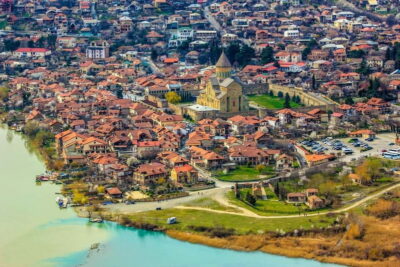
From the hill, you can see the Mtkvari and Aragvi rivers coming together below. It is one of the clearest views on the trip because it connects geography with history. The rivers help explain why Mtskheta grew into such an important settlement.
Jvari itself has a serious, restrained beauty. The stone church sits high above the river junction, and the exposed position gives the visit a quiet sense of scale. Bring a headscarf if you are a woman, or borrow one at the church entrance. Orthodox churches require covered shoulders and legs, and shorts, short dresses, and tight leggings are not acceptable.
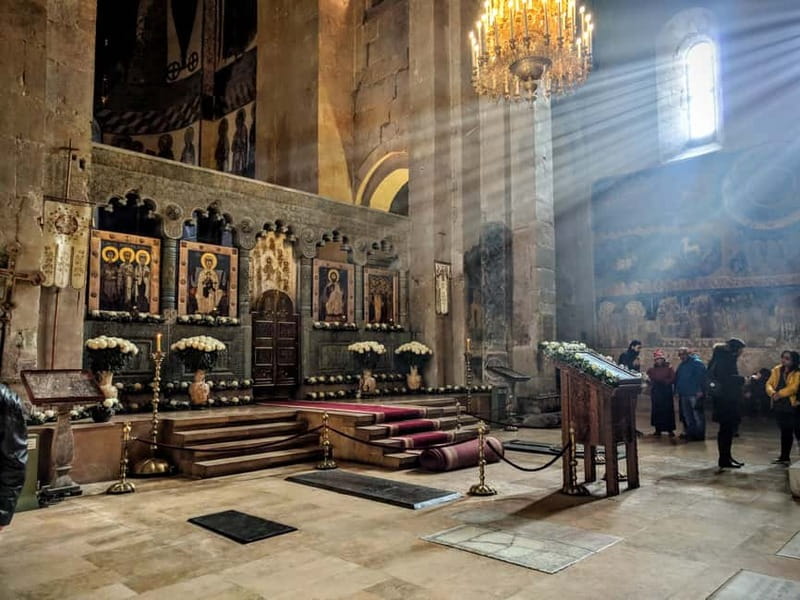
The route then continues into Mtskheta and Svetitskhoveli Cathedral. This medieval church is one of the major sacred buildings in Georgia, and it is still an active religious place rather than a museum piece.
Inside, you can see the burial site of Georgian kings and learn about the tradition connected with the robe of Christ. The cathedral’s importance is not only architectural. It is tied to the country’s conversion to Christianity, royal power, and national identity.
The town around the cathedral may feel more arranged for sightseeing than the ancient rock city of Uplistsikhe. One past visitor found the setting a little like a theme park. That is a fair caution. Mtskheta is popular and more commercial in feel, but the cathedral itself remains worthwhile, especially with a guide who can explain what you are seeing.
The Chronicle of Georgia and its Soviet Stonehenge nickname
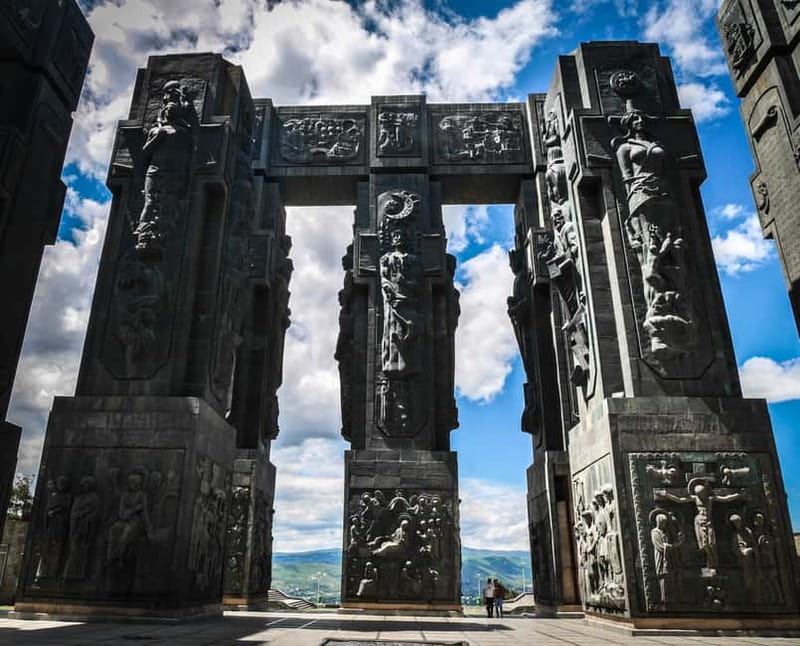
The final major stop is the Chronicle of Georgia, a colossal monument overlooking the Tbilisi Sea. Its huge pillars and reliefs create a very different experience from the churches and ruins earlier in the day.
Some people call it a Soviet Stonehenge because of its scale and dramatic placement. The nickname helps, but it does not fully explain the work. The monument is a piece of modern Georgian visual culture, shaped by the monumental style associated with the Soviet period.
I like putting this stop at the end. After Uplistsikhe, Gori, and Mtskheta, you have already seen Georgia’s older layers. The Chronicle gives you one final question: how does a modern nation represent its past in stone?
The location above the Tbilisi Sea also gives you room to pause. It is a broad, open setting rather than another tight historic interior. Depending on the conditions, the wind and scale can make the place feel almost theatrical.
This stop is not included on many standard Tbilisi day routes, which is one reason it adds value here. If you enjoy architecture, political history, or unusual monuments, you will likely remember it. If your main interest is medieval Georgia, you may find it less immediately moving than Jvari or Svetitskhoveli.
The guide can make or break the day
A private tour gives you more than a smaller group. It gives you a chance to shape the conversation. You can spend longer on the sites that interest you and ask for clearer explanations when a subject becomes complicated.
The guide languages are English and Russian. Guides named David and Saba have been praised for being kind, informative, friendly, and easy to spend a full day with. One especially useful detail is their willingness to take photographs. A guide who knows where to position you can make a real difference at Jvari, Uplistsikhe, and the Chronicle.
You should still tell your guide early in the day what matters most to you. If you care about church art, ask for more time in Svetitskhoveli. If Soviet history interests you, use the Gori stop for questions. If you mainly want scenery, let the guide know so the best viewpoints receive proper attention.
The route involves sensitive subjects, particularly Stalin and Orthodox religious tradition. A friendly guide who can explain rather than simply recite dates gives the day much more value.
Transport, timing, and the real cost
The tour costs $152 per person. That is not a bargain-priced excursion, especially once you add meals and the separate entrance fees. The listed entry cost for Uplistsikhe and the Gori Stalin Museum is about €7 per person, and lunch is extra.
Still, the price needs to be compared with what you are buying. The fee includes hotel or apartment pickup and drop-off in Tbilisi, a private vehicle, an English or Russian-speaking guide, and bottled water. You are also covering four major areas in one day: Uplistsikhe, Gori, Mtskheta, and the Chronicle of Georgia.
For two or more people, the private format can make more sense than paying for separate transfers or trying to combine public transport. You avoid arranging several difficult connections, and you can return directly to your accommodation at the end.
The duration is listed as 8.5 to 11 hours. That range tells you the day can vary. Traffic, the amount of time spent at Uplistsikhe, lunch, and your pace at the churches can all affect the finish time.
I would not plan an important evening reservation immediately after the tour. Give yourself room to arrive back in Tbilisi late, particularly if you want to ask questions or take your time at the final monument.
Free cancellation up to 24 hours before departure and the option to reserve now and pay later reduce the financial risk. Those policies are useful when your Tbilisi plans are still changing, but they do not shorten the day or make the walking easier.
Who should book this day trip?
I would recommend it to first-time visitors who want a broad introduction to Georgian history without arranging several separate outings. It suits couples, friends, and families with children over four who can handle a long day and uneven walking.
It is also a strong choice for travelers who prefer conversation and context over ticking off attractions. The private format lets you ask direct questions and avoid the fixed rhythm of a large coach.
I would think twice if you have limited mobility, serious knee or hip trouble, or a very young child. Uplistsikhe has natural steps and uphill sections, and strollers are not allowed. Anyone expecting a gentle sightseeing day should choose a shorter route.
You should also be comfortable with a full schedule. The reward is variety, but the cost is time on the road and less freedom to linger at every stop.
Should you book the Mtskheta, Uplistsikhe, and Gori tour?
Book it if you want one well-packed day that connects Georgia’s pagan past, Christian identity, Soviet memory, and modern monuments. I especially like the combination of Uplistsikhe and the Chronicle of Georgia because they give you two unusual, visually powerful stops that many simpler outings leave out.
The private vehicle, hotel service, and guide support make the $152 price easier to justify, though you should budget separately for lunch and about €7 in listed entry fees. Ask for a guide who can explain the difficult parts of Gori and make the church visits meaningful.
Skip it if you want a slow day, need step-free access, or care more about sitting in Mtskheta than covering a wide stretch of Georgian history. For the right person, this is a demanding but rewarding introduction to the country beyond Tbilisi.
FAQ
How long does the day trip last?
The tour lasts about 8.5 to 11 hours. Starting times vary, so you need to check availability for your preferred date.
Does the tour include hotel pickup?
Yes. Pickup and drop-off are included from your hotel or holiday apartment in Tbilisi.
Is this a private tour?
Yes. The experience is operated as a private group tour.
Which languages are available?
The live guide is available in English or Russian.
Are entrance fees included?
No. Entrance fees to Uplistsikhe and the Gori Stalin Museum are not included. The estimated combined cost is about €7 per person.
Is lunch included?
No. Meals are not included. Lunch is taken at your own expense, with help from the guide when choosing a local place or dish.
What should I wear to the churches?
You should avoid shorts, short dresses, and tight leggings. Women need to wear a headscarf inside Orthodox churches, and a scarf can be borrowed at the church entrance.
Is Uplistsikhe suitable for people with mobility problems?
No. Uplistsikhe has uneven surfaces, natural steps, and uphill sections. It is not recommended for people with significant knee or hip problems.
Can young children join the tour?
Children under four are not suitable for this activity. Uplistsikhe is also not suitable for toddlers, and baby strollers are not allowed.
Can I cancel the booking?
Yes. You can cancel up to 24 hours in advance for a full refund. You can also reserve now and pay later.
Just added in Tbilisi
- Wine Tasting feel the Difference of Qvevri or Classical Wine★ 4.4 · 10 reviews
- From Tbilisi: Kakheti and Kazbegi 2-Day 4X4 Jeep Tour pack★ 5.0 · 6 reviews
- Walking Tour in Old Tbilisi – Group Tour★ 4.5 · 8 reviews
- Uforgatable Kakheti Tour with wine tasting – in Georgia★ 4.9 · 5 reviews
- From Tbilisi: Uplistsikhe Caves and Mtskheta Town Day tour★ 5.0 · 2 reviews
- Tbilisi: Vintage Fashion and Secondhand Thrifting Tour★ 5.0 · 11 reviews
- Tbilisi Airport to Gudauri, Bakuriani, Batumi, Tbilisi★ 5.0 · 3 reviews
- Private Adorable City Tour of Tbilisi★ 5.0 · 3 reviews
Day Trips in Tbilisi, compared.
Day Trip to Kazbegi, Gudauri, Gergeti, and Ananuri
Read our review →
Day Trip to Kakheti Wine Region Including 9 Wine Tastings
Read our review →


Browse the lists this tour appears in