
Reviewed · DAY TRIPS IN TBILISI
From Tbilisi: Mtskheta, Jvari, Gori & Uplistsikhe Day Trip
Georgia packs centuries into one long day. This nine-hour trip from Tbilisi links the country’s ancient religious center, a Soviet-era museum, a medieval fortress, and a remarkable cave town. You move from church domes and hilltop views to Stalin’s birthplace and rock-cut chambers, with a bilingual guide adding the historical thread between each stop.
I like the excellent range of sights, especially Jvari Monastery and Uplistsikhe, which provide the most memorable views and architecture. I also like the price: at $15 per person, round-trip transport and a live English or Russian-speaking guide make this one of the better-value ways to cover several major places in one day.
The main tradeoff is the pace. You spend much of the day in the van, lunch is not included, and the meal may come late, sometimes close to 4 pm. You should also expect extra entry fees, cold or slippery conditions at Uplistsikhe in winter, and some confusion around the busy meeting point.
In This Review
- Key points before you book
- Why this route works so well in one day
- Jvari Monastery and the view over two rivers
- Mtskheta and Svetitskhoveli Cathedral
- Gori Fortress and the town below
- The Stalin Museum: important, unusual, and not neutral
- Uplistsikhe, Georgia’s rock-cut ancient town
- The guide is the key to the experience
- Transport, lunch, and the practical side
- How hard is the day?
- Who should book this day trip?
- Should you book it?
- FAQ
- How long does the day trip last?
- Where does the tour start?
- Which languages are available?
- Is transportation included?
- Are the Stalin Museum and Uplistsikhe entrance fees included?
- Is lunch included?
- What should I bring?
- Can I cancel the booking?
Key points before you book
- Four very different chapters of Georgia: Ancient Mtskheta, medieval Gori, Soviet-era history, and the pre-Christian cave city of Uplistsikhe all fit into one outing.
- Jvari gives you the grandest view: The hilltop monastery looks across the meeting point of the Mtkvari and Aragvi rivers, with broad mountain views beyond.
- Uplistsikhe requires proper shoes: The rock-cut site includes uneven paths, steps, and exposed walking areas. Comfortable footwear matters.
- The guide makes the long day work: Guides such as Lasha, Miko, Toko, Rosana, Misha, and Jimmy have been praised for clear explanations, energy, and humor.
- The price is low, but extras add up: Bring cash for the 15 GEL Stalin Museum ticket, 15 GEL Uplistsikhe ticket, and lunch.
- Allow time to find your vehicle: Several minibuses may gather near the pickup area, and identification has not always been obvious.
Why this route works so well in one day
This is not a slow, single-site excursion. It is a broad introduction to Georgian history, and the variety keeps the day moving.
You begin near Tbilisi at 22 Ovanes Tumaniani Street, then head toward Mtskheta and its hilltop monastery. From there, the route continues west to Gori, where you can choose to pay for the Stalin Museum before visiting the fortress. The final major stop is Uplistsikhe, an ancient settlement carved into rock.
The route gives you a useful sense of how Georgia’s past is layered. Mtskheta reflects the country’s early Christian identity. Gori brings in medieval military history and the difficult subject of Joseph Stalin. Uplistsikhe reaches further back, to a time when people shaped homes, temples, halls, and passages directly from the cliffs.
You will not get long, unhurried hours at each location. The advantage is coverage. If you have only a few days in Georgia, this trip lets you see several important places without arranging separate taxis, marshrutkas, or private drivers.
More Day Trips in Tbilisi
- Tbilisi: Day Trip to Kazbegi, Gudauri, Gergeti, and Ananuri
★ 4.9 · 3,203 reviews - Day Trip to Kakheti Wine Region Including 9 Wine Tastings
★ 5.0 · 2,774 reviews - Day Trip to Kazbegi and Gudauri
★ 5.0 · 2,009 reviews
Jvari Monastery and the view over two rivers
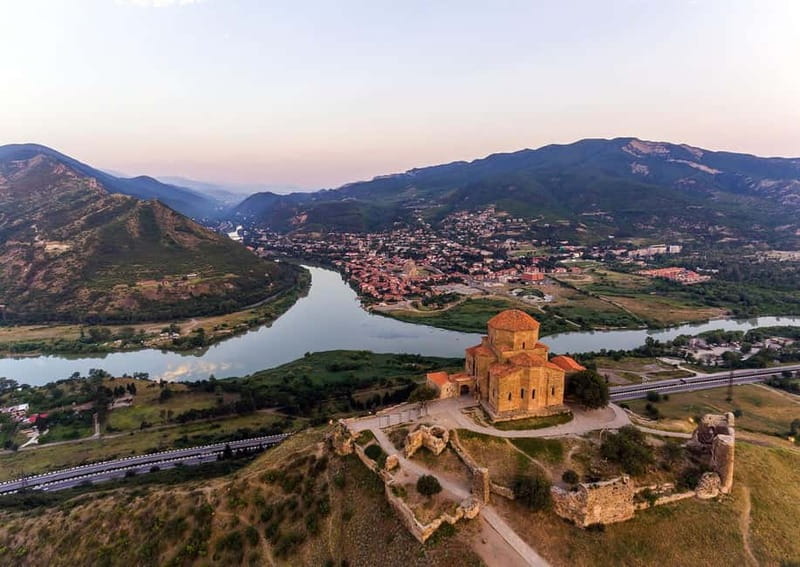
Jvari Monastery is usually the first major stop, with about 30 minutes for a guided visit and photographs. It sits high above Mtskheta, so the setting is as important as the building itself.
The monastery is simple compared with the grander cathedral later in the day. Its appeal comes from its position, stone construction, and wide view over the valleys below. You can look down toward Mtskheta and see the rivers meeting, with the hills extending beyond the town.
This is a short stop, but it is one of the strongest parts of the outing. The open setting gives you a welcome break after leaving Tbilisi, and the guide can explain why the site matters to Georgian Christianity. You should keep your camera ready, but do not spend the whole visit looking through it. The view is best appreciated with your own eyes.
In winter, the hill can feel very cold, especially when wind moves across the open ground. Wear warm socks and proper boots if snow or freezing weather is expected. One January visitor found the mountain cold enough for their feet to become uncomfortable, despite rating the trip highly.
Mtskheta and Svetitskhoveli Cathedral
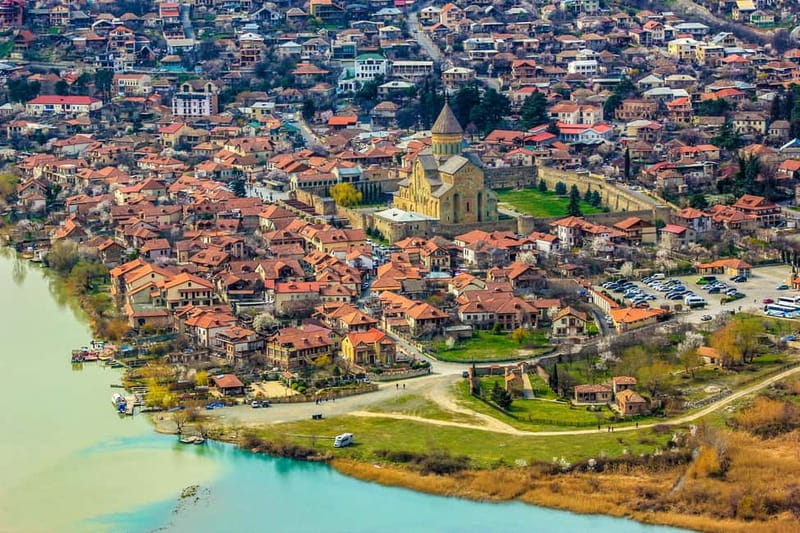
Mtskheta is one of the oldest continuously inhabited cities in the world and served as Georgia’s ancient capital. Its importance is religious as well as political, and the town remains one of the country’s key places for Georgian Orthodox Christianity.
The main visit is to Svetitskhoveli Cathedral, with about an hour set aside for the stop. The cathedral has a powerful presence, with stone walls, religious artwork, and a calm interior that feels very different from the busy streets of Tbilisi.
The exact order can vary. The published schedule places Svetitskhoveli after Uplistsikhe, while the trip description presents Mtskheta earlier in the day. Either way, you should expect both Mtskheta and Jvari to be part of the same route, with the guide explaining how the two sites connect.
Dress respectfully for the cathedral. Comfortable clothing is useful all day, but this is also a religious site, so avoid treating the visit like a quick photo stop. Services can affect access. A January visit could not enter Svetitskhoveli because an evening service was taking place from 6 to 8 pm on a Saturday. That kind of change is outside the tour company’s control, so keep your expectations flexible.
Mtskheta is a place where the guide adds real value. Without context, you may see an attractive old church and a pleasant town. With a good explanation, the stop becomes a key to understanding Georgia’s religious identity and its place in the wider story of the country.
Gori Fortress and the town below
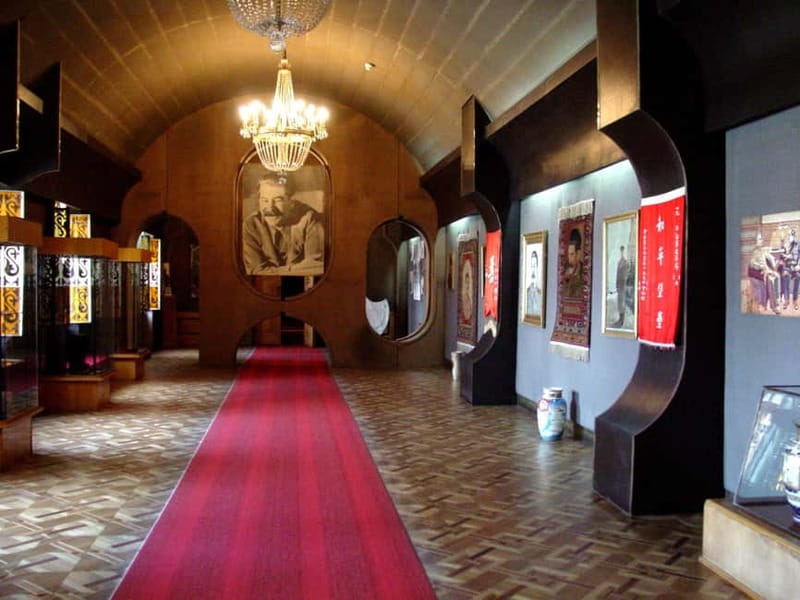
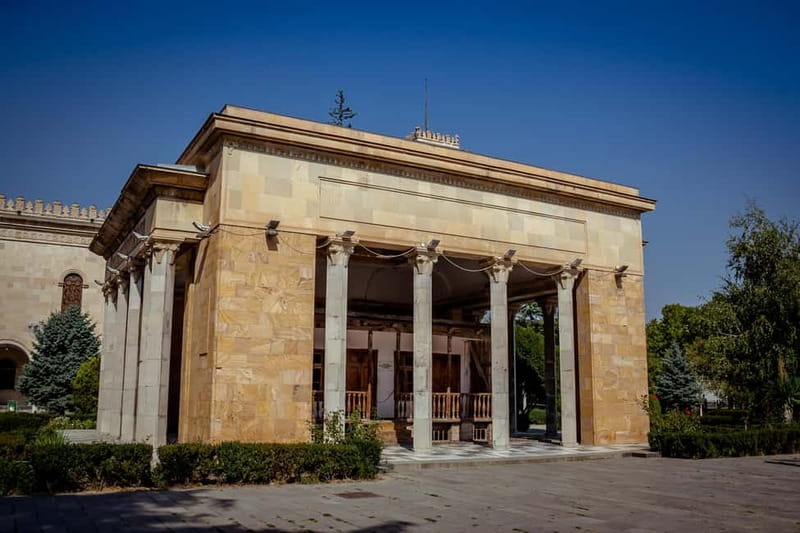
Gori brings a different mood. The town is known as the birthplace of Joseph Stalin, but the visit is not limited to Soviet history. Gori Fortress, an important defensive site dating to the 11th century, rises above the town on a rocky hill.
You receive about an hour for the Gori portion of the trip. The fortress is a strong choice for photographs, with views over the town and surrounding countryside. Its weathered walls and elevated position make it easy to picture why the site mattered militarily.
The climb and uneven ground mean you should keep your comfortable shoes on. You may find the fortress more satisfying if you have an interest in old defensive architecture and Georgian history, while visitors focused only on Stalin may prefer to spend more time at the museum.
The schedule can feel tight here. One person who rated the trip four stars rather than five felt the Stalin Museum visit was too brief. That is a fair concern if the museum is your main reason for booking. A full day covering four major places leaves limited room for lingering.
More things to do in Tbilisi:
- Highlights of Caucasus Mountains-Jinvali,Ananuri,Gudauri,Kazbegi(Group tour)
★ 5.0 · 2,682 reviews - From Tbilisi: Kakheti Wine Region Tour with 9 Wine Tastings
★ 4.9 · 2,541 reviews - Tbilisi: Mtskheta, Jvari, Gori and Uplistsikhe Day Tour
★ 4.9 · 2,396 reviews - From Tbilisi to Kazbegi, Ananuri, Gudauri & Gergeti
★ 4.9 · 2,278 reviews
The Stalin Museum: important, unusual, and not neutral
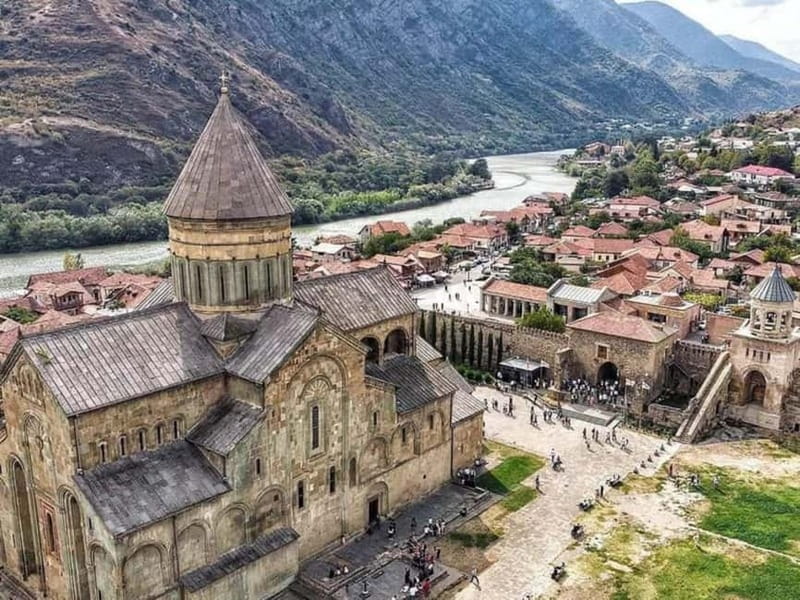
The Stalin Museum is optional in the sense that its entry ticket is not included, but the stop is built into the Gori visit. Admission costs 15 GEL.
The museum examines Stalin’s life in his hometown and offers a look at Georgia’s Soviet-era past. You will find this part of the trip particularly worthwhile if you want to understand how a Georgian-born figure became one of the 20th century’s most consequential and controversial leaders.
The experience may not feel evenly paced. English and Russian-speaking groups can receive different amounts of attention, and the museum’s own guide may move quickly through the exhibits. One visitor felt the group was rushed, while another described the museum as the highlight of the day but wished for more time.
That makes your priorities important. If you care deeply about Soviet history, consider treating the museum as the main focus in Gori and accepting that the rest of the day will continue on a fixed schedule. If you are more interested in ancient sites, the extra ticket may not be essential.
The guide from your Tbilisi tour helps place the museum in context, but the museum visit itself may be handled by staff on site. The quality of that portion can feel less consistent than the main guide’s commentary.
Uplistsikhe, Georgia’s rock-cut ancient town
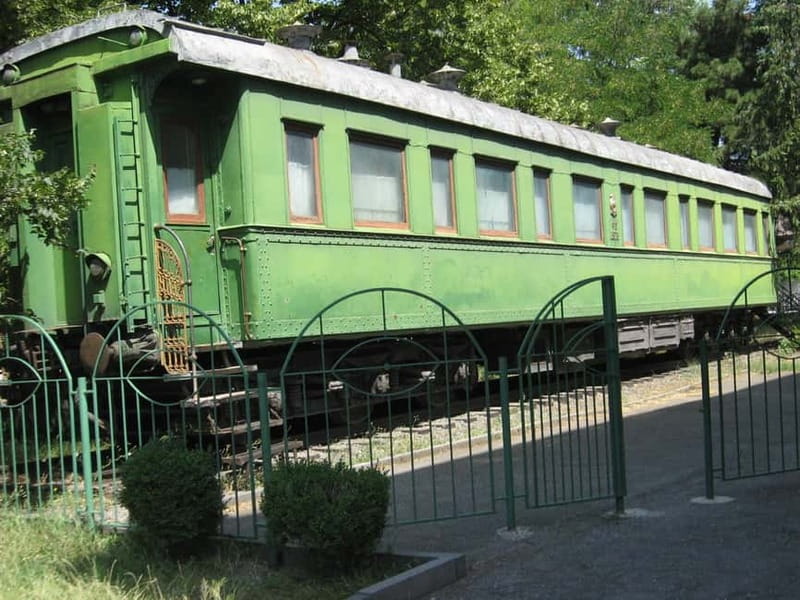
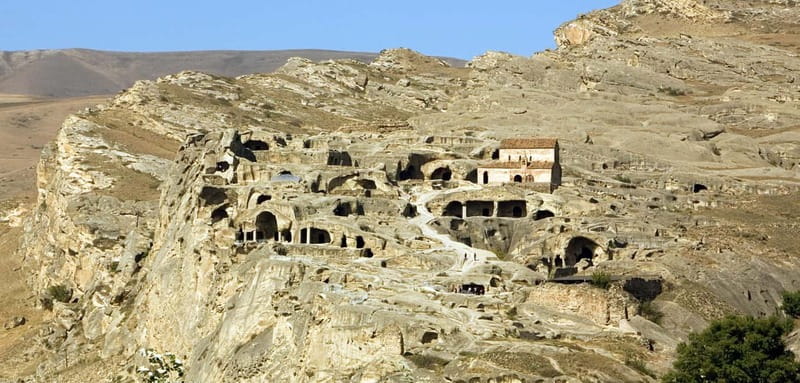
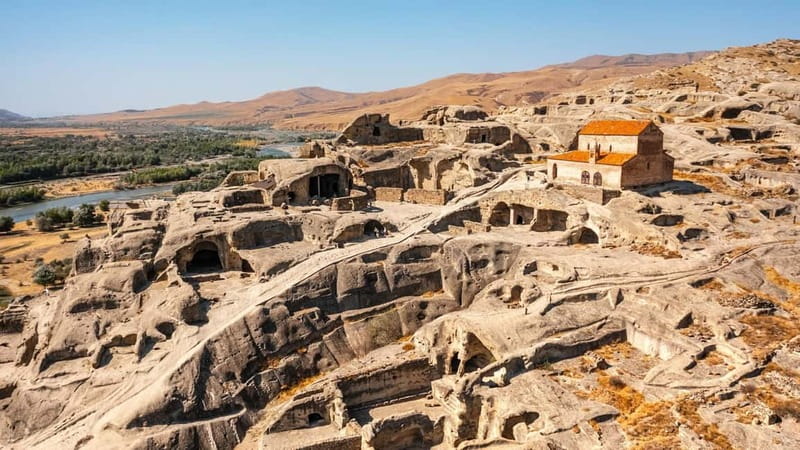
Uplistsikhe is the visual high point for many people. This ancient cave settlement was carved into rock, creating dwellings, halls, temples, tunnels, and passageways that spread across the site.
You have about an hour here, including a guided visit and time for photos. That sounds reasonable, but the site requires walking. Paths are uneven, some surfaces are exposed, and the climb can be tiring. In cold weather, snow and ice may make the footing less comfortable.
This is where sturdy shoes matter most. Trainers with good grip are better than smooth-soled casual shoes, and winter visitors should bring warm socks and boots. You should also carry cash for the 15 GEL entry ticket.
The appeal of Uplistsikhe comes from its physical setting. Instead of viewing ruins behind a barrier, you walk through spaces cut into the rock itself. Doorways, chambers, and tunnels make the site feel immediate. The architecture is unusual because the cliff is both the building material and the structure.
The hour is enough to see the main sections with a guide, but not enough for a slow exploration of every corner. If you want to stop often for photographs or study the details, you may feel rushed. Still, cutting Uplistsikhe from this route would remove one of the day’s most distinctive experiences.
The guide is the key to the experience
The strongest praise for this outing goes to the guides. Names that have received warm mention include Lasha, Mikho, Nikho, Stephan, Toko, Rosana, Misha, Jimmy, Miko, Jamal, Eva, and George.
The guide’s role matters because the route involves long stretches of driving and several periods where you could otherwise feel disconnected from the places around you. A strong guide fills those gaps with stories about Georgia, religious traditions, historical figures, and the country’s changing political past.
Several guides have been described as energetic, funny, caring, and able to explain complex subjects in clear English. One guide kept a multilingual group involved with games, while another added useful background well beyond the basic information at each site.
The tour also operates in English and Russian. In a mixed group, you may find that explanations take longer because the guide repeats information in both languages. One English-speaking visitor felt that more time was given to the Russian group. That is worth keeping in mind if you prefer a fast, English-only tour.
The guide cannot control every part of the day. The museum staff, restaurant, traffic, weather, and access to religious buildings may affect the experience. Still, the guide is often what turns the journey between stops from dead time into part of the trip.
Transport, lunch, and the practical side
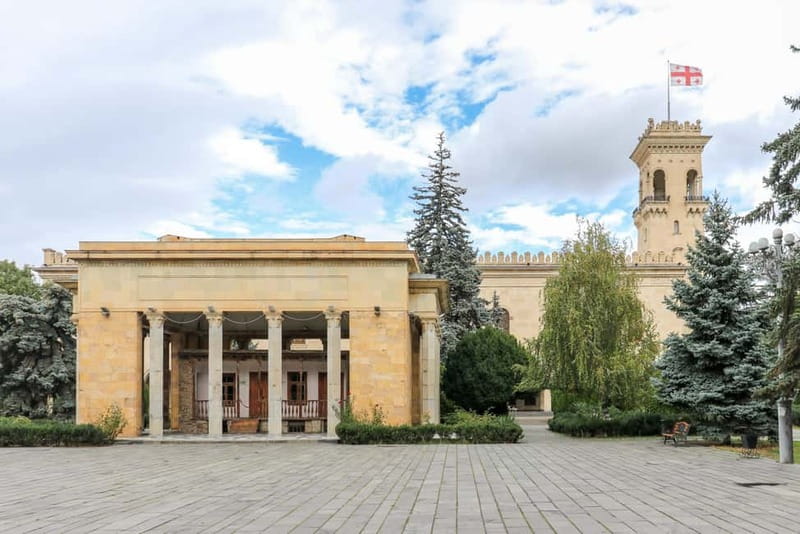
Round-trip transport is provided in a Mercedes Sprinter van. The drivers have generally been praised for safe, careful driving, and several people found the air conditioning useful during warmer months.
Vehicle condition may vary. One winter visitor noticed worn seats and a lingering cigarette smell, although the driver did not smoke during the ride. Food and drinks are not allowed in the vehicle, so plan around that rule.
Lunch is not included. You should bring cash and a snack for the morning because the meal may be late. One person reached lunch close to 4 pm and wished the timing had been explained in advance. You may also want to ask what is included before ordering at the restaurant, since extras can cost more than expected.
The pickup point deserves attention. The meeting location is 22 Ovanes Tumaniani Street, but several minibuses may gather nearby, with limited signs on the vehicles. Arrive early, keep your booking details ready, and ask staff which van is heading to Mtskheta, Gori, and Uplistsikhe.
At $15 per person, the value is unusually strong. You are paying less than the cost of arranging separate private transport, while also receiving a guide and a full day on the road. Add 30 GEL for the two entry tickets, plus lunch, and the total remains reasonable for the amount covered.
How hard is the day?
The tour is not a strenuous hike, but it is an active sightseeing day. You will walk around monastery grounds, climb near the fortress, explore uneven cave paths, and spend several hours sitting in a van.
Comfortable shoes and clothes are listed as essentials, and that advice is not just routine. Uplistsikhe can be tiring, while Jvari and Gori may expose you to wind or changing weather. Bring cash for admission and food, and check the forecast before leaving Tbilisi.
The nine-hour duration also means you should keep the evening open. Delays can come from traffic, services at the cathedral, restaurant timing, or the movement of a group between several sites. This is best treated as your main activity for the day, not something to squeeze between other bookings.
Who should book this day trip?
I would recommend it most strongly if you are visiting Georgia for the first time, have limited time in Tbilisi, and want a broad introduction rather than a relaxed village day.
It suits you if you enjoy religious architecture, ancient ruins, Soviet history, photography, and guided sightseeing. It is also a smart option if you do not want to negotiate regional transport on your own.
You may want a private tour instead if you need a slower pace, want a long museum visit, or prefer to decide exactly how much time to spend at each stop. Families with very young children may find the cave paths and nine-hour schedule demanding, though no age restriction is provided.
The route also works well for history lovers. You can compare Georgia’s ancient capital, medieval defenses, Soviet memory, and prehistoric-style rock architecture in a single day. That range gives the outing more substance than a simple scenic drive.
Should you book it?
Book this tour if you want maximum coverage at a very low price and do not mind a firm schedule. Jvari and Uplistsikhe are the strongest reasons to go, while Mtskheta adds spiritual and national importance and Gori gives the day a more complicated modern edge.
Before booking, make three preparations: bring cash, pack food for a late lunch, and wear shoes suitable for uneven rock. If Stalin’s museum is your top priority, understand that the visit may be short or rushed. If you accept those limits, this is an efficient, well-supported introduction to several of Georgia’s most important places.
FAQ
How long does the day trip last?
The experience lasts approximately nine hours, including transportation from Tbilisi, guided visits, and the return journey.
Where does the tour start?
The stated starting point is 22 Ovanes Tumaniani Street in Tbilisi.
Which languages are available?
The live guide speaks English or Russian.
Is transportation included?
Yes. Round-trip transportation in a Mercedes Sprinter van is included.
Are the Stalin Museum and Uplistsikhe entrance fees included?
No. The Stalin Museum costs 15 GEL and Uplistsikhe costs 15 GEL. These tickets are paid separately.
Is lunch included?
No. Lunch is not included in the price. You should bring cash, and it is wise to carry a snack because lunch may take place late in the afternoon.
What should I bring?
Bring comfortable shoes, comfortable clothes, and cash. Warm footwear is especially useful in winter or snowy conditions.
Can I cancel the booking?
You can cancel up to 24 hours in advance for a full refund. The activity also allows you to reserve now and pay later.
Just added in Tbilisi
- Wine Tasting feel the Difference of Qvevri or Classical Wine★ 4.4 · 10 reviews
- From Tbilisi: Kakheti and Kazbegi 2-Day 4X4 Jeep Tour pack★ 5.0 · 6 reviews
- Walking Tour in Old Tbilisi – Group Tour★ 4.5 · 8 reviews
- Uforgatable Kakheti Tour with wine tasting – in Georgia★ 4.9 · 5 reviews
- From Tbilisi: Uplistsikhe Caves and Mtskheta Town Day tour★ 5.0 · 2 reviews
- Tbilisi: Vintage Fashion and Secondhand Thrifting Tour★ 5.0 · 11 reviews
- Tbilisi Airport to Gudauri, Bakuriani, Batumi, Tbilisi★ 5.0 · 3 reviews
- Private Adorable City Tour of Tbilisi★ 5.0 · 3 reviews
Day Trips in Tbilisi, compared.
Day Trip to Kazbegi, Gudauri, Gergeti, and Ananuri
Read our review →
Day Trip to Kakheti Wine Region Including 9 Wine Tastings
Read our review →

Browse the lists this tour appears in