
Reviewed · DAY TRIPS IN TBILISI
From Tbilisi: Mtskheta, Gori, and Uplistsikhe Day Trip
Ancient Georgia fits into one long day. This 9-hour trip links Mtskheta’s sacred churches, Gori’s difficult Soviet story, and the remarkable rock-cut city of Uplistsikhe. I like the range: you move from Christian pilgrimage sites to 20th-century politics, then back into the distant past. I also like the value when the day runs well, since one guide, transport, and several major sights are combined from Tbilisi.
The main caution is organization. The meeting point near the sulfur baths can be confusing when several groups gather, and the bus may be full. The tour is offered in English and Russian, but English-speaking passengers may find the commentary shared with a larger Russian-speaking group.
In This Review
- Key points to know before booking
- Why this day trip makes sense from Tbilisi
- Jvari Monastery and the view over Mtskheta
- Svetitskhoveli Cathedral and Georgia’s spiritual center
- Gori Fortress and the road into Soviet history
- Uplistsikhe, Georgia’s ancient cave city
- Lunch and the practical rhythm of the day
- Transport, group size, and language
- What the price represents
- Who will enjoy this tour most
- Should you book this Mtskheta, Gori, and Uplistsikhe trip?
- FAQ
- How long does the day trip last?
- Where does the tour begin and end?
- Which languages are available?
- What places are included?
- Are entrance fees included?
- What should I bring?
- Is the tour suitable for everyone?
Key points to know before booking
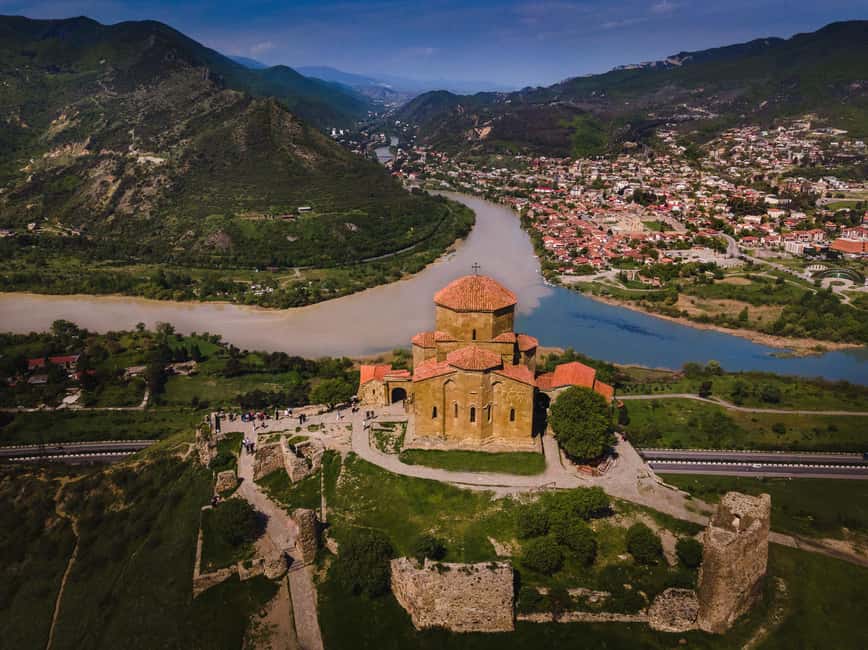
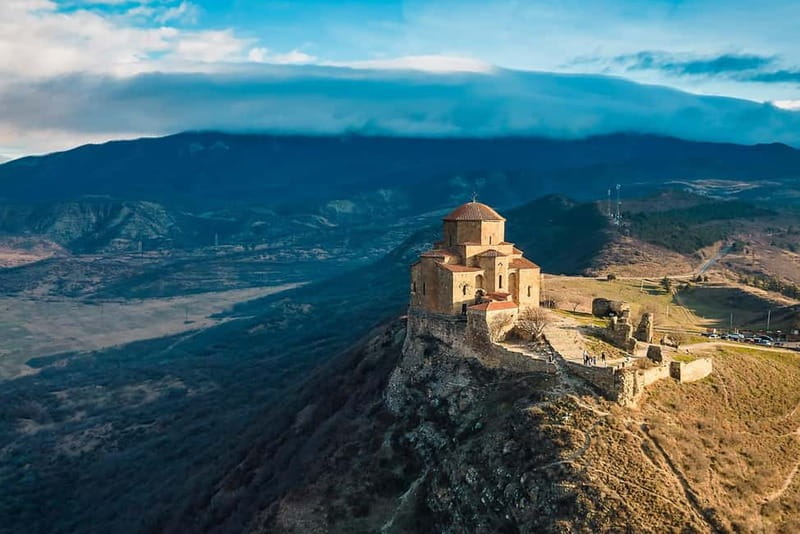
- Jvari Monastery gives you the day’s best opening view: The 6th-century church sits above Mtskheta, with a wide look over the town, river junction, and surrounding countryside.
- Svetitskhoveli is more than a photo stop: Georgia’s major Orthodox cathedral carries deep religious meaning and is linked to the robe of Christ.
- The Stalin Museum is fascinating but unsettling: It includes Stalin’s childhood home, personal objects, and Soviet-era material, with a tone that may feel more commemorative than critical.
- Uplistsikhe is the tour’s most unusual site: You walk through sandstone chambers, tunnels, temples, a basilica, and a rock-hewn theater.
- The day includes moderate walking: Wear shoes with a firm sole, bring water, and expect uneven ground at Uplistsikhe.
- English service needs checking: Davit Lotsulashvili is the named guide, but recent departures have used bilingual commentary with a stronger Russian focus.
Why this day trip makes sense from Tbilisi
Georgia’s most important sites are spread across the central part of the country, so this outing is a practical way to see several of them without arranging separate taxis or regional transport. You leave from 2 Abano St in the sulfur baths district and return there after about nine hours.
I see this as a history-heavy day rather than a relaxed countryside outing. You will visit churches, a museum, a fortress, and an archaeological site, with time on foot at nearly every stop. The reward is variety. In one day, you can trace Georgia from its early Christian traditions through medieval power struggles and into the Soviet period.
The day is also a useful choice if you have limited time in Tbilisi. Mtskheta could be visited on its own, and Gori and Uplistsikhe could be paired separately, but combining all three saves planning time. The tradeoff is a packed schedule and less freedom at each place.
The stated rating is 4 out of 5 from seven bookings. That fits the overall picture: the sights receive the strongest praise, while transport, group handling, and language arrangements are less consistent.
More Day Trips in Tbilisi
- Tbilisi: Day Trip to Kazbegi, Gudauri, Gergeti, and Ananuri
★ 4.9 · 3,203 reviews - Day Trip to Kakheti Wine Region Including 9 Wine Tastings
★ 5.0 · 2,774 reviews - Day Trip to Kazbegi and Gudauri
★ 5.0 · 2,009 reviews
Jvari Monastery and the view over Mtskheta
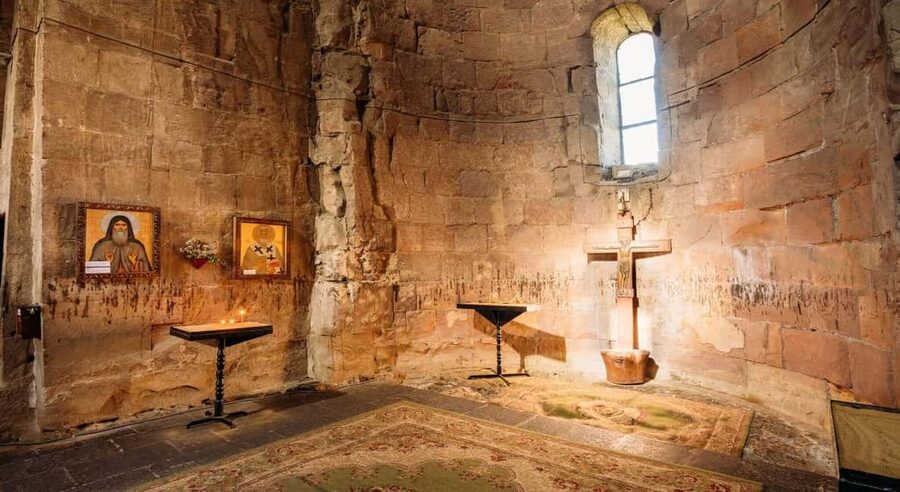
Jvari Monastery is usually the first major stop, with around 40 minutes for a guided visit, a walk, and photographs. Built in the 6th century, it is an early symbol of Georgia’s Christian identity and one of the country’s most memorable church settings.
The location matters as much as the building. From the hill, you look down toward Mtskheta and the meeting of the Mtkvari and Aragvi rivers. The view helps you understand why Mtskheta became such an important center. This is not a church dropped into an anonymous setting. It commands the area from above.
Inside, expect a compact stone church rather than a large, ornate cathedral. Your guide can explain the role of Jvari in Georgian Orthodox tradition and connect it with the later cathedral visit. The short stop works well because the view is immediate and the site does not require a long walk.
Bring a hat and sunscreen, especially in warm weather. The stop is exposed, and the combination of stone surfaces, sun, and moderate walking can make the first part of the day tiring if you arrive without water.
Svetitskhoveli Cathedral and Georgia’s spiritual center
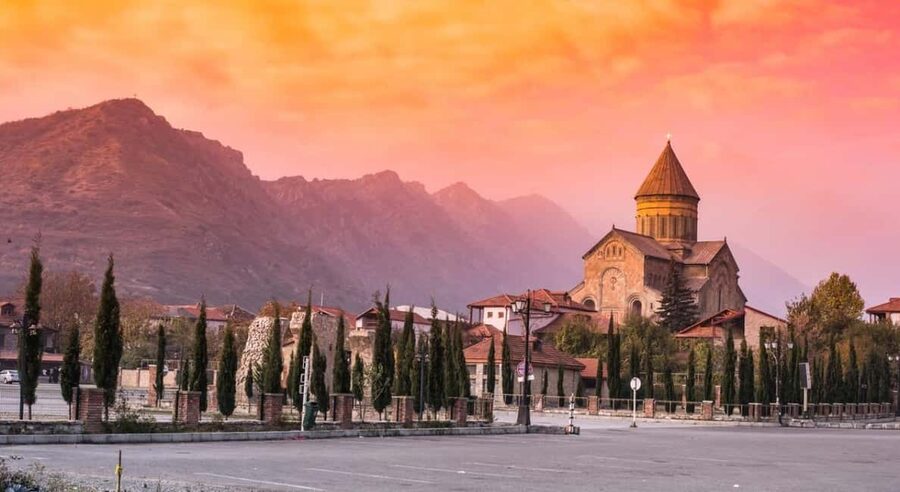
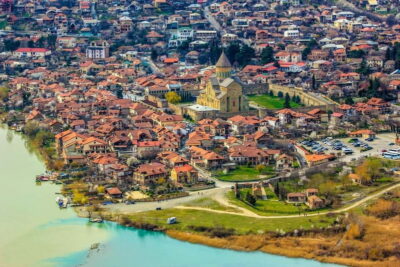
Svetitskhoveli Cathedral is another 40-minute stop. It sits in Mtskheta, one of Georgia’s oldest cities and a UNESCO World Heritage Site. The cathedral is the spiritual heart of the visit, with a grander scale and more formal interior than Jvari.
The cathedral is associated with the robe of Christ, making it a major pilgrimage site for Orthodox Christians. You do not need to share that faith to understand the importance of the place. The building connects Georgian religion, kingship, and national identity in a single setting.
Look closely at the stonework, carvings, frescoes, and tombs as your guide explains them. The atmosphere is active and religious, not simply archaeological. Modest clothing is the sensible choice at both churches, and you should be prepared to follow any instructions about entering sacred areas.
There is one timing concern. One recent departure reached Mtskheta late and placed this cathedral at the end of the day, when entry was no longer possible. Since the published order places Svetitskhoveli after lunch, ask at the start how the stops will be timed. If entering the cathedral matters to you, make that clear early.
Gori Fortress and the road into Soviet history
Gori is best known as the birthplace of Joseph Stalin, but the town also has a medieval fortress on a hill above it. Gori Fortress dates from the 12th century and offers broad views over the town and nearby countryside.
The fortress adds welcome balance to the Stalin Museum. You are not seeing Gori only through the lens of one 20th-century figure. The hilltop location points to the town’s older military role, while the museum deals with a modern political legacy that remains controversial.
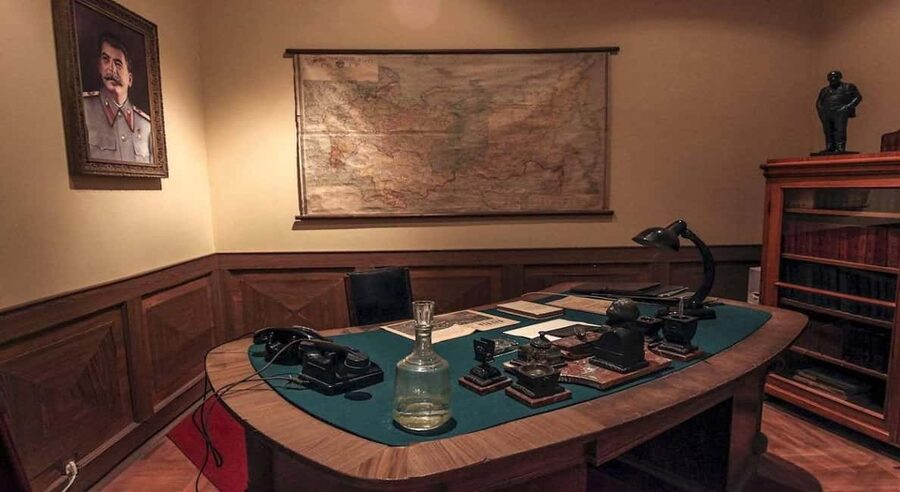
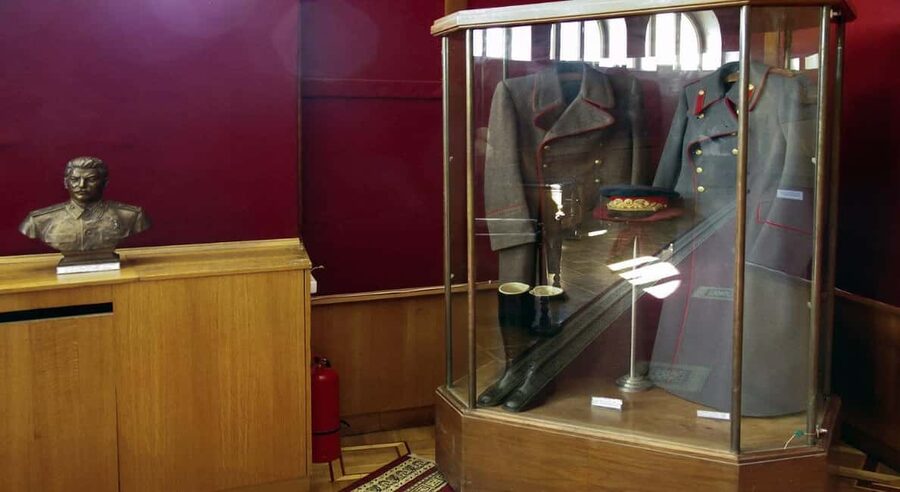
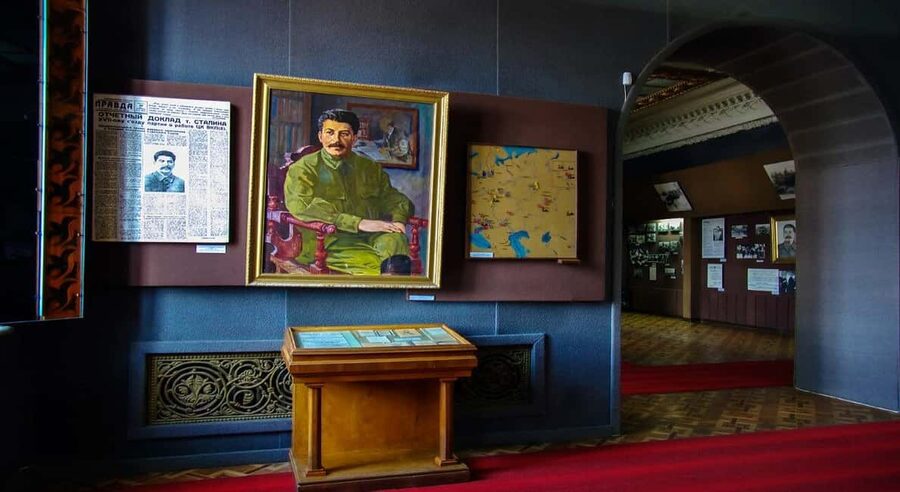
The information provided for this tour gives the Stalin Museum a one-hour guided visit. It includes Stalin’s childhood home, personal belongings, and Soviet-era memorabilia. The childhood house is preserved beside the museum, and the collection presents a close look at the man’s public image and private story.
I would not expect a neutral-feeling museum experience. The displays can be unsettling, particularly when you place the personal objects beside Stalin’s role as a dictator responsible for mass repression. One description of the visit called the museum frightening, which is a fair warning about its emotional effect.
This stop suits you if you want to confront a complicated part of Georgian and Soviet history. It may frustrate you if you expect a long, fully critical discussion of Stalin’s crimes. Your guide’s explanation matters here, and the quality of the commentary can shape the visit.
More things to do in Tbilisi:
- Highlights of Caucasus Mountains-Jinvali,Ananuri,Gudauri,Kazbegi(Group tour)
★ 5.0 · 2,682 reviews - From Tbilisi: Kakheti Wine Region Tour with 9 Wine Tastings
★ 4.9 · 2,541 reviews - Tbilisi: Mtskheta, Jvari, Gori and Uplistsikhe Day Tour
★ 4.9 · 2,396 reviews - From Tbilisi to Kazbegi, Ananuri, Gudauri & Gergeti
★ 4.9 · 2,278 reviews
Uplistsikhe, Georgia’s ancient cave city
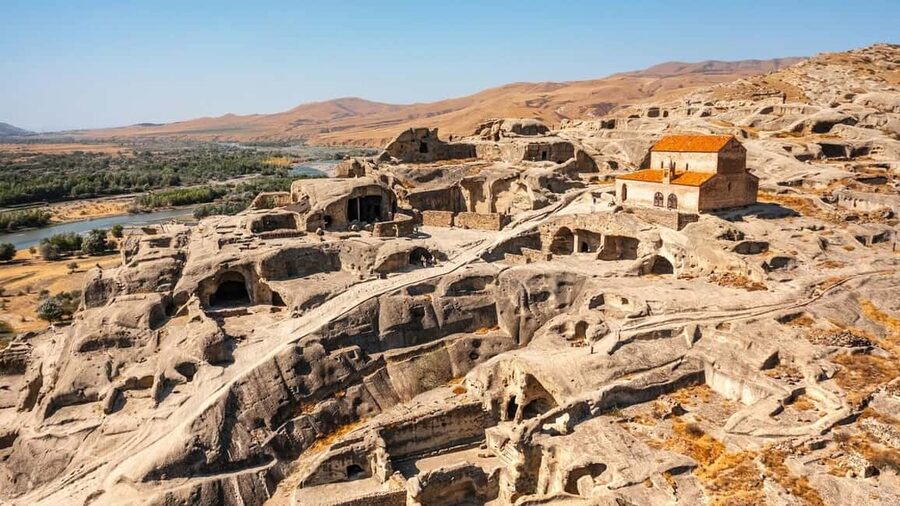
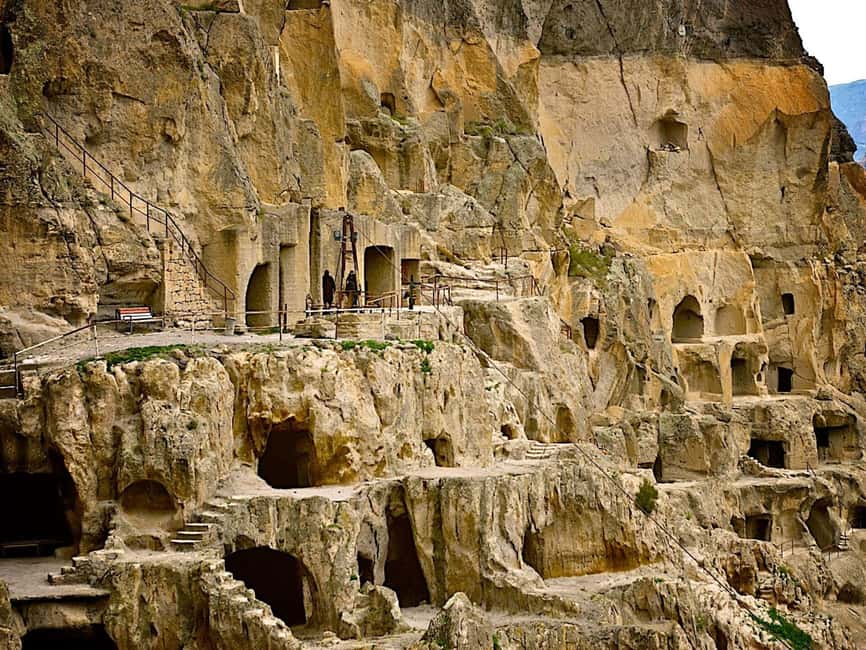
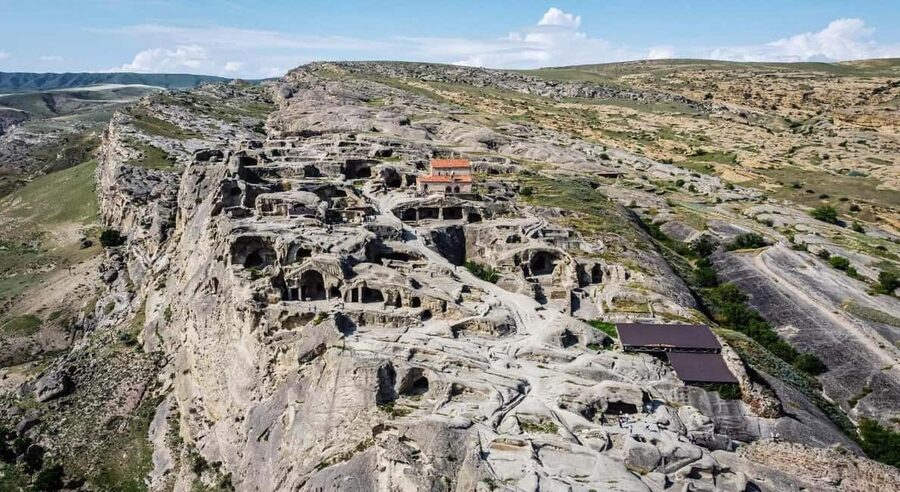
Uplistsikhe is the most distinctive stop of the day. The site dates to the early Iron Age and was carved into sandstone cliffs above the Mtkvari River. For about an hour, you walk among caves, tunnels, temples, chambers, and other rock-cut structures.
This is the place where the tour feels most different from a standard church-and-museum outing. Uplistsikhe once served as a cultural and religious center, and its remains show how people adapted a natural cliff to daily and ceremonial use. You can see ancient pagan spaces alongside an early Christian basilica, a striking reminder of changing beliefs over time.
The rock-hewn theater is another highlight. It gives the site a human scale, since you can imagine people gathering for performances or ceremonies rather than viewing the ruins as abstract stones. The tunnels and carved passages make the visit active and physical.
Uplistsikhe also brings the day’s best sense of place. From the cliff, you look over the valley and the Mtkvari River. The view is wide, but the site itself is the real attraction. You are walking through a settlement cut directly into the rock, not merely looking at ruins from behind a barrier.
Wear comfortable shoes with good grip. The tour information describes moderate walking, and Uplistsikhe is the reason. Uneven surfaces, steps, exposed rock, and sloping paths can be difficult for anyone with limited mobility. The experience is not suitable for wheelchair users or people with mobility impairments, and children under six are not accepted.
Lunch and the practical rhythm of the day
Lunch is scheduled for about one hour at Uplistsikhe. This break is useful because the day combines a long ride with walking in the sun, but you should treat the meal as a pause rather than a long dining experience.
The full route takes around nine hours, so timing matters. Two late returns of roughly 15 minutes were noted during one departure. That may sound minor, but delays can reduce your time at later sites and may affect cathedral entry. Stay close to the vehicle when the guide gives a return time.
The day begins at 2 Abano St, in the sulfur baths district. Arrive 15 minutes early. The pickup area can become confusing when multiple groups gather, and one departure took about half an hour to sort out who belonged on which vehicle. Keep the tour name and guide’s name visible on your phone, and ask where the English-speaking group is forming.
Transport, group size, and language
The transport is shared, and the bus may be packed. Limited legroom was a serious issue for at least one passenger, so this is not the right choice if you need generous personal space. The driver received positive praise for handling the roads, but a good driver cannot fix a cramped vehicle or unclear boarding process.
The guide is Davit Lotsulashvili, and the tour is offered in English and Russian. That sounds straightforward, but you should confirm the language balance before departure. Some outings have been bilingual with more Russian commentary, leaving English speakers with less connection to the guide.
The guiding itself can vary. One assessment praised the guide’s knowledge and careful scheduling, while another found the explanations dull and reported little direct communication during the day. I would book this trip for the sites first and treat the guide as an important variable, not the sole reason to choose it.
A bilingual tour can still work well if you are comfortable receiving information in both languages. If detailed English interpretation is essential, ask the provider before paying. This is especially important at the Stalin Museum, where context makes a major difference.
What the price represents
The exact price is not supplied in the tour information, but one booking described a fare of about $19 and an additional 30 GEL for two admissions. That gives you a useful value warning: the advertised transport cost may not cover every entry ticket.
At roughly that fare, the outing can be excellent value if you want to cover all three areas in one day. You receive shared transport, a guide, and a full route that would take more effort to arrange independently. The value weakens if admission charges come as a surprise or if poor timing prevents entry to a major site.
Ask two questions before booking: Which entrance fees are included, and how much should you budget for the Stalin Museum and Uplistsikhe? The tour information clearly identifies the sights, but it does not list all admission costs. A small amount of advance checking can prevent an awkward cash problem.
Free cancellation up to 24 hours before departure and reserve-now, pay-later booking add flexibility. Those terms are useful if your Tbilisi schedule may change, but they do not solve the language or group-size questions. Confirm those separately.
Who will enjoy this tour most
I would recommend this day to someone who wants a fast, broad introduction to central Georgian history. It suits first-time visitors, history fans, and people who would rather let a guide handle the route than piece together several regional transfers.
You will enjoy it most if you:
- Like ancient churches and archaeological sites
- Want to visit Stalin’s birthplace and museum
- Are comfortable with a shared vehicle
- Can manage moderate walking on uneven ground
- Accept that the day may use both English and Russian
- Prefer seeing several major places over lingering at one
I would hesitate if you need a spacious vehicle, precise one-language guiding, wheelchair access, or a leisurely meal. I would also avoid booking it without clarification if entering Svetitskhoveli Cathedral is one of your main goals.
Pack water, a camera, sunscreen, and a hat. Wear shoes made for walking, check the forecast, and dress suitably for churches. Smoking is not allowed during the activity.
Should you book this Mtskheta, Gori, and Uplistsikhe trip?
Book it if you want the biggest historical return from one day in Tbilisi. Uplistsikhe is the standout sight, Jvari offers a superb opening view, and Svetitskhoveli gives the route its religious weight. Gori adds a difficult but worthwhile look at Stalin’s legacy.
Before booking, confirm the English-Russian arrangement, likely group size, included admissions, and the planned order of Mtskheta and Svetitskhoveli. If those points are clear, this is a strong value outing with memorable sights.
If you prefer calm pacing and polished organization, choose a smaller private trip instead. You may pay more, but you will have better control over timing, language, and how long you spend at each place.
FAQ
How long does the day trip last?
The experience lasts about nine hours, including transport, sightseeing, walking, and a one-hour lunch break.
Where does the tour begin and end?
It begins and ends at 2 Abano St in Tbilisi’s sulfur baths district. The meeting point coordinates are 41.68839645385742, 44.8110237121582.
Which languages are available?
The tour offers live guiding in English and Russian. The group may be bilingual, and English commentary may not receive equal time on every departure.
What places are included?
The route includes Jvari Monastery, the Stalin Museum in Gori, Uplistsikhe, and Svetitskhoveli Cathedral in Mtskheta. Gori Fortress is also described as part of the sightseeing.
Are entrance fees included?
The supplied information does not clearly state that all entrance fees are included. One booking reported two additional admissions of 15 GEL each, so confirm the cost before departure.
What should I bring?
Bring comfortable shoes, a hat, sunscreen, water, and a camera. Check the forecast and dress suitably for the weather and church visits.
Is the tour suitable for everyone?
It is not suitable for children under six, wheelchair users, or people with mobility impairments. The day includes a moderate amount of walking, with uneven ground at Uplistsikhe.
Just added in Tbilisi
- Wine Tasting feel the Difference of Qvevri or Classical Wine★ 4.4 · 10 reviews
- From Tbilisi: Kakheti and Kazbegi 2-Day 4X4 Jeep Tour pack★ 5.0 · 6 reviews
- Walking Tour in Old Tbilisi – Group Tour★ 4.5 · 8 reviews
- Uforgatable Kakheti Tour with wine tasting – in Georgia★ 4.9 · 5 reviews
- From Tbilisi: Uplistsikhe Caves and Mtskheta Town Day tour★ 5.0 · 2 reviews
- Tbilisi: Vintage Fashion and Secondhand Thrifting Tour★ 5.0 · 11 reviews
- Tbilisi Airport to Gudauri, Bakuriani, Batumi, Tbilisi★ 5.0 · 3 reviews
- Private Adorable City Tour of Tbilisi★ 5.0 · 3 reviews
Day Trips in Tbilisi, compared.
Day Trip to Kazbegi, Gudauri, Gergeti, and Ananuri
Read our review →
Day Trip to Kakheti Wine Region Including 9 Wine Tastings
Read our review →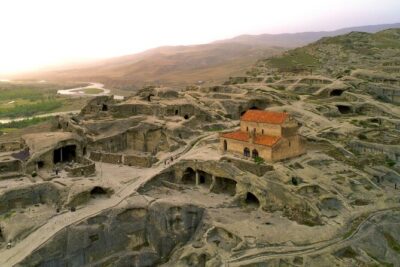

Browse the lists this tour appears in