
Reviewed · KUTAISI TOURS
Day tour from Tbilisi to Kutaisi and Tskaltubo
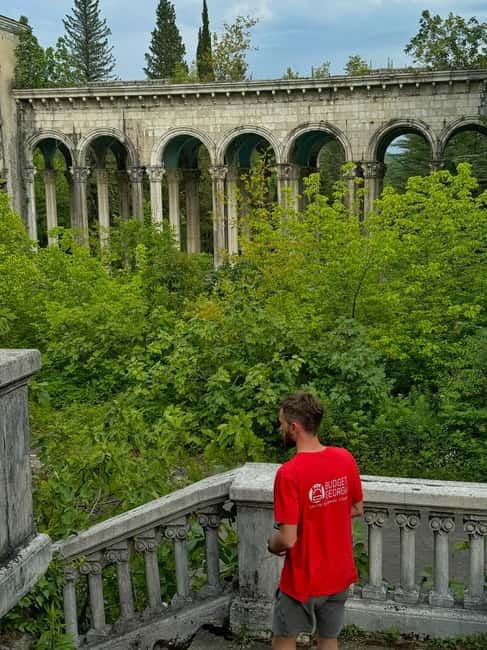
Forgotten resorts make unforgettable stops. This long day from Tbilisi combines a guided walk through Kutaisi with the abandoned Soviet sanatoriums of Tskaltubo, giving you both a living Georgian city and a haunting look at a former health resort. I especially like the contrast between Kutaisi’s fountains, parks, markets, and civic buildings and Tskaltubo’s empty grand halls. The guide also adds real value by explaining Georgia’s past rather than treating the old buildings as mere photo props.
I like the carefully chosen route through Kutaisi, which includes the White Bridge, the central market, the Opera House, and the unusual Golden Marquee Palace. I also like the human touch reported about the guiding team: Giorgi, also called George, is praised for his humor and clear explanations, while Lasha receives strong marks for careful driving and, in one case, dropping a participant back at their accommodation.
The main drawback is the length. With an 08:00 departure from Tbilisi and an expected return at 22:00, this is a very full day with plenty of road time and walking. If you want a relaxed holiday outing, this may feel demanding. If you want to see places that are hard to understand without local context, the long hours are easier to accept.
In This Review
- Key points to know before booking
- Why this day works as a two-part Georgian story
- Kutaisi’s fountain and central park
- Mon Plasir Arch and the White Bridge
- Mtsvane Bazari and the lunch break
- Spring No. 6 and the Soviet past
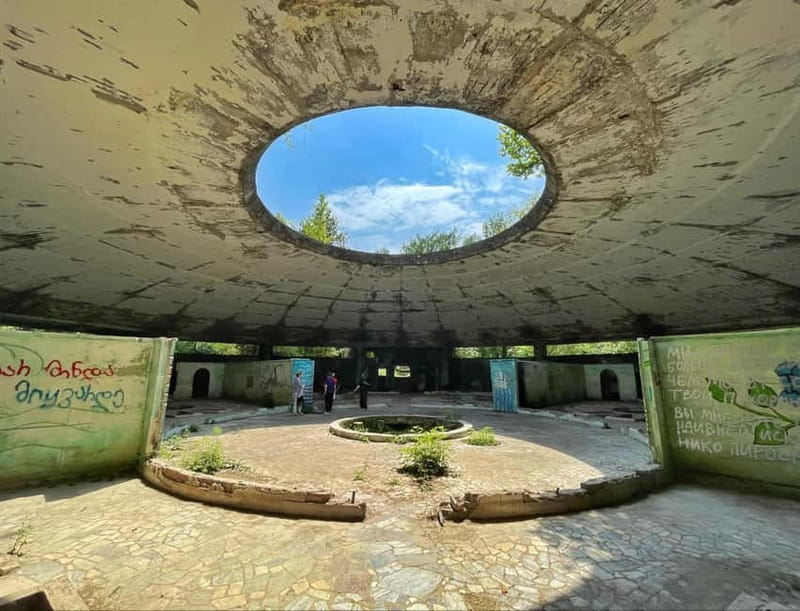
- Spring No. 8 and Tskaltubo’s unusual design
- Sanatorium Gelati and its old playground
- Sanatorium Medea and Druzhba
- Tskaltubo’s forgotten train station
- What the $61 price really buys you
- Who should book this tour?
- FAQ
- Where does the tour start?
- What time does the tour finish?
- How long is the experience?
- Which languages are available?
- What places are visited in Kutaisi?
- Which places are visited in Tskaltubo?
- Can I cancel the booking?
Key points to know before booking
- Kutaisi begins with a real city walk: You see the fountain, central park, city hall, Opera House, Mon Plasir Arch, White Bridge, and more before lunch.
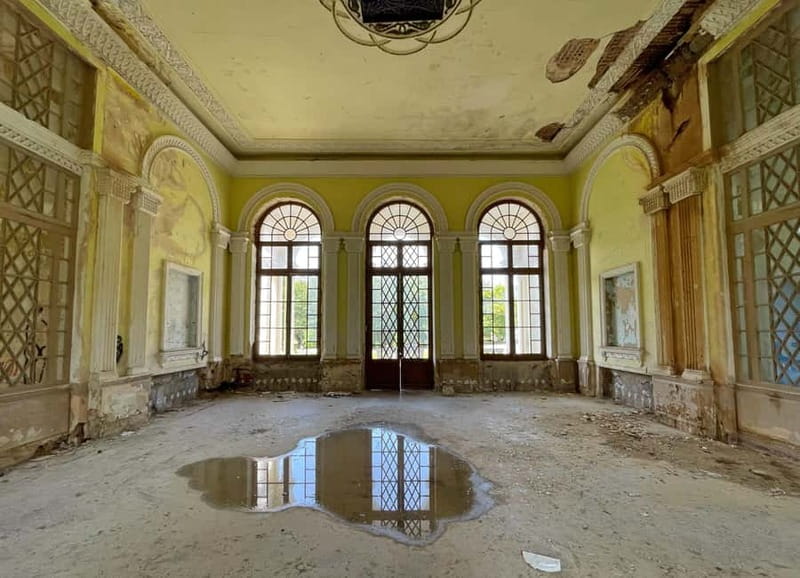
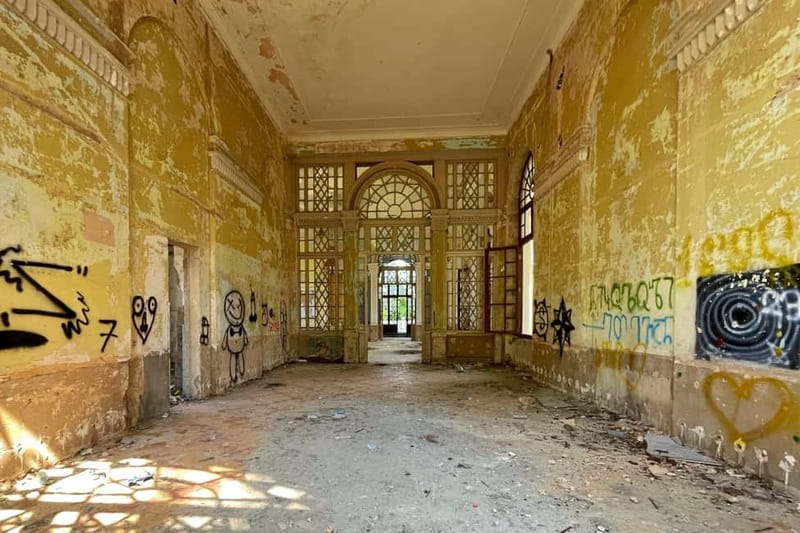
- Tskaltubo is about Soviet architecture, not restored spa luxury: The abandoned sanatoriums offer grand, strange, and atmospheric spaces in varying states of decay.
- Spring No. 6 connects the buildings to history: The guide discusses the Soviet occupation here, giving the visit political context as well as visual interest.
- Sanatorium Gelati was built for children: Its old playground and view into the inner structure make it one of the most distinctive stops.
- The route ends at a forgotten railway station: Tskaltubo’s train station gives the day a fitting final chapter.
- The price is strong for a private-style full-day experience: At $61 per person, you receive transport and guiding across two destinations, though the 14-hour schedule is the tradeoff.
Why this day works as a two-part Georgian story
This excursion is strongest because it does not treat Kutaisi and Tskaltubo as unrelated stops. Kutaisi shows you a working Georgian city, while Tskaltubo shows what happened to a major Soviet-era resort after its former system faded.
That contrast matters. In Kutaisi, you walk through public spaces still used by local people. In Tskaltubo, you enter a world of empty resort buildings, old treatment springs, and grand architectural ideas left behind. The result is more thoughtful than a simple city tour or an abandoned-building photo trip.
The day starts at 08:00 from the tour office in Tbilisi and finishes around 22:00. That gives you roughly fourteen hours on the road and on foot. The schedule is not light, but it allows the tour to reach two places that would be difficult to combine without organized transport.
The experience is conducted in Georgian or English. The live guide is important here, especially in Tskaltubo, where the buildings can be enormous and confusing. A guide helps you understand what you are seeing and directs the visit toward specific springs, sanatoriums, and viewpoints rather than leaving you to wander without context.
More things to do in Kutaisi:
- From Tbilisi: Kutaisi Canyons and Caves Full Day Tour
★ 4.8 · 1,051 reviews - Kutaisi: Martvili & Okatse Canyons & Prometheus Cave Tour
★ 4.9 · 829 reviews - From Kutaisi: Guided Tour of Okatse, Martvili, & Prometheus
★ 4.8 · 520 reviews
Kutaisi’s fountain and central park
The walking tour begins in downtown Kutaisi. Your first stop is the city fountain, a natural place for photographs and an easy way to get your bearings before the route moves into the central park.
The guide talks about Georgian history and Kutaisi during this opening walk. That broad introduction helps because the city’s buildings and memorials are easier to appreciate when they are connected to the country’s changing political story.
In the central park, you see the statue of the sister duo known as Ishkhnelebi and the memorial to 9 April. These are not just decorative pauses. They give the walk a more local feel, with public monuments placed alongside everyday city life.
You then pass Kutaisi City Hall and the Opera House. These stops help break up the historical discussion with a look at the city’s civic and cultural architecture. I like this part of the route because it does not rush straight toward the abandoned buildings. You first see Kutaisi as a place with an active center and its own rhythm.
Mon Plasir Arch and the White Bridge
The Mon Plasir Arch is one of the more unusual details on the Kutaisi route. It is the sort of stop that can easily be missed if you are exploring alone with only a short list of major sights.
The walk continues past the First Gymnasium and then to the White Bridge. From there, the route passes through the Park of Love before reaching the Golden Marquee Palace.
The appeal here is variety. You are not spending the whole morning inside museums or moving from one formal monument to another. Instead, the route mixes streets, parks, bridges, civic buildings, and odd architectural details. That gives you a broader impression of Kutaisi than a quick stop at one famous landmark.
The walk may feel fast if you prefer to linger over photographs. The day has a large amount to cover, so this is best approached as an introduction rather than a slow, detailed city study. You will see many of the key places, but you should not expect long free periods at each one.
Mtsvane Bazari and the lunch break
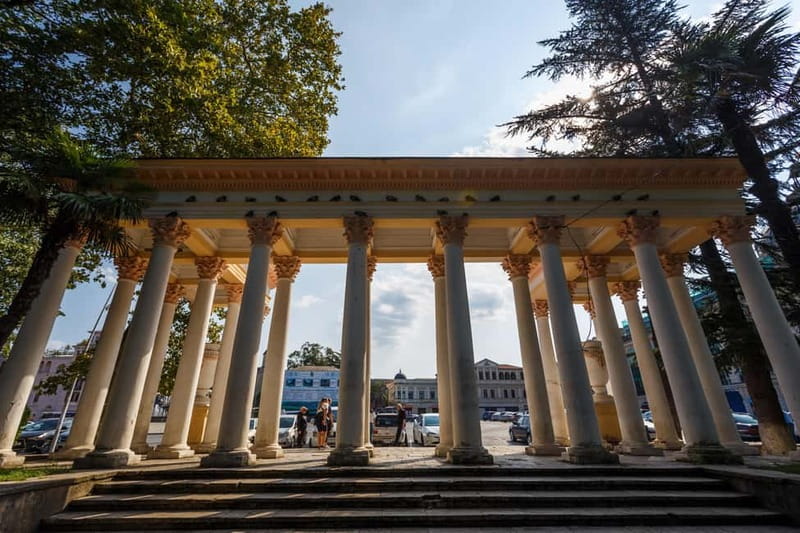
The Kutaisi walk finishes at Mtsvane Bazari, the city’s central grocery market. This is a useful ending because the market brings the tour down from monuments and official buildings to ordinary shopping life.
A market visit also gives you a more grounded view of the city. You can see the type of place where people buy food and carry on with daily routines, rather than seeing Kutaisi only through its historic center.
After the walk, you have a lunch break. The supplied details do not specify whether lunch is included, so you should plan on handling that cost yourself unless the operator tells you otherwise. This break is welcome in a day with extensive walking and a long afternoon ahead.
Do not treat lunch as wasted tour time. It is the natural pause between two very different parts of the experience. Afterward, you drive to Tskaltubo, where the focus shifts from a living city to Soviet spa architecture and abandoned resort buildings.
A completely different kind of day:
- Kutaisi Canyons and Caves from Tbilisi Full Day Tour
★ 5.0 · 448 reviews - Kutaisi:Chiatura Tour with Katskhi Pillar & Cable Car
★ 4.9 · 433 reviews - CANYONS & CAVE Tour from Kutaisi – Okatse, Martvili & Prometheus
★ 4.5 · 307 reviews - Kutaisi: Prometheus Cave & Martvili Canyon Guided Tours
★ 4.7 · 206 reviews
Spring No. 6 and the Soviet past
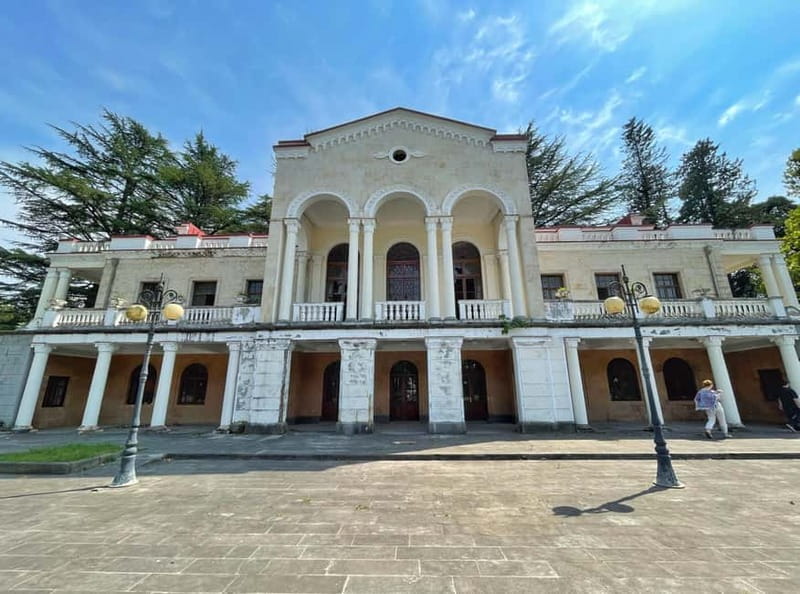
The Tskaltubo section begins at Spring No. 6. Here, the guide explains the Soviet occupation and sets the political and historical frame for what follows.
This is one of the most valuable parts of the tour. Without explanation, abandoned buildings can become a collection of strange rooms and dramatic photographs. With context, the springs and sanatoriums tell a larger story about state planning, public health, leisure, and the decline of a once-important resort system.
The exact mood of the stop depends on the condition of the site when you visit, but you should expect a place shaped by age and abandonment rather than a polished attraction. That is part of the appeal, but it also means you need to pay attention to where you walk and follow the guide’s directions.
If you are mainly interested in architecture, Spring No. 6 provides a useful starting point. If you are interested in history, the discussion of occupation makes the buildings feel less like empty shells and more like physical evidence of a complicated period.
Spring No. 8 and Tskaltubo’s unusual design
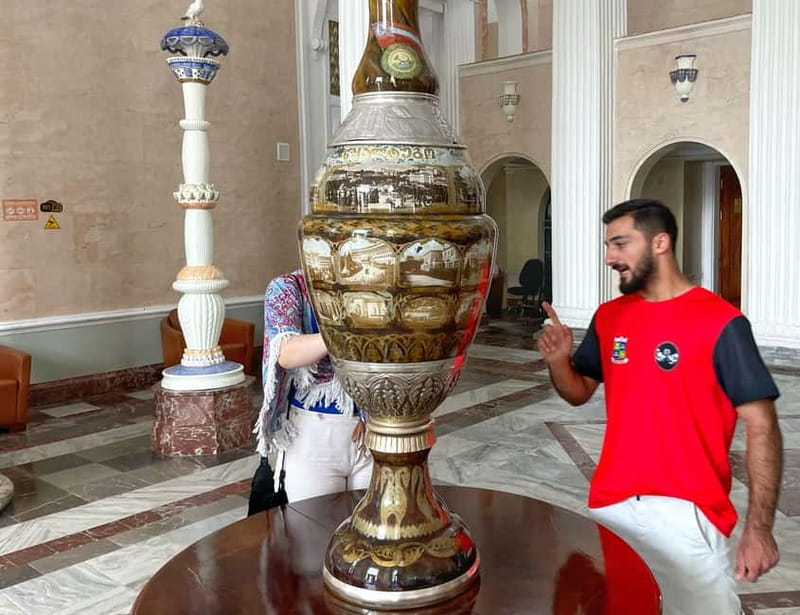
From Spring No. 6, you walk to Spring No. 8. This spring is described as having the most unusual architecture among Tskaltubo’s springs, so it is likely to be a highlight for anyone who enjoys odd forms and Soviet design.
The route does not present Soviet architecture as neat or uniform. Tskaltubo’s buildings are strange, theatrical, and often oversized. That makes the visit visually powerful, but it can also be unsettling. You may find beauty in the curves and open spaces while noticing the signs of neglect at the same time.
This stop is particularly useful for photographers and architecture fans. You get a chance to study how a spring complex was designed, rather than only looking at a distant exterior. The guide’s comments help explain why the structure looks the way it does.
The walking portion in Tskaltubo is spread across several stops. Comfortable footwear is a sensible choice, since the day includes a city walk, park paths, and movement around abandoned buildings. The tour details do not give a walking distance, so anyone concerned about stamina should ask the provider before booking.
Sanatorium Gelati and its old playground
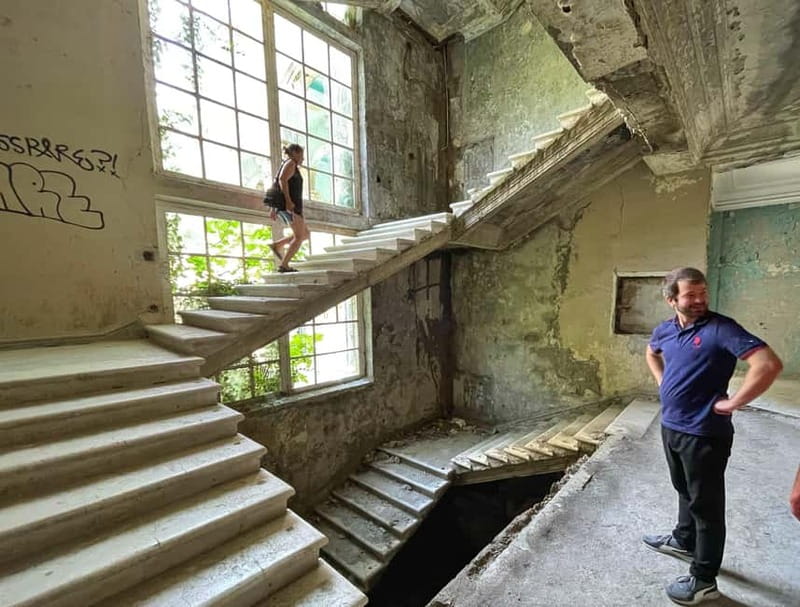
The next stop is Sanatorium Gelati, which was specially built for children. That detail changes how you read the building. It was not simply a grand hotel for adult spa visitors. It was designed with a younger population in mind, giving the site a more personal and slightly sad character.
Gelati includes an old playground and a viewpoint over the inner construction. Those features make it one of the day’s most memorable stops. The playground suggests the children who once used the resort, while the view into the building shows the scale and structure of the complex.
I find this kind of detail more affecting than another grand facade. It gives you a small clue about how the sanatorium functioned and who it was meant to serve. The building becomes easier to imagine as a place of everyday activity, not only as a ruin.
The viewpoint is also helpful for understanding the architecture as a whole. From inside, you can see how the spaces connect and why Tskaltubo has such an unusual visual character.
Sanatorium Medea and Druzhba
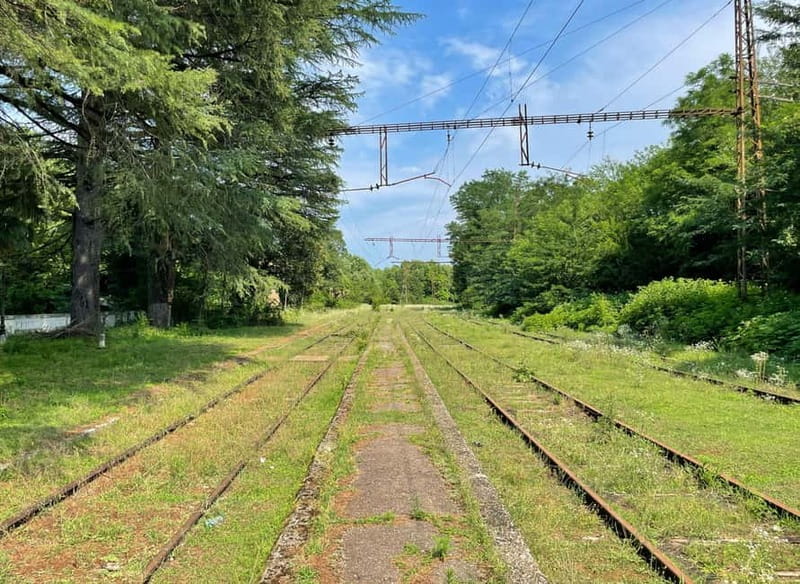
After Gelati, the route continues on foot to Sanatorium Medea and then Druzhba. These visits extend the central theme of the tour: the scale and variety of Tskaltubo’s former resort buildings.
Seeing several sanatoriums is worthwhile because one building cannot represent the entire resort. Each stop adds another version of the same idea, with different layouts, decay, and architectural details. The succession also makes the history feel larger than a single abandoned site.
At the same time, this is where the full schedule may begin to test your energy. By this point, you have already walked through Kutaisi, taken a lunch break, driven to Tskaltubo, and visited several sites. The buildings are compelling, but the experience is not designed for a quick look and an early finish.
The guide makes a real difference here. Large empty buildings can be hard to navigate, and it is easy to miss the most interesting parts without someone who knows the route. Recent praise for Giorgi, or George, focuses on his humor, warmth, clear explanations, and ability to keep the day enjoyable. That combination is useful during a long outing.
Tskaltubo’s forgotten train station
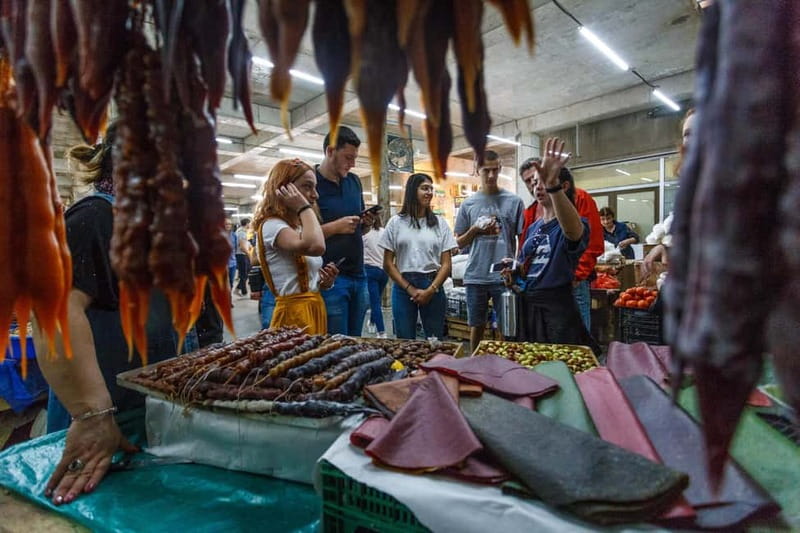
The final sequence takes you to Tskaltubo’s train station. It is a fitting end because the station connects the resort to movement, arrival, and departure.
A railway station is more than another abandoned structure. It suggests how people once reached Tskaltubo and how the resort was tied to a wider system. After seeing the springs and sanatoriums, the station helps complete the picture of a place that once depended on a steady flow of visitors.
Ending here also gives the tour a change of pace. You have spent much of the afternoon examining resort architecture, and the station shifts your attention toward infrastructure and connection.
The tour then returns to Tbilisi, with arrival expected around 22:00. The return time can vary with road conditions, but the stated schedule makes clear that this is an all-day commitment. Do not plan an important evening appointment in Tbilisi.
What the $61 price really buys you
At $61 per person, the value is strong if you want both transport and interpretation. You are not paying only for entry to one site. The price covers a guided route from Tbilisi to Kutaisi and Tskaltubo, with city sightseeing, several Tskaltubo springs and sanatoriums, and the return journey.
The tour is especially good value for visitors who do not want to arrange transport between the cities themselves. Combining Kutaisi and Tskaltubo in one day would require careful planning, and the route includes places that are easier to understand with a guide.
The main cost is your time and energy. Fourteen hours is a serious commitment, and the day includes a long transfer from Tbilisi as well as walking. You are trading a relaxed pace for a large amount of sightseeing at a modest price.
The very high rating of 4.9 from nine ratings supports the view that the guiding and driving are major strengths. The strongest praise centers on the guide’s warmth, historical explanations, humor, and helpfulness. Lasha is also singled out for safe, considerate driving, including a drop-off at accommodation in one account.
Because the group size is not provided, you should ask about it if that affects your decision. A smaller group would make it easier to hear the guide and move through the abandoned sites, but that detail is not stated.
Who should book this tour?
I would recommend it to you if you are interested in Soviet architecture, forgotten places, Georgian history, urban photography, or unusual day trips. It is also a good choice if you have limited time and want to see Kutaisi and Tskaltubo without arranging separate transport.
You will probably enjoy it most if you like a full schedule and do not mind returning late. The mix of city streets, market life, public memorials, springs, sanatoriums, and a railway station gives the day plenty of variety.
I would think twice if you want a slow holiday pace, long meals, or lots of time at each stop. The tour covers a great deal, and the abandoned sites may not suit anyone who prefers polished attractions or carefully restored buildings.
The strongest reason to book is the guide. Tskaltubo is far more meaningful when someone explains the Soviet context and helps you make sense of the huge empty structures. At $61, that combination of transport, history, and access to an unusual part of Georgia makes this a persuasive choice for curious, energetic visitors.
FAQ
Where does the tour start?
The tour starts at the provider’s office in Tbilisi at 08:00.
What time does the tour finish?
The tour is scheduled to finish back in Tbilisi at 22:00.
How long is the experience?
The full tour lasts 14 hours.
Which languages are available?
The live tour guide speaks Georgian and English.
What places are visited in Kutaisi?
The Kutaisi walk includes the downtown fountain, central park, the Ishkhnelebi statue, the 9 April memorial, City Hall, the Opera House, Mon Plasir Arch, the First Gymnasium, White Bridge, Park of Love, Golden Marquee Palace, and Mtsvane Bazari.
Which places are visited in Tskaltubo?
The route includes Spring No. 6, Spring No. 8, Sanatorium Gelati, Sanatorium Medea, Sanatorium Druzhba, and Tskaltubo train station.
Can I cancel the booking?
You can cancel up to 24 hours in advance for a full refund. The reserve-now-and-pay-later option lets you book without paying immediately.
Just added in Kutaisi
- Wine & Dine group tour from Kutaisi★ 4.6 · 3 reviews
- Wild Caving Experience in Melouri Cave Near Kutaisi★ 5.0 · 3 reviews
- Private tour from KUTAISI: Bagrati, Gelati and Motsameta★ 5.0 · 5 reviews
- Private Car – From Tbilisi, Kutaisi, Martvili Canyons, caves★ 5.0 · 1 review
- Full Day Tour To Kutaisi, Prometheus Caves, Bagrati and Gelati★ 5.0 · 1 review
- Tour to Kutaisi from Tbilisi (Sataplia Reserve, Bagrati, Gelati, Motsameta)★ 5.0 · 2 reviews
- Kutaisi, Martvili Canyon & Prometheus Cave Tour from Tbilisi★ 5.0 · 3 reviews
- 2-Day Kutaisi Tour: Caves, Canyons & Soviet Sanatoriums★ 5.0 · 12 reviews
Kutaisi Tours, compared.
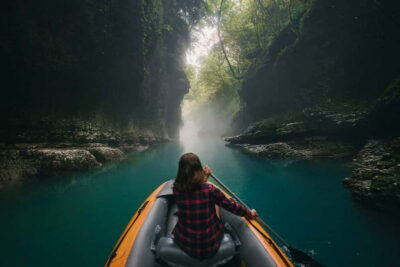
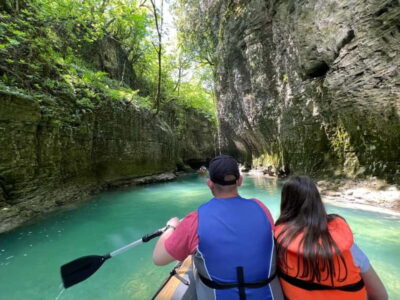
Martvili & Okatse Canyons & Prometheus Cave Tour
Read our review →
Kutaisi Canyons and Caves from Tbilisi Full Day Tour
Read our review →
CANYONS & CAVE Tour from Kutaisi – Okatse, Martvili & Prometheus
Read our review →
Prometheus Cave, Martvili & Okatse Canyon from Kutaisi
Read our review →Browse the lists this tour appears in