Reviewed · TBILISI TOURS
Chiatura. Soviet Past in the present. + Katskhi pillar
Georgia has a Soviet side worth seeing. This private day trip from Tbilisi takes you to Chiatura’s old mining town, where dramatic hills meet aging cable cars, industrial remains, and stories of magnesium mining. You also visit the striking Katskhi Pillar and the 13th-century Mgvimevi Monastery.
I like the private format, which gives you time to talk with your guide instead of following a large group. I also like the mix of subjects: Soviet industry, Georgian religious history, and unusual natural scenery all fit into one day. The main drawback is the length. At eight to ten hours, this is a serious outing, and lunch is not included.
In This Review
- Key points to know before booking
- Why Chiatura makes this day trip different
- The road from Tbilisi to western Georgia
- Chiatura: cable cars, mines, and stark beauty
- Katskhi Pillar: a monastery above the valley
- Mgvimevi Monastery through steps and a tunnel
- What the private guide adds
- Is $150 a fair price?
- Who should book this experience?
- Should you book Chiatura and Katskhi Pillar?
- FAQ
- How long does the tour last?
- Is hotel pickup and drop-off included?
- Is this a private tour?
- Is lunch included?
- What physical fitness level is required?
- Can the tour begin in another city?
Key points to know before booking
- Soviet-era Chiatura: See old cable cars, industrial sites, and a town shaped by magnesium mining.
- Katskhi Pillar: Look up at a 40-meter limestone monolith topped by a monastery.
- Mgvimevi Monastery: Reach the 13th-century site through steps and a tunnel.
- Private attention: Only your group takes part, with an English-speaking guide and flexible conversation.
- Comfortable transport: Hotel pickup, air conditioning, bottled water, snacks, WiFi, and return transfer are included.
- A full day outside Tbilisi: The trip lasts about eight to ten hours, with moderate physical fitness required.
Why Chiatura makes this day trip different
Many day trips from Tbilisi focus on polished monuments, wine, or mountain scenery. This one takes you somewhere more unusual: a working industrial town with a strong Soviet imprint.
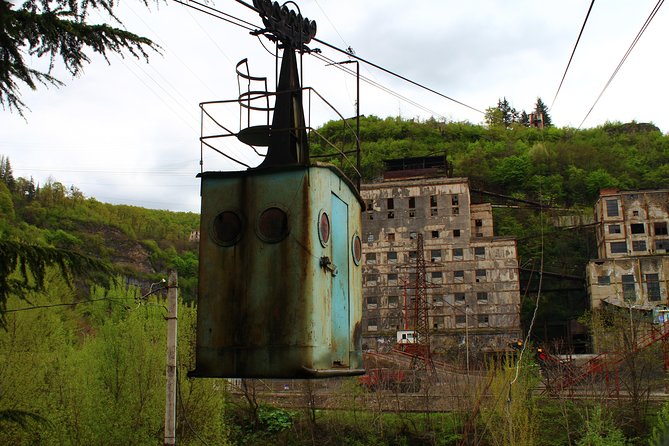
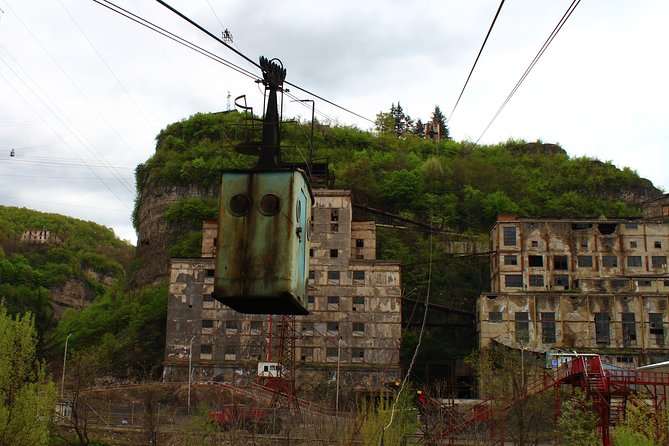
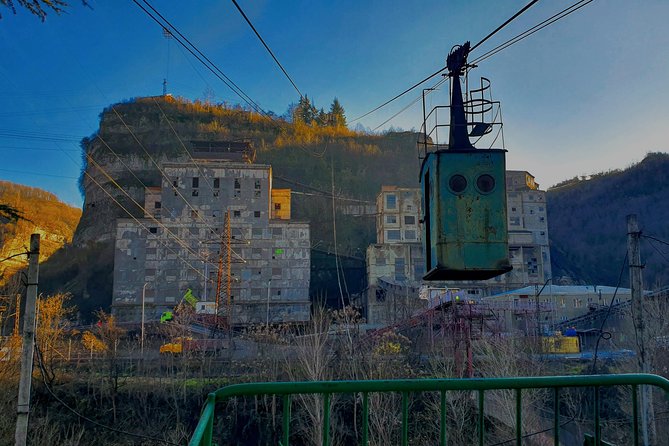
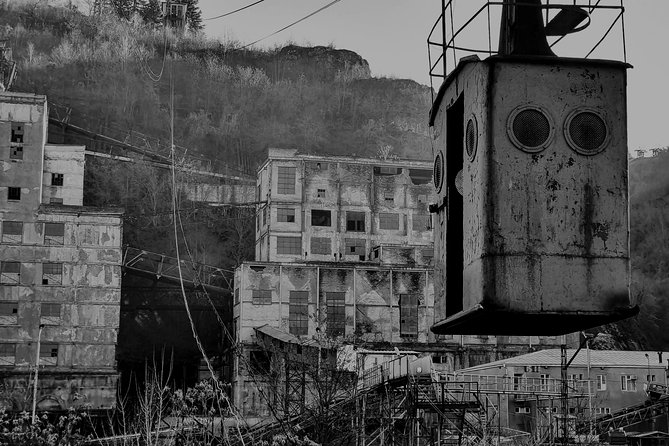
Chiatura grew around magnesium mining, and its steep setting made cable cars useful for moving miners around town. The hills rise sharply around the settlement, giving the old transport system a strange, cinematic quality. You are not simply looking at a museum piece behind glass. You are seeing the remains of a system tied to daily work and local industry.
The condition and use of the cable cars may vary. The tour description presents them as Soviet-era cable cars associated with magnesium miners, while one account of the experience described the system as now abandoned. That difference is worth keeping in mind. You should expect an atmospheric look at old infrastructure, but you should not book this as a guaranteed ride on every cable car.
Chiatura’s appeal is partly visual, but the conversation matters just as much. Guides David and Irakli were singled out for friendly, thoughtful discussion about Georgia and its past. David was praised for explaining the country’s mining story, while Irakli adjusted the day around personal interests and opened up conversation about Georgian life.
That makes the private setup especially useful. If you want to ask why a town developed where it did, how the mining industry shaped local life, or what happened to the old cable-car network, you can ask as you go. A large coach tour rarely gives you that freedom.
More things to do in Tbilisi:
- Tbilisi: Day Trip to Kazbegi, Gudauri, Gergeti, and Ananuri
★ 4.9 · 3,203 reviews - Day Trip to Kakheti Wine Region Including 9 Wine Tastings
★ 5.0 · 2,774 reviews - Highlights of Caucasus Mountains-Jinvali,Ananuri,Gudauri,Kazbegi(Group tour)
★ 5.0 · 2,682 reviews
The road from Tbilisi to western Georgia
Pickup is offered from your hotel, and the tour can also begin in other cities if arranged. From Tbilisi, plan on giving the whole day to the experience. The stated duration is about eight to ten hours, so the length of the drive and the pace of the stops will shape your day.
The air-conditioned vehicle is a real benefit. Georgia’s roads and weather can make a long outing tiring, and having a private vehicle means you are not dealing with a fixed public transport schedule. Bottled water, snacks, and WiFi on board are included as well.
Lunch is not included. I would plan for that before setting off, either by asking the provider how the day handles a meal stop or by bringing something with you. The supplied details do not promise a restaurant stop, so do not assume lunch is part of the price.
Because this is a private tour, the pace can be more personal than a standard group outing. You can spend more time talking in Chiatura or keep the stops brisker if you want more time elsewhere. Still, the itinerary is compact, and the total day is long enough that you should arrive ready for a steady schedule.
Chiatura: cable cars, mines, and stark beauty
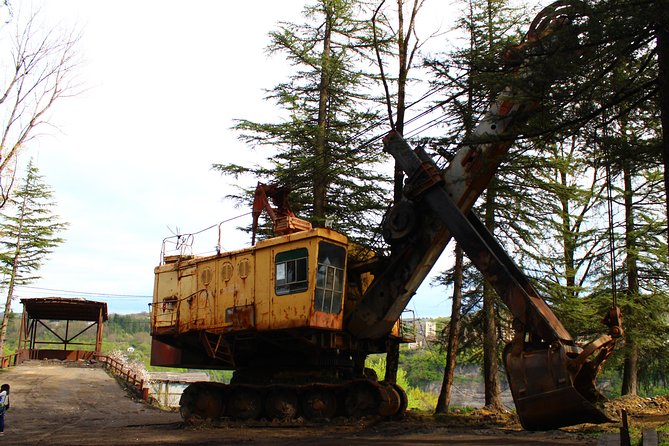
The Chiatura stop lasts about two hours. That is enough time to see the town’s key sights and get a feel for its setting, though it is not a full historical study of the mining region.
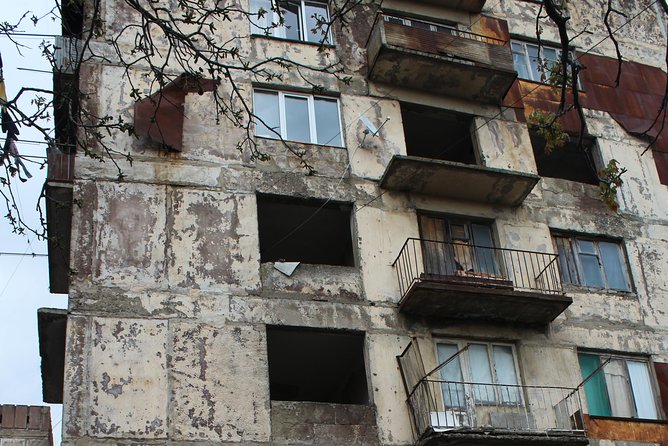
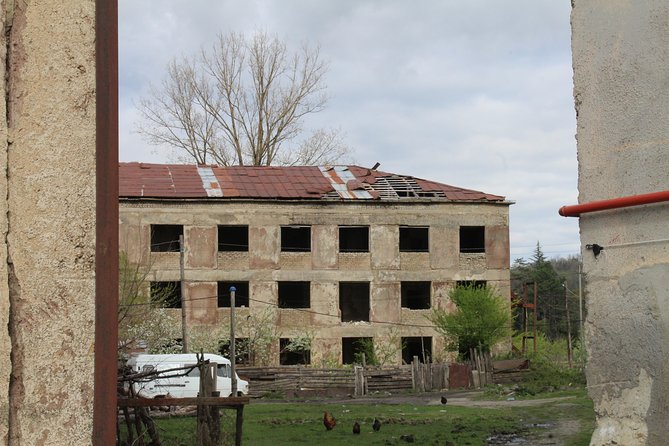
The town’s Soviet character comes through in the old cable-car system and factory remains. These structures give you a direct look at a working past rather than a reconstructed display. You may see aging stations, industrial buildings, and infrastructure that has outlasted the period that created it.
Bring a camera, but use it with care. The old factories and cable cars make strong subjects, especially against the surrounding hills. The tour details specifically point to industrial ruins and broad views, so this is a good choice if you enjoy photographing places where nature and heavy industry sit close together.
The setting adds a second layer. Chiatura is described as having beautiful nature and excellent views, so you are not spending two hours among industrial remains alone. The contrast is the point: steep Georgian scenery surrounds a town built around extraction and transport.
I would keep expectations realistic. This is not presented as a restored Soviet attraction with polished exhibits, clear signs, or a formal museum program. Its value comes from seeing the actual town and hearing the story behind what you see. If you prefer carefully maintained monuments, Chiatura may feel rough around the edges. If you like places with visible wear and a strong sense of place, it is likely to be the day’s main reward.
The guide can make a big difference here. David’s background in explaining Georgian history was especially praised, and the private setting allows you to connect the factory ruins and cable cars to wider questions about mining and life under the USSR.
Katskhi Pillar: a monastery above the valley

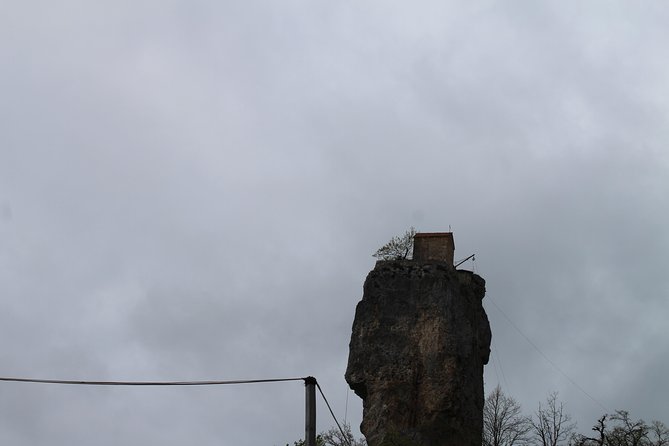
After Chiatura, the tour visits Katskhi Pillar. This natural limestone monolith rises about 40 meters and supports a monastery at the top. Even if you have seen photographs, the actual shape of the rock gives the stop its force.
The visit lasts about 30 minutes. That makes it a focused stop rather than a long climb or extended religious tour. You will have time to take in the pillar, photograph it, and appreciate how unusual the setting is.
The monastery’s position is the central feature. The rock rises sharply from the ground, and the building above it creates one of Georgia’s most memorable religious views. The information provided does not promise access to the monastery itself, so you should treat this as a viewing stop rather than expect to climb the pillar.
That short visit works well in a day with several contrasting locations. Chiatura gives you Soviet industry; Katskhi gives you a striking natural and religious sight. The change of subject keeps the outing from becoming a two-hour tour of similar ruins.
You will want sensible footwear for the day as a whole, but there is no claim that you will make a major hike at Katskhi Pillar. The tour requires moderate physical fitness, and the next stop includes steps and a tunnel, which may be more relevant to your comfort level.
A completely different kind of day:
- From Tbilisi: Kakheti Wine Region Tour with 9 Wine Tastings
★ 4.9 · 2,541 reviews - Tbilisi: Mtskheta, Jvari, Gori and Uplistsikhe Day Tour
★ 4.9 · 2,396 reviews - From Tbilisi to Kazbegi, Ananuri, Gudauri & Gergeti
★ 4.9 · 2,278 reviews - Tbilisi: Kakheti Wine Region Tour with 10 Wine Tastings
★ 5.0 · 2,160 reviews
Mgvimevi Monastery through steps and a tunnel
The final listed stop is Mgvimevi Monastery, visited for about 20 minutes. This 13th-century monastery is known for stone carvings, frescoes, and its striking position.
The approach is part of the experience. You go up through steps and a tunnel, so this is not a stop where you simply leave the vehicle and walk a few paces to a viewpoint. The short visit may feel quick if you want time to examine every carving or fresco, but it gives you a compact look at a very different side of Georgian culture.
Mgvimevi also helps balance the industrial focus of Chiatura. After seeing Soviet-era factories and cable-car infrastructure, you move into a much older setting shaped by Orthodox religious tradition. The two places are close enough to pair in one outing, yet they speak to very different periods of Georgian life.
Physical ability matters here. The tour specifically advises a moderate level of fitness, and the steps and tunnel explain why. If stairs or confined passages are difficult for you, ask the provider about the exact route before booking. Service animals are allowed, and the tour is listed as being near public transportation, though private pickup and transport are the main ways this experience operates.
What the private guide adds
The strongest part of this tour may be the guide rather than the vehicle or the sightseeing list. David and Irakli received specific praise for being friendly, professional, flexible, and easy to talk with.
That matters because Chiatura does not appear to be a place where every detail will be explained through signs or formal exhibits. You benefit from someone who can connect the cable cars, mining, Soviet industry, and modern Georgian life.
Irakli contacted the guest soon after booking and adjusted the outing around individual interests. That suggests a useful level of flexibility, though you should still discuss special requests before the day begins. David was valued for the quality of conversation about Georgia’s past, not simply for pointing out buildings.
A private tour also removes the social compromises of a large group. You do not have to wait for strangers at every stop, and you can ask direct questions without holding up a coach full of people. The tradeoff is price. A private experience costs more than a basic shared excursion, but the $150 per person includes transport, guide service, fees, snacks, water, air conditioning, WiFi, hotel pickup, and drop-off.
The value improves if you are traveling with companions who appreciate history and unusual places. If you are alone, the price is harder to judge, but the personal attention may still justify it if Chiatura is a major priority.
Is $150 a fair price?
At $150 per person, this is not the cheapest way to leave Tbilisi. You are paying for a private vehicle, a dedicated guide, hotel transfers, and a full day rather than simply buying entry to a single attraction.
The included fees are helpful because the day has several stops and no separate admission charges are listed. Air conditioning is important for the long transfer, while bottled water and snacks cover the basics between stops. WiFi on board is a small extra, but useful on a long road day.
Lunch is the main additional cost to plan for. Since it is not included, ask how much time is available for food or bring provisions. A full day without a clear meal plan can be inconvenient, especially if you prefer set meal times.
Group discounts may improve the price for a larger party. Since only your group participates, the cost can make more sense when split among several people. I would compare the price with the value of having a flexible English-speaking guide, not just with the cost of a shared bus seat.
The perfect score from nine published ratings gives the experience a strong early record, but the sample is small. I would treat that as encouraging rather than final proof. The most consistent praise centers on the guides, personal conversation, and unusual subject matter, which are also the features most likely to matter to you.
Who should book this experience?
I would recommend this tour if you want a less familiar side of Georgia. It suits you if you enjoy industrial history, Soviet-era sites, photography, and conversations about how places changed over time.
It is also a good fit if you have already seen several of Tbilisi’s central sights and want a full day beyond the capital. Katskhi Pillar and Mgvimevi Monastery add variety, so you are not committing the entire day to one industrial town.
You may want to think twice if you dislike long road days, stairs, tunnels, or rough-looking historic sites. This is not a luxury sightseeing loop built around leisurely meals and long stays at each monument. The itinerary is active enough to require moderate fitness, and the eight to ten-hour duration takes planning.
Families and mixed-interest groups may find the combination useful because it covers nature, religion, industry, and history. The private format also lets the guide adjust the conversation to your interests. Just confirm any needs in advance, especially regarding mobility, meal timing, or a pickup point outside Tbilisi.
Free cancellation is available if you cancel at least 24 hours before the start time. Changes or cancellations made within 24 hours are not accepted for a refund.
Should you book Chiatura and Katskhi Pillar?
Book it if you want Georgia beyond the standard circuit and value a good guide as much as a famous sight. The best reason to go is the combination of Chiatura’s Soviet mining legacy, Katskhi Pillar’s remarkable form, and Mgvimevi’s older religious setting.
I would choose this over a generic countryside drive if you like asking questions and stopping for context. Ask for David or Irakli if possible, and discuss your interests when booking. Bring a camera, plan for lunch, wear shoes suited to steps, and allow the entire day.
Skip it if you want a short outing, guaranteed cable-car rides, or a polished museum experience. For everyone else, this is a thoughtful private trip into a part of Georgia that feels unusual, direct, and far removed from Tbilisi’s main sights.
FAQ
How long does the tour last?
The experience lasts approximately eight to ten hours.
Is hotel pickup and drop-off included?
Yes. Air-conditioned transfers with hotel pickup and drop-off are included.
Is this a private tour?
Yes. Only your group participates in the activity.
Is lunch included?
No. Lunch is not included in the tour price.
What physical fitness level is required?
A moderate level of physical fitness is recommended. The Mgvimevi Monastery visit includes steps and a tunnel.
Can the tour begin in another city?
Yes. The provider states that the tour can start from other cities if requested.
Just added in Tbilisi
- Wine Tasting feel the Difference of Qvevri or Classical Wine★ 4.4 · 10 reviews
- From Tbilisi: Kakheti and Kazbegi 2-Day 4X4 Jeep Tour pack★ 5.0 · 6 reviews
- Walking Tour in Old Tbilisi – Group Tour★ 4.5 · 8 reviews
- Uforgatable Kakheti Tour with wine tasting – in Georgia★ 4.9 · 5 reviews
- From Tbilisi: Uplistsikhe Caves and Mtskheta Town Day tour★ 5.0 · 2 reviews
- Tbilisi: Vintage Fashion and Secondhand Thrifting Tour★ 5.0 · 11 reviews
- Private Adorable City Tour of Tbilisi★ 5.0 · 3 reviews
- Tbilisi Airport to Gudauri, Bakuriani, Batumi, Tbilisi★ 5.0 · 3 reviews
Tbilisi Tours, compared.
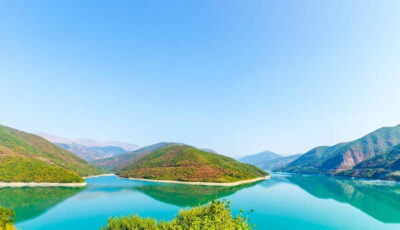
Day Trip to Kazbegi, Gudauri, Gergeti, and Ananuri
Read our review →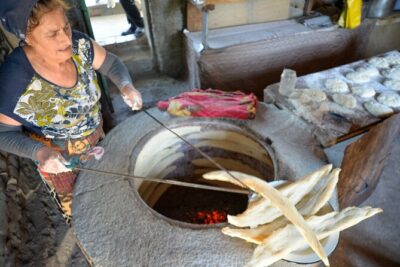
Day Trip to Kakheti Wine Region Including 9 Wine Tastings
Read our review →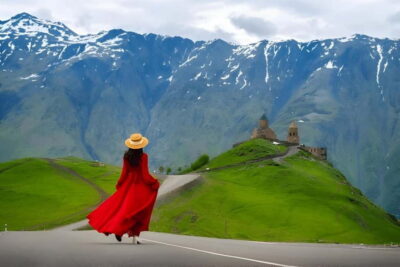
Highlights of Caucasus Mountains-Jinvali,Ananuri,Gudauri,Kazbegi(Group tour)
Read our review →
Kakheti Wine Region Tour with 9 Wine Tastings
Read our review →
Mtskheta, Jvari, Gori and Uplistsikhe Day Tour
Read our review →
From Tbilisi to Kazbegi, Ananuri, Gudauri & Gergeti
Read our review →
Kakheti Wine Region Tour with 10 Wine Tastings
Read our review →