
Reviewed · KUTAISI TOURS
Chiatura Cable Cars and Abadoned Sanatoriums of Tskaltubo
Old cable cars, cliffside churches, and Soviet-era ruins make this a striking day out from Kutaisi. The route reaches far beyond the usual city sights, linking the Katskhi Pillar, the mining town of Chiatura, Mgvimevi Monastery, and the abandoned sanatoriums of Tskaltubo in about nine hours.
I especially like the small maximum group of six, which should make the long day easier and give you room to ask questions. I also like the local angle: guide Giorgi was born and raised in Kutaisi, and his stories about growing up there in the late Soviet years add useful human detail. The main drawback is the pace. Five stops in nine hours means some visits are fairly short, and lunch and dinner are not included.
The tour costs $84.69 per person, with hotel pickup in Kutaisi, an air-conditioned vehicle, bottled water, an English-speaking guide, and included admission at several stops. For a visitor without a car, that is a practical way to connect places that would be awkward to visit together independently.
In This Review
- Key points at a glance
- Why this day trip is different from a standard Kutaisi outing
- Katskhi Pillar: a cliff, a church, and a powerful symbol
- Chiatura Local Museum and the story of manganese
- Chiatura’s old cable cars and Soviet-era streets
- Mgvimevi Monastery inside a karst cave
- Tskaltubo’s abandoned sanatoriums
- What the $84.69 price gets you
- Who should book this experience?
- Is the Chiatura and Tskaltubo tour worth booking?
- FAQ
- Where does the tour start?
- How long does the tour last?
- What language is the tour offered in?
- How many people can join the group?
- Is transportation included?
- Are meals included?
- Is admission included at every stop?
- Can I cancel for a full refund?
Key points at a glance
- Katskhi Pillar offers a dramatic start, with a church dating from the sixth to eighth centuries on top of a tall cliff.
- Chiatura’s cable cars reveal a fading Soviet industrial town, including old cars, worn towers, mining works, and high-rise blocks.
- The Chiatura Local Museum adds context about manganese mining, though its admission is not included.
- Mgvimevi Monastery is built into a karst cave, with older frescoes and views toward the mines.
- Tskaltubo’s abandoned sanatoriums bring a different mood, shifting from active industry to grand buildings left empty.
- The group is limited to six people, and pickup is offered from hotels in Kutaisi at 9:00 a.m.
Why this day trip is different from a standard Kutaisi outing
Kutaisi is a useful base for western Georgia, but the most unusual sights sit outside the city. This trip is built around places shaped by faith, mining, Soviet engineering, and decline. That mix gives the day more range than a simple church tour.
I like the contrast. Katskhi Pillar is tied to religious belief and a remarkable natural formation. Chiatura is practical, industrial, and visibly worn. Tskaltubo shifts the mood again, with empty sanatoriums that recall the Soviet period’s grand promise of state-run health resorts.
The experience is not polished in the way a major attraction might be. That is part of its appeal. You are not moving from one carefully restored monument to another. You are seeing places where history remains visible in broken structures, old transport systems, mines, and buildings that have outlasted the period that created them.
The day lasts approximately nine hours, beginning at 9:00 a.m. Pickup is available from a Kutaisi hotel, which removes the need to arrange separate transport to a meeting point. An air-conditioned vehicle matters here because the route covers several locations and includes a full day away from the city.
More things to do in Kutaisi:
- From Tbilisi: Kutaisi Canyons and Caves Full Day Tour
★ 4.8 · 1,051 reviews - Kutaisi: Martvili & Okatse Canyons & Prometheus Cave Tour
★ 4.9 · 829 reviews - From Kutaisi: Guided Tour of Okatse, Martvili, & Prometheus
★ 4.8 · 520 reviews
Katskhi Pillar: a cliff, a church, and a powerful symbol
The first stop is Katskhi Pillar, with about an hour set aside and admission included. At the top of the cliff is a church built between the sixth and eighth centuries. Even before Christianity, local people regarded the pillar as a symbol of the god of fertility.
That earlier belief gives the site extra depth. This is not simply a church placed on a high rock for dramatic effect. The pillar already held spiritual importance, and Christianity gave that place a new meaning. Local belief later connected the summit with getting closer to God.
You should expect the main impression to come from the setting itself. The height, the isolated church, and the idea of a religious building in such a difficult position make this one of the day’s strongest visual stops. The one-hour visit is long enough to take in the site without allowing it to dominate the whole schedule.
Because the tour includes several major stops, I would treat Katskhi Pillar as an introduction rather than a long archaeological visit. If you want extensive time for photography or detailed religious history, the fixed schedule may feel brisk. Still, it is a memorable beginning and gives the day a clear sense of place.
Chiatura Local Museum and the story of manganese
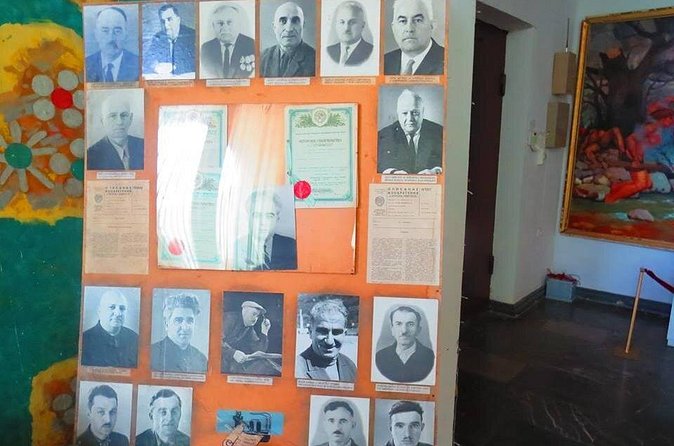
The next stop is the Chiatura Local Museum, with about an hour planned. Admission is not included, so you should allow for a separate ticket cost. The museum focuses on the history of Chiatura and the manganese mines that shaped the town.
This stop matters because the cable cars make more sense once you understand the mining economy. Chiatura was not designed as a picturesque hill town. Its slopes, industrial sites, transport systems, and housing were tied to work in the mines.
I like the decision to include a museum before or around the cable car visit. Without context, the old machinery and worn buildings can look like a strange collection of Soviet leftovers. With some background, you can see them as part of a working industrial system built to move people through a difficult town.
The museum is also a useful counterpoint to the outdoor sights. Katskhi Pillar gives you religious history, while the museum explains the economic force behind Chiatura. Since admission is extra and lunch is not provided, keep a little money available and plan to manage your appetite during the day.
Chiatura’s old cable cars and Soviet-era streets
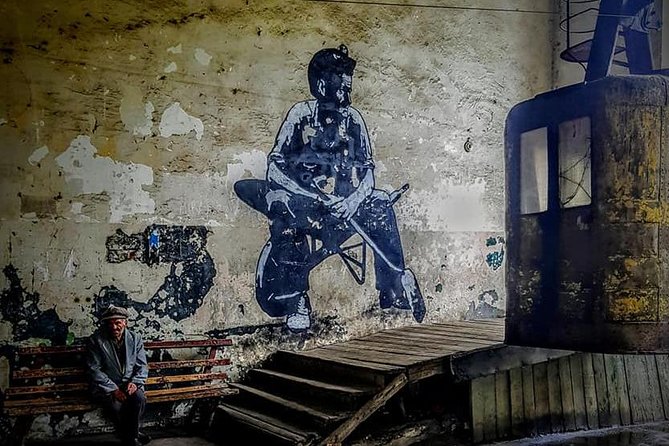
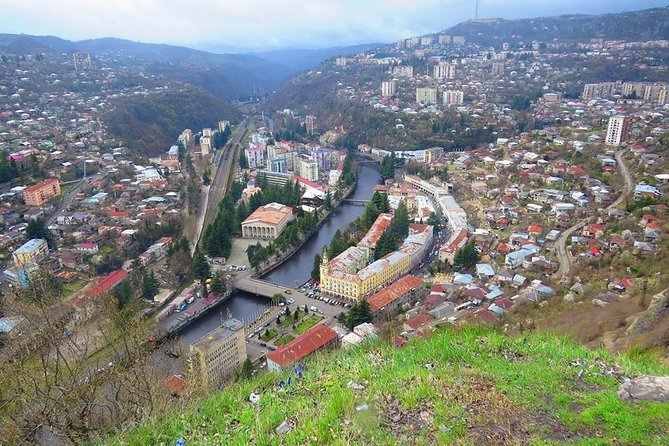
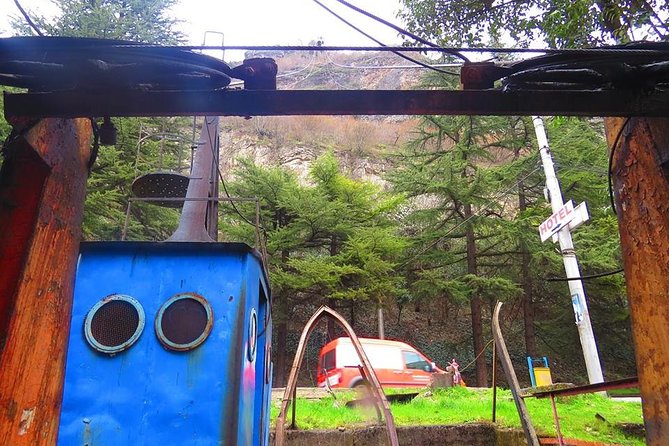
The cableways are the heart of the experience, with about two hours allocated and admission included. Chiatura is known for its unusual transport network, created to connect the town’s steep sections and mining areas. The town’s high-rise blocks, abandoned construction sites, old vehicles, mine structures, and cableway towers create an atmosphere unlike the usual Georgian sightseeing route.
The cable cars are not presented as a spotless modern attraction. You may see aging towers, worn cabins, and signs of a system that has carried people for decades. The description of creaking cars and archaic cabins climbing toward the mountains captures the appeal well: the machinery feels old, visible, and tied to everyday life rather than preserved behind glass.
This is also the part of the tour where conditions may feel least predictable. The cableways are described as moving, but an old transport system can have a different rhythm from a modern attraction. The schedule allows two hours, yet the exact experience may depend on what is operating at the time.
I would not book this tour expecting a sleek amusement ride or a standard city viewpoint. The attraction is the combination of function and decay. You are seeing an unusual form of public transport in the setting that gave it a reason to exist.
The town itself adds much of the impact. Randomly placed apartment blocks rise among mining structures and unfinished sites. The result is visually rough, but it tells you something about how industrial towns grow. There is no need to manufacture drama here. The town’s arrangement, old equipment, and mountain setting provide it naturally.
Giorgi’s background is particularly useful at this stop. He grew up in Kutaisi during the late Soviet years, so his explanations can add personal context to the period behind the buildings and machines. Before the tour, he communicated with a guest through WhatsApp and even offered to include Tskaltubo, which suggests a flexible and attentive approach to the day.
A completely different kind of day:
- Kutaisi Canyons and Caves from Tbilisi Full Day Tour
★ 5.0 · 448 reviews - Kutaisi:Chiatura Tour with Katskhi Pillar & Cable Car
★ 4.9 · 433 reviews - CANYONS & CAVE Tour from Kutaisi – Okatse, Martvili & Prometheus
★ 4.5 · 307 reviews - Kutaisi: Prometheus Cave & Martvili Canyon Guided Tours
★ 4.7 · 206 reviews
Mgvimevi Monastery inside a karst cave
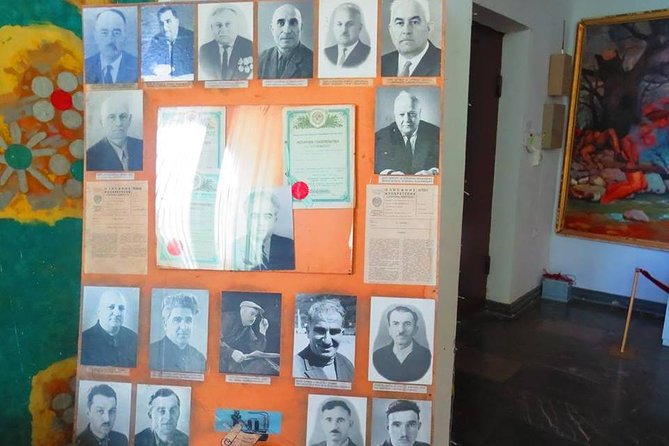
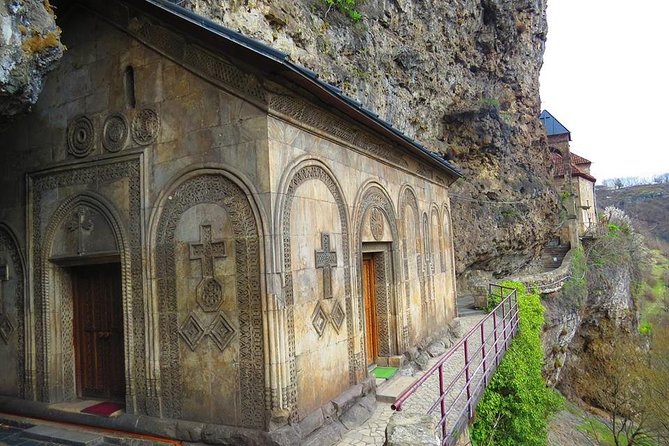
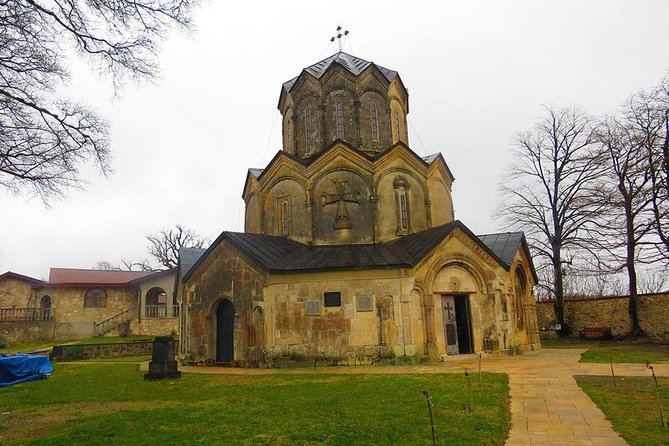
After Chiatura, the route continues to Mgvimevi Monastery, with one hour planned and admission included. The monastery was built by Prince Rati in the thirteenth century and is set into a karst cave on a rock.
The location makes it different from a conventional freestanding monastery. The building seems to fit into the rock rather than simply sit beside it. Inside the complex, ornaments decorate the structure, and some early frescoes remain.
This stop gives the day a quieter religious counterpoint after Chiatura’s machinery and mines. From the balcony, you can look toward the broken mountains and the mine workings leading underground. That view links the monastery back to the industrial story, rather than making it feel like an unrelated detour.
An hour is a sensible amount of time for seeing the complex and taking in the setting. I would pay attention to the details inside, especially the surviving frescoes and decorative work, rather than rushing straight to the balcony. The attraction is both the architecture and the way it occupies the rock.
If you prefer famous, heavily restored monuments, Mgvimevi may feel modest. Its strength is the setting and the unusual construction. It is a place for looking closely, not checking off a huge complex.
Tskaltubo’s abandoned sanatoriums
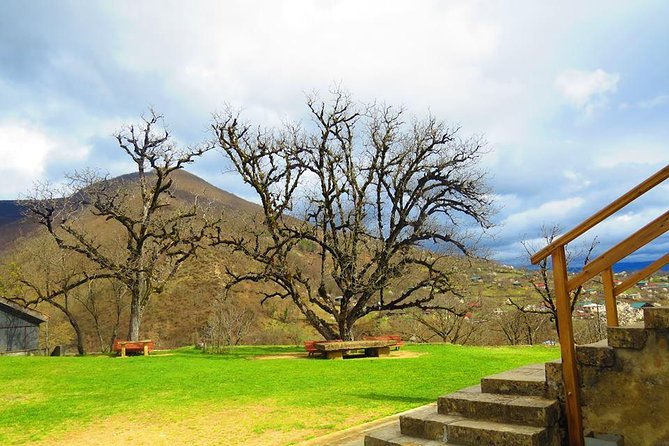
The final major stop is Tskaltubo, where about two hours are set aside to visit abandoned sanatoriums. Admission is free. These buildings reflect a different side of the Soviet period from Chiatura’s industrial infrastructure.
Tskaltubo was associated with spa and health treatment, and its sanatoriums were built for that purpose. Today, the abandoned buildings offer a stark contrast between their intended role and their present condition. Grand public architecture, empty interiors, and signs of neglect create a strong sense of time passing.
I like ending with Tskaltubo because the mood changes as the day closes. Chiatura shows a system still connected to movement and work. Tskaltubo shows buildings left behind after the system that supported them faded.
The two-hour visit gives you more time to look around than at Katskhi Pillar or Mgvimevi. Still, you should not assume every building will be open or accessible in the same way. The information provided confirms visits to abandoned sanatoriums, but it does not promise entry conditions, interior access, or a specific list of buildings.
Use sensible care around old structures. The supplied tour details do not describe the condition of each site, so you should follow the guide’s directions and avoid treating the ruins like a playground. Their appeal comes from seeing what remains, not from taking unnecessary risks.
What the $84.69 price gets you
At $84.69 per person, the tour is not the cheapest way to spend a day in western Georgia. Its value depends on how you would otherwise reach these places.
The price includes hotel pickup from Kutaisi, an air-conditioned vehicle, an English-speaking guide, bottled water, and admission for Katskhi Pillar, the cableways, and Mgvimevi Monastery. It also covers a full route that would be difficult to combine without private transport.
Chiatura and Tskaltubo are not a simple pair of nearby city sights. They require time on the road, local orientation, and a driver who can connect the stops in one day. If you are traveling without a car, the tour’s convenience may justify the cost.
The main extra expenses are food and the Chiatura Local Museum admission. Lunch and dinner are not included, so you should budget for both meals or bring something with you. The tour includes bottled water, which helps, but it does not remove the need to plan for food during a nine-hour outing.
The group limit of six is another part of the value. A small group usually means less waiting and more direct contact with the guide. It also makes it easier to ask about local life, mining, the Soviet period, or the religious sites without competing with a large crowd.
Who should book this experience?
I would recommend this tour to you if you want unusual sights and local context more than polished attractions. It fits people interested in Soviet-era infrastructure, industrial towns, abandoned buildings, Georgian religious sites, and places that still show the marks of their past.
It is also a good choice if you are based in Kutaisi and do not have a car. The pickup service and compact group remove much of the planning work. Giorgi’s local background is a real advantage if you want more than basic dates and directions.
The tour may not suit you if you need a slow schedule, long meal breaks, or highly predictable facilities. Five stops across roughly nine hours is a full day. You will spend time moving between locations, and the cableway experience may depend on the condition and operation of an old system.
The route is described as suitable for most people, and it is near public transportation, but no detailed accessibility information is provided. If you have specific mobility needs, ask the provider before booking. The tour is offered in English, and confirmation is sent within 48 hours, subject to availability.
Free cancellation is available if you cancel at least 24 hours before the 9:00 a.m. start time. Changes or cancellations made less than 24 hours ahead are not accepted for a refund.
Is the Chiatura and Tskaltubo tour worth booking?
Book it if you want a concentrated day of places that feel genuinely different from Kutaisi’s central sights. The strongest reasons are the small group, the local guide, the old Chiatura cable cars, and the unusual combination of active mining history with abandoned sanatoriums.
I would choose this tour over a standard sightseeing day if your interests run toward Soviet Georgia, remote religious buildings, and imperfect but memorable places. I would skip it only if you prefer relaxed pacing, included meals, or fully restored attractions.
For the right visitor, $84.69 is a fair price for transport, guiding, several included admissions, and access to a route that is hard to arrange efficiently alone. Pack patience, plan for your own meals, and expect the day to be more atmospheric than polished.
FAQ
Where does the tour start?
Pickup is offered from hotels located in Kutaisi. The start time is 9:00 a.m.
How long does the tour last?
The experience lasts approximately nine hours.
What language is the tour offered in?
The tour is offered in English.
How many people can join the group?
The group has a maximum of six travelers.
Is transportation included?
Yes. An air-conditioned vehicle and hotel pickup from Kutaisi are included.
Are meals included?
No. Lunch and dinner are not included. Bottled water is provided.
Is admission included at every stop?
Admission is included at Katskhi Pillar, the Chiatura cableways, and Mgvimevi Monastery. Admission to the Chiatura Local Museum is not included. The visit to the abandoned sanatoriums of Tskaltubo is free.
Can I cancel for a full refund?
Yes, if you cancel at least 24 hours before the experience start time. Cancellations or changes made less than 24 hours before the start are not accepted for a refund.
Just added in Kutaisi
- Wine & Dine group tour from Kutaisi★ 4.6 · 3 reviews
- Wild Caving Experience in Melouri Cave Near Kutaisi★ 5.0 · 3 reviews
- Private tour from KUTAISI: Bagrati, Gelati and Motsameta★ 5.0 · 5 reviews
- Private Car – From Tbilisi, Kutaisi, Martvili Canyons, caves★ 5.0 · 1 review
- Full Day Tour To Kutaisi, Prometheus Caves, Bagrati and Gelati★ 5.0 · 1 review
- Tour to Kutaisi from Tbilisi (Sataplia Reserve, Bagrati, Gelati, Motsameta)★ 5.0 · 2 reviews
- Kutaisi, Martvili Canyon & Prometheus Cave Tour from Tbilisi★ 5.0 · 3 reviews
- 2-Day Kutaisi Tour: Caves, Canyons & Soviet Sanatoriums★ 5.0 · 12 reviews
Kutaisi Tours, compared.
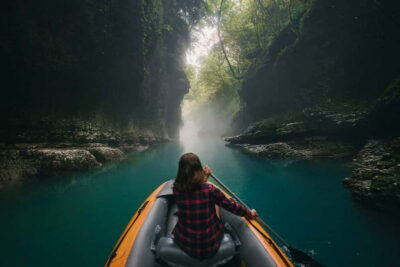
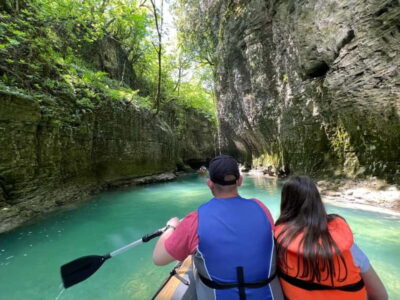
Martvili & Okatse Canyons & Prometheus Cave Tour
Read our review →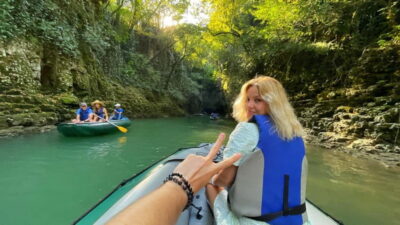
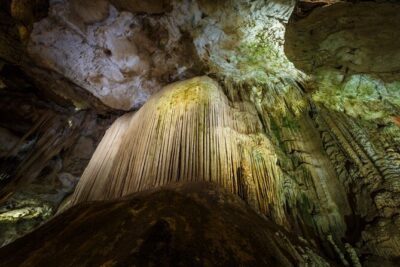
Kutaisi Canyons and Caves from Tbilisi Full Day Tour
Read our review →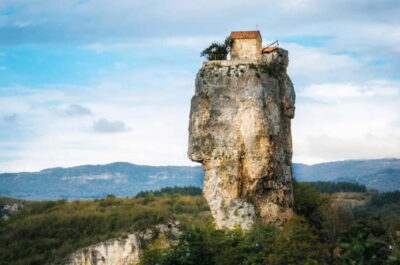
CANYONS & CAVE Tour from Kutaisi – Okatse, Martvili & Prometheus
Read our review →
Prometheus Cave, Martvili & Okatse Canyon from Kutaisi
Read our review →Browse the lists this tour appears in