Reviewed · TBILISI TOURS
Brutalist Tbilisi: Urban exploration and untold stories
Tbilisi’s concrete side deserves a closer look. I like the comfortable car-based route, which covers far more ground than a walking tour, and I like the human stories that explain how these huge buildings shaped daily life. The main drawback is clear: some stops are abandoned, neglected, or unsettling, so this is not the right outing if you want only polished sights and pretty balconies.
This four-hour tour costs $75 per person and focuses on Soviet, Brutalist, and modernist Tbilisi. Guides such as Khatuna, Jonah, Alex, Oksana, and Aleksi have led the route, with strong praise for their clear explanations, warmth, humor, and flexibility. Traffic can stretch the timing, and some stops can change with weather or local conditions.
In This Review
- Key things to know before you book
- Why this is not a standard Tbilisi city tour
- City of Students and the outer neighborhoods
- Riding the Bagebi Cable Road
- The Nutsubidze Skybridge and hillside housing
- The Ministry of Highways and Georgia’s Brutalist landmark
- The former Museum of Archaeology
- Suicide Bridge and the darker side of the city
- A bakery break with a local snack
- The Chronicle of Georgia above Tbilisi Sea
- Guides, vehicles, and the value of the $75 price
- Who should book this Tbilisi architecture tour?
- FAQ
- How long does the Brutalist Tbilisi tour last?
- What language is the tour offered in?
- Is transportation included?
- What does the $75 price include?
- Is the tour suitable for children or people with mobility impairments?
- What should I bring?
- Should you book it?
Key things to know before you book
- The Ministry of Highways is the architectural star: This bold concrete structure is one of Eastern Europe’s best-known Brutalist buildings.
- You reach far-flung sights without a long hike: A private car or van links scattered neighborhoods and viewpoints.
- The Nutsubidze Skybridge feels like science fiction: Suspended walkways connect high-rise residential blocks on a steep hillside.
- The old Bagebi cable car adds a living piece of Soviet Tbilisi: You do not just look at the past, you ride through it.
- The tour deals honestly with difficult places: Suicide Bridge and abandoned buildings bring a darker tone.
- Your fee supports internally displaced people: This gives the outing a useful social purpose beyond sightseeing.
Why this is not a standard Tbilisi city tour
Most first visits to Tbilisi revolve around the Old Town, sulfur baths, churches, carved balconies, and hilltop views. Those places deserve your time, but they show only one face of the city. This tour heads into areas that rarely appear on a first-time sightseeing plan.
The focus is not simply on concrete shapes. You learn how monumental buildings served the Soviet state, how apartment complexes affected ordinary residents, and how Georgia still lives with the physical remains of that period. The best guides connect design with real life instead of treating each building like a lifeless object for photographs.
I especially value that balance. Brutalism can be reduced to dramatic angles and gray surfaces, but Tbilisi’s buildings are more interesting when you hear about the people who used them, worked in them, or grew up beside them. The tour also shows how post-Soviet Tbilisi has adapted, reused, abandoned, or simply lived around these structures.
You travel in a small or private group, rather than on a large bus. That matters here because several places need explanation, patience, and a little flexibility. Guides have also adjusted the experience for individual interests. One guest asked to see the Palace of Rituals, and the guide added it as a bonus stop.
More things to do in Tbilisi:
- Tbilisi: Day Trip to Kazbegi, Gudauri, Gergeti, and Ananuri
★ 4.9 · 3,203 reviews - Day Trip to Kakheti Wine Region Including 9 Wine Tastings
★ 5.0 · 2,774 reviews - Highlights of Caucasus Mountains-Jinvali,Ananuri,Gudauri,Kazbegi(Group tour)
★ 5.0 · 2,682 reviews
City of Students and the outer neighborhoods
The outing begins at your selected pickup point, usually your accommodation or another central location in Tbilisi when the private option is chosen. From there, the car takes you beyond the central tourist zone toward the City of Students.
This opening stop introduces the scale and social purpose of Soviet-era planning. You get about 45 minutes for a guided visit and photographs, enough time to look carefully rather than jump out, snap a picture, and rush away. The area helps you see how education, housing, and public life were organized around large institutions.
Do not expect a restored historic quarter. The appeal comes from the contrast between huge planned spaces and the everyday city around them. Your guide can help you read details that are easy to miss from the car window, including how the buildings relate to one another and how their original ambitions compare with their present condition.
The route is useful for anyone who wants to see how Tbilisi extends beyond its familiar center. It also sets the tone for the rest of the day: this is a tour about urban life, not a checklist of famous monuments.
Riding the Bagebi Cable Road
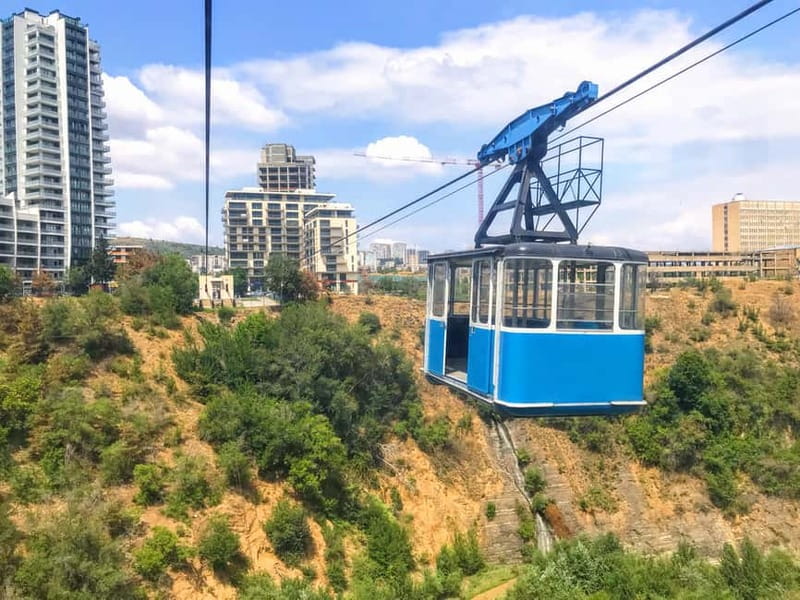
At Bagebi, you get a short guided visit, time for photographs, and a cable car ride, usually taking about 25 minutes in total. The ride is one of the more memorable parts of the experience because it offers movement, height, and a direct link to the city’s Soviet past.
You see Tbilisi from a different angle as the cable car crosses the hillside. The ride is not just transport between points. It lets you experience an old urban system that once played a practical role in the city’s daily routine.
If you are uneasy with heights, pay attention to the tour’s restrictions. This experience is not suitable for people afraid of heights, and later stops also involve elevated walkways and broad views. The cable car may be a highlight for one person and the hardest part of the day for another.
Weather and operating conditions can affect the route. Keep your schedule flexible instead of booking a tight connection immediately afterward.
The Nutsubidze Skybridge and hillside housing
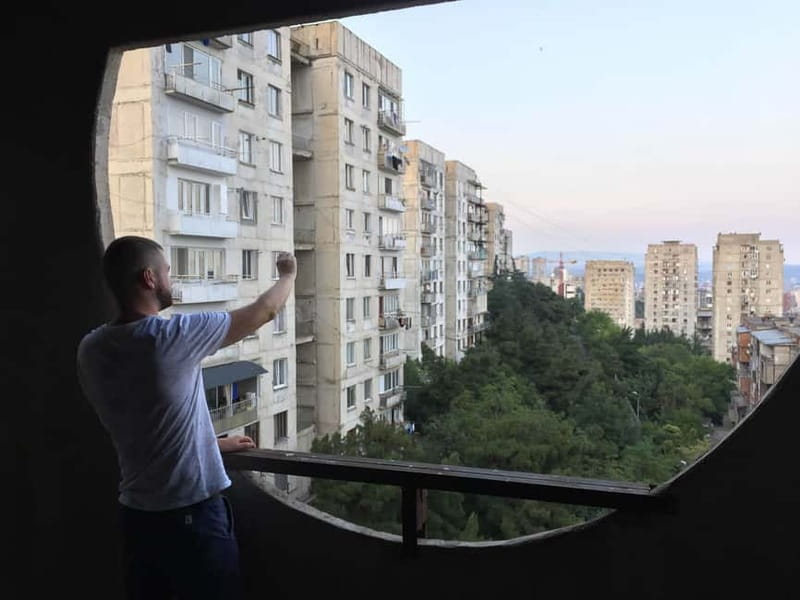
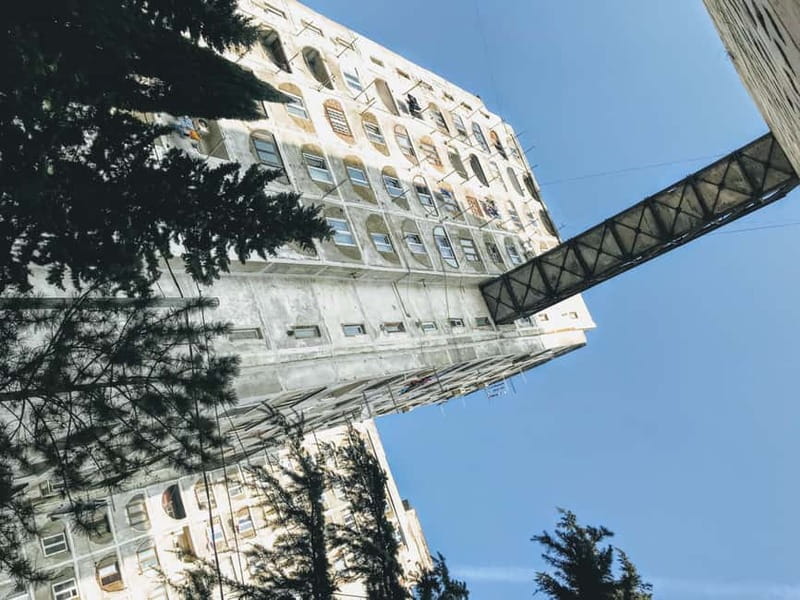
The Nutsubidze Skybridge is one of the tour’s most unusual stops. This 1970s residential complex uses suspended sky bridges to connect apartment blocks high on the hillside. You get around 40 minutes here for guided sightseeing, photographs, and views along the way.
The first impression is architectural drama. The bridges appear to hang between high-rise buildings, creating a structure that feels more like a film set than a normal apartment complex. Yet the guide brings you back to its practical purpose: people live here, move through these spaces, and have spent decades treating an extraordinary design as part of ordinary home life.
This is where the tour’s social angle works best. You are not viewing an isolated monument. You are looking at housing that still belongs to a neighborhood. The contrast between ambitious design and daily use gives the building more meaning than a simple list of dates and architects could provide.
You should wear comfortable shoes. The tour does not involve long walks, but you still need to move around at several stops, and sensible footwear was a repeated practical recommendation. The site may also feel exposed or uncomfortable for anyone who dislikes height or rougher urban settings.
A completely different kind of day:
- From Tbilisi: Kakheti Wine Region Tour with 9 Wine Tastings
★ 4.9 · 2,541 reviews - Tbilisi: Mtskheta, Jvari, Gori and Uplistsikhe Day Tour
★ 4.9 · 2,396 reviews - From Tbilisi to Kazbegi, Ananuri, Gudauri & Gergeti
★ 4.9 · 2,278 reviews - Tbilisi: Kakheti Wine Region Tour with 10 Wine Tastings
★ 5.0 · 2,160 reviews
The Ministry of Highways and Georgia’s Brutalist landmark
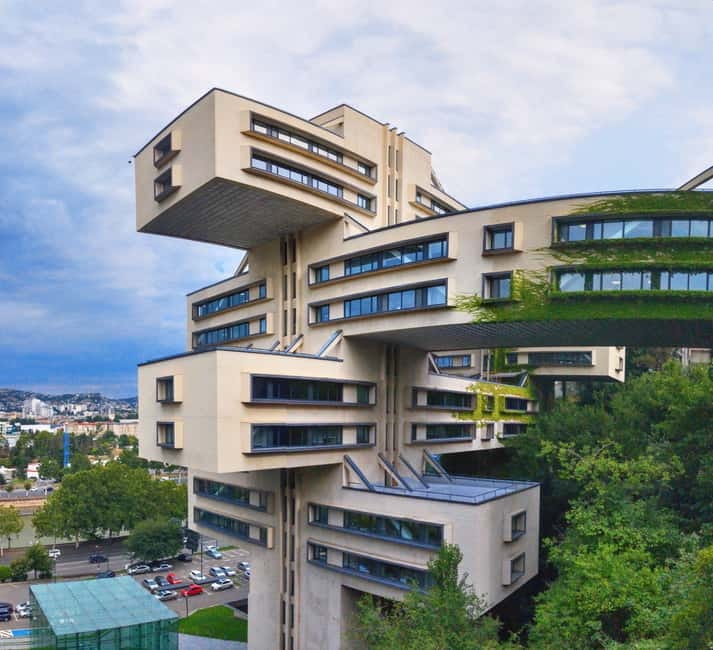
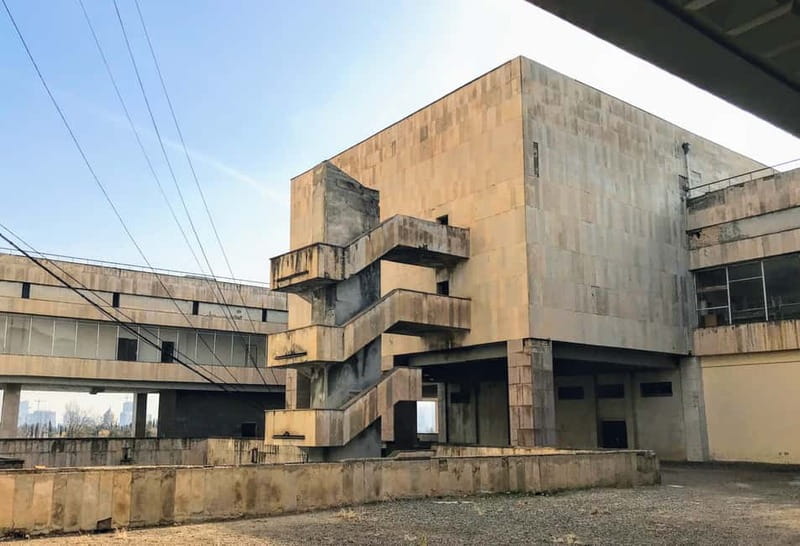
The former Ministry of Highways of the Georgian SSR is the architectural centerpiece for many people. Its stacked, interlocking concrete forms create a striking profile, with sections that seem to float over one another. It is often described as one of the most important Brutalist structures in Eastern Europe.
The building is powerful because it combines monumental scale with an almost impossible-looking arrangement of blocks. You can photograph it from outside, but the explanation matters just as much as the view. Your guide places the building within the Soviet system and explains how an official structure could project authority through its size, shape, and position.
The stop also raises a useful question: what happens to a building designed for one political era after that era ends? Tbilisi’s Soviet architecture is not frozen in a museum. Some buildings continue to serve new purposes, while others are altered, underused, or left to weather.
The route includes a stop connected with the Bank of Georgia, allowing about 20 minutes for guided sightseeing. The exact emphasis can depend on the day’s route, traffic, and access, but the point is the same: modernist architecture here is tied to working institutions, not only abandoned shells.
The former Museum of Archaeology
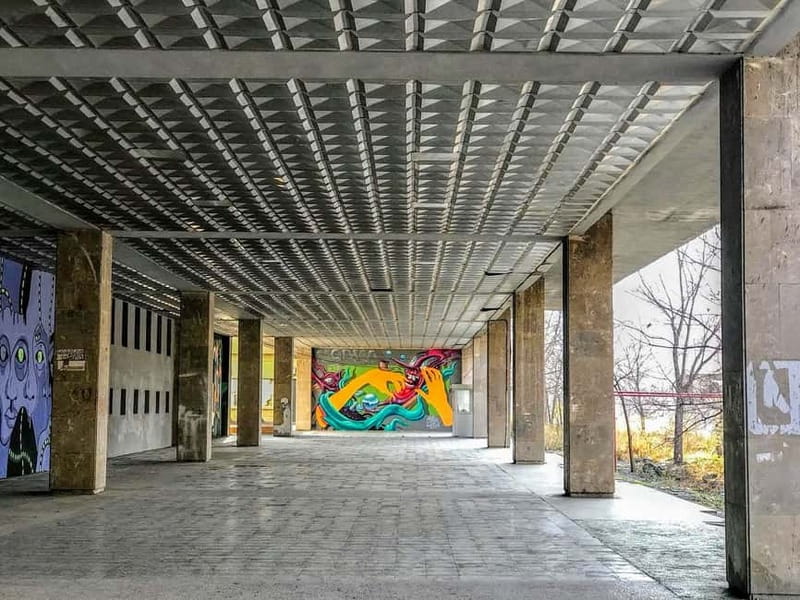
The former Museum of Archaeology offers a different mood. Once intended as a major cultural institution, the building is now abandoned, yet its modernist design remains forceful.
This is not a polished museum visit. You should expect an exterior-focused stop and a building whose neglect is part of the story. Cracked surfaces, empty spaces, and signs of age may be precisely what interests you, but they can feel bleak if you prefer restored monuments.
The guide helps turn that discomfort into context. You learn to look at the building as both an architectural work and a sign of changing priorities. Its present state says something about the difficulties of preserving large public structures after political and economic change.
Take care around uneven areas and follow your guide’s directions. The tour is not designed for people with mobility impairments, and access conditions can vary.
Suicide Bridge and the darker side of the city
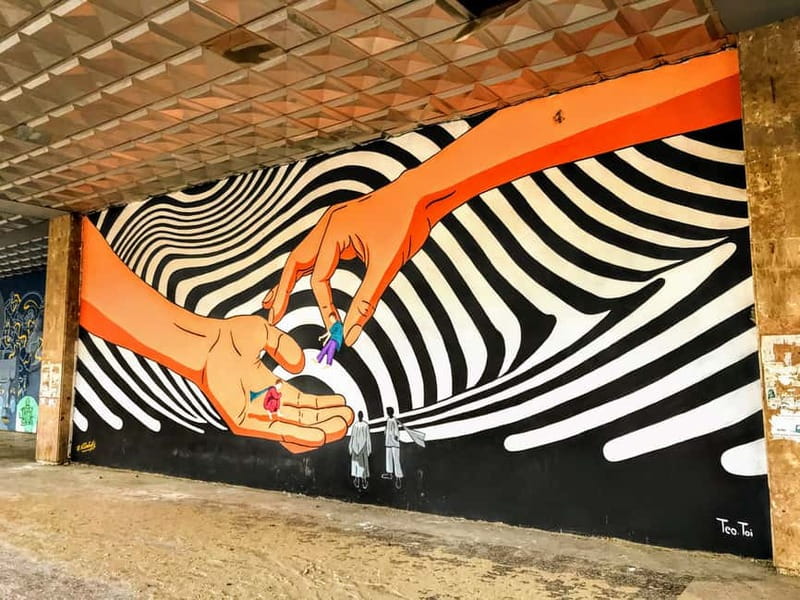
The stop known as Suicide Bridge brings a more serious tone. Its name points to a painful part of Tbilisi’s urban story, and the guide discusses the site with care rather than treating it as a novelty.
This part of the tour will not suit everyone. If you find abandoned places, difficult histories, or reminders of tragedy upsetting, you may prefer a gentler introduction to Tbilisi. The attraction is not entertainment. It is the chance to understand how a piece of infrastructure can gather a heavy public memory.
The stop also shows why the tour goes beyond architecture. Concrete, bridges, and apartment blocks are used by real people, and their meaning changes over time. A good guide makes space for that complexity.
A bakery break with a local snack
The stop at a local bakery lasts about 15 minutes and includes street food or a local snack. This is a small part of the route, but it provides a welcome change from monumental buildings and serious discussion.
I like this pause because food gives you a quick connection with the city’s daily rhythm. It is not a full lunch, so plan to eat separately if you need a substantial meal. Lunch is not included in the $75 price.
The bakery stop also gives the guide a natural chance to suggest other Georgian foods and places to eat. Khatuna, for example, has offered useful recommendations for local food and chimney cake. That kind of practical advice can be as valuable as another photograph, especially early in your time in Tbilisi.
The Chronicle of Georgia above Tbilisi Sea
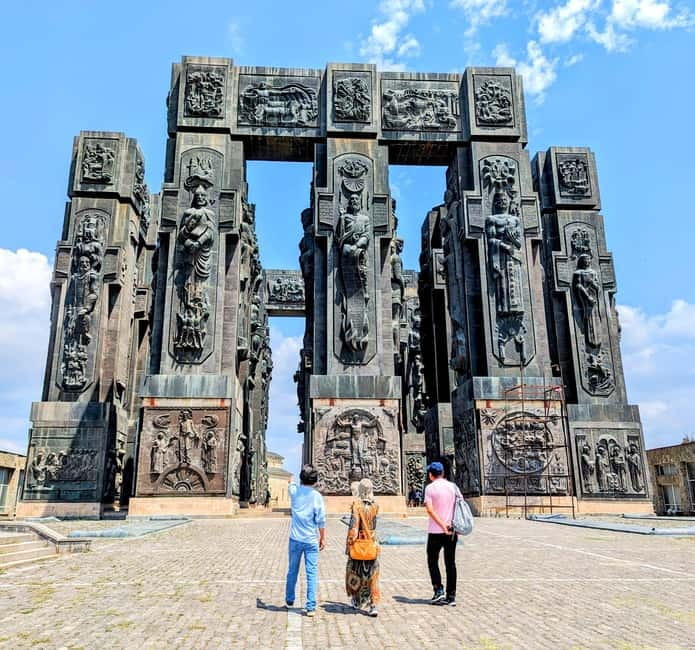
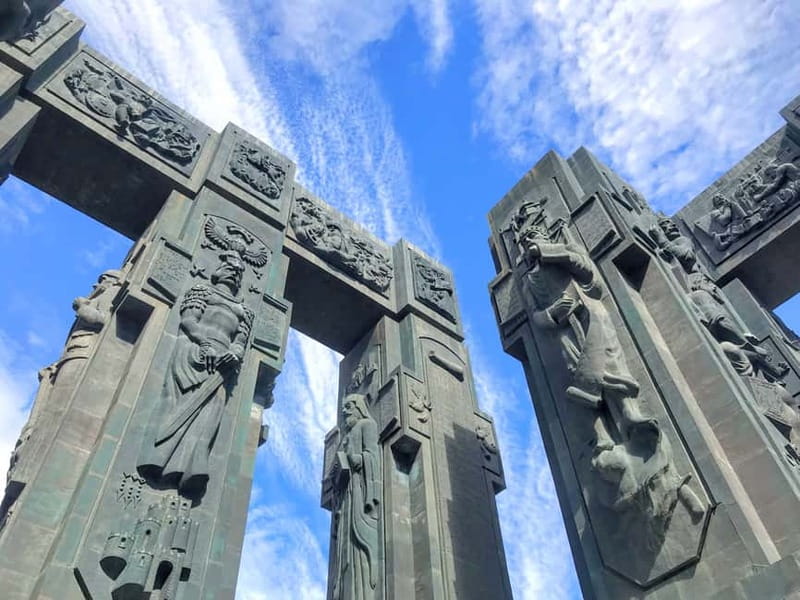
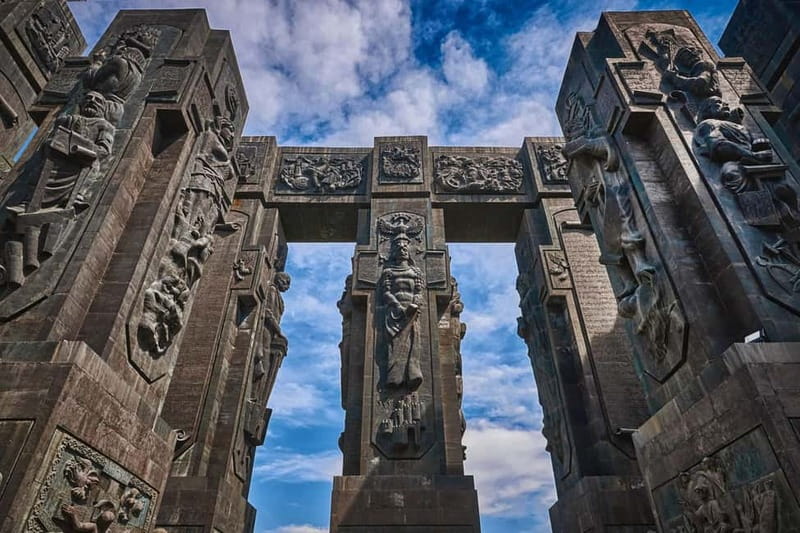
The Chronicle of Georgia, sometimes called the Georgian Stonehenge, closes the main sightseeing portion with a huge monumental setting above the Tbilisi Sea. The stop allows about 45 minutes for a guided visit, free time, photographs, and aerial views.
Tall stone columns and carved figures create a grand, solemn space. The scale is the point. From here, you look across the water and the wider city area, seeing how Tbilisi spreads through hills and valleys rather than sitting on a flat plain.
This is one of the tour’s best photo stops, but it deserves more than a quick panorama. Your guide explains the imagery and the monument’s place in Georgian culture and national memory. The site can feel remote from the Old Town, which is exactly why reaching it by car is useful.
Bring water, though a bottle is included. The open setting can feel exposed in poor weather, and conditions may affect how long you stay or which stops are possible.
Guides, vehicles, and the value of the $75 price
At $75 per person, this is not the cheapest way to look at buildings in Tbilisi. It is good value if you want several distant sites in one half-day, a private or small-group setting, entrance fees, bottled water, a local guide, and transport without arranging taxis between every stop.
The car is a major part of the value. Tbilisi’s Brutalist buildings are spread across different districts, and public transport connections may take time and local know-how. Here, you can sit between stops, avoid a long uphill walk, and cover a great deal in four hours.
The guides are the other major reason to pay for the tour. Khatuna and Khato have been praised for detailed explanations, kindness, flexibility, and strong knowledge of Georgian architecture and history. Jonah has been praised for clear information, humor, and a pleasant manner. Alex, Alexo, Oksana, Aleksi, and other guides have also led the experience.
Because the guide can answer questions and adjust the conversation, the tour works for both architecture fans and curious first-time visitors. You do not need a design degree. You only need an interest in how cities reflect politics, ambition, and everyday life.
The transport rating is particularly strong, with 95 percent of ratings giving it a perfect score. That fits the practical design of the outing: pickup, driving, short visits, and drop-off at one of two Tbilisi locations.
Who should book this Tbilisi architecture tour?
I would choose this tour if you have already seen the Old Town or want a second view of Tbilisi from the start. It suits people interested in Soviet history, architecture, urban planning, photography, and the way cities reuse difficult physical legacies.
It also works well for anyone who wants to cover a lot without spending four hours walking hills. The route is especially useful for a short stay, since it reaches several places that would be awkward to combine independently.
You should think twice if you want a classic sightseeing tour, restored interiors, or a relaxed food outing. Children under 12 are not accepted, and the experience is not suitable for people with mobility impairments or a fear of heights. Pets, large bags, strollers, alcohol, and drugs are not allowed.
The route can change because of traffic, weather, and other conditions. Four hours is a realistic guide, not a rigid promise. Leave some breathing room in your day, especially if you plan another timed activity.
FAQ
How long does the Brutalist Tbilisi tour last?
The tour is scheduled for four hours, but traffic, weather, and other conditions can make it longer. Starting times depend on availability.
What language is the tour offered in?
Live guiding is available in English and Russian.
Is transportation included?
Yes. The tour uses car transport between sites, and pickup is included at your accommodation or another central Tbilisi location when the private option is selected.
What does the $75 price include?
The price includes a local guide, entrance fees, bottled water, and door-to-door service when the private option is selected. Lunch is not included.
Is the tour suitable for children or people with mobility impairments?
Children under 12 are not accepted. The experience is also not suitable for people with mobility impairments or people afraid of heights.
What should I bring?
Bring comfortable shoes. Large bags, oversize luggage, baby strollers, pets, alcohol, and drugs are not allowed.
Should you book it?
Book this tour if you want Tbilisi beyond the balconies and postcard views. The strongest parts are the Ministry of Highways, Nutsubidze Skybridge, Bagebi cable car, and Chronicle of Georgia, but the real reward is the connection between those structures and the people who live with them.
Skip it if abandoned buildings, Soviet-era symbolism, heights, or difficult urban stories do not appeal to you. For everyone else, the combination of private transport, strong local guiding, unusual viewpoints, and social support makes this a thoughtful and unusually useful half-day in Tbilisi.
Just added in Tbilisi
- Wine Tasting feel the Difference of Qvevri or Classical Wine★ 4.4 · 10 reviews
- From Tbilisi: Kakheti and Kazbegi 2-Day 4X4 Jeep Tour pack★ 5.0 · 6 reviews
- Walking Tour in Old Tbilisi – Group Tour★ 4.5 · 8 reviews
- Uforgatable Kakheti Tour with wine tasting – in Georgia★ 4.9 · 5 reviews
- From Tbilisi: Uplistsikhe Caves and Mtskheta Town Day tour★ 5.0 · 2 reviews
- Tbilisi: Vintage Fashion and Secondhand Thrifting Tour★ 5.0 · 11 reviews
- Tbilisi Airport to Gudauri, Bakuriani, Batumi, Tbilisi★ 5.0 · 3 reviews
- Private Adorable City Tour of Tbilisi★ 5.0 · 3 reviews
Tbilisi Tours, compared.
Day Trip to Kazbegi, Gudauri, Gergeti, and Ananuri
Read our review →
Day Trip to Kakheti Wine Region Including 9 Wine Tastings
Read our review →
Highlights of Caucasus Mountains-Jinvali,Ananuri,Gudauri,Kazbegi(Group tour)
Read our review →
Kakheti Wine Region Tour with 9 Wine Tastings
Read our review →
Mtskheta, Jvari, Gori and Uplistsikhe Day Tour
Read our review →
From Tbilisi to Kazbegi, Ananuri, Gudauri & Gergeti
Read our review →
Kakheti Wine Region Tour with 10 Wine Tastings
Read our review →