
Reviewed · CANYON AND CAVE TOURS IN KUTAISI
Bagrati Cathedral, Motsameta monastery, Sataplia Cave
Three monuments, one short outing. This three-hour tour links Bagrati Cathedral, Gelati Monastery, and Motsameta Monastery, giving you city views, medieval churches, mountain scenery, and an important chapter of Georgian history without spending a full day on the road.
I like the efficient route and the small private group, capped at six people. I also like that the tour balances famous religious sites with the quieter setting of Motsameta. The main consideration is the tight schedule: three hours leaves little room for lingering, long walks, or a slow look at every corner.
The English-speaking driver is part of the experience, and Giorgi has earned praise for being helpful, well-informed, and funny. That matters on a short tour, where a good guide can turn a quick stop into something that makes sense.
In This Review
- Key points at a glance
- Why this short Kutaisi tour works
- Bagrati Cathedral and the view across Kutaisi
- Gelati Monastery and the world of David the Builder
- Motsameta Monastery above the river
- How the three stops fit together
- The role of the driver and guide
- Is three hours enough?
- Value, group size, and practical limits
- Who should book this experience?
- Should you book the Bagrati, Gelati, and Motsameta tour?
- FAQ
- How long does the tour last?
- Where does the tour start and finish?
- Is the tour private?
- What language does the driver speak?
- Is the tour wheelchair accessible?
- What happens if the weather is poor?
Key points at a glance
- Bagrati Cathedral gives you a full view of Kutaisi from its hilltop position.
- Gelati Monastery carries UNESCO recognition and includes churches, an academy, a bell tower, monks’ houses, and the tomb of King David the Builder.
- Motsameta is built on a cliff above a river, with water on three sides and forested mountain views.
- The route fits into about three hours, making it useful for a short stay in Kutaisi.
- The group is private and limited to six people, so you get a more personal outing than a large coach tour.
- The tour runs in an air-conditioned vehicle, with pickup and return in Kutaisi.
Why this short Kutaisi tour works
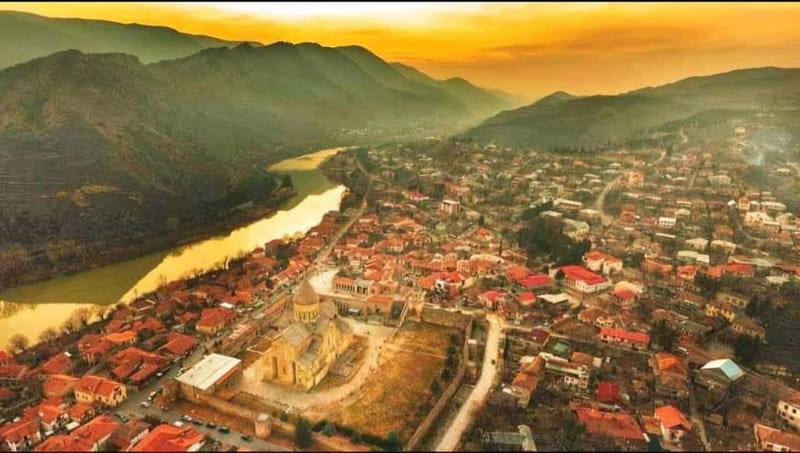
Kutaisi has enough sights around it to fill several days, but many visitors have only a short window. This tour is designed for that situation. In roughly three hours, you see three major religious monuments, each with a different mood and setting.
Bagrati is the city-facing stop. Gelati is the grand historical and religious center. Motsameta is the scenic pause, with a monastery surrounded by trees, cliffs, rivers, and mountain views. The variety keeps the outing from feeling like a series of similar church visits.
I see the main benefit as good use of limited time. You do not need to arrange separate transport, work out the road connections, or decide which sites deserve priority. The driver picks you up in Kutaisi, takes you through the three stops, and returns you to the city.
The trade-off is equally clear. A three-hour visit is a sampler, not a slow cultural day. You should expect a brisk pace, especially if you want time for photographs at each site. The tour is best for getting a strong first impression rather than studying every architectural detail.
More Canyon and Cave Tours in Kutaisi
- From Tbilisi: Kutaisi Canyons and Caves Full Day Tour
★ 4.8 · 1,051 reviews - Kutaisi: Martvili & Okatse Canyons & Prometheus Cave Tour
★ 4.9 · 829 reviews - From Kutaisi: Guided Tour of Okatse, Martvili, & Prometheus
★ 4.8 · 520 reviews
Bagrati Cathedral and the view across Kutaisi
The first stop is Bagrati Cathedral, built in the 11th century. Its importance reaches beyond its religious role. The cathedral was created as a symbol of a united Georgia, a period when Georgian political and cultural identity was taking shape under a strong central kingdom.
The setting helps you understand why this is the opening stop. From the cathedral, you can look across the whole city. That broad view gives you your bearings before you head into the countryside toward the monasteries.
I would give your first few minutes to the view rather than rushing straight toward the building. Look across Kutaisi, note the river and the surrounding hills, and then turn your attention to the cathedral itself. The city panorama is one of the tour’s clearest highlights.
Bagrati also gives the outing a useful starting point. You begin with a monument connected to national unity, then move to sites tied more closely to medieval Georgian faith and royalty. The sequence has a sensible rhythm.
The stop may feel brief if you are interested in architecture or religious history. The provided timing does not promise a long guided visit, and the tour has two more sites to cover. If you want extensive time at Bagrati alone, a separate visit would give you more freedom.
Gelati Monastery and the world of David the Builder
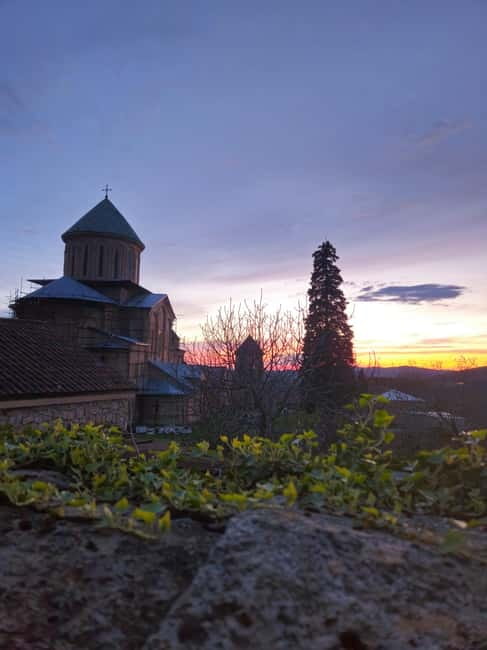
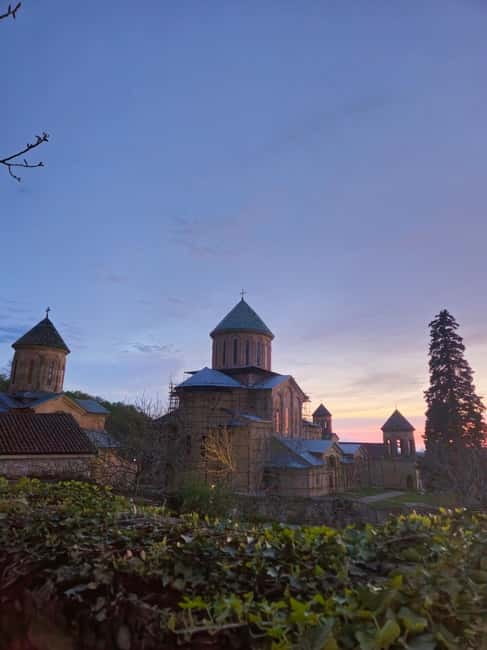
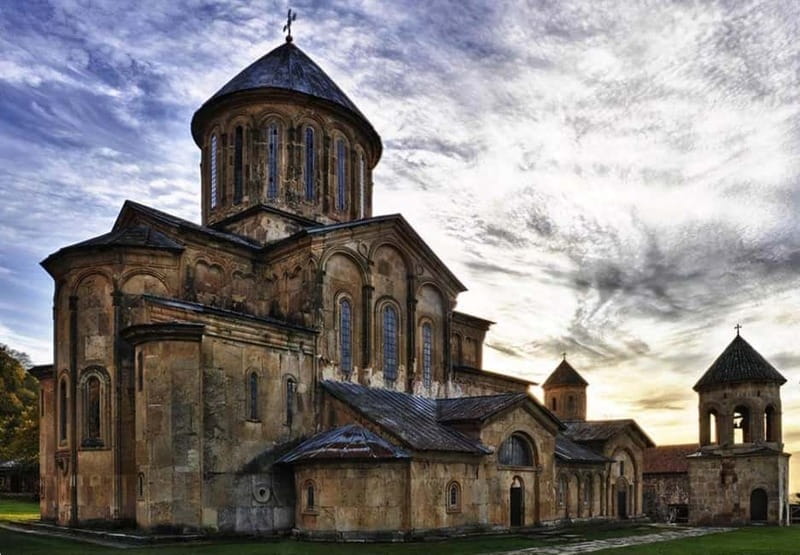
Gelati Monastery is the historical centerpiece of the route. It is included on the UNESCO heritage list and was built by King David the Builder, one of Georgia’s most important rulers.
The complex includes three large churches, an academy, a bell tower, the grave of David the Builder, and houses for monks. That range of buildings makes Gelati more than a single church stop. It was a religious center, a place of learning, and a royal foundation.
The academy is particularly important for understanding the complex. Medieval monasteries were not only places for prayer. They could also preserve texts, teach theology, and support intellectual life. At Gelati, the religious and educational roles were part of the same institution.
The tomb of David the Builder adds a personal connection to the site. You are not simply looking at a grand medieval complex. You are also standing near the burial place of the king associated with its creation and with a major period in Georgian history.
The exact time available at Gelati matters. Three hours covers the entire outing, including the other two locations, so you should expect an overview. Use the guide’s explanation to focus your attention on the academy, the churches, the bell tower, and the royal tomb rather than trying to inspect every wall and building equally.
The site is a strong match for you if you care about medieval Georgia, royal history, church architecture, or the relationship between faith and education. If your main interest is scenery, Gelati may feel more formal than Motsameta, but it provides the historical weight that gives the route its shape.
Motsameta Monastery above the river
Motsameta brings a different feeling. The monastery sits on a cliff and is surrounded by a river on three sides. Forest and mountain views frame the complex, and the natural setting is one of the most memorable parts of the visit.
The name is linked to the story of David and Constantine Mkheidze, two brother lords who were tortured. That story gives the monastery a strong connection to Georgian religious tradition and local memory.
Even with only a short stop, Motsameta offers a welcome change from the city view at Bagrati and the large historic complex at Gelati. Here, the setting does much of the work. You get river views, trees, cliffs, and mountain color around a monastery that feels closely tied to its surroundings.
I would save some attention for the approach and the views around the building, not just the interior. The supplied details emphasize the river, forest, and mountains for good reason. This is the stop where you are most likely to remember the relationship between the monastery and the natural setting.
The cliffside position also means you should be ready for uneven access or short walking sections. The tour is not wheelchair accessible, and the information provided does not promise a fully step-free route. Most people can participate, but anyone with mobility concerns should ask for specific access details before booking.
A completely different kind of day:
- Kutaisi Canyons and Caves from Tbilisi Full Day Tour
★ 5.0 · 448 reviews - Kutaisi:Chiatura Tour with Katskhi Pillar & Cable Car
★ 4.9 · 433 reviews - CANYONS & CAVE Tour from Kutaisi – Okatse, Martvili & Prometheus
★ 4.5 · 307 reviews - Kutaisi: Prometheus Cave & Martvili Canyon Guided Tours
★ 4.7 · 206 reviews
How the three stops fit together
The route works because each place offers something different:
- Bagrati gives you Kutaisi from above and introduces the idea of a united Georgian kingdom.
- Gelati gives you royal history, religious architecture, and medieval learning.
- Motsameta gives you river, forest, cliff, and mountain scenery, along with a local religious story.
This is more useful than visiting three monuments chosen only because they are nearby. The stops cover city, history, faith, and nature in a compact circuit.
The pace will suit you if you prefer a clear plan and several highlights in one morning or afternoon. It may not suit you if you like long café breaks, extended photography, or quiet time inside each church. There is no wasted stop, but there is also little spare time.
Since the experience is private, you can ask questions as you go. A group of up to six is small enough to hear the driver clearly and keep the outing more personal. It also avoids the feel of a large coach group, where every stop is ruled by a loud meeting point and a head count.
The role of the driver and guide
The driver speaks English, and the experience is built around transport with guiding along the way. That combination is especially useful when the sites are close enough for a short outing but not so close that getting between them is effortless.
Giorgi received particularly strong praise for being helpful, well-informed, and good-humored. Those qualities are valuable here. The historical details can be dense, and a guide who explains them clearly helps you remember what separates Bagrati, Gelati, and Motsameta.
Do not expect a long specialist lecture unless you arrange that in advance. The tour description promises an English-speaking driver, not a dedicated academic guide or a full museum-style interpretation. Still, the small group gives you a better chance to ask about the buildings, King David the Builder, or the story connected with Motsameta.
The personal quality of the outing is one reason the private format may be worth paying more for than a basic shared transfer. You are not only buying a ride between three sites. You are paying for a planned route, local assistance, and the ability to keep the group small.
Is three hours enough?
Yes, if you treat the outing as a highlights tour. You can see the three main sites and return to Kutaisi within the stated three-hour duration.
No, if your goal is a slow, detailed study of each complex. Gelati alone contains several major buildings and features, while Bagrati and Motsameta each deserve time for views and reflection. The schedule requires you to keep moving.
I would book this tour early in a Kutaisi visit if you want an introduction to the area. It gives you a useful sense of the region’s religious monuments and geography. Afterward, you can decide if one site deserves a longer return visit.
The compact duration also makes the tour practical around other plans. You could use it during a short stay in Kutaisi, though you should check the available starting time before making firm arrangements. The tour begins and ends in Kutaisi, with pickup included.
Value, group size, and practical limits
No tour price is provided here, so I cannot judge the exact cost. The fair way to assess value is to compare what is included: a private group of no more than six, an air-conditioned vehicle, pickup in Kutaisi, an English-speaking driver, and transport between three important sites.
That package is likely to offer better value for a small party than booking separate rides to each monastery. If you are alone or traveling as a couple, compare the price with a shared option before committing. The private format becomes more attractive when several people can share the cost.
The group size is a real benefit. Six people is small enough to keep the tour calm and flexible, while still allowing the transport cost to be spread among several people. You should confirm the final price at booking because the supplied information does not state it.
The tour requires good weather. If poor weather causes cancellation, you are offered another date or a full refund. That condition makes sense because the best parts of Bagrati and Motsameta are outdoor views, and the route includes a cliffside setting.
You can cancel up to 24 hours before the experience for a full refund, and you can reserve now while paying later. Those policies make the tour easier to fit around changing plans, especially when weather is uncertain.
The experience is not wheelchair accessible, but most people can participate. It is also near public transport, though pickup is included, so you do not need to arrange your own way to the starting point in Kutaisi.
Who should book this experience?
I recommend it for a first visit to Kutaisi, a short Georgian itinerary, or anyone who wants to see the region’s most important religious monuments without giving up an entire day.
It is especially suitable for:
- Small families or friend groups who value a private vehicle.
- History-minded visitors interested in King David the Builder and medieval Georgia.
- People who want city, forest, river, and mountain views in one outing.
- Anyone staying in Kutaisi without a rental car.
- Visitors who prefer a planned route over arranging several separate transfers.
I would think twice if you need wheelchair access, want a slow pace, or hope to spend hours at each monastery. I would also check the weather forecast before booking, since outdoor views are central to the experience.
Should you book the Bagrati, Gelati, and Motsameta tour?
Book it if you want three major Kutaisi-area sights in three hours, with a small group, an air-conditioned vehicle, and an English-speaking driver. The strongest reasons are the easy route, the full-city view from Bagrati, the UNESCO-listed Gelati complex, and the dramatic river setting at Motsameta.
Skip it if you want an unhurried day or detailed time at every building. This is a compact introduction, not an exhaustive monastery study.
For most people with limited time in Kutaisi, I think the balance is good. The route gives you a clear sense of Georgian religious history and the setting around the city, while Giorgi’s helpful and humorous style can make the quick schedule easier to enjoy.
FAQ
How long does the tour last?
The experience lasts about three hours, including the visits to Bagrati Cathedral, Gelati Monastery, and Motsameta Monastery.
Where does the tour start and finish?
Pickup is included in Kutaisi, and the tour returns to Kutaisi.
Is the tour private?
Yes. It is a private group experience for up to six people.
What language does the driver speak?
The driver speaks English.
Is the tour wheelchair accessible?
No, the experience is not wheelchair accessible. Most people can participate.
What happens if the weather is poor?
The experience requires good weather. If it is canceled because of poor conditions, you can choose another date or receive a full refund.
Just added in Kutaisi
- Wine & Dine group tour from Kutaisi★ 4.6 · 3 reviews
- Wild Caving Experience in Melouri Cave Near Kutaisi★ 5.0 · 3 reviews
- Private tour from KUTAISI: Bagrati, Gelati and Motsameta★ 5.0 · 5 reviews
- Private Car – From Tbilisi, Kutaisi, Martvili Canyons, caves★ 5.0 · 1 review
- Full Day Tour To Kutaisi, Prometheus Caves, Bagrati and Gelati★ 5.0 · 1 review
- Tour to Kutaisi from Tbilisi (Sataplia Reserve, Bagrati, Gelati, Motsameta)★ 5.0 · 2 reviews
- Kutaisi, Martvili Canyon & Prometheus Cave Tour from Tbilisi★ 5.0 · 3 reviews
- 2-Day Kutaisi Tour: Caves, Canyons & Soviet Sanatoriums★ 5.0 · 12 reviews
Canyon and Cave Tours in Kutaisi, compared.
Martvili & Okatse Canyons & Prometheus Cave Tour
Read our review →
Kutaisi Canyons and Caves from Tbilisi Full Day Tour
Read our review →CANYONS & CAVE Tour from Kutaisi – Okatse, Martvili & Prometheus
Read our review →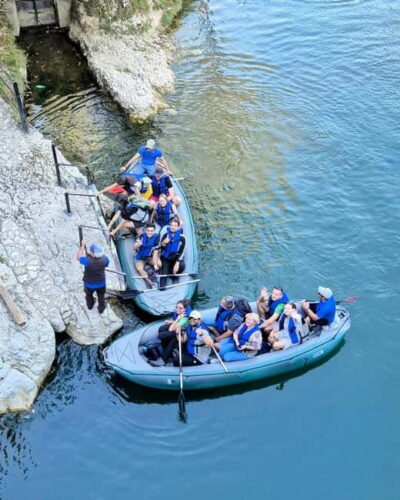
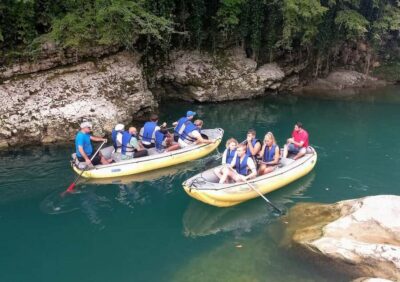
Prometheus Cave, Martvili & Okatse Canyon from Kutaisi
Read our review →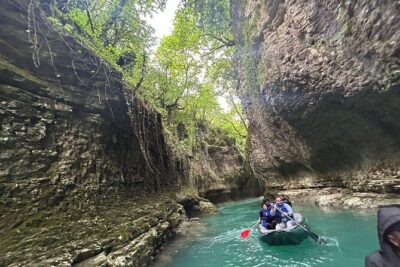
Canyons and caves tour with transfer to Tbilisi
Read our review →Browse the lists this tour appears in