Reviewed · TOURS
A Journey Through Abandoned Wonders – Tbilisi Urbex Tour
Forgotten Tbilisi tells a different story. This four-hour urbex tour takes you into an abandoned laboratory, an old movie theater, and a secret underground command bunker, places normally closed to the public. I like the private-group format and the fact that taxis between sites are included, so you spend your time exploring rather than sorting out transport.
I also like the relaxed pace. Guides such as Tina, Toko, Tornike, and Lasha have been praised for their passion and for giving people time to take photographs. The main consideration is simple: these are abandoned buildings, so you should expect rough surroundings and wear sturdy shoes, even though one account described the outing as fairly easy and not especially dirty.
In This Review
- Key points about Tbilisi’s abandoned places
- Why this tour changes the way you see Tbilisi
- Meeting at Nadzaladevi and setting the pace
- The abandoned laboratory: rooms with a working past
- The abandoned movie theater, including the Apollo
- The secret command bunker underground
- What the guide adds to the experience
- How difficult is the exploration?
- Is $120 a fair price?
- Who will enjoy this tour most?
- Booking, cancellation, and what to wear
- Should you book A Journey Through Abandoned Wonders?
- FAQ
- Where does the Tbilisi Urbex Tour meet?
- How long does the tour last?
- What locations are included?
- Is transportation included?
- Is the tour private?
- What language does the guide speak?
- Do I need previous urban exploration experience?
- What should I wear?
- Can I take photographs?
- Can I cancel the booking?
Key points about Tbilisi’s abandoned places
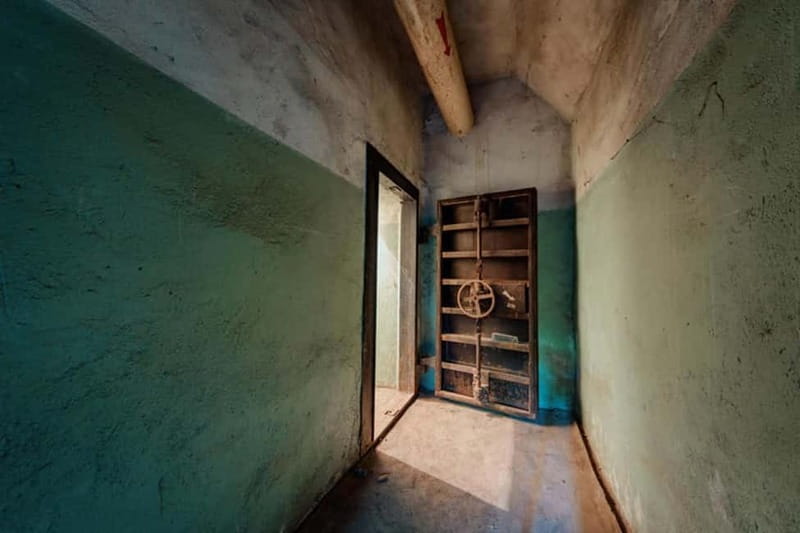
- Three very different sites: Visit an underground command bunker, an abandoned movie theater, and a former laboratory.
- Private four-hour outing: Your group explores with a live English-speaking guide rather than joining a large crowd.
- Taxi transport included: The tour begins at Nadzaladevi metro station, then uses taxis between the three locations.
- Good for first-time urbex: Guides explain the purpose and history of each place, making the experience approachable for beginners.
- Photography-friendly pace: You are given time to look around and take photos or video without being hurried.
- Flexible booking: You can cancel up to 24 hours before the tour for a full refund and reserve without paying immediately.
Why this tour changes the way you see Tbilisi
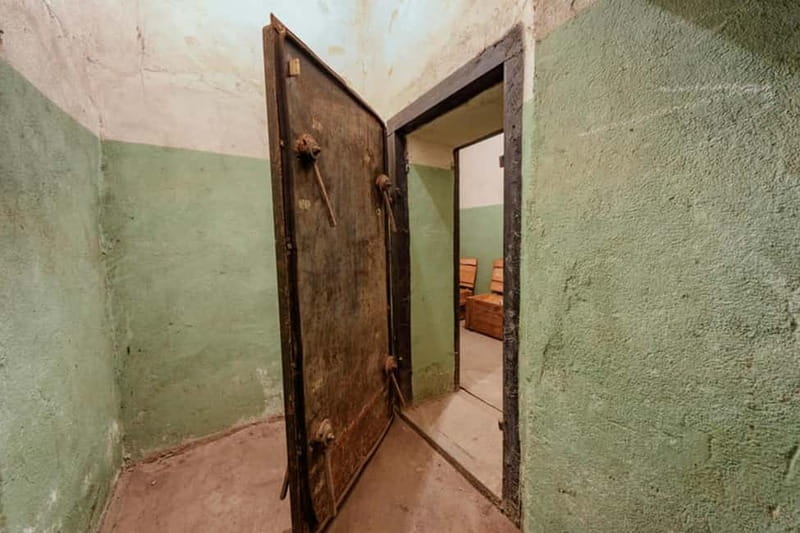
Most city tours point you toward churches, balconies, museums, and lively streets. This one asks you to look at what has been left behind. That change in viewpoint is the real appeal.
You are not simply walking past old buildings and hearing that they were once important. You enter places with specific former purposes, then hear how they fitted into the city’s past. The laboratory suggests scientific work, the cinema points to public entertainment, and the command bunker carries the uneasy atmosphere of military planning.
That range gives the tour shape. Each stop feels different, rather than three versions of the same empty building. You get a mixture of design, decay, history, and photography, with the guide tying the pieces together.
The tour is led in English and is designed for a private group. That matters here. Urbex works better when you can stop at an interesting doorway, ask why a room was built, or take a careful photo without a large group pressing forward.
The guides are also active urban explorers, according to the information provided for the experience. That helps explain the strong emphasis on respect for the sites. You are not being encouraged to treat abandoned places as a playground. You are being shown how to observe them with care.
More things to do in Tbilisi:
- Tbilisi: Day Trip to Kazbegi, Gudauri, Gergeti, and Ananuri
★ 4.9 · 3,203 reviews - Day Trip to Kakheti Wine Region Including 9 Wine Tastings
★ 5.0 · 2,774 reviews - Highlights of Caucasus Mountains-Jinvali,Ananuri,Gudauri,Kazbegi(Group tour)
★ 5.0 · 2,682 reviews
Meeting at Nadzaladevi and setting the pace
The meeting point is the entrance of Nadzaladevi metro station. This is useful because it gives the group a clear, public place to meet before heading to the first site.
From there, transportation between the locations is by taxi, and that cost is included in the $120 price. You do not need to arrange separate rides or work out a route through different parts of Tbilisi. For a four-hour tour with three stops, that saves both time and mental effort.
The exact order of the sites may vary, so you should think of the outing as a guided circuit rather than a fixed walking route. The important point is that all three main locations are included, and the transfers are handled for you.
The pace is one of the strongest parts of the experience. The guide explains each place, then allows time for looking and photography. You are not expected to rush through a corridor, snap one photo, and move on. That is especially useful at locations where the small details may matter more than the overall view.
At the same time, this is still a four-hour tour. You should not expect a full museum-style study of every building or a long historical lecture at each stop. The experience gives you an introduction to several unusual sites, with enough context to make them meaningful.
The abandoned laboratory: rooms with a working past
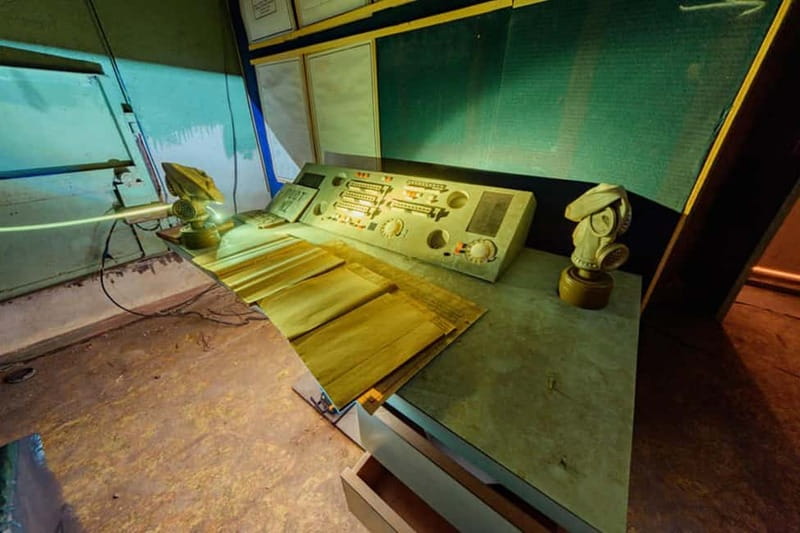
The laboratory is the stop most likely to appeal to people who enjoy clues. An empty scientific building can feel less immediately dramatic than a ruined theater, but it often rewards careful looking.
Your guide explains the purpose of the site and the work once carried out there. That context matters because abandoned rooms can otherwise blur together. A bare table, a marked door, or an old piece of equipment means more when you understand what the space was designed to do.
The laboratory also gives the tour a grounded quality. You are not only seeing decay. You are seeing a former workplace, a place connected with routine, research, and daily responsibilities. The contrast between that practical past and the building’s present condition creates much of the atmosphere.
For photography, I would take your time with textures and smaller details here. The available information does not promise specific equipment or preserved rooms, so you should avoid arriving with a fixed picture of what you will see. The guide’s stories are part of the stop, not an optional extra.
This site may be less thrilling if you want grand architecture at every turn. Its appeal is quieter. You are looking at evidence of work that has stopped, and the guide helps you understand why the rooms matter.
The abandoned movie theater, including the Apollo
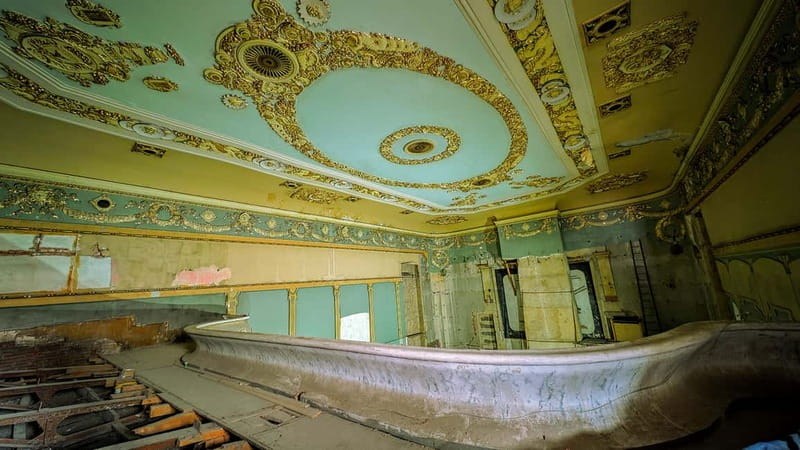
The abandoned movie theater is likely to be the most instantly photogenic stop. A cinema was built for public spectacle, so even an empty one can suggest the crowds, films, and shared evenings that once filled it.
One of the locations is referred to as the Apollo, and it has been singled out as a particularly good place to see and photograph. You may find this is the stop where you naturally spend the most time with your camera. The theater’s identity is easier to imagine than that of a former laboratory, which gives it a strong emotional pull.
The experience offers access to places that are not open to the public. That is a major part of the value here. You are not peering through a fence or taking a distant exterior photo. You get to see the interior up close with someone who can explain its purpose and background.
Still, an abandoned cinema is not a restored cultural venue. You should expect signs of neglect and an atmosphere shaped by loss rather than polish. That is precisely why it works for urbex, but it may not suit someone looking for comfort, formal exhibits, or a carefully maintained attraction.
Bring a camera if photography matters to you. The pace allows time for photographs and video, and the private format makes it easier to frame a shot without strangers in the way. Be respectful, avoid touching fragile objects, and follow the guide’s instructions inside.
A completely different kind of day:
- From Tbilisi: Kakheti Wine Region Tour with 9 Wine Tastings
★ 4.9 · 2,541 reviews - Tbilisi: Mtskheta, Jvari, Gori and Uplistsikhe Day Tour
★ 4.9 · 2,396 reviews - From Tbilisi to Kazbegi, Ananuri, Gudauri & Gergeti
★ 4.9 · 2,278 reviews - Tbilisi: Kakheti Wine Region Tour with 10 Wine Tastings
★ 5.0 · 2,160 reviews
The secret command bunker underground
The underground command bunker is the most unusual stop, and probably the one that gives the tour its title. It introduces a more serious mood than the cinema or laboratory.
The word secret points to restricted access and a hidden function, while command bunker suggests a place built for planning and protection. Your guide explains the site’s purpose and its role, giving you a way to read the rooms rather than simply wander through them.
An underground location also changes the feel of the outing. You leave the ordinary city above and enter a space designed around secrecy and control. The appeal is not decoration. It is the sense that the building was created for a particular threat or need, then left behind when circumstances changed.
Because the information does not specify the bunker’s exact condition, layout, or depth, you should keep your expectations open. It may be the most atmospheric stop, but it is not presented as a polished museum with displays and signs. The guide provides the explanation that makes the visit worthwhile.
This is also the point where practical clothing matters most. Sturdy shoes and comfortable clothes are sensible for all three sites, but especially for an underground abandoned structure. The tour does not require special skills or a high level of fitness, yet you should still be ready for an uneven environment.
What the guide adds to the experience
The guide is not simply a person who leads you from one address to the next. The price includes an expert guide who explains the history and purpose of each site.
That role is essential in urbex. Empty buildings rarely explain themselves. Without context, you might see a corridor, a concrete room, or a faded interior and move on. With a guide, you begin to understand what happened there and why the building was designed in the first place.
Several guides are named in the feedback connected with the tour. Tina is praised for explaining everything and allowing as much time as needed. Toko and Tina are described as passionate about the subject, while Tornike and Lasha are noted for their respect for the sites and their experience as urban explorers.
You may not have every one of these guides on your booking, so treat the names as examples rather than a promised lineup. The consistent point is the guiding approach: personal, enthusiastic, and focused on the story behind the place.
That enthusiasm can make or break an urbex tour. A guide who enjoys abandoned sites can help you notice details you would miss. Just as important, the guides are described as respectful, which sets the right tone for locations that may be fragile or privately controlled.
How difficult is the exploration?
This is not presented as a physically demanding activity. One detailed account describes the outing as requiring little effort and says the clothing did not become dirty.
Even so, you should not confuse easy with carefree. Abandoned buildings can have rough floors, narrow passages, dust, or other minor obstacles. The instructions specifically recommend comfortable shoes, and that is advice worth following.
You do not need special equipment or previous urbex experience. The tour is suitable for beginners and for people who are curious about the subject but do not want to enter abandoned places alone.
A camera is welcome. You can take photographs and video, and the pace is designed to give you time for both. A phone is enough if you are traveling light, though a proper camera may help in darker interiors.
An open mind is more useful than technical gear. Urbex is about seeing familiar cities from an unusual angle, noticing what remains after a place has lost its original function, and listening to the stories attached to it.
Is $120 a fair price?
The price is $120 per person. That is not a low-cost city walk, but the comparison should not be with a standard neighborhood tour.
You are paying for four hours, a private group, an English-speaking guide, access to three locations that are usually closed to the public, and taxi transportation between the sites. Those parts add up, particularly when the tour removes the need to arrange transport yourself.
The value is strongest if you care about access and interpretation. If you only want to photograph abandoned buildings and are comfortable finding places independently, the price may feel high. But going alone can create access, safety, and legal problems, while the tour provides a structured way to see the sites.
It also helps that the schedule is not rushed. Time for photographs is part of the experience, and the guide adjusts the pace to the group. For a private booking, that personal attention makes the price easier to justify.
I would see this as a specialist tour rather than a general introduction to Tbilisi. You are paying for a narrow subject handled in depth across three locations. If abandoned buildings, unusual city stories, and photography are high on your list, the cost is reasonable. If this is only a casual curiosity, you may prefer a cheaper standard sightseeing tour.
Who will enjoy this tour most?
This outing suits you if you want to see a side of Tbilisi that ordinary sightseeing does not cover. It is a good match for photographers, architecture fans, history enthusiasts, and people who enjoy places with a strong sense of time and change.
It is also a good introduction for first-time urban explorers. You do not need to know the rules of urbex before arriving. The guide explains the locations and leads you through them, so you can focus on observing rather than worrying about where to go.
Experienced urbex fans may appreciate the access and the local perspective. The three stops offer variety, and the guides’ own interest in urban exploration adds more than a basic photo walk.
You may not enjoy it if you want bright, comfortable, highly organized sightseeing spaces. These are abandoned sites, not restored attractions. The mood can be eerie, serious, or unsettling, and the appeal comes from seeing places in their present condition.
The private format is a plus for couples, friends, and small groups with shared interests. It is less suited to someone who wants a big social group or a broad survey of Tbilisi’s main landmarks.
Booking, cancellation, and what to wear
You meet at the entrance of Nadzaladevi metro station. The tour lasts four hours, and starting times depend on availability.
You can reserve now and pay later, which helps if your Tbilisi schedule is still changing. Cancellation is free up to 24 hours in advance, with a full refund.
Wear sturdy, comfortable shoes and clothes suitable for walking and exploring. No special requirements are listed, and the tour is not described as strenuous, but abandoned buildings are not the place for delicate footwear.
Bring a camera or phone if you want photographs. You should also bring curiosity and patience. The strongest moments may come from a guide’s explanation or a small detail rather than a grand view.
Should you book A Journey Through Abandoned Wonders?
I would book this tour if you want a personal, unusual experience and like the idea of seeing Tbilisi through its unused spaces. The combination of an abandoned cinema, laboratory, and secret command bunker gives the four hours a clear variety, while included taxi rides and a private guide keep the outing practical.
The best reasons to choose it are the rare access, the unhurried photography time, and the guides’ clear passion for urban exploration. Beginners get an easy entry into urbex, while experienced explorers get local stories and guided access.
Skip it if you want a conventional city tour, restored buildings, or a bargain activity. For everyone else, $120 is a fair price for three restricted sites, transport, and a guide who can explain what you are seeing. Just wear proper shoes, keep an open mind, and let the empty rooms do some of the talking.
FAQ
Where does the Tbilisi Urbex Tour meet?
The meeting point is at the entrance of Nadzaladevi metro station in Tbilisi.
How long does the tour last?
The tour lasts four hours.
What locations are included?
The tour includes an abandoned secret command underground bunker, an abandoned movie theater, and an abandoned laboratory.
Is transportation included?
Yes. Taxis between the three main locations are included in the price.
Is the tour private?
Yes. It is offered as a private-group experience.
What language does the guide speak?
The live tour guide speaks English.
Do I need previous urban exploration experience?
No. The tour does not require special experience or special requirements, and it is suitable for people new to urbex.
What should I wear?
Wear comfortable clothing and sturdy, comfortable shoes suitable for walking and exploring.
Can I take photographs?
Yes. You can bring a camera and take photographs or video during the tour.
Can I cancel the booking?
Yes. You can cancel up to 24 hours in advance for a full refund. You can also reserve now and pay later.
Just added in Tbilisi
- Wine Tasting feel the Difference of Qvevri or Classical Wine★ 4.4 · 10 reviews
- From Tbilisi: Kakheti and Kazbegi 2-Day 4X4 Jeep Tour pack★ 5.0 · 6 reviews
- Walking Tour in Old Tbilisi – Group Tour★ 4.5 · 8 reviews
- Uforgatable Kakheti Tour with wine tasting – in Georgia★ 4.9 · 5 reviews
- From Tbilisi: Uplistsikhe Caves and Mtskheta Town Day tour★ 5.0 · 2 reviews
- Tbilisi: Vintage Fashion and Secondhand Thrifting Tour★ 5.0 · 11 reviews
- Tbilisi Airport to Gudauri, Bakuriani, Batumi, Tbilisi★ 5.0 · 3 reviews
- Private Adorable City Tour of Tbilisi★ 5.0 · 3 reviews
Tours, compared.

Highlights of Caucasus Mountains-Jinvali,Ananuri,Gudauri,Kazbegi(Group tour)
Read our review →
Kakheti Wine Region Tour with 9 Wine Tastings
Read our review →
Mtskheta, Jvari, Gori and Uplistsikhe Day Tour
Read our review →
Kakheti Wine Region Tour with 10 Wine Tastings
Read our review →
Tbilisi Walking Tour Including Cable Car and Traditional Bakery
Read our review →