Reviewed · TBILISI TOURS
3 Faces of Tbilisi – The new, the old and the alternative
Tbilisi reveals itself in layers. This three-hour walk links the grand center, ancient Old Town, and modern creative districts, giving you a useful first look at a city that sits between Europe and Asia. I especially like the route’s mix of famous sights and ordinary corners, and the guide’s practical advice on restaurants, bars, customs, and nightlife. The traditional snack and drink tasting add a welcome local touch.
I also like the way the tour moves beyond postcard Tbilisi. You get royal churches, sulfur baths, fortress views, Soviet-era reminders, a market, and the lively Fabrika complex in one outing. The main consideration is pace: this is close to three hours of walking, often over old streets, slopes, and steps, so comfortable shoes are essential.
In This Review
- The three sides of Tbilisi in one walk
- National Gallery, Parliament, and the city’s public heart
- Old Town, Betlemi Street, and wide views
- Sulfur baths and the Leghvtakhevi waterfall
- Churches, kings, and the Metekhi view
- Europe Square, Rike Park, and the modern riverfront
- Anchiskhati Basilica, the clock tower, and old walls
- Dry Bridge Market and Tbilisi’s alternative side
- Fabrika, nightlife, and the final tasting
- What the $30 price really gives you
- Who should book this Tbilisi walk?
- Final verdict: a smart first look at Tbilisi
- FAQ
- How long does the 3 Faces of Tbilisi tour last?
- What languages are available?
- Is hotel pickup and drop-off included?
- What food and drink are included?
- Can I book a private tour?
- What should I bring?
The three sides of Tbilisi in one walk
The tour begins in Dzveli Tbilisi, or Old Tbilisi, and returns there after a broad loop through the center and riverside districts. It is designed less as a slow museum visit and more as a connected city lesson.
Your guide explains what you are seeing, but also helps you read the city. That might mean discussing Georgian customs near a church, pointing out the remains of older walls, or explaining why Tbilisi’s alternative nightlife matters to younger residents today.
The tour is available in English or Russian. Private and small-group options are offered, and hotel pickup and drop-off are included. That is useful if you are staying outside the central walking area, though you should be ready in the lobby five minutes before pickup. The vehicle waits no more than five minutes after the agreed time.
National Gallery, Parliament, and the city’s public heart
The first section takes you through central Tbilisi, beginning near the National Gallery. You see the building from the outside and get guided context rather than a full gallery visit, so art lovers should not mistake this tour for a museum tour.
From there, the route reaches the Parliament of Georgia. This is an important stop because Tbilisi’s political life is tied closely to its public squares and central avenues. You get time for photographs and an explanation of the site before passing the Museum of Georgia.
Liberty Square is the next major landmark. It is one of the easiest places in Tbilisi to get your bearings, and it connects the formal center with the older streets beyond. The guide uses the square to explain how the city has changed, while Gudiashvili Square offers a more intimate urban setting.
I like this opening because it gives you structure. Instead of starting with a random collection of monuments, the walk moves from national institutions toward the city’s older neighborhoods.
More things to do in Tbilisi:
- Tbilisi: Day Trip to Kazbegi, Gudauri, Gergeti, and Ananuri
★ 4.9 · 3,203 reviews - Day Trip to Kakheti Wine Region Including 9 Wine Tastings
★ 5.0 · 2,774 reviews - Highlights of Caucasus Mountains-Jinvali,Ananuri,Gudauri,Kazbegi(Group tour)
★ 5.0 · 2,682 reviews
Old Town, Betlemi Street, and wide views
Crossing into Old Town changes the mood quickly. The streets become more irregular, and the route takes you along Betlemi Street toward viewpoints above the historic center.
This is one of the more scenic parts of the walk. You can look across rooftops and hills while the guide connects the view to Tbilisi’s long political and religious story. You also get photo stops in the Old Town and at a dedicated viewpoint.
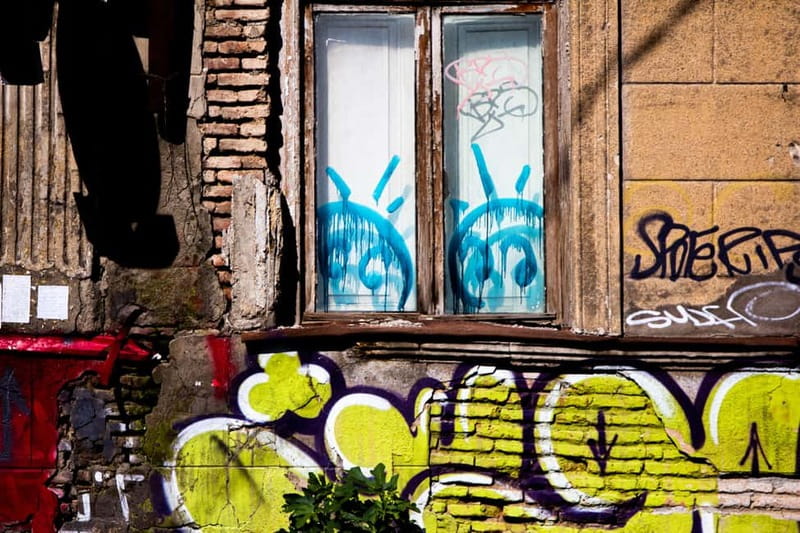
The route is not only about polished facades. You will see a mixture of restored buildings, weathered walls, narrow lanes, and older structures that show how much work Tbilisi still needs. That contrast is central to the tour’s good, bad, and ugly idea.
The uneven surfaces matter. Old Town is not difficult for most reasonably active walkers, but the walk is not designed for luggage or large bags. Leave those behind and bring shoes with a firm sole.
Sulfur baths and the Leghvtakhevi waterfall
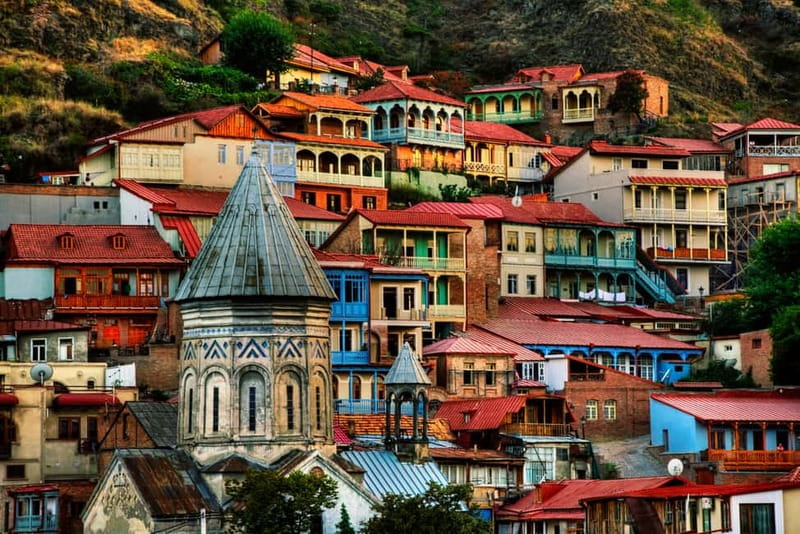
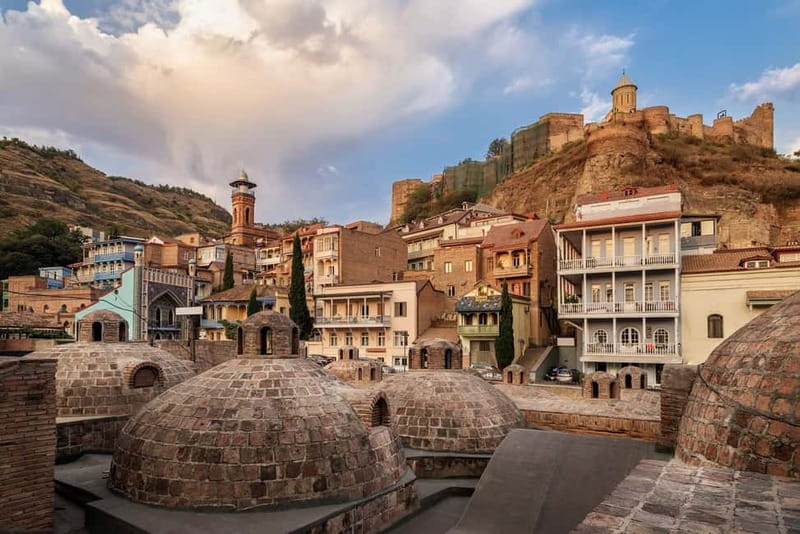
The Royal Baths are one of Tbilisi’s defining sights. The city’s name is linked to its warm springs, and this area helps explain why a settlement grew here in the first place.
You spend about ten minutes around the baths, with a guided explanation and time for photographs. The stop is short, but it gives the surrounding streets a clear purpose. These are not simply old buildings beside a pretty ravine. They are tied to the city’s origins and to the traditions of Georgian bath culture.
From the baths, the route continues to Leghvtakhevi Waterfall. This is a surprising change of scene inside the city. A short urban walk leads you into a narrow gorge with falling water, stone walls, and a quieter feel than the nearby streets.
This part is especially good for visitors who like city walks with a little variety. You get architecture, history, and a natural feature without leaving central Tbilisi. After rain, surfaces may be slick, so watch your footing.
Churches, kings, and the Metekhi view
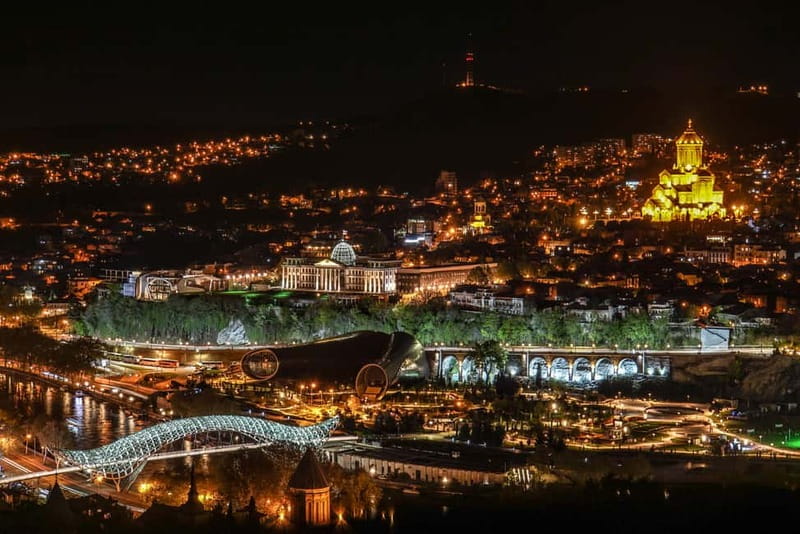
The walk then reaches the river and the Metekhi area. The Metekhi Bridge provides a strong view across the water, while Metekhi St. Virgin Church adds one of the tour’s most important religious and royal settings.
This part of Tbilisi carries serious historical weight. Early Georgian rulers lived, married, and were buried in this area, and the guide explains why it is regarded as some of the city’s most blood-soaked ground. The wording is dramatic, but the point is useful: Tbilisi’s location made it valuable, and that value also made it vulnerable.
You stop for photographs at the church and hear more about the city’s early rulers. The guide may also help you understand how Georgian religious buildings fit into the wider story of the city, rather than treating the church as an isolated monument.
Across the river, Narikala Fortress rises above the old quarters. You see the fortress and walk through the surrounding area, with scenic views along the way. The height gives you a better sense of Tbilisi’s shape: river, hills, clustered roofs, and major landmarks all come into view.
The Aerial Tramway is also part of this section as a city sight. The tour information does not promise a full cable-car ride for every booking, so check the exact inclusions when reserving. Some tour arrangements have included transport and a cable-car ticket, but this should not be assumed without confirmation.
A completely different kind of day:
- From Tbilisi: Kakheti Wine Region Tour with 9 Wine Tastings
★ 4.9 · 2,541 reviews - Tbilisi: Mtskheta, Jvari, Gori and Uplistsikhe Day Tour
★ 4.9 · 2,396 reviews - From Tbilisi to Kazbegi, Ananuri, Gudauri & Gergeti
★ 4.9 · 2,278 reviews - Tbilisi: Kakheti Wine Region Tour with 10 Wine Tastings
★ 5.0 · 2,160 reviews
Europe Square, Rike Park, and the modern riverfront

The route returns toward the contemporary riverfront through Europe Square and Rike Park. These spaces show a newer version of Tbilisi, with broad paths, public art, and modern buildings.
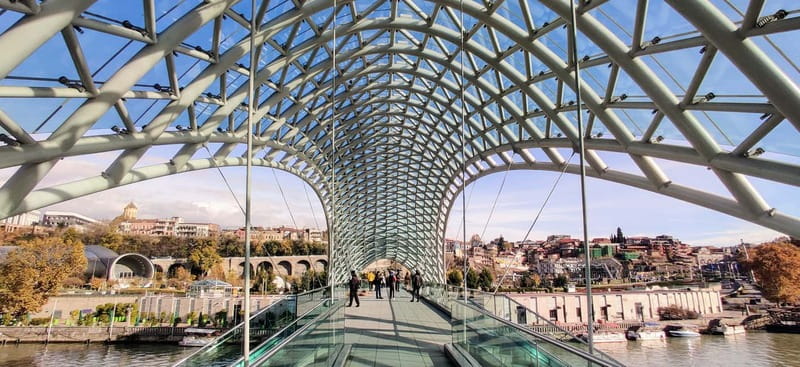
Rike Concert Hall and the Bridge of Peace are two of the most recognizable modern sights on the walk. The curved glass-and-steel bridge divides opinion, which is part of what makes it worth discussing. It gives you a clear example of Tbilisi’s effort to present itself as a modern international capital while preserving its older quarters nearby.
Rike Park is a good photo stop and a chance to reset after the steeper Old Town sections. You pass the concert hall and continue across or near the Bridge of Peace, depending on the exact route and group pace.
I appreciate that the tour does not pretend the old and new parts of Tbilisi always match. The contrast can be awkward, but it is honest. You see a city still working out how to combine restoration, new construction, tourism, and local life.
Anchiskhati Basilica, the clock tower, and old walls
The route turns back into older streets for Anchiskhati Basilica, one of the city’s early Christian churches. You get a guided visit and time to look at the building before continuing through the Old Town.
The clock tower is another playful Tbilisi landmark. Its uneven, storybook appearance contrasts with the more formal churches and government buildings earlier in the day. It is a quick photo stop, but it helps show the city’s fondness for eccentric details.
You also pass Berikaoba monuments and sections of the Old Town wall ruins. Berikaoba is connected with an old Georgian masked street performance tradition, and the monuments add a glimpse of local folk culture to the route.
The wall ruins are especially helpful for understanding scale. Tbilisi can feel like a collection of disconnected lanes until you see where earlier defenses shaped the city. The guide points out what remains and explains the older boundaries.
Alexandre’s Garden provides another short walking section before the tour heads toward the Dry Bridge Market. These transitions are part of the appeal, but they also mean the experience is active rather than leisurely. If you want long interior visits, this is not the right format.
Dry Bridge Market and Tbilisi’s alternative side
Dry Bridge Market brings you into a different kind of Tbilisi. It is associated with secondhand goods, antiques, art, and local trade, and it offers a look at the city outside its formal monuments.
The exact market activity can vary, so treat this as a walk-through and introduction rather than a guaranteed shopping session. You may find items that catch your eye, but the real value is seeing how the area functions as a social and commercial space.
This is where the tour’s alternative angle becomes clearer. Tbilisi is not only churches, fortresses, and balconies. It also has artists, collectors, independent businesses, and residents shaping the city in less official ways.
Fabrika, nightlife, and the final tasting
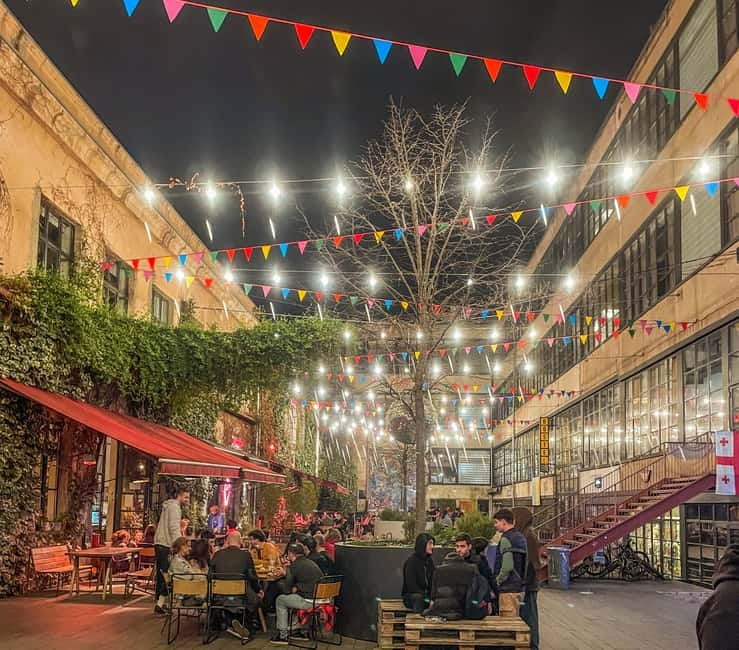
The tour ends at Fabrika Tbilisi, a former industrial setting turned into a popular creative and social complex. You have break time here, along with a guided introduction, photographs, and the chance to browse shops or look around the bars and public spaces.
Fabrika is a fitting finale because it represents the newer, more experimental side of the city. It is also a practical place to continue your evening. The guides are particularly useful here if you want suggestions for where to eat, drink, or go dancing afterward.
The tour includes a small tasting of a traditional drink and a local snack. Think of it as a cultural sample, not a meal or a full wine experience. One useful tip: eat something beforehand if you plan to take the alcohol shot. The tasting is small, but drinking on an empty stomach is never a clever sightseeing strategy.
The nightlife discussion includes Bassiani, Tbilisi’s famous club. You may not enter the club during this daytime walking tour, but you hear about its place in the city’s modern cultural life. That conversation helps connect the historic streets to the younger generation’s music and nightlife scene.
What the $30 price really gives you
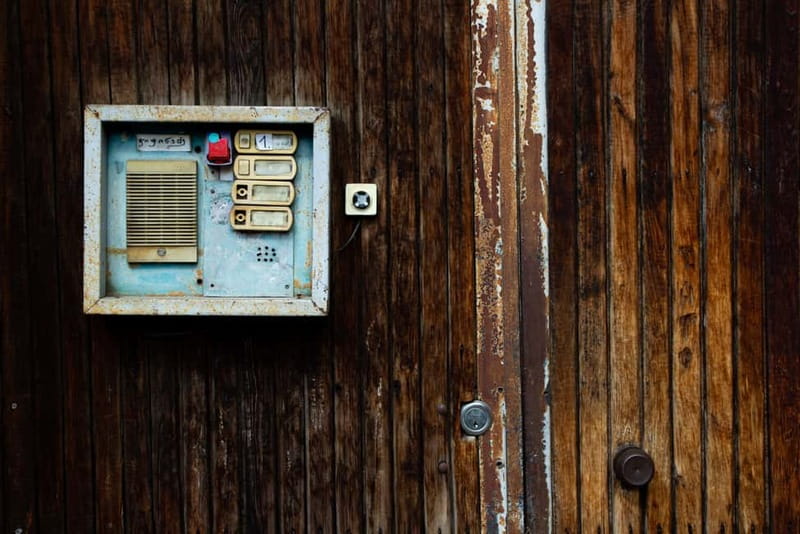
At $30 per person, the tour is not the cheapest way to walk around Tbilisi. You can see several Old Town sights without paying for a guide, especially if you are comfortable planning your own route.
The value comes from the amount of ground covered and the explanations between the sights. You get a guide, hotel pickup and drop-off, a traditional snack, and a drink tasting. Depending on the arrangement, taxi transfers and a cable-car ticket may also be included, so confirm those points before booking.
I think the price makes the most sense during your first day or two in Tbilisi. The recommendations can save you time later, and the route helps you decide which areas deserve a second visit. It is less useful if you have already spent several days exploring the center or prefer to move at your own pace.
The consistently top rating and repeated praise for guides such as Giorgi, Georgi, Sara, Sarah, and Nodari point to the human side of the experience. The strongest guide qualities are clear English, patience, local advice, and a willingness to answer unusual questions rather than recite facts.
Who should book this Tbilisi walk?
I would choose this tour if you want a fast but meaningful introduction to Tbilisi. It suits first-time visitors, solo visitors who want company, couples, and small groups who prefer conversation over a large coach tour.
You will get the most from it if you care about both ancient and recent history. The route includes churches, royal sites, baths, fortifications, political landmarks, market culture, creative spaces, and nightlife.
It may not suit you if you want a slow photography walk, extended museum time, or a food-focused tour. The National Gallery and Museum of Georgia are passed or discussed rather than explored at length. The snack tasting is modest, and extra food and drinks are not included.
Bring weather-appropriate clothing and comfortable shoes. Do not bring luggage or a large bag. The tour is offered as a private experience or in small groups, so check the option carefully if personal attention matters to you.
Final verdict: a smart first look at Tbilisi
I recommend 3 Faces of Tbilisi for a first visit, especially if you have only a short stay. It gives you the city’s main landmarks without stopping at the usual postcard version, then finishes in a modern district where you can continue your evening.
Book it if you want a guide who can explain why the sulfur baths matter, how royal and religious sites shaped the city, and where today’s cultural life is happening. Skip it if you already know central Tbilisi well or would rather spend three hours inside museums.
For most visitors, the strongest reason to book is simple: you get a usable map of Tbilisi, plus ideas for what to do after the tour ends at Fabrika.
FAQ
How long does the 3 Faces of Tbilisi tour last?
The tour lasts three hours. Check the available starting times when booking.
What languages are available?
The tour is offered with a live guide in English or Russian.
Is hotel pickup and drop-off included?
Yes. Hotel pickup and drop-off are included. You should wait in the lobby five minutes before the scheduled pickup time, and the vehicle will wait no longer than five minutes after that time.
What food and drink are included?
The tour includes a traditional local snack and a shot or tasting of a traditional drink. Extra food and drinks are not included.
Can I book a private tour?
Yes. Private and small-group options are available, depending on the option you select.
What should I bring?
Bring comfortable shoes and clothing suited to the weather. Luggage and large bags are not allowed.
Just added in Tbilisi
- Wine Tasting feel the Difference of Qvevri or Classical Wine★ 4.4 · 10 reviews
- From Tbilisi: Kakheti and Kazbegi 2-Day 4X4 Jeep Tour pack★ 5.0 · 6 reviews
- Walking Tour in Old Tbilisi – Group Tour★ 4.5 · 8 reviews
- Uforgatable Kakheti Tour with wine tasting – in Georgia★ 4.9 · 5 reviews
- From Tbilisi: Uplistsikhe Caves and Mtskheta Town Day tour★ 5.0 · 2 reviews
- Tbilisi: Vintage Fashion and Secondhand Thrifting Tour★ 5.0 · 11 reviews
- Private Adorable City Tour of Tbilisi★ 5.0 · 3 reviews
- Tbilisi Airport to Gudauri, Bakuriani, Batumi, Tbilisi★ 5.0 · 3 reviews
Tbilisi Tours, compared.
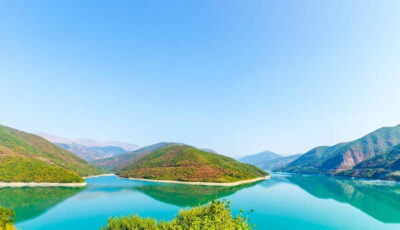
Day Trip to Kazbegi, Gudauri, Gergeti, and Ananuri
Read our review →
Day Trip to Kakheti Wine Region Including 9 Wine Tastings
Read our review →
Highlights of Caucasus Mountains-Jinvali,Ananuri,Gudauri,Kazbegi(Group tour)
Read our review →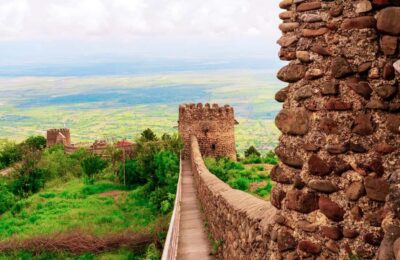
Kakheti Wine Region Tour with 9 Wine Tastings
Read our review →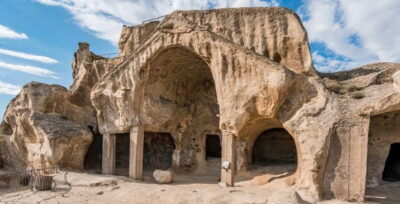
Mtskheta, Jvari, Gori and Uplistsikhe Day Tour
Read our review →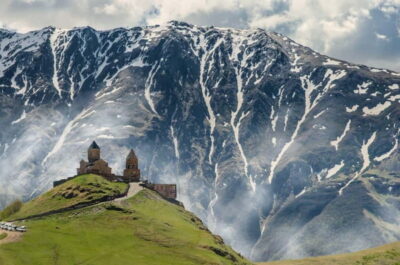
From Tbilisi to Kazbegi, Ananuri, Gudauri & Gergeti
Read our review →
Kakheti Wine Region Tour with 10 Wine Tastings
Read our review →