
Reviewed · BATUMI TOURS
10-Day Tour to Georgia, Tbilisi: Caucasus Mountains and Black Sea
Georgia rewards the curious. This 10-day small-group tour links Tbilisi’s old lanes, the Caucasus highlands, medieval Svan towers, UNESCO sites, and the Black Sea coast in one well-packed journey. I like the route’s variety and the way it reaches places that are hard to visit without local transport, especially Ushguli and the Chalaadi Glacier. I also like that breakfast, several dinners, hotels, bottled water, and guiding are included. The main caution is the pace: long road days, rough mountain routes, and a moderate fitness requirement mean this is not a sit-back-and-watch-the-country tour.
At $1,856 per person, the price is reasonable for a 10-day escorted trip with nine hotel breakfasts, three dinners, 3-star lodging, a guide-driver, and special 4×4 vehicles in Svaneti. You should still budget for most lunches, many drinks, travel insurance, and entrance fees not specifically included. The group is capped at 15, which keeps the experience smaller than a large coach tour, though the minimum booking is four people.
In This Review
- What makes this Georgia route worth considering
- Tbilisi begins with churches, cliffs, and sulfur baths
- Stalin and Uplistsikhe reveal two very different Georgias
- Caves, canyon water, and the road to Mestia
- Ushguli is the tour’s main mountain adventure
- Chalaadi Glacier adds a moderate walk near Mestia
- Svan towers, manuscripts, and a high cable car
- Batumi shifts the mood from mountains to the sea
- Shekvetili and Vani bring the route back to archaeology
- Mtskheta closes the cultural circle
- What the $1,856 price covers
- Who should book this tour?
- FAQ
- How long is the tour?
- Where does the tour start?
- How many people can join the group?
- Are hotels included?
- Is food included?
- Are the Ushguli and Chalaadi Glacier vehicle trips included?
- Does the tour operate in bad weather?
- Should you book it?
What makes this Georgia route worth considering
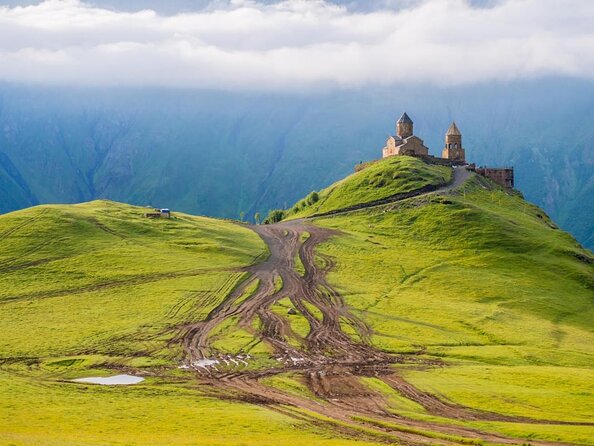
- Ushguli is the great prize: A 4×4 journey reaches this remote community at about 2,200 meters, known as the highest permanently settled village in Europe.
- Five UNESCO-linked sights fit into one trip: The route includes Upper Svaneti, Bagrati Cathedral, Mtskheta’s monuments, and other major cultural sites connected with Georgia’s long religious and architectural story.
- The scenery changes sharply: You move from Tbilisi’s dry eastern setting to alpine valleys, forests, glaciers, lowland wetlands, and the Black Sea shore.
- Svaneti gets real time: Three nights in Mestia allow for Ushguli, a glacier walk, a tower museum, and a possible cable-car ride.
- The tour balances culture and nature: Museums, cathedrals, cave towns, archaeological sites, canyons, and coastal promenades all have a place.
- The logistics are handled for you: Hotel pickup and drop-off, an air-conditioned vehicle on most touring days, local mountain vehicles, and an English-speaking guide-driver remove much of the planning work.
Tbilisi begins with churches, cliffs, and sulfur baths
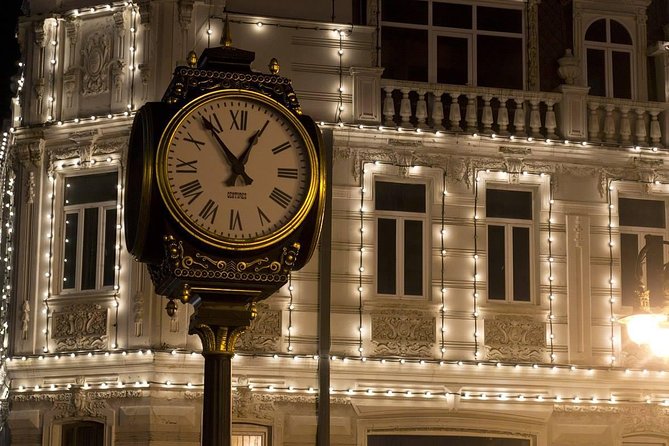
Your first day is a full introduction to Tbilisi, Georgia’s capital. Begin at Holy Trinity Cathedral, completed between 1995 and 2004 and the country’s highest church. It is a modern building rather than an ancient ruin, but its scale and role in Georgian religious life make it a useful first stop.
From there, Metekhi Cathedral gives you a better sense of old Tbilisi. The 13th-century church sits above the Mtkvari River, with views toward the historic center. The nearby Narikala Fortress adds the city’s best high viewpoint. The tour uses the aerial cable car from Europe Square, saving you an uphill climb and giving you a quick look at the river and old roofs below.
The most rewarding part of the day is the walk downhill through Abanotubani. Follow Botanical Street toward Tbilisi Mosque, the Fig Ravine, and its downtown waterfall, then continue to the sulfur bathhouses and Meidan Square. Sharden and King Erekle II streets bring souvenir shops, galleries, and places to pause for food. This is where the city feels most layered, with religious buildings, bathhouses, narrow lanes, and newer tourist businesses close together.
Sioni Cathedral and Anchiskhati Basilica fill out the old-city story. Sioni was first founded in the sixth or seventh century and rebuilt many times, while Anchiskhati dates to the seventh century. At the Georgian National Museum, allow the full 90 minutes for the Golden Treasury. Gold and silver pieces from sites across Georgia show that the country’s artistic traditions go far beyond its churches.
Finish on Rustaveli Avenue, passing the Parliament, Rustaveli Drama Theatre, Opera and Ballet House, Prospero’s Bookstore, and Rose Revolution Square. Day one covers a lot, so wear shoes suited to slopes and uneven paving. You will see more by walking at a steady pace than by treating each stop as a long museum visit.
More things to do in Tbilisi:
- Tbilisi: Day Trip to Kazbegi, Gudauri, Gergeti, and Ananuri
★ 4.9 · 3,203 reviews - Day Trip to Kakheti Wine Region Including 9 Wine Tastings
★ 5.0 · 2,774 reviews - Highlights of Caucasus Mountains-Jinvali,Ananuri,Gudauri,Kazbegi(Group tour)
★ 5.0 · 2,682 reviews
Stalin and Uplistsikhe reveal two very different Georgias
Day two heads west to Gori and Kutaisi. The Stalin Museum presents personal objects connected with Joseph Stalin, who was born in Gori. This stop is historically important but emotionally complicated. The display gives attention to the former Soviet dictator, and you may find the presentation more focused on objects and biography than on a full examination of Soviet repression.
Uplistsikhe is a stronger reason to make the stop. This early Iron Age cave town was cut into rock, with chambers, halls, tunnels, and connecting passages. The site is exposed, so sun protection and firm footwear matter. Its open setting also makes it easier to understand how a settlement could be built directly into the cliffs.
The road continues through Rikoti Pass and its tunnel toward Kutaisi, the center of the Imereti region. In the evening, Bagrati Cathedral offers a fine sunset setting. The 11th-century cathedral is connected with a UNESCO World Heritage site, and the evening timing gives you a welcome pause after a long driving day.
Caves, canyon water, and the road to Mestia
Day three combines Sataplia Cave and Nature Reserve with Martvili Canyon before turning north toward Svaneti. Sataplia is known for preserved dinosaur footprints, then takes you 900 meters into a cave filled with stalactites and stalagmites. Light and audio effects are used inside. Some people enjoy the theatrical presentation, while others prefer natural caves without added effects.
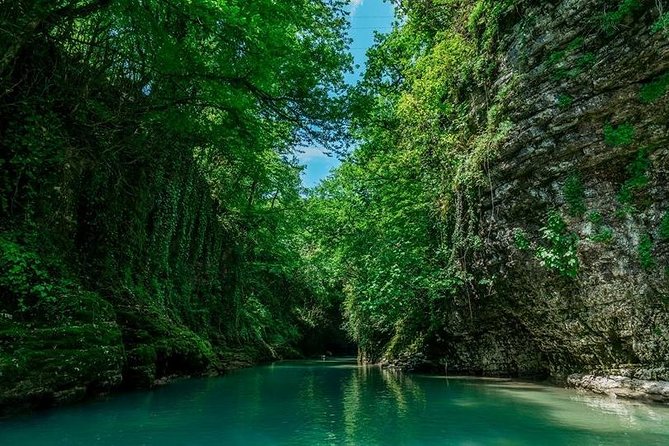
At Martvili Canyon, waterfalls and the Abasha River provide a change of pace. A boat trip is included, although water conditions can affect how the activity operates. The visit is short enough to fit the route but gives you time away from the vehicle.
The drive to Mestia is one of the tour’s big transitions. Mestia sits at about 1,500 meters and is the center of Svaneti, a highland region known for its defensive and residential towers. Some Svan towers date as far back as the ninth century. Three nights here are important because the region is not a quick roadside stop. You need time for mountain roads, weather changes, and the activities themselves.
Ushguli is the tour’s main mountain adventure
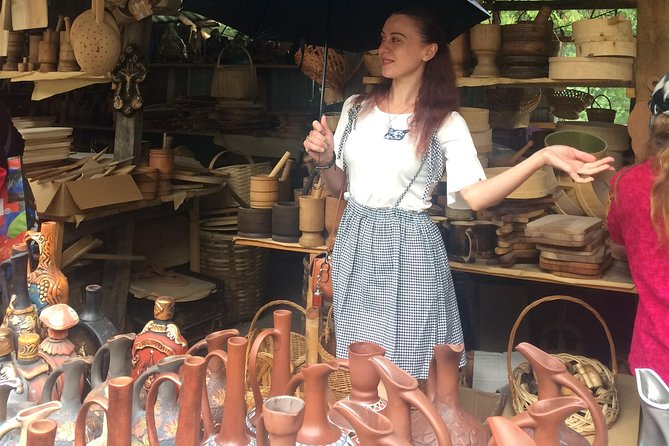
Day four is devoted to Ushguli, reached by local 4×4 vehicles from Mestia. The route follows the Enguri River and passes villages such as Ipari and Kala. Small churches with centuries-old frescoes add cultural interest along the way.
Ushguli is a community of four villages at roughly 2,200 meters. It is part of the Upper Svaneti UNESCO World Heritage area and is widely known as the highest permanently settled village in Europe. The appeal is not simply the altitude. It is the combination of stone towers, remote mountain roads, old churches, and a setting that feels far removed from Georgia’s main cities.
The excursion lasts about eight hours, and the road is an important part of the experience. A 4×4 makes access possible, but it does not turn the trip into a smooth transfer. If winding mountain routes make you uncomfortable, prepare yourself before booking. Weather can also affect the day, since the tour operates in all conditions and asks you to dress appropriately.
More things to do in Batumi:
- Tbilisi to Batumi, or vice versa – Private Transfer
★ 5.0 · 27 reviews - Batumi 4 Days Tour
★ 5.0 · 6 reviews - Tbilisi Airport to Gudauri, Bakuriani, Batumi, Tbilisi
★ 5.0 · 3 reviews - Tbilisi – Batumi Private Transfer
★ 5.0 · 2 reviews
Chalaadi Glacier adds a moderate walk near Mestia
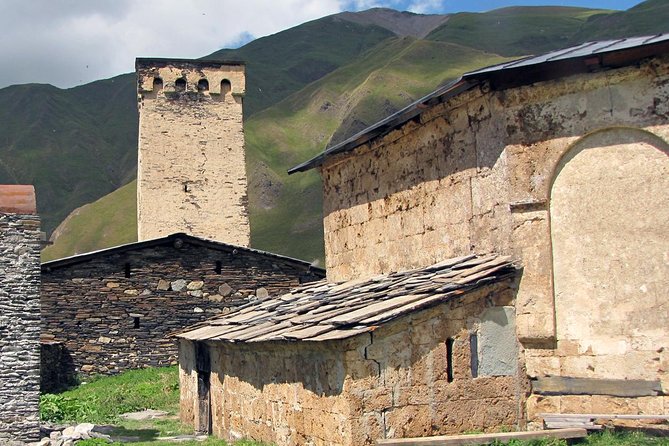
Day five brings a change from vehicle-based sightseeing to a mountain walk. You drive to the Mestiachala River and cross a bridge before heading uphill through forest. After about 1.5 kilometers, the trail becomes rocky, with stones of different sizes that require care.
Mount Chatini, at 4,412 meters, comes into view, and the route continues toward the Chalaadi Glacier at about 1,920 meters. The published figures give a maximum elevation of 1,925 meters, with 337 meters of climbing and the same amount of descent. The route is described as suitable for all skill levels, but you still need moderate fitness and stable footwear. The rough section is not a place for rushing.
A local 4×4 is included for this day. That matters because it cuts out some road access problems and leaves more energy for the walk. The itinerary’s timing information is compressed, so ask your guide for the exact walking and transfer schedule at the start of the day.
Svan towers, manuscripts, and a high cable car
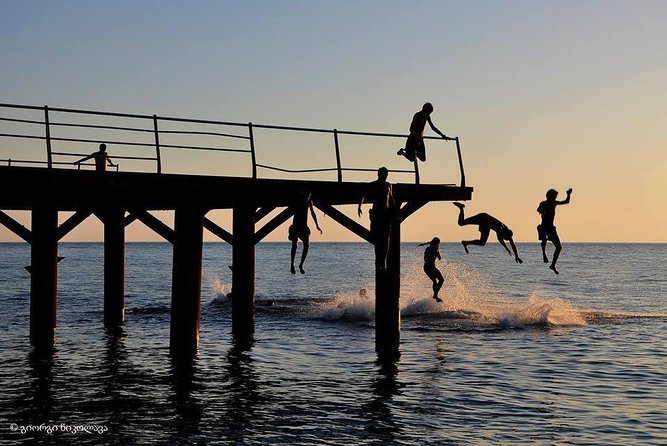
Day six keeps you in Svaneti before heading toward the lowlands. Margiani’s House Museum offers a close look at a 12th-century Svan tower and the traditional Svanetian dwelling known as a Machubi. This is a useful complement to the outdoor villages because you see how defensive architecture and domestic life worked together.
The Svaneti Museum adds manuscripts, Gospel books from the ninth, 10th, and 12th centuries, chained icons, and medieval metalwork. It also includes photographs by Italian photographer and mountaineer Vittorio Sella. These images are valuable because they record Svan villages, people, and mountain scenery from an earlier era.
If weather permits, the Hatsvali cable car takes you to Zuruldi Mountain at about 2,455 meters. From there, you may see Mount Ushba and Tetnuldi, two of the region’s great peaks. The cable-car ride is weather dependent, so treat it as a bonus rather than a guaranteed highlight.
The day ends with a drive to Zugdidi and the Dadiani Palaces Historical and Architectural Museum. The collection includes Georgian artifacts, archaeological material, Napoleon Bonaparte’s death masks, and a nearby botanical garden. The museum visit is only about 30 minutes, so it is more of a focused stop than a full palace exploration.
Batumi shifts the mood from mountains to the sea
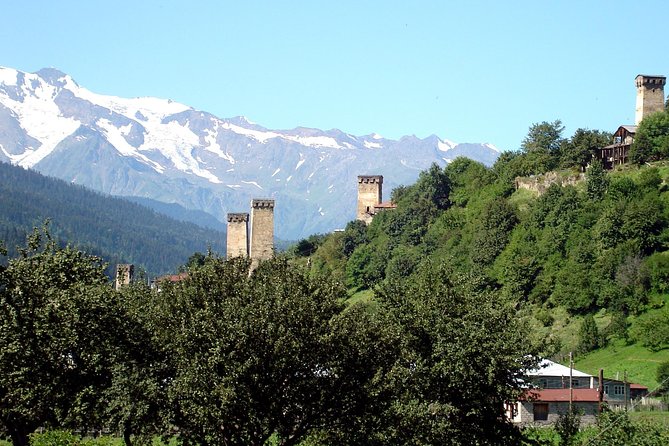
Day seven brings you to Adjara and the Black Sea coast. Gonio Fortress, about 10 kilometers from Batumi, is a brief historical stop. The nearby Borjgalo Ethnographic Museum is more unusual. Woodcarver Kemal Turmanidze and his family created human-sized house models and carved scenes showing life in the Adjara mountains.
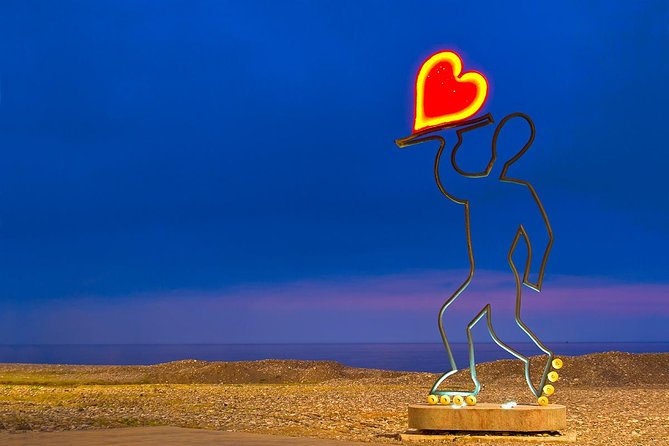
Batumi then provides a clear change of mood. The half-day walking tour includes Batumi Boulevard, the Ali and Nino kinetic sculpture, Piazza Square, and the Alphabet Tower. You get a free evening afterward, which is useful after several demanding mountain days.
Batumi is not presented here as an old Georgian town in the same way as Tbilisi or Mtskheta. Its appeal is the sea, public art, modern architecture, and relaxed promenade. Use the free evening for your own pace, but remember that meals and drinks are generally not included unless specified.
Shekvetili and Vani bring the route back to archaeology
Day eight follows the coast and lowlands. Shekvetili Dendrological Park and Georgia in Miniatures offer a lighter stop after the mountain and city touring. The visit is about an hour, so it works well as a visual break rather than a major historical visit.
The Vani Archaeological Museum returns you to ancient Georgia. Its collection covers cultural development from 800 BC to AD 100 and includes bronze sculpture fragments, coins, and jewelry. The jewelry collection is likely to be the main draw, especially if you enjoyed the Golden Treasury in Tbilisi.
In the evening, you return to Kutaisi for a free walk in the city center. That second Kutaisi stay helps break up the long route back toward eastern Georgia. It also gives you a little unscheduled time, something many tightly packed tours lack.
Mtskheta closes the cultural circle
Day nine visits Mtskheta, Georgia’s historic holy city. Svetitskhoveli Cathedral was built in the 11th century and is linked with early Christian legends. The cathedral is one of the country’s major religious monuments, and its setting makes it a fitting late-trip stop after the churches of Tbilisi and Svaneti.
Jvari Monastery sits above the meeting point of the Mtkvari and Aragvi rivers. Built in the sixth century, it provides one of the route’s best broad views. The visit is short, but the hilltop setting makes it memorable.
Day ten is simple: breakfast, hotel checkout by noon, and the end of service. There is no final airport transfer listed, so you need to arrange that separately if required.
What the $1,856 price covers
The package includes two nights in Tbilisi, two in Kutaisi, three in Mestia, and two in Batumi, all in 3-star hotels. It also includes an air-conditioned vehicle on touring days except the final day, local 4×4 vehicles for Ushguli, and a 4×4 for the Chalaadi Glacier outing.
Nine breakfasts and three dinners are included. Most other food and drinks are not. Entrance fees are included only where the itinerary specifically says so, including places such as the Georgian National Museum, Stalin Museum, Uplistsikhe, Sataplia, Martvili Canyon, Margiani’s House Museum, the Dadiani museum, and Vani Archaeological Museum.
For a 10-day route covering eastern Georgia, western Georgia, Svaneti, and the coast, the price offers solid value if you want transport and mountain access arranged. The value drops if you prefer independent hotels, long stays in each town, or freedom to skip scheduled museums.
The guide-driver speaks English and works throughout the tour except the last service day. Hotel pickup and drop-off are included, as are taxes, handling charges, and bottled water. Tbilisi airport transfers, insurance, visa fees, single-room accommodation, and unspecified entrance charges are extra.
Who should book this tour?
I would choose this tour if you want Georgia’s major contrasts in one trip and do not want to solve mountain transport on your own. It suits people who enjoy churches, museums, archaeological sites, scenic drives, short walks, and one demanding 4×4 day.
You should be comfortable with long transfers and a changing schedule. The route is active, the mountain roads can be rough, and the Chalaadi section includes rocky ground. The tour is not aimed at someone seeking a slow beach holiday or a deep stay in just one region.
The small-group limit of 15 is a real advantage. It should make vehicle movement and guide interaction easier than on a large coach, while the four-person minimum means the trip is not designed for solo departure with no other bookings.
FAQ
How long is the tour?
The tour lasts approximately 10 days. Day ten includes breakfast and hotel checkout by noon.
Where does the tour start?
The tour is based in Tbilisi, Georgia, with a listed start time of 10:00 am. Hotel pickup and drop-off are included.
How many people can join the group?
The maximum group size is 15 travelers, and a minimum of four people per booking is required.
Are hotels included?
Yes. The package includes nine overnight stays in 3-star hotels: two nights in Tbilisi, two in Kutaisi, three in Mestia, and two in Batumi.
Is food included?
Nine breakfasts and three dinners are included. Other food and drinks are not included unless specifically stated.
Are the Ushguli and Chalaadi Glacier vehicle trips included?
Yes. Local 4×4 vehicles are included for the Ushguli excursion, and one local 4×4 vehicle is included for the Chalaadi Glacier trekking day.
Does the tour operate in bad weather?
The tour operates in all weather conditions, and you are advised to dress appropriately. The Hatsvali cable car is specifically dependent on suitable weather.
Should you book it?
Book this tour if Ushguli, Svaneti, and Georgia’s mountain culture are high on your list, and if you value a guide, arranged transport, and a compact route. The strongest part is the three-night Mestia stay, which gives you enough time for towers, museums, a glacier walk, and the remote 4×4 trip.
Skip it if you need a relaxed pace, guaranteed cable-car access, or full control over meals and daily timing. For the right person, though, this is a practical way to see Georgia’s churches, caves, highlands, museums, and Black Sea coast without spending the trip arranging every mountain road yourself.
Just added in Tbilisi
- Wine Tasting feel the Difference of Qvevri or Classical Wine★ 4.4 · 10 reviews
- From Tbilisi: Kakheti and Kazbegi 2-Day 4X4 Jeep Tour pack★ 5.0 · 6 reviews
- Walking Tour in Old Tbilisi – Group Tour★ 4.5 · 8 reviews
- From Tbilisi: Uplistsikhe Caves and Mtskheta Town Day tour★ 5.0 · 2 reviews
- Tbilisi: Vintage Fashion and Secondhand Thrifting Tour★ 5.0 · 11 reviews
- Uforgatable Kakheti Tour with wine tasting – in Georgia★ 4.9 · 5 reviews
- Tbilisi Airport to Gudauri, Bakuriani, Batumi, Tbilisi★ 5.0 · 3 reviews
- Private Adorable City Tour of Tbilisi★ 5.0 · 3 reviews
Batumi Tours, compared.
Wine & Dine Tour To Waterfalls – Mountainous Adjara
Read our review →
Mtirala ATV, Buggy Maverick & Horse Riding Adventure
Read our review →

Batumi to Mtirala National park – Half day hiking group tour
Read our review →
Makhuntseti, Machakheta, & Mirveti Tour with Lunch
Read our review →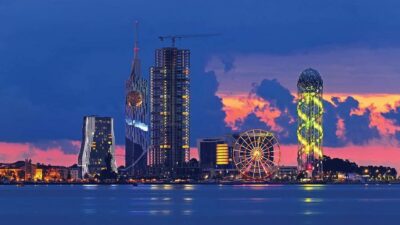
Batumi City – Botanical Garden – Petra Fortress from Kutaisi
Read our review →Browse the lists this tour appears in